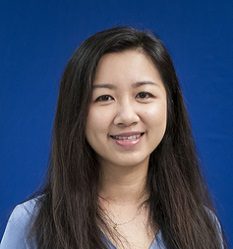
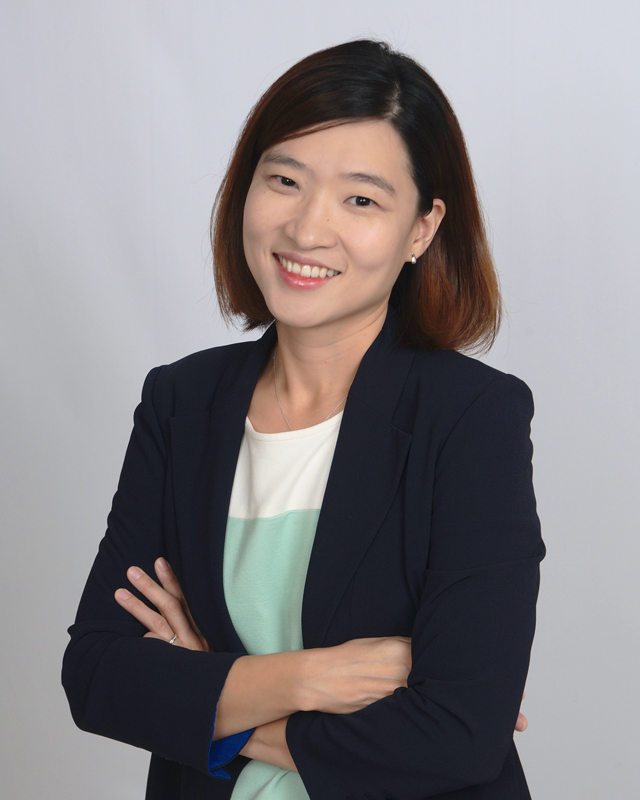
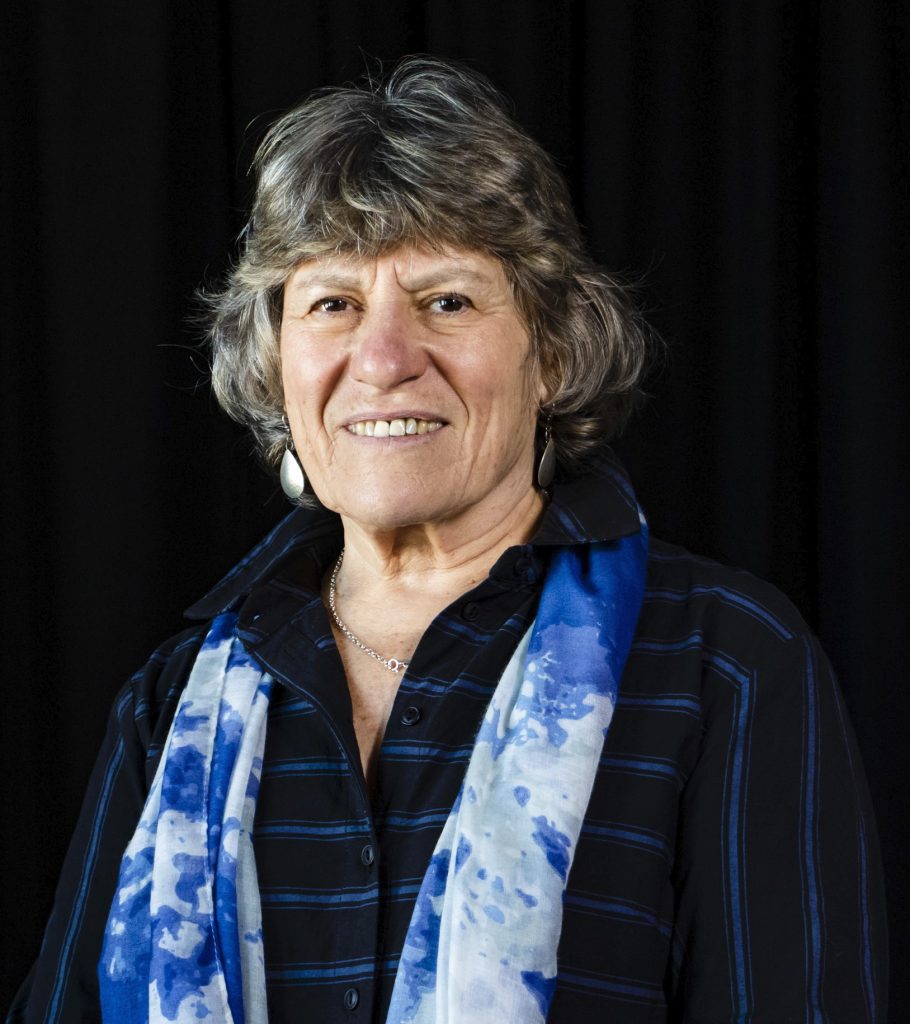
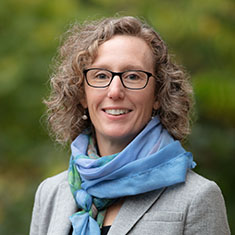
Catherine Z. Elgin is a Professor of the Philosophy of Education at Harvard University's Graduate School of Education since 1996. She holds a Ph.D. from Brandeis University (1975) and has taught at MIT, Princeton, Wellesley, Dartmouth, UNC Chapel Hill, Michigan State, Simmons, and Vassar prior to her Harvard appointment. Literary executor for Nelson Goodman and Jonathan Adler Research focuses on epistemology , philosophy of art , and philosophy of science Argues that understanding (not knowledge) should be epistemology's central concern Research Trends across her publications reveal: Epistemic value of fiction and imagination Interdisciplinary connections between art, science, and philosophy Critique of analytic/synthetic distinctions Perspectival approaches to scientific representation Conceptual analysis of exemplification and metaphor Epistemic normativity in educational contexts Scientific Awards & Editorial Involvement : Elected to American Academy of Arts & Sciences (2023) Advisory Board, American Philosophical Association Committee on the Philosophy of Education Editorial Board, American Philosophical Quarterly Editorial Board, International Journal for the Philosophy of Science Academic Leadership : Teaches courses in philosophy of education Maintains active research program through Harvard's DASH repository Collaborates with educators across Harvard's schools including the Center for Ethics and the Professions
Dr. Erin Ash is an Associate Professor in the Department of Communication at Clemson University , where she also serves as a Faculty Scholar in the Clemson University School of Health Research (CUSHR) and an Embedded Faculty Scholar at the South Carolina Department of Public Health. Ph.D. in Mass Communications, Pennsylvania State University (2013) M.A. in Media Studies, Pennsylvania State University (2010) B.A. in Communication, College of Charleston (2008) Her research focuses on media’s role in shaping public perceptions of social issues , particularly health behaviors and policies. Recent work examines reproductive health attitudes , racial stereotypes in sports media , and narrative persuasion for health policy support . She also explores intersectional representation in gaming and media-induced elevation for intergroup connectedness . Dr. Ash’s recent publications (2024–2025) emphasize social media’s impact on health communication , including teen pregnancy prevention , cross-cultural communication norms , and maternal health disparities . Earlier studies (2023–2015) analyze racialized athlete portrayals , binge drinking prevention , and media framing of public health crises . Award for Excellence in Service, Clemson University (2025) Top Faculty Paper, AEJMC (2011) Doctoral Award for Excellence in Communications, Penn State (2012)
Chiel van den Akker is an Associate Professor in Historical Theory/Philosophy of History at the Department of Art and Culture, History and Antiquities, Vrije Universiteit Amsterdam. He holds a PhD in Philosophy (2009) and a cum laude degree in History from Radboud University Nijmegen. He serves as Editor-in-Chief of the Journal of the Philosophy of History and is part of the Master's team for Vakdidactiek Geschiedenis. His research focuses on the philosophy of history, historical theory, and epistemology, exploring themes like historical value, narrative truth, and the relationship between history and ethics. Key works include The Exemplifying Past (2018), The Modern Idea of History (2020), and co-editing The Routledge Companion to Historical Theory (2022). His recent articles address topics such as historical antirealism, pragmatics of reading, and civic education in history. He has been recognized with the Facultaire Onderwijsprijs (2016) and contributes to academic discussions through editorial roles and teaching courses on historical theory, philosophy of history, and contemporary historical thought.
Dr. Xialing Lin is an Assistant Professor of Strategic Communication at the Nicholson School of Communication and Media, University of Central Florida. Her research focuses on risk and crisis communication, communication technology, and the effective use of media for community resilience. She has authored/co-authored over 30 peer-reviewed articles and book chapters, earning multiple Top Paper awards from prominent communication associations. Dr. Lin teaches courses such as Crisis Communication (PUR 4400), Honors Public Relations (PUR 4000H), and Theories of Public Relations (PUR 6005). She is a faculty fellow at Western Michigan University’s Communication & Social Robotics Laboratory and serves on editorial boards for Communication Studies and the Journal of International Crisis and Risk Communication Research . She holds leadership roles in professional organizations, including the Communication and Technology Interest Group at the Central States Communication Association. Her research explores intersections of AI in education, crisis communication strategies, and the impact of social media on public discourse. Recent work examines AI’s role in classroom discussions and the ethical implications of AI grading systems. She has consistently published on topics like risk behavior intentions, source credibility, and the mediating effects of communication technologies. Key awards include the Five-Year Service Award (2021), Dr. Richard J. & Sally Matthews Award for Scholarly Activity (2020), and the Faculty Endowed Research Award (2017). Her interdisciplinary approach bridges strategic communication theory with practical applications in technology and education. Dr. Lin’s academic service includes editorial contributions and conference leadership, reflecting her commitment to advancing communication research and pedagogy. She actively contributes to both theoretical and applied studies in crisis communication, social media dynamics, and human-AI interaction.
Rosie Jahng serves as an Associate Professor at Wayne State University, specializing in digital media, crisis management, and science communication. She teaches undergraduate and graduate courses including Public Relations Theory, Social Media & Public Relations, and Theories of Media Effects, emphasizing quantitative research methods and computational approaches. Her academic credentials include: PhD in Journalism from the University of Missouri MA in Journalism from the University of Texas-Austin MA in Communication from Seoul National University, South Korea BA in Telecommunication from Sookmyung Women's University, South Korea Dr. Jahng's research critically examines media effects in digital environments, with particular focus on how online comments influence information credibility judgments and how journalists navigate scientific uncertainty during public health crises. Her work bridges public relations and computational communication, investigating fake news dynamics, crisis response strategies on social media, and the ethical dimensions of science reporting. Methodologically, she integrates large-scale data analysis with experimental designs to uncover patterns in audience behavior and journalistic practices. Analysis of her recent publications reveals a cohesive trajectory examining communication during societal disruptions—spanning the Flint water crisis, Syrian refugee coverage, and the COVID-19 pandemic. Her scholarship consistently addresses how digital platforms reshape professional communication norms, with strong emphasis on verification practices, narrative framing, and the psychological mechanisms underlying public trust. Her research program has secured significant external funding from the Arthur W. Page Center for Integrity in Public Communication and the Association for Education in Journalism and Mass Communication, complemented by multiple internal Wayne State University grants supporting her investigations into media authenticity and crisis communication.
Christina Seeger is a Professor at the Institute of Media and Communication Studies, Alpen-Adria-Universität Klagenfurt. She serves as Deputy Head of Institute and Deputy spokesperson of the HSCM doctoral program, while also contributing to equality initiatives as a Member of the Working Group for Equal Treatment Issues. Research Focus: Political communication, digital conflict analysis, public opinion dynamics, social media effects, and experimental methodology. Key Contributions: Development of frameworks for media effects, disclaimers in digital content, and value-based environmental communication. Recent Trends: Her 2022-2023 work explores misinformation counter-strategies, psychological impacts of social media content, and methodological advancements in media research. Articles analyze Russian-Ukrainian conflict narratives, #MeToo framing effects, and influencer-driven political engagement. Scientific Roles: Active in academic leadership, she contributed to research data guidelines (2020) and international publishing strategies (2015). Her experimental research manuals (2018) are widely referenced.
Sherri Irvin is Presidential Research Professor of Philosophy and Women's and Gender Studies at the University of Oklahoma, where she serves as Senior Associate Dean of the Graduate College. She holds a PhD from Princeton University and focuses on aesthetics, philosophy of race, and intersections between aesthetics and justice. Her work examines contemporary art ontology, body aesthetics, and everyday aesthetic experiences. PhD, Princeton University Presidential Research Professor of Philosophy and Women's and Gender Studies Senior Associate Dean of Graduate College, University of Oklahoma Her research investigates how rules constitute contemporary artworks, as seen in her book Immaterial: Rules in Contemporary Art (Oxford 2022) and edited collection Body Aesthetics (Oxford 2016). Current projects analyze aesthetic blight, embodiment practices, and justice intersections. Recent publications (2022-2025) span topics from Taylor Swift's re-recordings as conceptual art to mental health in aesthetic experiences. Her work has appeared in Journal of Aesthetics and Art Criticism , Estetika , and edited volumes on collaborative art and mental health aesthetics. Key Scientific Awards Big Idea Challenge Grant (2021-2023) 30th Anniversary Feminist Caucus Prize (2020) Humanities Forum Fellowship (2018-2019) Franklin Research Grant (2013) American Society for Aesthetics Prizes Irvin contributes to Journal of Aesthetics and Philosophy Compass editorial boards. Her courses include Survey of Aesthetics, Philosophy and Race, and Seminars on Social Construction and Contemporary Art.
William Gardner is the Paul Whitfield Horn Distinguished Professor and Jerry S. Rawls Chair in Leadership at Texas Tech University’s Rawls College of Business. He directs the Institute for Leadership Research and serves as an associate editor for The Leadership Quarterly . His expertise spans authentic leadership, business ethics, and social influence processes within organizations. Dr. Gardner holds a DBA and MBA from Florida State University. He teaches leadership, organizational behavior, and research methods across undergraduate, graduate, and doctoral programs. His research focuses on authentic leadership development, ethical leadership, and leadership emergence, with over 100 peer-reviewed publications in top journals like Academy of Management Review and Journal of Management Studies . He has received prestigious awards including Texas Tech’s highest academic honor (Paul Whitfield Horn Professor, 2020), the James G. Hunt Sustained Service Award (2017), and Clarivate’s Highly Cited Researcher recognition (2017, 2019). His work emphasizes leadership integrity, virtual work dynamics, and the intersection of personality and leadership outcomes. His research trends highlight themes like authentic leadership’s challenges, pandemic-era leadership adaptations, and the impact of leadership styles on organizational trust. He actively contributes to scholarly communities, notably as past president of the Southern Management Association. Key contributions include advancing the Authentic Leadership Questionnaire , exploring charismatic leadership during crises, and analyzing gender dynamics in authorship. His leadership development programs and editorial roles further solidify his influence in leadership scholarship.
Mirka Dickel is a Professor and Chair holder of Geography Didactics at the Geographical Institute of the Friedrich-Schiller-Universität Jena since October 1, 2011. Prior to this position, she served as Professor of Educational Science specializing in Geography Didactics at the University of Hamburg (2008-2011) and as Academic Councilor for Geography Didactics at the University of Mainz (2006-2008). Her academic career spans over two decades with significant contributions to geography education, teacher training, and didactic methodology. Dr. Dickel completed her teaching qualification for secondary schools (SII/I) in German, English, and Geography at the University of Münster. She earned her doctorate in 'Didactics of Geography' from the Chemisch-Geowissenschaftlichen Fakultät at the University of Jena in 2004 under Prof. Dr. Tilman Rhode-Jüchtern. Before her university career, she worked for ten years as a teacher of German and Geography at the Goethe-Gymnasium in Stolberg (near Aachen). Her research focuses on geography didactics with an emphasis on phenomenological-hermeneutic lifeworld theory and socially theoretically informed spatial theory. She explores geographical thinking, representation and mediation methods, history of geography education, space theories, socialized human-nature relationships, democracy education, judgment practices in geography education, and the ecology of classroom time. Her work bridges theoretical frameworks with practical classroom applications, emphasizing ethical and aesthetic dimensions of geography teaching. Dr. Dickel's recent publications demonstrate a growing interest in virtuality, visualization, embodiment, and the intersection of geography with other disciplines such as philosophy, ethics, and visual arts. Her work increasingly examines digital media in geography education, intersectionality through comic art, and the temporal dimensions of teaching and learning processes. She has developed a distinctive approach that combines phenomenological inquiry with pedagogical practice, creating innovative frameworks for geography education that emphasize critical reflection and ethical engagement. As an active contributor to academic governance, Dr. Dickel has served as Director of the Geographical Institute (2019-2022), Chair of the Teacher Examination Committee (2011-2023), and leader of the Doktorandenkolleg 'Bildung-Forschung-Dialog' since 2019. She has coordinated several significant projects including the BMBF-funded 'Kompetenzzentren für digitales und digital gestütztes Unterrichten' (2023-2025) and the 'Qualitätsoffensive Lehrerbildung' (PROFJL) initiatives. Dr. Dickel is deeply involved in teacher education through her supervision, coaching, and workshop offerings focused on conflict resolution, team dynamics, and perfectionism in educational contexts. She leads numerous excursions that serve as living laboratories for her research on spatial awareness and human-environment relationships, including recent trips along the Saale River, to Hamburg, Vienna, and various international locations.
Erik Albæk is a Professor of Political Science and Journalism at the Department of Political Science and Public Management, University of Southern Denmark. Previously, he held professorial roles at Aalborg University (1999-2005) and University of Aarhus (1987-2005). His research focuses on political journalism, media effects, economic news framing, and democratic engagement. Key research areas: Political Participation, Media Use, Gender Equality in Journalism, Comparative Politics Major grants: 'Communicating the Economy' (€786,666), Europeanization of Domestic Politics project, Morality Politics comparative studies Recent publications analyze gender neutrality in expert credibility, economic news impacts on consumer confidence, and generational media consumption patterns. Awards include the Millenium Star Award (2010) and Goldsmith Book Prize (2016) . Current activities involve peer review, editorial work, and international collaborations.
Jill Adler is a Professor of Mathematics Education at the University of the Witwatersrand in South Africa and an Honorary Research Fellow at the Department of Education, Oxford University . Her career spans large-scale teacher development projects, including the Wits Maths Connect Secondary (WMCS) Project and the Nuffield-funded “Developing Language-Responsive Mathematics Classrooms” . She served as President of the International Commission on Mathematical Instruction (ICMI) from 2017-2020 and held the SARChI Mathematics Education Chair (2010-2019). Education: PhD in Mathematics Education. Awards: 2015 ICMI Hans Freudenthal Medal 2012 ASSAf Gold Medal for Science in the Service of Society 2015 Svend Pedersen Lecture Award 2003 Vice Chancellor’s Research Award 2003 Vice Chancellor’s Academic Citizenship Team Award Research Interests focus on mathematics teacher development in multilingual and resource-constrained settings. She has pioneered frameworks like Mathematical Discourse in Instruction (MDI) and Mediating Primary Mathematics (MPM) to analyze classroom practices, emphasizing coherence in explanations, representation transformations, and language-responsive pedagogy. Her work bridges curriculum reform , pedagogical theory , and teacher identity formation . Publications highlight trends in language-responsive teaching , variation theory , and teacher professional development . Key themes include exemplification strategies , mathematical discourse , and policy implementation challenges in diverse educational systems.
Dr. Esther Henschen is a Researcher and Member of the Institute of Mathematics II, affiliated with Ludwigsburg University of Education (implied by address). She serves as an Employee at the Counseling Center for Children with Learning Difficulties in Mathematics and as the BAFÖG representative for Early Childhood Education programs. Her work focuses on peer interactions in play-based learning, particularly in kindergarten settings. Her research emphasizes mathematical learning through block play and peer interactions, analyzing sociomathematical norms and collective problem-solving processes. Collaborations include projects with Anna-Marietha Vogler (Martin Luther University Halle). Publications highlight the role of play in early mathematical development, with studies on argumentation structures, peer cultures, and material utilization in educational contexts. Her work bridges pedagogy, psychology, and mathematics education, informing practices for educators and caregivers.
Rachel Clapp-Smith is the Teddy Jacobi Dean of Purdue University Northwest’s College of Business and Academic Director of The Leadership Institute at PNW. She holds a Professor of Leadership appointment and specializes in leadership development across multiple life domains, global mindset, and cultural self-awareness. Her research emphasizes the 'whole leader' concept, integrating professional, personal, and multicultural experiences. Education: Ph.D. in Organizational Behavior, University of Nebraska-Lincoln MBA in International Business, Thunderbird School of Global Management B.A. in History and German, Bowdoin College Research Interests: Clapp-Smith explores how diverse experiences shape leadership identity and efficacy. Her work bridges global leadership, cultural intelligence, and ethics, with a focus on how personal life domains (e.g., family, hobbies) influence professional leadership behavior. She advocates for holistic leadership education that addresses both workplace and non-workplace contexts. Teaching & Engagement: She teaches organizational behavior and leadership at undergraduate and graduate levels, emphasizing practical skill development. She also facilitates leadership seminars for managers, staff, and high school students. Her pre-academic career included managing multicultural teams in the software industry in Germany and the Netherlands. Awards: Finalist for the 2017 Academy of Management Review (AMR) Best Paper Award for Beyond (just) the workplace: A theory of leader development across multiple domains . Labs/Teams: Directs The Leadership Institute at PNW, fostering leadership research and community engagement. Collaborates internationally on global leadership initiatives.
Eline Visser is a Research Fellow at Uppsala University's Department of Linguistics, funded by the Wenner-Gren Foundations. She specializes in the endangered languages of eastern Indonesia, particularly Kalamang (Papuan) and Uruangnirin (Austronesian), and leads the Mapping Bomberai project (2024-2026) documenting understudied languages of the Bomberai peninsula. Her work bridges academic research with community-led language preservation initiatives. Her educational background includes: PhD in Linguistics from Lund University (2020), with a dissertation on Kalamang grammar Visser's research centers on language documentation and typology, with deep expertise in Austronesian and Papuan languages of eastern Indonesia. She investigates grammatical relations, narrative structures, prosody, and language contact phenomena through rigorous fieldwork. Her methodological contributions include integrating legacy materials with new field data and developing mobile dictionary apps for community use. She actively engages with ethical considerations in language documentation and promotes digital tools for endangered language preservation. Her publications from 2015-2025 reveal consistent focus on eastern Indonesian languages, particularly grammatical relations in Kalamang/Uruangnirin and methodological innovations in field linguistics. Key trends include the interplay between legacy data and new fieldwork, narrative analysis in Papuan languages, and applying computational approaches to language documentation. Her collaborative work spans syntax, phonology, and discourse analysis across diverse language families. Her scientific recognition includes: Wenner-Gren Fellowship for the Mapping Bomberai project Visser leads the Wenner-Gren-funded Mapping Bomberai project (2024-2026), supporting fieldwork on multiple Bomberai peninsula languages including Bedoanas, Erokwanas, Geser-Gorom, and Mbaham. She collaborates with researchers from Google on applying large language models to grammar reading and audio processing, and supports Wancho language documentation in India. Her community-oriented work includes developing mobile dictionary apps for Kalamang and Uruangnirin speakers. She is an active member of the 'Serial Verb Constructions across modalities' research group at the University of Amsterdam and previously contributed to the 'Where does grammar come from?' group. Her earlier work included the ExSynOp project at UiT The Arctic University of Norway on Scandinavian prosody, demonstrating her cross-linguistic research scope.
Adam Oliver Brown is an Assistant Professor in the Department of Biology at the University of Ottawa, with cross-appointments in the Faculty of Science and Faculty of Education. He holds a PhD from Laval University and specializes in Science Education and Science Communication, particularly focusing on bilingual learning environments. His research explores innovative teaching methods, including etymological approaches to scientific terminology, exemplification strategies, and the integration of arts into STEM education. Dr. Brown teaches courses such as Animal Behaviour , Public Communication of Science , and Ecology . He has produced documentaries and educational videos to enhance science communication, blending pedagogy with creative media. His work emphasizes critical thinking, evidence-based communication, and the adaptive value of biological behaviors. Key achievements include being a National Finalist for the Nature Inspiration Award and having his 2016 paper shortlisted for Research Worth Reading by the National Science Teachers’ Association. He actively collaborates with colleagues on projects examining pollination ecology and the role of biodiversity in agro-ecosystems.