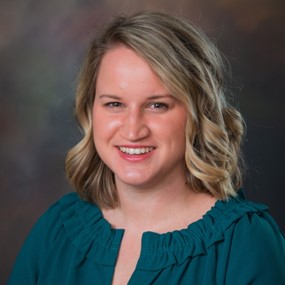
Dr. Chinnadurai Amutha serves as an Assistant Professor in the Paediatrics department at the Yong Loo Lin School of Medicine, National University of Singapore . Her research spans multiple domains including pediatrics, maternal-child health, clinical psychology, and public health. Key research areas: Pediatrics, maternal mental health, developmental psychology, neonatal resuscitation, ethnic-specific growth charts, and perinatal nutrition Notable contributions: Development of ethnicity-specific neonatal growth charts, pandemic response frameworks for neonatal care, and longitudinal studies on maternal feeding patterns Her publications reveal a focus on maternal-child health outcomes , with particular emphasis on: Quality improvement initiatives in pediatric mental health screening Clinical guidelines for neonatal resuscitation during pandemics Ethnic differences in gestational diabetes screening Impact of maternal feeding patterns on neonatal brain development Adiposity pathways in Asian neonates Postpartum practices across ethnic groups
Sabina Mandić serves as an Assistant Professor in the Department of Behavioural Disorders at the Faculty of Education and Rehabilitation Sciences, University of Zagreb, where she contributes to undergraduate and graduate programs including Rehabilitation, Social Pedagogy, and Educational Rehabilitation. Her research centers on Behavioral Disorders and Educational Rehabilitation , with strong connections to Special Education and Psychology . This work aligns with the faculty's doctoral programs in Prevention Science and Disability Studies, emphasizing evidence-based interventions for diverse populations. The Faculty maintains specialized research infrastructure including the Laboratory for Prevention Research and Laboratory for Psycholinguistic Research, which support interdisciplinary investigations into behavioral mechanisms and rehabilitation methodologies across multiple laboratories focused on hearing, speech, motor behavior, and sign language.
Helena Lindgren is a Professor at the Karolinska Institutet within the Department of Women's and Children's Health , specializing in reproductive health. She serves as a guest professor at the University of Gondar since 2017 and is active in the Swedish Midwives Association 's international committee and education board. PhD in Women's and Children's Health (Karolinska Institutet, 2008) Affiliated to Research (2023-2026) Her research focuses on models of care for optimal perinatal outcomes , including epidemiological studies, complex interventions, and qualitative evaluations. She innovated the MIMA-model (Midwives' Management during second stage of labor) which reduces perineal injuries. Her work spans Sweden, Ethiopia, Uganda, Kenya, and Malawi, addressing maternity care quality, migrant health, and midwifery-led frameworks. Recent publications examine fetal movement counseling, waterbirth safety, migrant maternity experiences, and midwife-led care implementation in African contexts. She contributes to tools like the MIDWIZE conceptual framework for midwifery resource planning.
June Thorvaldsen Forsberg is an Associate Professor at UiT The Arctic University of Norway , affiliated with the Regional Knowledge Center for Children and Youth, North (RKBU North) and the Research Group for Health Promotion and Preventive Measures . Her work focuses on implementing and evaluating psychosocial interventions for vulnerable populations, particularly refugee children and families. Research Areas: Traumatic stress, PTSD, school functioning in crisis zones, educational opportunities in conflict areas, parenting support for refugee families, neurobiological development, psychometrics, and meta-analysis. Teaching: Developmental psychology, biological psychology, psychological trauma mechanisms, and crisis pedagogy. Her recent publications (2023-2025) analyze refugee family integration, trauma-informed school programs, and the psychological impact of pandemics and conflicts. Key collaborations include the Better Learning Program and the PIRM study , focusing on refugee parenting interventions. She contributes to public outreach through podcasts like Hverdagspsyken and media commentary on Gaza children's trauma.
Professor David Copland at The University of Queensland is a leading speech pathologist and researcher in aphasia and language neuroscience. He directs the Queensland Aphasia Research Centre (QARC) and co-directs the STARS Education & Research Alliance and NHMRC Centre of Research Excellence in Aphasia Rehabilitation. His work focuses on post-stroke language disorders, neural recovery mechanisms, and high-dose aphasia treatments like CHAT. Bachelor (Honours) in Speech Pathology Researcher in aphasia, language neuroscience, and neuroimaging Research Interests include: Post-stroke aphasia treatment Neurobiological predictors of language recovery Dopamine's role in language learning Effects of sleep/exercise on word acquisition Implementation science in aphasia rehabilitation His grants include NHMRC CRE in Aphasia Rehabilitation, MRFF Bridging the Digital Divide, and UQ LIFT program funding. He supervises PhD students in: Communication partner training for bilingual patients Neuroimaging predictors of aphasia recovery Cost-effectiveness of aphasia rehabilitation Virtual reality therapy for communication disorders Recent publications analyze CHAT implementation, neural markers of language recovery, and cross-disciplinary interventions in aphasia. He leads multicenter trials on high-dose therapy and collaborates with Metro North Health Service and La Trobe University.
Lynne E. Levato, Ph.D., is an Associate Professor in the Department of Pediatrics at the University of Rochester Medical Center (URMC), specializing in Developmental and Behavioral Pediatrics. Her clinical and research work focuses on improving outcomes for children with autism spectrum disorder (ASD) and comorbid conditions through behavioral interventions, parent training, and school-based strategies. Academic Affiliation: URMC, School of Medicine and Dentistry Clinical Focus: ASD assessment, developmental disabilities, literacy development, behavioral interventions Dr. Levato’s research investigates the intersection of ASD with ADHD, anxiety, and learning disabilities, emphasizing evidence-based practices for treatment. Her publications highlight randomized controlled trials (RCTs) on parent training, modular behavioral approaches, and technology-assisted interventions like iOS apps and urine alarms for toileting and feeding challenges in ASD. She has contributed to high-impact journals such as the Journal of the American Academy of Child and Adolescent Psychiatry and Autism Research . Recent trends in her work include community-partnered interventions, self-regulation strategies, and adaptive behavior outcomes. Dr. Levato also explores school psychology applications, including contingency space analysis and experimental behavior analysis under naturalistic conditions. Scientific Awards: Leadership Education in Neurodevelopmental Disabilities and Related Disorders (LEND) Fellow Postdoctoral Fellow in School Psychology
Patricia Lanzon is an Assistant Professor and Coordinator of Early Level Education at the Division of Management and Education , University of Pittsburgh. With a PhD in Educational Psychology (Wayne State University) and additional degrees in Educational Psychology, Educational Administration, and Social and Philosophical Foundations of Education (Florida State University), she specializes in early childhood education , evidence-based teacher preparation , and continuity of mental health services . Her career spans classroom teaching, administration, and leadership in education programs, including co-authoring a children's book on disability representation. Education: PhD in Educational Psychology (Wayne State, 2000), MEd in Educational Psychology (Wayne State), EdS in Educational Administration (Florida State), MSc in Social/Philosophical Foundations of Education (Florida State), BSc in Communications/Theater Arts (Eastern Michigan) Research Interests: Patricia focuses on the relationship between early childhood education programs and secondary education outcomes , with emphasis on literacy , mental health continuity , and universal design for learning (UDL) . Her work aligns with social justice and inclusive education to support diverse learners and families. Academic Contributions: Recent publications and presentations highlight family literacy programs , mental health service integration , and UDL implementation . These outputs span peer-reviewed journals, Authorea preprints, and conferences like the World Association for Infant Mental Health and International Association of Special Education, reflecting interdisciplinary engagement across education , psychology , and policy . Scientific Awards: The Empowered Woman Leadership Award, Empowered Consulting, 2019 Service & Leadership: She has served as a peer reviewer for journals like the AERA Annual Meeting and contributed to textbooks as reviewer and content expert. Her career also includes community outreach through recruitment speaking (Henry Ford College, 2004-2020) and advocacy for disability-inclusive narratives via co-authored children's literature.
Cyrena Hunt-Madden is a Lecturer in Speech Pathology at Charles Sturt University's School of Allied Health, Exercise and Sports Sciences. A Certified Practicing Speech Pathologist, she delivers clinical services across hospitals, community health centres, Aboriginal health centres, schools, and preschools with expertise in child speech, language, and communication. Her academic qualifications include: Master of Public Health, University of New South Wales (2023) Master of Speech Language Pathology, University of Sydney (2012) Bachelor of Arts in Psychology (2009) Her research bridges public health and speech pathology to advance health equity and social justice. She investigates systemic barriers to healthcare access for Aboriginal and Torres Strait Islander children and LGBTIQ+ families, emphasizing culturally safe co-designed models of care. Her work actively promotes inclusion in clinical practice and policy development through community partnerships. Recent publications demonstrate consistent focus on equity-driven speech pathology. Studies analyze urban Aboriginal children's access to services, stigma in healthcare for LGBTIQ+ families, and telepractice education innovations. These works collectively advocate for dismantling systemic barriers through culturally responsive frameworks and interdisciplinary collaboration. Her professional recognition includes: Highly Commended, Charles Sturt Excellence Awards: Social Responsibility (2023) Cyrena mentors Master of Speech Pathology students in paediatric language assessment, clinical reasoning, and cultural safety. She developed virtual work-integrated learning experiences to enhance telepractice competence. Her NSW Health project on LGBTIQ+ family experiences in maternity services directly informs curriculum development and clinical practice improvements through evidence-based recommendations. She actively collaborates with the Children's Voices Centre and maintains research networks focused on Aboriginal health innovation and speech pathology service transformation.
Dr. Bernhard Schuch serves as a Lecturer in Mathematics Education at the University of Regensburg's Faculty of Mathematics, a position he has held since 2001. Concurrently, he retired in 2019 from his distinguished 38-year career in Bavarian primary and secondary school education where he attained Senior Teacher status. His institutional roles include Regional Coordinator for SINUS mathematics programs in Upper Palatinate (2011-2019) and Government Training Officer for Primary School Mathematics (1992-2009). His academic credentials feature a Doctorate in Mathematics Education (1989), Second State Examination for Primary/Secondary Teaching (1981), and foundational studies in pedagogy and psychology at the University of Regensburg (1974-1978). 1974-1978: Primary/Secondary Teaching Studies with Pedagogy & Psychology 1978: First State Examination 1981: Second State Examination 1986-1990: Academic Councillor at Mathematics Education Chair 1989: Doctorate in Mathematics Education Dr. Schuch's research pioneers practical solutions for primary mathematics instruction, focusing on conceptual development in arithmetic and geometry. His work addresses persistent challenges like fraction comprehension errors, operational geometry teaching, and performance differentiation strategies. He investigates the critical balance between conceptual understanding and computational fluency through classroom field studies, emphasizing how young learners develop number sense and mathematical reasoning. His publication timeline (1983-1992) reveals evolving expertise from foundational didactics theory to targeted empirical studies on arithmetic errors and geometry instruction. Key thematic threads include cognitive development in number concept formation, practical applications of social support theory in teacher training, and evidence-based frameworks for differentiated mathematics instruction in heterogeneous classrooms. As an educator, Dr. Schuch mentors admissions theses for teaching candidates and conducts professional development workshops including "Good Tasks in Mathematics Lessons" and "Patterns and Structures" for primary educators. His institutional contributions extend to examination seminars for primary mathematics teachers and SINUS program leadership coordinating mathematics education improvements across Upper Palatinate schools. He maintains active engagement through continuing education courses for teachers and ongoing supervision of graduate theses, bridging academic research with classroom practice in primary mathematics education.
Maria Rosa Paterniti is a Lecturer at the University of Palermo's School of Medicine and Surgery, specializing in Speech Therapy, Rehabilitation Sciences, and Neuroscience. She actively supervises theses and provides clinical guidance at the Phoniatrics and Speech Therapy Unit. Research Interests: Her work focuses on auditory processing disorders, pediatric hearing loss interventions, augmentative communication technologies, and burnout prevention in rehabilitation professionals. She emphasizes neuroplasticity-driven therapies and multidisciplinary team strategies. Recent Trends: Over the past three years, her supervised theses have addressed clinical risk management , freelance healthcare models , and digital rehabilitation records , reflecting a blend of technological and policy-oriented approaches.
Penelope Collins , a Professor at the School of Education, University of California, Irvine , specializes in linguistically diverse literacy development from early childhood to high school, focusing on bilingual education, reading disabilities, and digital interventions. Her research integrates bilingual narrative tools literacy analytics language sampling methodologies educational technology to address equity in literacy outcomes. Recent publications explore AI-driven reading platforms writing pedagogy innovations language processing diagnostics STEM education access for English learners. Scientific Contributions Provost Faculty Fellow Leading meta-analyses on adolescent writing Developed digital tools for ADHD classroom management Early Grade Reading Assessment (EGRA) analysis
Daniela Conti is an Associate Professor of General Psychology (PSIC-01/A) at the Department of Humanities of the University of Catania, where she teaches various courses in general and developmental psychology. She holds the National Scientific Qualification (Full Level) in competitive sector 11/PSIC-01 and serves as Student Ombudsman, member of the Quality Committee, and member of the Doctoral School in Interpreting Sciences. Her academic background includes: Degree in Psychology with honors International Doctorate in Neuroscience Daniela Conti's research lies at the intersection of psychology, cognitive neuroscience, and advanced technologies, with a particular focus on assistive robotics for autism and intellectual disabilities. Her work explores how social robots can support psychoeducational interventions, human-robot interaction, cognitive technologies, and evidence-based neuropsychological approaches. She investigates applications of cognitive neuroscience to education and rehabilitation, with special attention to social inclusion and caregiver support through advanced technologies. Her publication record demonstrates a consistent focus on human-robot interaction in educational and clinical settings, particularly for neurodevelopmental disorders. Recent work emphasizes trust in human-robot interaction, cultural dimensions, social robotics in education, bilingualism through robotics, and psychological measurements in educational robotics. Her research shows a clear trajectory toward integrating advanced technologies with psychological principles to address real-world challenges in education and healthcare. Her scientific recognition includes: National Scientific Qualification (Full Level) in competitive sector 11/PSIC-01 (2021) Individual Marie Skłodowska-Curie Fellowship (CARER-AID project) Deputy Director of GEV Area 11b (Psychological Sciences), VQR 2020-2024, ANVUR Membership in Italian Psychological Association (AIP), American Psychological Association (APA), and EUCognition Registration with the Order of Psychologists of Sicily region (A 6007) As an advisor, Daniela Conti has guided numerous students through thesis projects focusing on psychology, neuroscience, bilingualism, social robotics, and cognitive technologies. She serves as Principal Investigator for research projects funded by the University of Catania (Pia.ce.ri.) and collaborates with national and international healthcare institutions and research centers. Her grant activities include European projects like CARER-AID and University of Catania-funded initiatives. Daniela Conti leads research activities through collaborations with Sheffield Hallam University (UK) and participates in multidisciplinary teams focused on assistive robotics, cognitive technologies, and neurodevelopmental disorders. Her work bridges psychology, cognitive neuroscience, and engineering disciplines to develop innovative solutions for educational and clinical settings.
Mahmoud Al Ammouri is a medical doctor and researcher affiliated with the School of Public Health at Imperial College London's Faculty of Medicine. He holds a Doctor of Medicine (MD) from Hashemite University, Jordan, and a Master of Public Health (MPH) from Imperial College London. As a Chevening Scholar, he focuses on enhancing self-care practices, mental and physical well-being, and addressing barriers to self-care through collaborative research at the Self-Care Academic Research Unit (SCARU). Education: MD (Hashemite University), MPH (Imperial College London) His research interests center on public health interventions, healthcare accessibility, and evidence-based strategies to improve self-care behaviors. He contributes to interdisciplinary projects aimed at bridging clinical practice and community health outcomes. Fluent in English and Arabic, he engages in peer review and academic discourse in both languages. While no specific grants or labs are detailed, his affiliation with SCARU positions him within a dedicated team advancing self-care research. No formal advisees or published articles are listed in the provided data.
Dr. Peter Branney is an Associate Professor at the University of Bradford's School of Social Sciences within the Faculty of Mgmt, Law & Social Sciences. He specializes in qualitative research methodologies, healthcare experiences, and open science practices. His work focuses on improving healthcare service delivery through patient-centered interventions and exploring barriers to equitable access. Notably, he co-authored the UK Department for Health's Gender & Access to Services Study and led the groundbreaking Patients' Experiences of Penile Cancer (PEPC) study featured on healthtalk.org and BBC Radio 4. Academically, Branney holds a BSc in Psychology and Philosophy, an MSc in Psychological Approaches to Health, and a PhD in Psychology. His career spans institutions including Leeds Metropolitan University and Leeds Beckett University before joining Bradford in 2017. He has been recognized as an Honorary Life Member of the British Psychological Society and a Fellow of the Higher Education Academy. His research interests encompass men's health, psycho-oncology, and public health policy. Recent work emphasizes open science frameworks for qualitative studies, including contributions to the British Journal of Social Psychology special issue and invited lectures at UK Research Integrity conferences. He advises doctoral candidates exploring topics like organizational listening, barriers to academic leadership for Black women, and sickle cell disease management. Award-winning educator, Branney has received student body accolades for teaching excellence in social psychology. He serves as an external examiner for psychology programs in the UK, Hong Kong, and Singapore, and has contributed to national projects like the People in Public Health initiative. His current projects include the Back Onside physical activity intervention and the InPACT trial for penile cancer treatment evaluation. Key achievements include over 100 peer-reviewed publications, four top-cited papers in penile cancer quality-of-life research, and the development of a context-consent meta-framework for open data studies. His work bridges theoretical innovation with practical healthcare applications, emphasizing ethical rigor and participatory methodologies.
Lydia Allison is a Clinical Assistant Professor in the Department of Speech, Language & Hearing Sciences at Auburn University. She specializes in clinical instruction and supervision of graduate students in speech-language pathology practicum at the Auburn University Speech and Hearing Clinic (AUSHC). Her clinical and research interests focus on cognitive-communication deficits post-acquired brain injury and adult/pediatric dysphagia. She holds a certification as a Certified Brain Injury Specialist. Education: Both undergraduate and graduate degrees from Auburn University, details unspecified. Research Interests: Explores neurogenic communication disorders, instrumental feeding evaluations for pediatric populations, and clinical strategies for managing swallowing disorders. Her work bridges acute care rehabilitation and outpatient clinical practices, emphasizing evidence-based interventions for neurogenic conditions. Awards: Certified Brain Injury Specialist designation reflects her expertise in traumatic brain injury rehabilitation. Advising/Grants: Supervises graduate student clinicians but no specific grants mentioned. Lab affiliations include AUSHC where she integrates clinical training with academic rigor.