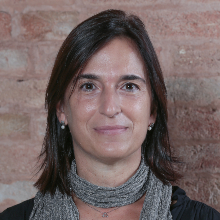
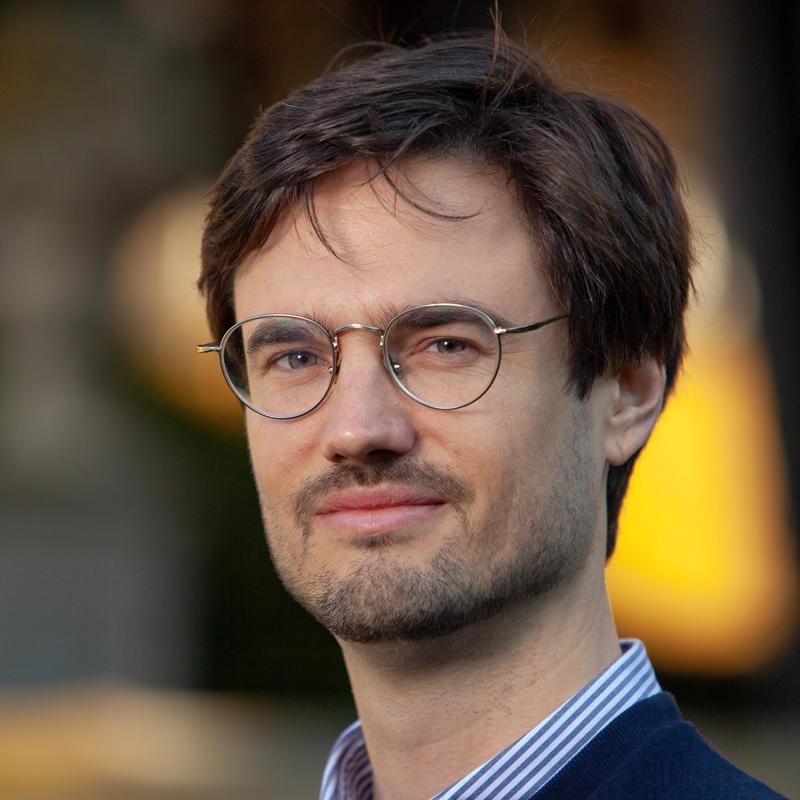
Tindara Addabbo is a Full Professor at the Department of Economics 'Marco Biagi' of the University of Modena and Reggio Emilia. Her academic roles include teaching and research in economic policy, labor economics, and gender equality. She coordinates courses such as 'Introduction to Macroeconomics,' 'Sustainability Report,' and 'Labour and Industrial Economics' at both undergraduate and master's levels. Her research focuses on gender wage gaps, LGBTQI+ workplace inequalities, gender budgeting, and inclusive teaching methodologies like Team-Based Learning (TBL). Her educational background aligns with her academic career, though specific details are not explicitly stated. She actively participates in institutional reforms to promote gender equality in academia, including the development of Gender Equality Plans (GEPs) and gender-auditing frameworks. Research interests span labor market dynamics, policy impacts on well-being, and sustainable development goals. Notable projects include analyzing gender disparities in wages and employment, the role of corporate policies in reducing inequality, and the effects of the green transition on work quality. Her publications emphasize evidence-based approaches to gender equality, academic inclusivity, and policy evaluation. She collaborates with international organizations and contributes to EU initiatives on social and economic policy.
Orazio Giancola is Associate Professor at the Department of Social and Economic Sciences, Sapienza University of Rome. His research focuses on social research methodologies, educational inequality analysis, and policy evaluation in Italian and comparative contexts. He teaches courses such as Applied Social Research Methodology , Research Methods for Social Policies , and data analysis techniques. Research Interests : Sociology of education, social stratification, big data analytics, educational equity, tertiary education access, and policy evaluation. Key Projects : School experiences and educational choices in the post-pandemic landscape (Rome high school survey). His recent publications examine educational poverty , digital technology disparities , and policy impacts in Italy and Europe. Articles employ multivariate analysis and logistic modeling to explore structural inequalities. No scientific awards are currently documented.
Marco Maretto is Associate Professor of Architecture and Urban Design at the Department of Engineering and Architecture, University of Parma, Italy. He has held academic positions at Sapienza University of Rome and the University of Florence, and is a founding member and Vice-President of ISUFItaly, the Italian chapter of the International Seminar on Urban Form. He co-directs the international journal U+D. Urban form and Design and serves on multiple scientific committees and editorial boards. Ph.D. in Architecture, University of Genoa (2002) 5-Year Degree in Architecture, Sapienza University of Rome (1998) His research focuses on Urban Morphology , Sustainable Urban Design , and Environmental Urban Design , emphasizing the integration of urban form, sustainability, and societal well-being. He investigates how urban fabrics influence climate resilience, public space quality, and neighborhood identity, often employing GIS, pedestrian tracking, and 3D urban surveying. His work bridges historical analysis with contemporary design challenges, particularly in medium-sized European cities and historic urban centers like Venice. His most recent publications explore sustainable neighborhoods, thermal resilience of open spaces, and pedagogical approaches to urban morphology. These works reflect a cohesive trajectory toward evidence-based, environmentally responsive urban design. Key themes include smart living integration, urban regeneration, and the redefinition of urban beauty through sustainability. Scientific Referee: Urban Morphology , Urban Design International , Sustainability , Buildings , Urban Science , City, Territory and Architecture Advisory Editor: The Urban Book Series , Springer Founder and Co-Director: U+D. Urban form and Design Council Member: ISUF (2010–2016), CISPUT (2017–present) Maretto has advised over 25 Master’s theses and multiple PhD students, primarily at the University of Parma and Sapienza University of Rome. He leads and contributes to major international research projects, including EU-funded initiatives such as KAEBUP (Erasmus+) and ARCHEA , focusing on evidence-based urban practices and sustainable urban development. He also organizes international design workshops (WAM) and conferences on urban regeneration, involving institutions like ETSAB Barcelona, UPV Valencia, and FEUP Porto. He is a member of the U.A.L. (Urban and Architectural Laboratory) at the University of Parma, where he leads participatory urban regeneration projects in the Emilia-Romagna region, including Casina Collaborator and Collaboratorio Vetto. His work demonstrates a strong commitment to public engagement, interdisciplinary collaboration, and the practical application of urban research.
Stefano CAMPOSTRINI is a Full Professor in the Department of Economics at Ca' Foscari University of Venice, specializing in Social Statistics (STAT-03/B). He serves as a Member of the technical-scientific Committee of the Ca' Foscari Challenge School and the Department of Economics' Committee. His research activities are supported by affiliations with the Research Institute for Social Innovation and the Research Institute for Innovation Management. Professor CAMPOSTRINI's research spans the intersection of statistical methodology, public health, and social policy. His work demonstrates expertise in advanced statistical techniques including Bayesian modeling, spatial analysis, and complex survey methodology. His primary focus areas include healthcare systems analysis, social innovation, public administration, and the economic aspects of health policy. He frequently addresses issues related to comorbidity patterns, healthcare service accessibility, and the application of artificial intelligence in healthcare settings. His publication record from 2021-2025 reveals significant trends in healthcare innovation, with particular emphasis on virtual hospital systems, AI applications in medicine, sustainable healthcare practices, and the statistical analysis of social services like early childhood education. His methodological contributions include novel approaches to analyzing regional health disparities and developing web-based tools for disease prevalence estimation. His research often employs expert consensus methods like Delphi techniques to address complex healthcare organizational challenges. Professor CAMPOSTRINI maintains active involvement in research initiatives through the Research Institute for Social Innovation and the Research Institute for Innovation Management. His work bridges advanced statistical methodology with practical applications in healthcare policy and social service delivery, making significant contributions to evidence-based decision making in public health and social policy domains across Italy and European contexts.
Marco Lazzari is a Full Professor at the University of Bergamo in the Department of Human and Social Sciences. His research focuses on educational technology integration, digital storytelling applications in teaching, and inclusive education methodologies. Previously he served as Department Head (2018-2024) and coordinates doctoral studies in Human Sciences and Welfare Innovation. Education Background: Ph.D. in Computer Science M.S. in Information Sciences B.S. in Information Sciences Research Interests: Digital storytelling for inclusive pedagogy Educational robotics applications Technology-mediated distance learning Teacher training in digital literacy Social media's educational impact His recent publications demonstrate strong focus on educational technology in post-pandemic contexts, inclusive robotics programs, and digital storytelling frameworks. Research trends include addressing educational disparities through technology, evaluating pandemic learning impacts, and developing sustainable digital pedagogies across educational levels. Scientific Awards: No major awards listed in provided materials As Director of the Educational Technologies Center (2005-2018), he established technology-enhanced learning initiatives. Currently supervises doctoral students investigating educational technology efficacy, digital inclusion, and robot-assisted learning. Research collaborations span computer science, pedagogy, and special education disciplines. Laboratory Focus: Educational robotics implementation Digital storytelling frameworks Teacher technology training programs Accessibility in educational technology
Barbara Penolazzi is an Associate Professor of Clinical Psychology at the University of Trieste's Department of Life Sciences. She serves as a member of the Department's Board, coordinates Course of Study Advice for Psychological Sciences and Techniques, and participates in multiple Doctoral Colleges for Neuroscience and Cognitive Sciences across numerous academic cycles. As the leader of the Clinical Psychology research group, her work focuses on "Typical and atypical development during lifespan" within the Psychology research area. Department Council - Member Course of Study Advice - Coordinator (Psychological Sciences and Techniques) Boards of Studies - Member (Clinical Psychology, Developmental Psychology and Neuropsychology) Doctoral Studies Boards - Member (Neural and Cognitive Sciences across multiple cycles) Professor Penolazzi's research spans clinical psychology, neuropsychology, and psychological well-being with emphasis on emotional intelligence, cognitive processes in various disorders, and brain mechanisms. Her work integrates experimental psychology with clinical applications, particularly using transcranial direct current stimulation to investigate neural mechanisms underlying decision-making, moral cognition, and memory processes. She has made significant contributions to understanding psychological mechanisms in eating disorders, schizophrenia, and addiction through a transdiagnostic lens. Her extensive publication record demonstrates consistent focus on the intersection of cognitive neuroscience and clinical psychology. Recent work examines neural underpinnings of voluntary action, environmental sensitivity as a personality trait, and interventions for fostering emotional intelligence in preadolescence. Her research employs diverse methodologies including neurostimulation techniques, psychometric validation studies, and experimental paradigms to investigate cognitive control mechanisms across various clinical populations. Professor Penolazzi currently serves as Scientific Manager for two significant research projects funded by the Ministry of University and Research: "PROBEN_0000008 - Promotion of the Well-Being of the University Community - PRO-BENE-COMUNE" and "10% Trentin Silvia - 100% MUR". These projects reflect her commitment to applying psychological science to address contemporary mental health challenges within academic communities and beyond. Within the Department of Life Sciences, Professor Penolazzi leads the Clinical Psychology research group that investigates typical and atypical developmental trajectories across the lifespan. Her team employs a multidisciplinary approach combining cognitive neuroscience methods with clinical assessment to understand the mechanisms underlying various psychological conditions and to develop evidence-based interventions.
Alessandro Di Vita is an Associate Professor at the Department of Psychological, Pedagogical, Physical Exercise and Training Sciences, School of Medicine and Surgery, Università degli Studi di Palermo (UNIPA). His work centers on educational psychology, career orientation, and pedagogical methodologies for adolescents and university students. Research Interests: Expressive writing for life planning, self-efficacy development, performance anxiety management, peer tutoring, and intercultural education. Key Projects: «Telemaco» (remote peer tutoring), «FOrCe» (career guidance interventions), and «FOrP» (school-university transition). Collaborations: Worked with international institutions like Universidad Austral (Argentina) and Universidad de Estudios de Palermo (Italy). His publications from 2007–2025 reflect a consistent focus on adolescent relationships, educational reform, and digital pedagogy. He has contributed to validation studies for psychological scales like the Worry Emotionality-Junior (WE-J) and developed methodologies such as «SeCo» for post-diploma decision-making. Alessandro also emphasizes Student Voice in educational processes, promoting active participation and resource utilization. Recent works include international comparative studies on peer tutoring and training programs for secondary school teachers.
Donatella Strangio serves as Professor of Economic History and Director of the Department of Methods and Models for the Economy, Territory and Finance (Memotef) at Sapienza University of Rome. She also holds the position of Deputy Rector for Chile and Brazil in the Latin America and Caribbean region. Her academic leadership extends to directing international research projects including the European Project PNRR Changes 5 and the Jean Monnet Project EUMCHA. Her research spans economic development and underdevelopment, financial history, tourism economics, international migration patterns, and colonial-decolonization processes. She examines these topics through historical lenses, particularly focusing on pre-industrial economic systems, 20th century European history, famines, food policies, and institutional evolution. Her work often bridges historical analysis with contemporary policy challenges. Professor Strangio's recent publications demonstrate strong thematic coherence across economic history, with particular emphasis on resilience mechanisms during crises, migration as knowledge transmission, and tourism's economic dimensions. Her scholarship shows consistent engagement with both Italian and global contexts, especially regarding Mediterranean and Latin American connections. She actively mentors through multiple master's programs including the Master in Migration and Development and the Master in Tourism Economics and Management. Her leadership in the Civis short-term courses on Crisis Sustainability and Cultural Heritage Enhancement demonstrates commitment to innovative teaching approaches. Professor Strangio directs significant research initiatives including the Spoke9 of PNRR Cultural Heritage and coordinates the Scientific Guarantee Committee for the 'Repertory of Italian banks from 1861 to today.' Her international collaborations span Columbia University, Universidad de Quilmes, University of Adelaide, London School of Economics, and numerous Latin American institutions.
Matteo Mario Pietro Motterlini is a Full Professor of Philosophy of Science at Università Vita-Salute San Raffaele in Milan, where he is affiliated with the Faculty of Philosophy. He is the director of the Center for Research in Experimental and Applied Epistemology (CRESA) and the Behavior Change Lab, and collaborates with the Cognitive Neuroscience Center and Division of Neuroscience. He holds teaching responsibilities in Cognitive Economics and Neuroeconomics, and Behavior Change, and serves on the university's academic committee. Università degli Studi di Milano – Philosophy London School of Economics – Economics Carnegie Mellon University – Cognitive Science His research lies at the intersection of philosophy, behavioral economics, and cognitive neuroscience, focusing on human rationality, decision-making processes, emotions, regret, and social learning, particularly in economic and financial contexts. He investigates how behavioral science can inform public policy and improve organizational practices. His work integrates experimental methods with neuroimaging to uncover the neurobiological foundations of judgment and choice. The recent publications highlight a strong trend in applying behavioral and cognitive sciences to societal challenges such as vaccine hesitancy, disinformation, charitable giving, and policy design. His work combines empirical rigor with philosophical depth, exploring topics like the epistemology of nudges, truth perception, and the role of expert endorsement. The integration of neuroscience, psychology, and economics is evident across his research output. Chief Behavioral Officer, E.ON Italia Spa Chief Behavioral Officer, Gruppo San Donato Scientific Advisor, MilanLab (AC Milan) Scientific Advisor, MarketPsych LLC Advisor for Behavioral Finance, Fidelity (Growth, Income & Stability project) Advisor for Social and Behavioral Sciences, Presidency of the Council of Ministers (Italy) He has received no explicitly mentioned scientific awards in the provided text. However, his advisory roles in high-impact public and private institutions reflect recognition of his expertise. His books are international bestsellers, translated into multiple languages, indicating broad scholarly and public influence. Motterlini has been actively involved in public engagement through collaborations with Corriere della Sera, Il Sole 24 Ore, and Il Foglio. He has delivered keynote lectures and participated in public festivals and media appearances, including on Sky TG24. He has advised on financial education (EDUFIN) and participated in events on longevity risk, health, and sustainability. His research is supported by interdisciplinary collaborations and applied projects with industry partners. He leads two major research units: the Center for Research in Experimental and Applied Epistemology (CRESA) and the Behavior Change Lab (also referred to as the E.ON Customer Behavior Lab), which focus on biometric and neuroscientific analysis of behavior. These labs serve as hubs for experimental research in decision-making, nudging, and behavioral interventions in health, finance, and sustainability.
Michele Gattullo serves as an Assistant Professor within the Department of Mechanics, Mathematics & Management at the Polytechnic University of Bari, Italy, specializing in design methods for industrial engineering (ING-IND/15). His research bridges cutting-edge extended reality technologies with practical industrial applications, focusing on human-centered solutions for manufacturing, maintenance, and workplace design. Dr. Gattullo's research portfolio centers on Augmented Reality, Virtual Reality, and Biophilic Design, with significant contributions to Human-Computer Interaction in industrial contexts. He investigates how nature-inspired elements in virtual workspaces enhance employee well-being and productivity, while simultaneously developing practical AR tools for assembly guidance, technical documentation, and maintenance support. His work uniquely integrates ergonomics, cognitive psychology, and industrial engineering to optimize human-technology interaction in complex production environments. Analysis of his 15 most recent publications reveals two dominant research trajectories: biophilic design frameworks for virtual/metaverse workspaces (2023-2025) and industrial AR authoring methodologies. The biophilic stream establishes evidence-based guidelines for digital nature integration, while the AR stream delivers validated tools like ADAM and minimal AR approaches that streamline technical documentation creation. Both trajectories emphasize user experience validation through rigorous industrial studies, demonstrating strong interdisciplinary impact across computer science, industrial engineering, and environmental psychology. Scientific Awards: No awards or honors were documented in the available sources. Advising and Grants: The provided materials contain no information regarding graduate student supervision, research grants, or funding sources. His academic profile emphasizes publication output over mentoring activities or project financing details. Laboratories and Teams: While Dr. Gattullo's research involves advanced XR technologies, the source text does not specify laboratory facilities, research groups, or collaborative teams associated with his work at Politecnico di Bari.
Dr. Ala Alrababah is an Assistant Professor in the Department of Social and Political Sciences at Bocconi University, with affiliations including the Evidence in Governance and Politics (EGAP) network, Immigration Policy Lab (IPL) at ETH Zurich and Stanford, BAFFI Center on Economics, Finance and Regulation at Bocconi, and the Abdul Latif Jameel Poverty Action Lab (J-PAL). She holds a Ph.D. in Political Science from Stanford University (2021). Her research examines immigration, refugees, and political violence using innovative mixed-methods approaches combining fieldwork with experimental and computational techniques. Primary domains include comparative analysis of migration policies, conflict dynamics in the Middle East, prejudice reduction strategies, and quantitative analysis of political discourse. She maintains active field research programs focused on Syrian refugee communities. Publications demonstrate consistent focus on migration policy impacts, refugee decision-making, and political violence analysis across multiple contexts. Computational methods feature prominently alongside field experiments, with strong methodological contributions to survey research and text analysis. As an active member of international research networks, Dr. Alrababah collaborates on large-scale projects examining refugee integration policies, transitional justice mechanisms, and political behavior in conflict regions. Her work has received international media coverage in outlets including The Economist, Foreign Policy, and BBC Arabic.
Nicoletta Corrocher is a Lecturer in Applied Economics at Bocconi University and Research Fellow at ICRIOS (Invernizzi Center for Research on Innovation, Organization, Strategy and Entrepreneurship). She holds a PhD in Economics and Management of Innovation from Sant'Anna School of Advanced Studies and an MSc in Science and Technology Policy from SPRU, University of Sussex. Her research focuses on innovation dynamics, digital transformation, and sustainability, particularly in ICT industries and service sectors. Key areas include eco-innovation, technology diffusion, and policy impacts on innovation adoption. Her teaching portfolio includes courses such as Innovation in Services , Innovation, Growth and Sustainability , and Entrepreneurship Lab , emphasizing critical thinking and real-world application. Recent research explores algorithmic decision-making fairness, unintended effects of environmental policies, and SME digitalization strategies. Corrocher’s work spans empirical analyses of green technology catch-up, mobile commerce adoption, and cluster policy effectiveness. Her contributions appear in journals like Research Policy , Regional Studies , and Industry and Innovation . Ongoing projects address digitalization-sustainability complementarity in SMEs and the role of science in green technologies. Her research highlights include studies on patent growth in environmental technologies, personalized pricing in telecom, and the 'resource curse' in European regions. She advises on innovation policy design, emphasizing evidence-based approaches to bridge theory and practice. Labs and collaborations involve interdisciplinary teams at ICRIOS, focusing on innovation ecosystems, sustainable transitions, and digital economy dynamics. Her work integrates quantitative methods with institutional analysis to address global challenges in innovation and development.
Silvia BOZZA is an Associate Professor in the Department of Economics at Ca' Foscari University of Venice, where she also serves as Department Delegate for Teacher Training for High Schools. Her academic profile is centered around Statistics (SSD STAT-01/A), with a strong focus on forensic applications of statistical methods. She maintains dual institutional affiliations, working within both the Department of Economics (based in San Giobbe) and the Interdepartmental School of Economics, Languages and Entrepreneurship for International Exchanges (located in Treviso - Palazzo San Paolo). Professor BOZZA's research primarily explores the application of Bayesian statistics to forensic science and legal evidence evaluation. Her work demonstrates a consistent trajectory from early publications on spatio-temporal models to her current specialized focus on forensic statistics. She has developed expertise in probabilistic graphical models, Bayes factors, and statistical decision theory as applied to evidence interpretation. Her research addresses critical questions in forensic science regarding how to properly evaluate and communicate statistical evidence in legal contexts, with particular attention to handwriting analysis, DNA evidence, and authorship attribution. Her publication record shows remarkable consistency and productivity, with over 90 publications spanning from 2001 to 2025. Recent work (2022-2025) demonstrates her ability to address contemporary challenges, including AI authorship discrimination using Bayesian methods for distinguishing human from ChatGPT-generated text. Her articles frequently appear in high-impact forensic and statistical journals including Law, Probability & Risk, Forensic Science International, and Annual Review of Statistics and its Application. Professor BOZZA actively supervises undergraduate and graduate theses involving data analysis, requiring knowledge of statistical software including the R programming language used in the Statistics for Economics Laboratory course. She encourages students to propose topics while offering guidance to refine research questions. Her office hours show she maintains regular availability for student consultations, indicating active engagement in academic mentoring.
Mauro Maggi is a Full Professor of Iranian Philology (L-OR/14) at Sapienza University of Rome since 2019, affiliated with the Italian Institute of Oriental Studies. Born in Como, he studied in Milan, Naples, and Hamburg, previously serving as Associate Professor at the University of Naples L'Orientale and as a librarian at the Italian Institute for Africa and the East in Rome. His research focuses on Khotanese language/texts, Central Asian Buddhism, Iranian language history, and New Persian development. Key Publications: The Khotanese Karmavibhaṅga (1995), Pelliot chinois 2928 (1997), and edited volumes like Buddhism among the Iranian peoples of Central Asia (2013) and A turquoise coronet (2020). Research Trends: His 2019-2023 articles analyze Khotanese Buddhist texts (e.g., Pradakṣiṇasūtra ), lexical evolution (e.g., maṇḍvaï- etymology), and scriptural parallels between Khotanese and Indian sources. He also investigates orthographic history, manuscript restoration, and Indo-Iranian linguistic borrowings. Collaborations: Frequent co-editor with scholars like Mohsen Ashtiany, Matteo De Chiara, and Alessandro Del Tomba.
James Dennison is a Part-time Professor at the Migration Policy Centre of the European University Institute in Florence and the 2025/26 Pierre Keller Professor at the Harvard Kennedy School. He directs the Observatory of Public Attitudes to Migration (OPAM) at the Migration Policy Centre, focusing on understanding public perceptions and attitudes toward migration across different regions and contexts. Dennison holds a PhD from the European University Institute and has held academic positions at prestigious institutions including Harvard University, Stanford University, the University of Stockholm, and the University of Oxford. His international academic experience has contributed to his broad perspective on migration studies and political behavior. His primary research interests include political attitudes, behavior, and communication, with a specific focus on migration and quantitative methods. Dennison's work examines attitudinal formation, social scientific methodology, and political behavior across diverse geographic areas including Europe, the Far East, and the Arab world. His research employs rigorous quantitative approaches to understand complex social phenomena related to migration and political attitudes. Dennison's recent publications demonstrate a clear trend toward examining migration narratives, public opinion on immigration, and strategic communication approaches. His work bridges academic research with practical policy applications, focusing on how evidence-based solutions can address migration challenges. The interdisciplinary nature of his research combines insights from political science, sociology, and communication studies to develop comprehensive understandings of migration dynamics. Among his notable recognitions is the prestigious appointment as the 2025/26 Pierre Keller Professor at the Harvard Kennedy School, highlighting his significant contributions to the field of migration studies and political behavior. Dennison has secured numerous grants and international collaborations throughout his career. He regularly advises major international organizations including the United Nations, European Commission, OSCE, IOM, and ICMPD, as well as political parties, NGOs, and private sector organizations. His evidence-based approach helps these entities develop effective strategies for managing migration-related challenges and implementing evidence-based solutions. As director of the Observatory of Public Attitudes to Migration (OPAM), Dennison leads a research team focused on tracking and analyzing global attitudes toward migration. His work includes developing the Migration Communication Campaigns Database, which provides valuable resources for researchers and policymakers interested in understanding how communication strategies influence public perceptions of migration.