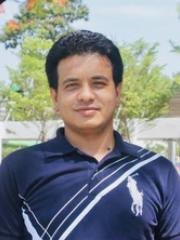
Andy Stevens is a Senior Lecturer in Sport Management at the University of Winchester. His career includes roles as a consultant to the Football Association (FA), focusing on five-a-side football and futsal development, including strategies for the FA Futsal League and facility strategies. He has authored numerous reports for the SportBusiness Group and contributed to Sport Business magazine, specializing in venue and event management. His research explores sport industry strategy, management, and performance, with notable work on sport governance and facility development. His publications span academic journals, industry reports, and conference presentations, addressing topics like sport venue optimization, sustainability, and global sport events as soft power tools. He has advised organizations such as the Anschutz Entertainment Group and Disability Sport England (now Activity Alliance), contributing to event calendars including the London Wheelchair Marathon. His work bridges academic research and practical industry challenges, emphasizing adaptability and innovation in sport management.
Elizabeth Miller serves as Department Chair and Professor of Marketing at the Isenberg School of Management, University of Massachusetts Amherst. Her academic leadership includes roles as PhD Coordinator since 2013 and prior appointments as Assistant and Associate Professor at UMass and Boston College. Her research centers on affect-driven consumer behavior , with specialization in health decisions, consumer well-being, and social impact. Key themes include emotional influences on information processing, CSR authenticity, and crisis-driven behavioral shifts during events like the COVID-19 pandemic. Her work bridges marketing theory with practical applications in food security, medical decision-making, and sustainable consumption. Miller's recent publications reveal strong trends in emotional drivers of pro-social behavior (e.g., awe in environmental actions, community philanthropy during crises) and methodological innovation in health communication (e.g., data visualization for medical choices). Her scholarship increasingly focuses on collective well-being frameworks and youth-led social entrepreneurship ecosystems. Best Research Paper, Direct/Interactive Marketing Research Summit (2013) Research Excellence Award, Isenberg School (2013) Mellon Mutual Team Mentorship Grant (2012) As PhD Coordinator, she mentors doctoral candidates in consumer behavior and experimental design. Her teaching spans doctoral seminars on experimental methodology to undergraduate courses in advertising and services marketing. Miller directs research partnerships with social impact organizations, focusing on food access equity and community resilience building. Her lab initiatives emphasize translational research through collaborations with public health agencies and social enterprises, particularly in post-pandemic food systems and medical decision support tools. Current projects explore linguistic humanization of service robots and youth entrepreneurship ecosystems.
Daniel Geiger is a Professor and Chairholder of Organization Studies at the University of Hamburg , Faculty of Economics and Social Sciences, Department of Social Economics. He has previously held professorial positions at the University of Kaiserslautern and the University of Linz. He earned his PhD from Freie Universität Berlin and conducted postdoctoral research at the University of Liverpool. He is an internationally recognized scholar in organization theory, with a focus on organizational routines, crisis management, and practice-based research. Education: Dipl.-Kfm. in Business Administration, Freie Universität Berlin; PhD in Management, Freie Universität Berlin (2005); Habilitation, University of Linz (2009). Professional Experience: Professor, University of Hamburg (2013–present); Professor, University of Kaiserslautern (2010–2013); Assistant/Associate Professor, University of Linz (2007–2009); Research Fellow, University of Liverpool (2005–2007). Prof. Geiger’s research centers on the dynamics of organizational routines in crisis and emergency contexts. He employs ethnographic methods and has collaborated with organizations such as the Uganda Red Cross, Feuerwehr Hamburg, and Technisches Hilfswerk. His work explores how time, space, and paradox shape coordination in extreme situations. His recent publications reveal a deepening focus on temporal elasticity, granularity in routine studies, and multi-actor dynamics in legitimacy repair and crisis response. He has contributed significantly to journals like Administrative Science Quarterly , Organization Studies , and Organization Science . His scientific contributions have been recognized with awards including the Douglas McGregor Memorial Award (2010) and the Best Paper Award for Young Scholars (2009). He serves on the editorial boards of Organization Studies , Management Learning , and European Management Journal , and is an active member of EGOS, including its Executive Board and Standing Working Group on Managing in Extreme Contexts. Prof. Geiger has advised several doctoral students and junior researchers, including Dr. Iris Seidemann and Pia Geisemann. He has led international research projects and held visiting appointments at the University of California, Irvine, and the Uganda Management Institute. His work combines theoretical rigor with practical relevance, particularly in humanitarian and emergency management contexts.
Carita Paradis is a Professor Emerita at Lund University's Centre for Languages and Literature, specializing in English Linguistics. She holds a PhD from Lund University (1997) and has held leadership roles including Chair of the Swedish Research Council's Linguistics panel (2010–2015). She coordinates the Language, Cognition and Discourse@Lund (LCD@L) research group, focusing on discourse meaning, language acquisition, and sociocultural variation. Her research spans cognitive linguistics, discourse analysis, semantics, and sensory language. She has authored/co-authored over 100 refereed publications, 5 books, and edited 10 journal volumes. Awards include membership in Academia Europaea (2016) and leadership roles in Scandinavian linguistic associations. She has supervised 14 PhD students and 8 postdocs, taught at all academic levels, and participated in numerous national/international research projects. Her editorial roles include serving on Cognitive Semantics, Languages, and Human Cognitive Processing series.
Roger Flage is a Professor of Risk Management at the University of Stavanger, affiliated with the Faculty of Science and Technology and the Department of Security, Economics and Planning. His research focuses on foundational and applied aspects of risk analysis, uncertainty quantification, and decision-making under uncertainty, with applications in critical infrastructure, environmental systems, and offshore energy. Roger Flage's research interests lie at the intersection of risk science, safety engineering, and decision theory. He investigates how uncertainty—especially epistemic uncertainty and assumptions—affects risk assessments, and advocates for more transparent and robust frameworks. His work spans theoretical advances, such as the treatment of 'black swan' events and the concept of 'real risk', as well as practical applications in offshore safety, power systems, and geohazards. He emphasizes the integration of data-driven methods, AI, and digital twins while critically assessing their limitations and associated security risks. His recent publications show a strong trend toward integrating dynamic, data-rich, and interdisciplinary approaches to risk analysis. Themes include the role of time in risk, AI applications, infrastructure interdependencies, and environmental risk in the oil and gas sector. He frequently publishes in top-tier journals like Risk Analysis , Reliability Engineering & System Safety , and Safety Science , often in collaboration with leading scholars such as Terje Aven and Seth Guikema. No scientific awards are mentioned in the provided text. Roger Flage has supervised or collaborated with several researchers, though no formal list of advisees is provided. His work is supported through academic collaborations and institutional affiliations rather than explicit grant mentions. He is actively involved in advancing risk science methodology, particularly in the treatment of assumptions and uncertainty, and contributes to both theoretical foundations and real-world applications in safety-critical domains. He is associated with research groups and collaborative networks at the University of Stavanger, particularly within the Department of Security, Economics and Planning. His work often involves interdisciplinary teams focusing on risk in complex engineered systems, including energy, transportation, and environmental systems.
Davide Scaramuzza is a Professor and Director of the Robotics and Perception Group at the University of Zurich. He holds a Ph.D. from ETH Zurich and has conducted postdoctoral research at the University of Pennsylvania and Stanford. His research focuses on autonomous drone navigation using visual and event-based sensors, leading to breakthroughs like AI drones outperforming human pilots in racing (Nature 2023). He pioneered algorithms for Mars helicopter navigation and developed the PX4 autopilot system. Key awards include the Kiyo-Tomiyasu IEEE Technical Field Award (2024), ERC Consolidator Grant (2019), and multiple best paper awards. His entrepreneurial ventures include co-founding Zurich-Eye (later Meta Zurich) and SUIND for agricultural drones. He co-authored the textbook Introduction to Autonomous Mobile Robots , widely used in academia. Research spans event camera algorithms, visual-inertial SLAM, and reinforcement learning for agile flight. His lab's work is featured in IEEE Spectrum, The Guardian, and Forbes. He advises UN initiatives on AI for disaster response and nuclear safety. Current projects include Graph-Generating State Space Models (CVPR 2024) and event-based vision for automotive systems (Nature 2024).
Peter Newman, Ph.D., serves as Dean of the Rubenstein School of Environment and Natural Resources at the University of Vermont since July 1, 2024, and holds the Suzie and Allen Martin Professor title. With a career spanning decades, he has conducted extensive research on visitor management in protected areas, soundscape management, and transportation planning, partnering with the National Park Service's Natural Sounds and Night Sky Division since 2012. Education Ph.D. in Natural Resources, University of Vermont M.S. in Forest Resource Management, SUNY College of Environmental Science and Forestry B.A. in Political Science, University of Rochester His research focuses on social carrying capacity decision-making in protected area management, with fieldwork across major U.S. parks including Denali, Grand Canyon, and Great Smokies. He has developed frameworks for acoustic management and Leave No Trace efficacy, contributing to sustainable outdoor recreation practices. Scientific Awards: Cooperative Ecosystem Studies Unit National Award (2012) George Wright Society National Award for Achievement in Social Sciences (2013) Throughout his career, Newman has led high-quality teaching at Penn State's Graduate Degree Program in Acoustics and mentored numerous students through research projects on wildlife approach norms, pandemic recreation shifts, and waste management strategies in national parks. He previously served as a Park Ranger in Yosemite and Backcountry Patrol member in Idaho.
Pascal Scherrer is Associate Dean (Research) and Professor within the Faculty of Business, Law and Arts at Southern Cross University . Based in Lismore, Australia, he combines an administrative leadership role with active research in sustainability, regional development, tourism and visitor management. His work bridges academia, industry and government, having jointly secured over AUD $2 million in competitive funding and delivered high-impact projects for clients such as the NSW National Parks & Wildlife Service and the Australian Meat Processor Corporation. Education BSc – Griffith University BSc (Hons) – Griffith University Graduate Certificate TESOL – Bond University PhD – Griffith University Research Interests Dr Scherrer’s scholarship centres on sustainability science applied to tourism and regional development. His current flagship project is a circular-economy partnership with the Australian Meat Processor Corporation aiming to reduce plastic packaging waste across red-meat supply chains. Earlier work includes sustainable-visitor-capacity assessments on Rottnest Island , alternatives to summiting Wollumbin-Mt Warning that informed a AUD $7.4 million NSW government trail investment, and longitudinal monitoring of visitor experiences at Point Fraser artificial wetland in Perth. Cross-cutting themes include visitor risk perception in remote alpine and coastal settings, community engagement in protected-area governance, Indigenous tourism business models , and the intersection of digital culture (e.g., selfie-taking) with tourism safety. Scientific Awards 2023 – Southern Cross University Research Award 2014 – Southern Cross University Vice-Chancellor’s Award for Excellence in Community Engagement Grants & Advising Scherrer has jointly attracted over AUD $2 million in research and consultancy funding from state and federal agencies, industry bodies and NGOs. He currently supervises Honours and PhD candidates across topics in sustainable tourism, regional development and visitor management, and teaches undergraduate and postgraduate units covering sustainable tourism, visitor-economy management, and planning & policy. Professional Affiliations & Service Member, IUCN World Commission on Protected Areas Member, North Coast Regional Advisory Committee, NSW National Parks & Wildlife Service External facilitator for community and local-government projects
David Imhoof is Professor of History at Susquehanna University and serves as the NCAA Division III Faculty Athletic Representative. He has twice chaired the History Department (2006-2015, 2020-2023) and directed the Global Opportunities (GO) Austria study abroad program since 2010. His research focuses on cultural and political history in 20th-century Germany with particular emphasis on Göttingen between the World Wars. Education : Ph.D. in History from the University of Texas at Austin, B.A. in History and Liberal Arts from Trinity University. Imhoof's research explores how cultural practices like sports, music festivals, and film shaped political integration in Weimar and Nazi Germany. His current projects include a biography of a Nazi mayor and a history of Germany's 20th-century recording industry. He has published extensively on topics ranging from the Total Work of Art concept to sound studies in German contexts. His recent publications form trends in cultural history, media studies, and political integration analysis. These works examine how music, sports, and film served as vectors for both traditional values and ideological transformation during Germany's turbulent 20th century. Scientific Awards : Multiple Susquehanna Research Grants, DAAD Fellowship, Nachtegall Junior Scholar Award, and Presidential Scholar at Trinity University. Imhoof advises senior theses and independent study projects. He has led assessment reforms in Susquehanna's history department and coordinated over $3,500 in donor campaigns. As director of GO Austria, he develops international curricula and faculty training programs. He co-founded Susquehanna's Holocaust-Genocide Studies Group (2000-2014) and leads a rock band Faculty Lounge with fellow professors. His service includes NCAA representation, university strategic planning, and organizing academic events ranging from opera performances to Holocaust survivor talks.
Dr. Terri Weaver is a Professor in the Clinical Psychology Program at Saint Louis University's Department of Psychology. She holds a Ph.D. from Virginia Tech and completed clinical training at Medical University of South Carolina. Her research examines interrelationships between traumatic life events (particularly interpersonal violence) and physical/mental health outcomes, with focus on PTSD, body image disturbances, and depression. Key research areas include: Trauma-informed healthcare approaches Body shame in abuse survivors Cross-cultural manifestations of trauma She directs the Violence and Traumatic Stress Laboratory and teaches graduate/undergraduate courses including Psychopathology, Psychology of Trauma, and Feminist Research Methods. Current projects investigate trauma sequelae in diverse populations including military veterans and marginalized communities. Her publications (2017-2025) explore intimate partner violence, mindfulness interventions, and health disparities. Recent work emphasizes embodied trauma experiences and integrated treatment models.
Robert Pettersson serves as an Associate Professor and Researcher at Mid Sweden University, affiliated with the Department of Economics, Geography, Law and Tourism (EJT) and the European Tourism Research Institute (ETOUR) in Östersund. His academic career spans over two decades with significant contributions to tourism studies, particularly in indigenous tourism, event management, and outdoor recreation. Pettersson's work bridges theoretical research with practical policy applications, focusing on sustainable development in northern contexts. His research centers on indigenous cultural tourism , where he has pioneered studies on Sami festivals and heritage in northern Sweden; event management , with expertise in hallmark events, social impact assessment, and evaluation frameworks; and outdoor recreation , examining environmental sustainability and social integration through sports and nature-based activities. Pettersson employs innovative spatial analysis techniques including GPS tracking to study tourist mobility and behavior, contributing methodological advancements to the field. His work consistently addresses the tension between cultural preservation and tourism development. Analysis of Pettersson's publication trajectory reveals an evolution from foundational research on Sami tourism (early 2000s) to contemporary studies on event portfolios, non-use value, and immigrant integration through outdoor activities. Recent work emphasizes holistic evaluation tools addressing social, environmental, and economic dimensions of events. This progression demonstrates his responsiveness to emerging challenges in sustainable tourism while maintaining focus on marginalized communities and northern regional development. No specific scientific awards are documented in the provided information. However, Pettersson's leadership in major research projects and extensive publication record in high-impact journals like Journal of Policy Research in Tourism, Leisure and Events and Scandinavian Journal of Hospitality and Tourism underscores his scholarly impact. His co-authored review on event evaluation (2015) remains a seminal reference in the field. Pettersson actively contributes to applied research through projects including Mistra Sport and Outdoors and Östersund CCI (Place development through cultural and creative industries). He has produced practical guides on event evaluation covering social effects (2024), environmental impacts (2023), and tourism economics (2023), translating academic insights into tools for event organizers and policymakers. His collaborative work with organizations like the Nordic Symposium in Hospitality and Tourism demonstrates commitment to knowledge exchange. As a core member of ETOUR, Pettersson participates in a multidisciplinary research environment focused on tourism's role in northern societies. The institute facilitates collaboration between tourism, geography, economics, and law scholars to address complex regional challenges including sustainable resource management and community well-being. Pettersson's ongoing projects continue to explore how events and outdoor activities can drive inclusive regional development.
Dr. Arnold Japutra is an Associate Professor of Marketing at Southampton Business School, University of Southampton. His research focuses on brand management, consumer behaviour, relationship marketing, and the adoption of emerging technologies such as AI, AR/VR, and robotics. Recognized among the Top 2% of Global Scientists, he has published in leading journals including the Journal of Business Research, European Journal of Marketing, International Marketing Review, Journal of International Management, Journal of Travel Research and Tourism Management. Dr. Japutra has held academic roles at the University of Western Australia and Universitas Indonesia, and has extensive experience in teaching, corporate training, and consulting for global organizations. His research interests include: Consumer-brand relationships Consumer negative behaviours Dark-side of brands Human-Robot interactions Adoption of new technologies (e.g., AI, AR, VR) Brand management (e.g., brand attachment, brand loyalty, brand equity) Technology adoption and consumer behaviour (e.g., impulsive and compulsive buying) Dr. Japutra's research sits at the intersection of branding, consumer psychology, and emerging technologies. His work examines how consumer–brand relationship factors drive both positive behaviors and negative ones such as impulsive buying, compulsive consumption, and trash-talking. He investigates how psychological traits shape consumer decision-making and has recently been exploring human-technology interactions with a focus on AI, robotics, AR, and VR. His publication pattern shows a clear evolution from traditional brand management topics toward increasingly technology-focused research, particularly examining the psychological impacts of AI and digital interfaces on consumer behavior. Dr. Japutra has received numerous prestigious awards, including: Stanford 2% Global Scientist Citation Rankings (2023, 2024) Business School Mid-Career Research Award, University of Western Australia (2023) Best Researcher Award, Faculty of Economics and Business, Universitas Indonesia (2023, 2022) Best paper at Journal of Hospitality and Tourism Management (2019) Best Researcher Award and Top Publication Award, Tarumanagara University (2016) Dr. Japutra is actively accepting PhD students and has extensive experience mentoring graduate researchers. His research has been supported by various grants though specific funding sources aren't detailed in the provided materials. He has also delivered corporate training and consulting services for numerous global organizations, bridging academic research with practical business applications.
Professor Tony McEnery is a Distinguished Professor of English Language and Linguistics at Lancaster University, where he has held various senior roles, including Dean of the Faculty of Arts and Social Sciences (2008–2014) and Head of the Department of Linguistics and English Language (2000–2005). His research focuses on corpus linguistics, applied linguistics, and sociolinguistics, with notable contributions to corpus-based analyses of historical medical discourse, media representation of Islam, and swearing in English. He has led major research projects, including the ESRC Centre for Corpus Approaches to Social Science (CASS) and the Trinity Lancaster Corpus. McEnery has secured over £10 million in research funding and holds visiting professorships at institutions worldwide, including Zhejiang University of Media and Communications and Shanghai International Studies University. He is a Fellow of the Academy of Social Sciences, Trinity College London, and the Royal Society for the Arts. Education: No explicit details provided, but his career trajectory implies advanced degrees in linguistics. Research Interests: Corpus linguistics applications in theoretical and applied linguistics, historical language analysis, and language as a socially situated phenomenon. McEnery’s work extends to interdisciplinary collaborations, including projects with the Environment Agency and the Home Office. His teaching includes summer schools in corpus linguistics and a Futurelearn MOOC, reaching tens of thousands globally. He advises on research funding for international bodies like the Irish Research Council and the Qatar National Research Foundation. Grants and Awards: Queen’s Anniversary Prize (2015), Changjiang Chair (2021), and multiple fellowships. Current grants include the Lancaster-Northern Arizona corpus and the Trinity Lancaster Corpus projects. Advising and Labs: Supervises postgraduate students in linguistics and collaborates with teams like the ESRC CASS Centre and UCREL (University Centre for Computer Corpus Research on Language).
Dr. Maren Boese is a Senior Research Scientist at the Swiss Seismological Service (SED) and Seismology and Geodynamics (SEG) groups at ETH Zurich. Her expertise spans seismology, earthquake early warning systems, and planetary seismology. She leads projects like the CISN ShakeAlert system for California and contributed to NASA's InSight mission to Mars. She earned her Ph.D. from Karlsruhe Institute of Technology (2006) and a Master's from Kiel University (2002). Research Focus: Real-time seismic event detection, finite-fault rupture analysis, ground-motion simulation, and Marsquake seismology. Key contributions include developing the FinDer algorithm for the ShakeAlert system and advancing early warning methodologies in Central America and Switzerland. Awards: 2011: Outstanding Publication Award (Luxembourg National Research Fund) 2010: Ausgewählter Ort im Land der Ideen (BMBF Project EWS Transport) 2006: European IST Prize (Early Warning for Strong Earthquakes) Grants & Leadership: Led the CISN ShakeAlert team (2009–2014), managed the German CRC 461 project, and coordinated international collaborations like the InSight Marsquake Service. Labs/Teams: Swiss Seismological Service (ETH Zurich), NASA InSight Mission, and the CHEAP smartphone network project in Chile.
Dr. Nanda Kaji Budhathoki is a Postdoctoral Research Fellow at the School of the Environment , University of Queensland, with expertise in environmental economics, climate change adaptation, and behavioral economics. He completed his PhD in Agriculture and Environmental Economics from Charles Darwin University in 2020. Education : PhD in Agriculture and Environmental Economics (2020), Charles Darwin University Research Interests : Focus on climate risk mitigation for agricultural communities, behavioral aspects of climate adaptation, socio-economic impacts of extreme weather events, and economic modeling for private land conservation. His work integrates environmental, economic, and social data to develop sustainable solutions. Publication Trends : Recent work explores climate risk management in agriculture (2025-2020), with specific focus on index-based insurance, farmer risk perception, and adaptation strategies. Earlier publications examine rural development economics (2017-2010), including microcredit impacts and crop innovation adoption.