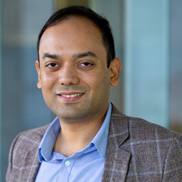
Prasad Naik is a Professor at UC Davis Graduate School of Management, specializing in marketing strategy, integrated communications, and dynamic market models. He holds a Ph.D. from the University of Florida and industry experience at GlaxoSmithKline. Research interests include cross-media advertising effectiveness, marketing budget optimization, and crisis preparedness, with recent work exploring livestream retail analytics and sustainability branding. Scientific awards: UC Davis Chancellor’s Fellowship Frank Bass Award Journal of Interactive Marketing Best Paper Award Academy of Marketing Science Dissertation Award William O’Dell Award Finalist His publications demonstrate expertise in econometric modeling of advertising dynamics, spatiotemporal budget allocation, and measuring cross-platform synergies.
Lucy Thomas is a Researcher in Physics at the California Institute of Technology (Caltech), affiliated with the Division of Physics, Mathematics, and Astronomy and the LIGO Lab. She holds a PhD in Gravitational Wave Astronomy from the University of Birmingham (2023), an MSc in Physics from King's College London, and a BSc in Mathematics and Natural Sciences from the University of Cambridge, all in the UK. Her research focuses on gravitational wave waveform models for compact binary coalescences, emphasizing machine learning acceleration and precession dynamics. She investigates how spin misalignment impacts orbital precession and gravitational wave signals, contributing to tests of general relativity and insights into binary formation mechanisms. Lucy is a key member of the LIGO-Virgo-Kagra (LVK) collaboration, analyzing real data to refine theoretical models and explore extreme astrophysical phenomena like high-mass black hole mergers and neutron star-black hole systems. Lucy has not listed any scientific awards. Her work on population studies and merger rate estimates has advanced understanding of compact object dynamics. She advises no current students and does not mention grants. She is based at Caltech's LIGO Lab, collaborating with the High-Energy Astrophysics group and the Walter Burke Institute for Theoretical Physics (WBITP). Lucy's contributions include developing novel methods to interpret gravitational wave data, such as the effective precession spin vector and generalized χp parameter. Her recent publications address waveform calibration challenges, systematic errors in precession measurements, and the implications of asymmetric mass ratios in observed binaries. She also explores constraints on Lorentz violation and the mass of the graviton through gravitational-wave dispersion effects.
Delong Li serves as an Adjunct Professor of Finance in the Department of Economics and Finance at the Lang School of Business, University of Guelph, and teaches corporate finance to LLM students at Osgoode Hall Law School, York University. Professionally, he works as a financial economist at Cornerstone Research specializing in securities litigation and regulatory matters. His educational credentials include: Ph.D. in Economics from Johns Hopkins University (2018) M.S. in Finance from Guanghua School of Management, Peking University (2012) Dual B.S. in Mathematics and B.A. in Economics from Tsinghua University (2010) Research spans Corporate Finance , Corporate Bonds , International Finance , and Financial Markets , with emphasis on empirical methodology, sovereign-corporate yield linkages, and machine learning applications. Recent work addresses measurement error correction in investment models and international bond pricing dynamics. His 12 publications (2015-2024) reveal consistent focus on emerging market finance, yield transmission mechanisms, and innovative econometric approaches, frequently intersecting corporate finance with macroeconomic variables. Dr. Li has secured multiple SSHRC grants since 2018, including an Insight Grant as co-investigator (2019), and served on SSHRC's Economics Adjudication Committee (2021-22). He previously held visiting economist positions at the International Monetary Fund and Bank of Finland.
Dong Li is a Professor of Economics at the University of Texas at Dallas (UT Dallas), affiliated with the School of Economic, Political and Policy Sciences. His research focuses on econometrics, industrial organization (particularly antitrust issues), financial economics, and the Chinese economy. He holds a Ph.D. in Economics from Texas A&M University (2000), an M.A. in Quantitative Economics from Huazhong University of Science & Technology (1994), and a B.A. in Quantitative Economics from the same institution (1991). Li's work emphasizes methodological contributions to panel data models, spatial econometrics, and semiparametric estimation techniques. His recent studies include analyses of cartel behavior in agricultural markets, military aid's impact on terrorism, and the implications of securities transaction taxes in emerging markets. His research bridges theoretical econometrics with applied policy questions, particularly in antitrust and financial regulation contexts. His articles span topics ranging from Bayesian auction analysis to China's economic policies, showcasing interdisciplinary rigor. While no specific awards are noted, his extensive publication record reflects sustained academic influence. His research often addresses practical economic challenges, such as optimizing college admissions systems and evaluating currency valuation impacts on macroeconomic variables like inflation and output growth.
Keith Blow is a Professor in Electronic Engineering at Aston University, leading the Photonics Research Group and the Adaptive Networks Communications Research Group. He holds a BA (First Class Honours) in Physics and Theoretical Physics from Cambridge University (1978) and a PhD in Solid State Physics from the Cavendish Laboratory (1981). Prior to joining Aston in 1999, he worked at BT Research Laboratories, focusing on optical fiber technologies and nonlinear effects. His research spans photonics, optical networks, adaptive communication systems, and energy-efficient protocols. Key areas include soliton-based transmission, nonlinear optical processing, and wireless sensor networks. He has supervised 6 students and contributed to over 99 publications, with notable work on soliton crystals, optical frequency combs, and FSO channel optimization. Blow serves on the editorial board of the Journal of Modern Optics and reviews for conferences like the Advanced Photonics Congress. His labs focus on advancing optical communication systems, network efficiency, and sensor network applications, emphasizing practical implementations of theoretical findings.
Dr. Eugene Vasiliev is an STFC Ernest Rutherford Fellow at the School of Mathematics and Physics, University of Surrey, UK. He specializes in galactic and stellar dynamics, focusing on supermassive black holes, Milky Way modeling, and the use of Gaia astrometric data. He develops advanced computational tools such as AGAMA, Forstand, and SMILE for dynamical modeling and action-based analysis. His research spans: Dynamical modeling of galaxies using the Schwarzschild method Action-based modeling of the Milky Way and dark matter halos Interactions between the Milky Way and the Large Magellanic Cloud Tidal disruption events and black hole feeding rates Structure and evolution of globular clusters and nuclear star clusters His recent publications (2022–2024) show a strong focus on refining Milky Way models using Gaia data, exploring phase-space substructures from past mergers, and improving black hole mass measurements in nearby galaxies. He frequently collaborates with leading researchers like James Binney, Vasily Belokurov, and Monica Valluri. His work is instrumental in advancing our understanding of galactic formation and evolution in the era of large-scale surveys. He has developed key software tools widely used in the astrophysics community. STFC Ernest Rutherford Fellowship Dr. Vasiliev actively mentors and collaborates on projects involving dynamical modeling, data analysis, and software development. He has delivered numerous talks and outreach lectures on black holes, galactic dynamics, and Gaia science. He leads research efforts that integrate observational data with theoretical modeling to probe the structure and history of the Milky Way.
Alaïs Martin-Baillon is an Assistant Professor at New York University Abu Dhabi (NYUAD), specializing in Macroeconomics and Monetary Economics with a focus on Firm Dynamics. Her research examines optimal fiscal and monetary policy design in heterogeneous-agent economies, corporate taxation under business cycles, and the impact of firm expectations on resource allocation. **Research Interests**: Her work bridges macroeconomic policy analysis with microeconomic firm-level behavior. Key themes include: Optimal monetary policy under nominal rigidities Corporate tax design in heterogeneous firm environments Financial constraints and investment responses Firm-level forecasting behavior and misallocation **Teaching**: At NYUAD, she teaches Intermediate Macroeconomics at the undergraduate level and advanced macroeconomics at the graduate level. Previously at Sciences Po Paris, she served as a teaching assistant for graduate macroeconomics courses and taught Mathematics for Quantitative Social Sciences to undergraduates. Her research has been conditionally accepted at the Review of Economic Studies , and she collaborates with prominent economists such as François Le Grand, Xavier Ragot, and Erwan Gautier.
Dr. Regina Nuzzo is a Professor of Mathematics at Gallaudet University, affiliated with the School of Science, Technology, Accessibility, Mathematics, and Public Health. She holds a Ph.D. in Statistics from Stanford University (2003) and a master's in Science Writing from UC Santa Cruz (2004). Her work bridges statistical research, education, and public communication, emphasizing reproducibility and clear data interpretation. Dr. Nuzzo's research focuses on statistical methodology, particularly in addressing issues like p-value misuse, communication of risk and relative risk, and improving statistical literacy. She has authored influential articles in Nature , Science , and New York Times , including her landmark 2014 piece on p-values that earned an ASA award. She co-authored the seminal 2016 ASA P-Values Statement, reshaping statistical practice. Education: Ph.D. in Statistics (Stanford), B.S. in Industrial Engineering (USF) Teaching: Courses span applied statistics, probability, and research methods for social sciences Awards: ASA Excellence in Statistical Reporting Award (2014) Her advisory roles include mentoring doctoral students in linguistics and psychology, and she actively contributes to workshops on statistical communication for journalists and researchers. She promotes accessible quantitative education for diverse audiences, including deaf and hard-of-hearing learners.
Martin Lind is an Assistant Professor of Mathematical Analysis at Karlstad University. His research focuses on advanced topics in mathematical analysis, including discrepancy theory, functions of bounded variation, approximation theory, and multiscale systems. He holds a PhD from Karlstad University (2013) and completed a post-doctoral fellowship at the University of South Carolina (2014-2015). Education: PhD in Mathematics, Karlstad University, 2013 His work bridges pure and applied mathematics, addressing problems in number theory, functional analysis, and numerical methods. Key research themes include: Discrepancy estimates for pseudorandom sequences Properties of functions with bounded variation (p-variation, Lambda-variation) Nonlinear approximation methods using splines Analysis of multiscale elliptic-parabolic systems His recent publications (2020-2024) emphasize number-theoretic aspects of sequences and their applications in quasi-Monte Carlo methods. He collaborates actively on applied projects like pollution reduction modeling with photocatalytic materials. Notable contributions include: Developing variational characterizations of Sobolev spaces Establishing convergence rates for semidiscrete Galerkin schemes Exploring Fubini-type properties in multivariate analysis
Prof. Saikat Guha holds the Clark Distinguished Chair Professorship in the Department of Electrical and Computer Engineering at the University of Maryland, College Park. He leads the Photonic Quantum Systems (PhoQuS) group, focusing on quantum information theory applications to quantum optics, quantum-limited photonic systems, and cross-disciplinary innovations in information theory, error correction, and network theory. His research spans quantum-enhanced classical communications, quantum network architectures, photonic sensing with non-classical light, and quantum-limited imaging. Notable projects include NSF-funded initiatives for quantum interconnects in ion trap quantum computers and quantum networking protocols. He is recognized as an IEEE Fellow for contributions to quantum communication. Teaching includes a new undergraduate/graduate course Information in a Photon (ENEE 439G/739G), introducing quantum light principles for information processing. His group collaborates on experimental proof-of-concept systems, including entanglement-enhanced LiDAR, fiber-optic gyroscopes, and quantum-optimal coronagraphs for exoplanet detection. Research Labs: Photonic Quantum Systems (PhoQuS) Lab Grants: $5M NSF Convergence Accelerator Award (Quantum Interconnects) $1M NSF Project (Quantum Network for Trapped-Ion Computers) Awards: IEEE Fellow (2023) Key advising contributions include PhD student Itay Ozer (optomechanics) and postdoc Yu Shi (quantum entanglement studies). His work bridges foundational theory with practical implementations, aiming to achieve quantum-limited performance in real-world systems.
Prof. Jantje Sönksen is a Professor of Data Science and Financial Market Econometrics at Leibniz University Hannover's Faculty of Economics and Management. She holds a habilitation in econometrics and empirical financial economics from Eberhard Karls University Tübingen and has held academic roles since 2013. Her research focuses on simulation-based econometric methods, machine learning applications in asset pricing, empirical financial economics, and intermediary-based asset pricing models. She currently leads the sub-project B02 in the DFG Research Unit 5230 on Financial Markets and Frictions. Educational Background: Since 07/2024: Full Professor, Leibniz University Hannover 05/2013–06/2024: Researcher at Eberhard Karls University Tübingen 05/2024: Habilitation in Ökonometrie und empirische Finanzwirtschaft 11/2023–12/2023: Research Fellowship at Boston University 08/2017: PhD in Economics, Eberhard Karls University Tübingen 05/2013: Master of International Economics and Finance 10/2011: Bachelor in International Business Administration and East Asian Studies Research Focus: Her work bridges econometric theory with practical financial applications, particularly leveraging machine learning for asset pricing puzzles and intermediary dynamics. Recent projects include multi-task learning approaches to CAPM testing and simulation-based disaster risk modeling. Affiliations: Member of the DFG Research Group 5230, associated with interdisciplinary research centers, and frequent presenter at global conferences like the Society for Financial Econometrics and the European Finance Association.
Viola Priesemann is a Professor of Theoretical Neural Systems at the University of Göttingen and leads a research group at the Max Planck Institute for Dynamics and Self-Organization. She is also an External Faculty member of the Complexity Science Hub and a board member of the Campus Institute for Data Science. Her work bridges physics, neuroscience, and societal dynamics. Education: PhD in Physics, University of Frankfurt (2013) Diploma (Master) in Physics, Technical University Darmstadt (2008) Research at Caltech, MPI for Brain Research, FIAS Summer School, Marine Biological Laboratory, Woods Hole Her research focuses on collective information processing in neural and social networks, aiming to uncover universal principles of self-organization and learning. She applies statistical physics and information theory to understand how intelligence emerges in adaptive systems, from brains to societies. During the COVID-19 pandemic, she became a leading voice in modeling infection dynamics and advising public policy, serving on the German government’s Corona Expert Council. Her recent work explores predictive coding, curiosity, and the neural basis of cognition. Her publications reveal a strong trend toward interdisciplinary modeling, combining epidemiology, neuroscience, and social dynamics. She frequently employs Bayesian inference, dynamical systems theory, and computational simulations to analyze complex phenomena across scales. Scientific Awards: Communitas Award, Max-Planck-Society Wissenschaftspreis Niedersachsen Medaille für naturwissenschaftliche Publizistik, DPG Dannie-Heineman-Award Arthur-Burkhardt-Preis Lise-Meitner-Lecture Young Scientist Award for Socio- and Econophysics She actively mentors students and leads a vibrant research group investigating curiosity, neural dynamics, and societal information spread. She has secured significant research funding, including a German-Israel Foundation Young Investigator Grant and leadership in the Physics to Medicine Initiative. Her lab collaborates internationally and is involved in major centers such as the Max Planck–University of Toronto Centre for Neural Science and Technology. She leads the Collective Information Processing group at MPI-DS, which investigates self-organization in living systems, with projects spanning neural networks, AI, and social dynamics. The lab fosters interdisciplinary collaboration and open science, with code and models publicly available.
Nicolaas Prins is an Associate Professor in the Department of Psychology within the College of Liberal Arts at the University of Mississippi. He teaches courses in statistics and sensation and perception and is actively involved in the Experimental Ph.D. Program, where he reviews student applications. His academic work centers on rigorous psychophysical methodology and quantitative modeling of perceptual processes. Education: B.A. in Psychology, Leiden University (1992) M.A. in Psychology, Leiden University (1993) Ph.D. in Experimental Psychology, University of Kansas (1999) Dr. Prins' research is focused on psychophysical methods, particularly adaptive testing and the development of robust quantitative models for sensory and perceptual measurement. His work emphasizes improving the reliability and validity of psychometric functions, with a strong interest in low-level visual perception including texture and motion processing. He is a developer and advocate of the Palamedes Toolbox for advanced psychometric analysis. His recent publications reflect a strong methodological focus, addressing issues such as Bayesian hierarchical modeling, model overfitting in psychometric data, hypothesis testing via model comparison, adaptive methods that account for nuisance parameters, and the proper treatment of lapse rates. These works collectively aim to enhance the precision and interpretability of sensory measurement in experimental psychology. Dr. Prins is recognized as an expert consultant in psychophysical research methods, advising researchers in academic, government, and industrial settings on best practices in sensory and perceptual measurement. While no formal awards are listed, his influence is evident through his methodological contributions and software tools. He has completed postdoctoral training in Melbourne, Australia, and Montreal, Canada, before joining the University of Mississippi faculty. His teaching includes core courses such as PSY 202 (Statistics for Behavioral Sciences) and PSY 326 (Sensation and Perception). He is affiliated with both the Bachelor of Arts in Psychology and the Ph.D. program in Psychology at the Oxford campus.
Ángel Bujosa Bestard is an Associate Professor in the Department of Applied Economics at the University of the Balearic Islands (UIB), where he has been affiliated since 2009. He directs the UNESCO/SA NOSTRA Chair in Business and Environmental Management since 2010 and currently leads the Postgraduate Studies Management Unit (UGEP). PhD in Economics (UIB, 2009) Master’s in Tourism and Environmental Economics (UIB, 2005) Bachelor’s in Business Administration (UIB, 2004) His research focuses on environmental valuation methodologies, climate change impacts on tourism, and discrete choice modeling. He has contributed to journals like Ecological Economics and Climatic Change and co-authored book chapters on Mediterranean tourism and climate adaptation. His work analyzes tourists’ preferences, congestion in recreation demand, and implicit discount rates for adaptation policies. Key research projects include: Climate Change Vulnerability in Spanish Coastal Tourism (2015-2018) Tourism Demand for Circular Economy Practices (2022-2023) Climate Adaptation Policy Discount Rates (2011-2014) He has received awards such as the Premi Medi Ambient de Mallorca (2007) and I AERNA Award (2008). His teaching includes Environmental Economics and non-economic impact evaluation in master's programs.
Dr. Christoph Schult is a researcher at the Halle Institute for Economic Research (IWH) , specializing in dynamic macroeconomics and energy economics . He joined the Department of Macroeconomics in July 2016. Education: Bachelor's from Martin Luther University Halle-Wittenberg; Master's from Humboldt-Universität zu Berlin; PhD (2021). His research analyzes macroeconomic forecasting methodologies, fiscal policy responses to crises, and energy market dynamics. Recent work employs advanced econometric techniques and novel models like the Ten-Agents New-Keynesian (TENK) framework to study Germany's energy crisis and climate policy impacts. Key publication themes include: Improving forecast accuracy via double machine learning and partial linear instrumental variable models Evaluating targeted fiscal measures for consumption stabilization Quantifying DSGE model limitations in energy shock scenarios Assessing coal phase-out implications for German regions He collaborates with institutions like the German Federal Ministry for Economic Affairs and Climate Action, contributing to policy evaluations for the InvKG and STARK-Bundesprogramms .