معرفی
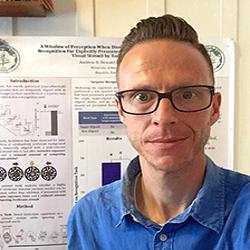
Nicolaas Prins is an Associate Professor in the Department of Psychology within the College of Liberal Arts at the University of Mississippi. He teaches courses in statistics and sensation and perception and is actively involved in the Experimental Ph.D. Program, where he reviews student applications. His academic work centers on rigorous psychophysical methodology and quantitative modeling of perceptual processes.
Education:
- B.A. in Psychology, Leiden University (1992)
- M.A. in Psychology, Leiden University (1993)
- Ph.D. in Experimental Psychology, University of Kansas (1999)
Dr. Prins' research is focused on psychophysical methods, particularly adaptive testing and the development of robust quantitative models for sensory and perceptual measurement. His work emphasizes improving the reliability and validity of psychometric functions, with a strong interest in low-level visual perception including texture and motion processing. He is a developer and advocate of the Palamedes Toolbox for advanced psychometric analysis.
His recent publications reflect a strong methodological focus, addressing issues such as Bayesian hierarchical modeling, model overfitting in psychometric data, hypothesis testing via model comparison, adaptive methods that account for nuisance parameters, and the proper treatment of lapse rates. These works collectively aim to enhance the precision and interpretability of sensory measurement in experimental psychology.
Dr. Prins is recognized as an expert consultant in psychophysical research methods, advising researchers in academic, government, and industrial settings on best practices in sensory and perceptual measurement. While no formal awards are listed, his influence is evident through his methodological contributions and software tools.
He has completed postdoctoral training in Melbourne, Australia, and Montreal, Canada, before joining the University of Mississippi faculty. His teaching includes core courses such as PSY 202 (Statistics for Behavioral Sciences) and PSY 326 (Sensation and Perception). He is affiliated with both the Bachelor of Arts in Psychology and the Ph.D. program in Psychology at the Oxford campus.