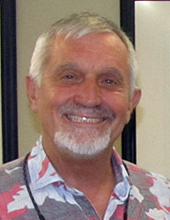
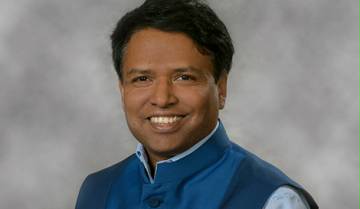
Marcia Fetters is Associate Professor in Western Michigan University's College of Education and Human Development. She holds a PhD, MAEd, and BS from Michigan State University. Her research focuses on innovative science education through: Universal Design for Learning frameworks 21st-century skill integration in STEM Teacher professional development Hands-on science modeling Publications demonstrate expertise in creating accessible science curricula using Lego models for molecular processes and developing alternative certification pathways for teachers. Recent work examines strategies for teaching creativity and critical thinking in science classrooms.
Dr. Gerald Knezek is a Regents Professor and Co-Director of the Institute for the Integration of Technology into Teaching and Learning (IITTL) at the University of North Texas. His expertise lies in educational technology, STEM education, and teacher training. He holds a PhD in Educational Psychology from the University of Hawaii (1978), an MEd (1976), and a BA in Mathematics & Social Sciences from Dartmouth College (1974). His research focuses on measuring attitudes toward information technology, developing models for technology integration, and refining educational assessment methods. He has pioneered work using simulated teaching environments to address implicit bias and improve culturally responsive teaching practices. Key projects include NASA-funded space science education initiatives and studies on AI's role in education. Dr. Knezek's recent publications emphasize equity-focused teacher training, STEM engagement through events like solar eclipses, and leveraging simulations to reduce educational bias. His 2018 award recognized outstanding research in digital learning. Active in global education policy, he co-leads initiatives like EDUsummIT to bridge research and practice in IT integration.
Neda Ratanawongsa, MD, MPH, is a Professor in the Division of General Internal Medicine at the University of California, San Francisco (UCSF) School of Medicine, and a core member of the Action Research Center for Health Equity (formerly the UCSF Center for Vulnerable Populations). She serves as the Chief Health Informatics Officer for the San Francisco Department of Public Health and has held interim leadership roles in the San Francisco Health Network and Laguna Honda Hospital. Her academic focus is on leveraging health informatics to improve care for underserved populations, particularly through EHR design and implementation strategies that enhance patient-clinician communication and compassionate care. Dr. Ratanawongsa holds an MD from Harvard Medical School and an MPH from Johns Hopkins Bloomberg School of Public Health. She completed residency and chief residency in Internal Medicine at UCSF, followed by a General Internal Medicine fellowship at Johns Hopkins. Her research emphasizes mixed methods, including implementation science and qualitative analysis, to address gaps in healthcare access and quality. Key areas include EHR usability, patient portal adoption, clinician-computer interaction, and strategies to mitigate health disparities through technology. She has led NIH-funded studies and contributed to national committees with the Society of General Internal Medicine and Academy on Communication in Healthcare. Dr. Ratanawongsa’s work has been widely cited in peer-reviewed journals and media, addressing topics such as clinician multitasking during patient visits, trust-based care models, and the role of technology in chronic disease management. She has received the Milton W. Hamolsky Junior Faculty Award from the Society of General Internal Medicine (2008). Her professional activities include developing curricula for medical trainees and leading initiatives to improve health IT systems in safety-net settings. She has also explored the impact of telemedicine and mHealth tools on diverse patient populations, emphasizing user-centered design principles to ensure equitable access.
Ricky Burdett is a Professor of Urban Studies at the London School of Economics and Political Science (LSE) , where he leads LSE Cities , a global research and teaching center. He founded the Urban Age programme , which explores global metropolitan centers through conferences and interdisciplinary research. His work connects urban form to social equity, environmental sustainability, and governance. Current initiatives include a four-year training and research programme for European mayors with Bloomberg Philanthropies and the Hertie School of Government. He co-founded the Council on Urban Initiatives with Mariana Mazzucato, linking academics and city leaders. Past roles include advising the Mayor of London, serving as Chief Adviser for London 2012 Olympics, and directing the Venice Architecture Biennale. He has received the CBE (2017) for urban planning and an Honorary Fellowship from the Royal College of Art (2019). His publications focus on urban governance, health disparities, and global city comparisons. Recent articles analyze post-pandemic urban recovery, health inequities in London neighborhoods, and the role of infrastructure in equity. Key Roles : Director of Venice Architecture Biennale, Curator at Tate Modern, Jury Chair for EU Prize for Contemporary Architecture. Collaborations : Harvard University (Visiting Professor), New York University (Global Distinguished Professor), National University of Singapore (advisory roles).
Jessica Olson, PhD, MPH, is an Associate Professor in the Department of Community Health at the Medical College of Wisconsin (MCW), within the Institute for Health & Humanity. She holds leadership roles including Co-PI of the NIH-funded ASCEND WI Initiative addressing maternal health disparities, Director of Evaluation and Innovation in the Office of Diversity and Inclusion, and Co-Director of the Clinical and Translational Science Institute's Basic and Translational Science Program. Her research focuses on reducing cancer and maternal health disparities through interdisciplinary collaboration between clinical, basic science, and community stakeholders. Dr. Olson earned both her PhD and MPH from MCW in 2015 and 2017 respectively. Her work spans community-based participatory research, policy advocacy, and translational science. Notable projects include building trust between doulas and healthcare providers, investigating housing instability in birthing populations, and training future researchers in maternal health equity. Her publications emphasize interdisciplinary team dynamics, diet-cancer links, and racial disparities in healthcare access. Leadership positions include roles with the National Lung Cancer Roundtable and academic-police partnerships to address community health challenges. Dr. Olson’s work integrates social justice principles with clinical innovation to advance equitable healthcare outcomes.
Dr. Caroline McGarry is a Lecturer in the Department of Education at SETU (South-East Technological University), Waterford. She teaches across diverse programs including the BA in Adult Further Education, Postgraduate Diploma in Further Education, and Masters in Education. Her research focuses on digital literacy, educational disadvantage, language development, inclusion, and curriculum development. She holds a PhD and Masters in Education from Mary Immaculate College, Limerick. Notably, she organized the Pracademics in Education Research Colloquium (2024) and contributes to UN Sustainable Development Goals related to education equity and quality. Education: PhD in Education, Mary Immaculate College University of Limerick (2017) Masters in Education, Mary Immaculate College University of Limerick Bachelors in Education, Mary Immaculate College University of Limerick (2007) Research Interests: Caroline explores how digital tools enhance adult education and address educational disadvantage. Her work emphasizes inclusive curriculum design, leveraging universal design principles and assistive technologies to improve learning environments. Recent studies examine teacher engagement in curriculum consultations and language curriculum reform in primary education. Grants & Advising: She is open to supervising PhD students and actively publishes in peer-reviewed journals and conferences. Her recent articles highlight digital tools' role in fostering positive educational outcomes and human connections in digital spaces. Labs/Teams: Collaborates with colleagues in FoELL (Faculty of Education and Lifelong Learning) on initiatives blending technology and pedagogy to advance equitable education access.
Bianca Herlo is a Professor of Eco-Social Design at Lucerne School of Design, Film and Art (HSLU DFK), serving as Head of the Competence Center for Transformation Design. She specializes in eco-social transformation, digital justice, and participatory design practices. Her work bridges academia, civil society, and policy-making to address systemic inequalities through design interventions. She previously held interim professorships at the University of Fine Arts Braunschweig and led research groups at the Weizenbaum Institute and Berlin University of the Arts. Her current roles include chair of the German Society for Design Theory and Research (DGTF), co-host of the podcast Purple Code , and member of the Social Design Network. She actively contributes to interdisciplinary collaborations across art, technology, and urban planning, focusing on equitable digital futures and inclusive social innovation. Research interests emphasize structural justice in digital systems, feminist futures, and the role of design in fostering participatory democracy. Her recent contributions include co-editing Design als Haltung (2024) and leading projects like REASSESSING THE SOCIAL and the PhD Programme in Eco-Social Innovation. Her work frequently appears in transdisciplinary platforms such as Weizenbaum Journal and Geography Compass . Key achievements include jury roles for the Gender Design Award, SNSF evaluations, and advisory roles in digital policy initiatives. She frequently lectures internationally on topics ranging from AI ethics to intercultural participation, maintaining a strong commitment to translating research into actionable societal impact.
Courtney Nations Azzari is an Associate Professor in the Department of Marketing and Logistics at the University of North Florida. Her research focuses on consumer vulnerability, transformative rituals, and sustainable service practices. She holds a PhD in Marketing from the University of Wyoming (2016), and prior degrees from Clemson University. Dr. Azzari explores how service providers can enhance consumer well-being through inclusive, co-creative approaches, particularly in contexts like end-of-life rituals and healthcare. Her work addresses marginalized consumer groups, emphasizing ethical frameworks for market access, privacy norms in digital spaces, and the role of luxury in ritual transformation. She has contributed to journals such as the Journal of Macromarketing and Journal of Service Research , with over 17 peer-reviewed articles. Azzari serves on editorial boards, including the Journal of Consumer Affairs , and chairs committees on diversity and curriculum development. Her research highlights intersections between consumer behavior and social justice, advocating for compassionate service design that balances organizational priorities with individual well-being. Recent projects examine data privacy negotiations and crisis research methodologies.
Prof Tapan Sarker is a Professor (Finance) at the School of Business, University of Southern Queensland. He holds qualifications of BSc (Chittagong), MABusComm (Keio), and PhD (ANU). His affiliations include the Centre for Applied Climate Sciences and Institute for Resilient Regions. His research focuses on sustainable development, climate finance, environmental economics, and financial policy. Education: Bachelor of Science in Chittagong Master of Applied Business and Commerce from Keio University Doctor of Philosophy from Australian National University Research Interests: Climate finance mechanisms and policy design Sustainable development goals and financing strategies Green finance instruments (e.g., green bonds) Taxation and compliance in digital economies Energy policy in Asia-Pacific regions His work bridges financial systems with environmental sustainability, emphasizing equitable climate adaptation and economic growth. Recent Research Trends: Post-pandemic resilience in financial markets Blue economy initiatives for coastal sustainability Low-carbon transition challenges in developing economies Blockchain governance in education and finance sectors Advising & Grants: Supervising doctoral research on climate finance, decarbonization, and blockchain governance Leading projects on green bond markets and tax policy reforms Collaborating with international institutions like Asian Development Bank Labs/Teams: Affiliated with cross-disciplinary teams at the Centre for Applied Climate Sciences, focusing on climate resilience and sustainable development.
Vicky Duckworth is a Professor of Further Education at Edge Hill University, affiliated with the Research Health Research Institute. She teaches across various modules from level 5 to level 7 MA delivery and serves as a PhD supervisor. Her academic career spans over two decades, during which she has developed a national and international reputation in Adult Education and Literacy. Educational Background: PhD in Educational Research, Lancaster University (2004-2011) MEd, Manchester Metropolitan University (1998-2003) MA in English, University of Manchester (1997-2001) Postgraduate Education Diploma, Manchester Metropolitan University (1997-1998) PGCert, University of Bolton (1995-1996) BA in English, Manchester Metropolitan University (1992-1995) Vicky Duckworth's research focuses on Adult Education and Literacy through a critical lens, applying Bourdieu's theoretical framework alongside feminist perspectives, sociology of education, ethics of care, and critical literacy pedagogy. Her work explores the impact of violence and trauma on learning, possibilities for resistance and transformation, and connections to class, gender, ethnicity, health, and literacy. She is deeply committed to challenging inequality through critical and emancipatory approaches to education, widening participation, inclusion, community action, and research with a strong social justice agenda. Her research aims to empower marginalized learners and transform educational practices to create more equitable learning environments. Her recent publications reveal a strong focus on transformative teaching and learning, digital literacy, and social justice in education. There's a clear trajectory from theoretical explorations of literacy and social justice toward practical applications of transformative pedagogies, with increasing attention to digital technologies and their role in educational equity. Her work consistently connects theory to practice, emphasizing hope, empowerment, and resistance in educational contexts, particularly in further and adult education settings. Scientific Awards: Chancellor's Excellence in Teaching (2014) Chancellor's Excellence in Teaching (2015) International Professional (2010) Outstanding Paper (2016) Visiting scholar (2024) Vicky Duckworth actively supervises PhD students and has advised on educational policy at national and international levels. She serves as a trustee of the Helena Kennedy Foundation and is a board member of the Association for Research in Post-Compulsory Education. Her research projects, including 'Transforming Adult Learner lives Australia,' demonstrate her commitment to practical applications of her theoretical work. She has received funding for multiple research initiatives focused on transformative teaching and learning in further education, with emphasis on social justice and empowerment. Her work contributes to UN Sustainable Development Goals related to quality education and reduced inequalities. Vicky Duckworth is involved in several research centers and networks, including the Centre for Social Responsibility, the Participative and Action Research Network, and the Transformative Education group. Her collaborative work spans international boundaries, with recent activities including a visiting researcher position at Deakin University in Australia. She is actively engaged in the academic community through editorial work, conference presentations, and peer review activities.
Ruba Abu-Salma is a Lecturer in Computer Science at King’s College London, affiliated with the Cybersecurity Group and Human Centred Computing Group within the Department of Informatics. Her research focuses on interdisciplinary cybersecurity, privacy, human-computer interaction (HCI), and public policy, with an emphasis on vulnerable populations. She holds a PhD from University College London (UCL) and previously held postdoctoral roles at UC Berkeley and Inria Sophia Antipolis. Education: PhD in Computer Science, UCL (2019) Postdoctoral Researcher at ICSI (UC Berkeley) and Inria (2019–2021) Research Interests: Designing equitable privacy-enhancing technologies; smart home privacy; digital security for marginalized groups; privacy law and policy. Affiliations: King’s Cybersecurity Centre, EPSRC-NCSC Academic Centre of Excellence, Centre for Technology and the Body. Her work bridges computational and social science methods, addressing privacy and security challenges faced by vulnerable populations such as migrant domestic workers and older adults. Recent studies include smart home privacy dynamics, mHealth app vulnerabilities, and longitudinal migration security practices. Key achievements include publications at venues like ACM CHI, USENIX Security, and IEEE S&P, alongside media coverage in The New York Times and CNET. She leads projects funded by Google and the UK’s Technology Strategy Board, focusing on gaze-enhanced authentication and female health app privacy. Grants & Projects: “Usable Privacy in Female Health Apps” (Google, 2023–2025) EyeLock: Gaze-Enhanced Authentication (TSB, 2024–2025) Dr. Abu-Salma advises PhD students on topics intersecting cybersecurity, privacy, and marginalized communities. She actively participates in academic service roles, including organizing workshops on privacy and serving on program committees for top-tier conferences.
Beth Christie is a Senior Lecturer at the University of Edinburgh's Moray House School of Education and Sport, specializing in outdoor and environmental education. She serves as Director of Scotland’s United Nations University-Recognised Regional Centre of Expertise in Education for Sustainable Development (Learning for Sustainability Scotland). Her work bridges sustainability education, climate justice, and social equity, influencing national and international policy. She leads MOOCs engaging global learners and advises organizations like the Scottish Government and European Commission. Educated at Heriot-Watt University (BA) and University of Edinburgh (PhD), her research emphasizes critical pedagogies and participatory practices. Awards include the Watt Medal and Fellowships from the Higher Education Academy and RSA. Key educational contributions include developing the MSc Learning for Sustainability program and leading COP26-linked MOOCs. She supervises PhD students globally and collaborates internationally through projects like PRISMA (Erasmus initiative) and the Antarctic climate leadership expedition. Current roles include steering UK-Scotland climate justice initiatives and trustee work with Wen (Women's Environmental Network). Research focuses on sustainability curriculum transformation, climate justice education, and the role of outdoor learning in fostering equitable futures. Recent publications critique Scotland’s sustainability education policies while advocating for intersectional approaches. She has examined over 70 MSc dissertations and contributed to policy frameworks shaping the Scottish educational landscape.
Dr. Tricia Clark-Fookes is a Lecturer in the School of Creative Arts within the Faculty of Creative Industries, Education & Social Justice at Queensland University of Technology. Her academic work focuses on the intersection of arts education, digital pedagogy, and inclusive practices, with particular expertise in drama education and the integration of emerging technologies. Her research interests center on the complex challenges of arts assessment, the application of generative artificial intelligence in creative education, and the development of inclusive pedagogical approaches. Clark-Fookes explores how digital technologies can enhance artistic expression while maintaining educational integrity, with a strong emphasis on accessibility and equity in arts education. Analysis of her publication record from 2019-2025 reveals a consistent focus on the evolving relationship between traditional arts education and digital innovation. Her work demonstrates particular expertise in drama education technology integration, arts assessment methodologies, and inclusive pedagogical frameworks that address diverse learner needs in creative disciplines. As an emerging scholar with a PhD by Creative Works completed in 2021, Clark-Fookes has established herself as a thoughtful contributor to the field of arts education, with particular relevance to the challenges of teaching creative disciplines in increasingly digital educational environments.
Athina Kontogianni serves as Assistant Professor of Greek Civil Law at the School of Law, Department of Law, European University Cyprus, while maintaining active roles as Acting Member of Greece's National Commission on Human Rights (2015-today), Research Fellow to the Hellenic Parliament's Scientific Council (2009-today), and member of critical medical oversight bodies including the Advisory Board of the Greek National Organization of Medicines (2019-today) and Supervisory Board of the Greek National Authority of Medical Assisted Reproduction (2021-today). Her academic credentials include a PhD in Civil Law (2005), MA in Civil Law (1999), and BA in Law (1997), all from the National and Kapodistrian University of Athens. These qualifications underpin her expertise in both Greek civil law foundations and European legal harmonization. Dr. Kontogianni's research centers on Consumer Protection Law, European Civil Law, and Medical Law, with significant contributions to understanding EU consumer directives' implementation, medically assisted reproduction regulations, and human rights case law interpretation. Her work bridges theoretical scholarship with practical legislative impact, particularly evident in her advisory roles for Greek government bodies on consumer protection and family law reforms. Analysis of her 15 most recent publications (2018-2023) reveals three dominant research trajectories: consumer protection mechanisms (especially online dispute resolution under EU Regulation 524/2013), medically assisted reproduction regulations (focusing on traceability and cross-border healthcare), and human rights jurisprudence (detailed commentaries on European Court of Human Rights judgments concerning privacy, vaccination mandates, and family rights). Her scientific recognition includes: Scholar awardee of the State Scholarship Foundation (1998-2000) Scholar awardee of the European Commission's Program for Civil Law Consolidation (1999-2000) Election as rapporteur for Greece before the European Parliament's IMCO Committee on the 'New Consumer Agreement' proposal (2019) Dr. Kontogianni has secured and led significant research funding including the European Commission's Consumer Protection Program (2014-2019) as Program Director and the Conflict Resolution with Equitative Algorithms project (2018-2019) as researcher. Her governmental advisory work spans legislative committees for Family Law reform (1999-2000) and Consumer Protection Law reform (2016), where she provided legal drafting expertise that shaped national legislation. She actively contributes to scholarly communities through membership in the Hellenic Association for European Law (promoting research on European civil law responsibility concepts) and the Association of Greek Civil Law (critical analysis of contemporary civil law issues), while serving on editorial committees including the quarterly journal 'European Law'.
Dr Katerina Dounavi is a Senior Lecturer in Behaviour Analysis and Autism at Queen's University Belfast's School of Social Sciences, Education and Social Work (SSESW). She coordinates the ABAI Verified Course Sequence (VCS) for the MSc in Applied Behaviour Analysis (MScABA), a globally renowned program she helped design and launch in 2014. Her expertise spans applied behaviour analysis, autism spectrum disorders, telehealth interventions, and values-driven professional training. Dr Dounavi has extensive clinical experience across Europe, supervising home-based ABA programs, school inclusion initiatives, and certification supervision. She is fluent in English, Greek, Spanish, and French, with significant media engagement. Research focuses on evidence-based interventions for neurodevelopmental disorders, including early screening methods, telehealth applications, and parent-mediated interventions. She has secured research grants addressing societal challenges such as healthier eating behaviors (2017-2019) and early autism detection (2023-present). Notable achievements include a 2013 best poster award for aphasia tact training research and a 2018 teaching award for her role in growing the MScABA program. Dr Dounavi also validates UAE National Occupational Standards for Special Education and serves on editorial and review boards. Her work contributes to UN Sustainable Development Goals 3 (Good Health) and 4 (Quality Education) through improving inclusive education systems and equitable access to evidence-based interventions. Supervision roles have guided over 8 PhD/MSc projects, emphasizing translational research and professional training innovations.