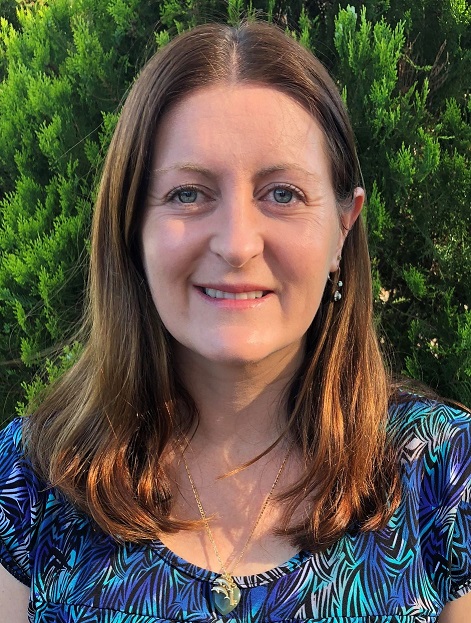
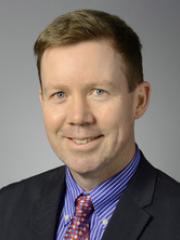
Dr. Amir Ghanbaripour is a Discipline Lead in Planning, Property, and Project Management at Bond University's Faculty of Society & Design, with a PhD in Construction Project Management (2020). He teaches postgraduate courses and leads the Project Management program. His expertise spans project management methodologies, systems thinking, organizational maturity, and gender equality in projects. He is an active member of the Project Management Institute (PMI) as Associate Director for Academic Outreach. Education: PhD in Construction Project Management (Bond University, 2020), MSc in Civil Engineering (Iran University of Science and Technology, 2012), BSc in Civil Engineering (Amirkabir University of Technology, 2009). Research focuses on project success models, agile methodologies, and technology integration in construction education. He leads research projects on megaprojects, sustainable practices, and gender diversity in the industry. Grants include the 2023 FSD Research Project Grant (focusing on construction project strategies) and the 2023 FSD Deans Award (exploring robotics in manufacturing). He supervises PhD candidates and collaborates with national/international organizations on project management innovation.
Associate Professor Naseem Ahmadpour is a leading researcher in Human-Computer Interaction (HCI) and Design at the University of Sydney 's School of Architecture, Design and Planning. She directs the Affective Interactions Lab and serves as Associate Dean (Research) and Chair of the EDI Committee . PhD, University of Montreal MSc, Chalmers University of Technology BSc, Bahonar University Her research critically examines the ethical implications of sociotechnical systems in care and work futures, focusing on participatory design with vulnerable populations. She explores immersive technologies like VR for mental health, pain management, and clinical training, while advocating for equity in design practices. Recent work includes 15+ publications (2023-2026) on VR applications, ethical design tools, and sociotechnical critiques. She has received the SOAR Prize (2022-2023) and led grants on VR in clinical education, digital volunteering, and aging technologies. Dr. Ahmadpour supervises PhD students in projects like Collaborative Reflection in Mental Health and Cultural Bias in Digital Design . She contributes to the Design. Think. Make. Break. Repeat methodology handbook and co-leads the VirtX Community of Practice for immersive realities.
Professor Shanlin Fu is a distinguished academic at the University of Technology Sydney (UTS), holding the position of Professor in the School of Mathematical and Physical Sciences and affiliated with the Centre for Forensic Science. He serves as the Program Director for the Bachelor of Forensic Science program and is a Research Integrity Adviser for the Faculty of Science. With over $10 million in competitive research funding from ARC, NHMRC, and other national and international schemes since 2008, Professor Fu leads the Drugs and Toxicology Group, focusing on developing sensitive methods for clinical diagnosis, therapeutic drug monitoring, and drugs of abuse testing. Professor, UTS School of Mathematical and Physical Sciences (2019-present) Associate Professor, UTS School of Chemistry and Forensic Science (2015-2019) Senior Lecturer, UTS School of Chemistry and Forensic Science (2008-2014) Professor Fu earned his PhD in Medicinal and Pharmaceutical Chemistry from the University of Sydney (1989-1992), an MSc in Phytochemistry from Peking Union Medical College (1982-1985), and a BSc in Biology from Nanjing Normal University (1978-1982). Prior to his academic career at UTS, he served as a Senior Hospital Scientist at the Northern Sydney Area Health Service (2000-2008) and as a Senior Research Scientist at The Heart Research Institute (1993-2000). Professor Fu's research spans analytical chemistry, forensic chemistry, medical biochemistry, pharmacology, pharmaceutical sciences, forensic toxicology, and clinical toxicology. His work focuses on three main areas: Forensic Chemistry concerning identification of drugs of abuse including new psychoactive substances; Forensic Toxicology focusing on detection of drugs in biological matrices for clinical and medico-legal purposes; and Clinical Toxicology aiming to understand mechanisms of substance abuse harms. His research has strong real-world applications, with his patented 'Cathinone Test' already commercialized for law enforcement and potential healthcare settings. Analysis of Professor Fu's recent publications reveals a strong emphasis on developing innovative analytical methods for drug detection, particularly for new psychoactive substances. His work increasingly incorporates multi-omics approaches (metabolomics, lipidomics, proteomics) and machine learning techniques to enhance detection capabilities. There's a clear trend toward translating laboratory research into practical field applications, with numerous color spot tests and portable detection methods being developed for law enforcement use. His research also shows expanding applications in equine doping control and postmortem analysis. Vice-Chancellor's Medal for Research Excellence through Collaboration or Partnership (2023) UTS Teaching and Learning Award for Team Teaching (2022) MAPS Research Translation Award (2022) As a member of the HDR Panel since 2022, Professor Fu actively supervises Masters Research and PhD students in forensic science. His extensive grant portfolio includes leadership of the ARC Research Hub for Integrated Device for End-user Analysis at Low-levels and the Australian Centre for cannabinoid clinical and research excellence (ACRE). He has established key collaborations with Australian Federal Police, NSW Forensic and Analytical Science Service, Racing NSW, and international institutions including University of Copenhagen and University of Dundee. His research impact extends beyond academia through commercialization of detection technologies that improve efficiency and accuracy of illicit drug detection. Professor Fu heads the Drugs and Toxicology Group at the Centre for Forensic Science, which maintains strong industry partnerships with forensic laboratories and law enforcement agencies. His group is currently developing a multiplexer device that can simultaneously detect multiple new psychoactive substances including cathinones, NBOMEs, piperazines, and fentanyl analogues. The group's work bridges fundamental research with practical applications, with several technologies moving from the laboratory to real-world implementation in forensic and healthcare settings.
Prof. Nan Yang is a Professor at the Australian National University's ANU College of Engineering, Computing and Cybernetics, leading the Information and Signal Processing Cluster and the Emerging Communications Laboratory. He holds a PhD in Electronic Engineering from Beijing Institute of Technology (2011) and has held postdoctoral roles at CSIRO and UNSW before joining ANU in 2014. His research focuses on terahertz communications, ultra-reliable low-latency systems, and cyber-physical security, with notable contributions to molecular communications and massive MIMO systems. Education: B.S. in Electronics, China Agricultural University (2005) M.S. in Electronic Engineering, Beijing Institute of Technology (2007) Ph.D. in Electronic Engineering, Beijing Institute of Technology (2011) Key Roles: Associate Dean for Higher Degree Research (2019–2021) Editorial Board Member of IEEE Transactions on Molecular, Biological, and Multi-Scale Communications, IEEE Communications Letters, and others Organizer of workshops at IEEE ICC, GlobeCOM, and ACM MobiCOM His research interests span terahertz communication systems, cyber-physical security, and intelligent communications. Recent work emphasizes secure beamforming, UAV-assisted networks, and molecular communication protocols. He has authored over 180 publications and secured grants totaling millions in funding for projects like the Ultra-Fast and Secure Terahertz Communications for 6G Wireless Systems (2023–2026). Awards & Recognition: IEEE ComSoc Distinguished Lecturer (2023–2024) Best Paper Awards at IEEE ICC 2024, GlobeCOM 2022, and VTC Spring 2013 Exemplary Editor/Reviewer Awards from IEEE Transactions Grants & Projects: iLAuNCH: SWIFT-iLAuNCH Project A (SC-9) (2024–2026) Ultra-Fast and Secure Terahertz Communications for 6G (2023–2026) Facility for Energy Security and Resilience Research (2022) His lab, the Emerging Communications Laboratory, develops cutting-edge solutions for 6G networks, including hybrid beamforming for terahertz systems and secure short-packet protocols. Collaborations span global institutions, emphasizing interdisciplinary research in communications and signal processing.
Professor Carsten Rudolph serves as Deputy Dean at Monash University's Faculty of Information Technology and directs the Oceania Cyber Security Centre (OCSC). He holds a PhD in Information Security from Queensland University of Technology (2002) and a Diplom in Computer Science from Goethe University Frankfurt (1997). His interdisciplinary research focuses on cybersecurity foundations, including cryptographic protocols, AI-driven security, human factors, and national cybersecurity policy. Key areas include securing smart grids, digital health systems, and transnational energy networks. Notable contributions include establishing the OCSC, leading Pacific region cybersecurity maturity reviews with Oxford University, and advancing frameworks for firmware security in virtual power plants. He chairs major projects like RAI4IoE (Responsible AI for Energy) and Post-Quantum Cryptography initiatives. Teaching responsibilities include cybersecurity modules like FIT3173 and FIT3168. Rudolph's research outputs (137+ publications) emphasize phishing detection via AI, blockchain-based energy trading, and resilient smart grid systems. He collaborates internationally on policy development and has advised 12 major research projects funded by agencies like the U.S. Bureau of East Asia and Pacific Affairs.
Dr. Angela Finn is a Senior Lecturer at RMIT University in the Department of Fashion & Textiles , City Campus, Australia. With expertise in sustainable fashion design , fashion manufacturing , and practice-led research , she focuses on design methodology and knowledge transfer in fashion education. Teaching Interests : Fashion Design, Sustainable Fashion & Textiles, Design/Research Methodology Research Emphasis : Sustainable design strategies, technological integration in textiles, historical design adaptation Her 15 most recent publications explore themes like minimization in fashion design , luxury sustainability , and virtual teaching resources . Key subtopics include zero-waste design , regional manufacturing , and UV-protective textiles for health applications. Supervision Availability : Open to mentoring Masters or PhD students in sustainable fashion and textiles research.
Dr. Lauren Miller-Lewis is a Lecturer in Positive Psychology at CQUniversity Australia, affiliated with the School of Health, Medical and Applied Sciences under the College of Psychology. She holds a B.Psych (Hons) and PhD from Flinders University (2004). Her career includes a NHMRC Postdoctoral Fellowship at the University of Adelaide and roles at Flinders University’s Research Centre for Palliative Care, Death and Dying. She joined CQUni in 2019. Her research focuses on lifespan developmental psychology, mental health resilience, and end-of-life care. Key areas include mortality acceptance, death coping, and palliative care innovation. She teaches in the Graduate Certificate/Diploma/Master of Applied Positive Psychology programs. Publications emphasize palliative care resources (e.g., CarerHelp Toolkit), death doula roles, and pandemic impacts on grief. She is a member of the Cluster for Resilience and Wellbeing (CReW) and supervises students in clinical and developmental psychology. Her work bridges theory and practice, emphasizing person-centered bio-psycho-social approaches to healthcare.
Dr. Jonathan Kummerfeld is a Senior Lecturer at the University of Sydney's School of Computer Science, specializing in Natural Language Processing (NLP) and AI collaboration. He holds a PhD from UC Berkeley and a B.Sc. from the University of Sydney, with postdoctoral research at the University of Michigan. His work focuses on enabling computers to collaborate effectively with humans through NLP, including interactive systems, dialogue, and crowdsourcing. Education: PhD in Computer Science, UC Berkeley (advised by Dan Klein), 2016 B.Sc. in Computer Science, University of Sydney (advised by James Curran), 2010 Postdoctoral Researcher at University of Michigan (2016–2021) Research Interests: Interactive Executable Semantic Parsing NLP Data Science for Messy Real-World Data AI Collaboration in Games and Dialogue His recent work explores empathetic AI systems, alignment algorithms, and AI-resilient interfaces. Over 50 publications span venues like ACL, NAACL, and ICML. Grants & Advising: CHIRON (DARPA): AI for recognizing opponent narratives Google/Amazon grants for annotation tools and dialogue systems Advising PhD student Kent O'Sullivan His lab develops tools like SLATE and contributes to dialogue corpora. Labs/Teams: Leads the Sydney NLP Lab, focusing on human-AI collaboration and scalable NLP systems.
Dr. Tehzeeb Zulfiqar is a Research Fellow at the National Centre for Epidemiology and Population Health at the Australian National University (ANU) and an Adjunct Associate Professor at the Health Services Academy in Pakistan. With over 30 years of experience in public health policy and research across Pakistan and Australia, she brings extensive expertise in epidemiology, program evaluation, and health systems strengthening. Her current work focuses on the evaluation of the Australian Pathogen Genomics Program (AusPathoGen) using realist theory, examining the utility and cost-effectiveness of genomic-based public health responses and capacity transformation with emphasis on end-user acceptability. Dr. Zulfiqar's educational background includes: PhD in Public Health from the Australian National University Master of Public Health (MPH) from the Australian National University MPhil in Reproductive Physiology from Quaid-i-Azam University MSc in Community Nutrition from Allama Iqbal Open University MBBS from Army Medical College Dr. Zulfiqar's research spans genomic epidemiology, immigrant health, and environmental health challenges. Her primary focus is on genomic surveillance systems and their implementation in public health practice, particularly through her leadership in evaluating Australia's national pathogen genomics program. She has conducted extensive studies on obesity patterns, health disparities, and cultural adaptation among immigrant populations in Australia, examining intergenerational differences in body image standards and dietary practices. Her environmental health research has gained prominence following Australia's devastating bushfire seasons, where she investigated community perceptions of smoke exposure and the effectiveness of public health communication during environmental disasters. Her work demonstrates how housing conditions, individual risk perception, and public health advice interact during climate-related emergencies. Dr. Zulfiqar's publication record shows a clear trajectory toward integrating advanced genomic technologies with practical public health applications while maintaining a strong commitment to health equity. Her recent work spans from technical evaluations of genomic surveillance systems to critical examinations of public health terminology and its impact on marginalized communities, particularly regarding the problematic use of terms like 'culturally and linguistically diverse (CALD).' Dr. Zulfiqar has supervised multiple students including Hesham Al-Sharani, Russell Tolentino, and Alfi Fatima Yudani. She has been involved in numerous significant research projects, including the third-party evaluation of Pakistan's Lady Health Workers program conducted by Oxford Policy Management, UK, where she served as national lead. Her teaching experience includes Family Medicine, Public Health Nutrition, Life Style Medicine, and serving as a tutor at the ANU Medical School for 8 years. Dr. Zulfiqar is actively involved in multiple research teams, most notably as a key researcher in the Australian Pathogen Genomics Program evaluation and the Timor-Leste One Health Bacteria Enteropathy and Nutrition (BEN) Study (2023-2027). Her interdisciplinary approach bridges epidemiology, social sciences, and public health practice to address complex health challenges both in Australia and internationally.
Rebecca Yang is a Visiting Professor at RMIT University's School of Property, Construction and Project Management, specializing in building, construction, and distributed renewable energy research. She integrates theoretical knowledge with cutting-edge technologies to advance sustainable urban development. Her research focuses on solar energy applications in buildings, construction innovation, and international energy policy frameworks through her leadership roles in the International Energy Agency's Photovoltaic Power Systems Programme (PVPS) Task 15 and Solar Heating and Cooling Programme (SHC) Task 66. She established RMIT's Solar Energy Application Lab and has 8 years of BIPV expertise. Notable achievements include: Australian representative in international BIPV standardization (IEC 63092) 2019 Facilitator Prize for BIPV Tool development She supervises research projects related to: Solar building envelope optimization Machine learning for energy systems Fire safety in BIPV installations Blockchain-enabled energy trading Circular economy for PV waste
Stuart Ekberg, PhD, is an Associate Professor (Teaching and Research) at Flinders University's College of Nursing and Health Sciences. His roles include membership in the Caring Futures Institute and the Research Centre for Palliative Care, Death and Dying. He holds an Associate Fellow (Indigenous Knowledges) from the Higher Education Academy. Ekberg specializes in healthcare communication, palliative care, and the social dimensions of health, particularly for Aboriginal and Torres Strait Islander peoples. His research employs conversation analysis to study interactions between healthcare providers and users, focusing on pediatric palliative care, mental health, and culturally sensitive communication. Education: PhD, University of Adelaide (2011). Prior academic roles include positions at UK and Queensland universities (2010–2024). Research interests include: Palliative care for children and adults Clinician-patient communication Cultural competence in healthcare Aboriginal Torres Strait Islander health equity Notable projects include the National Action Plan for Paediatric Palliative Care and training programs for mental health professionals. His work has been funded by grants from the National Health and Medical Research Council, Australian Research Council, and others. Key achievements include developing prompt lists for family consultations in palliative care and translating research into eLearning tools. Current supervisions include studies on rural survivorship care and advance care planning in pediatric palliative care. Awards: While no explicit awards are listed, his extensive grants and academic roles reflect recognition in his field.
Dr. Xiaoyu Xia is a Lecturer (equivalent to Assistant Professor in North America) in Cybersecurity & Software Systems at RMIT University's School of Computing Technologies. He received his PhD with the prestigious Alfred Deakin Medal from Deakin University, Australia, and has established himself as a leading researcher in distributed systems and cybersecurity with over 50 peer-reviewed publications in top-tier venues including IEEE S&P, ACM WWW, and IEEE Transactions. Dr. Xia's research spans critical areas at the intersection of computing and security: System Privacy and Security Distributed Systems and Edge Computing AI Privacy and Machine Learning Systems Sustainable Computing Cybersecurity and Privacy-Preserving Technologies His recent work demonstrates a clear trajectory toward developing practical privacy-preserving frameworks for emerging technologies, particularly in edge computing environments and large language models. Dr. Xia has made significant contributions to machine unlearning, secure data management in distributed systems, and energy-efficient edge computing solutions that balance performance with sustainability concerns. Dr. Xia has received notable recognition for his scholarly impact: World's Top 2% Scientists by Stanford University (2022-2024) Alfred Deakin Medal for PhD research excellence (2021) Teaching Excellence Award from Swinburne University of Technology (2021) As an active researcher, Dr. Xia currently leads multiple funded projects including an ARC Discovery Project grant worth over $500,000 for developing privacy-aware intelligent digital twins for secure critical infrastructures. He is open to supervising motivated PhD students with interests in system security and privacy, and distributed ML systems. Dr. Xia serves the academic community through editorial roles as Associate Editor for IEEE Transactions on Dependable and Secure Computing and as a Review Board Member for IEEE Transactions on Parallel and Distributed Systems, and regularly participates in program committees for major conferences including ACM WWW and IEEE ICDCS.
Professor Vinh Lu (Lữ Nhật Vinh) is Director of the Research School of Management at the Australian National University (ANU)’s College of Business and Economics. Leading a team of 60 academic and professional staff, he oversees research and education initiatives across disciplines like Marketing, International Business, and Project Management. Previously, he held roles including Associate Dean (Advancement & Engagement) and Director of Employability at the College. Ph.D in Marketing (University of Adelaide) B.Commerce (Hons), B.Commerce (Marketing & International Business) Cert III Government and Dip. Market Research His research focuses on service delivery, relationship management, and career development, with recent trends exploring AI in service sectors, cultural intelligence during study abroad programs, and crisis management in branding. His work bridges Marketing, Organizational Behavior, and International Business. Vinh’s accolades include the 2025 Vice-Chancellor's Award for Educational Excellence, 2024 ACT NAIDOC Award, and 2024 Asia-Pacific Triple E Award. He also chairs the 2025 Vice-Chancellor's Education Awards. He has led university-wide initiatives in employability, global mobility, and externally engaged learning. His grants include funding from Wine Australia and SEARMS Community Housing Aboriginal Corporation. Vinh contributes to journals like the Australasian Marketing Journal and Journal of Service Theory and Practice .
Professor Anthony Smith is Director of the Centre for Online Health (COH) at The University of Queensland’s Faculty of Health, Medicine and Behavioural Sciences and Adjunct Professor at the University of Southern Denmark. With 25+ years in telehealth research, he focuses on scalable virtual care models, Indigenous health equity, and workforce training. His leadership includes editorship of the Journal of Telemedicine and Telecare and chairing the International Conference on Successes and Failures in Telehealth. Research Interests: Smith’s work spans telehealth feasibility, consumer engagement, and technology-supported care in underserved populations. Key projects include telehealth integration in aged care, First Nations health services, and telementoring for rural practitioners. His research prioritizes sustainable, community-led health solutions. Publication Trends: Recent articles (2024–2025) emphasize telehealth accessibility, trust validation in chronic disease management, and economic evaluations of remote care. Methodologies include systematic reviews, mixed-methods studies, and cross-sectional surveys, reflecting a focus on evidence-based service optimization. Awards: Public Engagement Award (UQ, 2024) Top Researcher in Medical Informatics (2023) Excellence in Indigenous Engagement (2021) Spirit of Reconciliation Award (2021) Advising & Grants: Supervises PhD candidates in telehealth equity and service implementation. Secured funding from the Commonwealth Department of Health, CRC for Developing Northern Australia, and Queensland Health for projects like DementiaECHO and palliative care telehealth. Major grants include: Expanding Palliative Care ECHO (2023–2026, $2.1M) Health-e-Regions telehealth expansion (2023–2025) Labs & Teams: Leads the COH, collaborating with Queensland Digital Health Centre and First Nations communities. Partners with clinical teams across 35+ schools for Indigenous child health screening and international groups for pediatric telehealth innovation.
Dr. Zahra Batool Naqvi is a Lecturer in Livestock Health and Production at the School of Agricultural, Environmental and Veterinary Sciences, Charles Sturt University (CSU). She holds a DVM and a PhD in Meat Science from CSU, awarded in 2022 under the John Allwright Fellowship from the Australian Centre for International Agricultural Research (ACIAR). Her academic and research work is centered on improving meat quality, particularly for low-value beef cuts. Her educational background includes: DVM (Doctor of Veterinary Medicine) PhD in Meat Science, Charles Sturt University (2022) Dr. Naqvi's research interests focus on meat science, livestock health, and agricultural extension. She investigates mechanisms to enhance meat tenderness, shelf life, and sensory characteristics using natural methods such as ginger protease (zingibain) and sous vide cooking. Her work integrates food technology with farmer engagement, particularly in rural Pakistan, where she has led extension projects to improve beef value chains. Her recent publications (2021–2024) reveal a strong focus on meat quality preservation, lipid and microbial stability, and innovative processing techniques. Themes include the use of natural antioxidants, plant-based enzymes, and fortified food products, reflecting a multidisciplinary approach bridging veterinary science, food science, and agricultural development. Dr. Naqvi has been recognized for her outreach, particularly her tribute to rural women in agriculture, highlighted in university press. While no formal scientific awards are listed, her work has generated significant citations and engagement. She actively teaches meat and veterinary science subjects and has contributed to major research projects funded by Meat and Livestock Australia (MLA) and ACIAR. Her work emphasizes knowledge transfer to farmers and end-users, combining laboratory research with field application. Though no specific lab or team name is mentioned, her collaborations include researchers from CSU and international partners, focusing on meat science and rural development initiatives.