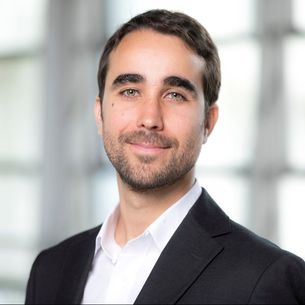
Dr Elisa Alt is a Lecturer in Entrepreneurship at King’s Business School, King’s College London. Her research focuses on entrepreneurial change agency within organizations, addressing social and environmental challenges through intrapreneurship. She coordinates the GRONEN Reading Group and has held visiting roles at Cranfield University, Fundação Dom Cabral, and Northeastern University. Previously, she was at Anglia Ruskin University and worked in Brazil’s advertising industry. Elisa holds a PhD in Management from the University of Seville. Her expertise includes intrapreneurship, corporate sustainability, and organizational change. She teaches entrepreneurship in family business contexts and contributes to King’s Executive MBA program, emphasizing innovation for social impact. Research Interests: Social intrapreneurship, corporate social entrepreneurship, environmental management, and organizational citizenship behavior Awards: Fellow of the Higher Education Academy
Michel Laroche serves as Professor of Marketing and holds the Royal Bank Distinguished Professorship at Concordia University's John Molson School of Business. He maintains active research leadership through editorship of the Canadian Journal of Administrative Sciences and extensive scholarly contributions across global marketing domains. His educational background includes a Diplôme d'ingénieur from École Centrale de Paris, M.S.E. from Johns Hopkins, and M.Ph./Ph.D. from Columbia University, complemented by an honorary Doctor of Science from the University of Guelph. This multidisciplinary foundation underpins his research approach. Consumer behavior modeling Social media/digital marketing analytics Cross-cultural retailing dynamics Advertising effectiveness in global contexts Internet of Things consumer adoption Artificial intelligence in marketing systems His publication portfolio demonstrates consistent innovation in digital consumer behavior, with recent work examining social commerce cultural dynamics, TikTok authenticity metrics, and pandemic-driven media consumption patterns. Articles consistently integrate technological advancement with deep cultural analysis. Fellow of the Royal Society of Canada Recipient of the Jacques-Rousseau Medal for multidisciplinary research Living Legend of Marketing Award (HEC-Montreal) Hans B. Thorelli Award for international marketing research JBR Outstanding Associate Editor Award (namesake) Laroche has supervised 64 M.Sc. and 27 Ph.D. theses while securing major funding from SSHRC and FQRSC. His editorial leadership spans 16 years as Managing Editor of the Journal of Business Research and current Editor-in-Chief role at CJAS , establishing significant infrastructure for marketing scholarship. Professional service includes presidential roles in ASAC and AMS, plus extensive journal editorial board participation.
Jörg Spenkuch is an Associate Professor of Managerial Economics & Decision Sciences at Kellogg School of Management, Northwestern University, where he has been since 2013. He holds a Ph.D. in Economics (2013) and M.A. (2009) from the University of Chicago, and dual B.A. degrees in Economics and Business Administration (2007) from the University of St. Gallen, Switzerland. Education: Ph.D., 2013, Economics, University of Chicago M.A., 2009, Economics, University of Chicago B.A., 2007, Economics, University of St. Gallen B.A., 2007, Business Administration, University of St. Gallen Professor Spenkuch's research bridges political economy and applied microeconomics , with a focus on ideological behavior, strategic decision-making, and social dynamics. His work examines topics like: Political Economy: Campaign finance, electoral accountability, and ideological sorting. Behavioral Economics: Satisficing behavior, memory-driven choices, and strategic voting. Public Policy: School desegregation effects, bureaucratic performance, and immigration-crime linkages. His recent publications analyze: Long-term ideological shifts from 1975 school desegregation (2025 working paper). Memory premiums in decision-making (2025 working paper). Complexity's role in chess strategy (2024 Review of Economic Studies ). Political accountability during natural disasters (2025 American Economic Journal ). Scientific Recognition: MinE Best Paper Award (European Economic Association) Chair's Core Teaching Award Deutschlands "Top 40 unter 40" (Capital magazine) FEEM Award (European Economic Association) Best Paper Award, RGS Doctoral Conference At Kellogg, he teaches Leadership and Crisis Management (PACT-440-5) and Business Analytics (DECS-435-0). His work has been published in top journals like Econometrica , American Economic Review , Quarterly Journal of Economics , and Review of Economic Studies , covering topics from partisan spatial sorting to expressive vs. strategic voting behavior.
Praveen K. Kopalle is the Signal Companies' Professor of Management, professor of marketing, and area chair at the Tuck School of Business, Dartmouth College. He served as associate dean for the MBA program (2015–18) and chairs the marketing area (2012–15, 2022–present). He teaches courses in retail pricing analytics, marketing concepts, and new product development. Education: PhD in Marketing (Columbia University, 1992), MBA (Indian Institute of Management, 1988), BE in Mechanical & Product Engineering (Osmania University, 1986) His research focuses on marketing , machine learning , artificial intelligence , pricing strategy , retail analytics , and new product innovation . Recent work addresses digital customer orientation, loyalty programs in the big data era, and predictive analytics in retailing. He has published in top journals like Journal of Consumer Research , Management Science , and Marketing Science . Praveen serves as departmental editor for Production and Operations Management and associate editor for multiple journals. He has held leadership roles in the INFORMS Society for Marketing Science and contributed to editorial boards of 10+ journals. Scientific Awards: 2018 Lifetime Achievement Award (American Marketing Association’s Retailing and Pricing Special Interest Group) 2015 Core Teaching Excellence Award (Tuck School) 2011 Distinguished Alumni Award (IIM Bangalore) Multiple John Little and Davidson Awards 2022 Distinguished Alumnus Award (Osmania University) His teaching spans MBA core courses ( Marketing , Statistics for Managers ) and electives ( Retail Pricing Strategy , Marketing New Products ). He also leads executive education programs and the Tuck Integrative Experiential Learning (TuckINTEL) initiative.
Bryan Bollinger is a Professor of Marketing at Dartmouth College Tuck School of Business. Previously, he served as Associate/Professor at NYU Stern School of Business from 2019-2025. His research focuses on the causal effects of policy decisions in sustainability domains, including energy, environment, and health, with grants from DOE, NSF, and EPA. He has authored influential studies on solar adoption, dynamic pricing, and behavioral marketing. PhD in Marketing, Stanford University (2011) BA/BE in Engineering, Dartmouth College (2003) MA in Economics, Stanford University (2010) Research interests include technology adoption, energy policy, peer effects, and empirical methods. His work has appeared in Marketing Science , Management Science , and Nature . He currently edits leading journals like Journal of Marketing and Quantitative Marketing and Economics . Recent articles explore solar subsidy valuations, soda tax impacts, and behavioral strategies for sustainable products. Awards include the AMA-EBSCO Responsible Research Award. Supervised over 20 PhD/postdoc students in marketing and economics. Active in editorial boards and policy advisory roles. Labs/Teams: Collaborates with interdisciplinary groups on energy policy and behavioral science initiatives. Leads research on solar diffusion, climate change consumer behavior, and sustainable marketing strategies.
Carlos Diaz Ruiz is an Associate Professor (tenure-track) at the Department of Marketing, Hanken School of Economics in Vasa, Finland. He holds a Ph.D. in Marketing from Finland and has held faculty positions at Hanken, Aalto University, KEDGE Business School (France), and the University of Auckland (New Zealand). His research focuses on market-shaping, consumer culture, and disinformation, particularly in digital advertising and social media contexts. He authored the book *Market-Oriented Disinformation Research: Digital Advertising, Disinformation and Fake News on Social Media* (2025) and received the 2025 Thomas C. Kinnear Award for his work on disinformation in social media echo chambers. Dr. Diaz Ruiz’s academic career includes roles as a Lecturer and Senior Lecturer at the University of Auckland, and prior to academia, he worked as a consumer insights consultant for Latin American companies, recognized in ESOMAR's Insights250 (2022, 2024). He is an Associate Editor at the *Journal of Marketing Management* and actively publishes in top journals like *Journal of Public Policy & Marketing* and *New Media & Society*. His teaching emphasizes bridging academic research with industry needs, offering courses in qualitative research, strategic branding, and consumer culture. Methodologically, he employs business anthropology and ethnography to study consumer-led marketing strategies. Key research themes include the intersection of disinformation, social media business models, and the performative role of market representations.
Prof. Marc Fischer is a Professor of Marketing Science and Analytics at the University of Cologne, holding the Morrison Faculty Fellowship at UCLA Anderson School of Management. His research focuses on marketing performance management, analytics, and brand strategy. He has held academic roles at institutions including the University of Technology Sydney and the University of Passau. His work bridges theoretical and applied marketing, with contributions to firm value optimization, dynamic pricing, and healthcare marketing. Education and Career: 2011–current: Full Professor at University of Cologne 2014–2020: Senior International Faculty at UTS Business School 2007–2010: Professor at University of Passau 2003–2007: Assistant/Associate Professor at Christian-Albrechts-University Kiel 2002–2003: Visiting Scholar at UCLA 2001–2002: Consultant at McKinsey & Company Research Interests: Prof. Fischer explores how marketing strategies impact firm value and brand equity. His work emphasizes marketing analytics, including econometric modeling of brand performance, advertising effectiveness, and cross-country marketing dynamics. He also investigates healthcare marketing, particularly in prescription drug markets and physician-patient interactions. Key Contributions: His research has been recognized with awards such as the VHB Best Paper Award and multiple nominations for the Paul E. Green Award. Notable articles include studies on brand leverage potential (Management Science, 2024) and corporate social irresponsibility (Journal of Marketing, 2020). Service and Leadership: Co-leads the Key Research Initiative “Analytics and Transformation” at Cologne CEMS Academic Director (global alliance of 34 business schools) Member of the Rector’s Advisory Commission on Bonus Systems, University of Cologne Advisory Board Member of Analyx GmbH and the Marketing Accountability Standards Board (MASB) Labs and Collaborations: Active in interdisciplinary projects like the HPDnet Emerging Group (healthcare networks for pediatric care), funded by the DFG. Collaborates with institutions such as UCLA, the University of Bonn, and multinational corporations through CEMS.
Caner ÇAKI is an Assistant Professor at Mucur Vocational School, Erciyes University, specializing in communication sciences with a focus on historical propaganda analysis. His academic journey includes a PhD from Erciyes University's Institute of Social Sciences in Communication Sciences (2020), an MSc from İnönü University's Institute of Social Sciences (2016), and a BA from Karadeniz Technical University's Faculty of Communication (2012). PhD: Erciyes University, Institute of Social Sciences, Communication Sciences (2016-2020) MSc: İnönü University, Institute of Social Sciences, Communication Sciences (2013-2016) BA: Karadeniz Technical University, Faculty of Communication, Public Relations and Advertising (2007-2012) ÇAKI's research primarily focuses on semiotics and propaganda studies, with particular expertise in analyzing historical political cartoons, wartime propaganda, and visual communication across different eras and political systems. His work spans multiple historical periods including World War I, World War II, the Cultural Revolution in China, and Cold War dynamics. His extensive publication record (over 150 publications) demonstrates a consistent focus on propaganda mechanisms across different historical contexts and political systems. His recent work (2023-2025) shows a continued emphasis on visual propaganda analysis, with particular attention to World War-era propaganda, Chinese Cultural Revolution materials, and historical political cartoon analysis across multiple national contexts including German, French, British, and Ottoman/Turkish media. Collaborating with researchers such as Mehmet Ozan Gülada, Mehmet Ali Gazi, Mustafa Karaca, and Abdülhakim Bahadır Darı, ÇAKI has established himself as a significant contributor to the field of historical propaganda analysis with a strong focus on visual communication methods. He teaches courses including Advertising Film, Effective Speaking and Communication, Public Relations Concepts and Theories, Popular Culture and Media, and Basic Information Technology Usage at the vocational school level, demonstrating his commitment to both theoretical research and practical education in media studies.
Fred Feinberg is the Joseph and Sally Handleman Professor of Marketing and Professor of Statistics (by courtesy) at the University of Michigan, where he is also an Affiliated Faculty member of the Center for the Study of Complex Systems. His work integrates advanced Bayesian methods with large-scale marketing data to illuminate how people make choices under uncertainty. Education Ph.D., Sloan School of Management, Massachusetts Institute of Technology (1989) Doctoral program in Mathematics, Cornell University (1983–84) S.B. Mathematics & S.B. Philosophy, Massachusetts Institute of Technology (1983) Research Focus Feinberg’s scholarship centers on discrete choice models that leverage real-world decisions to infer latent attributes such as demographics, product appeal, and socioeconomic status. Methodologically, he employs Hierarchical Bayes (HB) models and cutting-edge MCMC algorithms to handle massive data sets, while theoretically he advances dyadic utility theory and optimal search under uncertainty. Applications span click-through behavior, menu-based choice, online dating preferences, spatial marketing, and consumer reactions to intangible or aesthetic product features. Recent empirical studies explore the wearout versus weariness effects of online advertising, the impact of data breaches on consumer behavior, and dynamic pricing for digital media subscriptions. Across these projects, Feinberg couples rigorous statistical innovation with actionable managerial insights, bridging marketing science, operations, and engineering. Scientific Awards & Leadership Joseph and Sally Handleman Endowed Professorship Past President, INFORMS Society for Marketing Science Departmental Editor, Production and Operations Management Former Co-Editor, Marketing Science Co-author (with T. Kinnear & J. Taylor) of the textbook Modern Marketing Research: Concepts, Methods, and Cases Grants & Collaborations While explicit grant lists are not provided, Feinberg’s prolific publication record in top-tier journals (e.g., Journal of Marketing Research , Marketing Science , Management Science ) and editorial board service imply sustained external funding and interdisciplinary partnerships, particularly with operations, engineering, and computer-science groups. Laboratories & Teams Feinberg is formally affiliated with the Center for the Study of Complex Systems (CSCS) at the University of Michigan, where he collaborates on network-based choice frameworks and large-scale behavioral data analytics. He maintains active ties to the Ross Marketing faculty and the Department of Statistics, fostering joint workshops and doctoral training initiatives.
Bryan Lilly is a Professor of Marketing at the University of Wisconsin Oshkosh , where he has been affiliated with the College of Business since 1991. His academic journey includes a Ph.D. from Indiana University (1997), an MBA from Northwestern University (1991), and a BS from The Ohio State University (1985). Education : Ph.D. (Indiana University, 1997), MBA (Northwestern University, 1991), BS (The Ohio State University, 1985) Dr. Lilly's research spans Marketing Education, Sales Pedagogy, Consumer Behavior, and Environmental Advertising . He has pioneered collaborative data collection models for regional workforce development and examined counterproductive work behaviors in sales. His 2024 article on student-teacher behavioral dynamics and 2023 work on patient satisfaction in healthcare marketing highlight his interdisciplinary focus. His recent publications (2016-2024) emphasize pedagogical innovation , sales ethics , and consumer psychology , with keywords spanning education, healthcare, and environmental marketing. Articles frequently address behavioral motivations, word-of-mouth dynamics, and experiential learning. Scientific Awards : College of Business Outstanding Faculty of the Year (2018) Dr. Lilly has served as a thesis advisor for UW Honors students, advised marketing clubs, and participated in university governance through committees like the COB Graduate Programs Committee and UWO Faculty Senate Budget Committee. He also contributes to community initiatives like the Neenah youth support group Brigade and Oshkosh Propel.
Felipe Thomaz is an Associate Professor of Marketing at Saïd Business School, University of Oxford, and Deputy Director of the Oxford Future of Marketing Initiative. He holds a PhD in Marketing from the University of Pittsburgh and previously taught at the University of South Carolina. His research focuses on marketing strategy, AI ethics, illicit markets, and ESG integration, with notable contributions to frameworks like Ad Net Zero for net-zero advertising emissions. He collaborates with UN agencies, NGOs, and tech companies to address global sustainability goals and wildlife trafficking networks. Education: PhD in Marketing (University of Pittsburgh), MSc in Marketing & Finance (University of Pittsburgh), BSc in Animal Sciences (University of Florida). Research interests include digital marketing channels, brand performance via social networks, AI-driven marketing strategies, and conservation science linked to wildlife trade. His work bridges academia and industry, resulting in spinouts and IP transfers from Saïd Business School. Key projects include: Ad Net Zero: Global standard for reducing advertising emissions UN collaboration on wildlife trafficking through dark web analysis UNESCO partnerships on eliminating stereotypes in advertising His interdisciplinary approach spans marketing, mathematics, and conservation science, with publications in top journals like Journal of Marketing and Conservation Science and Practice .
Andre Veiga is an Assistant Professor of Economics at the Imperial College Business School, affiliated with the Department of Economics and Public Policy at Imperial College London. He holds a PhD in Economics from the Toulouse School of Economics and was a postdoctoral fellow at Oxford University. His research focuses on theoretical and empirical Industrial Organization, particularly in healthcare, insurance, and digital markets. He explores how individuals and firms operate in these markets and the regulatory implications thereof. His work has been published in top journals like the American Economic Journal: Microeconomics, Journal of Marketing Research, and the Review of Economics and Statistics. Veiga’s research interests span Economic Theory, Applied Economics, and Econometrics. Key themes include price discrimination in selection markets, attention spillovers in digital advertising, and healthcare quality disparities. His articles often blend empirical analysis with theoretical models to inform policy. Notably, his work has been shortlisted for prestigious awards such as the SCOR/EGRIE Young Economist Best Paper Award and the Antitrust Writing Awards. He teaches courses on Digital Economics, Business Economics, and Microeconomic Theory at Imperial College, reflecting his expertise in contemporary market dynamics. His collaborations with institutions like the CEPR and media outlets like Forbes highlight his engagement with both academic and public discourse.
Damon McCoy is a Professor of Computer Science and Engineering at NYU Tandon School of Engineering and Co-Director of the NYU Center for Cybersecurity (CCS). He holds a Ph.D. in Computer Science from the University of Colorado, Boulder (2009) and a B.S. in the same field (1999). His research focuses on empirically measuring the security and privacy of technology systems, with a current emphasis on online payment systems, cybercrime economics, automotive security, privacy-enhancing technologies, and censorship resistance. He co-directs Cybersecurity for Democracy , a multi-university initiative addressing online threats to democratic processes. His research has examined topics such as the monetization of YouTube conspiracy content, toxic online discourse targeting election officials, and vulnerabilities in automotive systems. He has collaborated with institutions like the International Computer Science Institute and led studies on social media platforms' content moderation practices, including Facebook's handling of political ads and YouTube's ecosystem of deceptive advertising. McCoy's work often bridges cybersecurity with societal impacts, analyzing how technology intersects with democracy, misinformation, and economic exploitation. His contributions include developing frameworks for securing automotive software updates (Uptane) and methodologies to combat cybercrime supply chains. He has received funding from the National Science Foundation and other agencies to pursue projects addressing emerging cyber threats. Key affiliations include the NYU Center for Cybersecurity and the Center for Automotive Embedded Systems Security (CAESS), where he contributed to early automotive security analysis. He advises on cybersecurity policy and has published extensively in top-tier journals and conferences, focusing on real-world applications of security research.
Fabrício Benevenuto is an Associate Professor in the Computer Science Department at Federal University of Minas Gerais (UFMG), where he conducts interdisciplinary research at the intersection of social media analysis, data science, and computational journalism. His work spans complex networks, machine learning, and natural language processing with strong societal impact. His research focuses on social media dynamics, particularly in Brazilian contexts, with major contributions to hate speech detection, fake news analysis, and political discourse monitoring. He leads large-scale projects against misinformation, including development of systems like WhatsApp Monitor, Media Bias Monitor, and Purple Feed. His work combines technical innovation with real-world applications for election transparency and public discourse integrity. Benevenuto's recent publications demonstrate strong trends in multilingual NLP for social media analysis, with emphasis on Brazilian Portuguese contexts. His team produces both theoretical contributions and practical systems addressing hate speech, misinformation, and media bias. Notable methodological approaches include combining network analysis with linguistic features, developing culturally-aware detection systems, and creating large annotated datasets for understudied languages. CAPES award for best Brazilian computer science thesis (2010) Humboldt Foundation scholarship recipient (2017-2018) Member of TikTok Safety Advisory Council WWW'20 Best Paper Nominee & CNIL-INRIA Privacy Protection Prize winner Multiple best paper awards at CEAS, WBC, and ICWSM conferences Test-of-Time Award at ICWSM'20 Benevenuto actively mentors PhD and MSc students, with numerous advisees securing academic positions at Brazilian universities and research roles at institutions like Max Planck Institute. His projects often receive funding supporting interdisciplinary collaborations across computer science and social sciences. Current work includes large-scale analysis of Telegram political groups, real-time election monitoring systems, and developing culturally-aware NLP tools for Portuguese. He leads research teams working on social media analysis systems with societal impact, particularly focused on Brazilian digital ecosystems. Projects involve cross-institutional collaborations with researchers from MPI-SWS, Max Planck Institute, and various Brazilian universities, emphasizing practical applications for public discourse integrity.
Joel Mero is an Associate Professor at the School of Business and Economics, University of Jyväskylä , leading the Digital Marketing and Communication (DMC) research group and directing the International Master's Program in Digital Marketing and Corporate Communication (DMCC) . He holds a D.Sc. (Econ.) from Jyväskylä University (2016) and has designed over 20 courses across 10 institutions, covering all academic levels from Bachelor to Doctoral. His research focuses on B2B digital marketing management , particularly leveraging digital data and technologies in business markets. Notable achievements include two Best Paper Awards (2017 & 2019) in the Industrial Marketing Management journal. His work explores topics such as influencer marketing, big data analytics, marketing agility, and AI-driven strategies. Current research groups include the Sound Science Lab (music perception) and Digital Marketing and Communication (DMC) . He collaborates on projects like the Finnish Quantum Flagship , aiming to advance quantum technology applications. Mero emphasizes practical applications of digital tools, bridging academic insights with industry needs. Publications span conceptual frameworks, empirical studies, and industry guides, with a focus on B2B customer journeys, AI in content creation, and data-driven decision-making. His teaching and research highlight agility, innovation, and the ethical use of emerging technologies in marketing.