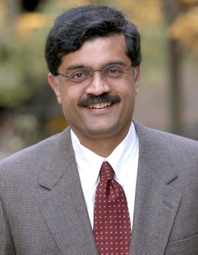
Wilfred Amaldoss is the Thomas A. Finch Jr. Professor of Marketing at Duke University's Fuqua School of Business. He holds a Ph.D. in Marketing from the Wharton School (University of Pennsylvania) and an MBA from the Indian Institute of Management, Ahmedabad. Previously, he taught at Purdue University's Krannert Graduate School of Management. His research focuses on strategic behavior in pricing, advertising, and competitive dynamics. Notable areas include pricing strategies for prototypical products, the impact of social influence on branding, and sponsored search advertising mechanisms. He has published in top journals like Journal of Marketing Research and Management Science . Amaldoss has received multiple awards, including the Frank M. Bass Award (2001) for exceptional Ph.D.-derived research and the John C. Little Award for outstanding marketing papers. His teaching excellence is recognized through awards such as the Duke MBA Excellence in Teaching Award (2008, 2009, 2019) and the Salgo Noren Outstanding Teacher Award (2000–2001). He serves as an Associate Editor for Management Science and Journal of Marketing Research , and has been honored with the Distinguished Service Award by Management Science (2009–2011). His work bridges theoretical contributions with practical insights into consumer behavior and strategic business decisions.
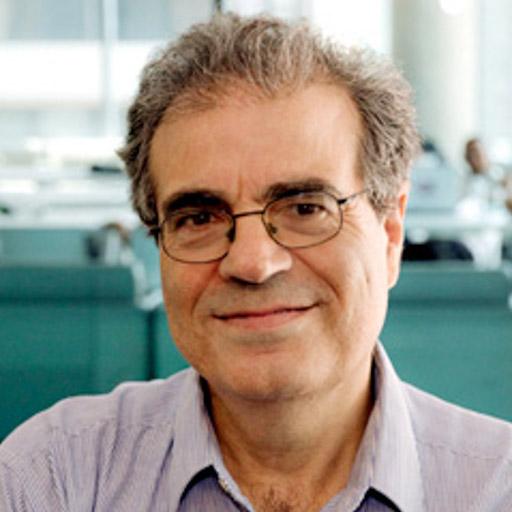
Dr. Peter Guenther is a Visiting Professorial Fellow at the Institute of Management and Decision Sciences (MDS) at Hamburg University of Technology (TUHH), specializing in marketing strategy and quantitative methods. His research focuses on quantifying marketing's impact on financial performance, marketing asset accountability, business-to-business advertising, and digital marketing. He holds a PhD in Marketing from the University of Melbourne and a Diplom (German Master) in Commerce from the University of Mannheim. Key research interests include understanding marketing's financial value, improving PLS-SEM methodologies in business research, and analyzing B2B advertising dynamics. His work has been published in top-tier journals such as the Journal of Marketing , International Journal of Research in Marketing , and Industrial Marketing Management . He serves on the Editorial Review Board of Industrial Marketing Management . Dr. Guenther has prior affiliations with the University of Melbourne and RMIT (Australia). He contributes to the Liverpool Advanced Methods for Big Data Analytics (LAMBDA) Research Centre and teaches modules like 'Consumer Insight Research' and 'Marketing & Digital Analytics.'
Annechen Bahr Bugge is a sociologist and Researcher I at Consumption Research Norway (SIFO), Oslo Metropolitan University. Her work focuses on food culture, culinary heritage, and sustainable consumption patterns, with particular emphasis on Norwegian dietary traditions and their evolution from the 16th century to present day. PhD in Sociology (2005) from Norwegian University of Science and Technology (NTNU) Current leader of FoodStories project (2025-2028) examining Norwegian food heritage Previously led FoodLessons project (2021-2024) connecting culinary history with future food development Her research explores: dietary transitions, plant-based diets, food policy interventions, and the sociocultural dimensions of food consumption. She has published extensively on Norwegian food culture, including the book Fattigmenn, tilslørte bondepiker og rike riddere (2019) and upcoming Food Cultures of Norway: Cuisines, Customs, and Issues (2025, co-authored with Henry Notaker). Recent publications focus on: food heritage revitalization, sustainable diets, retail interventions for healthier choices, and digital marketing influences on youth consumption patterns. Her work combines historical analysis with contemporary food challenges to inform future sustainable food systems. For a complete overview of her research and publications, see her Cristin profile: Cristin Profile
Prof. Dr. Michael Bosnjak leads the Department for Psychological Research Methods at the University of Trier, Germany, focusing on research synthesis methods, theory-driven machine learning, survey methodology, and experimental designs applied to personality psychology (HEXACO model), consumer behavior, and public health. His team includes Dr. Henning Silber (GESIS), Dr. Bernd Weiß (GESIS), and international collaborators at Utrecht University. Affiliation: University of Trier (Department of Psychology) Editorial Roles: Zeitschrift für Psychologie (Editorial Board), Social Science Computer Review (Associate Editor), Frontiers in Psychology (Review Editorial Board) Grants: DFG SFB 884 (co-applicant), DFG Project PaCO (2019-2024, principle investigator), BMBF-funded GESIS Panel Campus His recent publications analyze panel conditioning effects in longitudinal studies, e-commerce privacy dynamics, personality-trait interactions, and psychosis proneness measurement. Scientific awards include the 2016 BMBF infrastructure grant, 2011 Isaac Manasseh Meyer Fellowship, and 2003 Karin Islinger Award. Current projects address data quality in probability-based and opt-in panels, with experimental designs across eight groups testing measurement error mechanisms. He serves as a co-editor for multiple special issues on survey methodology and tourism psychology.
Zoran Kalinic serves as an Assistant Professor at the Faculty of Economics, University of Kragujevac, where he teaches Electronic Business since October 2012. Previously, he worked at the Faculty of Mechanical Engineering in Kragujevac from 1996 to 2005, and joined the Faculty of Economics in February 2005 as an assistant in Information Systems, later teaching Information Technology and Electronic Business from 2009 onward. Doctorate (2012): Faculty of Engineering, University of Kragujevac, specializing in information systems development and mobile communications Postgraduate studies: Faculty of Mechanical Engineering in Kragujevac (completed with average grade of 10) Bachelor's degree: Faculty of Mechanical Engineering in Kragujevac (1996, average grade 9.43) Professor Kalinic's research focuses on digital transformation and its economic implications, with particular expertise in mobile commerce, electronic business systems, digital payment technologies, and consumer behavior in online environments. His work frequently employs advanced analytical methods including artificial neural networks, structural equation modeling, and hybrid analytical approaches to investigate technology adoption patterns and digital marketplace dynamics. He has conducted extensive research on Serbian digital markets, including studies on mobile payment systems, e-commerce development barriers, and real estate price prediction using AI techniques. His publication record demonstrates a clear progression from foundational technology acceptance research toward more complex analyses of digital ecosystems, with recent work examining influencer marketing effects on TikTok, biometric payment systems, and gig economy measurement in Serbia. The integration of artificial intelligence methodologies with traditional consumer behavior theories represents a distinctive feature of his scholarly approach. Professor Kalinic maintains active international academic engagement through short study visits to institutions including the University of Udine, Vienna University of Economics, University of Maribor, Krakow University of Economics, Coventry University, Polytechnic of Turin, and Comenius University in Bratislava. He spent six weeks at the University of Maribor in 2007 through a Tempus IMG grant and served as a visiting lecturer at the Krakow University of Economics in 2012. Author/co-author of over 60 papers in international and domestic journals and conferences Participant in multiple scientific research and professional projects Recipient of academic awards during studies from University, Faculty, Ministry of Science and Technology of Serbia, Embassy of Norway, WUS-Austria, Zastava-Yugo Automobiles, and Kragujevac City Assembly His professional development includes a month-long visit to the Faculty of Informatics at the University of the Basque Country in San Sebastian (2004) and ongoing collaboration with regional and European academic institutions. Professor Kalinic's research bridges theoretical frameworks with practical applications in the Serbian and Western Balkan digital economy context.
Guillermo Ferreyra is a Professor in the Department of Mathematics at Louisiana State University (LSU), where he has served since 1996. He holds a Ph.D. from Rutgers University (1983) and a Licenciado from the Universidad de Córdoba, Argentina (1977). His research focuses on Deterministic and Stochastic Control Theory, Partial Differential Equations, Probability Theory, and Financial Mathematics. Ferreyra has held significant administrative roles, including Associate Dean for Science Education (2012–present), Deputy Superintendent of the Office of STEM at the Louisiana Department of Education (2010–2012), and Dean of the College of Arts and Sciences at LSU (2004–2009). He has led initiatives to enhance STEM education, including professional development programs for K-12 teachers and strategies to improve 8th-grade math achievement. Ferreyra’s academic contributions include over 30 journal articles and co-edited volumes on evolution equations and control theory. He has advised five Ph.D. students and secured millions in grants for interdisciplinary research and educational initiatives. His administrative achievements at LSU include expanding faculty diversity, improving student advising, and fostering interdisciplinary programs such as the China Initiative. He has also contributed to statewide education reforms, including planning for the Common Core State Standards. Ferreyra is a member of the American Mathematical Society and has served on national evaluation committees and grant review panels. Publications highlight his work in stochastic control, free boundary problems, and applications to finance and advertising models. His research bridges theoretical mathematics with practical applications, such as the mathematical underpinnings of the 1997 Nobel Prize in Economics for the Black-Scholes formula.
Martin Huber is Professor of Applied Econometrics and Policy Evaluation at the University of Fribourg, Switzerland, within the Faculty of Management, Economics and Social Sciences, Department of Economics. He leads the Chair of Applied Econometrics and maintains an active research profile with numerous publications in top economics and statistics journals. His work bridges theoretical econometrics with practical policy applications across multiple domains including labor, health, and education economics. Professor Huber earned his Ph.D. in Economics and Finance in 2010 and served as Assistant Professor at the University of St. Gallen until 2014. He has conducted research stays at Harvard University (2011/2012) and the University of Sydney (2014 and 2019), establishing an international research network. His academic affiliations include the Committee for Econometrics of the Verein für Socialpolitik, Global Labor Organization, Soda Labs (Monash Business School), and Centre for European Economic Research (ZEW) Mannheim. Huber's research focuses on data-based causal analysis , machine learning applications in economics , and policy evaluation methods . He specializes in developing and applying statistical and econometric methods for measuring causal effects, with particular emphasis on semi- and nonparametric microeconometrics. His work spans labor economics (gender occupational segregation, maternal labor supply), health economics, education policy, and competition policy (bid-rigging cartels detection). His recent publications (2023-2025) demonstrate a clear trajectory toward integrating machine learning techniques with traditional econometric methods for causal inference. This includes developing frameworks for causal discovery, improving difference-in-differences methods with machine learning, and creating novel approaches for detecting collusion in markets. His 2023 book "Causal Analysis: Impact Evaluation and Causal Machine Learning with Applications in R" (MIT Press) has become a key reference in the field. As an active researcher, Professor Huber directs several research projects including experimental evaluations of gender occupational segregation in the Swiss apprenticeship market. His work combines theoretical rigor with practical policy relevance, often employing experimental and quasi-experimental methods to address questions of causal mechanisms in social and economic phenomena. Through his Chair of Applied Econometrics, Huber supervises Ph.D. students and maintains an active research group focused on advancing causal inference methodologies. His work has significant implications for evidence-based policymaking across multiple sectors, particularly in evaluating the effectiveness of social programs and economic policies.
Dr. Seyed Mohammad Sadegh Khaksar is a Senior Lecturer in Technology Management at La Trobe Business School, specializing in digital transformation, innovation, and healthcare technology. He holds a PhD in Management and teaches courses like Project Management. As Head of the Project Management major, he employs innovative pedagogies such as blended learning and peer review to enhance graduate employability. His research focuses on digital excellence strategies in firms, with notable projects including an AUD 96k IoMT platform for rural healthcare and AUD 40k studies on aged care supply chain resilience. He advises startups and organizations on digital strategies, particularly in healthcare, oil & gas, and professional services. Key research areas include social robots in education and care, IoT applications, and agile-lean methodologies. He has secured over $300k in grants and serves on editorial boards like Technological Forecasting and Social Change . Awards include the 2024 Student Experience Award and 2021 Early Career Researcher Award. Current PhD supervision spans digital responsibility in healthcare and banking sectors, and IoT-driven service innovations. He leads funded projects on smart cities and pandemic logistics, reflecting his interdisciplinary impact across technology, healthcare, and education.
Dr Harrison Smith is a Lecturer in Digital Media & Society at the University of Sheffield's School of Sociological Studies, Politics and International Relations. He holds a PhD from the University of Toronto’s Faculty of Information, alongside MA and BA degrees in Sociology from Queen’s University, Canada. His research focuses on the political economy of data analytics, particularly in smart cities and consumer surveillance contexts. Education: PhD in Information Studies, University of Toronto (Canada) MA in Sociology, Queen’s University (Canada) BA (Hons) in Sociology, Queen’s University (Canada) Smith’s research examines how data infrastructures shape socio-economic inequality through processes like surveillance, classification, and market segmentation. Key areas include location-based marketing, 5G data infrastructures, and industry consolidation in data analytics. His work critiques how digital technologies reconfigure urban spaces and labor markets, particularly in 'smart city' contexts. Recent publications explore the metaverse's industrial implications, blockchain’s role in dispute resolution, and surveillance practices at music festivals. His teaching includes leading the module SCS2016: The Sociology of the Media. Smith’s expertise bridges media theory, urban informatics, and critical data studies, emphasizing ethical and political dimensions of digital technologies in everyday life.
Pankaj Aggarwal is a Professor of Marketing in the Department of Management at the University of Toronto Scarborough (UTSC), with a cross-appointment to the Rotman School of Management. He holds a PhD in Marketing from the University of Chicago and has held academic leadership roles, including former Associate Chair of the UTSC Department of Management. His research focuses on consumer-brand relationships, anthropomorphism, and judgment/decision-making, with publications in top journals like the Journal of Consumer Research and Psychological Science . He is recognized as a leading scholar in consumer behavior, ranked 1st in Canada and top 25 globally. Aggarwal teaches courses ranging from undergraduate marketing principles to PhD-level consumer psychology seminars and serves on editorial boards for major marketing journals. Education: PhD in Marketing (University of Chicago), MBA from the University of Chicago and IIM Ahmedabad, and a B.A. in Economics from St. Stephen’s College, Delhi University. Research Interests: Consumer-brand relationships, brand anthropomorphism, judgment and decision-making, advertising, and social psychology. His work explores how brands are perceived as human-like entities and how this influences consumer behavior, including service evaluations, product preferences, and ethical decisions. Grants & Leadership: Aggarwal has secured multiple grants from SSHRC (Social Sciences and Humanities Research Council) and other institutions, focusing on topics like anthropomorphism, brand relationships, and decision-making norms. He has held editorial roles at the Journal of Consumer Research and Journal of the Association for Consumer Research , and is a Fellow of the Institute of Brand and Brand Relationships. Teaching & Mentorship: Teaches courses such as Principles of Marketing, Advertising Management, and PhD-level consumer psychology seminars. Supervises graduate students and mentors researchers in consumer behavior and marketing strategy.
Venkatram Ramaswamy is the Hallman Fellow of Electronic Business and Professor of Marketing at the Ross School of Business, University of Michigan. He is a globally recognized thought leader in innovation, strategy, and co-creation, with expertise spanning marketing, branding, IT, and organizational dynamics. His work emphasizes the transformative potential of co-creating value with stakeholders across industries and sectors. Education: PhD in Marketing, The Wharton School, University of Pennsylvania (1989). Research Interests: Venkat’s work focuses on co-creation paradigms, experience innovation, digital ecosystems, and stakeholder collaboration. He pioneered the concept of co-creation as a revolutionary approach to business value, detailed in his seminal books The Future of Competition (2004) and The Power of Co-Creation (2010). His recent work explores AI-human interactional creation and platformed ecosystems. Key Contributions: He has advised global firms like Mahindra, Hitachi, and Infosys on co-creation strategies. His frameworks integrate strategic risk management, digital platforms, and lived-experience ecosystems to drive sustainable value. He has delivered keynotes at events worldwide, including the Drucker Forum and InnovationsKongress. Awards: Recipient of the MIT-PwC Award (2003), Emerald Literati Award (2009), and Best Speaker Award at the Baptie Marketing Focus (2005). Grants & Labs: Collaborations with institutions like the International University of Japan (IUJ) and involvement in initiatives like the India Philanthropic Co-Creation Project reflect his commitment to systemic social impact. His research is supported by grants exploring digitalized societal ecosystems and wellbeing-focused platforms.
Tridas Mukhopadhyay is the Deloitte Consulting Professor of e-Business at Carnegie Mellon University's Tepper School of Business, where he has served on the faculty since 1986. His academic journey at CMU progressed from Instructor of Information Systems (1986-1987) to Assistant Professor (1987-1993), Associate Professor (1993-1997), Professor (1998-present), and Deloitte Consulting Professor of e-Business (2000-present). He also served as Director of the MS in Electronic Commerce program from 1999-2004. Ph.D. in Computer and Information Systems, University of Michigan–Ann Arbor, 1987 M.B.A. in Computer and Information Systems, Indian Institute of Management Calcutta, 1981 B. Tech. in Electrical Engineering, Indian Institute of Technology Kharagpur, 1978 Professor Mukhopadhyay's research spans multiple critical areas in information systems and technology management. His work on strategic IT use examines how organizations derive business value from information technology investments. He has conducted extensive research on business-to-business commerce, particularly focusing on e-procurement systems, web-based marketplaces, and electronic intermediation models. His cybersecurity research investigates the economic aspects of cyber security, including liability mechanisms and patch release strategies. In software engineering, he has studied productivity, quality metrics, and offshore software development contracts. His most recent publications reveal several key trends in his research trajectory. There's a growing focus on digital platform economics, examining advertising models, virtual currency systems in gaming, and sharing economy dynamics. His work increasingly incorporates behavioral aspects, studying how users respond to personalized content and how backers exert control in crowdfunded projects. Methodologically, his research employs sophisticated analytical approaches including hierarchical Bayesian models, structural equation modeling, and natural experiment designs. CART Research Frontier Award, Carnegie Mellon, 2005 Distinguished Ph.D. Alum, Michigan Business School, 2004 Best Paper, International Conference on Information Systems, 2001 Best Paper, MIS Quarterly, 1995 Xerox Research Chair, Tepper School of Business, 1988-1989 Information Systems Society Distinguished Fellow, 2012 Professor Mukhopadhyay has served on numerous editorial boards including Information Systems Research (1994-2003), Management Science (1999-2003), and MIS Quarterly (1997-1999), demonstrating his significant contributions to the field. His consulting work with major organizations including Alcoa, Chrysler, Ford, General Motors, IBM, and governmental agencies like the United States Post Office and Pennsylvania Turnpike has provided practical insights that inform his academic research. He has been actively involved in university governance through committee service including the Business Technology Faculty Search Committee and the CMU Faculty Senate. His research has been supported through various industry partnerships and academic grants, though specific grant details aren't provided in the source material. His teaching focuses on Business Computing and Strategic IT courses, reflecting his expertise in both foundational information systems concepts and strategic applications of technology in business contexts.
Susan Herbst is a Professor of Political Science and President Emeritus at the University of Connecticut. She previously served as the 15th President of UConn (2010–2019), returning to the faculty afterward. Her academic career includes roles as Executive Vice Chancellor of the University System of Georgia, Provost at the University at Albany (SUNY), and Dean of the College of Liberal Arts at Temple University. She holds a B.A. in Political Science from Duke University (1984) and a Ph.D. in Communication Theory from USC’s Annenberg School (1989). Her research focuses on public opinion, media, and American politics, with five authored books and numerous articles. She co-edits the University of Chicago Press’s Studies in American Politics series. Notable works include A Troubled Birth: The 1930s and American Public Opinion (2021) and President in the Maelstrom: FDR as Public Opinion Theorist (2021). Her scholarship bridges historical analysis with contemporary democratic theory, emphasizing media’s role in shaping public discourse. Herbst teaches at UConn’s Stamford campus, focusing on political communication and leadership. Her career reflects deep engagement with academic governance, institutional leadership, and scholarly contributions to understanding public opinion dynamics in American democracy.
Dr Elisa Alt is a Lecturer in Entrepreneurship at King’s Business School, King’s College London. Her research focuses on entrepreneurial change agency within organizations, addressing social and environmental challenges through intrapreneurship. She coordinates the GRONEN Reading Group and has held visiting roles at Cranfield University, Fundação Dom Cabral, and Northeastern University. Previously, she was at Anglia Ruskin University and worked in Brazil’s advertising industry. Elisa holds a PhD in Management from the University of Seville. Her expertise includes intrapreneurship, corporate sustainability, and organizational change. She teaches entrepreneurship in family business contexts and contributes to King’s Executive MBA program, emphasizing innovation for social impact. Research Interests: Social intrapreneurship, corporate social entrepreneurship, environmental management, and organizational citizenship behavior Awards: Fellow of the Higher Education Academy
Michel Laroche serves as Professor of Marketing and holds the Royal Bank Distinguished Professorship at Concordia University's John Molson School of Business. He maintains active research leadership through editorship of the Canadian Journal of Administrative Sciences and extensive scholarly contributions across global marketing domains. His educational background includes a Diplôme d'ingénieur from École Centrale de Paris, M.S.E. from Johns Hopkins, and M.Ph./Ph.D. from Columbia University, complemented by an honorary Doctor of Science from the University of Guelph. This multidisciplinary foundation underpins his research approach. Consumer behavior modeling Social media/digital marketing analytics Cross-cultural retailing dynamics Advertising effectiveness in global contexts Internet of Things consumer adoption Artificial intelligence in marketing systems His publication portfolio demonstrates consistent innovation in digital consumer behavior, with recent work examining social commerce cultural dynamics, TikTok authenticity metrics, and pandemic-driven media consumption patterns. Articles consistently integrate technological advancement with deep cultural analysis. Fellow of the Royal Society of Canada Recipient of the Jacques-Rousseau Medal for multidisciplinary research Living Legend of Marketing Award (HEC-Montreal) Hans B. Thorelli Award for international marketing research JBR Outstanding Associate Editor Award (namesake) Laroche has supervised 64 M.Sc. and 27 Ph.D. theses while securing major funding from SSHRC and FQRSC. His editorial leadership spans 16 years as Managing Editor of the Journal of Business Research and current Editor-in-Chief role at CJAS , establishing significant infrastructure for marketing scholarship. Professional service includes presidential roles in ASAC and AMS, plus extensive journal editorial board participation.