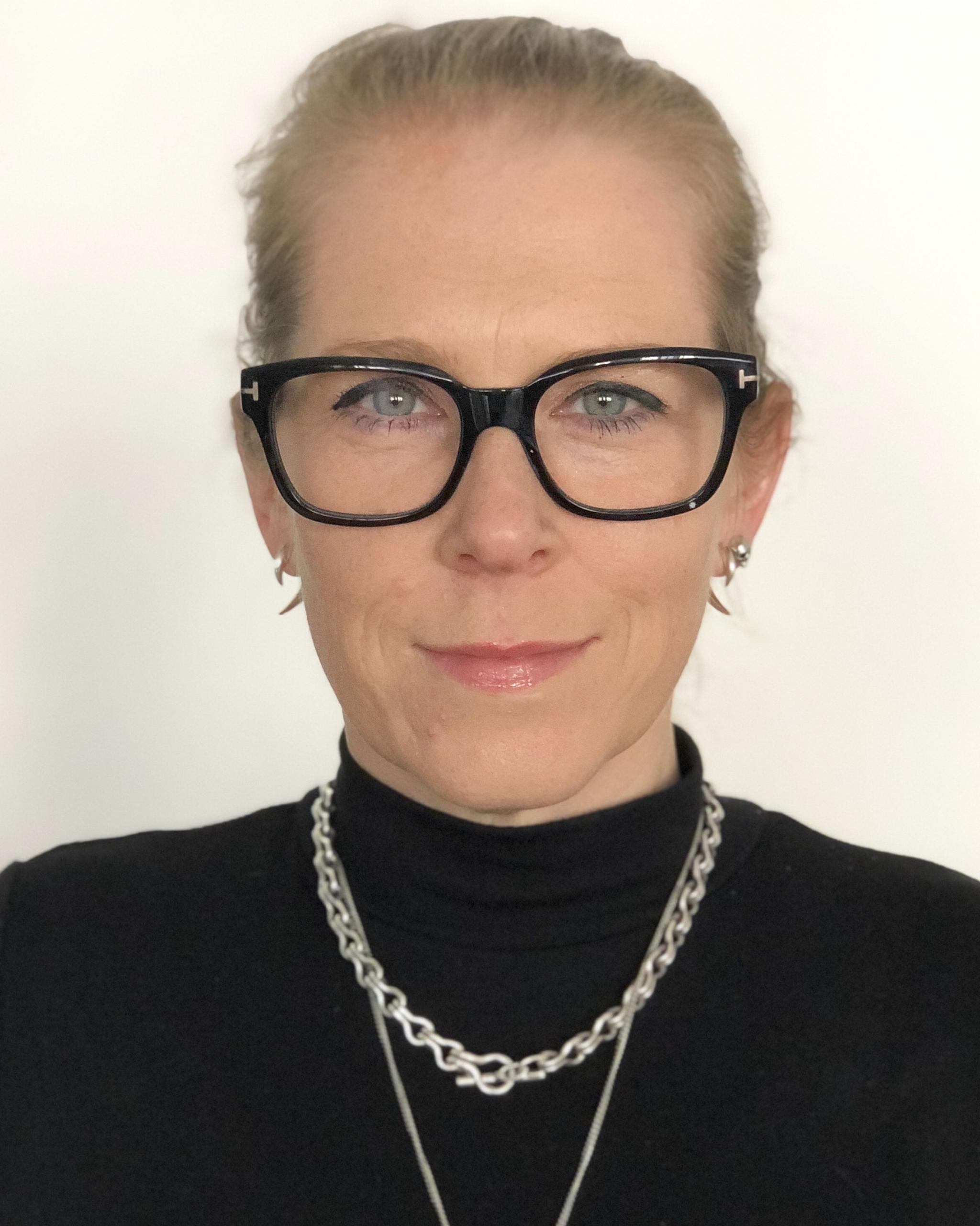
Larissa D'Angelo is an Associate Professor of English Language and Translation at the University of Bergamo , affiliated with the Department of Foreign Languages, Literatures and Cultures . She leads the Eye Tracking Lab within the Research Group on Digital Humanities (ReDH) and is a member of the Research Center on Languages for Specific Purposes (CERLIS) . Her academic background includes an MA in English Language from Youngstown State University (USA), a TESOL Certificate , a Certificate in Children's and Young Adult Literature , and a PhD in Applied Linguistics from the University of Reading (UK). Her research focuses on English for Specific Purposes , multimodal analysis , and eye-tracking studies , particularly in audiovisual translation , game localization , and academic communication . She has supervised theses on topics like AVT and cultural prosumer dynamics , multimodal text design , and AI in translation , though she emphasizes that AI usage is strictly prohibited in thesis work. Her publications explore the intersection of digital communication , metadiscourse , and translation theory , with a focus on visual and textual academic genres and pedagogical applications . She actively collaborates on projects like Erasmus+ initiatives for climate-resilient education.
Maria Löfgren serves as Associate Professor in the Department of Culture and Media Studies at Umeå University, Sweden. Her research critically examines literacy development within contemporary educational frameworks, with particular focus on Swedish language education policy and multimodal communication practices. Her scholarly work centers on Literacy Studies , Multimodal Literacy , and Educational Policy , investigating how literature functions within Swedish L1 education. Key themes include the relationship between literacy practices and democratic citizenship, the marginalization of literature in educational reform, and teacher professional development challenges in implementing multimodal literacy approaches. Her research often analyzes national initiatives like Läslyftet (The Literacy Lift) through policy implementation lenses. Analysis of her publication trajectory reveals consistent engagement with tensions between global educational assessments and national literary traditions. Her work demonstrates how socio-political forces reshape literature's role in Swedish classrooms, with increasing emphasis on digital literacy competencies while traditional literary analysis faces institutional constraints. Recent scholarship particularly addresses epistemological foundations of literacy in teacher education contexts. Löfgren actively participates in the Litum research group at Umeå University, which specializes in literacy research from educational sciences perspectives. Her collaborative work with Per-Olof Erixon forms a significant component of her scholarly output, particularly regarding literature's evolving position in Swedish educational policy.
Dr Flavio Pileggi is a Senior Lecturer in Computer Science at the University of Technology Sydney (UTS), Australia, since July 2023. Previously, he served as Lecturer in Computer Science (2021–2023) and Information Systems (2017–2021) at the same institution. Education: Ph.D. in Computer Networks (Cum Laude), Universitat Politècnica de València, Spain (2011) M.Sc. in Computer Engineering, Università della Calabria, Italy (2005) As a specialist in Knowledge Engineering and Ontology-based Systems, his research focuses on human-centric socially sustainable solutions, particularly socio-technical systems, sustainable development, and climate change. His work bridges technical innovation with socio-economic and environmental value creation. Recent publications explore uncertainty in clustering algorithms, AI ethics, digital twins with ontologies, and socio-technical impacts of AI in education. His 15 most recent articles (2021–2025) span topics like self-reported data risks, smart technology adoption in rural regions, and pandemic resilience metrics. Scientific Awards: Best Paper Award at ICWMC 2006 Teaching Awards from AEMG Education (2022, 2024) He actively supervises PhD/Masters students and participates in 10+ funded collaborative research projects, including grants from UTS MCR Research Capabilities Development Initiative (2025) and CSIRO Next Generation Graduates Program (2024–2027). Currently, he serves on the editorial board of Sustainability (MDPI).
Dr. David Vinson is a Senior Lecturer in the Department of Experimental Psychology at University College London (UCL), where he conducts research at the intersection of language, cognition, and emotion. His academic profile demonstrates a strong commitment to understanding how humans process and represent meaning across various communication modalities. Dr. Vinson received his Doctor of Philosophy from University College London in 2009 and his Bachelor of Arts from Northwestern University in 1991. His educational background spans transatlantic institutions, providing him with a diverse academic foundation for his interdisciplinary research. His primary research focuses on language representations and processes, with particular emphasis on word, phrase and sentence meaning and its relation to other cognitive functions. A significant thread throughout his work examines the relationship between language and emotion, investigating how emotional content influences semantic processing. Dr. Vinson also explores how different communicative expressions integrate in multimodal contexts, studying both spoken language and sign systems. His methodological approach combines behavioral experimentation with selective neuroimaging techniques to provide comprehensive insights into language processing mechanisms. Dr. Vinson's publication record reveals consistent scholarly output across multiple high-impact journals in psychology, linguistics, and cognitive neuroscience. His recent work demonstrates growing interest in interdisciplinary semantic frameworks, with contributions to understanding how semantic representations differ for concrete versus abstract concepts, how iconicity functions in language, and how multimodal cues contribute to meaning construction. His research increasingly bridges theoretical linguistics with empirical cognitive science, reflecting contemporary trends in psycholinguistic research. As an educator, Dr. Vinson serves as module convenor for PSYC0004 Language and Cognition, an undergraduate second-year course at UCL. He actively contributes to the academic community as an ad hoc peer reviewer for numerous journals in psychology and neuroscience, a role he has maintained since 2002.
Dr. Jane Carter is a Senior Lecturer in the Department of Education and Childhood at the University of the West of England (UWE). With a background transitioning from law to primary teaching (including deputy headship) and local authority literacy support, she now teaches across undergraduate Initial Teacher Education to doctoral programmes. Her educational qualifications include: LLB PGCE MEd EdD Passionate about English teaching and reading pedagogy, her research centers on literacy with emphasis on early reading comprehension, community Funds of Knowledge, and anti-racist approaches to engage children and families. She investigates how teacher educators navigate policy-practice tensions and explores historical events to foster tolerance through human rights frameworks. Her notable awards include: HEA National Teaching Fellowship (2013) UWE VC Early Career Researcher award British Academy Tackling Global Challenges award Jane supervises doctoral students and leads major funded projects including the Erasmus Plus 'Open the Door for Reading' initiative, a South Africa-focused mobile app for comprehension teaching, and Bristol school implementations of BR@P reading interventions. She co-authored 'Putting Social Justice at the Heart of Reading for Pleasure' and collaborates internationally with University of Zululand and Malmo University on inclusive pedagogies. Her work involves multi-disciplinary teams across the UWE College of Health, Science and Society (CHSS), focusing on 'practice first' educators and anti-racist teacher preparation.
Carl Winsløw is a Professor in the Department of Science Education at the Faculty of Science, University of Copenhagen. With over two decades of academic experience, he has been a Full Professor at the university since 2007, following previous positions as Associate Professor at the Royal Danish School of Education and Danish University of Education. His educational background includes: Cand. scient. in Mathematics and French from Odense University (1991) Ph.D. in Mathematics from the University of Tokyo (1994) Professor Winsløw's research primarily focuses on the Didactics of Mathematics. He investigates how mathematical knowledge is developed, taught, and assessed across educational levels, with particular attention to university mathematics education. His work bridges theoretical frameworks with practical classroom applications, examining how teachers can design effective learning experiences and how students develop mathematical understanding. His multilingual abilities (Danish, French, and English at fluent levels; German and Japanese at basic levels) inform his international research perspective. His recent publications demonstrate a strong emphasis on theoretical approaches in mathematics education research, particularly study and research paths, functional modeling, and the connections between mathematical concepts. He also explores interdisciplinary applications of mathematics and how teachers utilize their professional knowledge in practice, with significant contributions to understanding task design in university mathematics education. Professor Winsløw serves in various academic capacities: Chair of the European Society for Research in Mathematics Education (2021-2025) Editor of Recherche en Didactique des Mathématiques journal since 2006 Member of review committees at ETH Zürich, University of Agder, and Vetenskapsrådet As an active researcher with 182 documented research outputs, he has been invited to deliver keynote speeches at international conferences including ICMT5 in Norway. His work continues to influence mathematics education research and practice across Europe and beyond, with upcoming presentations scheduled through 2025.
Prof. Dr. Rainer Schliermann is a Professor of Educational Sciences and Social Science Research Methods at Regensburg University of Applied Sciences (OTH Regensburg), Faculty of Social and Health Sciences. He serves as a member of the Examination Board for the BA Social Work, Bachelor of Music and Movement-Oriented Social Work programs, and is the Module Responsible for the Basic Module in Social Research and Evaluation in the part-time Master's in Leadership and Communication Management. Additionally, he holds the position of Officer for Inclusion and Contact Person for Anti-Discrimination at the university. His academic background includes: Diplom Sozialpädagoge (FH; FH-Würzburg-Schweinfurt) Diplom Pädagoge (Univ.; Uni Bamberg) Dr.phil. (Sportwissenschaft; Uni Halle-Wittenberg) Dr.phil.habil. bzw. Privatdozent (PD) (Venia legendi: Sportwissenschaft; Uni Halle-Wittenberg) Professor Schliermann's research focuses on the intersection of educational sciences, social work, and sports psychology, with particular attention to disability studies and inclusion. His work examines social and emotional competencies of students in social pedagogical courses, psychology and pedagogy in sports for people with disabilities (such as wheelchair basketball and deaf sports), stress management and burnout prevention in sports coaching (particularly football), psychological skills training in competitive sports, and inclusion-related issues in physical activity contexts. His research spans both theoretical frameworks and practical applications, emphasizing evidence-based approaches to improving performance and well-being in diverse populations. His recent publications demonstrate a consistent focus on adapted physical activity, mental skills training in sports, and the application of social work principles in sports contexts. A significant portion of his work addresses the psychological aspects of disability sports, particularly wheelchair basketball and deaflympic sports. His research methodology combines quantitative and qualitative approaches, often employing empirical studies, systematic reviews, and meta-analyses. There's a clear trajectory toward increasingly interdisciplinary work, integrating perspectives from psychology, education, social work, and sports science to address complex issues in inclusive sports and social work practice. Professor Schliermann has served as a peer reviewer for numerous academic journals including Sports Science, Deutsche Zeitschrift für Sportmedizin, Leipziger Sportwissenschaftliche Beiträge, Adapted Physical Activity Quarterly, and International Journal of Sports Science & Coaching. His professional memberships include the Deutsche Vereinigung für Sportwissenschaft (DVS), Arbeitsgemeinschaft für Sportpsychologie in Deutschland (asp), and several international organizations including the American Educational Research Association (AERA) and the International Society of Sport Psychology (ISSP). His academic career includes positions as Scientific Assistant (Habilitand) at Uni Halle-Wittenberg, Scientific Assistant and Scientific Director at the Research Institute for Inclusion through Movement and Sport (FIBS gGmbH), W2-Visiting Professor of Exercise Psychology at Uni Leipzig, and his current position as W2-Professor of Educational Sciences and Social Science Research Methods at OTH Regensburg. He has additional qualifications including the Curriculum Sportpsychologie im Leistungssport (asp/BDP), Progressive Muscle Relaxation course leadership, and Project Management training.
Ansgar Zerfass is Professor and Chair in Strategic Communication at the Institute of Communication and Media Studies at the University of Leipzig, Germany, and Professor in Communication and Leadership at BI Norwegian Business School in Oslo, Norway. With a distinguished career spanning academic and professional communication fields, he has established himself as a leading scholar in strategic communication, corporate communication, and public relations. His work bridges theory and practice through extensive research collaborations and leadership roles in major international communication studies. Dr. Zerfass earned his Dipl.-Kfm. (equivalent to MBA) in Business Administration from the University of Erlangen-Nuremberg in 1990, followed by a Dr. rer. pol. (PhD) in Business Administration summa cum laude in 1995. He completed his Habilitation (second doctorate) in Communication Science at the same university in 2005. His academic journey includes significant industry experience, having worked for 10 years in corporate communications and political consulting, including an executive position at MFG Baden-Württemberg. Zerfass's research focuses on strategic communication, corporate communication, digital transformation, communication evaluation, and communication management. His work examines how organizations can optimize their communication functions to create value, navigate digital transformation, and maintain ethical standards in an increasingly complex media environment. He has pioneered research on communication business models, communication maturity, and the role of communication in agile organizations. His extensive publication record reveals a consistent focus on bridging theory and practice in communication management. His recent work explores the impact of digitalization and AI on communication departments, stress resilience among communication professionals, and the evolving business models for communication functions. His research demonstrates increasing attention to digital transformation challenges while maintaining core interests in communication evaluation, strategic alignment, and organizational integration of communication functions. Multiple Top Paper Awards at EUPRERA Annual Conferences (2012-2016) Koichi Yamamura International Strategic Communication Award (2014, 2016) Pathfinder Award from the Institute for Public Relations (2014) Impact Award from the Journal of Communication Management (2016) Albert-Oeckl-Prize from the German Public Relations Society (1995) PhD Award from the University of Erlangen-Nuremberg (1995) As Editor of the International Journal of Strategic Communication and director of the European Communication Monitor (a 15+ year study spanning 40+ countries), Zerfass has significantly shaped communication research methodology and practice. He serves as Academic Advisor for the Corporate Communication Cluster Vienna and Plank Scholar at the Plank Center for Leadership in Public Relations. His leadership extends to founding the Academic Society for Corporate Management and Communication, which connects over 35 global companies with academic institutions for knowledge transfer and research funding. Zerfass leads several major research initiatives including the European Communication Monitor (since 2007), the Asia-Pacific Communication Monitor, and the multi-year research program Value Creating Communication. His work with these initiatives has established longitudinal datasets that track global trends in strategic communication practices, providing invaluable insights into the evolution of the field.
Brigitt Antonia Egloff serves as Lecturer and Deputy Head of Textile Design at Lucerne University of Applied Sciences and Arts (HSLU) within the School of Design, Film and Art. With continuous teaching since 1999 in the BA Textile Design program and from 2012-2018 in the Master's program, she maintains active research and teaching roles while leading international collaborations with institutions including National Institute of Design (India), Beijing Institute of Fashion Technology, and Sichuan School of Fine Arts (China). Her research centers on sustainable material strategies, specializing in textile recycling systems, natural fiber applications, and innovative color systems for solar photovoltaics. She pioneers the cross-disciplinary integration of textile design methodologies into non-textile domains—particularly solar energy systems—while emphasizing the symbiotic relationship between research and pedagogy. Current projects explore circular economy frameworks, sustainable medical textiles, and architectural solar integration. Recent publications reveal strong thematic focus on circular textile design (33% of recent output), solar-textile integration (27%), and sustainable manufacturing processes (20%), with growing emphasis on medical applications and cross-cultural design pedagogy. Her work consistently bridges theoretical research with industrial implementation through Innosuisse projects. Egloff's artistic contributions have earned significant recognition: Berlin Studio Fellowship for Artistic Work (2017) Chicago Studio Fellowship for Artistic Work (2017) Artistic Work Grant (2008) Artistic Work Grant (1998) She directs multiple interdisciplinary research initiatives including CIMProW (Circular Innovation: Medical Protective Wear), Solar Design Tools, and Textile Recycling 4.0, collaborating with EMPA, SUPSI, and textile industry partners. Her leadership extends to the Textile Design program's Examination Board and supervision of student research in sustainable material innovation. Current projects like Circle Up Textiles 2 and SpinnLab demonstrate her commitment to closing textile waste loops through industrial-academic partnerships. As Deputy Head of Textile Design since 2010, Egloff shapes curriculum development and research strategy within HSLU's Textile Design Lab, fostering student engagement with real-world sustainability challenges through projects like Viscosilab and TESS (Textile Eco System Sleep). Her 'Design and Sustainability' framework informs both pedagogy and industry collaborations.
Rachel Falconer is a Lecturer in the Department of Computing at Goldsmiths, University of London, and serves as Head of the Digital Arts Computing BSc program. She is also the Goldsmiths Digital Project Manager. Her work bridges digital art curation, feminist technoscience, and critical engagement with emergent technologies. Falconer holds an MA in Curating Contemporary Art from the Royal College of Art and a BA in Industrial Design and Multimedia Communications from UCL/Politecnico di Milano. Her research focuses on networked curatorial strategies, human-computer interaction, and decentralized technologies. She has curated exhibitions at institutions like Tate, Barbican, and V&A, and her writing appears in Frieze , British Journal of Photography , and The Guardian . Falconer supervises PhD students in computational arts and digital arts computing, including primary supervision of Yajuan Han. Her articles explore themes like distributed knowledge production and the societal implications of AI. She frequently speaks at events such as EVA London and the Institute of Network Cultures, advocating for critical perspectives on technology's role in culture and society.
Sarah Elliott is an Associate Head of the School of Life and Environmental Sciences at Bournemouth University . A palaeoecologist, environmental archaeologist, and geoarchaeologist, her work focuses on Middle Eastern Neolithic Archaeology and Ethnoarchaeology, applying scientific methodologies to investigate human and animal occupation/activity signatures. PhD (2016) and MA in Geoarchaeology from the University of Reading British Academy Postdoctoral Fellow and Teaching Fellow at the University of Aberdeen Her research integrates phytolith analysis, soil micromorphology, geochemistry, and dung studies to explore Neolithic transitions from hunter-gatherer to farming societies. Recent projects include the PAST project at the University of Exeter and INEA at Bournemouth University. Her publications span high-impact journals like Nature and Quaternary Science Reviews . Scientific Awards : British Academy Postdoctoral Fellowship Teaching Fellowship at the University of Aberdeen Postdoctoral Fellowships at the British Institute in Amman (CBRL) Postdoctoral Fellow on the PAST project at the University of Exeter
Associate Professor Richard Black is affiliated with the School of Architecture and Urban Design at RMIT University in Australia. His academic work bridges architecture with ecological systems through innovative design approaches. Research Focus: Intersections of architecture, landscape systems, and ecological integration Design Themes: Biophilic soundwalls, digital twins for material reuse, and performative inhabitation Geographic Contexts: Melbourne's collective housing, Macau's urban spaces, and Hong Kong-inspired parallel works His recent publications (2012-2025) explore topics spanning ephemeral architecture , circular economy applications , and site-specific design strategies . Key trends include integrating environmental systems into architectural practice and developing frameworks for migratory design approaches. Supervision Availability : Open to Masters Research or PhD student supervision, particularly focusing on: Site knowledge application in design Ecological system interactions Strategic siting methodologies
Assoc. Prof. Franjo Pehar is an Associate Professor at the Department of Information Sciences and Technologies, University of Zadar. His research focuses on scientific communication, bibliometrics, information systems, and human-computer interaction with a particular emphasis on user experience (UX) and usability. He leads projects like OPERAS-PLUS and ILO, emphasizing user-centered methodologies in digital publishing and information literacy. His work bridges quantitative research analysis and practical applications in educational and corporate digital transformation. Key research interests include bibliometric analysis of Croatian scientific fields, UX questionnaire validation, and digital publishing standards. He has contributed to multilingual MOOC development and studies on Croatian companies' readiness for digital transformation. Prof. Pehar's publications span eye-tracking studies for visual attention in digital interfaces, cross-cultural UX adaptations, and frameworks for quality objectives in scholarly communication. His projects OPERAS-PLUS and 2CODE aim to enhance cross-border digital ecosystems and business environments. He serves as a mentor in the Doctoral Studies program and maintains active collaborations with academic and industry partners. His lab focuses on advancing digital tools for libraries, publishers, and educators through innovative research and practical implementation.
Dr Andrew Barnfield is a Senior Lecturer in Public Health at the University of East London (UEL), affiliated with the Health, Sport & Bioscience research institute. His work focuses on the intersection of public health, urban development, and policy analysis, with a particular interest in mission-oriented governance, health equity, and transdisciplinary research collaboration. He explores how urban policies can integrate public health considerations to address societal challenges like chronic diseases and environmental disparities. His research interests include analyzing the effectiveness of democratic governance structures in implementing health-focused urban policies, evaluating health outcomes in post-pandemic recovery strategies, and improving patient self-care practices through skill development. He also investigates the role of funding mechanisms in equitable urban development and the application of qualitative methods to understand complex decision-making processes. Dr Barnfield’s recent publications highlight trends in policy integration, interdisciplinary collaboration, and the use of health evidence to influence urban planning. His work often critiques existing policy frameworks while proposing actionable strategies to 'level up' public health outcomes through systemic reforms and stakeholder engagement. No scientific awards have been explicitly mentioned in the provided texts. His advising and grant activities are not detailed here, though his involvement in projects such as the Tower Hamlets Council Healthy Lives Programme Evaluation (2024) demonstrates applied research in community health initiatives. He contributes to collaborative teams focused on sustainable urban development and health promotion across diverse disciplinary contexts.
Berenike Herrmann is a Professor in the Faculty of Linguistics and Literary Studies at the University of Bielefeld, Germany. She is affiliated with the Department of German Studies and the Department of Literary Studies, and actively contributes to interdisciplinary research through centers such as the Bielefeld Center for Data Science (BiCDaS) and the Center for Uncertainty Studies (CeUS). She leads major research projects within Collaborative Research Centers SFB 1288 and SFB 1646, focusing on comparative literature and linguistic creativity. Faculty of Linguistics and Literary Studies Department of German Studies Department of Literary Studies Collaborative Research Center 1288 – Subproject E06 SFB 1646 – Project A05 Bielefeld Center for Data Science (BiCDaS) Center for Uncertainty Studies (CeUS) Her research spans computational stylistics, data humanities, German-Swiss literature, affect and emotion, metaphors, and social reading practices. She employs digital methods to analyze literary texts and reader responses, bridging traditional literary scholarship with computational approaches. Her work emphasizes comparative frameworks, national literature formation, and the impact of digitality on contemporary literary culture. The 15 most recent articles reflect a strong interdisciplinary trend, combining literary theory with data science, cognitive linguistics, and affect studies. Key themes include computational analysis of style and creativity , emotional dynamics in literature , metaphorical structures , and digital reading practices . The research is characterized by methodological innovation, using metrics and models to study linguistic and literary phenomena in both historical and contemporary contexts. Deputy Chairwoman, Board of Literary Studies Deputy Chair, Library Commission Member, IKM Officers (with Prof. Dr. Maximilian Benz) Voting Member, Linguistics Department Member, BiSEd (Faculty of Linguistics and Literature) She is involved in academic governance and digital infrastructure, advising on library policy, research data services, and curriculum development. She is the module responsible for 'Literature in the present: Culture, media, digitality' (23-GER-PLit2_a), indicating active teaching and program leadership. Her projects are supported by third-party funding, particularly through the German Research Foundation (DFG), and she collaborates across disciplines, especially at the intersection of humanities and data science. Berenike Herrmann is embedded in several interdisciplinary research environments, including the Collaborative Research Centers 1288 and 1646, the Bielefeld Center for Data Science (BiCDaS), and the Center for Uncertainty Studies (CeUS). These labs and teams foster innovative, cross-disciplinary approaches to literary and linguistic research, combining traditional hermeneutics with computational modeling and data-driven analysis.