معرفی
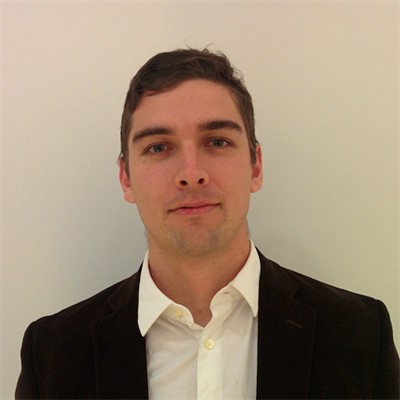
Carl Winsløw is a Professor in the Department of Science Education at the Faculty of Science, University of Copenhagen. With over two decades of academic experience, he has been a Full Professor at the university since 2007, following previous positions as Associate Professor at the Royal Danish School of Education and Danish University of Education.
His educational background includes:
- Cand. scient. in Mathematics and French from Odense University (1991)
- Ph.D. in Mathematics from the University of Tokyo (1994)
Professor Winsløw's research primarily focuses on the Didactics of Mathematics. He investigates how mathematical knowledge is developed, taught, and assessed across educational levels, with particular attention to university mathematics education. His work bridges theoretical frameworks with practical classroom applications, examining how teachers can design effective learning experiences and how students develop mathematical understanding. His multilingual abilities (Danish, French, and English at fluent levels; German and Japanese at basic levels) inform his international research perspective.
His recent publications demonstrate a strong emphasis on theoretical approaches in mathematics education research, particularly study and research paths, functional modeling, and the connections between mathematical concepts. He also explores interdisciplinary applications of mathematics and how teachers utilize their professional knowledge in practice, with significant contributions to understanding task design in university mathematics education.
Professor Winsløw serves in various academic capacities:
- Chair of the European Society for Research in Mathematics Education (2021-2025)
- Editor of Recherche en Didactique des Mathématiques journal since 2006
- Member of review committees at ETH Zürich, University of Agder, and Vetenskapsrådet
As an active researcher with 182 documented research outputs, he has been invited to deliver keynote speeches at international conferences including ICMT5 in Norway. His work continues to influence mathematics education research and practice across Europe and beyond, with upcoming presentations scheduled through 2025.