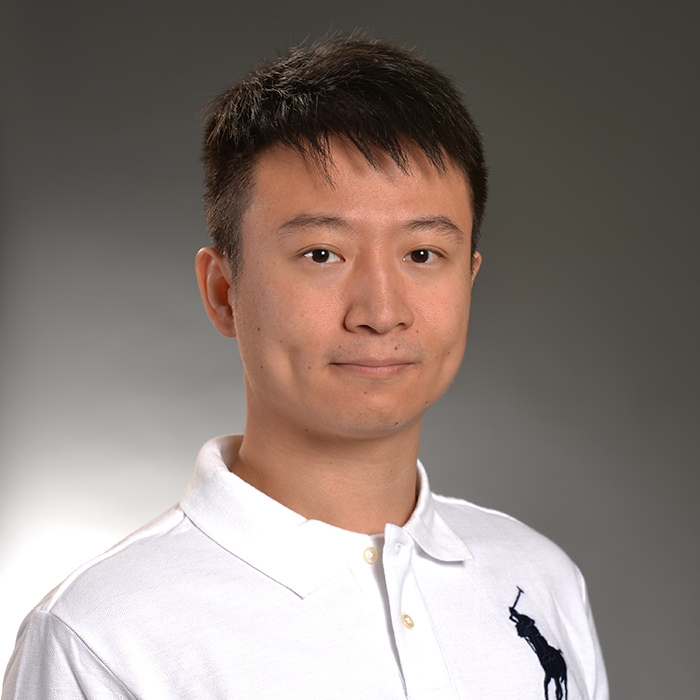
Torben Peters is a Lecturer in the Department of Civil, Environmental and Geomatic Engineering at ETH Zürich. His research focuses on 3D computer vision, deep learning, and generative models applied to geospatial analysis and photogrammetry. Research Focus: Peters develops computational tools for processing LiDAR point clouds, aerial imagery, and satellite data. His work enables automated environmental monitoring (e.g., forest inventories and avalanche mapping) and urban modeling through advanced segmentation and 3D reconstruction techniques. Generative models like TetraDiffusion expand capabilities in geometric deep learning. Publication Trends: Recent articles emphasize scalable geospatial AI, including war damage assessment in Ukraine, global biomass datasets, and self-supervised shape completion. Methodological innovations center on reducing annotation dependencies and improving geometric accuracy. Teaching: Leads courses on image-based mapping and geodetic data processing at ETH Zürich.
Dr. Philip Kokic is a Visiting Fellow at The Australian National University's Institute for Climate, Energy & Disaster Solutions (ICEDS), affiliated with the College of Science. With a career spanning academia, government, and private industry across Australia and overseas, his expertise lies in statistical methodologies applied to climate, economic, and agricultural systems. His research focuses on operational climate risk analysis for sectors such as agriculture, mining, finance, and telecommunications, alongside developing sophisticated statistical software tools for these analyses. His work integrates advanced statistical techniques like Bayesian modeling, spatial analysis, and robust estimation. Key themes include the vulnerability of rural communities to climate change, adaptive capacity of land managers, and statistical downscaling for climate impact predictions. He has contributed to policy frameworks through studies on drought's socioeconomic impacts and farm-level resilience strategies. Over the past decade, Philip’s research highlights trends in climate projection methodologies, agro-economic modeling, and interdisciplinary approaches to disaster solutions. His publications emphasize bridging climate data with decision-making systems for sustainable adaptation. No notable scientific awards are listed, though his contributions have been recognized through institutional affiliations and collaborative projects. He remains active in ICEDS’ initiatives addressing food security, energy transitions, and climate resilience strategies.
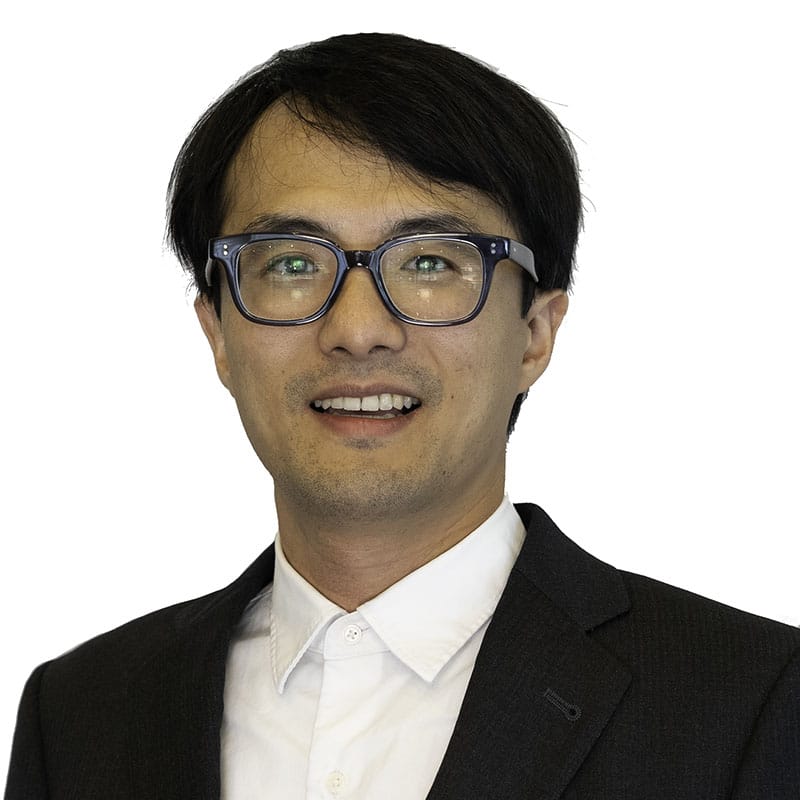
Weixian Liao is an Assistant Professor in the Department of Computer and Information Sciences at Towson University. His research focuses on big data analytics, cybersecurity, and networking in cyber-physical systems (CPS) and IoT. Dr. Liao holds a Ph.D. in Computer Engineering from Case Western Reserve University (2018), an M.S. in Electrical and Computer Engineering from Mississippi State University (2015), and a B.S. in Information Engineering from Xidian University (2012). His expertise spans secure edge intelligence, federated learning, adversarial machine learning, and IoT system resilience. Recent work includes surveys on AI model marketplaces, blockchain-empowered federated learning, and cybersecurity frameworks for smart energy systems. He has contributed to over 30 peer-reviewed publications in top journals/conferences such as IEEE Transactions and ACML. Research trends highlight his focus on interdisciplinary solutions blending machine learning with cybersecurity in critical infrastructure systems. His work emphasizes practical applications like disaster damage assessment via IoT search engines and resilient CPS design. Current projects explore edge computing security, federated learning incentives, and adversarial attack detection in distributed systems. No scientific awards or grants are explicitly listed in the provided materials. Dr. Liao’s lab focuses on advancing secure AI frameworks for IoT and CPS through innovative algorithm design and system architectures.
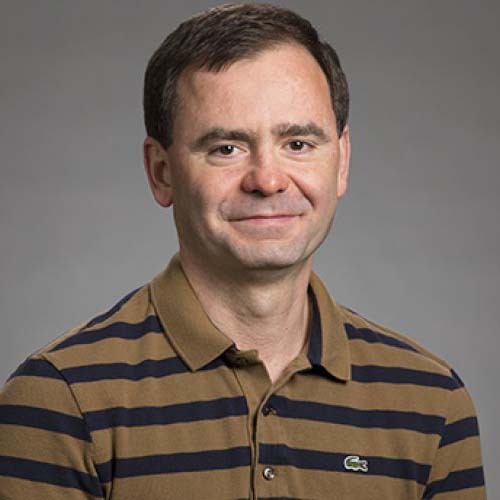
Marco Lippi is a Professor affiliated with the University of Modena and Reggio Emilia (Italy) and the Einaudi Institute for Economics and Finance. His research spans artificial intelligence, machine learning, and their applications in domains like legal technology, transportation, and healthcare. He collaborates extensively with institutions globally, focusing on interdisciplinary projects that bridge technical innovation and societal challenges. Research Interests: Lippi's work emphasizes neuro-symbolic AI, argument mining, and ethical AI applications. He explores how AI can enhance consumer protection, improve urban transport systems, and contribute to medical diagnostics. His recent projects include autonomous systems development, causality learning in smart factories, and analyzing social media for disaster response. Publications Trends: His articles reflect a strong focus on AI ethics, legal informatics, and machine learning applications. Notable contributions include frameworks for detecting unfair contract clauses, causal modeling in industrial IoT, and human-robot interaction pipelines. His work often combines theoretical advancements with practical implementations in real-world settings. Affiliations & Collaborations: Collaborations span academia and industry, including projects with Università di Bologna and the Einaudi Institute. His team frequently addresses cross-disciplinary challenges, such as integrating legal reasoning with machine learning and optimizing smart city infrastructure through data-driven approaches.
Prof. Elif Sertel is a Professor of Geomatics Engineering at Istanbul Technical University's Faculty of Civil Engineering, specializing in GIS, Remote Sensing, and Satellite Technologies. She holds a PhD from ITU (2008) and has conducted groundbreaking research on land use analysis, urbanization impacts, and geospatial AI applications. Her work integrates historical aerial photography with modern satellite data to model environmental and demographic changes. Notable projects include the GeoAI_LULC_Seg ERC-funded initiative analyzing rural depopulation and agricultural land abandonment in Turkey and Bulgaria since 1940. She has led over 30 research projects totaling €6M+, with notable funding from TÜBA, ERC, and the Ministry of Development. Awards include the 2024 Istanbul Technical University Academic Performance Award and the 2017 TÜBA Outstanding Young Scientist Award. Her teaching includes GIS in Engineering courses. Research focuses on: 1) AI-driven land cover segmentation using deep learning, 2) drought monitoring via satellite data, 3) urban heat island analysis, and 4) landscape metric correlations with satellite resolution. Recent work emphasizes historical data integration, with projects like the 1958-2020 Bursa land use study. Her team developed benchmark datasets (VHRTrees, HRPlanes) and tools like the GeoAI-based mobile drought app. Grants and projects: Over 30 completed projects including €150k ERC GeoAI_LULC_Seg (2022-2024), €5M ITU Satellite Ground Terminal Renewal (2016-2020), and TÜBA-funded city mapping initiatives. Collaborations with institutions like NASA, ESA, and European Research Council have produced over 50 peer-reviewed publications. Awards highlight sustained excellence: 2023-2024 Academic Performance Awards, 2024 Broadcasting Achievement Award, and 2017 TÜBA recognition. Her work bridges geomatics engineering with environmental policy through interdisciplinary approaches.
Matthew Caesar is a Professor in the Department of Computer Science at the University of Illinois at Urbana-Champaign, with affiliations in Electrical and Computer Engineering, Coordinated Science Laboratory, School of Information Sciences, and Information Trust Institute. He holds a PhD from UC Berkeley (2007) and has over two decades of experience in networked systems research. His work focuses on improving network reliability and security through software-defined principles, formal verification, and AI-driven approaches. He co-founded Veriflow (acquired by VMware in 2019), leading to practical network verification systems. Education: PhD, Computer Science, University of California, Berkeley, 2007 Research Interests: Matthew’s research emphasizes robustness in distributed systems and networks, including network verification, SDN, IoT security, and cloud infrastructure. He explores formal methods to ensure safety properties in large-scale systems, with applications in disaster recovery and enterprise networks. Key Contributions: Developed Veriflow, the first practical network verification system Co-founded the Networking Channel and chairs ACM SIGCOMM Recipient of NSF CAREER Award (2011), IEEE Fellow (2023), and multiple Best Paper Awards Grants & Advising: Over $10M in research funding, including a $25M TSCP-DC project. Advises over 30 students, many now leading roles in industry and academia. Labs/Teams: Principal Investigator at IARCS Singapore, involved in projects like FORTIFY and SMOG. Collaborates with industry partners like Microsoft and VMware on network security and verification.
David S. Ebert is a Gallogly Chair Professor of Computer Science and Electrical and Computer Engineering at the University of Oklahoma, serving as Director of the Data Institute for Societal Challenges and Associate Vice President for Research and Partnerships. He holds adjunct professorships at Purdue University and leads the Department of Homeland Security's Visual Analytics Center (VACCINE). Ebert's research focuses on visual analytics, human-AI collaboration, and trustable AI systems with applications in climate resilience, public health, and security. He earned a Ph.D., M.S., and B.S. in Computer Science from The Ohio State University. His work has led to patents in public safety systems and predictive analytics, alongside impactful tools like SMART 2.0 for social media misinformation tracking and MetricsVis for law enforcement performance evaluation. Ebert has received prestigious awards including the IEEE Visualization Technical Achievement Award and multiple Department of Homeland Security recognitions. His contributions span interdisciplinary projects addressing societal challenges such as pandemic preparedness, methane emission monitoring, and sustainable agriculture through data-driven decision systems. Key leadership roles include directing the DHS Visual Analytics Center, the Purdue Visual Analytics Center, and the Center for Education and Research in Information Assurance and Security. His research emphasizes bridging technical innovations with real-world applications in emergency response, healthcare, and environmental sustainability.
Dr. Qingmin Meng is an Associate Professor in the Department of Geosciences at Mississippi State University, specializing in human-environment interactions through quantitative geospatial analysis. His work integrates mathematics and statistics to model landscape dynamics, natural resources, and human activities using vector, raster, and time-series datasets. Dr. Meng's educational background includes: PhD in Forestry and Natural Resources, University of Georgia (2006) MS in Statistics, University of Georgia (2005) PhD in Geography, Peking University, China (2001) MS in Geography, Lanzhou University, China (1997) BS in Geography, Shandong Normal University, China (1994) His research focuses on geospatial big data exploration , with emphasis on remote sensing data integration, ecological system assessment, and environmental-social interactions in Gulf coastal ecosystems, hydraulic fracturing impacts, and West Nile Virus dynamics. Key methodologies include GIS, remote sensing, and geospatial modeling for analyzing complex systems. Recent publications reveal a strong trend toward applied environmental justice research , particularly in urban flood vulnerability, wildfire risk disparities, and health inequities exacerbated by climate change. His work increasingly utilizes machine learning and high-resolution spatial analytics to address climate adaptation challenges. Notable recognitions include: CHANS Fellowship (2010) from the International Network of Research on Coupled Human and Natural Systems (NSF/MSU) UCGIS/ESRI Junior Faculty Award (2010) Dr. Meng mentors graduate students in geospatial science, with current advisees including PhD candidates Sadia Shammi, Khalid Hossain, and Tianyu Li. His research is supported by grants focused on environmental hazard assessment and geospatial technology development, though specific funding sources aren't detailed in available materials. His work leverages Mississippi State University's geospatial infrastructure for analyzing Gulf coastal ecosystems and hydraulic fracturing impacts, with growing emphasis on urban environmental justice and climate resilience applications.
Chau-Wai Wong is an Associate Professor in the Department of Electrical and Computer Engineering at North Carolina State University, with affiliations to the Forensic Sciences Cluster and Secure Computing Institute. He previously served as a Data Scientist at Origin Wireless, Research Assistant at University of Maryland, and Research Associate at Hong Kong Polytechnic University. His work bridges machine learning with applications in multimedia forensics, signal processing, and computational social science. Ph.D. , Electrical Engineering, University of Maryland (2017) M.Phil. , Electronic and Information Engineering, Hong Kong Polytechnic University (2010) B.Eng. , Electronic and Information Engineering, Hong Kong Polytechnic University (2008) Research spans federated learning (security vulnerabilities, communication efficiency), physically unclonable features (PUF-based authentication), generative models (GANs for hardware modeling), and computational social science (AI chatbots for disaster communication, TikTok behavioral analysis). Recent work explores neural tangent kernels and multi-LLM agent collaboration . Key publications focus on decentralized AI systems (ICML'25), deepfake detection (under review), and social media health analytics (Telematics and Informatics'25). His federated learning research has appeared at ICLR, IEEE T-NNLS, and USENIX Security. NSF CAREER Award IEEE Signal Processing Cup Organizer (2016) Technical Program Committee Chair (IH&MMSec'25) Area Chair (ICME'21–'24) Senior Member, IEEE Advises students in AI security , physiological sensing , and social science automation . Collaborates with teams at University of Maryland, Hong Kong Polytechnic University, and industry partners. Current projects include identity-privacy protection for smart health and UAV-assisted network optimization (IEEE DySPAN'25).
Lo Siaw Ling is an Associate Professor of Information Systems (Education) at Singapore Management University's School of Computing and Information Systems, serving as Pedagogy Mentor. She holds a PhD from University of Newcastle (2017) and teaches Digital Analytics Technology and Digital Business Transformation. Research bridges educational technology, NLP, and crisis informatics. Key areas include AI-enhanced learning systems, educational data mining, and crisis information extraction from social media. Publications focus on NLP applications in education and crisis management, particularly transformer-based models for actionability extraction (2023-2025). Recent work explores AI grading systems, doubt detection algorithms, and sentiment analysis for crisis events. No documented scientific awards. Teaches analytics and digital transformation courses. No PhD advisees listed. Develops educational technologies including doubt identification systems and learning analytics dashboards based on student reflections.
Tolga Soyata is an Associate Professor in the Department of Electrical and Computer Engineering at George Mason University's College of Engineering, specializing in cyber-physical systems, digital health, and high-performance computing. Previously, he served as an Associate Professor at SUNY Albany (2016-2019), Senior Lecturer at Johns Hopkins University (2020), and Assistant Research Professor at the University of Rochester (2008-2016). PhD, Electrical and Computer Engineering, University of Rochester (2000) MS, Electrical and Computer Engineering, Johns Hopkins University (1992) BS, Electrical and Communications Engineering, Istanbul Technical University (1988) His research focuses on cyber-physical systems , digital health applications , and FPGA/GPU-based high-performance computing , with significant contributions in medical cyber physical systems, brain-computer interfaces, and energy harvesting for embedded systems. His work bridges hardware design with healthcare applications and smart city infrastructure. Analysis of his recent publications reveals a strong emphasis on medical applications of cyber-physical systems (30%), smart city infrastructure (25%), energy-efficient computing (20%), and security/privacy frameworks (15%). His work consistently integrates hardware innovation with real-world applications, particularly in healthcare monitoring and urban systems. BEST PAPER AWARD (UEMCON18-BCI) PRESIDENTIAL AWARD FOR UNDERGRADUATE RESEARCH BEST PAPER AWARD (HONET-ICT'15) IEEE Senior Member (2016-present) ACM Senior Member (2016-present) As an advisor, he has mentored 12 PhD students (including 2 who completed degrees under his supervision) and over 25 master's/undergraduate researchers, many of whom received awards for their work. His TTIP directorship at GMU focuses on expanding graduate education in computer engineering through innovative recruitment and bridge programs. His research has been supported by industry partnerships with NVIDIA, Xilinx, and MOSIS. He leads research in medical cyber physical systems and energy-harvesting architectures, with lab facilities supporting FPGA development, GPU programming, and medical sensor integration for digital health applications.
Dian Tjondronegoro is a Professor in the Department of Computer Science at Griffith University's School of Information and Communication Technology. With over 120 publications spanning from 2002 to 2025, Professor Tjondronegoro has established a significant research presence in artificial intelligence, computer vision, and human-computer interaction. Professor Tjondronegoro's research interests center around affective computing, multimedia systems, and responsible AI development. Their work bridges technical innovation with practical applications in healthcare, public safety, and education. Recent research has increasingly focused on ethical AI implementation, privacy-preserving technologies, and sustainable computing practices, reflecting a growing concern for the societal impact of technological advancements. Analysis of the publication trends shows a clear evolution from foundational work in facial expression recognition and video processing toward more complex systems integrating AI ethics, privacy considerations, and human-centered design principles. The research demonstrates strong interdisciplinary collaboration across computer science, healthcare, and social sciences. Professor Tjondronegoro has collaborated extensively with researchers including Vinod Chandran (19 publications), Ligang Zhang (19 publications), Wei Song (18 publications), and Yi-Ping Phoebe Chen (15 publications), among others. Their work appears in prestigious venues including IEEE Transactions, ACM journals, and major conferences in multimedia and computer vision. Current research directions include the TOAST Framework for ethical AI integration, privacy-preserving video surveillance systems, and collaborative approaches to bridge knowledge gaps in AI adoption among innovation champions. These projects reflect a commitment to developing technologies that balance innovation with social responsibility.
Dr. Paul Pang is an Associate Professor of Cyber Security at Federation University Australia's Institute of Innovation, Science and Sustainability (IISS). Previously, he held a Professorship in Data Analytics and directed the Center for Computational Intelligence for Cybersecurity at Unitec Institute of Technology, New Zealand. His research focuses on Cognitive Cyber Security Intelligence, Cyber Resilience, and Applied Data Analytics for Digital Health, leveraging over NZD$3.5M in grants from organizations like MBIE and HRC. He has authored over 100 refereed articles and holds 1 patent with 3 pending applications. Education: PhD in Engineering from Shanghai Jiao Tong University (2000). Research Interests: Pang's work spans cybersecurity, digital health, and big data analytics. He develops intelligent systems for cyber threat detection, resilience frameworks, and healthcare applications. His methods include machine learning for data streams, incremental learning algorithms, and multi-agent cooperative systems. Publications Trends: His articles emphasize cybersecurity (e.g., darknet traffic analysis, malware grouping), healthcare analytics (e.g., schizophrenia prediction), and foundational machine learning (e.g., SVMs, LDA algorithms). Collaborations span institutions in Japan, China, and the U.S. Awards: IEEE Best Paper Awards (2003, 2008), Unitec Excellence Awards (2011-2015), ARC Assessor (Australia). Advising & Grants: Supervised 10+ PhD/Masters students; led 13 grants totaling NZD$3.5M. Notable students include Snjezana Soltic (Pest Survival Analysis) and Simon Dacey (Land Use Management). Professional Roles: IEEE Senior Member, Vice President of APNNS, Global AI Summit Judge (2018). Labs/Teams: Active in Federation University's Cybersecurity and Digital Health research groups. Collaborates with industry partners like NICT Japan and Telecom NZ.
Muhammad Fermi Pasha is a Senior Lecturer at the School of Information Technology, Monash University, Malaysia. He holds a PhD in Brain-inspired Computing from Universiti Sains Malaysia and has been actively contributing to research and teaching since joining Monash. His academic roles include lecturing and serving as Chief Examiner for courses such as FIT1008, FIT2085, FIT9123, FIT5152, and FIT3175, focusing on computer science, business information systems, and usability. PhD in Brain-inspired Computing, Universiti Sains Malaysia (2010) MSc in Computer Science, Universiti Sains Malaysia (2006) BCompSc (Hons) in Software Engineering, Universiti Sains Malaysia (2003) Dr. Pasha's research spans computational neuroimaging, intelligent network security, digital health, and big data analytics. His work integrates artificial intelligence with healthcare applications, including Alzheimer's diagnosis, mHealth platforms, and secure medical data systems. He emphasizes evolving systems, machine intelligence, and neocortex memory modeling. His projects often involve interdisciplinary collaboration and community engagement. The recent publications highlight a strong trend in AI-driven healthcare solutions, secure data systems, and behavioral analysis using deep learning. His work combines computer vision, natural language processing, and cybersecurity to address real-world challenges in medicine and public health. Themes such as microexpression recognition, EHR clustering, blockchain for IIoT, and flood modeling using CNNs reflect his diverse yet cohesive research vision. Awards for software solutions and research projects as team lead or member (specific names not provided) Dr. Pasha supervises multiple PhD students and leads significant research grants, including projects on microexpression recognition, Alzheimer's prediction, and flood modeling. He collaborates with national and international researchers and contributes to UN Sustainable Development Goals, particularly in health and education. His lab work involves developing intelligent systems for medical and environmental applications. He leads or participates in key research labs and teams focused on AI in healthcare, network security, and sustainable computing. These teams develop frameworks for early disease detection, secure data sharing, and environmental resilience using advanced machine learning and blockchain technologies.
Liz Ritchie-Tyo is a Professor in the School of Earth, Atmosphere & Environment and the Department of Civil Engineering at Monash University, where she conducts cutting-edge research on tropical cyclones, extreme weather, and climate impacts. She is actively involved in interdisciplinary research, supervision of PhD students, and leadership in national and international scientific organizations. Education: PhD in Atmospheric Science, Monash University (awarded 1 October 1995), focusing on mesoscale aspects of tropical cyclone genesis. Her research spans both fundamental and applied domains, including the physical understanding of tropical cyclogenesis, intensity change, extratropical transition, and landfall impacts. She also investigates the remote sensing of tropical cyclones and their societal and environmental consequences. Her recent publications reflect strong trends in integrating satellite remote sensing, climate modeling, and public health outcomes, particularly in assessing post-cyclone disease risks and radiative effects of storm clouds. This interdisciplinary approach underscores her contributions to climate science and disaster resilience. Scientific Awards and Honors: Fellow of the American Meteorological Society Prof. Ritchie-Tyo has secured significant research funding from prestigious bodies including the Australian Research Council (ARC), the US Office of Naval Research, the National Science Foundation, NOAA, NASA, and the Australian Bureau of Meteorology. She currently leads multiple projects, such as the ARC Centre of Excellence for the Weather of the 21st Century and a project on the contribution of tropical cyclones to Earth's energy budget. She has supervised numerous students and contributes extensively through editorial roles, including as editor of Weather and Forecasting and former editor of Monthly Weather Review . Research Labs and Teams: She is a key member of collaborative research teams working on tropical cyclone dynamics and climate impacts, including international networks under the World Meteorological Organization (WMO) and partnerships with institutions in the US and Australia. Her work is highly collaborative, involving experts in meteorology, oceanography, public health, and remote sensing.