معرفی
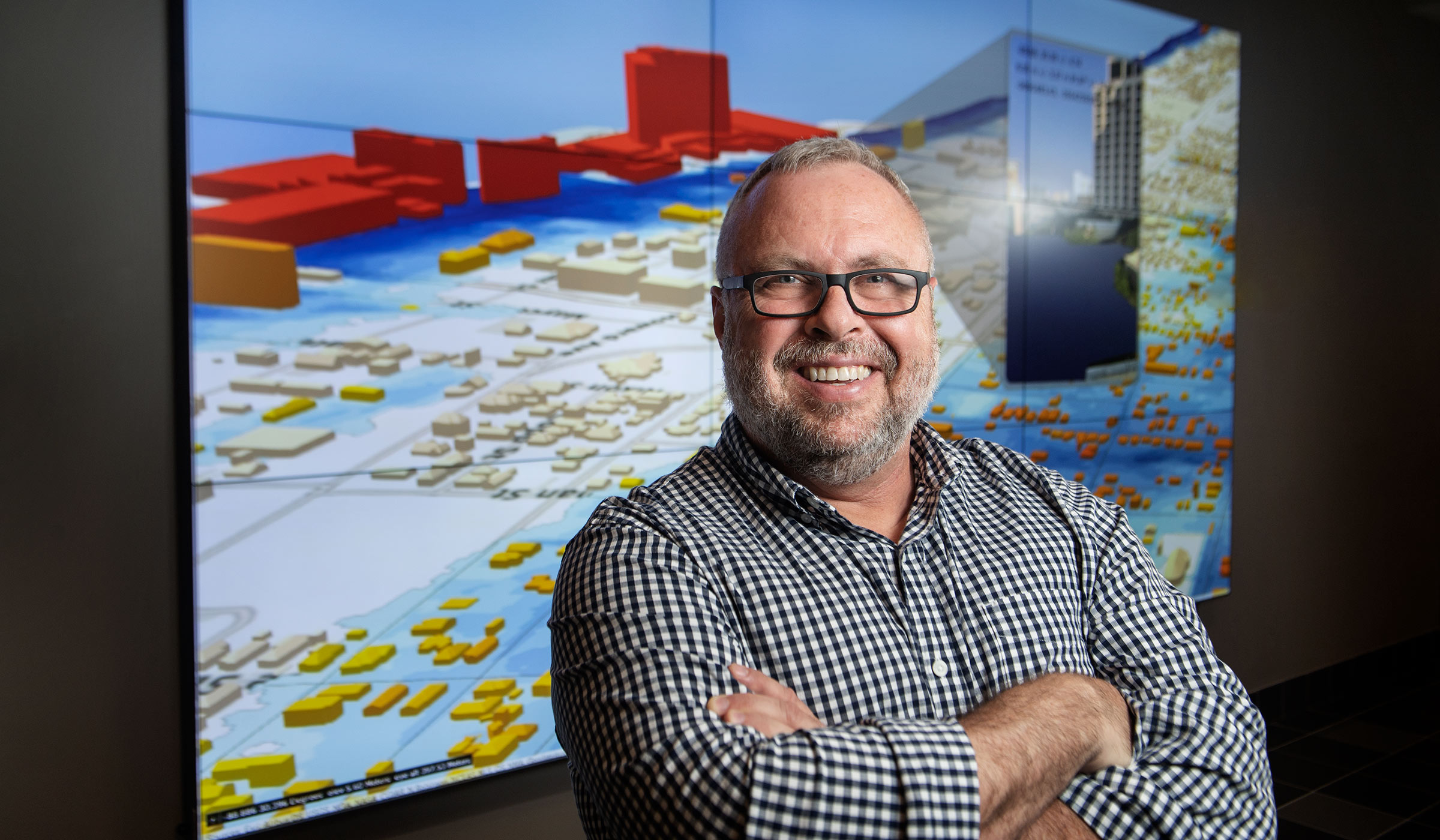
Dr. Qingmin Meng is an Associate Professor in the Department of Geosciences at Mississippi State University, specializing in human-environment interactions through quantitative geospatial analysis. His work integrates mathematics and statistics to model landscape dynamics, natural resources, and human activities using vector, raster, and time-series datasets.
Dr. Meng's educational background includes:
- PhD in Forestry and Natural Resources, University of Georgia (2006)
- MS in Statistics, University of Georgia (2005)
- PhD in Geography, Peking University, China (2001)
- MS in Geography, Lanzhou University, China (1997)
- BS in Geography, Shandong Normal University, China (1994)
His research focuses on geospatial big data exploration, with emphasis on remote sensing data integration, ecological system assessment, and environmental-social interactions in Gulf coastal ecosystems, hydraulic fracturing impacts, and West Nile Virus dynamics. Key methodologies include GIS, remote sensing, and geospatial modeling for analyzing complex systems.
Recent publications reveal a strong trend toward applied environmental justice research, particularly in urban flood vulnerability, wildfire risk disparities, and health inequities exacerbated by climate change. His work increasingly utilizes machine learning and high-resolution spatial analytics to address climate adaptation challenges.
Notable recognitions include:
- CHANS Fellowship (2010) from the International Network of Research on Coupled Human and Natural Systems (NSF/MSU)
- UCGIS/ESRI Junior Faculty Award (2010)
Dr. Meng mentors graduate students in geospatial science, with current advisees including PhD candidates Sadia Shammi, Khalid Hossain, and Tianyu Li. His research is supported by grants focused on environmental hazard assessment and geospatial technology development, though specific funding sources aren't detailed in available materials.
His work leverages Mississippi State University's geospatial infrastructure for analyzing Gulf coastal ecosystems and hydraulic fracturing impacts, with growing emphasis on urban environmental justice and climate resilience applications.