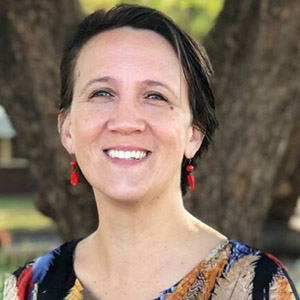
Dr. Sarina Kilham is a Lecturer in Agricultural Extension and Rural Sociology at the Gulbali Institute's Agricultural, Environmental and Veterinary Sciences school. Her research focuses on sustainable rural livelihoods, autonomy in development programs, and biofuel strategies in Brazil and Timor-Leste. She holds a PhD from the University of Technology Sydney (2017) and has extensive experience with international development organizations like the UN and NGOs. Her work bridges sociology and agriculture, addressing food justice, disability-inclusive disaster resilience, and urban food systems innovation. She teaches courses like AGR220 and AGR202, and supervises graduate students examining social dimensions of agriculture and food systems. Recent grants include funding for regenerative agriculture's economic/social dimensions and knowledge translation in agriculture (Soil CRC). She collaborates with the City of Sydney and TASA on urban food systems projects. Awards include grants supporting Timor-Leste education programs and disability advocacy. Her podcast What's Sociology Got to Do with It? highlights applied sociological insights. Kilham's work contributes to UN SDGs on education, sustainable cities, and climate action.
Dr Jodie Bailie is a Senior Research Fellow at the University of Sydney's University Centre for Rural Health and a member of the Sydney Environment Institute. Her research focuses on improving primary healthcare delivery for vulnerable populations, including Aboriginal and Torres Strait Islander communities and people with disabilities. She holds a PhD and has over 15 years of experience spanning academic research, policy development, and clinical practice. Her work emphasizes participatory methodologies and health equity advocacy. Member of Sydney Environment Institute Adjunct roles in health policy and rural health systems Recipient of awards including the Australasian Evaluation Society Excellence in Indigenous Evaluation Award (2016) Research Focus Dr Bailie's research spans: Health systems strengthening for Indigenous health Disability-inclusive healthcare systems Climate change and health impacts Rural health workforce development Continuous quality improvement methodologies Recent Projects Current initiatives include: Research Alliance for Youth Disability and Mental Health Centre for Research Excellence: Strengthening Systems for Indigenous Health Care Equity Climate change education for health professionals Awards Key recognitions include: UPA Postgraduate Award (2020) Multiple Research and Academic Development Awards Finalist in NSW Aboriginal Health Awards (2009) Grants & Impact Recent grants include a 2024 project addressing chronic back pain in rural settings. Her work has informed NDIS policy, health system reforms, and disaster resilience frameworks.
Dr. Michelle Villeneuve is an Associate Professor at The University of Sydney's Centre for Disability Research and Policy, with an honorary adjunct appointment at Queen's University in Canada. She serves as Activity Lead at the World Health Organisation Collaborating Centre for Rehabilitation Capacity in Health Systems and as Deputy Director at the University of Sydney's impact Centre for Disability Research and Policy. PhD in Education, MSc in Rehabilitation Science, BSc in Occupational Therapy International experience in disaster risk reduction across Bosnia, Sri Lanka, Indonesia, and Australia Lead developer of the Person-Centred Emergency Preparedness (P-CEP) framework Her research focuses on Disability-Inclusive Disaster Risk Reduction (DIDRR) , Interprofessional Collaboration , and Community-Based Rehabilitation . She applies social learning methodologies to improve cross-sector coordination and has influenced national policy through her work with the Australian Research Council and NSW/Queensland Governments. Key awards include the 2023 National Resilient Australia Award for P-CEP Certificate Course, 2020 Canadian Women in Global Health Award, and multiple Resilient Australia Awards (2017-2023). Current research students include Louise Mitchell (Community Recovery after Bushfire), Brigit Maguire (D/deaf Emergency Preparedness), Bronwyn Simpson (Spinal Cord Injury Well-being), and Olivia Jackson (Mentoring in Occupational Therapy). Her work spans partnerships with Queenslanders with Disability Network, Community Services Industry Alliance, Infrastructure NSW, and the United Nations Economic and Social Commission for Asia and the Pacific (UNESCAP). She has co-produced 18 award-winning research outputs and leads the Collaborating4Inclusion program.
Simon Moss is an Associate Professor at the Faculty of Health, Psychology, Charles Darwin University. His research focuses on organizational policies enhancing innovation, performance, and wellbeing, particularly exploring how workplace practices foster purpose and resilience. He investigates leadership styles, mental health interventions, parenting strategies, and educational initiatives that align present activities with future goals. Key skills include multivariate statistics and the psychology of persuasion. Research interests span workplace culture, mental health, parenting interventions, and university initiatives to boost student motivation. He has led projects on climate change adaptation (e.g., heat stress in tropical regions) and cross-cultural curricular exchanges. His work contributes to UN SDGs related to health, education, and sustainable communities. Recent articles address community resilience to natural hazards, child therapy for trauma, and marketing strategies affecting public health. He collaborates internationally on topics like disaster management and Indigenous health. Grants include studies on heat resilience and PNG child violence reduction programs. Labs/Teams: Active in interdisciplinary teams addressing climate adaptation, mental health, and educational equity. Supervised 5 theses on topics like play therapy in diverse contexts and pharmacists' roles in public health crises.
Dr. Alex Robinson is the Head of the Disability Inclusion and Rehabilitation department at the University of Melbourne's Melbourne School of Population and Global Health. He holds a PhD in Development Studies and specializes in applied research, policy, and practice at the intersection of disability inclusion, development, and disaster risk reduction (DRR). His work emphasizes inclusive education, livelihoods, social protection, and humanitarian response in disaster contexts. He co-founded the Disability-inclusive Disaster Risk Reduction Network, instrumental in shaping the Sendai Framework for DRR 2015-2030. His research focuses on fostering resilience, equity, and sustainable human development through inclusive policies and practices.
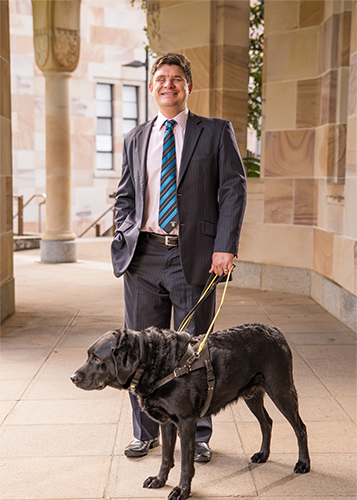
Professor Paul Harpur OAM is a leading international and comparative disability rights legal academic at the University of Queensland , where he directs The Disability Collaboratory - a university-wide initiative for high-impact research. He holds an Australian Research Council Future Fellowship and serves as an Associate with Harvard Law School's Project on Disability, International Distinguished Fellow at Syracuse University's Burton Blatt Institute, and former Fulbright Future Scholar. Key roles include Chair of UQ's Disability Inclusion Group and membership in the Ministerial Reference Group for the Universities Accord. Research interests span disability rights , higher education reform , international comparative law , and universal design . His work focuses on legal frameworks for disability inclusion, accessibility policies, and intersectionality in education. Recent articles examine disability-led strategies, eco-ableism, and SDG-aligned policies. 2024 saw him awarded the Medal of the Order of Australia (OAM) for service to disability rights. He actively advises on the Higher Education Standards Panel and leads global EDI frameworks through Universitas 21. Publications include 69 journal articles and 6 books, with a focus on copyright law , workplace discrimination , and assistance animal regulation . As a dual Paralympian (Sydney 2000, Athens 2004) and TEDx speaker , his advocacy bridges academic rigor and lived experience. Current projects include advancing the U21 Framework for Equitable and Inclusive Global Engagement and systemic reforms for disability inclusion in legal professions and educational systems.
Sumita Ghosh is an Associate Professor in the School of Built Environment at the Faculty of Design, Architecture and Building (DAB) at University of Technology Sydney (UTS). With over 28 years of teaching, research and professional experience as an architect and urban planner, she has established herself as a leading expert in urban resilience and sustainable planning. Her academic appointments include Director of Higher Degree Research Programs (since Dec 2023), former Higher Degree Research Coordinator (2021-2023), and former Course Director of Postgraduate Planning (2022-2023). She is also a member of the DAB Faculty Ethics Committee and affiliated with the Centre for Advanced Modelling and Geospatial Information Systems (CAMGIS) at UTS. Director of Higher Degree Research Programs, UTS Faculty of Design, Architecture and Building (Dec 2023 - present) Associate Professor, School of Built Environment, UTS (Jan 2019 - present) Senior Lecturer, School of Built Environment, UTS (Jan 2011 - Dec 2018) Lecturer, Macquarie University (2010) Dr. Ghosh holds a PhD from The University of Auckland, New Zealand, a Graduate Certificate in Remote Sensing and Earth Observation from Pennsylvania State University, a Master of City Planning from Indian Institute of Technology (IIT) Kharagpur, and a Bachelor of Architecture from National Institute of Technology, India. Her extensive educational background spans architecture, urban planning, and geospatial technologies. Sumita Ghosh's research focuses on urban resilience, connecting to multiple strands of urban sustainability research. Her core interests include green infrastructure planning and policy (urban forestry and local food production), urban morphologies, and climate change impacts and adaptation using spatial GIS and remote sensing applications. She explores food urbanism theory and practices in designing and master planning for precincts to create healthy and sustainable communities. Her work integrates nature-based solutions to address urban challenges such as flood risk, heat island effects, and food security, with a particular emphasis on high-density urban environments. Dr. Ghosh's research has significant implications for urban policy and practice, especially regarding sustainable urban transformation in the context of climate change. Analysis of Dr. Ghosh's recent publication record reveals a strong focus on urban sustainability, with particular emphasis on green infrastructure, urban agriculture, and climate resilience. Her work spans multiple geographic contexts from Australian cities to global case studies in Dhaka and Accra. The interdisciplinary nature of her research is evident in publications that bridge urban planning, environmental science, public health, and social equity. A notable trend is her increasing focus on nature-based solutions as a response to climate change impacts, with particular attention to how these solutions can be integrated into high-density urban environments. Her research demonstrates a consistent commitment to translating academic knowledge into practical planning applications. Chief Investigator (CI) from UTS in a collaborative research project funded by Horticulture Australia Limited (HAL) Category 1 grant investigating Australia's urban forest carbon benefits CI in City of Sydney's Environmental Grant Programme on rooftop urban food production CI in Landcom's urban transformation project on local foodscapes and placemaking CI in IKEA's project on measuring sustainable lifestyles and CO2 emissions savings Current work with Achieve Australia on mapping Specialist Disability Housing (SDA) in NSW Current work with NSW Department of Education and Training on sharing green space Dr. Ghosh teaches urban design, strategic planning, master planning, and spatial analysis using GIS methods in the Master of Planning degree at UTS. She has supervised numerous PhD and postgraduate research students, with completed theses covering topics such as climate change vulnerability in informal settlements, wind resilience in tall buildings, and office layout impacts on organizational culture. Currently, she supervises four PhD students working on projects related to green infrastructure, flood resilience, urban agriculture, and post-COVID green spaces. Her leadership extends to directing UTS's Higher Degree Research Programs, shaping the next generation of urban planning scholars and practitioners.
Professor Amanda Howard is a leading academic in Social Work and Policy Studies at the University of Sydney , with a research focus on community development , disaster management , and climate change from a social justice perspective. She directs undergraduate programs and collaborates extensively with organizations like the Sydney Environment Institute . Research Themes : Climate justice, community resilience, participatory action research, and disability policy Key Collaborations : Work with Indigenous communities, disaster risk reduction frameworks, and policy advocacy Her recent publications emphasize community-led approaches to disasters, integrating First Nations worldviews and complexity theory . Current projects investigate intersections between climate change and social inequality , with grants from organizations like NCOSS and Leapfrog Ability . Amanda actively engages with community networks, as evidenced by her work on projects like Mapping Local Networks in Local Disaster Planning and Southlakes Connections .
Associate Professor Lexine Stapinski is a Clinical Psychologist and academic at the University of Sydney's Matilda Centre for Mental Health and Substance Use. She holds dual affiliations with the Sydney Environment Institute and the Brain and Mind Centre. Her work focuses on preventing alcohol and substance use disorders, particularly through early intervention programs like 'Inroads' and 'Strong and Deadly Futures', which address cultural gaps in Indigenous health. A NHMRC TRIP Fellow, she leads national initiatives such as Positive Choices, translating evidence-based prevention strategies into actionable programs. Her research spans anxiety disorders, comorbidity, and culturally inclusive interventions, with partnerships extending to Indigenous creative agencies and global collaborations like the SocialDeviance1820 study. Awards include the Sydney Research Accelerator Award (2023) and the Elsevier Mid-Career Researcher Award (2021). Dr. Stapinski’s research projects include evaluating climate change impacts on youth mental health (CAP Study), developing FASD educational resources, and testing neuroscientific animations for drug education. She advises 3 PhD candidates and has over 130 peer-reviewed publications. Key contributions include the Strong & Deadly Futures trial for Indigenous youth and the Climate Schools Plus program targeting cannabis use. Her work emphasizes community co-design, exemplified by the Cracks in the Ice toolkit addressing methamphetamine stigma. Education: PhD in Clinical Psychology (2009) with Vice Chancellor’s commendation, followed by postdoctoral fellowships at University of Bristol and Macquarie University. Grants: NHMRC TRIP Fellowship, Australian Rotary Health, and Ramsey Foundation Health4Life Initiative funding. Labs/Teams: Matilda Centre Research Group, Brain and Mind Centre Collaborative Team, and Indigenous Health Partnerships. Future Work: Expanding climate resilience programs and digital mental health tools for youth, with ongoing trials on vaping prevention and motherhood-related alcohol use.
Dr. Julie King is a researcher at Queensland University of Technology's School of Public Health & Social Work, with over 15 years of academic output focused on disability justice, gender-based violence, and social equity. Her work bridges public health, social work, and policy analysis through international collaborations. Key research themes: disability-inclusive disaster management, gendered transport safety, Indigenous health, and climate justice Active in cross-cultural studies across Southeast Asia, Africa, and the Pacific Recent Publications (2025-2023) examine women's transport safety (2025), climate-disability intersections (2024), and HIV service accessibility for disabled populations (2023). Her methodological approach combines qualitative analysis with intersectional frameworks. Collaborative Network includes Dr. Mark King (transport accessibility), Dr. Niki Edwards (disability policy), and Dr. Hanna Watling (social work education). She contributes to Journal of Public Transportation and Violence Against Women editorial boards.
Tonia Crawford is a Senior Lecturer and Director of Pre-registration Programmes at the Susan Wakil School of Nursing and Midwifery, University of Sydney. With 20 years of clinical experience and a PhD in intercultural healthcare communication, her work bridges nursing education, health communication, and disaster risk reduction for marginalized groups. She leads projects focusing on disability-inclusive disaster planning, CALD communities, and improving nursing education for culturally diverse students. Her research interests include healthcare interactions with minority groups, nurse education strategies for CALD students, and disaster risk reduction. Notable grants include a National Emergency Management Agency-funded project on disability-inclusive disaster arrangements ($751,757.60). Awards include the 2019 Sydney Women’s Mentoring Program and Fellow of the Higher Education Academy. Teaching focuses on community health, social determinants of health, and health communication. She supervises PhD/Master’s students exploring topics like aged care transitions for internationally qualified nurses and LGBTQIA+ inclusion in nursing curricula. Active in professional associations like the Australian College of Nursing and Centre for Disability Research and Policy, she also reviews for journals such as Nurse Education Today and Qualitative Health Research.
Dr. Wade Hadwen is a Senior Lecturer at Griffith University's School of Environment and Science (Environment and Marine department), affiliated with the Australian Rivers Institute and Griffith Climate Action Beacon. His research focuses on water resource management under climatic and non-climatic threats, integrating ecological, socio-economic, and policy dimensions. He holds a PhD from Griffith University and has taught extensively in water management programs since 2013. Education: Doctor of Philosophy (GU, 2003) Bachelor of Science (Hons 1st Class, Griffith University, 1996) Bachelor of Science (University of Queensland, 1994) Graduate Certificate in University Learning and Teaching (Griffith University, 2020) Research Interests: Climate change adaptation strategies for water systems Coastal and freshwater wetland resilience Impacts of tourism on aquatic ecosystems Ecosystem-based adaptation frameworks Inclusive WASH (Water, Sanitation, Hygiene) in tourism Funded Research Highlights: Consultancy projects with SPREP on Pacific Island resilience assessments Climate Change and Water Short Courses for South Asia Integrated River Basin Management training in partnership with ICIMOD Evaluation of flood control dams in the Philippines Advising & Grants: Supervised 7 doctoral students focusing on water systems and ecological resilience Lead over 25 funded projects totaling $4M+, including AUSAID and DFAT initiatives Program advisor for Integrated Water Management degrees Labs/Teams: Australian Rivers Institute, Griffith Climate Action Beacon, Climate and Health Collective.
Dr Jade Chang is a Research Fellow at the University of Sydney’s Impact Centre for Disability Research and Policy, affiliated with the School of Health Sciences and Faculty of Medicine and Health. She holds a PhD from the University of Sydney, a Master’s in Health Economics from Deakin University, and a Master’s in Health Management from the University of New South Wales. Her research focuses on economic evaluation of disability-related programs, discrete choice experiments, and behavioral economics. Key areas include person-centered outcome measurement, disaster risk reduction for people with disabilities, and healthcare equity within the National Disability Insurance Scheme (NDIS). Current projects include leading a study on heatwave preparedness apps for people with disabilities, funded by the Heat and Health Research Incubator Collaboration. Jade actively contributes to teaching, co-supervising honours students and lecturing on research methodologies. Notable publications include work on NDIS equity mapping, disaster preparedness surveys, and cost-benefit analyses of vision rehabilitation services. She has authored reports on disability-inclusive emergency planning and service provider capabilities across Australia. Jade’s work bridges economic evaluation methodologies with real-world disability policy, emphasizing inclusive disaster preparedness and equitable healthcare resource allocation. Her interdisciplinary approach combines quantitative techniques like Markov modeling with qualitative insights from lived experiences.
Dr. Mariana Atkins is a Senior Research Fellow at the Centre for Social Impact and the UWA Business School, specializing in human geography and planning. Her work focuses on disaster resilience, ageing populations, homelessness, unemployment, and migrant communities. She holds a PhD from the University of Western Australia and advanced degrees from the London School of Economics and University College London. Mariana is a Fellow of the Royal Geographic Society and contributes to UN Sustainable Development Goals through her research. Education: PhD in Geography and Planning (UWA, 2017) MSc in Social Policy and Planning (LSE, 1989) BA (Hons) in Geography (UCL, 1989) Research Interests: Disaster preparedness, age-friendly urban design, unemployment solutions, disability inclusion, and multicultural integration. Her work bridges academic research with practical policy applications, emphasizing community engagement and evaluation methodologies. Awards: Fellow of the Royal Geographic Society Grants/Advising: Lead investigator on 30+ research grants addressing social issues (e.g., ageing, disability, youth unemployment) Board member of PerthALIVE and ADFAS Perth Mentor for CANWA's Dream, Plan, Do initiative Labs/Teams: Active in the Centre for Social Impact, collaborating on projects like the Mentoring 2 Work initiative and age-friendly policy frameworks.
Peter Roger is a Professor in the Department of Linguistics at Macquarie University, with dual expertise in medicine and applied linguistics. He holds a MB BS (Hons) from the University of Sydney and a PhD in Communication Sciences and Disorders. His research focuses on health communication, linguistic diversity, and second language acquisition, emphasizing globalization's impact on language learning and identity. He teaches in the Master of Applied Linguistics and TESOL program and co-authored Communication and Professional Relationships in Healthcare Practice (2013). Education: Medicine from University of Sydney (MB BS Honours), PhD in Communication Sciences and Disorders Key Projects: Telehealth in General Practice (Avant Foundation-funded), Bilingual Speech Pathologists in Australia, Health Literacy in Clinical Practice His research interests include interpreter-mediated healthcare, telehealth implementation, and the interplay between language learning and motivation. He has supervised 32 graduate research candidates, including 16 doctoral students as principal supervisor. Recent work explores communication dynamics in telemedicine and surgeon-patient interactions. Labs/Teams: Lifespan Health and Wellbeing Research Centre, collaborating on interdisciplinary healthcare communication projects.