Dr. Yanping Zhang is a Professor at the University of North Carolina (UNC) School of Medicine in the Department of Radiation Oncology and a member of the Lineberger Comprehensive Cancer Center. Her research focuses on the Mdm2-p53 tumor suppression pathway , the ribosomal protein-Mdm2-p53 signaling axis , and the role of mitochondrial protein p32 in cancer biology. She investigates how these pathways regulate genomic integrity, energy metabolism, and apoptosis to prevent oncogenic transformation.
Donald Bryant is the Ernest C. Pollard Professor of Biotechnology and Professor of Biochemistry & Molecular Biology at Pennsylvania State University. His laboratory is located at 403C Althouse Lab on the University Park campus. Research Focus: Dr. Bryant specializes in the physiology, biochemistry, and genomics of photosynthetic bacteria. His work centers on cyanobacteria (especially Synechococcus sp. PCC 7002) and green sulfur bacteria ( Chlorobaculum tepidum ), with emphasis on: Structural and functional analysis of photosystems I/II under far-red light Molecular mechanisms of light-harvesting complexes and pigment systems Evolutionary adaptations of photosynthetic organisms in extreme environments Genomic signatures of phototrophic bacteria and associated bacteriophages Publication Trends: Recent articles (2021-2023) demonstrate extensive use of cryo-EM to characterize photosynthetic protein structures adapted to low-energy light conditions. Key themes include far-red light photoacclimation (FaRLiP), chlorophyll variants, and ecological adaptations in hypersaline/desert environments. Collaborative work also explores global phage genomics and viral-host dynamics in phototrophic systems.
Dr. Mariana Kozlowska is a Group Leader and KIT Associate Fellow at the Institute of Nanotechnology, Karlsruhe Institute of Technology (KIT). She leads the DNA Unit of the Virtual Materials Design platform, focusing on multiscale modeling of soft matter and natural materials to understand molecular dynamics, assembly, and interfacial phenomena in chemistry, biology, and physics. Her research integrates density functional theory (DFT) , molecular dynamics simulations , and multiscale modeling to investigate spectroscopic properties, photophysical phenomena in metal-organic frameworks (MOFs) , molecular adsorption, and noncovalent interactions. Current projects include virtual design of chiral alignment materials and photoswitchable MOF conductance, supported by the Carl Zeiss Stiftung and DFG Priority Program. Dr. Kozlowska’s work has been recognized through grants like the Brigitte-Schlieben-Lange-Programm and 3D Matter Made to Order Cluster of Excellence. Her interdisciplinary approach bridges computational modeling with experimental validation, particularly in biomolecular assembly and functional materials design . She has also contributed to science communication via initiatives like Creative Discussions about Science and the ADAMED SmartUP program. Research Focus: Multiscale materials modeling, soft matter assembly, MOF electronic properties Key Collaborations: Prof. Burkhard Luy (Virtmat), Prof. Maria Andrea Mroginski (DAAD grant)
Prof. Dr. Annie Powell serves as Research Unit Chair for Cluster Chemistry at the Institute of Nanotechnology (INT) at Karlsruhe Institute of Technology (KIT) in Germany. She leads a prominent research group focused on synthesizing and characterizing molecular cluster compounds and framework structures of transition metals and rare earth elements for nanoscopic applications. Her research spans five interconnected domains: Molecular Magnets: Development of Single Molecule Magnets (SMMs), including a record-breaking Mn 19 compound with S = 83/2 ground spin state, and pioneering work on 3d-4f systems where Dy(III) ions introduce crucial magnetic anisotropy MOFs and SMOFs: Creation of Super Metal Organic Frameworks using large coordination clusters as building units, including structures with Dy 36 and Y 79 rare earth clusters Biomimetics: Development of sophisticated models for biological systems, including a 4Mn/1Ca system representing the Oxygen Evolving Centre of Photosystem II Processing of Coordination Compounds: Transformation of coordination arrays into novel materials through thermolysis, yielding structures with potential battery applications Multifunctional Materials: Integration of multiple properties like porosity and magnetic ordering in single materials Recent research has centered on butterfly-shaped 3d-4f clusters, where her group has demonstrated how ligand design, bridge rigidity, and crystal packing critically influence magnetic properties. Her work on photoexcited coordination compounds has revealed fundamental relationships between optical and magnetic properties, opening new possibilities for optomagnetic materials. A major contribution was the discovery of a Dy 3 triangle that serves as the archetype for Single Molecule Toroids (SMTs), significantly advancing 4f chemistry in molecular magnetism. Professor Powell is recognized for her strong commitment to diversity in science, with her research group historically comprising members from varied religious, ethnic, and gender backgrounds. She is actively involved in the DFG-funded Collaborative Research Centre '4f for Future' which advances both scientific research and gender equality in this field. In October 2024, she will celebrate her 65th birthday with an international symposium dedicated to 4f chemistry and diversity in science.
Steven Ludtke is a Professor in the Biochemistry and Molecular Pharmacology department at Baylor College of Medicine . He serves as the Charles C. Bell Jr. Professor of Structural Biology, Director of the CryoEM/ET Core, Co-Director of the Center for Computational and Integrative Biomedical Research (CIBR), and Deputy Director of Advanced Technical Cores. His lab focuses on advancing cryo-electron microscopy (CryoEM) and tomography (CryoET) for high-resolution structural analysis of biological systems. Education: Ph.D. in Physics, Rice University (1996) M.A. in Physics, Rice University (1993) B.S. in Physics, California Institute of Technology (1990) Ludtke's research spans CryoEM/CryoET methodology , quantitative image processing , and structural studies of macromolecular assemblies, membrane proteins, and antibiotic resistance mechanisms. His group developed the EMAN software suite , widely used in the field with over 30,000 downloads. Recent work explores in-situ structural biology using CryoET, enabling visualization of biomolecules within native cellular environments. The 15 most recent articles highlight trends in computational CryoEM/ET tools (e.g., deep learning for variability analysis), structural elucidation of ion channels (IP3R) and efflux pumps (AcrAB-TolC), and applications to pathogens like Toxoplasma and Candida glabrata . Key themes include 3D reconstruction algorithms , subtomogram averaging , and in-situ macromolecular architecture . Scientific Awards include the Burton Medal (MSA, 2008), multiple NRSA fellowships, and recognition as Outstanding Lecturer in Quantitative and Computational Biosciences (2020, 2023). His leadership in the CryoEM field is further evidenced by roles in EMDataBank and EMX initiative . Ludtke's lab collaborates on diverse biological systems, from individual proteins to whole-cell analysis, and contributes to cancer research via the Dan L Duncan Comprehensive Cancer Center . His work bridges methodological innovation with biomedical applications, particularly in membrane biology and disease mechanisms.
Dr. Mary Prorok is an Assistant Professor at the University of Notre Dame's College of Science, Department of Chemistry, since 1998. Her research focuses on structure-function relationships in peptides and proteins, particularly those containing gamma-carboxyglutamic acid (Gla), such as blood coagulation factors and neuroactive conantokins from marine snail venom. She also investigates plasminogen and angiostatin. Education: B.S. in Medicinal Chemistry (1982, SUNY Buffalo, magna cum laude) Ph.D. in Chemistry (1990, SUNY Buffalo) Postdoctoral Fellow at Brandeis University (NIH, 1990–1993) and Notre Dame (AHA, 1994–1997) Her work combines site-specific mutagenesis and peptide synthesis with biophysical methods (X-ray crystallography, NMR, SPR). Functional assessments include enzymology and electrophysiology in mice. Recent publications highlight her focus on conantokin peptides, Gla residues, and plasminogen interactions. Scientific Awards: American Heart Association Scientist Development Grant She has authored over 40 publications, with recent trends in neuropharmacology, hematology, and structural analysis.
Victor Ruiz-Velasco is a Professor at Penn State University with dual appointments in the Department of Anesthesiology and Perioperative Medicine and Department of Neuroscience and Experimental Therapeutics . He also serves as Associate Vice Chair for Basic Science Research and is a core member of the Penn State Neuroscience Institute. Research spans 1994-present with 71 publications and 6 major grants Active in calcium channel biophysics , opioid receptor signaling , and autonomic reflex modulation Key research themes include: G protein modulation of ion channels in neurons and smooth muscle cells ASIC channel interactions with opioid peptides in pain and cardiovascular regulation Biophysical characterization of NaV1.8/NaV1.9 polymorphisms in pain syndromes Recent publications (2024-2025) focus on: Cannabis receptor pharmacology in cancer cell death Ghrelin's role in visceral sensory neuron function ASIC3 knockout models for exercise reflex regulation Major grant funding from: National Heart, Lung, and Blood Institute (2017-2022, 2021-2024) National Institute on Drug Abuse (2009-2014) National Institute of Arthritis and Musculoskeletal and Skin Diseases (2010-2021)
Tatjana Kleinow is a Senior Lecturer at the University of Stuttgart , leading the Molecular Biology Unit within the Institute of Biomaterials and Biomolecular Systems. Her research focuses on geminivirus-host plant interactions , particularly the cell biological and molecular mechanisms of intra- and intercellular virus transport, pathogenicity, and plant macromolecular trafficking. She also develops phytoviral diagnostics using nucleic acid-based methods and explores plant virus-based vectors for biotechnology and functional genome analysis. Habilitation in Plant Molecular Biology and Virology (2007) Doctorate (Dr. rer. nat., University of Cologne, 2000) Her work emphasizes posttranslational regulation of viral proteins, with contributions to understanding phosphorylation effects on viral movement and replication. She has pioneered isothermal amplification techniques for plant virus detection and investigated virus-induced stromule formation as a novel macromolecular transport route. Recent publications highlight her expertise in viral protein dynamics and host reprogramming. Kleinow serves as a Review Editor for Frontiers in Plant Science and has held leadership roles in academic committees. Her teaching includes courses in molecular biology, bionanotechnology, and scientific methodology for Technical Biology students.
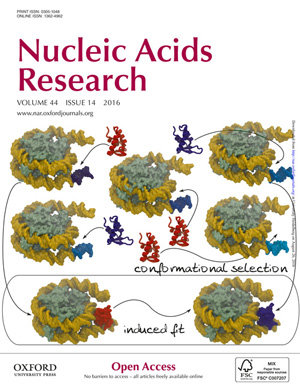
Vlad Cojocaru is a Research Professor and Group Leader of the Computational Structural Biology project group at the Max Planck Institute for Molecular Biomedicine in Münster, Germany. Since September 2018, he has also served as a Group Leader at the Hubrecht Institute of the Royal Netherlands Academy of Arts and Sciences in Utrecht, The Netherlands. His research group applies state-of-the-art computational methods to investigate biological processes from a physico-chemical perspective, with particular focus on stem cell pluripotency mechanisms. Dr. Cojocaru's research centers on understanding how transcription factors recognize and bind to DNA through computational approaches including structural modeling, biomolecular simulations, and molecular docking. His work examines protein-nucleic acid interactions, protein-membrane interactions, and computer-aided drug discovery. Key research areas include DNA recognition by transcription factors involved in combinatorial control of transcription, cooperativity between transcription factors during DNA binding, and the impact of transcription factor folding on DNA recognition. Analysis of Dr. Cojocaru's recent publications reveals a strong emphasis on chromatin structure and transcription factor dynamics, particularly regarding how pioneer factors like OCT4 interact with nucleosomes. His work combines computational modeling with experimental validation to reveal molecular mechanisms difficult to observe through traditional methods, significantly advancing our understanding of stem cell regulation and chromatin dynamics. PLoS Computational Biology 2011 journal cover feature Biochimica et Biophysica Acta 2007 journal cover feature Nucleic Acids Research 2005 journal cover feature Dr. Cojocaru actively mentors students in computational structural biology and receives funding from prestigious sources including the Max Planck Society and the DFG SPP1356 Priority Program. He utilizes significant computational resources from the Max Planck Society and the PRACE EU initiative. His group welcomes Master's and PhD students interested in pursuing computational biology research, with applications directed to him personally. The Computational Structural Biology group, which includes researchers like Jan Huertas, utilizes what Cojocaru terms a 'computational nanoscope' - a suite of molecular modeling and simulation methods enabling visualization of biomolecular dynamics at atomistic resolution. Their work has produced significant insights into chromatin dynamics, nucleosome breathing, histone tail dynamics, and the structural mechanisms of pioneer transcription factor binding to nucleosomes.
Ivo Vinklárek serves as an Alexander von Humboldt Fellow and Postdoctoral Researcher at the Center for Free-Electron Laser Science (CFEL), hosted by Deutsches Elektronen-Synchrotron DESY in Hamburg, Germany. His work focuses on cutting-edge molecular imaging techniques using free-electron lasers, with direct applications in atmospheric science and quantum dynamics research. His research spans Chemical Physics and Ultrafast Molecular Dynamics , specializing in laser-induced molecular processes, photochemistry of clusters, and imaging chemical reaction pathways. Key methodologies include velocity map imaging, ultrafast spectroscopy, and advanced laser alignment techniques for macromolecular imaging. Recent breakthroughs involve laser-induced alignment for single-particle diffractive imaging, significantly improving structural recovery of biomolecules. Analysis of his publications reveals a strong focus on molecular cluster dynamics (water dimers, PAH nanoparticles), atmospheric chemistry (halocarbon photolysis), and instrumentation development for controlled molecule experiments. His work consistently bridges theoretical modeling with experimental validation using free-electron laser facilities. Scientific Awards: Alexander von Humboldt Fellowship (2023-present) As a Humboldt Fellow, Vinklárek leads research within CFEL's molecular imaging group, contributing to major instrumentation projects like the transportable endstation for controlled molecule experiments. His work supports DESY's strategic initiatives in X-ray imaging and cryo-electron microscopy. Current projects focus on overcoming limitations in single-particle diffractive imaging through geometric confinement of molecules. He operates within CFEL's collaborative framework involving DESY, Max Planck Society, and University of Hamburg researchers, contributing to breakthroughs in laser-alignment techniques for macromolecular imaging as highlighted in recent DESY news (April 2025).
Dr. Cintia Citterio, an Assistant Professor at Chapman University's School of Pharmacy , specializes in Biomedical and Pharmaceutical Sciences . She obtained her Bachelor of Science and PhD in Pharmaceutical Sciences and Biochemistry from the University of Buenos Aires, followed by postdoctoral work at the University of Michigan Medical School. Education : University of Buenos Aires (BSc, PhD); postdoctoral fellowship at University of Michigan Her research investigates the molecular basis of hereditary thyroid disorders , focusing on thyroglobulin (Tg) structure-function relationships and thyroid hormone synthesis mechanisms . Current projects use CRISPR/Cas9 mutagenesis to study Tg domain interactions and ER quality control pathways in protein trafficking. Recent publications analyze the ChEL domain's role in Tg dimerization and disulfide bond requirements for proper hormone generation. Her work is funded by the National Institute of Diabetes and Digestive and Kidney Diseases (NIDDK) and supported by the American Association of Colleges of Pharmacy . Scientific Recognition : 2024 Endocrine Society Early Investigator Award Outstanding Abstract Award from Endocrine Society Dr. Citterio teaches biochemistry, endocrinology, and molecular biology to pharmacy and graduate students, with a focus on clinical applications of thyroid research.
Viktor Cerovski serves as an Expert Advisor at the Department of Plant, Soil and Nano Systems within the University of Belgrade's Institute for Multidisciplinary Research. His career spans international institutions including Chemnitz University of Technology (Germany), Virginia Commonwealth University, and Michigan State University (USA), where he earned his PhD and served as Teaching Assistant in Physics. His educational background includes: Doctor of Physics, Michigan State University Graduate in Physics, University of Belgrade Faculty of Physics Programmer certification, Mathematical Gymnasium Belgrade Cerovski's research centers on quantum disordered systems and nanoscale phenomena, with expertise in computational modeling of electronic transport, atomic clusters, and biomolecular structures. His work bridges theoretical condensed matter physics and biophysics, utilizing advanced DFT and HPC methodologies to investigate chaotic systems, quasicrystals, and molecular-scale transport mechanisms. Analysis of his 2000-2017 publications reveals a progression from fundamental studies of Anderson localization and quasicrystals toward applied research in molecular electronics and biomolecular photodissociation. Key journals include Physical Review B, Europhysics Letters, and high-impact chemistry journals, reflecting interdisciplinary collaboration with European synchrotron facilities. No scientific awards were documented in available sources. He mentors doctoral students and reviews master's theses at the University of Belgrade's Faculty of Physics while leading current Ministry of Education Project No. 171033. Past funding includes EU FP7 initiatives, SOLEIL synchrotron projects (France), and Swiss SCOPES grants, supporting international collaborations in nanoscale bio-non-bio interaction research. Though no dedicated laboratory is specified, his computational work within the Department of Plant, Soil and Nano Systems emphasizes cluster-based modeling of quantum systems, with infrastructure likely supported through Serbia's national research network and international partnerships.
Professor Rowena Ball is a distinguished academic at the Australian National University (ANU) within the Mathematical Sciences Institute . Her work bridges applied mathematics , physical chemistry , and nonlinear dynamical systems , with groundbreaking contributions to the origin of life and Indigenous science . PhD (1997), BSc Hons I + University Medal (1993) from Macquarie University Awarded ARC Future Fellowship (2010–2016), Lagrange Fellowship (2005), and ARC Postdoctoral Fellowship (2000–2003) Key research areas include: Prebiotic Chemistry: Hydrogen peroxide-driven RNA replication, thermochemical oscillators, and polymer decomposition Indigenous Knowledge Systems: Decolonizing STEM curricula and mapping Indigenous agricultural patterns via satellite Thermodynamic Engineering: Endex calcium looping for CO2 capture and combustion efficiency optimization Her recent publications focus on anomalous thermal fluctuations , chiral symmetry in prebiotic molecules , and nonlinear feedback in biomass combustion . Scientific accolades include peer-reviewed recognition in Journal of the Royal Society Interface , Astrobiology , and Physical Chemistry Chemical Physics . Professor Ball actively supervises projects in: Mathematical modeling of Indigenous cultural practices Thermochemical systems for carbon sequestration Dynamical models of plasma turbulence and fusion energy
Philippe Jeandet is a Professor of Biochemistry and Molecular Biology at the Faculty of Sciences, University of Reims Champagne-Ardenne. He leads the Research Unit 'Induced Resistance and Plant Bioprotection' (RIBP-USC INRAe 1488) and coordinates national/international projects related to grapevine and wine science. Specializes in resveratrol, stilbene compounds, phytoalexins, and plant biochemistry Head of multiple academic programs: Master of Grapevine and Wine Science, Wine and Spirits Law, and Oenology Research Focus: Natural product chemistry, plant-pathogen interactions, secondary metabolites, and bioactivity studies. His work spans from wine chemistry to biotechnological applications in pharmaceuticals and cosmetology. Publication Trends: Recent articles emphasize stilbene oligomer synthesis, mass spectrometry imaging of plant stress responses, and green chemistry approaches for resveratrol production. Collaborative studies with international institutions dominate his research output. Scientific Recognition: Ranks in Top 1% of Influential Researchers (2021-2022, Stanford/Elsevier) #398 in France and #11057 Globally for Biology and Biochemistry (Research.com) Editorial roles in 15 academic journals Organized three international symposia Academic Contributions: Authored 300+ articles (200+ JCR-indexed), edited 3 books, and 15 special journal issues. His work includes 270+ conference communications and an international patent.
Patrick SENET is a Professor of Condensed Matter Physics and Molecular Biophysics at the University of Burgundy (Dijon, France) since 2001. He leads research in theoretical and computational approaches to protein dynamics, nanopore technology, and density functional theory. Affiliated with the Nanosciences Department at the Laboratoire Interdisciplinaire Carnot de Bourgogne (ICB). Scientific director of the university's computational center (CCuB) since 2016. Former leader of the 'Physics Applied to Proteins' research group (2007-2021). Research Focus Protein Folding & Dynamics: Investigates conformational changes, misfolding, and aggregation mechanisms using molecular dynamics and free-energy landscape analysis. Nanopore Technology: Develops 2D MoS2 solid-state nanopores for protein sequencing and biomolecule detection. Density Functional Theory: Applies conceptual DFT to study reactivity, polarizability, and electronic responses in molecular systems. Complex Systems: Utilizes Monte Carlo simulations and graph theory to model nanomaterials and biological processes. Publications Trends Recent work focuses on: 2D nanopore applications for protein sequencing (2022-2025). Statistical analysis of protein folding/unfolding dynamics (2020-2024). Computational modeling of glutathione transferases and their biological roles (2018-2023). Integration of machine learning in nanopore-based detection systems (2022).