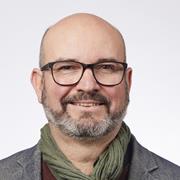
Niels Rytter serves as Head of Section and Associate Professor in the Department of Technology and Innovation at SDU Engineering, University of Southern Denmark. His research focuses on sustainable transitions in maritime industries and green energy systems, with particular expertise in systems engineering approaches to value creation. His research interests span multiple domains of sustainable technology: Green transition strategies for maritime industries Systems engineering approaches to sustainable value creation Operations management for sustainable business processes Artificial intelligence applications in strategic foresight Green hydrogen and Power-to-X technologies Methanol production and sustainable fuel systems Dr. Rytter's recent publications demonstrate a strong focus on the maritime industry's green transition, sustainable energy systems, and the application of systems engineering to complex sustainability challenges. His work frequently involves case studies in Danish industrial contexts, particularly focusing on methanol, hydrogen, and CO2 reduction strategies with significant international collaboration. He actively participates in multiple high-impact research projects including ShippingLab II (as Coordinator), SDU Maritime Research Platform, and the Denmark-Australian Partnership on Green Hydrogen Value Chains. His work has gained substantial academic attention with several publications accumulating over 200 readers on academic platforms. Dr. Rytter supervises PhD students including Goncalves, R. P., and teaches undergraduate courses such as "Supply Chain Data Analyse and Digitalisering" at the bachelor's level. He is also active in public discourse, having contributed to 26 press/media appearances primarily discussing green hydrogen industries and international partnerships for sustainable transition.
Kenichi Nakashima is Professor at Waseda University’s School of Social Sciences, Tokyo, specialising in production management, supply-chain control, quality management and environmentally conscious manufacturing. He previously served as Professor and Senior Advisor to the President at Kanagawa University and as Visiting Assistant Professor at MIT’s Laboratory for Manufacturing & Productivity. He is Vice-President of the Japan Industrial Management Association, a board member of the International Foundation for Production Research, and serves on the Deming Prize Selection Committee. Education: Ph.D. in Engineering Research interests span social-systems engineering, supply-chain management, JIT/kanban systems, remanufacturing, closed-loop logistics, Industry 4.0 applications with IoT, and environmental management systems. His recent work integrates data-driven optimisation with sustainable manufacturing and digital-transformation strategies. Across 43 Scopus-listed papers (h-index 12, 518 citations) his publications analyse stochastic production control, multi-kanban policies, warranty/maintenance of sensor-embedded products, pricing of IoT-based services, and risk mitigation in global supply networks. He has co-authored multiple books including Introduction to Manufacturing Management and Responsible Manufacturing . Selected honours: Japan Industrial Management Association Encouragement Award 1996 He currently leads a Grant-in-Aid project on environmentally conscious SCM for a super-smart society (2020-2024) and has completed SIP and JSPS projects on supply-chain resilience, remanufacturing market diffusion, and green factory models. He teaches Production Systems, Global Supply-Chain Management, TQM and Informatics at both undergraduate and graduate levels.
Martin Schmidt is an Associated Researcher at the Alexander von Humboldt Institute for Internet and Society (HIIG) since 2017, working in the "Learning, Knowledge, Innovation" research programme which addresses the interfaces of science and digitisation. He concurrently pursues a PhD in environmental modelling at the University of Potsdam while working as a Data Analyst and Consultant, and serves as co-editor of the critical blog journal Elephant in the Lab. Schmidt holds foundational training as an agricultural and soil scientist, now advancing through doctoral studies in environmental modelling at the University of Potsdam. His academic trajectory reflects interdisciplinary movement from agricultural sciences into digital scholarship and research system analysis. His research critically examines scientific infrastructure through lenses of Science of Science and Open Science. Key interests include research evaluation frameworks, authorship ethics in collaborative science, societal impact measurement, and digital transformation in both academic practices and agricultural systems. This work bridges technical data science applications with systemic analysis of scholarly communication, emphasizing tensions between academic incentives and societal relevance. Analysis of his publication record reveals evolving focus from 2017-2021: early work dissected authorship inflation and collaborative norms in "factory science," progressing to open access implementation challenges and culminating in practical data science management frameworks. Collectively, these contributions demonstrate consistent engagement with scientific system reform, particularly regarding digitalisation's impact on research credibility, equity, and effectiveness across domains including environmental science and agriculture. Schmidt actively disseminates research through media engagements in Berliner Zeitung, TAZ, and Laborjournal Blog, addressing issues like citation cartels and artificial publication inflation. While no formal awards are documented, his commentary reaches broad academic and public audiences through these prominent platforms. As a current PhD candidate, Schmidt has not yet supervised graduate students. His advocacy for early-career researchers is evidenced through former representation of doctoral researchers in the Leibniz Association, highlighting institutional engagement beyond formal research roles. Current work is sustained through HIIG affiliation and consulting practice rather than discrete grant funding. Schmidt operates within HIIG's "Learning, Knowledge, Innovation" programme team and co-leads the Elephant in the Lab editorial collective. These environments foster interdisciplinary dialogue about digital transformation in knowledge production, positioning him at critical intersections of research policy, scholarly communication, and data-intensive science across academic and agricultural contexts.
Dagmar Mack is a full-time Professor of Business Informatics at the Faculty of Business and Informatics, Hannover University of Applied Sciences and Arts. She maintains her primary office in room 1H.1.18 at Ricklinger Stadtweg 120, 30459 Hannover, Germany, with direct contact via +49 511 9296 1535 and institutional email. Her research concentrates on applied business-technology intersections, specifically: Advanced Business Analytics methodologies Customer Relationship Management (CRM) systems optimization Tailored IT solutions for Small and Medium Enterprises (SMEs) Ethical frameworks for Responsible Corporate Digitalisation These areas reflect her commitment to practical digital transformation strategies that balance technological innovation with corporate responsibility, particularly for mid-sized business operations in contemporary economic environments.
Obaid Rehman is a doctoral researcher at Aalto University's School of Science, Department of Industrial Engineering and Management. His research focuses on supply chain resilience, digital transformation in developing economies, and simulation modeling for operational disruptions. Recent research outputs include studies on digitalisation barriers in Pakistan, pandemic-induced supply chain adaptations, and data-sharing impacts on forecast accuracy. His work intersects with UN Sustainable Development Goals through supply chain innovation and developing world challenges. Publications demonstrate expertise in systematic reviews, simulation studies, and dynamic modeling of supply chain systems. Collaborations with researchers like L. Saarinen and K. Tanskanen highlight his network in operations management fields.
Associate Professor Devika Kannan is Deputy Director of the Institute for Sustainability Energy and Resources (ISER) and Deputy Director of the Centre for Sustainable Operations and Resilient Supply Chains (CSORSC) at the University of Adelaide's Adelaide Business School. She holds an academic rank of Associate Professor and specializes in supply chain management with a focus on sustainability, circular economy, resilience, and decarbonization strategies. Her research explores digitalization in supply chains, sustainable entrepreneurship, and operational resilience. Notable contributions include over 90 international journal articles (19,700+ citations, h-index 58) in top-tier journals like Nature and European Journal of Operational Research. She serves on editorial boards of multiple journals and has been recognized as a Clarivate Analytics Highly Cited Researcher in Engineering (2019, 2021-2024). Recent publications emphasize blockchain adoption in supply chains, logistics decarbonization via big data, and strategic frameworks for Industry 5.0 integration. Her work addresses global challenges such as agrochemical policy analysis, carbon regulatory drivers, and smart waste management systems. Dr. Kannan supervises Masters and PhD candidates and actively engages in policy-driven research for decarbonization and sustainable supply chain practices. Her interdisciplinary approach bridges operational innovation with environmental stewardship in manufacturing, healthcare, and agro-food sectors.
Prof. Hadi Ghaderi is a Professor of Management and Major Discipline Coordinator for Logistics and Supply Chain Management at Swinburne Business School (Swinburne University of Technology). He leads the Supply Chain Decarbonisation initiative and the Disruptive Mobility research stream at Swinburne’s Smart City Research Institute. His work bridges research and teaching, emphasizing practical, problem-based learning. Notable recognitions include inclusion in Stanford’s 2023-2024 Top 2% Cited Scientists and the 2018 Faculty Teaching Excellence Award for inspiring student engagement. Research focuses on supply chain digitalisation, decarbonisation, intelligent transport systems, and urban logistics. Key projects include crowd-shipping optimization, 5G-enabled smart cities, and low-emission truck adoption strategies. He collaborates with industry and government to deliver solutions like AIoT-CitySense for infrastructure maintenance and OPL-based delivery systems. Professional accolades include finalist status in the Excellence in Research and Development Award (2023) and High Commendation in Environmental Excellence (2023). He supervises PhD candidates addressing decarbonisation, smart platforms, and sustainable urban delivery systems.
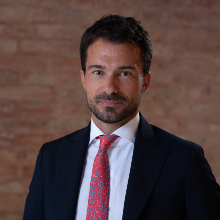
Andrea MINTO is Associate Professor at Ca' Foscari University of Venice, holding the Jean Monnet Professorship in Law and Regulation of Financial Markets and the Chair in Digitalisation in EU Financial Studies (EUDIFIN). He serves as Department Delegate for Orientation and Tutoring within the Department of Economics, which operates under the Interdepartmental School of Economics, Languages and Entrepreneurship for International Exchanges. Additionally, he maintains a part-time professorship at the University of Stavanger Business School in Norway. His research focuses on the intersection of Law, Economics, and Finance, with expertise in European Economic Law (SSD GIUR-03/A). MINTO's work spans economic law, European and comparative financial regulation, company and business law, and FinTech innovation. His publications appear in high-impact journals including Journal of Financial Regulation, Capital Markets Law Journal, and European Journal of Risk Regulation. Analysis of his recent publications reveals a strong focus on regulatory frameworks for emerging financial technologies, particularly cryptocurrency regulation under MiCAR, AML implications of digital currencies, and the intersection of traditional banking regulation with new financial technologies. His work demonstrates increasing attention to the European financial regulatory landscape and its adaptation to technological innovation. Scientific Awards: Two BIS Fellowships at the Bank for International Settlements SIEMENS Integrity Initiative Fellowship at IACA PMFCFS research grant at the Prince Mohammad Bin Fahd Center for Futuristic Studies MINTO has extensive experience as a policy advisor, having worked with major financial institutions including Deutsche Bundesbank, De Nederlandsche Bank, Bank of Italy, and the European Banking Authority. He currently serves as Senior Policy Adviser and Researcher at the Deutsche Bundesbank Eurosystem on topics including FinTech, shadow banking, and regulatory arbitrage. He also works as Of Counsel at Annunziata&Conso Law Firm in Milan.
Guillermo Aranda-Mena is an Associate Professor at RMIT University's School of Property, Construction and Project Management and a Visiting Professor at Politecnico di Milano. His research focuses on architecture, sustainable design, and BIM, with over 100 publications. He holds a PhD in Construction Management from the University of Reading and a professional certificate in Virtual Design and Construction from Stanford University. Education: Masters in European Construction Engineering from Loughborough University (UK) PhD in Construction Management from the University of Reading (UK) Undergraduate studies in Architecture in Mexico and Spain Professional Certificate in Virtual Design and Construction from Stanford University His research interests include architecture, heritage management, innovation districts, and urban design. He has led projects such as the Australian National Guidelines for Digital Modelling and collaborated with institutions like TU Delft and NUS. Awards include the Golden Key Honorary Membership and a Senior Research Fellowship at Politecnico di Milano. Guillermo advises on industry projects and has received grants for research on workplace wellbeing and smart maintenance. He leads the G-Lab, a global BIM architecture studio, and advocates for emotionally intelligent workspaces through books like *Creating Emotionally Intelligent Workspaces: A Design Guide to Office Chemistry*.
Chao Ye is a Research Fellow at the KTH Royal Institute of Technology , working in the Aerospace, Moveability and Naval Architecture department. He is currently a Postdoc researcher on the SHIFT-DT project focusing on sustainable ship design and production through digital twins. His research bridges ship design (lines, stability, hydrodynamics) with production optimization and LNG transportation systems. PhD focused on LNG boil-off rate assessment in marine type C tanks Teaches courses like Modelling ship’s propulsion and manoeuvring and Digitalisation for Sustainable Production Research interests span ship structural integrity, propulsion systems, and environmental impacts. His work integrates numerical modeling, experimental studies, and multi-objective optimization for 3E (exergetic, economic, environmental) frameworks. Publications emphasize data-driven approaches (e.g., deep learning for temperature prediction) and fault diagnosis systems for marine machinery. Collaborates with Digital Futures initiatives for advanced maritime technologies.
Rigmor Argren is a Senior Lecturer at Örebro University in Sweden, affiliated with the School of Behavioural, Social and Legal Sciences. She specializes in Public International Law and International Humanitarian Law, with a particular focus on the intersection of these fields with environmental law, human rights law, and digital technologies. Her educational background includes: Ph.D. in International Human Rights Law from Essex University (2012) LL.M. in International Human Rights Law from Essex University (2003) Master of Communications from Örebro University (2004) Diploma in Humanitarian Leadership from the Centre for Humanitarian Leadership at Deakin University (2014) Argren's research primarily explores the complex relationship between international humanitarian law and other legal frameworks, with special attention to non-absolute rights such as privacy and freedom of expression in the digital age. Her work examines how these rights function during armed conflicts and how they intersect with emerging technologies, biometrics, and data protection concerns. She has developed innovative teaching methods, including the use of virtual reality for teaching Law of Armed Conflict, demonstrating her commitment to both scholarly advancement and pedagogical innovation. Argren is actively involved in multiple research projects and groups: ORUPIL (Public International Law at ORU) JuVås (Rule of Law) LDA - Law, Digitalisation and AI research environment Ongoing projects: Mis(sing) Information Project, FIRE Completed projects: Children and Improved Crisis Response, LAWGEM (2019-2022) Her scholarly output demonstrates a consistent focus on contemporary legal challenges at the intersection of human rights, technology, and armed conflict. Argren has made significant contributions through both solo and collaborative works, including edited volumes on child rights in humanitarian crises and rule of law in transitional contexts.
Diane Burns is a Senior Lecturer in Organisation Studies and Head of the Organisation Studies Research Cluster at the University of Sheffield Management School. She joined Sheffield University Management School in October 2012 as a Lecturer in Human Resource Management and Organisational Behaviour, having previously served as Research Fellow at the School of Allied Health Professions, University of East Anglia. Her academic career focuses on the organization and management of social care, particularly examining how structures, processes and dynamics produce and affect care provision and the lives of people who work within or need the support of social care systems across the UK and internationally. Diane Burns holds the following academic qualifications: PhD in Psychology from Manchester Metropolitan University MSc in Organisational Psychology from Birkbeck University of London BSc Hons. in Psychology from Manchester Metropolitan University PGCert. in Teaching & Learning in Higher Education from University of Sheffield Her research interests concentrate on power and relations of domination in the care space, with four key interconnected areas: workforce issues and job quality in care settings; AI, digitalisation and innovation in care delivery; financialisation and marketisation of social care; and intersubjective epistemologies and participatory approaches in research. She examines how organizational structures, processes and dynamics affect care provision, particularly in social care settings, investigating temporality, digitalisation, corporate colonisation and instability in social care organizing, with critical attention to how these factors impact both care workers and recipients of care services. Analysis of Dr. Burns' recent publications reveals a consistent evolution of her research focus toward the intersection of organizational dynamics and social care delivery under increasing financial and technological pressures. Her work demonstrates growing attention to temporal arrangements in homecare, the financialization of elder care, and innovative service models, while maintaining a critical perspective on power dynamics and corporate influence. A notable trajectory shows her expanding interest in AI-driven solutions for workforce shortages, as evidenced by her current ESRC-funded project examining AI-driven technology in homecare across the UK, Finland and Sweden, while continuing to investigate participatory research methods to understand care home culture and worker experiences. Her scholarly contributions have been recognized with awards including: Best Paper Award at the 8th International Organisational Behaviour in Healthcare Conference (2012) Diane Burns actively supervises PhD students including Kevin Burrows (Doctoral Associate in Accounting and Finance) and Amrithavally Thaivalappil Ramakrishnan (Doctoral Researcher in Organisation Studies), having previously guided Arbaz Kapadi, Juan Pablo Winter, and Rosie Westerveld to completion. She leads significant research initiatives including: ESRC (JPI MYBL) 2025-2028: "AI-driven platform care: Promoting equal and inclusive job quality in long-term care" (£377,000) ESRC 2021: "Centre for Care" (£4.5 million) ESRC 2017-2021: "Sustainable Care Research Programme" (£2 million) Wellcome Trust 2016-2017: "Doing Care Differently" (£49,793) Department of Health & Comic Relief 2012-2013: "Care Home Organisations Implementing Cultures of Excellence" (£550,000) As Head of the Organisation Studies Research Cluster at Sheffield University Management School, Dr. Burns leads collaborative research efforts examining organizational dynamics in healthcare and social care settings. Her work frequently involves international partnerships, particularly with researchers in Finland and Sweden for her current ESRC-funded project on AI-driven technology in homecare. She maintains strong connections with the Work, Employment and Organisations research group and has established research networks across European institutions focused on understanding comparative social care systems and innovative care delivery models under financial constraints.
Jukka Tapio Mähönen is Professor of Cooperative Law at the University of Helsinki Faculty of Law (20% workload since 2019) and Professor at the University of Oslo Faculty of Law (since September 2015). He holds a Docent title in law and economics at both the University of Helsinki and University of Eastern Finland. His academic career includes serving as Dean of the Faculty of Law at the University of Turku and holding the chair of Commercial Law there. He is affiliated with the Helsinki Institute of Sustainability Science (HELSUS) and serves as Supervisor for the Doctoral Programme in Law at the University of Helsinki. His educational background includes: Doctor of Law (University of Turku, 2001) Licenciate of Law (University of Turku, 1995) Master of Laws (University of California at Berkeley, 1994) Master of Science (Economics) (Turku School of Economics, 1993) Bachelor of Law (University of Turku, 1988) Mähönen's research focuses on business law and law and economics from a sustainability perspective, with expertise spanning cooperative law, corporate law, sustainability law, accounting law, corporate governance, and finance and securities law. His current work emphasizes sustainable business models, digitalization, cooperativism, and institutional investors. He approaches legal issues through theoretical frameworks examining regulatory dynamics between public and private sectors. His publication trends reveal a strong focus on sustainability integration within corporate law frameworks, with recent work examining shareholder vs stakeholder models, sustainable innovation ecosystems, and international sustainability reporting frameworks. His research increasingly connects cooperative structures with environmental sustainability, showing particular interest in how legal frameworks can support sustainable business models in global value chains. His notable recognition includes: Member of Finnish Academy of Sciences and Letters (2011) Mähönen actively supervises doctoral research and has received significant research funding, including an Academy of Finland project (2013-2016) and a major Academy of Finland research project on sustainable innovation ecosystems (2020-2024). He participates extensively in peer review activities for numerous international journals including Circular Economy and Sustainability, Discover Sustainability, and Journal of Co-operative Organization and Management. He leads the UiO:Nordic Research Group Futuring Sustainable Nordic Business Models and serves as risk manager for the European Commission Horizon 2020 SMART project. His external roles include membership on the board of the University of Turku and the scientific council of the State Audit Office of Finland.
Dr. Albert Attom is a University Teacher in Human Resource Management and Organisational Behaviour, focusing on impact research, leadership, and organisational culture. He holds a PhD in Management from the University of Sheffield. His work emphasizes collaborations with global institutions to drive tangible outcomes in emerging economies, particularly in healthcare digitalisation and policy development. Research groups: Work and Organisation Grants and funding: Enterprise Projects Group (EPG) grant for impact research Organisation for Economic Co-operation and Development (OECD) funding for DAC List countries research Teaching and supervision: Leads leadership/Human Resource Management modules, teaches on MBA Executive and Professional Education programs, and supervises dissertations.
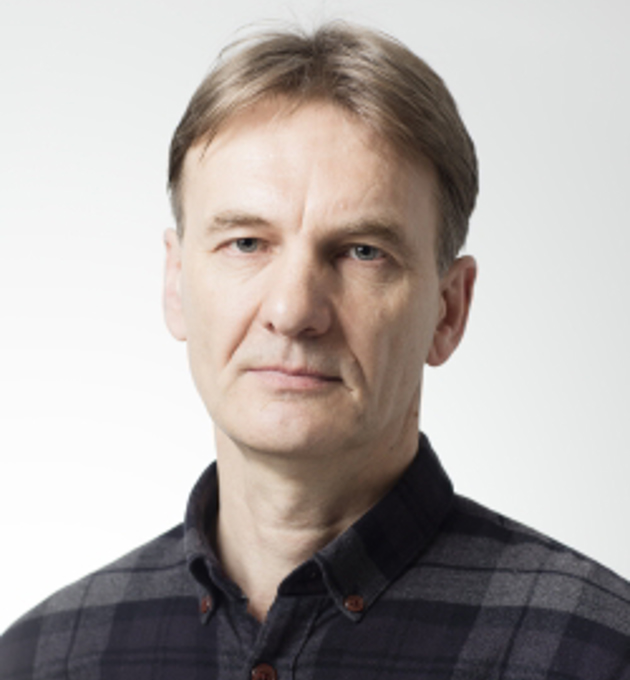
Torstein Nesheim is a Senior Researcher at the SNF Foundation, holding a PhD and Professor title. His work focuses on organizational structure challenges in project-based and matrix organizations, with expertise in knowledge management, human resource management, and public sector innovation. Research groups: Digitalisation, Strategy and Management; Energy, Natural Resources and Environment (ENE) FAIR Insight Team Research Interests include: Project-based and matrix organizational challenges Network organizations and organizational boundaries Non-standard work arrangements and multi-employment relations Knowledge sharing and human resource management Public sector innovation and structural change His research projects cover: The knowledge firm: Personnel allocation and competence development (2019-2023) Freelancers and independent contractors in organizational contexts (2019-2023) Selected Publications (2011-2022) analyze: Agile organization structures Resource manager roles in project environments Inter-agency coordination frameworks Knowledge management systems Bureaucratic reform in state agencies Employment relations in professional services Contact: torstein.nesheim@snf.no | LinkedIn