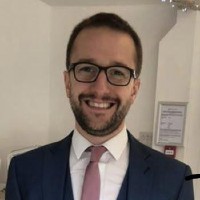
Dr John Stanton is a Reader in Law at City St George's, University of London, with a focus on Constitutional Law and Comparative Constitutional Law. He has held academic roles since 2010, previously at Kingston University and City University, and is a Visiting Lecturer at the University of Malta since 2018. PhD in Law (Kingston University London, 2010) LLB Law (University of Surrey, 2007) His research spans Maltese constitutional history , local government dynamics , democracy , and central-local relations . Recent projects include Law, Localism and the Constitution (2023) and co-editing The Constitution of Malta at Sixty (2024). John’s publications and conference presentations (e.g., at Melbourne and Texas) address themes like constitutional decay , autocracy , and democratic resilience . He contributes to journals such as Legal Studies , Public Law , and Environmental Law Review . Learning Enhancement Award for Teaching (2017) Fellow, Higher Education Academy He testified before the UK Parliament on devolution and is active in the Society of Legal Scholars , UK Constitutional Law Association , and the Honourable Society of the Inner Temple .
Hasan Dindjer is an Associate Professor of Law at the University of Oxford’s Faculty of Law and the Blanesburgh Fellow and Tutor in Law at Balliol College. His research focuses on public law, philosophy of law, and related areas of moral and political philosophy. He has specialized in administrative law standards, particularly the 'reasonableness' standard, and has engaged with foundational questions in legal positivism. Education: BA and BCL (New College, Oxford) LLM (Harvard Law School, as a Fulbright Scholar) Previously served as Examination Fellow at All Souls College, Oxford Research Interests: Public Law and Administrative Law Standards Philosophy of Law and Legal Positivism Moral and Political Philosophy in Legal Contexts Publications: Over a decade of scholarship includes journal articles, book chapters, and blog posts analyzing administrative law theory, constitutional principles, and debates over legal positivism. Recent work includes contributions to Modern Law Review and Legal Theory . Affiliations: Member of the Jurisprudence in Oxford Research Group and actively involved with blogs like the UK Constitutional Law Blog and ICONnect.
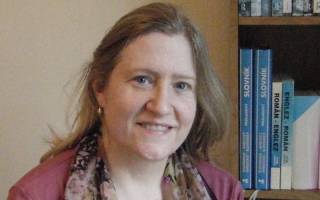
Professor Gabrielle Lynch is a leading scholar in Comparative Politics and African Studies at the University of Warwick. She holds the academic rank of Professor and serves as PAIS Impact Director, Comparative Politics cluster lead, and Warwick UCU Equalities Officer. Her research focuses on ethnic identities, elections, transitional justice, and social media's role in African politics. Lynch earned her BA, MPhil, and DPhil from the University of Oxford. She has conducted extensive fieldwork in Kenya, Ghana, and Uganda, supported by grants from the ESRC, Warwick Policy Support Fund, and others. Her awards include the ESRC Award for Outstanding International Impact (2019) and the Market Research Society’s President’s Medal. Lynch is editor of African Affairs and a member of the African Studies Association of the UK and British Institute in Eastern Africa. Lynch’s work bridges academia and public engagement, including columns in The Saturday Nation and The East African . She founded the African Judiciaries Research Network and co-authored influential books like Performances of Injustices and The Moral Economy of Elections in Africa . Her research emphasizes democratization challenges, electoral integrity, and the intersection of technology and politics in Africa.
Professor Aileen Mcharg is a leading academic in Public Law and Human Rights, holding a professorship at Durham Law School since 2019. Previously, she held chairs at Strathclyde, Glasgow, and Bristol Universities. Her research focuses on UK and Scottish constitutional law, devolution, and administrative law. She co-edits Public Law and serves on committees like the UK Constitutional Monitoring Group and the Scottish Government’s Expert Panel on Environmental Charges. Her research interests emphasize the UK’s territorial constitution, devolution dynamics, and Brexit’s legal implications. Notable contributions include analyses of the Miller Case, the Sewel Convention, and the UK Internal Market Act 2020. She frequently engages in interdisciplinary work, exploring energy law and policy post-Brexit. Recent publications include Constitutional change and territorial consent: The Miller Case and the Sewel Convention (2024) and The Silence of Constitutions (2024). She also contributes to blogs and journals on topics like the 2024 UK General Election’s constitutional implications and Scottish independence pathways. Her esteem indicators include roles as Research Excellence Framework panel member (2020), co-chair of the British-Irish Chapter of the International Society of Public Law (2018), and editorial board positions for Public Law and Journal of Energy and Natural Resources Law . Professor Mcharg advises PhD students and collaborates on grants exploring devolution, Brexit, and constitutional resilience. She is affiliated with Durham’s legal research networks and contributes to interdisciplinary projects on energy policy and constitutional futures.
Professor John Bone is a Personal Chair in the Department of Sociology at the University of Aberdeen, School of Social Science. His work bridges sociology, political economy, neuroscience, and environmental policy, with a strong focus on just transitions, social well-being, and the biosocial impacts of contemporary capitalism. PhD in Sociology, University of Aberdeen (2004) MA Hons in Sociology, University of Aberdeen (1998) John Bone’s research centers on political economy, social and biosocial theory, and energy justice. He has developed an original biosocial framework known as the 'social map' to analyze how human biological capacities interact with social structures, affecting identity, health, and cohesion. His recent book, The Great Decline (2024), critiques the psychological and societal harms of hyper-mediated, neoliberal societies and warns of unpreparedness for AI and climate change. His empirical work examines energy transitions, particularly in Aberdeen, where he leads the Aberdeen Just Transitions Lab. His recent publications span interdisciplinary themes in just transition, climate governance, and social theory. Key trends include the development of metrics for equitable energy transitions, stakeholder engagement in nuclear decommissioning, and the role of deliberative democracy in climate assemblies. His work frequently addresses regional policy, social inequality, and the psychological impacts of economic precarity. Philip Abrams Memorial Prize 2007 (Joint Winner, Best First Book in Sociology) John Bone has supervised numerous PhD students, including David Magee, Karen Lumsden, and Lorna Watson. He has been a co-applicant on major grants such as UKRI’s Just-Systems project (£5.7M) and NIHR’s Aberdeen Health Determinants Research Collaborative (£1.3M). His leadership roles include Head of Department (2013–2019), Social Science Enterprise Champion, and Coordinator of the Aberdeen Just Transitions Lab. He has also served as Chair of the British Sociological Association (2018–2021). He leads the Aberdeen Just Transitions Lab and collaborates with the Aberdeen Health Determinants Research Centre. His research teams engage with policymakers, NGOs, and community groups, including Aberdeen City Council, NHS Grampian, and the Just Transition Commission, to ensure research has real-world impact on policy and social equity.
Raffael N. Fasel is a SNSF Ambizione Senior Researcher at the University of Zurich , with affiliations as an Affiliated Lecturer at the University of Cambridge and Visiting Scholar at NYU Law School . His work bridges animal rights law , constitutional theory , and comparative jurisprudence . Education: Dr. iur. from University of Cambridge, LL.M. from Yale, MA from University College London. Current research focuses on nonhuman legal personhood , direct democracy , and constitutional constraints in global contexts. His publications analyze intersections between legal philosophy and practical governance , including forthcoming work on Animal Rights Law and peer-reviewed articles on topics like Sieyès' constitutional theory and Swiss primate rights cases . He has collaborated with artists on public legal education projects, such as an installation on the monkey selfie case (Naruto v. Slater) in Aarhus Courthouse (2020). Scientific awards: SNSF Ambizione Fellowship Key thematic areas: animal rights law , constitutional self-determination , judicial reasoning , and democratic legitimacy .
Dr. Sherrill Stroschein is a Reader in Politics at the Department of Political Science, University College London (UCL) , where she has been since 2005. Her academic career includes prior roles as an Academy Scholar at Harvard University and Assistant Professor at Ohio University . She earned her PhD from Columbia University in 2000 under the supervision of the late Dr. Charles Tilly, and a BA magna cum laude from Amherst College .
Dr Angus Armstrong is a Professorial Research Fellow at the UCL Institute for Global Prosperity, University College London, directing the ESRC-funded Rebuilding Macroeconomics network that has produced 80+ papers and 100+ public events. His work reinterprets macroeconomics as a knowledge-creation system under fundamental uncertainty. Research focuses on decision-making under uncertainty, collective intelligence, agent-based modelling, and macroeconomic policy within ecological economics, comparative systems, and experimental frameworks. He emphasizes institutions and social interactions as foundations of prosperity in complex adaptive systems. Analysis of 2015-2019 publications reveals concentrated expertise in Brexit fiscal impacts, devolution economics, monetary policy at zero bounds, and Scottish independence. Works integrate macroeconomic modeling with political economy, addressing UK/European policy challenges through institutional and uncertainty-focused lenses. Armstrong serves as Chief Economic Advisor to Lloyds Banking Group (2017) and leads the Rebuilding Macroeconomics network. His 'New Economics of Prosperity' teaching reimagines prosperity as emergent from socio-economic interactions rather than an end state, reflecting his view of economies as open systems defined by fundamental uncertainty.
Mark Elliott is Professor of Public Law at the Faculty of Law, University of Cambridge, and a Fellow of St Catharine's College, Cambridge. He served as Deputy Chair of the Faculty (2018-2019) and Chair (2019-2024), and is Legal Adviser to the House of Lords Constitution Committee. He co-founded the biennial Public Law Conference series and maintains the influential blog Public Law for Everyone . His research focuses on UK constitutional dynamics, including the impact of Brexit, judicial review mechanisms, human rights frameworks, and devolution. Elliott explores intersections between legal doctrine, political practice, and constitutional change, with emphasis on parliamentary sovereignty, executive accountability, and common law rights. His publications demonstrate consistent engagement with constitutional crises, Supreme Court jurisprudence, and the evolution of administrative law. Recent works analyze post-Brexit governance challenges, judicial scrutiny of executive power, and the resilience of constitutional principles amid political pressures. Awards and Honors: Pilkington Prize for Excellence in Teaching University of Cambridge Yorke Prize for doctoral thesis As a trusted policy adviser, Elliott has shaped legislative scrutiny processes at the House of Lords. He engages public audiences through accessible legal commentary and academic outreach, though no specific grants, labs, or supervised students are detailed in available materials.
Dr Stephen McGlinchey is a faculty member and Programme Leader for Politics and International Relations at the School of Social Sciences , University of the West of England, Bristol. He holds a PhD in International Relations from Cardiff University, alongside an MSc and BSc from Cardiff and Wales respectively. His research focuses on: US foreign policy, particularly historical US-Iran relations Arms policies during the Cold War Innovative pedagogical approaches in International Relations Post-truth political dynamics Dr McGlinchey has authored and edited numerous publications, including: Polarity (2025) - analyzing global power structures Global Politics in a Post-Truth Age (2022) - exploring modern political discourse Foundations of International Relations (2022) - a textbook for beginners The Reluctant Realist: Jimmy Carter and Iran (2018) - applying realism to US-Iran arms deals He is also the Editor-in-Chief and Publisher of E-International Relations , the leading open-access IR platform. His work spans from 1950s US-Iran arms agreements to contemporary geopolitical theory, with articles in journals like Diplomacy and Statecraft . No scientific awards or student advising details are mentioned in the provided texts.
Dr. Leah McCabe is a Lecturer in British Politics at the School of Social and Political Science , University of Edinburgh. She specializes in British politics, public policy, gender politics, and social movements, with a focus on contentious politics in the UK. Her research examines policy framing, institutional governance, and constitutional change, particularly in cases of gender-based violence and abortion politics. Education : PhD in Social Policy, University of Edinburgh (2016–2021) MSc Gender Studies (Applied), University of Stirling (2015–2016) MA (Honours) Sociology and Politics, University of Edinburgh (2011–2015) Research Interests : Leah's work bridges feminist institutionalism, intersectionality, and multi-level governance. She investigates how devolution and constitutional shifts influence policy contestations and social movement strategies. Her current project, funded by the Leverhulme Trust, analyzes abortion politics across the UK, exploring legislative debates and pro-choice/pro-life advocacy strategies. Past research includes a groundbreaking thesis on domestic abuse policy in post-devolution Scotland, which won major academic awards. Awards : Elizabeth Wiskemann Prize (Political Studies Association) University of Edinburgh Outstanding Thesis Prize Leverhulme Early Career Fellowship Grants & Projects : Principal Investigator for the Leverhulme-funded project Framing Abortion Politics in the UK (2023–2026). Previously held ESRC and SGSSS fellowships. Labs/Teams : Active in the Gender Politics Research Group and Territorial Politics Research Group within her school.
James Mitchell is a Professor of Public Policy at the University of Edinburgh’s School of Social and Political Science . He holds a MA (Political Studies) from the University of Aberdeen and a D.Phil. (Oxford). His research focuses on British politics, devolution, public policy, territorial politics, and Scottish nationalism. He has supervised over 30 years of PhDs and Masters in public policy, devolution, and constitutional politics. Key research themes include fiscal accountability in Scotland, party membership surges post-referendum, and multi-level governance. Research Projects: ESRC-funded study on SNP and Scottish Greens’ post-referendum membership growth Investigation of fiscal devolution’s accountability gaps Analysis of Scotland’s constitutional questions and local governance Research Interests: Mitchell explores territorial politics, public service reform, and political behavior in sub-state governments. He has contributed to debates on Scottish independence, EU referendum impacts, and intergovernmental relations. Recent work includes studies on the SNP leadership contest (2023) and Holyrood’s fiscal structures. Grants & Awards: He has secured grants from the Economic and Social Research Council (ESRC) for projects on party membership and constitutional dynamics. No specific scientific awards are listed, but his work is widely cited in political science and public policy. Labs & Teams: He is part of the Territorial Politics Research Group and has collaborated on regional economic forecasting and governance studies. His work often bridges academia and policy, influencing debates on devolution and public finance.
Professor Felicity Matthews is Head of School for the Department of Politics & International Relations and the Department of Sociological Studies at the University of Sheffield. She specializes in the exercise of power in policy processes and relationships between government, parliament and citizens, with expertise in British politics, constitutional rules, and institutional norms. Her research examines: Executive politics and public administration Parliamentary scrutiny mechanisms Constitutional change and democratic practices E-petitions systems and citizen engagement Professor Matthews has held leadership roles including Director of the ESRC-funded White Rose Doctoral Training Partnership (2022-2024) and co-editorship of Policy & Politics (2015-2020). She has received prestigious fellowships including ESRC Post Doctoral Fellowship and Leverhulme Fellowship. Her parliamentary work includes an ESRC-funded Academic Fellowship with the House of Commons Petitions Committee examining democratic engagement through e-petitions systems. Her research has influenced parliamentary practice through advisory roles to the Public Administration and Constitutional Affairs Committee and Committee on Standards in Public Life. She has over 130 media appearances analyzing political events for outlets including BBC, ITV, and Washington Post.
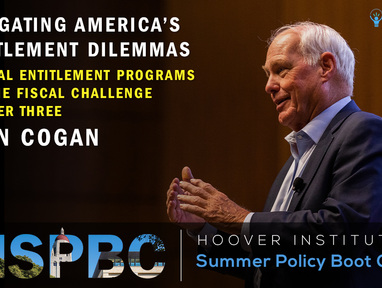
John F. Cogan is the Leonard and Shirley Ely Senior Fellow at Stanford University's Hoover Institution and a former faculty member in the Public Policy Program (1994-2019). His research examines U.S. fiscal policy, federal entitlement programs, and healthcare reform. He holds a PhD in Economics from UCLA and an MA from California State University, Long Beach. Cogan's research interests span: Federal budget dynamics including deficit drivers and debt sustainability Entitlement program evolution with historical analysis of Social Security and Medicare Healthcare system efficiency focusing on market-based reform frameworks Fiscal federalism examining state-federal financial relationships Economic governance exploring institutional design for prosperity His publications consistently address entitlement sustainability, fiscal responsibility, and healthcare economics, with recent work emphasizing the trade-offs between government price controls and innovation in healthcare markets. Awards & Honors: Hayek Prize (2018) for The High Cost of Good Intentions Stanford-in-Government Distinguished Service Award Stanford Review Best Undergraduate Teaching Award He has served on federal advisory commissions including President George W. Bush's Commission to Strengthen Social Security and the California Public Employee Post-Employment Benefits Commission.
Dr Maria Kendrick is Senior Lecturer in Law at City Law School, City, University of London, where she also serves as Assistant Dean for Employability and Student Outcomes. She is a Research Fellow at the Centre of European Law, King's College London, and a Member of the Institute for the Study of European Law (ISEL). She has held visiting lecturer positions at the London School of Economics (2017–2020) and King’s College London (2015–2018). PhD in Law, King's College London (2018) LL.M, King's College London LL.B, King's College London Bar Vocational Course, Gray's Inn Dr Kendrick’s research centers on EU and international tax law, with a focus on differentiated integration, the Subsidy Control Act 2022, and the repayment of NextGenerationEU debt. She explores how taxation functions within EU own resources and the implications for fiscal sovereignty post-Brexit. Her work intersects with broader themes of EU constitutional development, transatlantic tax coordination, and digital economy taxation. She is particularly known for analyzing the limits of tax harmonization within the EU and the role of differentiated integration as a viable path forward. Her recent and forthcoming publications analyze the legal feasibility of EU tax proposals to repay NextGenerationEU debt, the impact of the Subsidy Control Act on public spending, and transatlantic agendas on corporate taxation. These works reflect a consistent trend in EU fiscal governance, post-Brexit legal frameworks, and the tension between harmonization and national sovereignty in tax matters. Dr Kendrick has received notable recognition, including a lifetime Fellowship from King’s College London and research funding from the University of Rome ‘La Sapienza’ for the PRIN 2017 project on European federalism. She is a Member of the Editorial Board of the Global Trade and Customs Journal and a Reviewer for EUBlog . She has advised and contributed expert evidence cited by the House of Lords Sub-Committee on the Protocol on Ireland/Northern Ireland. She has organized and spoken at high-profile events, including a roundtable in the House of Lords on Subsidy Control and Levelling Up. Her research is supported by grants and collaborative networks such as EUFUTURES and UACES, focusing on interdisciplinary approaches to EU integration. Dr Kendrick leads the LLM International Tax Law module and is actively involved in research networks including DiCE (Differentiation: Clustering Excellence), an EU-funded project on differentiated integration. She has presented her work at international conferences in the UK, EU, and beyond, reinforcing her role as a leading scholar in EU tax and integration law.