Prof. Dr. Alexander Stroh-Steckelberg is Professor of Political Science with a focus on African Politics & Development Policy at the University of Bayreuth since 2022. He serves as Deputy Head of the Bayreuth International Graduate School of African Studies (BIGSAS) until 2025 and has held prior roles as Junior Professor and Senior Fellow at BIGSAS (2015–2021). His academic career includes research associate positions at the GIGA German Institute of Global and Area Studies (2006–2015) and teaching roles at the Universities of Abomey-Calavi, Heidelberg, and Lüneburg. Stroh-Steckelberg’s research spans comparative democracy studies , judicial politics , electoral systems , political party dynamics , and development policy in Africa, with regional expertise in Francophone West Africa and Rwanda . His work emphasizes institutional diffusion, informal networks in courts, and the interplay between formal and informal governance structures. Recent publications reveal a focus on judicial appointment policies , electoral manipulation , and local governance challenges across Africa. He contributes to methodological advancements in comparative area studies and network analysis , particularly in non-Western democracies. Stroh-Steckelberg is actively involved in academic communities including the American Political Science Association , German Political Science Association , and Association for African Studies in Germany .
Fabio Franceschi is an Associate Professor of Ecclesiastical Law, European Ecclesiastical Law, and Law and Religion at the Faculty of Law, Sapienza University of Rome. He teaches courses including Diritto Ecclesiastico (Ecclesiastical Law), Diritto Ecclesiastico Europeo (European Ecclesiastical Law), and Law and Religion. His institutional affiliation is with the Department of Legal and Economic Studies at Sapienza University of Rome. Franceschi's research interests focus on ecclesiastical law and the relationship between law and religion in contemporary society, the history of relations between State and Church in Italy (particularly in pre- and post-unification periods), canon law, and intercultural law. His work examines religious freedom, secularism, religious confessions, and the legal frameworks governing religious institutions in increasingly multicultural and multireligious societies. His publication record includes over 60 academic works in Italian and English, with his most notable contribution being the 'Compendium of Ecclesiastical Law,' which has gone through multiple editions. His recent scholarship addresses contemporary issues such as religious freedom in MENA countries, end-of-life decisions from religious perspectives, and the financial operations of religious institutions. Franceschi is actively involved in research groups including 'DiReSom (Law and Religion in Multicultural Societies)' and the executive committee of the interdisciplinary research center 'ORFECT - Observatory on Religious Freedom in the Jurisprudence of the European Court of Human Rights.' He also coordinates the research group 'Tradizioni religiose, diritti umani e diritto interculturale' (Religious Traditions, Human Rights and Intercultural Law). He serves on the scientific committee of the legal journal 'SudEuropa. Quadrimestrale di civiltà e cultura europea' and the editorial board of 'Il Diritto ecclesiastico.' His teaching materials for attending students are available on the university's E-Learning platform, and he maintains regular office hours for student consultations.
Professor Dan Meagher is a Chair in Law at Deakin University's Faculty of Business and Law, where he leads research in constitutional law and statutory interpretation. He serves as Director of Research at Deakin Law School and actively contributes to legal scholarship through publications, editorial work, and supervision of doctoral candidates. Doctor of Philosophy, University of New South Wales Master of Laws, Monash University Bachelor of Economics, Monash University Bachelor of Laws (LLB), Monash University His research focuses on constitutional law, statutory interpretation, and human rights protections. He explores the principle of legality, responsible government norms, and the interplay between common law and statutory frameworks, often advocating for enhanced rights protections through judicial interpretation. Professor Meagher's scholarly output highlights trends in Australian constitutionalism, including proportionality in secondary legislation, non-discrimination principles, and the evolution of common law rights. His work bridges doctrinal analysis with practical implications for legislative drafting and judicial review. Elected Fellow of the Australian Academy of Law Comments Editor for the Public Law Review Director of Research at Deakin Law School He supervises doctoral research on topics like human rights protection and legislative drafting models. His professional activities include co-editing major legal texts and contributing to debates on constitutional evolution and judicial interpretation.
Patrick Overeem is an Associate Professor at the Faculty of Social Sciences and Humanities (Vrije Universiteit Amsterdam), specializing in Political Science and Public Administration. He holds a PhD from Leiden University (2010) and advanced degrees in Public Administration and Political Science from the same institution. His research focuses on democratic theory, value pluralism, statesmanship, and EU governance. He is affiliated with the Multi-layered Governance (MLG) research group and serves on editorial boards, including the American Review of Public Administration . Overeem's work emphasizes ethical leadership, compromise in politics, and the interplay between democracy and pluralism. Key contributions include his 2012 book on the politics-administration dichotomy and his neo-Aristotelian analyses of political virtue. He has led projects like the EU-funded RECONNECT initiative (2018–2022), exploring democratic reconciliation in Europe. He advises Dutch parliamentary integrity committees and contributes to public debates on ethics and governance through media engagements. His research bridges classical political theory with contemporary challenges, addressing topics like postliberalism, moral dilemmas in governance, and constitutional frameworks. Overeem teaches courses on political theory, democratic systems, and the history of political thought, fostering critical engagement with ethical and institutional dimensions of power.
Susan Fino is a Professor at the College of Liberal Arts and Sciences, Wayne State University. Her research focuses on public law, American constitutional law, administrative law, and the role of state supreme courts. She holds a B.A. from Johns Hopkins University, an M.A. and Ph.D. from Rutgers University. She has received the President's Award for Excellence in Teaching. Her courses include American Government (PS1010) and Constitutional Law (PS5110/PS5120), taught across multiple terms from 2023 to 2025. Dr. Fino's research explores judicial federalism, state constitutional frameworks, and legal interpretations of rights. Her work analyzes topics like church-state relations, taxation provisions in state constitutions, and assisted suicide debates. She has written extensively on state supreme court dynamics, including landmark cases and institutional performance metrics. Her scholarship bridges legal theory with practical governance challenges at both state and federal levels. Her publications span over three decades, addressing evolving legal landscapes such as the Rehnquist Court’s federalism approach and technological impacts on criminal sentencing. She consistently engages with issues at the intersection of law, politics, and societal values.
Dr John Stanton is a Reader in Law at City St George's, University of London, with a focus on Constitutional Law and Comparative Constitutional Law. He has held academic roles since 2010, previously at Kingston University and City University, and is a Visiting Lecturer at the University of Malta since 2018. PhD in Law (Kingston University London, 2010) LLB Law (University of Surrey, 2007) His research spans Maltese constitutional history , local government dynamics , democracy , and central-local relations . Recent projects include Law, Localism and the Constitution (2023) and co-editing The Constitution of Malta at Sixty (2024). John’s publications and conference presentations (e.g., at Melbourne and Texas) address themes like constitutional decay , autocracy , and democratic resilience . He contributes to journals such as Legal Studies , Public Law , and Environmental Law Review . Learning Enhancement Award for Teaching (2017) Fellow, Higher Education Academy He testified before the UK Parliament on devolution and is active in the Society of Legal Scholars , UK Constitutional Law Association , and the Honourable Society of the Inner Temple .
Hasan Dindjer is an Associate Professor of Law at the University of Oxford’s Faculty of Law and the Blanesburgh Fellow and Tutor in Law at Balliol College. His research focuses on public law, philosophy of law, and related areas of moral and political philosophy. He has specialized in administrative law standards, particularly the 'reasonableness' standard, and has engaged with foundational questions in legal positivism. Education: BA and BCL (New College, Oxford) LLM (Harvard Law School, as a Fulbright Scholar) Previously served as Examination Fellow at All Souls College, Oxford Research Interests: Public Law and Administrative Law Standards Philosophy of Law and Legal Positivism Moral and Political Philosophy in Legal Contexts Publications: Over a decade of scholarship includes journal articles, book chapters, and blog posts analyzing administrative law theory, constitutional principles, and debates over legal positivism. Recent work includes contributions to Modern Law Review and Legal Theory . Affiliations: Member of the Jurisprudence in Oxford Research Group and actively involved with blogs like the UK Constitutional Law Blog and ICONnect.
Gerald L. Neuman is the J. Sinclair Armstrong Professor of International, Foreign, and Comparative Law at Harvard Law School (HLS), where he serves as Director of the Human Rights Program. His expertise spans human rights, constitutional law, immigration law, and international legal frameworks. Previously, he taught at the University of Pennsylvania Law School (1984-1992) and Columbia Law School (1992-2006). Research Interests: Neuman's work focuses on: Human rights in populist and pandemic contexts Transnational constitutionalism Immigration law and extraterritorial constitutional rights Age discrimination as a human rights violation Impeachment's role in human rights protection Indirect discrimination analysis Selected Trends: His recent articles examine pandemic-era immigration policies ( Title 42 ), impeachment mechanisms for human rights violations, and age discrimination frameworks. Publications show consistent engagement with: Constitutional law intersections Comparative legal analysis Administrative law critiques Human rights treaty body applications Scientific Contributions: Neuman's work appears in leading journals like Harvard International Law Journal and Harvard Human Rights Journal . He has organized workshops on indirect discrimination related to: Sexual orientation/gender identity Chronological age Religious practice Disability rights Pandemic policy impacts He has served as a UN expert workshop organizer and contributed to international human rights literature through edited volumes and treaty analysis.
Sakari Melander is a Professor at the Faculty of Law , University of Helsinki, specializing in Criminal Law , with a focus on constitutionalization, Europeanization, and sentencing policies. His work bridges theoretical criminal law with practical legislative and policy challenges. Key research areas include EU criminal law, constitutional constraints on criminal legislation, and general doctrines of criminal law. He has extensive experience in parliamentary legal consultation, providing expert opinions to Finland’s Legislative Committees (e.g., on immigration control, anti-corruption directives, and digital evidence handling). Recent publications address topics like EU corporate sanction policies, constitutionalization of criminal law, and reforms in Finnish sentencing systems. His 2025 article in the New Journal of European Criminal Law explores balancing administrative and criminal sanctions in the EU. Scientific awards include: Hilkka ja Otto Brusiin Foundation Thesis Prize (2001) Magister Bonus – Good Teacher Award (2014) Primustohtori Award (2010) Year’s Teacher (2010) Year’s Opponent (2008) He leads research projects such as Criminal Law Under Pressure: Differentiation and Harmonization (2012-2015) and Assessment of Human Trafficking Sanction Practices (2021-2022), and supervises doctoral theses on criminal law topics.
Katherine Lemons is an Associate Professor in the Department of Anthropology at McGill University's Faculty of Arts. Her research focuses on Islamic family law adjudication in India, examining its implications for understanding Muslim gender and kin relations, secularism, minority politics, and legal pluralism in postcolonial contexts. She has established herself as a leading scholar in the anthropology of law with her groundbreaking work on Muslim divorce practices and their relationship to Indian secularism. Dr. Lemons earned her Ph.D. from the University of California, Berkeley in 2010. Her academic journey has centered on the intersections of religion, law, and gender in South Asian contexts, with particular attention to how religious legal systems operate within secular states. Her research interests span multiple interconnected fields including the anthropology of law, Islamic legal studies, secularism theory, feminist anthropology, and South Asian studies. Lemons approaches these topics through careful ethnographic work in India, particularly examining how Muslim communities navigate family law disputes through non-state Islamic institutions. Her work challenges conventional understandings of the relationship between religious and secular law, arguing that Muslim divorce practices in India represent a critical site for understanding the complexities of secular governance in postcolonial contexts. She investigates how legal pluralism functions in practice, how religious legal authority is established adjacent to secular states, and how gender relations are shaped through these intersecting legal regimes. Dr. Lemons' scholarly output reveals a consistent focus on the tensions between religious legal traditions and modern secular governance, with particular attention to how marginalized communities navigate these complex legal landscapes. Her work demonstrates how legal practices often blur the boundaries between religious and secular domains, challenging simplistic understandings of secularism. She has made significant contributions to understanding how Islamic law functions in non-Muslim majority contexts, both in India and more recently in her research on sharia courts in Ontario. Michelle Z. Rosaldo Prize from the Association for Feminist Anthropology, American Anthropological Association (Honorable Mention) Critical Anthropology Book Prize from the Association for Political and Legal Anthropology (Honourable Mention) South Asian Muslim Studies Association Book Award (Honourable Mention) As an academic mentor, Dr. Lemons advises graduate students working at the intersections of anthropology, law, and religious studies. Her research has been supported by various academic grants that have enabled extensive fieldwork in India and Canada. She is currently developing two major research projects: "Traveling for Justice," which examines transnational dimensions of Islamic legal knowledge, and "Adjacent to the State," an ethnographic study of sharia courts in Ontario. Dr. Lemons is affiliated with several research centers at McGill University that focus on South Asian studies, legal anthropology, and religious studies. Her work connects with broader scholarly communities through collaborations with researchers studying legal pluralism, secularism, and Islamic jurisprudence across multiple national contexts.
Patricia M. Thornton is an Associate Professor in the Department of Politics and International Relations (DPIR) at the University of Oxford and a Fellow and Tutor in Politics at Merton College. She specializes in Chinese politics, focusing on state-society interactions, authoritarian governance, and the legacies of the Cultural Revolution. Her research explores institutions, practices, and networks shaping governance in China, including works like *Disciplining the State* (2007) and *Red Shadows* (2017). She has held leadership roles at Oxford, including Chair of the Sub-Faculty of Politics and International Relations, and served on editorial boards such as *The China Quarterly*. Her work addresses contemporary challenges like authoritarian resilience, social control mechanisms, and political dissent. Research Interests: - State formation and governance in China - Authoritarian political systems - Memory and legacies of the Cultural Revolution - Party-state dynamics and social movements - Comparative political institutions Publications highlight themes like economic governance, social movements, and policy implementation. She has supervised numerous PhD students, many now leading academics in Asia-Pacific studies. Her contributions to understanding China’s political evolution are complemented by media commentary on current events, including analysis of Xi Jinping’s governance strategies and societal trends. Awards: Merton College Fellowship Key Projects: Edited *To Govern China* (2017) and *Red Shadows* (2017)
Dr. Mark B. Smith is an Associate Professor in Modern European History at the University of Cambridge’s Department of History. His research focuses on Soviet and European history, particularly the Soviet Union’s social structures, welfare policies, urban development, and cultural dynamics from Stalinism through late socialism. He teaches courses on welfare states, Soviet life, and 20th-century European violence. Key research areas include Soviet urban housing programs, welfare state evolution, and Cold War-era cultural exchanges. His publications analyze topics like Khrushchev’s housing reforms, post-Stalin urban welfare systems, and Soviet pension policies. Smith has co-edited special issues on European urban societies and authored books such as *The Russia Anxiety* (2019) and the forthcoming *Exit Stalin* (2026). He advises doctoral students on Soviet history, welfare states, and Cold War topics. His work bridges legal history, social policy analysis, and cultural studies, emphasizing how everyday life reflected broader ideological and structural changes in Soviet society.
Deval Desai serves as Reader in International Economic Law at the University of Edinburgh's Edinburgh Law School, a position he has held since 2020 after serving as Lecturer from 2020-2023. His academic career includes research positions at Harvard Law School and the Geneva Graduate Institute. Dr. Desai also brings extensive practical experience from a decade working with the World Bank on rule of law and governance in sub-Saharan Africa, as well as advising the United Nations on rule of law issues. Dr. Desai's educational background includes an MA in History and French Literature from Oxford University, followed by legal training at City University/BPP Law School (PGDipL and PGDipLP), and advanced law degrees (LLM and SJD) from Harvard Law School. At Harvard, he held prestigious fellowships including the Byse Fellowship, Program on Negotiation Next Generation Fellowship, and Institute for Global Law and Policy Fellowship. MA (Oxon), History and French Literature PGDipL, PGDipLP, City University/BPP Law School LLM, Harvard Law School SJD, Harvard Law School Dr. Desai's research centers on law and development, administrative law and regulation, theories of the state, and patterns of knowledge and authority across the Global North and South. His work examines institutional reform processes, particularly how expertise and knowledge operate within rule of law initiatives. His interdisciplinary approach draws from legal and social theory, development studies, international relations, and performance studies, as evidenced in his monograph Expert Ignorance (Cambridge University Press). His recent work focuses on fiscal sociology, administrative law in the Global South, and the politics of social welfare provision. Dr. Desai's publications span leading journals in law, political science, and development studies, revealing a consistent focus on the intersections between legal institutions, governance, and development. His work demonstrates increasing engagement with comparative methodologies and critical perspectives on knowledge production in global governance. Recent articles show particular attention to fiscal policy, welfare systems, and responses to global crises like the Covid-19 pandemic, with comparative studies between India and European contexts. Dame Muriel Spark Medal (2024, Royal Society of Edinburgh) Chancellor's 'Rising Star' Award (2023, University of Edinburgh) Member of the Young Academy of Scotland Fellow of the Royal Society of Arts Fellow of the Young Academy of Europe Dr. Desai has secured significant research funding from diverse international sources, including a £2.1 million Swiss National Science Foundation Sinergia grant titled 'Reversing the Gaze: Towards Post-Comparative Area Studies' where he serves as PI. He also leads projects funded by the British Academy, University of Edinburgh's Big Ideas Accelerator, Scottish Funding Council, and Foreign, Commonwealth, and Development Office. His commitment to mentoring is evident through his recognition with the Susan Manning Award for Inspiring Mentor and his leadership in establishing programs like the Global Scholars' Academy at the Geneva Graduate Institute and the Global Justice summer school at CEU. As editor-in-chief of the Cambridge University Press book series 'Elements in Legal Theory and the Global South' and serving on multiple editorial boards, Dr. Desai plays a significant role in shaping scholarly discourse. His current research projects examine 'loss' in legal institutions guiding transitional processes, constitutional implications of fiscal arrangements in fragile contexts, and social welfare provision in India and Italy.
Professor Tatsuhisa Tamura is affiliated with the Faculty of Law at Waseda University , specializing in Public Law . His academic career spans over two decades, with a focus on local government law, administrative law, and economic regulation. Research Interests include: Public Law : Constitutional frameworks and local governance structures. Disaster Relief Law : Legal systems for JSDF deployment in crises. Economic Regulation : Impacts of deregulation on administrative law. Civic Accountability : Judicial control mechanisms like resident litigation. Policy Reform : Decentralization and carbon-neutral governance. Recent Publications (2015–2020) address municipal financial systems, citizen litigation frameworks, and disaster response protocols. His work emphasizes balancing efficiency with democratic control in shrinking societies. Grants & Projects include: 2025–2029: Sustainable Public Official Law (JSPS Grant). 2019–2022: Civil Defense Systems in Large-Scale Disasters . 2017–2021: Legal Regulation of Local Government Enterprises . 2021–2025: Comparative Studies on Personnel Administration . Teaching involves courses like Local Government Law and Administrative Law at Waseda’s Graduate School of Law. He also contributes to public policy debates on carbon neutrality and judicial transparency.
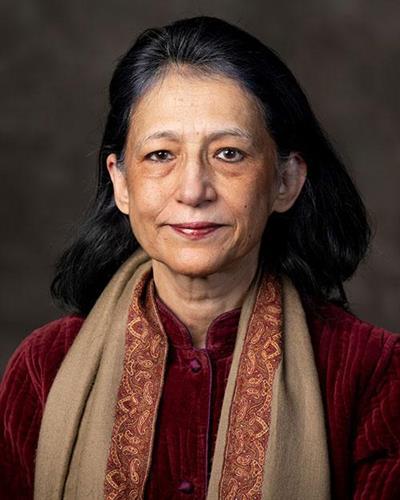
Ayesha Jalal is a distinguished Professor of History at Tufts University's School of Arts and Sciences and holds a joint appointment at The Fletcher School of Law and Diplomacy. She currently serves as the Mary Richardson Professor and directs the Center for South Asian and Indian Ocean Studies. With a career spanning over three decades, Professor Jalal has established herself as a leading scholar in South Asian history, particularly focusing on Pakistan studies, the partition of India, and Muslim political thought in the region. Professor Jalal's academic journey began with a double major in History and Political Science from Wellesley College in 1978. She then pursued doctoral studies at the University of Cambridge, earning her PhD in History in 1983. Her early career included prestigious fellowships at Trinity College, Cambridge (1980-84), the Centre of South Asian Studies (1984-87), the Woodrow Wilson Center for International Scholars (1985-86), and the Harvard Academy for International and Area Studies (1988-90). Professor Jalal's research primarily centers on South Asian history with special emphasis on Pakistan, the partition of India, and Muslim political thought. Her work explores the complex interplay between religious identity, nationalism, and state formation in the region. She has made significant contributions to understanding democratic development in Pakistan, sectarian dynamics in South Asia, and the historical connections between the Indian subcontinent and the wider Indian Ocean world. Her recent scholarship has focused on 'Oceanic Islam,' examining transregional Muslim networks and universalist aspirations that transcended colonial boundaries. Professor Jalal's extensive publication record demonstrates a consistent focus on South Asian political history, with particular attention to Pakistan's formation and development. Her recent works show a progression from studies of partition and state formation toward broader examinations of Muslim intellectual history and transregional connections. The 2020-2024 publications reveal a sophisticated engagement with themes of democratic erosion, sectarianism, and the historical roots of contemporary political challenges in South Asia, while also exploring more cultural and religious dimensions through works on Muslim enlightened thought and oceanic connections. Patrus Bukhari Award for the best English language book, The Pity of Partition , Academy of Letters, Government of Pakistan (2015) Britannica Book of the Year recognition (2015) MacArthur Fellowship (1998-2003) As an educator, Professor Jalal has mentored numerous graduate students through thesis supervision and directed research projects. Her teaching portfolio includes courses on Modern South Asia, Contemporary South Asia, Islam and the West, and specialized seminars on South Asian history. She has taught at several prestigious institutions including the University of Wisconsin-Madison, Columbia University, and Harvard University before joining Tufts in 1999. In her role as Director of the Center for South Asian and Indian Ocean Studies, she has fostered interdisciplinary research and provided guidance to emerging scholars in the field. Professor Jalal directs the Center for South Asian and Indian Ocean Studies at Tufts University, which serves as a hub for interdisciplinary research on South Asia and its connections to the wider Indian Ocean world. The center facilitates collaborative projects, hosts visiting scholars, and organizes events that bridge historical, political, and cultural perspectives on the region. Under her leadership, the center has become a prominent institution for South Asian studies, promoting dialogue between academic research and contemporary policy issues.