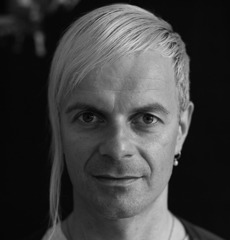
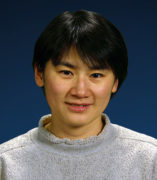
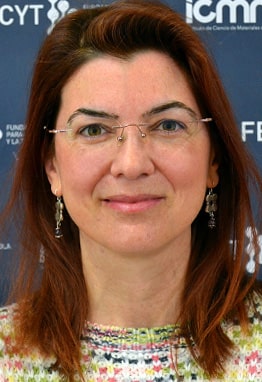
Dr. Jay Yoon is an Associate Professor at Department of Human Centered Design , College of Human Ecology , Cornell University . He leads the Meta Design & Technology Lab which focuses on creating products that enhance both momentary and long-term user experiences through human-centered design , human-computer interaction , and positive psychology principles. Education : BA & BE in Industrial Design & Computer Science, Handong University (South Korea) MSc in Design for Interaction, Delft University of Technology (Netherlands) PhD in Emotion-driven Design, Delft University of Technology His research demonstrates how emotional granularity and positive emodiversity in technology interactions can significantly improve user well-being. He has developed multiple design tools like the EmotionPrism and Positive Emotional Granularity Cards. Industry collaborations include smart home services , airport crew centers , museum tours , and brand loyalty programs . Notable publications span International Journal of Design , She Ji: The Journal of Design, Economics, and Innovation , and International Journal of Human-Computer Interaction . Scientific Awards : Sloan Recent Alumni Achievement Award His design projects have been exhibited at international conferences including Design & Emotion and Dutch Design Week . Current research explores technology-mediated well-being through hedonic and eudaimonic experience design.
Tathagata Srimani is an Assistant Professor in the Department of Electrical and Computer Engineering at Carnegie Mellon University (CMU), affiliated with the College of Engineering. He previously served as a Postdoctoral Scholar in Electrical Engineering at Stanford University. His academic journey includes a Ph.D. and S.M. in EECS from MIT (2022 and 2018 respectively) and a B.Tech. in E&ECE from IIT Kharagpur (2016). Research Focus: Srimani’s work centers on nanoelectronics and transformative NanoSystems. Key areas include: Carbon nanotube field-effect transistors (CNFETs) and their monolithic 3D integration with silicon Ultra-dense 3D integration of logic and memory to address the 'memory wall' in AI/ML Technology-architecture co-design frameworks for energy-efficient computing Key Achievements: Developed first silicon fab-compatible CNFET processes (TNANO ’18, Nature ’19) Enabled CNFET RISC-V microprocessor and monolithic 3D integration with Analog Devices/SkyWater Recipient of MIT Presidential Fellowship (2016) and Morris Joseph Levin Award (2018) Teaching & Outreach: Teaches semiconductor devices and hardware design, including hands-on 'Hacker Fab' courses. Leads the NEXUS Research Group exploring heterogeneous nanomaterials (e.g., magnetic and oxide semiconductors) and thermal/power management in 3D systems. Future Directions: Expanding into probabilistic computing hardware, co-design frameworks for application-specific systems, and scaling 3D NanoSystem technologies for industrial adoption.
Salman Durrani is a Professor and Associate Director Education at the School of Engineering, Australian National University. He holds a PhD in Electrical Engineering from the University of Queensland and a BSc (First Class Honours) from the University of Engineering & Technology, Lahore, Pakistan. His research spans Internet of Things networks, satellite/UAV communications, machine learning applications in wireless systems, early wildfire detection, and backscatter communications. Current projects focus on terahertz communication security, UAV-assisted networks, and IoT-based environmental monitoring. His recent publications demonstrate strong emphasis on wireless security, terahertz technology optimization, UAV network design, and IoT applications for environmental protection. Technological innovations include novel beamforming techniques and lightweight authentication protocols. AI 2000 Internet of Things Most Influential Scholar (2020, 2022, 2023) IEEE ComSoc Asia Pacific Outstanding Paper Award (2016) Australian Council of Graduate Research Excellence Award (2019) ANU Vice-Chancellor's Awards for Supervision (2018) and Education (2012) He has supervised 15 PhD students to completion and secured $1.9M in research funding as chief investigator for six grants. Current projects include participation in the ANU Optus Bushfire Research Centre of Excellence.
Prashanth Krishnamurthy is a Research Scientist in the Department of Electrical and Computer Engineering at New York University Tandon School of Engineering. His research focuses on robotics, control systems, and cybersecurity, particularly in cyber-physical systems such as power grids and embedded devices. He holds a Ph.D. in Electrical Engineering from NYU. Key research areas include hardware security (e.g., detecting Trojans in chips), anomaly detection in critical infrastructure, and resilient control strategies for robotic systems. He has led or contributed to projects funded by the U.S. Department of Energy (DOE), Office of Naval Research (ONR), and others, including the Tracking Real-time Anomalies in Power Systems (TRAPS) initiative and hardware Trojan detection using short-term aging phenomena. Education: Ph.D., Electrical Engineering, NYU His work bridges theoretical advancements and practical implementations, such as developing FPGA-based testbeds for hardware security validation and creating AI-driven cybersecurity tools like the CRAKEN LLM agent. Collaborators include institutions like SRI International, Karlsruhe Institute of Technology, and the NYU Center for Cybersecurity. Grants include a $1.94M DOE grant for TRAPS and a $359K DURIP grant for hardware Trojan detection. His technical contributions span control systems, anomaly detection algorithms, and cybersecurity frameworks for embedded systems. He is actively involved in advancing secure cyber-physical systems through innovations in real-time monitoring, robust control mechanisms, and AI-augmented security solutions.
Dr. Hak-Keung Lam is a Reader in the Department of Engineering at King's College London, part of the Faculty of Natural, Mathematical & Engineering Sciences. He holds an IEEE Fellowship and has been a Clarivate Web of Science Highly Cited Researcher since 2018. His research focuses on fuzzy control systems, neural networks, stability analysis, and their applications in biomedical and engineering domains. Education: Dr. Eng. (2000), B. Eng. (1995), both from Hong Kong Polytechnic University. Research Interests: Fuzzy modeling, neural network-based control, computational intelligence, machine learning, and biomedical applications such as ECG/EEG signal classification. His work bridges theoretical advancements with practical implementations in robotics, autonomous systems, and healthcare technology. Publications: Over 480 publications (as of 2023) in top-tier journals and conferences, with a focus on control systems, fuzzy logic, and intelligent systems. Recent work includes fault-tolerant control, cyber-physical systems, and explainable AI. Awards: IEEE Fellow (2019), 1st Place in PhysioNet Computing in Cardiology Challenge (2022). Grants/Projects: Active projects include fuzzy control system stabilization, autonomous robots in healthcare environments, and networked control of robotic systems. Labs/Teams: Center for Robotics Research, contributing to solutions for societal challenges through robot-centric approaches.
Jicheng Jin is a Postdoctoral Researcher in the Department of Physics and Astronomy at the University of Pennsylvania, affiliated with the College of Arts & Sciences. His research focuses on topological photonics, nonlinear optics, and advanced photonic materials like AlScN and lithium niobate. Key interests include Floquet engineering, topological insulators of light, and novel optical devices. Research Interests: Nonlinear optical phenomena in photonic crystals Floquet topological phases and their experimental realization CMOS-compatible materials for integrated photonics Surface-emitting THz/FIR sources Bound states in the continuum and high-Q resonances Recent studies emphasize topological edge states, nonlinear frequency conversion, and device applications of 2D van der Waals heterostructures. His work bridges theoretical predictions with experimental validations in advanced photonic systems. Notable trends in publications include exploration of AlScN-based electro-optic phase shifters, Floquet Chern insulators, and geometric phase effects in magnon polaritons. No scientific awards are explicitly mentioned in the provided materials. Advising and grants remain unspecified in the current dataset. Lab affiliations include collaborations related to the Department's photonics and condensed matter physics groups.
Professor Emanuele (Manuel) Trucco is the NRP Chair of Computational Vision in the Department of Computing, School of Science and Engineering, at the University of Dundee. He holds additional roles as an Honorary Clinical Researcher at NHS Tayside and formerly served as an Adjunct Professor at the Chinese Academy of Sciences from 2018 to 2021. He earned his MSc and PhD in Electronic Engineering from the University of Genoa, Italy, in 1984 and 1990, respectively. His research focuses on medical image and data analysis, particularly in retinal imaging, using machine and deep learning techniques. He is co-director of VAMPIRE, a major international initiative in retinal image analysis, which supports biomarker studies in cardiovascular disease, diabetes, dementia, and neurodegenerative disorders. His recent work includes AI-driven tools for predicting dementia from brain scans and cardiovascular risk from retinal images. The latest publications reflect strong trends in applying deep learning to retinal and brain imaging for early disease detection, with themes centered on AI in healthcare, precision medicine, and non-invasive diagnostics. FRSA (Fellow of the Royal Society of Arts) FIAPR (Fellow of the International Association for Pattern Recognition) Professor Trucco has led and co-led significant research projects funded by EPSRC, NIHR, and EU programs. He has supervised PhD students through industry-sponsored studentships (e.g., OPTOS, NIDEK, Toshiba) and collaborated with institutions such as the Universities of Edinburgh and Liverpool. His research is supported by extensive industrial partnerships including Canon Medical, Epipole plc, and NIDEK. He is a key member of the UK Biobank Eye and Vision Consortium and co-director of the VAMPIRE initiative, a collaborative effort between the Universities of Dundee and Edinburgh focused on retinal image analysis. His work also involves participation in major research networks such as the Academic Health Science Partnership in Tayside.
Dr. Yu Zhong is an Assistant Professor in the Department of Materials Science and Engineering at Cornell University's College of Engineering, where he leads the Yu Zhong Group. His research laboratory focuses on the design and synthesis of novel soft materials and nanomaterials for applications in electronics, energy, healthcare, and sustainability. As a principal investigator, he oversees a dynamic research team comprising postdoctoral associates, graduate students, and undergraduate researchers working on cutting-edge materials science projects. Dr. Zhong received his educational training at prestigious institutions, earning his B.S. in Chemistry from the University of Science and Technology of China (USTC) in 2011, followed by a Ph.D. in Chemistry from Columbia University in 2017 under the supervision of Prof. Colin Nuckolls. His doctoral research centered on designing contorted molecules for electronic and energy applications including organic solar cells, photodetectors, and gas sensors. He then conducted postdoctoral research at the University of Chicago in Prof. Jiwoong Park's group, where he worked on the design and synthesis of 2D polymers for ultrathin electronic circuits and energy conversion. Dr. Zhong's research program spans three primary directions: (1) the bottom-up synthesis of ultrathin nanoporous membranes using techniques like laminar assembly polymerization (LAP) for applications in water desalination, nanofiltration, and gas separation; (2) the study of transport behaviors in hybrid organic-inorganic 2D heterostructures created through layer-by-layer assembly for use in optical, electronic, and thermal management devices; and (3) the development of mixed ionic-electronic materials for bio-inspired and bioelectronic devices. His group employs advanced synthesis methods including organic/polymer synthesis, supramolecular and reticular chemistry, and 2D materials characterization to explore novel scientific phenomena and technological applications. An analysis of Dr. Zhong's recent publications reveals a strong focus on the synthesis and characterization of 2D polymers and organic-inorganic hybrid materials. His work bridges fundamental materials science with practical applications in energy conversion, electronics, and separation technologies. A notable trend is his development of innovative synthesis techniques like laminar assembly polymerization that enable precise control over material structure at the molecular level, leading to breakthroughs in areas such as lithium-ion transport, osmotic power generation, and ultra-narrowband photodetection. Dr. Zhong's scientific achievements have been recognized with several prestigious awards: Pegram Award for Meritorious Graduate Research, Columbia University (2016) Camille and Henry Dreyfus Postdoctoral Fellowship, Dreyfus Foundation (2016) Arun Guthikonda Memorial Fellowship, Columbia University (2015) Jack Miller Award for Excellence in Teaching, Columbia University (2014) As an advisor, Dr. Zhong mentors a diverse group of researchers including postdoctoral associate Qiyi Fang, multiple Ph.D. students (Yuhe Zhang, Kaushik Chivukula, William Xie), M.S. students, and undergraduate researchers. His group has secured funding for research on soft and nanomaterials, with projects spanning organic electronics, 2D materials synthesis, and biomimetic membranes. Dr. Zhong actively seeks motivated graduate students and postdoctoral fellows to join his research team, emphasizing the importance of interdisciplinary collaboration in advancing materials science. The Yu Zhong Group operates state-of-the-art laboratories in Bard Hall at Cornell University, equipped for organic synthesis, materials characterization, and device fabrication. The research team works collaboratively across disciplines, partnering with experts in physics, chemistry, and engineering to tackle complex challenges in materials science. Current projects focus on developing novel synthesis methodologies and exploring structure-property relationships in soft materials to enable next-generation electronic, energy, and healthcare technologies.
Wolfgang Mayer is a Professor for Performative Practice at the State Academy of Fine Arts Stuttgart , teaching collaborative artistic processes. He co-founded the art group Discoteca Flaming Star (DFS) in 1998 with Cristina Gómez Barrio, focusing on performative works that challenge memory and institutional frameworks. 1990–1995: Studied at Academy of Fine Arts Munich 1996–1997: DAAD scholarship at School of Visual Arts NYC 2005–2006: Whitney ISP participant Mayer’s research integrates performative practice , body theory , and collaborative art . His works interrogate memory , feminist narratives , and public space dynamics through sculptures , performances , and experimental music . Recent projects like Momentum:synthesize.r (2024) and Love Any Out of (90 Seconds) End (2023) explore temporal structures and emotional labor . Scientific honors include: 2013 Fundacion Estrenos Grant 2006–2007 Pollock-Krasner Scholarship 1993 Salzburg Summer Academy scholarship He emphasizes non-formalized artistic development through Sound & Body modules, public space interventions , and critical response protocols . Mayer’s DFS collective has shown globally at institutions like The Kitchen , Whitney Museum , and Tate Modern , often collaborating with figures like Rita McBride and Jeremiah Day.
Dr. Matteo Montecchi is a Senior Lecturer (Associate Professor) in Marketing at King’s Business School, King’s College London, where he also serves as Theme Lead for Sustainable Consumption at the Centre for Sustainable Business and Programme Director for the Strategic Marketing (Open Executive) programme. He teaches core modules such as Consumer Behaviour, Digital Marketing, and Research Methods, and leads executive education initiatives. Previously, he was a Senior Lecturer at the London College of Fashion, University of the Arts London, and has held visiting positions at Milan Politecnico, Università Cattolica del Sacro Cuore, and Università Federico II. Montecchi earned his PhD in Marketing from King’s College London, an MRes in Marketing from Birkbeck College, an Executive Master in Marketing and Sales from SDA Bocconi and ESADE, and a Bachelor’s in Business Economics from the University of Modena and Reggio Emilia. He also holds a PgCert in Academic Practice and is a Fellow of the Higher Education Academy (FHEA). His research focuses on the digital transformation of marketing, particularly the role of artificial intelligence and blockchain in enhancing transparency and trust. He investigates ethical engagement with diverse consumer groups, inclusion, and corporate responsibility, with a special interest in marginalized communities. His work integrates consumer behavior, digital interactions, and decision-making with technological innovation, offering actionable insights for sustainable and responsible business strategies. The most recent 15 publications reflect a strong trend in AI in retail, brand transparency, consumer trust, ethical data use, voice technologies, and social sustainability. His research spans journals in marketing, psychology, interactive marketing, and business ethics, demonstrating interdisciplinary impact. Scientific Awards: KingsCAT: Capture and Analysis Tool for Social Media Research at King’s College London (2024) – Recognized as part of a collaborative team for advancing digital research infrastructure and media analysis. Montecchi is actively involved in PhD supervision and is accepting new students. He has led research projects using social media analytics (KingsCAT) and has contributed to strategic debates on grand challenges in marketing. His work connects academic research with real-world managerial applications, particularly in digital strategy and ethical innovation. He is a key contributor to interdisciplinary research through tools like KingsCAT, which supports collaborative social media analysis, and his publications often involve co-authorship with experts in data science, psychology, and organizational behavior.
Wenjing Rao is an Associate Professor at the Department of Electrical and Computer Engineering, College of Engineering, University of Illinois at Chicago (UIC). Her research focuses on VLSI test, fault-tolerance, reliability, and hardware security in emerging nanoelectronic systems. Education: Ph.D. in Computer Science from University of California, San Diego (2008) B.S. in Computer Science from Peking University (2001) Her work explores novel computation paradigms through physical unclonable functions (PUFs), defect-tolerant logic implementation, and scalable fault tolerance in many-processor arrays. Publications emphasize hardware security, reconfiguration strategies, and reliability challenges in nanoscale architectures. Notable honors include the 2017 Harold A. Simon Award for Excellence in Teaching and the 2012 NSF CAREER Award. She has contributed to key journals like IEEE Transactions on Computer-Aided Design and conferences including DATE, ASPDAC, and NANOARCH.
Elsa Prada Nuñez is a Senior Researcher at the Institute of Materials Science of Madrid (ICMM) under the Spanish National Research Council (CSIC) . She leads the Quantum Dynamics of Materials (QUDYMA) group and currently serves as Head of the Theory Department. Her academic career spans multiple institutions, including the Universidad Autónoma de Madrid (UAM), Karlsruhe University, and Lancaster University, with a focus on condensed matter theory and quantum materials. PhD in Physics from UAM (2006) Tenured Scientist at ICMM-CSIC (2020-2025) Senior Researcher at ICMM-CSIC (2025-present) Her research explores quantum phenomena in low-dimensional materials and nanostructures, particularly topological insulators, Majorana zero modes in hybrid nanowires, graphene and 2D crystals, disorder effects, magnetotransport, spintronics, quantum pumping, straintronics, and exciton dynamics. She has directed over 20 students across PhD, Master's, and undergraduate levels, including notable projects on full-shell hybrid nanowires and twisted bilayer graphene. Recent publications highlight advancements in Josephson junctions, Majorana detection, and topological superconductivity in full-shell nanowires. Awards include the Young Female Scientist 2021 from the Royal Academy of Sciences of Spain and Mastercard, and the 2022 Certamen Universitario 'Arquímedes' First Award as a tutor. She has secured significant grants from the Spanish government and European collaborations for projects on quantum materials and topological superconductivity. Principal Investigator for €139,150 Spanish government grant (PID2021-125343NB-I00) Lead on €5,000 ICMM-CSIC grant (2020-2021) Participant in €3.48M EU AndQC project (2019-2023)
Dr. Caitlin Wilson is a Senior Paramedic Research Fellow at the University of Hertfordshire's School of Health and Social Work, affiliated with the Centre for Applied Clinical, Health and Care Research (CACHE). Her research focuses on improving ambulance service practices through feedback mechanisms, staff wellbeing, and patient safety initiatives. Education: PhD in Psychology (2019–2023) Current Roles: Senior Paramedic Research Fellow (NHS - Yorkshire Ambulance Service NHS Trust, 2022–present); Associate Editor, British Paramedic Journal (2021–present) Wilson’s research spans clinical education frameworks, public health conversations in ambulance services, and prehospital analgesia optimization. Her recent projects include PRE-IMPACT (2023–2026) and AS USUAL (2023–2026), addressing health inequalities and pediatric trauma care. She has published extensively in paramedic science, focusing on ventilation monitoring, overdose management, and feedback systems. Key collaborations include partnerships with Yorkshire Ambulance Service NHS Trust, with network connections in clinical research, public health, and emergency medicine. Her awards include a PhD in Psychology and editorial roles advancing paramedic literature.
Prof. Julia Herzen holds the Associate Professorship of Physics in Biomedical Imaging at the Department of Physics , TUM School of Natural Sciences , Technical University of Munich . Her research focuses on advancing X-ray imaging techniques using synchrotron radiation and laboratory sources, with applications in medical diagnostics and tissue analysis. Position: Associate Professor Department: Physics School: TUM School of Natural Sciences University: Technical University of Munich Contact: julia.herzen@tum.de Her core research interests include: Quantitative multi-modal X-ray imaging (spectral & phase-contrast) 3D virtual histology of human tissue Breast cancer detection improvement Lung disease imaging (emphysema, pneumonia) X-ray phase-contrast tomography Dark-field imaging material decomposition Recent publications demonstrate expertise in dark-field imaging for lung pathology , phase-contrast CT for organoid visualization , and spectral X-ray applications in multi-material differentiation . Her team explores clinical translation of X-ray techniques for non-invasive diagnostics . She supervises PhD students and teaches Biomedical Engineering courses, including: Quantitative X-Ray Imaging (3 VI) Image Processing in Physics (2 VO) Biostatistics (2 VO) Advanced Lab Courses in X-ray Micro-CT
Michael E. McHenry is a Professor of Materials Science and Engineering at Carnegie Mellon University's College of Engineering. He holds appointments with multiple research centers including the Data Storage Systems Center, Engineering Research Accelerator, Materials Research Science and Engineering Center, and Wilton E. Scott Institute for Energy Innovation. Dr. McHenry received his BS in Metallurgical Engineering and Materials Science from Case Western Reserve University in 1980, his PhD in Materials Science and Engineering from MIT in 1988, and completed a postdoctoral fellowship at Los Alamos National Laboratory. His research focuses on soft magnetic nano-composites for power and energy applications, with particular expertise in metal amorphous nanocomposites (MANCs) for high-efficiency electric motors and power systems. His work spans advanced materials processing, magnetic properties under various conditions, and rare earth materials criticality. His research portfolio demonstrates a clear progression toward practical applications of magnetic materials, particularly in high-power density, high-efficiency motors that can operate at high rotational speeds with minimal energy loss. His publications reveal a strong focus on translating fundamental materials science into engineering solutions for energy conversion, with significant emphasis on rare earth-free alternatives and high-frequency applications. IEEE Distinguished Lecturer (2013) TMS Awardee for Research Excellence (2014) Subject of TMS Symposium in Honor of M. E. McHenry (2016) NATO Series Lecturer on Rare Earth Criticality (2016/17) Dr. McHenry has co-founded CorePower Magnetics Inc. with Paul Ohodnicki and Samuel Kernion, commercializing soft magnetic technologies with applications in grid modernization and electric vehicles. His extensive publication record and leadership in major research initiatives including a MURI on high-temperature magnetic materials and an ARPA-E program demonstrate significant impact in both academic and industrial contexts. He has served in various leadership roles for Magnetism and Magnetic Materials and Intermag Conferences, and continues to advise on rare earth scarcity issues for organizations like NATO.