Dr. Alicia Horton is a Lecturer in the Department of Sociology at Kwantlen Polytechnic University's College of Arts. She holds a BA (Honors, 1st Class) from Simon Fraser University, an MA, and a PhD from Queen's University. Her research focuses on criminology, deviance, and body modification, with an emphasis on social policy, subcultural practices, and the cultural analysis of deviant behavior. She has contributed to academic discourse through publications in the Routledge Handbook of Deviance and peer-reviewed journals like Deviant Behavior. Her recent scholarly work explores the intersection of criminology, spatial dynamics, and identity formation. She co-founded the Prison Education Network (PEN) in 2021 to advance educational initiatives in correctional settings.
Dr. Caitlin G. Lynch is an Associate Professor of Sociology and Criminology at Eastern Illinois University (EIU), where she has been a faculty member since 2017. She serves as co-advisor (with Dr. Mari Kita) of the Criminal Justice Club and teaches courses such as Introduction to Criminal Justice, Sociology of Deviant Behavior, Victimology, and Policing Society: A Sociological Analysis. Her research focuses on police and society, crime and social inequality, and criminal justice reform, with a current emphasis on partnerships between police and social workers during mental health emergencies to reduce police violence against people in crisis. Education: Ph.D. (2017) and M.S. (2012) in Criminology, B.A. (2008) in Sociology Dr. Lynch’s publications span topics including police-social worker collaboration, criminal justice reform, and the sociological implications of policing practices. Her work has appeared in journals such as the Journal of Police and Criminal Psychology and Contemporary Justice Review . Prior to academia, she worked as a California police officer for four years in youth services, investigations, and tactical enforcement roles. Her research trends highlight interdisciplinary approaches to policing ethics, crisis intervention models, and systemic inequalities in criminal justice systems. She has presented at major conferences like the American Society of Criminology and Academy of Criminal Justice Sciences, focusing on mental health solutions, gender dynamics in policing, and historical analysis of police violence. Key Courses: CRM 1829, CRM/SOC 2780, CRM 3049, CRM 3069, CRM/SOC 3780
Ruth McKie is a prominent academic at De Montfort University, serving as Subject Lead in Criminology within the School of Applied Social Sciences, Faculty of Health and Life Sciences. Her work bridges criminology, environmental science, and social policy, with a focus on climate obstruction, community resilience, and the intersections of animal abuse and domestic violence. Research Interests: Dr. McKie is a world-leading scholar in Climate Social Science, particularly in understanding the actors and mechanisms behind climate obstruction. Her research explores how fossil fuel interests and allied organizations delay climate action through discursive, political, and economic strategies. She also investigates community resilience to environmental disasters like flooding and the socio-legal dimensions of environmental harm. Her work extends into feminist animal studies and the links between animal cruelty and intimate partner violence. The recent publications highlight a strong trend toward interdisciplinary research, combining criminology, environmental sociology, and policy analysis. Her work increasingly focuses on transnational networks of climate obstruction, digital propaganda, and justice dimensions in climate adaptation, especially in the Global South and the UK. She also contributes to understanding gender-based violence through technological interventions and systemic barriers. Scientific Awards: Selected as Monthly Highlight, Environmental Research Letters, March 2016 Advising and Grants: Dr. McKie supervises current research students, including Tasnina Karim, and has supported completed students like Emma Johnston. She is the Principal Applicant on several externally funded projects, including a British Academy Small Research Grant on flooding resilience and multiple grants from the Climate Social Science Network on climate obstruction in the UK and Global South. She is also a Co-Applicant on projects involving Leicestershire Police and the European Climate Foundation, demonstrating strong policy engagement and interdisciplinary collaboration. Labs and Research Groups: She is affiliated with the Institute for Research in Social Sciences at DMU and is an active member of the Climate Social Science Network. Her research often involves international collaborations, including work with Brown University’s Institute at Brown for Environment and Society.
Dr. Fergal O'Brien is a Professor in Finance and Assistant Dean of Postgraduate Studies at the Kemmy Business School, University of Limerick. He also serves as Course Director for the MSc in Business Analytics. He holds a PhD from Lancaster University (2007) and an MBS thesis that received the Guinness Irish Management Institute Sir Charles Harvey Award (1999). His research integrates finance with behavioral and organizational studies, focusing on: Equity market dynamics (option returns, asset pricing, sentiment analysis) Risk modeling (skewness/kurtosis in asset returns) Interdisciplinary applications (tacit knowledge, horse racing analytics) Sustainability and leadership psychology Recent publications explore management theory adaptations, ethical leadership in service industries, and green HRM practices, reflecting a trend toward organizational behavior and sustainability. Awards: Edward Cahill Memorial Prize (1999) Guinness Irish Management Institute Sir Charles Harvey Award (1999) He leads projects in tacit knowledge research and ASSK Knowledge Analytics, though specific labs/teams are undisclosed.
Dr Katherine Harrison serves as Course Director for BA (Hons) Media and English within the School of Humanities and Social Sciences at Leeds Beckett University, where she has taught visual culture and media studies since 2017. Her academic leadership extends to undergraduate dissertation coordination and module development including the innovative 'Space Media' course. Harrison's research centers on visual culture with specialized focus on spatial representations across multiple contexts: outer space media, domestic environments, welfare stigma, and craft practices. Her work intersects gender studies, sociology, and cultural geography, employing innovative methodologies like 'knit 'n' natter' focus groups that challenge traditional research paradigms. Notable projects include Fulbright-Smithsonian research at the National Air and Space Museum archives and Leverhulme/British Academy-funded analysis of welfare television. Her publication trajectory reveals evolving research interests from early work on mid-20th century photographic icons (nuclear imagery, Earth views) through feminist craft studies to contemporary analyses of pandemic leisure and spatial stigma. Recent outputs demonstrate strong interdisciplinary engagement across leisure studies, fat studies, and visual sociology, with significant contributions to understanding how media constructs spatial hierarchies and social stigma. Key awards: Fulbright-Smithsonian Scholar Award (2021-22) for space imagery research Leverhulme/British Academy grant for welfare television analysis AHRC funding for doctoral research on iconic photography Harrison actively supervises PhD candidates in visual culture, gender studies, and space representation while contributing to undergraduate and postgraduate media courses. Her current research on the 'new space age' bridges academic inquiry with practical curriculum development, exemplified by the 'Space Media' module derived from National Air and Space Museum archives research. She collaborates extensively with scholars like Jayne Raisborough and Lisa Taylor on spatial stigma projects.
Samantha Brown is an Assistant Professor in the Criminology and Criminal Justice department at the University of North Florida (Jacksonville, Florida). As a first-generation college student from Wisconsin, she bridges rural and urban academic experiences in her research. Education : PhD (2020) & MS (2016) in Criminology and Criminal Justice from Florida State University , BS in Sociology (2012) from University of Wisconsin-La Crosse Her research spans four core areas: (1) juvenile delinquency and the long-term effects of juvenile justice system involvement , (2) school-based crime and institutional responses to at-risk youth, (3) social media's role in both perpetuating and mitigating delinquency, and (4) modern policing practices and their societal impacts. Recent publications (2020–2025) emphasize: Racial disparities in adolescent policing and judicial outcomes Far-right extremism in military and civilian courts Immigrant victimization in sexual assault cases Online-offline crime dynamics via social media Political ideology's influence on police reform attitudes Her methodological approach combines quantitative analysis (e.g., longitudinal datasets) with qualitative fieldwork to address systemic criminal justice challenges.
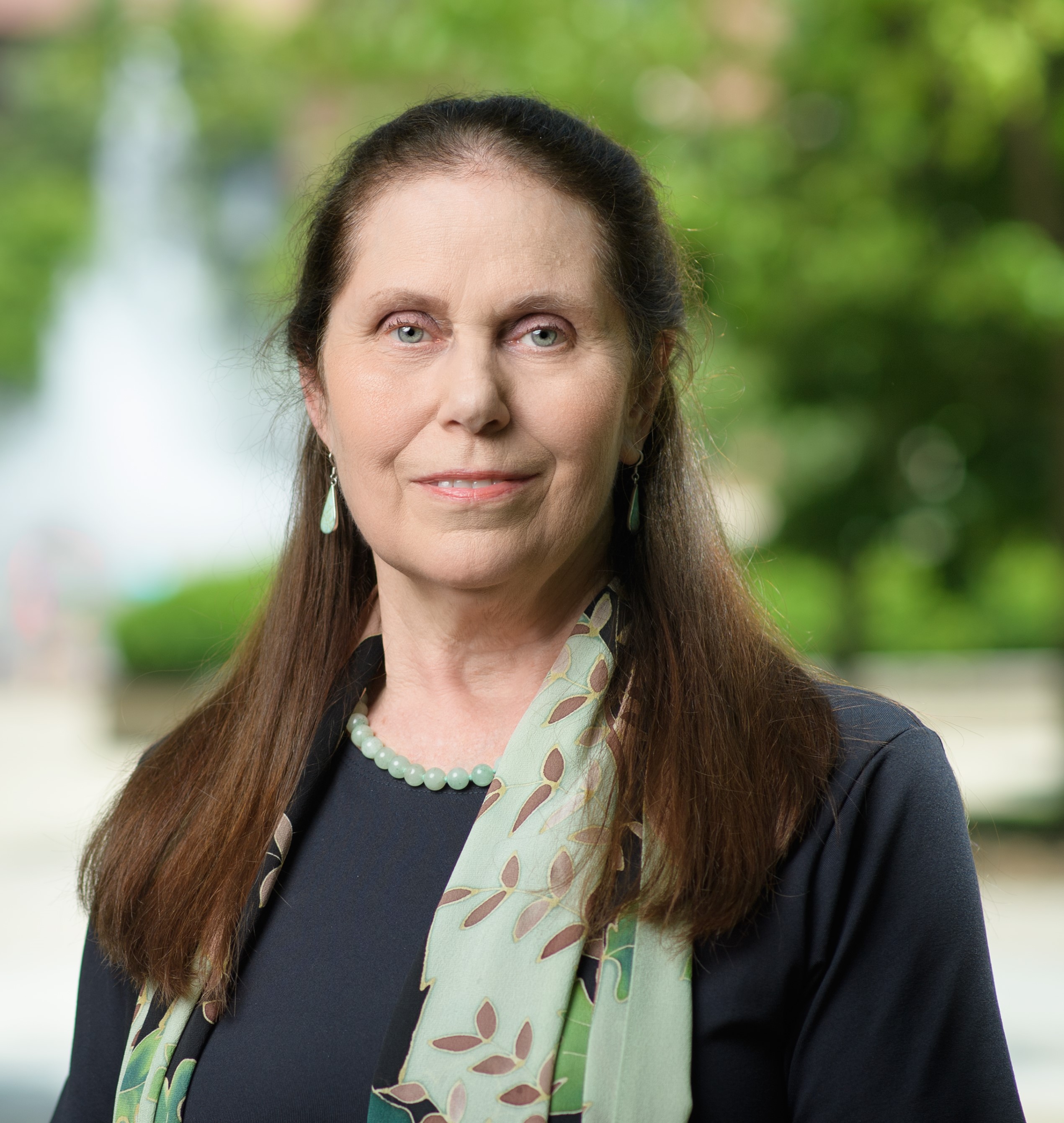
J. Jill Suitor is a Distinguished Professor of Sociology and a Faculty Associate at Purdue University's Center on Aging and the Life Course. She leads the Within-Family Differences Study (WFDS) , a longitudinal NIH-funded project examining intergenerational relationships, parental favoritism, and sibling dynamics in over 550 multigenerational families. Her research spans 2001–present, with a focus on family caregiving and well-being. Education: Ph.D. in Sociology from SUNY-Stony Brook (1985) Research Interests: Suitor specializes in parent-adult child relations , sibling relations in adulthood , family caregiving , and mixed methods . Her work explores how parental differential treatment affects psychological well-being and interpersonal dynamics , particularly during health crises and bereavement. Article Trends: Recent publications analyze birth order , digital communication , racial/gender disparities , and intergenerational care networks . Themes include depressive symptoms , caregiving roles , and transmission of family behaviors across generations. Funding & Leadership: Research supported by the National Institute on Aging, National Institute of Mental Health, and Spencer Foundation. She served as Deputy Editor-in-Chief of Innovation in Aging and Associate Editor of The Journal of Gerontology: Social Sciences , with leadership in NIH study sections. Students & Team: Mentored graduates like Robert T. Frase (Southern Illinois University), Reilly Kincaid (University of Arkansas), and Siyun Peng (University of South Florida). Current team includes graduate students Destiny Ogle, Ranran He, and postdoctoral fellows like Hanamori Skoblow at the University of Missouri.
Phillip Neil Quisenberry is a Professor of Sociology and serves as Chair of the Division of Social Sciences at McKendree University. His academic leadership spans theoretical criminology and empirical research on deviant behavior within contemporary social contexts. His educational credentials include: Ph.D. from the University of Kentucky M.A. from the University of South Florida B.A. from Western Kentucky University Dr. Quisenberry's research centers on hate crimes , juvenile delinquency , deviance , and criminological theory , with particular emphasis on testing the General Theory of Crime across diverse behavioral contexts. His work critically examines how communication styles influence violence and substance abuse, while his environmental criminology studies investigate the physical structure-crime relationship through broken windows theory frameworks. This dual focus bridges micro-level behavioral analysis with macro-level community dynamics. His publication record from 2003-2015 demonstrates consistent theoretical innovation, connecting classical criminological frameworks to modern phenomena like distracted driving and campus substance use. The research portfolio reveals three dominant trajectories: rigorous testing of self-control theory, analysis of speech-violence-substance use intersections, and environmental criminology applications to urban planning. These threads collectively advance understanding of crime causation while maintaining practical relevance for criminal justice policy. Dr. Quisenberry actively supports academic discourse as a member of the American Society of Criminology and Midwest Sociological Society , providing peer review services for the Journal of Contemporary Ethnography , Roxbury Publishing, and Sage Publishing. His institutional commitment extends to advising the Spectrum Alliance student organization and Alpha Kappa Delta sociology honor society, fostering both scholarly development and campus community engagement.
Mark Lauchs is a Senior Lecturer at the School of Justice, Queensland University of Technology, specializing in criminology and organized crime research. His work spans global and regional analyses of outlaw motorcycle gangs (OMCGs), police ethics, transnational crime, and illicit markets. Education : PhD (Criminology) from Queensland University of Technology (2006). His research focuses on outlaw motorcycle gangs, their international expansion, and interactions with law enforcement. He has conducted case studies on Australian illicit tobacco markets, police corruption, and strategic crime management. His publications include journal articles, book chapters (e.g., The Encyclopedia of Rural Crime ), and edited volumes like Understanding the Outlaw Motorcycle Gangs: International Perspectives . Lauchs has collaborated with researchers such as Andy Bain, Zoe Staines, and Robyn Keast. His work often employs qualitative analysis, stakeholder interviews, and social network analysis of criminal organizations. Recent articles examine OMCG violence through ludology and regulatory challenges in plastic packaging. Key themes include accountability in public service, ethical policing, and the socioeconomic implications of illicit trade. He has contributed to policy discussions on income management in Indigenous communities and transnational organized crime in Oceania.
Michael K. Dzordzormenyoh is an Assistant Professor in the Department of Political Science at Kent State University (Kent, OH), affiliated with the Center for African Studies. He holds a Ph.D. in Political Science from the University of South Dakota (2019), an M.A. in Applied Politics from the University of Akron (2014), and a B.A. in Political Science and Linguistics from the University of Ghana (2011). His research focuses on social justice, inequality, and public policy in the Global South, particularly in Africa and Brazil, with methodological expertise in formal theory, quantitative, and qualitative analysis. Previous roles include a Postdoctoral Fellowship at the University of California, Santa Barbara (2020–2021) and a Visiting Assistant Professorship at Oklahoma State University (2021–2022). His work addresses criminal justice, immigration, healthcare, leadership, and electoral systems, often analyzing geopolitical and institutional dynamics. He has published in journals like Journal of Global Health , International Journal of Public Leadership , and Deviant Behavior . No scientific awards are explicitly listed. His research emphasizes interdisciplinary approaches to understanding governance challenges and policy effectiveness. He advises no listed students, but his CV highlights mentorship roles during his academic career.
Dr Andrew Pressey is a Reader in Marketing and Deputy Head of the Department of Marketing at the University of Birmingham's Birmingham Business School. He has held previous leadership roles including Head of Department (2012–2015) and Research Director, and has academic experience at the University of East Anglia and Lancaster University Management School. His research focuses on three interconnected areas: business-to-business marketing, the intersection of marketing and competition law/antitrust, and consumer behavior in virtual worlds. His recent work has expanded into ethical issues in service contexts, including deceptive practices in tourism and digital addiction. His 15 most recent publications reflect a strong interdisciplinary approach, combining marketing with psychology, law, and information systems. Key themes include dark tourism, smartphone 'zombie' behavior, service worker deception, and network learning in B2B contexts, demonstrating a trend toward understanding consumer and organizational behavior in complex, ethically charged environments. Emerald Management Reviews Citation of Excellence British Academy of Marketing Award (Dublin, 2005) British Academy of Marketing Award (Southampton, 2012) Forum on Service Award (Capri, 2009) Reviewer of the Year (2014), Journal of Historical Research in Marketing Andrew Pressey has secured research funding from the British Academy and Nottingham SPARK. He supervises PhD students, including Fredah Mwiti, and plays a significant role in academic service as Associate Editor of the Journal of Marketing Management and on editorial boards of Industrial Marketing Management and Journal of Historical Research in Marketing . He is also active in the British Academy of Marketing, serving as Deputy Chair of the B2B track. He is affiliated with the ESRC Centre for Competition Policy and has collaborated extensively with colleagues there on antitrust-related research.
Martin Lalumière is a Full Professor in the School of Psychology at the University of Ottawa, affiliated with the Faculty of Social Sciences. He also serves as Vice-Dean, Governance and Internationalization. His academic career spans institutions including the University of Lethbridge, University of Toronto, and Centre for Addiction and Mental Health (CAMH). Education: PhD in Psychology, Queen's University at Kingston (1995) MPS in Psychology, Université de Montréal (1990) BSc in Psychology, Université de Montréal (1989) His research centers on clinical and forensic psychology, particularly psychopathology, sexual deviance, phallometric testing, and sexual victimization. He investigates mechanisms of sexual arousal, assessment tools for pedophilic interest, and physiological responses in nonconsensual contexts. His work bridges clinical science, criminology, and mental health law. His recent publications reveal a strong focus on the validity of assessment instruments in forensic psychology, the interpretation of physiological sexual responses, and integrative models of psychopathology. These works predominantly appear in high-impact journals such as Archives of Sexual Behavior and The Journal of Sex Research , indicating sustained scholarly productivity and specialization in sexual behavior and clinical assessment. Scientific Awards: No awards listed in the provided text. Martin Lalumière actively supervises graduate students, including Kailey Roche, Enya Levaque, and Lucas Walters, indicating an ongoing commitment to mentorship and research training. There is no mention of external grants or funding sources in the provided content. He has held leadership roles in academic governance and has built a career integrating research, teaching, and administration across multiple institutions. He is associated with research teams and labs focused on sexual behavior and forensic assessment, though specific lab names are not provided. His prior affiliations with CAMH and the Law and Mental Health Program suggest deep engagement with clinical and legal applications of psychological science.
Dr. Dina V. Krasikova is an Associate Professor in the Department of Management at The University of Texas at San Antonio (UTSA), affiliated with the Alvarez College of Business. She joined UTSA in 2013 after a post-doctoral fellowship at the University of Nebraska-Lincoln. Her expertise spans leadership dynamics, deviant workplace behavior, and advanced statistical methods for organizational research. Dr. Krasikova holds a Ph.D. and M.S. in Industrial/Organizational Psychology from Purdue University, alongside a Diploma with Highest Honors from Voronezh State University, Russia. Her research emphasizes constructive and destructive leadership behaviors, organizational deviance, and statistical methodologies to address complex research questions. She has contributed to journals like Journal of Applied Psychology , Organizational Behavior and Human Decision Processes , and Organizational Research Methods , with work also featured in media outlets such as Forbes and Inc. Magazine. Dr. Krasikova serves on the editorial boards of Journal of Applied Psychology , Journal of Business and Psychology , and others. She also holds a leadership role as Representative-at-Large at the Academy of Management’s Research Methods Division. Her methodological contributions include developing effect size indicators and addressing multilevel research challenges, while her applied work focuses on leader creativity, voice behaviors, and well-being in remote work contexts. Her scholarly output reflects a dual focus: advancing rigorous research techniques and understanding human behavior in organizations. Recent studies explore social media’s impact on prosocial behavior, sleep’s role in remote worker well-being, and the psychological effects of unaccepted employee voice. These trends highlight her commitment to both methodological innovation and real-world organizational challenges.
Cody L. Chullen is an Associate Professor of Management and Associate Dean for Academic Quality in the College of Business at East Carolina University. He holds tenure and teaches both undergraduate and graduate courses in management, including Managerial Negotiation, Human Resource Management, and Collaboration, Conflict, and Negotiation. He earned his Ph.D. in Organizational Behavior & Human Resource Management from Purdue University and has been at ECU since 2011. His educational background includes: Ph.D. in Organizational Behavior & Human Resource Management, Krannert Graduate School of Management, Purdue University M.B.A., Southern Illinois University Carbondale B.S., magna cum laude, Southern Illinois University Carbondale A.S. and A.A., Rend Lake College Dr. Chullen's research centers on leadership processes, particularly Leader-Member Exchange (LMX), occupational stress, burnout, and gender issues in management. He also investigates legal aspects of human resource management and workplace challenges in healthcare, such as deviant behavior and involuntary turnover. His work bridges theory and practice, with collaborations in manufacturing, mental health, and healthcare industries. While specific articles are not listed, his research has been published in journals such as the Journal of Healthcare Management , Equality, Diversity, & Inclusion , and Journal of Occupational Health Psychology , indicating strong contributions to organizational psychology, HR management, and healthcare leadership. His work often integrates multilevel analysis and experimental design, as seen in his early participation in ABC’s 20/20 special on social loafing. His scientific awards and recognitions include: Award for Exemplarily Performance as Outstanding Editorial Board Reviewer (AMLE) Best Paper and Outstanding Reviewer Awards at national conferences Alumni Award for Outstanding Teaching, ECU Commerce Club New Faculty Teaching Award, ECU Excellence in Graduate School Teaching Award, Purdue University Purdue Doctoral Fellow Distinguished Chancellor’s Leadership Fellow Dr. Chullen is deeply committed to student development, having served as faculty advisor for ECU’s Society for Advancement of Management (SAM), which won 1st Place Best National Chapter and 3rd Place in an international case competition. He has received multiple teaching grants, including from ECU’s BB&T Center for Leadership, and has been recognized by students as Faculty Marshal multiple times. His service extends to institutional roles in Faculty Senate, University Budget Committee, and mentoring programs. He also contributes to community service through the REAL Crisis Intervention Center, Riley’s Army, and Pitt County’s Nursing Home Advisory Board. He serves on the editorial boards of the Academy of Management Learning & Education , Journal of Occupational Health Psychology , and International Journal of Stress Management , and is an active ad-hoc reviewer for numerous academic journals and conferences.
Dr. Beth A. Sanders serves as Professor and Chair of the Department of Human Services within Bowling Green State University's College of Health & Human Services. She joined BGSU in 2018 after prior academic appointments at Kent State University and public health experience at Cincinnati Children's Hospital. Her leadership oversees the Criminal Justice program, Police Integrity Research Group, and departmental operations from the Health and Human Services Building. Her educational foundation includes a Ph.D. from the University of Cincinnati. Prior professional roles encompass: Academic position at Kent State University Public health research at Cincinnati Children's Hospital Child Health Statistics Center Dr. Sanders' research centers on police officer selection methodologies and performance evaluation systems , critically examining organizational constraints in identifying quality officers. Her work on public opinion toward the death penalty explores gender disparities and sociological determinants. Through extensive consulting with police departments on selection protocols, performance metrics, and community relations, she bridges academic theory with practical law enforcement challenges. Her program evaluations for adult probation and juvenile treatment systems demonstrate applied criminological expertise. Analysis of her 25+ publications reveals sustained focus on policing integrity across three decades, with recent work expanding into social policy impacts on traffic safety. Her scholarship consistently employs rigorous quantitative methods in journals like Policing: An International Journal , Journal of Criminal Justice Education , and Deviant Behavior , addressing core tensions between organizational realities and ideal policing standards. As Department Chair and Professor, Dr. Sanders mentors students in Criminal Justice programs while leading the Police Integrity Research Group. Her consulting engagements with multiple police departments indicate active knowledge transfer between academia and law enforcement practice, though specific grant details remain unreported in available materials. The department's operational framework includes: Police Integrity Research Group examining ethical policing challenges Criminal Justice Career Fair facilitating student-practitioner connections Interprofessional Education initiatives across health disciplines