معرفی
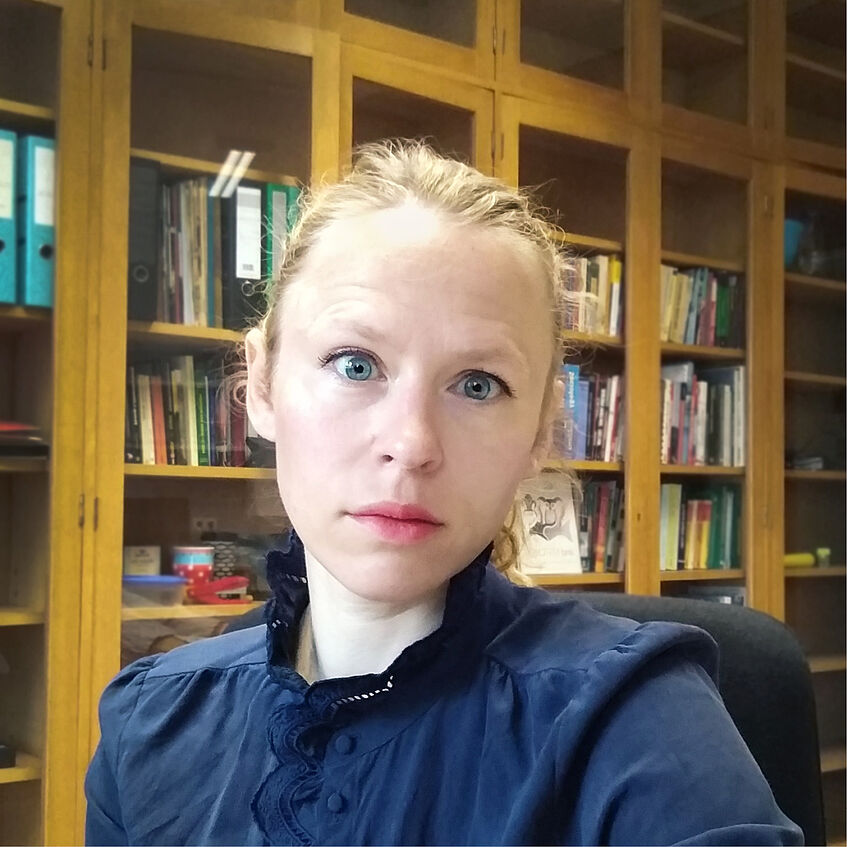
Dr Katherine Harrison serves as Course Director for BA (Hons) Media and English within the School of Humanities and Social Sciences at Leeds Beckett University, where she has taught visual culture and media studies since 2017. Her academic leadership extends to undergraduate dissertation coordination and module development including the innovative 'Space Media' course.
Harrison's research centers on visual culture with specialized focus on spatial representations across multiple contexts: outer space media, domestic environments, welfare stigma, and craft practices. Her work intersects gender studies, sociology, and cultural geography, employing innovative methodologies like 'knit 'n' natter' focus groups that challenge traditional research paradigms. Notable projects include Fulbright-Smithsonian research at the National Air and Space Museum archives and Leverhulme/British Academy-funded analysis of welfare television.
Her publication trajectory reveals evolving research interests from early work on mid-20th century photographic icons (nuclear imagery, Earth views) through feminist craft studies to contemporary analyses of pandemic leisure and spatial stigma. Recent outputs demonstrate strong interdisciplinary engagement across leisure studies, fat studies, and visual sociology, with significant contributions to understanding how media constructs spatial hierarchies and social stigma.
Key awards:
- Fulbright-Smithsonian Scholar Award (2021-22) for space imagery research
- Leverhulme/British Academy grant for welfare television analysis
- AHRC funding for doctoral research on iconic photography
Harrison actively supervises PhD candidates in visual culture, gender studies, and space representation while contributing to undergraduate and postgraduate media courses. Her current research on the 'new space age' bridges academic inquiry with practical curriculum development, exemplified by the 'Space Media' module derived from National Air and Space Museum archives research. She collaborates extensively with scholars like Jayne Raisborough and Lisa Taylor on spatial stigma projects.