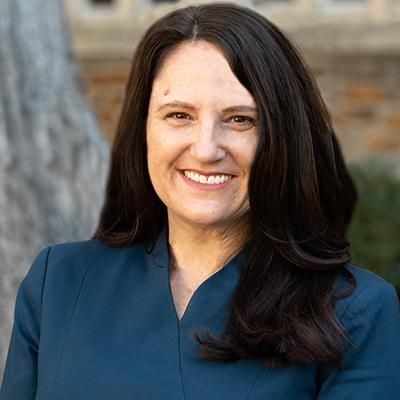
Alexandra Horowitz is a Senior Research Fellow and Adjunct Associate Professor at Barnard College. She has been teaching since 2004, specializing in dog cognition and olfactory research. Her academic roles span the Departments of English and Psychology, reflecting her interdisciplinary focus on animal behavior and human-animal interactions. Education: M.S. and Ph.D. in Cognitive Science from UC San Diego; B.A. in Philosophy from the University of Pennsylvania. Research interests include naturalistic observations of dog social play, testing anthropomorphic assumptions, and characterizing canine olfactory abilities. She has authored influential books like Inside of a Dog and Being a Dog , exploring how dogs perceive the world. Her work frequently appears in top journals and media outlets, including the New York Times and TED-Ed. Recent articles highlight studies on dog navigation, play behavior, and olfactory perception. She has been recognized as among the Top 2% of Cited Authors globally. Her presentations and lectures span academic conferences, museums, and public forums, emphasizing science communication.
William S. Horton (Sid) is an Associate Professor in the Department of Psychology at Northwestern University , where he has taught since 2005 and directed the Cognition and Communication Lab (Cresap 108). Starting in September 2025, he will serve as Chair of the Department of Linguistics . His research focuses on socio-cognitive mechanisms in language use, particularly discourse pragmatics , perspective-taking , and non-literal language processing . Education: B.S. in Psychology/German from Duke University (1991), M.A. and Ph.D. in Cognitive Psychology from University of Chicago (1994/1999) Previous roles: Postdoctoral research at SUNY-Stony Brook, Cognitive Aging at Georgia Tech Research trends from his 20+ years of publications include common ground , memory processes , figurative language , and age-related communication changes . His work increasingly incorporates computational text analysis and real-time digital communication studies. Awards : Fellow, Society for Text and Discourse Students : Supervised Ph.D. theses on conversational alignment, common ground activation, and digital communication. Undergraduate honors projects explore inhibitory deficits, speech internalization, and perspective-taking in bilingualism. Cognition and Communication Lab investigates language processing in spoken/written contexts using experimental methods and computational models.
Rick Hoyle is a Professor of Psychology and Neuroscience at Duke University, where he serves as Associate Chair of the Department of Psychology and Neuroscience. He is also a Faculty Network Member of the Duke Institute for Brain Sciences. His academic career spans decades, with significant contributions to understanding self-regulation and adolescent development. Dr. Hoyle earned his B.A. from Appalachian State University (1983), followed by an M.A. (1986) and Ph.D. (1988) from the University of North Carolina, Chapel Hill. He progressed from Assistant to Associate to Full Professor at the University of Kentucky from 1989 to 2003 before joining Duke University. His research focuses on how adolescents and emerging adults manage goal pursuit through self-regulation, taking a broad view that accounts for personality, environment, cognition, emotion, and social influences. He employs longitudinal methods with repeated assessments, sometimes spanning years with data collection multiple times per year, or intensive studies with assessments several times daily. His lab develops innovative measurement tools including self-report measures of self-control and grit, as well as unobtrusive approaches using mobile phones and wearable devices to track goal pursuit in natural settings. His recent publications reveal a strong focus on self-regulation in digital contexts, adolescent substance use, socioeconomic influences on development, and innovative measurement approaches. His work increasingly integrates technology (social media analysis, wearable devices) with traditional psychological research methods to understand real-world behavior. Fellow, Association for Psychological Science (2013) Dr. Hoyle has secured numerous research grants totaling millions of dollars, including the current Real-Time and Randomized Tests of Social Media and Mental Health Links in Early Adolescence (2024-2029), NCCU Duke - Substance Use Research & Education (2024-2029), and Mid-Life Health Inequalities in the Rural South: Risk and Resilience (2023-2028). His grant portfolio demonstrates sustained funding for research on adolescent development, substance use, self-regulation, and health disparities. He teaches advanced courses including Applied Structural Equation Modeling and Psychology and Neuroscience Grant Writing, mentoring the next generation of researchers in quantitative methods and research design. His work through the Center for the Study of Adolescent Risk and Resilience (2008-2025) has established a significant research infrastructure for longitudinal studies of adolescent development. Current projects examine social media effects on mental health, substance use patterns, and the impact of environmental factors on adolescent well-being using innovative digital tracking methods.
Claudia Arteaga serves as Associate Professor of Spanish, Latin American, and Caribbean Literatures and Cultures and Chair of the Department of Spanish, Latin American and Caribbean Literatures and Cultures at Scripps College. Her academic profile centers on indigenous representation in Latin America through cinematic and literary analysis, with particular emphasis on Andean societies. Her educational background includes: Ph.D. and M.A. in Spanish from Rutgers University B.A. in Linguistics and Literature from Pontificia Universidad Católica del Perú Arteaga's research critically examines indigenous self-representation in Peru, Bolivia, and Guatemala, investigating race-gender intersections , popular environmentalism , and epistemological translation in post-colonial contexts. Her work bridges Decolonial Theory , Indigenous Film Studies , and Andean Cultural Analysis , with significant contributions to understanding how communitarian filmmaking challenges dominant narratives. She actively connects academic research with social movements through interdisciplinary approaches. Her publication trajectory reveals consistent focus on indigenous media as decolonial praxis , with recent works analyzing Mayan documentaries, Quechua poetry, and Amazonian film schools. The research demonstrates evolving methodology from textual analysis toward community-engaged film studies, particularly examining how film festivals and grassroots cinema reshape environmental and identity politics across Latin America. Notable recognitions include: Mary W. Johnson Faculty Achievement Award in Teaching (Scripps College, 2018-2019) Sabbatical Research Fellowship (Scripps College, 2018-2019) Rutgers Teacher-Scholar Fellowship (2013-2014) Adolfo Snaidas Best Graduate Student Essay Award (2009) Arteaga has secured significant research funding from CLAS and GAIA for faculty-student collaborations and academic events, including the initiative 'Sumak Kawsay & Bolivarianism Today.' Her teaching portfolio spans advanced literature courses and specialized seminars on indigenous women's struggles, reflecting her commitment to integrating research with pedagogy. She maintains active engagement with the Latin American Studies Interdisciplinary Group, fostering connections between academic work and community activism. Her current projects extend into contemporary indigenous media production, with ongoing analysis of how digital platforms transform testimonial practices and environmental advocacy among Quechua and Mayan communities.
Dr. Sharon K. Sagiv is an Adjunct Assistant Professor of Epidemiology at UC Berkeley's School of Public Health and an investigator at the Center for Environmental Research and Children’s Health. Her research focuses on prenatal and early-life environmental toxin exposures, particularly persistent organic pollutants, heavy metals, pesticides, and consumer chemicals, and their impacts on child neurodevelopment. She has extensively studied associations between environmental toxicants and neurodevelopmental disorders like ADHD and autism, alongside innovative work using functional neuroimaging to assess neural activity in exposed populations. Dr. Sagiv holds a PhD in Epidemiology from UNC Chapel Hill (2004), an MPH from Boston University (1998), and a BA in Biology from Franklin and Marshall College (1993). She has contributed to major cohorts such as CHAMACOS and Project Viva, examining long-term effects of pollutants like PFAS, organophosphates, and PBDEs. Her work bridges epidemiology, toxicology, and neuroimaging to advance understanding of environmental health risks. Research interests emphasize translational environmental health science, with a focus on pesticide mixtures, air pollution, and endocrine disruptors. Key themes include exposure assessment frameworks, functional neuroimaging outcomes, and developmental origins of health disparities. She teaches grant-writing seminars and collaborates globally on pesticide neurotoxicity studies in farmworker populations. Recent publications highlight links between prenatal PFAS exposure and metabolic outcomes, pesticide exposure and brain connectivity, and traffic pollution’s role in neurocognitive decline. Her research portfolio includes systematic reviews on air pollution health impacts and methodological innovations for assessing chemical mixtures in pregnancy. Dr. Sagiv’s work has policy implications for environmental regulations and public health interventions targeting vulnerable populations.
Dr. Meera Sabaratnam is an Associate Professor of International Relations at the University of Oxford and a Tutorial Fellow in Politics at New College. She previously held positions at SOAS University of London, the University of Cambridge, and the London School of Economics (LSE), where she earned her MSc and PhD. Her work focuses on the colonial and postcolonial dimensions of world politics, challenging Eurocentric frameworks in International Relations (IR) theory and practice. Education MA in Philosophy, Politics, and Economics (PPE), Balliol College, University of Oxford MSc and PhD in International Relations, London School of Economics (LSE) Her research examines how imperial histories shape contemporary international order, with a particular focus on structural violence , epistemic justice , and anti-colonial resistance . She is currently writing a book titled Complex Indebtedness , analyzing material and moral debts in the liberal international order. Scientific Awards and Grants : Senior Fellowship of the Higher Education Academy Leverhulme Trust Research Fellowship RF-2021-235 Co-investigator for Czech Science Foundation grant (2025-2027) on postcolonial order Previous funding from the Economic and Social Research Council (ESRC) Dr. Sabaratnam co-founded the Colonial/Postcolonial/Decolonial Working Group at the British International Studies Association (BISA) and serves on editorial boards of International Studies Quarterly , Security Dialogue , and Cambridge Review of International Affairs . Her methodological innovations include contrapuntal analysis and histories from below , particularly in studying the Great War's impact on southeast Africa.
Lisa Wallner Samstag is a Professor of Psychology at Long Island University's Brooklyn Campus, affiliated with the College of Liberal Arts and Sciences and Department of Psychology. She is Director of Psychotherapy Research and Clinical Supervisor at LIU's Psychological Services Center, and Senior Consultant at Mount Sinai Beth Israel's Psychotherapy Research Program. B.A. in Psychology from Queen’s University M.A., M.Phil., and Ph.D. in Clinical Psychology from City University of New York Her research focuses on therapeutic alliance development, alliance ruptures, process-outcome dynamics, depression, anxiety, personality disorders, and developmental themes like parenting and infertility. She has extensively published on ruptures in psychotherapy and their resolution. Dr. Samstag's publications span from 2004 to 2022, emphasizing therapeutic alliance dynamics, rupture repair strategies, and clinical outcomes across diverse psychotherapy approaches. Her work bridges theoretical concepts with practical applications in alliance-focused training. Fellow of the American Psychological Association (APA) She supervises trainees in alliance-focused therapy, co-edited a book on rupture repair, and contributes to psychotherapy literature through book chapters and editorship roles in APA journals.
Jennifer J. Baker is an Associate Professor in the Department of English at New York University's College of Arts and Science. Holding a Ph.D. in English from the University of Pennsylvania (2000), her academic focus spans 18th- and 19th-century American literary, cultural, and intellectual history. Key research areas include literature and science, environmental literature, transatlantic Romanticism, and Civil War literature. She is currently working on a reception history of Herman Melville’s Moby-Dick , examining its rise to canonical status through Cold War politics and academic culture. Education: Ph.D. in English, University of Pennsylvania (2000) Her upcoming book American Romanticism and the Evolutionary Idea (Stanford UP, 2026) investigates how evolutionary theories intersected with Romantic concepts in 19th-century American literature. Previous publications include Securing the Commonwealth: Debt, Speculation, and Writing in the Making of Early America (Johns Hopkins UP, 2006). Recent research includes articles on Herman Melville, Emerson, Nathaniel Hawthorne, and Judith Sargent Murray, reflecting her interdisciplinary approach combining literary analysis with financial history, scientific thought, and cultural studies. Faculty Fellowship, NYU Center for the Humanities (2014-15) Heyman Prize, Yale University (2004) Morse Fellowship, Yale University (2005) Andrew W. Mellon Dissertation Fellowship (1997-98) She serves on the Board of the Melville Society Cultural Project and has held academic appointments at Yale University and the McNeil Center for Early American Studies.
Daniel Collins serves as an Associate Professor in the English department at Guttman Community College, where he has taught for two years across the First-Year Program (Reading and Writing, Composition I) and Liberal Arts and Sciences Program of Study (Introduction to Humanistic and Philosophical Thought, Composition II, Capstone). His research focuses on composition studies and digital writing pedagogy , particularly the integration of generative AI tools in writing instruction. This is exemplified by his course Self-Representation in a Digital Age , which foregrounds AI-assisted writing practices and digital identity exploration. Collins actively contributes to CUNY-wide writing initiatives through membership in the Teaching Courses on the Commons group (264 members) and the CUNY Developmental and ESL Writing Collaboration (C-DEWC), where he collaborates on developmental writing best practices across the university system.
Shona McIntosh is a Senior Lecturer in the Department of Education at the University of Bath, affiliated with the Centre for Qualitative Research. She holds a PhD in Education and is actively supervising doctoral students. Her work bridges theory and practice in education, with a strong commitment to social and epistemic justice. Research Interests: Climate and Sustainability Education Decolonising Education and Research Methods Global Citizenship and International Education Teacher and Professional Learning Participatory and Feminist Qualitative Research Teaching-Research Nexus in Higher Education Her research is grounded in decolonial, feminist, and sociocultural theories, emphasizing co-construction of knowledge with participants. She employs experimental and mixed methods to explore equity in educational contexts. Recent Research Trends: Her recent publications (2022–2025) reflect a sustained focus on justice-oriented education, particularly in climate change, teacher development during crises (e.g., school closures), and methodological innovation in collaborative and reflexive research. There is a clear trajectory toward developing frameworks for epistemically-just and equitable research practices, often in international and interdisciplinary contexts. Scientific Awards: Jeff Thompson Research Award from the International Baccalaureate Organization (2017) Grants and Supervision: She has secured funding from the British Academy and the British Council for projects on the teaching-research nexus and youth climate concerns. She is Principal Investigator (PI) on multiple projects and a Co-Investigator on international collaborations. She currently accepts doctoral students and has supervised several research outputs and theses. Labs and Research Groups: She is a core member of the Centre for Qualitative Research at the University of Bath, where she contributes to advancing innovative qualitative methodologies and fostering equitable research practices.
Professor Tineke Brunfaut is a leading academic in Applied Linguistics at Lancaster University 's School of Social Sciences. Her work focuses on language testing , second language reading , listening , and integrated/multimodal skills . She coordinates the Language Testing Research Group and has received prestigious awards including the ILTA Best Article Award , e-Assessment Award , and TOEFL Outstanding Young Scholar Award . Key research areas: Cognitive and affective factors in testing, methodological innovations (eye-tracking, discourse analysis), and language test development. Recipient of multiple grants from the British Council, Trinity College London, and British Academy. PhD supervision interests: Language testing, integrated skills, assessment literacy, and validation. Recent publications explore technology-enhanced assessment , multimodal viewing-to-write tasks , and the impact of delivery modes on test performance . She has consulted for global institutions on test design and evaluation. Scientific Awards : ILTA Best Article Award e-Assessment Award for Best Research TOEFL Outstanding Young Scholar Award Her teaching includes MA programs in Language Testing, TESOL, and Applied Linguistics, covering Test Construction , Research Methods , and Statistical Analyses .
David Lydon-Staley is an Associate Professor at the Annenberg School for Communication, University of Pennsylvania, where he serves as Principal Investigator of the Addiction, Health, & Adolescence (AHA!) Lab. His research integrates neuroscience with communication science to examine substance use, media effects, and curiosity using fMRI, ecological momentary assessment, and network analysis. Education includes a Ph.D. in Human Development & Family Studies from The Pennsylvania State University, an M.S. from Penn State, an M.F.A. in Creative Writing from Drexel University (2025), and a B.A. in Psychology and English Literature from Trinity College Dublin. Research focuses on three interconnected areas: curiosity in media environments and health communication, media engagement in emotion dynamics, and substance use through dynamic network perspectives. Work emphasizes intensive longitudinal measurement of brain-behavior interactions during daily life. Recent publications (2023-2025) predominantly explore tobacco behavior, neural mechanisms of addiction, curiosity modulation, and social media's emotional impacts. Articles demonstrate consistent themes: fMRI analysis of inhibitory control, real-time geospatial tracking of smoking triggers, curiosity-based health messaging, and emotion regulation networks. Research has been supported by the National Institute on Drug Abuse, Jacobs Foundation, International Society for Behavioral Development, Center for Curiosity, and Brain & Behavior Research Foundation. Leads the Addiction, Health, & Adolescence (AHA!) Lab investigating substance use through network science approaches. Collaborates with the Complex Systems Lab at Penn's Department of Bioengineering.
Elizabeth J. Marsh is a Professor of Psychology and Neuroscience at Duke University and a Faculty Network Member of the Duke Institute for Brain Sciences . Her work bridges cognitive psychology, neuroscience, and education, with a focus on memory accuracy, misinformation, and aging. Education: Ph.D., Stanford University (1999) B.A., Drew University (1994) Research Interests: Marsh investigates how memory can be both accurate and erroneous, exploring questions like why people misremember facts, how fiction influences memory, and how aging affects decision-making and belief formation. Her work intersects with social psychology , developmental psychology , and educational psychology . Scientific Awards: Langford Lecture Award (2010) Grants & Funding: Aging and Finding Information: Using Google vs. Relying on Other People (2015–2025) Effects of Aging on Episodic Memory-Dependent Decision Making (2018–2025) When are pictures worth a thousand words? Debunking misinformation with images (2022–2023) Advancing Artificial Intelligence for the Naval Domain (2018–2023) Leveraging Older Adults' Social Goals to Improve Memory and Strategy Use (2018–2020) Exploring the potential of essay testing for improving memory and learning (2013–2019) Courses Taught: PSY 990: Special Readings in Psychology PSY 765S: Psychology and Neuroscience Grant Writing PSY 755: Research Practicum PSY 724S: Survey of Current Topics in Psychology and Neuroscience II PSY 723S: Survey of Current Topics in Psychology and Neuroscience I PSY 102: Cognitive Psychology: Introduction and Survey NEUROSCI 755: Interdisciplinary Program in Cognitive Neuroscience (IPCN) Independent Research Rotation
Ardon Shorr serves as Writing Seminar Faculty at Princeton University's Princeton Writing Program, based in office 313 New South. His position focuses on academic writing instruction within the university's core curriculum. Trained in experimental biology, Shorr specializes in explaining scientific complexity through science communication. His research background includes gravitational biology and mechanotransduction, with expertise in developing biological measurement devices. Current work emphasizes translating technical concepts for broader audiences. Publication trends reveal sustained investigation into cellular force sensing mechanisms, evolving from foundational gravitational transduction studies (2008) to innovative high-throughput embryonic research using mesofluidics (2019). This trajectory demonstrates integration of bioengineering approaches with developmental biology. No scientific awards, student advisees, research grants, or laboratory affiliations were documented in available materials.
Dr. Eunice Eunhee Jang is a Professor in the Department of Applied Psychology and Human Development at the Ontario Institute for Studies in Education (OISE), University of Toronto. Her research focuses on synergistic learner modeling, dynamic assessment systems, and the intersection of language testing with educational measurement. PhD with specializations in language testing, educational measurement, and program evaluation Develops interactive digital assessment interfaces for struggling readers Author of "Focus on Assessment" (2014) and co-author of OECD Reviews on Evaluation and Assessment in Education Research Interests Dr. Jang's work explores prismatic assessment analytics to understand learner potential and predict learning pathways. She integrates natural language processing and machine learning to create diagnostic feedback systems that support cognitive, metacognitive, and affective growth in technology-rich classrooms. Scientific Awards Jacqueline Ross TOEFL Dissertation Award Caroline Clapham IELTS Master’s Award Tatsuoka Measurement Award Professional Contributions She has served on major advisory boards including EQAO provincial assessments and TOEFL Committees of Examiners. Currently, she is an elected board member for the International Language Testing Association and contributes to the Broader Measures of Success Advisory Committee for People for Education.