Alexandra Horowitz is a Senior Research Fellow and Adjunct Associate Professor at Barnard College. She has been teaching since 2004, specializing in dog cognition and olfactory research. Her academic roles span the Departments of English and Psychology, reflecting her interdisciplinary focus on animal behavior and human-animal interactions. Education: M.S. and Ph.D. in Cognitive Science from UC San Diego; B.A. in Philosophy from the University of Pennsylvania. Research interests include naturalistic observations of dog social play, testing anthropomorphic assumptions, and characterizing canine olfactory abilities. She has authored influential books like Inside of a Dog and Being a Dog , exploring how dogs perceive the world. Her work frequently appears in top journals and media outlets, including the New York Times and TED-Ed. Recent articles highlight studies on dog navigation, play behavior, and olfactory perception. She has been recognized as among the Top 2% of Cited Authors globally. Her presentations and lectures span academic conferences, museums, and public forums, emphasizing science communication.
David Stillwell serves as Professor of Computational Social Science at Cambridge Judge Business School and Academic Director of The Psychometrics Centre, University of Cambridge. His research leverages big data to understand human psychology and behavior, with significant contributions in personality prediction from digital footprints and personalized advertising applications. His educational background includes: BSc in Psychology from the University of Nottingham (2007) MSc in Research Methods from the University of Nottingham (2008) PhD in Decision Making from the University of Nottingham (2012) Dr. Stillwell's research centers on computational social science and psychometrics, pioneering the myPersonality Facebook application that collected data from over 6 million users. His work demonstrates computers can predict personality as accurately as spouses, reveals psychological targeting's advertising effectiveness, and establishes links between personality-matched spending and life satisfaction. He also explores linguistic honesty markers through profanity analysis and personality-based dating patterns. His recent publications (2019-2025) reveal a strong trajectory toward AI evaluation using psychometric frameworks, particularly in medical and general-purpose AI assessment. Key themes include fairness metrics in language models, crisis emotional responses through social media, and computational personality recognition - demonstrating consistent innovation at the psychology-technology intersection. He has received significant recognition: Top 10 most influential papers of 2013 by Altmetric Nieman Journalism Lab highlight of 2013 Named in 'top 30 thinkers under 30' by Pacific Standard Magazine Dr. Stillwell maintains active industry engagement through consultancy with Barclays, Hilton, and Ubisoft on projects spanning computer-adaptive testing systems to interactive experiences like Predictive World for Watch Dogs 2. His policy impact is substantial, with citations by the European Data Protection Supervisor, World Bank, and multiple national governments, leading to speaking engagements at the European Parliament and Bank of England. As Academic Director of The Psychometrics Centre, he leads a global hub for advancing psychological assessment through innovative methods including Concerto open-source software, collaborating with organizations ranging from the European Commission to major corporations on psychometric applications in people analytics and digital behavior.
Claus Lamm is a Full Professor of Biological Psychology at the University of Vienna , where he leads the Social, Cognitive and Affective Neuroscience Unit (SCAN-Unit) . He serves as Vice Dean for Research and Advancement of Early Career Researchers at the Faculty of Psychology and holds affiliations with the Vienna Cognitive Science Hub , Environment & Climate Change Hub , and Austrian Academy of Sciences . His academic career spans international collaborations and formative research experience abroad. Scientific Focus: Lamm investigates the neural underpinnings of empathy and prosocial behavior , employing multi-modal approaches combining neuroimaging, psychopharmacology, and psychoneuroendocrinology . His work extends to comparative studies with ravens and dogs, and explores environmental social neuroscience through climate change decision-making research. Recent publications show trends in cross-cultural psychology , machine learning applications , and neurobiological pathways related to social behavior. Awards & Grants: Recipient of the APS Mentor Award for his support of early career researchers. Funded by European Research Council , Austrian Science Fund , Vienna Science and Technology Fund , and intramural grants exceeding €10 million. Key projects include "Unravelling the opioid system in empathy" and "Comparative dog-human fMRI" . Media Engagement: A prominent public science communicator, Lamm has appeared in Nature , Science Magazine , and Austrian media outlets like Ö1 Mittagsjournal and ORF2 , discussing topics from pandemic psychology to social media effects . He maintains active outreach through Science TV and educational programs .
Ashli Owen-Smith is a behavioral scientist affiliated with the School of Public Health at Georgia State University , where her research focuses on mental health disparities, suicide prevention, and integrative/complementary approaches for complex mental-physical health conditions. She works with underserved populations including refugees/immigrants, incarcerated individuals, and LGBTQ+ communities through community-based participatory research and mixed-methods frameworks. Her current projects are funded by CDC , DBHDD , and DPH . Education: Ph.D. in Behavioral Sciences (Emory, 2009), S.M. in Public Health (Harvard, 2005), B.A. in Psychology (Smith College, 2001) Her research spans mental health , trauma , suicide prevention , and mindfulness-based interventions . Recent work examines telehealth adaptations for chronic pain and mental health, vaccine hesitancy in refugee communities, and social determinants of suicide . She leads studies on gender-affirming care and health disparities in LGBTQ+ populations. Key article trends include epidemiological analysis of suicide risk factors, COVID-19 impacts on mental health, ICD-10 coding for autism, and complementary medicine in trauma recovery. Subfields span telehealth , health equity , mental-physical comorbidity , and community engagement . Students she has mentored include C.A. Scarlett , T. Griner , and M.M. Sesay . Her work integrates public health policy , clinical research , and health systems analysis .
Jonathan Santo is a Professor of Psychology at the University of Nebraska at Omaha (UNO), where he serves as Director of the Graduate Developmental Psychology Program and as a faculty member in the Office of Latino/Latin-American Studies. His research explores peer relations, cultural differences in self-esteem, and classroom-level influences on child and adolescent development, with a focus on improving school environments and fostering positive social interactions. ORCA Faculty Fellow His research spans broad areas including Developmental Psychology , Social Support Systems , and Cross-Cultural Peer Dynamics , with specific attention to peer victimization , self-continuity , school climate , and developmental trajectories in Brazilian and Colombian youth . Recent publications analyze topics like hikikomori experiences , friendship security , and HPA axis dysregulation in adolescents. Scientific awards include the ORCA Faculty Fellow recognition. His work often involves longitudinal assessments of peer relationships cross-cultural comparisons (Brazil, Colombia, China, Nigeria, Singapore, U.S.) policy-focused blog posts on family separations and school interventions
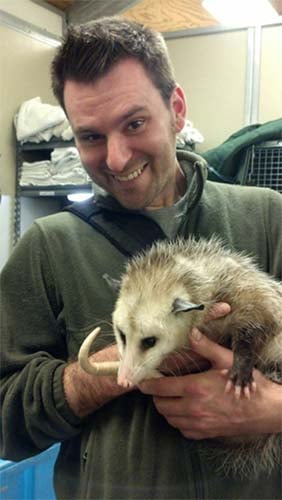
Dr. Preston Foerder is Assistant Professor of Psychology specializing in comparative cognition research. His work examines problem-solving abilities across species including elephants, otters, dolphins, and therapy dogs. Key findings include documenting the first evidence of insightful tool use in elephants and analyzing socialization effects on feline cognition. Current research investigates therapy dog impacts on human anxiety and zoo animal enrichment strategies. Foerder's doctoral research established novel paradigms for studying insight in non-human species. His zoo-based approach combines behavioral observation with controlled cognitive testing. Prior to academia, Foerder worked professionally as a puppeteer, bringing unique perspectives to animal behavior interpretation.
Dr Deborah Wells is a Reader in the School of Psychology at Queen's University Belfast, specializing in animal welfare and behavior, particularly in dogs and cats. Her research focuses on improving psychological welfare of animals, human-animal bond, and laterality studies. She holds a PhD from Queen's (1996) and has been a lecturer since 1999. Education: BSc (Hons) Psychology, Queen's University Belfast, 1992 PhD in Animal Welfare, Queen's University Belfast, 1996 Research Interests: Animal welfare assessment, laterality in animals, enrichment strategies, and pets' impact on human health. Recent work includes studies on auditory enrichment for dogs and equine-assisted therapy. Awards: Multiple grants and awards, including CAST DfE Collaborative PhD Studentships and the Most Popular Paper Award. Teaching & Grants: Teaches animal behavior modules and supervises PhD students. Leads projects like the KTP with Devenish Nutrition and lateralised behavior research. Active in the Animal Behaviour Centre. Labs/Teams: Director of the Animal Behaviour Centre, promoting interdisciplinary research in animal welfare.
Dr Valdas Noreika is a Senior Lecturer in Psychology at the School of Biological and Behavioural Sciences, Queen Mary University of London. He serves as Head of The Centre for Brain and Behaviour and leads the Sleep and Cognition Lab. His work bridges cognitive neuroscience, psychology, and clinical applications, with a focus on understanding consciousness and its disorders. Dr Noreika's educational background includes: BA in Philosophy from Vilnius University, Lithuania MSc in Neurobiology from Vilnius University, Lithuania PhD in Psychology from the University of Turku, Finland, focusing on altered states of consciousness and temporal distortions Dr Noreika's research explores the cognitive and neural mechanisms underlying sleep, dreaming, and consciousness. Using techniques including electroencephalography (EEG), transcranial magnetic stimulation (TMS), and psychophysics, his work investigates both basic mechanisms of consciousness and their applications to neurodevelopmental and mental health conditions. His research spans multiple domains including time processing, inter-brain synchronization across species, and environmental decision-making. A key aspect of his work involves translational research focusing on sleep, subjective experiences, and well-being in conditions such as learning disabilities, ADHD, autism, and depression. Analysis of Dr Noreika's recent publications reveals a strong focus on consciousness studies, neural mechanisms of sleep and dreaming, and applications to neurodevelopmental conditions. His work frequently employs EEG and other neuroimaging techniques to study brain activity during various states of consciousness. Recent trends show increasing emphasis on inter-brain synchronization, particularly in infant-parent interactions and cross-species communication, as well as growing interest in environmental psychology and climate change-related decision making. Dr Noreika has secured significant research funding including: The neural basis of inter-species communication - £155,098 from the Biotechnology and Biological Sciences Research Council (2024-2026) Sleep and circadian interactions with sensory sensitivity in adults with intellectual disabilities - £103,229 from the Baily Thomas Charitable Fund (2023-2025) As a supervisor, Dr Noreika advises multiple PhD students working on diverse topics including Alzheimer's disease diagnosis using information theory, emotion recognition, thermal sensation in Parkinson's disease, cultural differences in cognitive processes, and time processing. His Sleep and Cognition Lab serves as a hub for interdisciplinary research bridging neuroscience, psychology, and clinical applications. Dr Noreika leads the Sleep and Cognition Lab at Queen Mary University of London, which focuses on investigating the neural mechanisms of sleep, dreaming, and consciousness. The lab brings together researchers from diverse backgrounds to study both fundamental aspects of consciousness and their applications to clinical populations. Current projects include investigations of sleep and sensory sensitivity in adults with learning disabilities and human-dog interaction studies.
Bertram O. Ploog is a Professor at the College of Staten Island, City University of New York, and is affiliated with the CUNY PhD program in Cognition & Comparative Psychology. He teaches courses in behavior analysis and statistics at both undergraduate and graduate levels. Research Interests: His research focuses on autism spectrum disorders, with emphasis on selective attention, stimulus overselectivity, and emotion recognition. He employs behavioral animal models, including studies with squirrel monkeys and dogs, to explore cognition and Theory of Mind. His work extends to the development and evaluation of computer-assisted technologies (CAT) for enhancing social, communicative, and language skills in children with autism. Recent Research Trends: His recent publications reflect a strong focus on attention processes in autism, the use of educational technology and computer games in developmental disabilities, and cross-species cognitive studies. His work bridges experimental psychology, clinical applications, and technological innovation in autism research. Professional Recognition: He is a Board-Certified Behavior Analyst and a licensed psychologist and behavior analyst in New York State. Education and Training: He earned his Ph.D. from the University of California, San Diego, mentored by Laura Schreibman and Ben Williams. His academic foundation was shaped by George Reynolds and Edmund Fantino in experimental behavior analysis. Advising and Grants: While no specific students or grants are listed, his active research and doctoral program affiliation suggest involvement in mentoring graduate students and securing research funding. His ongoing publications and program affiliation indicate sustained scholarly engagement. Labs and Teams: Specific lab or research team names are not mentioned in the available text.
Dr. Jonathan Hicks serves as Professor and Chair of the Recreation and Parks Leadership Studies department at Minnesota State University, Mankato's College of Allied Health and Nursing. With a Ph.D. and M.S. in Recreation & Park Management from University of Illinois and B.A. in Print Journalism from Western Illinois University, his academic focus bridges environmental education with emotional psychology. Ph.D., Recreation & Park Management, University of Illinois, 2016 M.S., Recreation & Park Management, University of Illinois, 2010 B.A., Print Journalism, Western Illinois University, 2004 His research examines the emotional connections between humans and wildlife, particularly through the lens of awe and its educational applications. Key areas include: Human Dimensions of Wildlife Wildlife-Inspired Awe Natural Resource Recreation Planning Environmental Education Pedagogy Wildland Recreation Management Dr. Hicks' publications reveal a consistent exploration of emotional responses in nature-based recreation, with recent work analyzing tenure challenges at teaching institutions. His awards include commendations for community-driven teaching approaches. Numerous teaching commendations Prior teaching experience includes environmental education settings at University of Illinois, emphasizing experiential learning integration and applied research methodologies.
Dr. Helen Lewis is an Associate Professor in Education and Childhood Studies at Swansea University's School of Social Sciences. She serves as the School Education Lead and Programme Director for the Primary Postgraduate Certificate in Education (PGCE). Her work bridges teacher education, metacognitive development in children, and innovative uses of animal-assisted interventions in schools. Her research focuses on two pillars: 1) fostering children's thinking skills and metacognition through pedagogical frameworks like Project Zero's VSRD methodology, and 2) exploring how school dogs enhance pupil well-being, learning, and resilience. Recent projects include an ESRC-funded initiative creating best practice guidelines for canine-assisted education. Professionally, she holds certifications in animal-assisted play therapy and canine intervention strategies. She actively contributes to academic governance as an External Examiner at institutions like University College London and serves on national committees such as the National School Dog Alliance and Let's Think Forum. Her career highlights include leadership roles in program development (BA Education Studies, MA Education), peer review for academic journals, and governance as a primary school inspector for Estyn. She balances rigorous scholarship with practical advocacy for evidence-based educational practices.
Thad Starner is a Professor in the College of Computing at Georgia Institute of Technology and Technical Lead/Manager on Google's Glass. He directs the Contextual Computing Group (CCG), co-founded the Animal Computer Interaction Lab, and contributes to Georgia Tech's Ubicomp Group and Brainlab. A wearable computing pioneer since 1993, he has over 500 publications and 80 issued U.S. patents. Coined 'augmented reality' in 1990 Developed CopyCat for ASL learning in deaf children Invented Passive Haptic Learning for skill acquisition His research spans wearable interfaces for Deaf-hearing communication, dolphin interaction systems (CHAT), dog-handler communication (FIDO), and brain-computer interfaces for ALS patients. Current projects focus on optical aging simulation, XR input methods, and animal behavior telemetry. Recent publications (2023-2025) explore AR display ergonomics, AI-augmented reasoning, sign language recognition, and animal-computer interaction. His work has been featured in 60 Minutes, BBC, National Geographic, and Time Magazine. CHI Academy (2017) Lemelson-MIT Prize finalist White House Champions of Change finalist He advises graduate students in wearable systems and teaches AI and prototyping courses. His lab developed the Perceptive Workbench for gesture tracking and created early Eigenfaces research for face recognition.
Professor Hannah Buchanan-Smith is a Professor of Psychology at the University of Stirling, Faculty of Natural Sciences. She holds multiple external roles including Member of the UK Zoos Expert Committee advising DEFRA and devolved governments, Leader of the 'Welfare and mixed-species living' project at the Living Links Executive Board, and Corresponding member of the Primate Society of Great Britain's Captive Care Working Party. Her research focuses on animal behavior, welfare, and ecology with a particular emphasis on non-human primates. Education: PhD from University of Reading, postdoctoral work at St Andrews University Research interests include comparative color vision evolution, refinement of laboratory animal care (3Rs principles), and welfare assessment in zoos. She promotes welfare through open-access resources like the Marmoset Care website and the NC3Rs Macaque Website. Collaborations include RZSS Edinburgh Zoo and Blair Drummond Safari Park. Recent articles explore cultural differences in zoo visitor attitudes, social dynamics in mixed-species exhibits, and welfare implications of circadian rhythms in captive pandas. Her work bridges theoretical research with applied welfare practices, emphasizing translational science between field observations and captive environments. Awards: Extensive professional recognitions through committee memberships but no specific named awards listed Advising: Supervised Dr. Lou Tasker (PhD) and others through BBSRC CASE studentships. Active in grant-funded projects including EU, BBSRC, and NC3Rs initiatives. Leads the 24/7 welfare approach framework for captive animals. Labs/Teams: Core member of Scottish Primate Research Group, affiliated with the Behaviour and Evolution Research Group at Stirling. Collaborates internationally through IUCN Species Survival Commission.
Professor Bruce N. Walker holds a joint appointment in the School of Psychology and School of Interactive Computing at Georgia Institute of Technology, within the College of Sciences. His research focuses on human-centered technology design, emphasizing accessibility, auditory displays, and human-AI interaction. He leads the Sonification Lab, pioneering multimodal interfaces and inclusive technology solutions. He earned his Ph.D. in Human Factors and Human-Computer Interaction from Rice University in 2001. Research Interests: Trust in technology, accessible interfaces, sonification, AI-human collaboration, and HCI in non-traditional environments. Current projects include the AccessCORPS VIP initiative to enhance course accessibility and studies on automated vehicle interaction. Awards: Best Paper Award at AudioMostly 2014 for auditory weather reports research. Active in professional organizations like the International Community for Auditory Display and Human Factors and Ergonomics Society. Teaching: Courses include Research Methods for Human Factors, Sensation and Perception, and HCI Foundations. Supervises interdisciplinary teams in the Sonification Lab R&D Studio and AccessCORPS VIP. Labs/Teams: Sonification Lab (multimodal data exploration) and AccessCORPS (disability-inclusive course design). Collaborates on international projects like the Mwangaza initiative for learners with vision impairment in Kenya.
Matthew Ahmadi is a Postdoctoral Research Fellow at the University of Sydney's Sydney School of Health Sciences, part of the Faculty of Medicine and Health. He is affiliated with the Charles Perkins Centre and supervises research student Angel Bian. His work focuses on physical activity, sleep patterns, and their impacts on cardiovascular health, mortality, and chronic disease prevention. He has published extensively on device-measured behaviors, wearable technology applications, and population health studies. Ahmadi has secured grants including a National Heart Foundation Postdoctoral Fellowship and a Charles Perkins Centre Professional Development Award. Research interests span epidemiology and public health, with emphasis on translating activity metrics into clinical and policy recommendations. Recent studies investigate vigorous intermittent lifestyle physical activity (VILPA), sleep regularity's cardiovascular effects, and the role of physical activity in mitigating infectious disease risks. He contributes to the ProPASS consortium analyzing global movement behavior data. Key achievements include developing machine learning methods for activity classification (e.g., in cerebral palsy populations) and leading randomized controlled trials evaluating dog activity trackers' impact on owner behavior. His research bridges clinical, technological, and population health perspectives to address global health challenges.