Maiju Loukola (Doctor of Arts) is a university lecturer in artistic research at the Academy of Fine Arts, University of the Arts Helsinki. She is the head of the Kone Foundation-funded project City as Space of Rules and Dreaming , which explores urban spatial justice through interdisciplinary collaboration with legal scholars, urban researchers, and political theorists. Current Role : University Lecturer in Artistic Research (since 2021) Research Focus : Politics of urban space, speculative spatiality, and emancipatory art practices. Key Collaborations : Helsinki University Faculty of Law, Aalto University Department of Built Environment, and European Artistic Research Network (EARN). Her artistic practice includes site-specific installations and lecture performances that interrogate urban marginalization, legal normativity, and collective dreaming. She has co-edited journals like RUUKKU Studies in Artistic Research and Tiede & edistys , and convenes the EARN working group on Space + Practice. Scientific Awards Kone Foundation grant for urban research (2021–2025) Academy of Finland grants for Floating Peripheries (2017–2021) and Figures of Touch (2008–2012) Awarded for 'Media in Performance' at Prague Quadrennial 2015
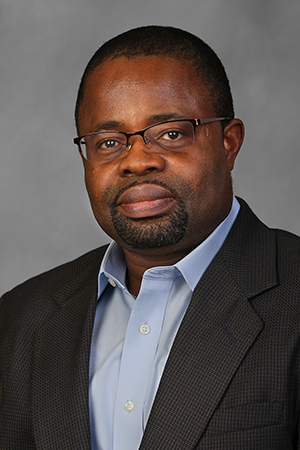
Dr. Apollos Okwuchi Nwauwa serves as Professor of History in the Department of History at Bowling Green State University's College of Arts and Sciences. His expertise spans Modern Africa with specialized focus on Nigerian history, Igbo studies of Southeastern Nigeria, African education systems, and Africa's global political engagement. His educational foundation includes: PhD in African History from Dalhousie University, Canada (1993) MA in African History from Dalhousie University, Canada (1989) BA (Hons) from Bendel State University, Nigeria (1986) Dr. Nwauwa's research critically examines colonial legacies in African education , Igbo socio-political organization , and post-colonial Nigerian leadership . His work bridges historical analysis with contemporary challenges, particularly exploring how traditional Igbo structures interact with modern governance systems and how colonial educational policies continue to shape African development trajectories. He emphasizes the agency of African intellectuals in navigating global ideologies. His recent publications (2015-2022) reveal consistent thematic threads: the Cold War's impact on Nigerian universities , evolving Igbo identity in post-colonial contexts, and critical reassessments of colonial education . These works demonstrate interdisciplinary approaches connecting political history, cultural studies, and educational policy analysis, often challenging Eurocentric narratives through African-centered perspectives. Key honors include: Distinguished Doctoral Dissertation Award (2011) for Michael Kithinji's research Ohio Academy of History Dissertation Award (2011) Isaac Walton Killam Scholarship (1990) Head of Department Award as Best History Graduate (1986) As a dedicated mentor, Dr. Nwauwa has supervised doctoral candidates including award-winning student Michael Kithinji. His grant portfolio features a $50,000 Fulbright Foreign Language Teaching Assistant grant (2010-2016) for Swahili instruction, multiple Faculty Research Incentive Grants totaling over $15,000, and support from the Institute for the Study of Culture and Society. These resources have advanced his research on Nigerian universities during the Cold War and Africana educational initiatives. Though not lab-affiliated, Dr. Nwauwa actively shapes scholarly discourse through leadership in the Igbo Studies Association (serving as President during 2012-2014 conferences), African Studies Association, and Nigerian Studies Association. His conference presentations and invited talks consistently foster transnational academic networks focused on African historiography and contemporary political challenges.
Besa Arifi is a Full Professor at the Faculty of Law, South East European University (SEEU), with over 15 years of academic experience in criminal law, criminology, and victims' rights. Her career spans roles as Coordinator for International Cooperation and Mobility (2015–present), former Head of SEEU's Human Rights Centre, and leadership in academic reform projects. PhD in Criminal Law Sciences (2007–2010), St. Cyril and Methodius University Master of Arts in Criminal Law and Criminology (2003–2006), St. Cyril and Methodius University Bachelor of Arts in Law (2000–2003), St. Cyril and Methodius University Her research bridges criminal law , cybercrime , and gender-based legal analysis , with a focus on restorative justice and counter-violent extremism strategies . Recent publications address blockchain-enabled corruption , hate crime drivers , and children's procedural rights . Arifi's scholarly output spans 15 years, covering hate speech regulation , domestic violence legislation , and digital forensics . She has collaborated with institutions like OSCE and UNDP on projects related to judicial independence and whistleblower protection in higher education.
Christina Seeger is a Professor at the Institute of Media and Communication Studies, Alpen-Adria-Universität Klagenfurt. She serves as Deputy Head of Institute and Deputy spokesperson of the HSCM doctoral program, while also contributing to equality initiatives as a Member of the Working Group for Equal Treatment Issues. Research Focus: Political communication, digital conflict analysis, public opinion dynamics, social media effects, and experimental methodology. Key Contributions: Development of frameworks for media effects, disclaimers in digital content, and value-based environmental communication. Recent Trends: Her 2022-2023 work explores misinformation counter-strategies, psychological impacts of social media content, and methodological advancements in media research. Articles analyze Russian-Ukrainian conflict narratives, #MeToo framing effects, and influencer-driven political engagement. Scientific Roles: Active in academic leadership, she contributed to research data guidelines (2020) and international publishing strategies (2015). Her experimental research manuals (2018) are widely referenced.
S. Andrew Schroeder is a Professor in the Department of Philosophy at Claremont McKenna College. He received his PhD from Harvard University Department of Philosophy in 2009. His scholarly work bridges ethics, political philosophy, and the philosophy of science, with particular attention to how these fields intersect with practical concerns in medicine, public health, and policy-making. Dr. Schroeder's educational background includes a PhD from Harvard University (2009), though specific details about his undergraduate and master's education are not provided in the available materials. His research focuses on normative ethics, social and political philosophy, and the role of values in science. He has made significant contributions to understanding how non-epistemic values influence scientific research, particularly in medical and public health contexts. His work examines questions of democratic decision-making in science, the ethical dimensions of health metrics like the Global Burden of Disease study, and the philosophical foundations of disability and well-being. He has notably explored how scientific findings should be communicated to policymakers and the public, arguing for an ethical framework that promotes informed decision-making while acknowledging the role of values in scientific practice. Dr. Schroeder's scholarly output demonstrates consistent engagement with contemporary issues, particularly evident in his recent work on Covid-19 policy, pandemic response ethics, and the challenges of scientific communication during public health crises. His publications reveal a trajectory of increasingly interdisciplinary work that connects philosophical analysis with practical concerns in medicine, epidemiology, and public policy. Democratic Values: A Better Foundation for Public Trust in Science (2021) The Limits of Democratizing Science: When Scientists Should Ignore the Public (2022) Lockdowns, Bioethics, and the Public: Policy-Making in a Liberal Democracy (2023) Diversifying science: comparing the benefits of citizen science with the benefits of bringing more women into science (2022) An Ethical Framework for Presenting Scientific Results to Policy-Makers (2022) Dr. Schroeder has collaborated with leading scholars in philosophy, medicine, and public health, including work with Nir Eyal, Samia A. Hurst, Christopher J. L. Murray, and Daniel Wikler on the philosophical dimensions of measuring the global burden of disease. His research has been published in top journals across philosophy, bioethics, and science policy. His work on imperfect duties and group obligations represents significant contributions to normative ethics, while his more recent work has increasingly focused on the intersection of philosophy with practical concerns in medicine, public health, and science policy. Dr. Schroeder's scholarship demonstrates a consistent commitment to addressing real-world ethical challenges through rigorous philosophical analysis.
Gerard Vilar is Full Professor of Aesthetics and Theory of the Arts in the Department of Philosophy at the Autonomous University of Barcelona (UAB), where he also served as Department Director. He holds a Doctorate in Philosophy from UAB (1985) and studied in Frankfurt and Constance as a DAAD and Humboldt Fellow under Jürgen Habermas and Axel Honneth. His academic career spans positions at the Barcelona School of Architecture and visiting professorships across Germany, the US, UK, and Mexico. Bachelor's Degree in Philosophy (UAB, 1978, Outstanding) PhD in Philosophy (UAB, 1985, cum Laude) Vilar's research focuses on the Philosophy of Contemporary Art, Critical Theory (particularly the Frankfurt School), Aesthetics, and Theories of Rationality. His work explores connections between practical and aesthetic rationality, deartification processes, precariousness in contemporary art, and the cognitive aspects of artistic research. He has directed numerous competitive research projects including five consecutive national projects from 2001-2022 on topics ranging from contemporary art and democratic identity to artistic research epistemology. His publication trends reveal a sustained engagement with the theoretical foundations of contemporary art, evolving from early work on rationality to recent investigations of precariousness and artistic knowledge production. The research output demonstrates consistent interdisciplinary methodology bridging philosophy, art theory, and critical social analysis. Extraordinary Bachelor's and Doctorate Awards Multiple DAAD and Humboldt Fellowships Leadership of Consolidated Research Group GRETA (2014-2020) Vilar has directed approximately thirty doctoral theses and leads major research initiatives including the MICU project PGC2018-093502-B-100 (2019-2022). He founded and directed the UAB-Fundació Miró master's programs in Contemporary Art Theory (2000-2012) and serves on editorial boards of major journals including Daimon and Enrahonar . His evaluation work spans national and international agencies including ANECA, CNEAI, CONACYT, and FONDECYT. As leader of the GRETA Research Group on Aesthetics and Theory of the Arts, Vilar coordinates a multidisciplinary team exploring the cognitive dimensions of contemporary artistic practices. His ongoing projects investigate the interface between philosophical inquiry, artistic creation, and design thinking, with particular emphasis on knowledge generation within artistic research frameworks.
Philippe Bezes is a CNRS Research Professor at the Centre for European Studies and Comparative Politics (CEE) at Sciences Po , where he teaches the sociology of public administrations and state reforms. He holds a PhD in Political Science (2002) from Sciences Po and an HDR (Habilitation to Direct Research) from 2014. His work focuses on the historical sociology of administrative reforms, neo-managerial turn in public bureaucracies, and comparative analysis of state rationalization processes. Education PhD in Political Science (2002), Sciences Po HDR (Habilitation to Direct Research) (2014) Research Interests Administrative Reform Policy and State Reform Transformations of Bureaucracy in Comparative Perspective Public Policy Analysis Organizational Changes and State Rationalization Scientific Contributions Co-editor of Gouvernement et action publique Member of editorial board of Sociologie du travail Co-chair of IPSA Research Committee 27 (Structures and Organization of Government) Lead researcher on projects like SOG-PRO (2016) and COCOPS (2011-2014) Awards CNRS Bronze Medal (INSHS) in 2014 Collaborations Worked with scholars like Gerhard Hammerschmid, Steven Van de Walle, Patrick Le Lidec, and Gilles Jeannot Contributed to European research on public administration reform through ANR and FP7 grants
Anna Kende is a University Professor at Eötvös Loránd University, serving as Director of the Institute of Psychology and Head of the Department of Social Psychology. She actively contributes to academic governance as a member of both the Faculty Honors Committee and Faculty Council. Her research centers on the psychology of intergroup relations, with specialized expertise in social change processes, prejudice reduction mechanisms, and collective action dynamics. A defining focus of her work examines anti-Gypsyism and the social inclusion challenges faced by Roma communities across Europe, integrating both theoretical frameworks and applied interventions. Her research methodology frequently employs large-scale international collaborations spanning dozens of countries. Analysis of her 15 most recent publications (2025) reveals three dominant research trajectories: pandemic-induced shifts in intergroup relations (particularly migration attitudes), cross-cultural analyses of allyship motivations for marginalized groups (LGBTQ+ and Roma), and context-dependent interventions for reducing structural prejudice. Her work consistently utilizes multinational datasets and addresses contemporary societal challenges through psychological lenses. Professor Kende has secured substantial funding from European Union programs and other international organizations for numerous research projects. She leads the Social Groups and Media Research Workshop, which investigates group dynamics, media influences on social attitudes, and psychological mechanisms of social change. Her work bridges academic research with real-world applications in prejudice reduction and social cohesion.
Brian E. Ray is a Professor at Cleveland State University College of Law, serving as Co-Interim Dean and Director of the Center for Cybersecurity & Privacy Protection. He specializes in cybersecurity, data privacy, AI law, and comparative constitutional law, with a focus on socio-economic rights and pandemic response. B.A., University of Notre Dame (1993) M.A., University of Pennsylvania (1998) J.D., The Ohio State University (2001) His research bridges legal theory and technological innovation, particularly in cybersecurity , data privacy , and AI policy . He has led interdisciplinary teams securing over $4.5 million in grants for cybersecurity education and pandemic preparedness. His work on South African socio-economic rights culminated in the book Engaging with Social Rights (2016). Recent publications analyze smart city governance, facial recognition regulation, and pandemic digital privacy. His awards include the Fulbright Scholar designation (2013). Ray also directs the online Master of Legal Studies in Cybersecurity & Data Privacy and co-founded the Center for Cybersecurity & Privacy Protection. Co-Interim Dean, Cleveland State University College of Law Director, Center for Cybersecurity & Privacy Protection Member, CyberOhio Advisory Board Member, Ohio Attorney General Facial Recognition Task Force
Syon Bhanot is an Associate Professor of Economics at Swarthmore College , with additional appointments as an Adjunct Associate Professor at the Wharton School (University of Pennsylvania). He specializes in behavioral economics , public economics , and experimental economics , focusing on pro-social behavior , decision-making , and development economics . Academic Affiliate, Office of Evaluation Sciences Board Member, Busara Center for Behavioral Economics Senior Researcher, MIT Applied Cooperation Initiative Co-Founder, Philadelphia Behavioral Science Initiative Member, American Economic Association His research emphasizes field experiments using behavioral science concepts to influence decision-making, with applications in public policy , poverty reduction , and environmental sustainability . Recent publications explore topics like political messaging effects , administrative burden reduction , and social norm influences on conservation behavior. His work has appeared in journals like The New England Journal of Medicine , Journal of Development Economics , and Organizational Behavior and Human Decision Processes . He is a frequent media commentator in outlets including the New York Times , NPR , and The Philadelphia Inquirer , with notable contributions on quarantine compliance and vaccine hesitancy . His interdisciplinary approach bridges economics with environmental studies and public health .
Filip Balunović is an assistant professor at the Department of Political Studies within the Faculty of Media and Communications (FMK) at Singidunum University in Belgrade. He holds a doctorate in the sociology of social movements from Scuola Normale Superiore in Florence (2020) and has served as a visiting researcher at the universities of Liverpool and Copenhagen. Balunović is the executive editor of Le Monde Diplomatique Serbia and has authored works on political theory and contemporary social issues. Undergraduate: Faculty of Political Sciences, Belgrade (2011) Master's: European Institute in Nice (2013), Universities of Sarajevo and Bologna (2015) PhD: Scuola Normale Superiore, Florence (2020) His research focuses on international relations, social movements, and democracy in post-socialist contexts. He teaches courses on Global Politics through Film , International Relations , and World Politics Studies in Democracy . His publications analyze topics such as human rights, labor exploitation, and political ideologies in Serbia. Recent articles emphasize human rights challenges (2023), pandemic-era labor issues (2020), and critiques of social democracy (2016). His work spans disciplines including political science, sociology, and post-socialist studies, with a focus on Serbia's integration into European frameworks and systemic socioeconomic transformations. Contact: filip.balunovic@fmk.edu.rs
Iza Marfisi is a Professor at the University of Le Mans where she became a University Professor in 2024 and was appointed Head of the IEIAH (Computer Environments for Human Learning) team in 2025. She works within the Claude Chappe Institute of Computer Science, focusing on developing educational technologies that empower teachers to create their own digital learning tools. Her research bridges computer science and educational theory to enhance teaching practices through accessible technology solutions, with particular emphasis on making advanced tools usable for non-technical educators. Marfisi's research spans Educational Technology, Serious Games for Education, Mobile Learning, and Extended Reality (XR), with a consistent focus on teacher-centered design. She develops "no-code" authoring tools enabling educators to create custom digital learning experiences deployable across various hardware platforms. Her work specifically targets situated learning with mobile devices, human-computer interactions for learning, and educational applications of mixed and extended reality. This approach democratizes access to advanced educational technologies by removing technical barriers for teachers. Analysis of her recent publications reveals a clear evolution from foundational mobile learning frameworks toward increasingly sophisticated integration of mixed reality and artificial intelligence in educational contexts. Her 2024-2025 work shows particular emphasis on generative AI for educational activity design, immersive pharmacology learning, and collaborative frameworks that connect multiple learning technologies. The publications consistently emphasize practical teacher needs, with many studies conducted in authentic educational settings rather than controlled laboratory environments. Marfisi actively supervises doctoral research across multiple dimensions of educational technology. Her current advisees explore artificial intelligence for mixed reality activity creation, mixed reality for professional training, free software approaches to serious games, and innovative interaction techniques for collaborative learning. Previous students have investigated mixed reality for fraction learning, educational game indexing systems, and mobile educational game design models. Her supervision portfolio demonstrates both depth in specific technical areas and breadth across the educational technology landscape. As Head of the IEIAH team at LIUM since 2025, Marfisi leads a research group focused on computer environments for human learning. She also serves on the Board of Directors for both the Serious Game Society and the IKIGAI association (Games for citizens), and was elected Deputy Director of Research at the Claude Chappe Institute of Computer Science since 2018. Her leadership extends to communications management for the IEIAH team and participation in the LIUM Laboratory Council (2022-2024), demonstrating significant institutional impact beyond her direct research contributions.
Jari Ristiniemi is a Professor of Religious Studies at the University of Gävle, where he also serves as Educational Director for the Master's program in Religious Studies. He joined the university in 1999, previously holding positions as Head of the Department of Cultural, Religious and Educational Studies (2010-2011) and Subject Representative for Religious Studies (2002-2009). Prior to Gävle, he taught at Uppsala University and Sköndal Institute/Ersta & Sköndal University. Education: Bachelor of Theology, Uppsala University (1981) Doctor of Theology in Philosophy of Religion, Uppsala University (1987) His research explores the intersections of ethics, religion, and existential philosophy, with emphases on: Globalization and social ethics Dostoevsky's philosophical legacy Paul Tillich's differential monism Children's existential questions and meaning-making Existential pedagogy in higher education Ristiniemi's work bridges theology, cultural analysis, and educational theory through phenomenological and interdisciplinary frameworks. Publications since 2019 demonstrate strong thematic coherence: 80% analyze existential philosophy (particularly Tillich/Dostoevsky), 40% focus on childhood existentialism, and 33% address democracy/totalitarianism. Recurring methodologies include theological hermeneutics, educational ethnography, and cultural critique. Administrative service includes committee roles for Uppsala University's Gender Equality Committee, library council, and the North American Paul Tillich Society Board (2016-2018). Pedagogic training includes Uppsala's teacher/supervisor certification programs.
Carl Hartley is a full-time Lecturer in Journalism at the University of Leeds' School of Media and Communication, leveraging 25 years of professional broadcasting experience while maintaining active industry roles as a Senior Journalist for BBC 5-Live and consultant for the Gibraltar Broadcasting Corporation. His dual career bridges academic theory with real-world media practice. His academic credentials include an MA in Broadcast Journalism and a Postgraduate Certificate in Academic Practice from the University of Leeds, complemented by a Higher Education Academy Fellowship recognizing his innovative student-centered teaching methodologies. Dr. Hartley's research focuses on the intersection of journalism practice and pedagogy, with particular emphasis on podcasting , broadcast media , and journalism education . He pioneers innovative teaching methods including virtual reality crime scene simulations and flipped learning to enhance active student engagement, exploring their impact on professional preparedness in high-stakes reporting environments. His recent publications reveal a clear trend examining political podcasting's role in democratic processes, particularly during the 2024 UK election cycle. This work analyzes emerging ethical challenges in audio journalism and investigates whether regulatory frameworks are needed for the rapidly evolving podcasting landscape, bridging his dual expertise in industry practice and academic inquiry. Key professional recognitions include: Fellowship of the Higher Education Academy (Advance HE) Senior Fellow at the John Schofield Trust mentoring early career journalists Though not formally supervising PhD students, Dr. Hartley actively mentors emerging journalists through the John Schofield Trust and industry partnerships. His collaborative projects with the BBC and Gibraltar Broadcasting Corporation directly inform his academic work, while his leadership in the Humanities Podcast Network and Education Through Podcasting initiatives demonstrates significant grant-adjacent activities focused on audio media's educational applications. He co-produces the "Sound of Politics" podcast with Professor Stephen Coleman and leads the development of virtual reality journalism training tools, with ongoing research exploring trauma reporting impacts and podcast regulation frameworks scheduled through 2025.
Dr. Chris van der Borgh is an Associate Professor at Utrecht University's Faculty of Humanities within the Department of History and Art History . As coordinator of the MA Conflict Studies and Human Rights program, he contributes to graduate education while maintaining active research in Conflict Studies and International and Political History . Specializes in peacebuilding and security politics Extensive fieldwork in El Salvador Expert on gang-state dynamics Focus on hybrid governance structures His research explores: Security politics in Central America International intervention in Kosovo NGO operations in partial democracies Post-war reconstruction challenges Urban violence and state responses Key research trends include analysis of: Security governance in gang-controlled territories Legal frameworks in conflict zones International-local policy interactions Civil society resilience Democratization in violent contexts Academic contributions span three decades with publications on: El Salvador's gang truces Kosovo's statebuilding NGO operational spaces Hybrid governance Peacebuilding theories