- Metallurgy
- Extractive Metallurgy
- Metal Processing
- +۴ مورد دیگر
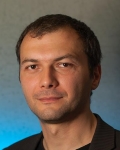
Tomasz Kargul serves as a Lecturer at the Department of Plastic Metal Processing and Extractive Metallurgy within the Faculty of Metals Engineering and Industrial Computer Science at AGH University of Science and Technology in Kraków, Poland. His academic position falls under the assistant professors group, with office location in Building B-5, Room 309 at Czarnowiejska Street 66, and primary contact email tkargul@agh.edu.pl. Dr. Kargul's research centers on metallurgical engineering with emphasis on superalloy systems (particularly Ni-based MAR-M247 and Co-based X-40), nanocomposite development for repair applications, phase transformation mechanisms in peritectic steels, and steelmaking process optimization. His experimental work integrates microstructure characterization, thermal analysis, and fluid dynamics modeling to address industrial challenges in aerospace component repair, directional solidification, and ladle refining processes. Key methodologies include suction casting, differential scanning calorimetry, and numerical simulation of casting phenomena. Analysis of his 15 most recent publications (2025-2014) reveals three dominant research thrusts: (1) Nanocomposite-enhanced superalloy repair technologies focusing on TiB 2 /TiC-reinforced Alloy 625 systems; (2) Fundamental studies of phase transformations in peritectic steels using advanced thermal characterization; and (3) Optimization of ladle stirring hydrodynamics and continuous casting processes. The work consistently bridges experimental metallurgy with industrial process modeling, demonstrating strong specialization in high-temperature material behavior and solidification phenomena. Scientific awards: No awards or honors were documented in the available sources. Advising and grants: Publicly accessible information does not specify graduate student supervision, research funding sources, or grant awards. His departmental role suggests involvement in undergraduate and graduate instruction within metallurgical engineering programs, but specific advising records remain undisclosed.