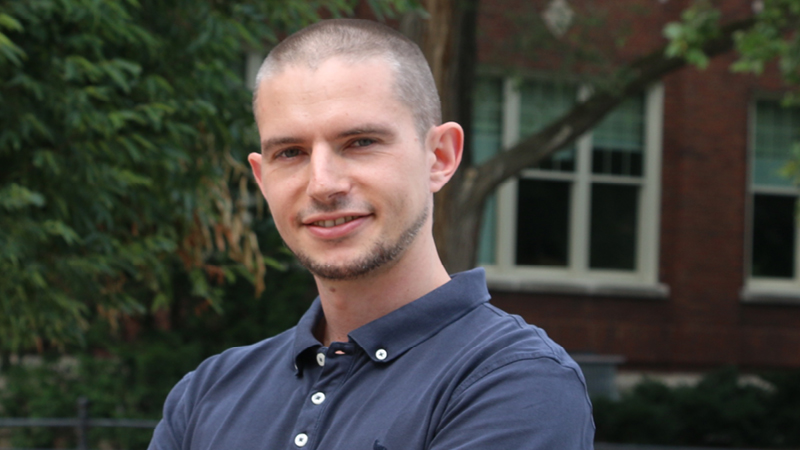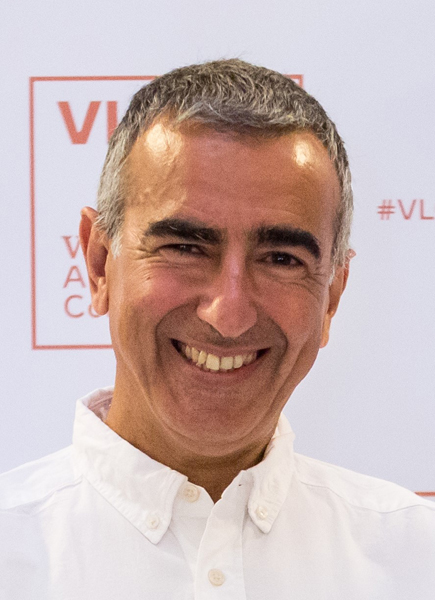
Apostolos Zarras is a Professor in the Department of Computer Science & Engineering at the University of Ioannina, Greece. He has been with the institution since 2002, progressing from Visiting Professor to full Professor in 2022. His academic journey includes a Ph.D. from the University of Rennes 1, France (2000), an M.Sc. from the University of Crete (1996), and a B.Sc. from the same institution (1994). Education: Ph.D. in Computer Science, University of Rennes 1, France (1996–1999) M.Sc. in Computer Science, University of Crete, Greece (1994–1996) B.Sc. in Computer Science, University of Crete, Greece (1990–1994) His research centers on software engineering, with a focus on software architecture, design patterns, software evolution, middleware, and service-oriented computing. He explores quality aspects of software systems, including refactoring, schema evolution, and dependable systems. His work often bridges theoretical models with practical applications in distributed and pervasive environments. The recent publications reflect a strong trend in software evolution, particularly schema evolution in databases, refactoring patterns, and the empirical study of design patterns (e.g., GoF patterns) in real-world systems. Themes such as anti-patterns, tool support for refactoring, and naming conventions in SQL are recurrent, indicating a deep interest in improving software quality through structured design and evolution practices. Scientific Awards: No specific awards are mentioned in the provided text. Advising and Grants: Apostolos Zarras has supervised over 17 B.Sc. theses, more than 12 M.Sc. theses, and one Ph.D. thesis. He has served as a principal investigator in several EU and national R&D projects, including the ForeverSOA INRIA project and the CHOReOS FP7 ICT IP project. His professional service includes extensive reviewing for top journals (IEEE TSE, CACM, etc.) and participation in program committees of major conferences (ICSE, FSE, Middleware, ER). Labs and Teams: He has collaborated with the ARLES Group at INRIA Rocquencourt, France, during multiple visiting researcher stays (2005–2008). His research is conducted within the Department of Computer Science & Engineering at the University of Ioannina, where he contributes to graduate studies and academic dissemination.