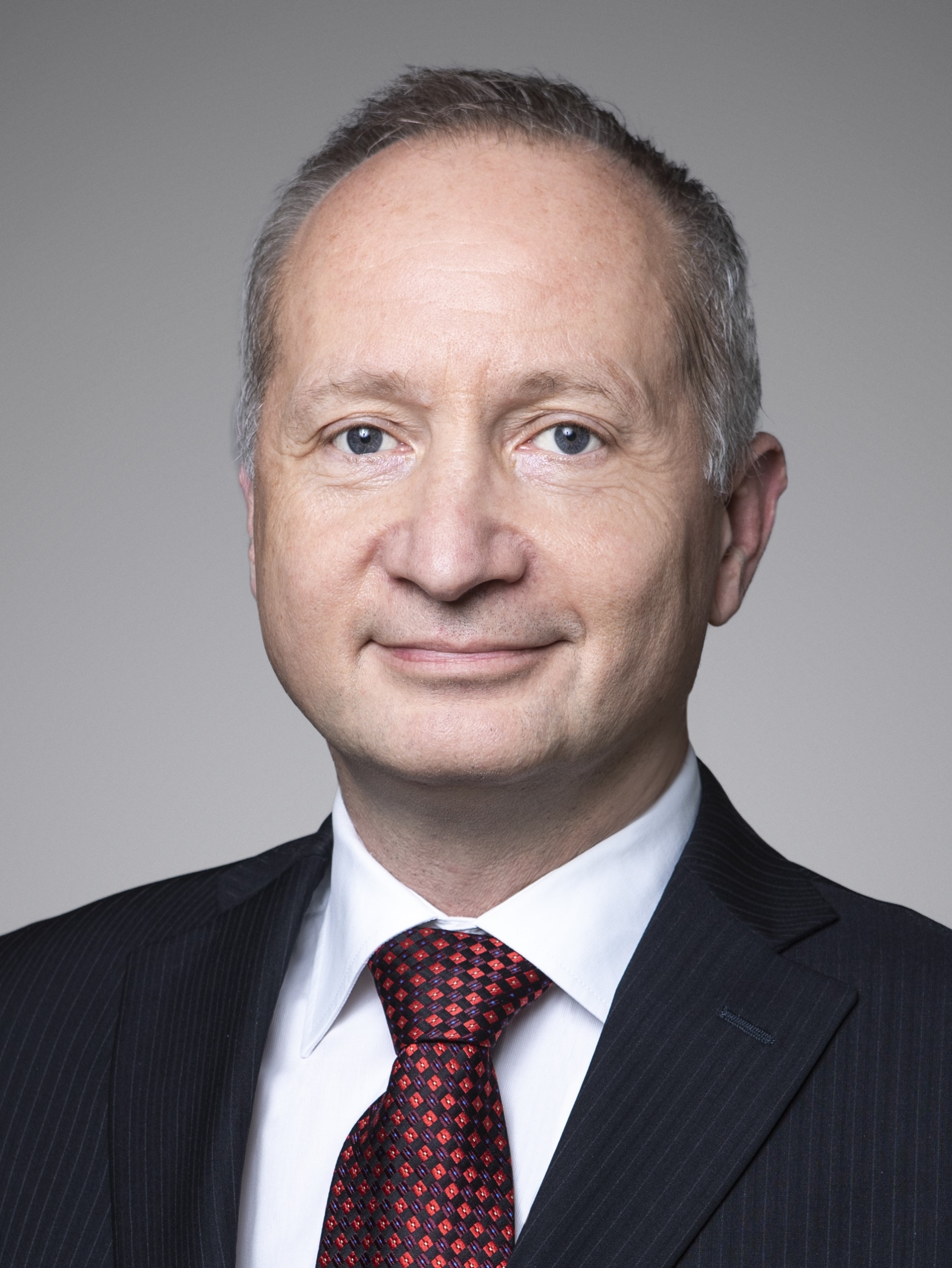
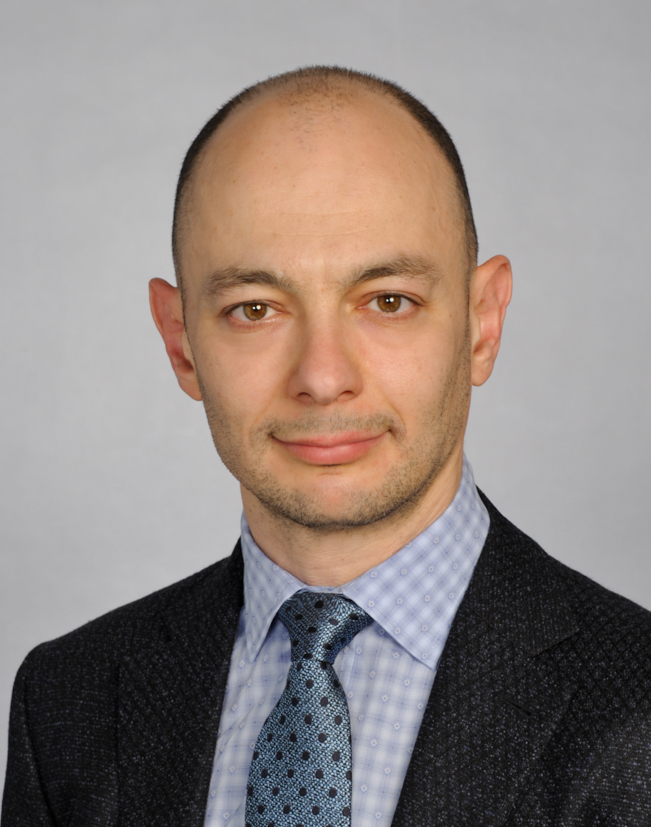
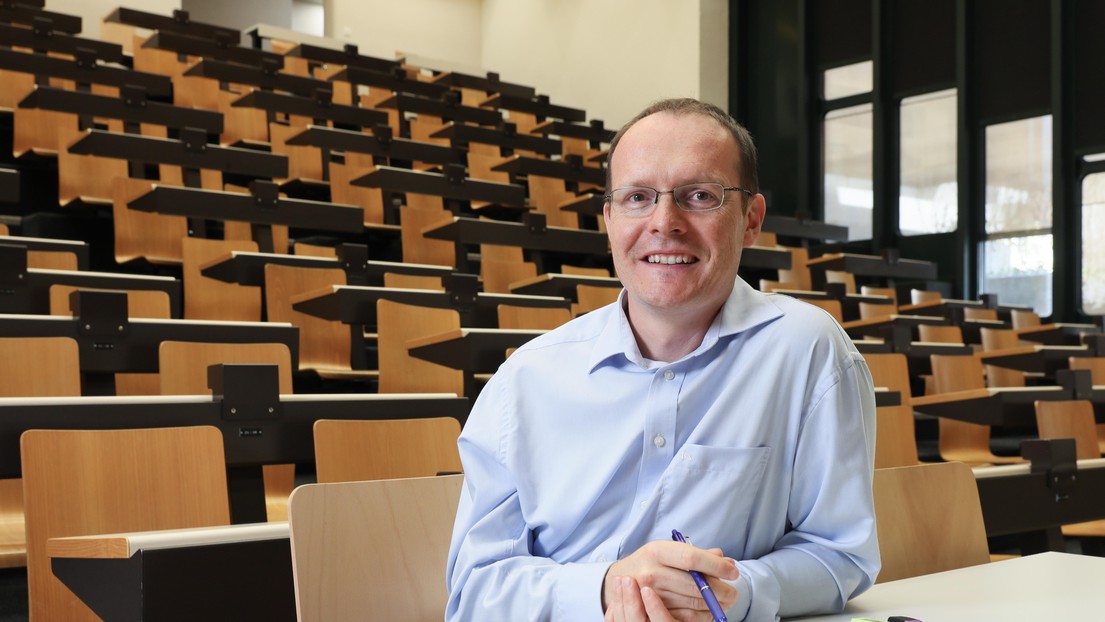
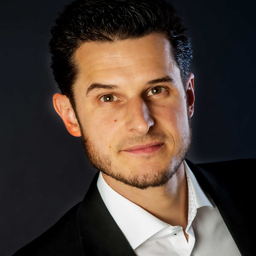
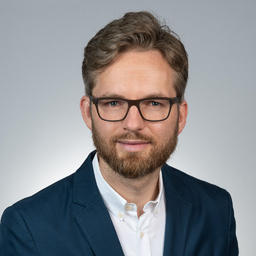
Berend Smit is a Full Professor at the École Polytechnique Fédérale de Lausanne (EPFL) , affiliated with the School of Basic Sciences (SB) and the Molecular Simulation Laboratory (LSMO) . His research focuses on molecular simulation, metal-organic frameworks (MOFs), carbon capture technologies, and energy materials. Leads the LSMO, a lab specializing in computational chemistry and materials design. Advises 15+ PhD students in areas like CO2 capture, photocatalysis, and materials informatics. Develops algorithms like MOFChecker for MOF validation and PrISMa for holistic carbon capture assessment. Research Interests: Design and evaluation of nanoporous materials for environmental applications. Integration of machine learning and high-throughput screening for material discovery. Process-informed approaches to carbon capture and DAC (direct air capture). Recent Work: Focuses on MOF-based CO2 capture, thermal transport in ZIFs, and AI-driven inverse design methods. His articles highlight advancements in adsorption modeling, lifecycle assessment for materials, and photocatalytic hydrogen generation. Lab and Teams: Directs the LSMO, collaborating with experimental and computational groups to bridge theory and application in energy and environmental materials.
Andrew Sonta is a Tenure Track Assistant Professor at École Polytechnique Fédérale de Lausanne (EPFL), leading the ETHOS Lab (Engineering and Technology for Human Oriented Sustainability). He also serves as Head of the Diversity Office at the School of Architecture, Civil and Environmental Engineering (ENAC). His expertise spans human-building interaction, sustainable design, and data-driven urban analysis. Sonta holds a PhD from Stanford University and conducted postdoctoral research at Columbia University's Data Science Institute. Education BS in Civil and Environmental Engineering, Northwestern University (2015) MS and PhD in Civil Engineering, Stanford University (2017, 2020) Research Focus Sonta’s work integrates computational tools with sustainability goals, addressing urban form, energy efficiency, and occupant behavior. Key areas include: - Data-driven building design for energy optimization - Machine learning for occupant behavior modeling - Social-environmental analysis of urban systems. His lab, ETHOS, emphasizes interdisciplinary solutions for societal and ecological challenges. Publications Recent work explores topics like walkability’s impact on social cohesion, occupant-centric energy systems, and global behavior databases. His research bridges urban informatics with machine learning to advance human-centric sustainability. Advising & Leadership He advises four PhD students and oversees the Diversity Office, promoting inclusivity in ENAC. Courses taught include sustainability frameworks, computational systems thinking, and energy-occupant dynamics in buildings. Labs & Teams Directs the ETHOS Lab, which collaborates on projects like the Global Building Occupant Behavior Database and smart energy systems. Engages with industry and academia to translate research into actionable sustainability strategies.
Prof. Hato Schmeiser is a Full Professor of Risk Management and Insurance Economics at the University of St. Gallen, serving as Chairholder of the Chair for Risk Management and Insurance since 2005. He also serves as Managing Director of the Institute of Insurance Economics (IVW-HSG) and was Dean of the School of Management (2017-2023). His academic journey includes a doctoral degree from the University of Passau (1997), a postdoctoral qualification (Habilitation) from Humboldt University Berlin (2003), and professorships at the Universities of Münster and Frankfurt. Education: Doctorate in Business Administration (Dr. rerum politicarum), University of Passau (1997) Habilitation in Business Administration, Humboldt University Berlin (2003) Studies in Business Administration at the University of Mannheim (1987-1993) Research focuses on Risk Management, Insurance Regulation, Behavioral Insurance, and Strategic Management of Insurance Companies. Key themes include optimal risk pooling, capital allocation under Solvency II/SST, and consumer preferences for insurance products. His work bridges theoretical models and practical regulatory challenges. Publications emphasize innovative reinsurance solutions, pandemic risk insurability, and digital monitoring in insurance. Recent work explores big data's impact on risk classification and privacy. Awards highlight contributions to insurance economics, including multiple recognitions from the American Risk and Insurance Association and Emerald Literati Network. He has held leadership roles in professional organizations like the European Group of Risk and Insurance Economists (EGRIE, President 2015-2016). Grants include Swiss National Science Foundation funding for studies on investment guarantees and regulatory impacts. Active in editorial roles for journals like Geneva Risk and Insurance Review and The Journal of Insurance Issues. Oversees the IVW's research on insurance trends and policy implications. Labs/Teams: Leads the IVW-HSG, a leading research hub in insurance economics, collaborating with industry and academia on projects like pandemic risk modeling and digital insurance transformation.
Semyon Malamud is an Associate Professor of Finance at the Swiss Finance Institute at École Polytechnique Fédérale de Lausanne (EPFL), where he has held a tenured position since October 2015. He is also a Research Fellow at the Center for Economic Policy Research (CEPR), a Senior Chair at the Swiss Finance Institute, and has served as a Visiting Assistant Professor at the University of Texas at Austin’s McCombs School of Business and a Visiting Professor at UBC Sauder School of Business in 2020. Additionally, he holds a Research Fellow position at the Bank for International Settlements and was a Lamfalussy Fellow of the European Central Bank in 2015. Education: Ph.D. in Mathematics, Swiss Federal Institute of Technology (ETH Zurich), Switzerland, May 2006. Diploma in Mathematics, Donetsk National University, Donetsk, Ukraine, July 2001. Current Research Interests: Big Data and Machine Learning , focusing on their applications in asset pricing and financial markets. Liquidity and Market Frictions , exploring their impact on market dynamics and investment strategies. International Finance , including exchange rate models and dominant currency debt. Information Economics , studying information percolation and equilibrium-driven market behaviors. Equilibrium Asset Pricing and Optimal Contracting , addressing viable markets and security design. Network Economics and Corporate Finance , analyzing market integration and corporate capital structure. Work in Macroeconomics , particularly in endogenous growth and risk management. Scientific Awards and Grants: INQUIRE Europe Research Grant (2022) Lamfalussy Fellow of the European Central Bank (2015) Joint INQUIRE Europe-INQUIRE UK Prize (2015) CEPR Research Fellow (2015–present) ETF Academy Award (2015) Europlace Institute of Finance Award (2015) Swiss National Science Foundation Starting Grant (CHF 1m, 5 years) Dauphine Amundi Prize in Asset Management (2014 and 2013) Swiss Finance Institute Research Grant (2013–2015) Narrative on Advising and Grants: Malamud’s research has been supported through prestigious grants such as the Swiss National Science Foundation Starting Grant and INQUIRE Europe awards. He has collaborated extensively with scholars like Bryan Kelly, Darrell Duffie, and Julien Hugonnier. As an Associate Editor for top journals including the Journal of Finance and Journal of Financial Econometrics , he contributes to academic rigor in finance. His work on machine learning applications and large factor models reflects cutting-edge trends in financial economics. Labs and Teams: Malamud’s research is anchored within the Swiss Finance Institute (SFI) and its collaborative networks. He actively engages with the CEPR and BIS research communities, contributing to interdisciplinary projects in financial markets and policy.
Simone Deparis is a Professor and senior scientist in the Mathematics Section at EPFL's School of Basic Sciences (SB). He specializes in numerical analysis, computational fluid dynamics, and mathematics education. Deparis holds a PhD from EPFL and a mathematics degree from ETH Zurich. He pioneered a flipped classroom approach in first-year linear algebra courses, earning the 2018 Credit Suisse Award for Best Teaching. His research focuses on fluid-structure interaction, hemodynamics, and reduced basis methods, with applications in cardiovascular systems and biomedical engineering. Collaborations include EPFL’s Teaching Support Center (CAPE) and development of MOOCs on programming languages like MATLAB/Octave. Research interests span multiscale modeling, numerical methods for PDEs, and interdisciplinary applications in engineering and medicine. Deparis has contributed to open-source tools like the LifeV library, advancing computational hemodynamics simulations. His flipped classroom experiments emphasize student engagement and equity, leveraging innovative pedagogical strategies. Awards reflect his dual excellence in research and teaching. Education : M.Sc. Mathematics (ETH Zurich), PhD (EPFL) Key Projects : Fluid-structure interaction in arteries, numerical methods for cardiovascular simulations, flipped classroom pedagogy Grants/Awards : 2018 Credit Suisse Award for Best Teaching Labs/Teams: Involved in EPFL’s MATHICSE group and collaborations with biomedical engineering teams. Research outputs include over 50 peer-reviewed articles, focusing on computational methods and educational innovation.
Tom Griffiths is a Professor of Psychology and Cognitive Science at Princeton University, directing the Computational Cognitive Science Lab and co-leading the Princeton Laboratory for Artificial Intelligence . His research spans computational models of human cognition, Bayesian statistics, and AI systems. Key research themes: mathematical foundations of human intelligence, resource-rational analysis of decision-making, cultural evolution, and AI-human alignment Awards: National Science Foundation, Sloan Foundation, American Psychological Association, Psychonomic Society Recent publications focus on large language models, cognitive resource optimization, and cross-disciplinary insights from psychology, computer science, and neuroscience. He is also co-author of the popular science book Algorithms to Live By .
Julien Nembrini is a Lecturer and Senior Researcher at the Department of Informatics within the Interfaculty of Informatics at the University of Fribourg. His roles include affiliations with the Human-IST (Human-centered Interaction Science and Technology) group and the Department of Informatics. He holds a PhD in Mechanical Engineering and focuses on interdisciplinary research at the intersection of human-computer interaction, robotics, and sustainable architecture. His research interests span human-building interaction , energy-efficient lighting systems , swarm robotics , and computational design tools . Notable projects include developing smart lighting systems that balance energy efficiency with user comfort, and exploring emergent behaviors in wireless robotic swarms. He has collaborated on projects like VOILES/SAILS (self-assembling lighter-than-air robotic structures) and Source Studio (teaching programming to architects). Recent work emphasizes user-centered approaches to technology integration, such as no-code programming for industrial robots and visual analytics for building management systems (BMS). His publications highlight interdisciplinary methods, combining simulation, machine learning, and human factors analysis. He has contributed to book chapters on topics like low-carbon building design and swarm engineering, and has taught courses integrating computational methods with architectural and engineering practices. His work often bridges academic research with practical applications in sustainability and human-centered technology.
Patrick Schnider is a lecturer in the Department of Mathematics and Computer Science at the University of Basel and the Department of Computer Science at ETH Zürich. His academic journey includes postdoctoral positions at ETH Zürich under Prof. Bernd Gärtner and Prof. Emo Welzl, and at the University of Copenhagen with Prof. Karim Adiprasito. He holds a PhD in Theoretical Computer Science from ETH Zürich between 2015 and 2020. Education: Bachelor's and Master's degrees in Mathematics from ETH Zürich. PhD in Theoretical Computer Science under Prof. Emo Welzl. Research focuses on combinatorial and topological methods in discrete geometry and high-dimensional data analysis, including topological methods for mass partitions, combinatorial depth measures, geometric transversals, computational geometry, and topological properties of solution spaces. Recent work explores geometric algorithms, topological data analysis, and combinatorial optimization, with notable contributions to clustering algorithms, persistent homology applications, and fair division problems. No scientific awards explicitly mentioned. Collaborations include the Theory of Combinatorial Algorithms Group at ETH Zurich and research groups led by Prof. Gärtner and Adiprasito. Other interests include music, playing clarinet in a wind orchestra, and conducting in various orchestral projects.
Andreas Melillo is a Lecturer and Researcher at the Lucerne University of Applied Sciences and Arts within the Lucerne School of Engineering and Architecture. He is affiliated with the Institute of Mechanical Engineering and Energy Technology and the Competence Center for Thermal Energy Storage. Melillo holds an M.Sc. in Physics with a specialization in theoretical physics from the University of Bern. His research focuses on Data Science applications in energy systems , particularly in simulation, modeling, and data collection for thermal energy optimization. He teaches courses on Python for Data Science and Data Collection, Integration, and Preprocessing. Research projects include SWEET DeCarbCH TES, Smart Decentralized DHW, and GIASES, focusing on renewable energy integration and grid optimization. His publications primarily explore energy demand forecasting, building characterization, and multi-energy system modeling.
Clemente Minonne is a Lecturer at the Lucerne School of Business (HSLU), specializing in Organizational Psychology and Design. He holds a Dr. oec. from the University of South Australia (2008) and a Master of Arts in Industrial and Organizational Psychology (2024). His research focuses on digital transformation, socio-technical systems, and the application of immersive technologies like AR/VR in organizational contexts. He is also the founder of Minonne & Associates, a consultancy focusing on human-centered digital transformation. He has authored multiple books and peer-reviewed articles on knowledge management, business process optimization, and organizational change. Notable achievements include the Doctoral Scholars Award (2009, 2010) and keynotes at conferences like Innovate 2025. His work bridges organizational psychology, technology, and leadership to address challenges in digital innovation and employee empowerment. Minonne’s advisory projects span blockchain governance, data culture development, and AI integration, reflecting his interdisciplinary approach to modern business challenges.
Professor Max Monauni holds a professorship in Controlling and Simulation-Based Learning at the Lucerne School of Business (HSLU), specifically within the Institute of Financial Services Zug (IFZ). He is a full-time academic with a PhD in Business Administration (Dr. rer. pol.) from the University of Stuttgart, complemented by advanced studies in Controlling, international postgraduate programs at EGADE Tecnológico de Monterrey (Mexico) and Macquarie University (Australia), and a Diplom-Betriebswirt degree in Procurement & Logistics from Pforzheim University. His professional experience spans over 15 years in academia and industry, including roles as a Corporate Learning & Business Development Consultant at TATA Interactive Systems and adjunct lecturer positions at multiple institutions. His teaching focuses on Controlling, Management Accounting, Behavioral Management Control, and gamification-driven learning methodologies. Research interests revolve around gamified learning solutions, data-driven decision frameworks, and strategic execution through business simulations. Notable projects include exploring gamified community building in hospitality, developing AI-based simulation generators, and analyzing data as strategic corporate assets. His work bridges educational innovation with practical business challenges, emphasizing interactive learning and digital transformation in financial services. Publications span academic journals, conference proceedings, and industry articles, with a focus on simulation-based pedagogy, agile methodologies, and production network agility. He actively contributes to professional communities through jury roles in educational technology awards and international conference participation.
Stefan Niederberger is a Senior Researcher at the Institute of Electrical Engineering IET iHomeLab, part of the Lucerne School of Engineering and Architecture at Lucerne University of Applied Sciences and Arts (HSLU). His research focuses on AI-driven systems for smart environments, trustworthy AI, and hybrid modeling. He holds a Doctorat d’Automatique from Université de Haute-Alsace and advanced degrees in Mechatronics and Automation from Fachhochschule Nordwestschweiz. Education: Doctorat d’Automatique, Université de Haute-Alsace (2012) Master of Science in Mechatronics & Automation, FHNW (2015) Bachelor of Science in Industrial Automation, FHNW (2012) CAS in DevOps Leadership and Agile Methods (2021) CAS in Cloud and Platform Management (2021) His research projects include KI im Gebäude (AI for smart buildings), RecoveryFun (AI-driven tele-rehabilitation), and CleverGuard (contextual anomaly detection for elderly care). He specializes in digital twin architectures, explainable AI, reinforcement learning, and cloud-native systems . Professional competencies span Agile methodologies, DevOps, and full-stack development. Key research themes: Hybrid modeling for real-time optimization, trustworthy AI systems, and scalable digital twin platforms. His work bridges academic research with industrial applications in energy systems, healthcare, and automation. Advising and grants: While no formal advisees are listed, his roles in multi-year research projects (e.g., PRECARRHD, Smart Maintenance 4.0) imply collaborative research leadership. Active in grant-funded initiatives focusing on AI integration in infrastructure and healthcare. Labs/Teams: Head of the iHomeLab’s AI for Smart Environments division, collaborating with industry partners like Belimed AG and academic networks in mechatronics and control systems.
Sabine Rimmele is a Lecturer and Project Manager at the Lucerne School of Social Work (Lucerne University of Applied Sciences and Arts), affiliated with the Institute for Social Pedagogy and Social Policy. Her roles involve teaching, project leadership, and research in social work management, organizational development, and nature pedagogy. Education includes a licentiate in theology from the University of Fribourg, a MAS in Business Economics from Lucerne University of Applied Sciences, and specialized training in group dynamics, systemic counseling, and initiatory nature work. She has held academic and project leadership roles since 1990, including at the University of Fribourg and the Christian Peace Service. Her research focuses on organizational development in social services, management of small to medium social work organizations, team dynamics, and nature-based education. She leads initiatives like the Praxisforum series, exploring practical challenges in social services and community-oriented management strategies. Key publications include handbooks on managing social services and frameworks for self-organized learning in digital environments. Her work emphasizes practical tools for organizational efficiency, benchmarking, and stakeholder collaboration. Projects include studies on professionalizing work pedagogy, organizational guidance for social services, and community perspectives on welfare services. She advocates for innovative educational frameworks and interdisciplinary approaches to social work challenges.
Claas Wagner is a Lecturer at the Lucerne School of Engineering and Architecture, part of Lucerne University of Applied Sciences and Arts (HSLU). He is affiliated with the Institute of Innovation and Technology Management (IIT), focusing on interdisciplinary research and education at the intersection of engineering, sustainability, and corporate ethics. His professional experience includes roles such as Energy and Environmental Consultant since 2009, External Expert at the European Food Safety Authority (EFSA) from 2014–2016, and a Ph.D. fellow at Vattenfall SA from 2010–2013. His expertise spans energy systems optimization, sustainable practices, and innovative pedagogical approaches. Research interests include environmental engineering, sustainable energy systems, corporate ethics, and the integration of renewable technologies. Notable projects involve electrification of construction sites, energy efficiency in Swiss industries, and adaptable energy platforms for local markets. Publications highlight contributions to sampling methodologies in analytical chemistry, energy efficiency assessments, and educational innovation, reflecting his dual focus on applied science and teaching excellence. No scientific awards are explicitly mentioned in the provided information. He advises master’s students and oversees industrial projects, emphasizing practical, project-based learning. His work is anchored at the IIT, fostering interdisciplinary solutions to contemporary technical and environmental challenges.
Dr. Thomas Wozniak is a Professor of Consumer Behaviour and Technology at the Institute of Communication and Marketing (IKM) within the Lucerne School of Business at Lucerne University of Applied Sciences and Arts (HSLU). He also serves as Research Coordinator since 2019 and holds a PhD in Management from the University of St. Gallen. His academic career includes roles as Senior Research Associate at the Institute of Tourism (2013–2017) and Research Associate at the University of St. Gallen (2008–2012). Education: - PhD in Management, University of St. Gallen (2013) - Master-equivalent degrees in Electronic Business and Business Administration from Berlin University of the Arts and University of Leipzig. - Further certifications in Project Management, University Teaching, IBM Data Science, and Scrum Methodology. Research focuses on Digital Consumer Behaviour, Sustainability in E-commerce, and the application of Data Science to Marketing challenges. He explores topics like algorithmic nudging for sustainable choices, mobile marketing effectiveness, and leveraging AI for consumer journey analysis. His work bridges technology adoption, behavioral psychology, and business strategy. Key research trends in his articles include: - Developing frameworks for sustainable packaging decisions using behavioral nudges. - Analyzing session-level data to predict consumer return intent in e-commerce. - Applying NLP to corporate mission/vision statements and crisis news coverage. - Investigating consumer segmentation and technology acceptance in mobile contexts. Notable projects include the 'EcoNudge' initiative to boost energy-efficient investments, research on dynamic nudging for sustainable energy decisions, and studies on returns management in Swiss apparel retailing. His work frequently addresses real-world challenges like reducing e-commerce returns and enhancing sustainability practices. Awards and grants are unspecified, but his extensive publication record reflects active engagement with industry partnerships and applied research. He advises on digital transformation, sustainability strategies, and data-driven marketing. Active in labs/teams like the IKM Research Group, his work intersects academia and business through collaborative projects with Swiss companies.