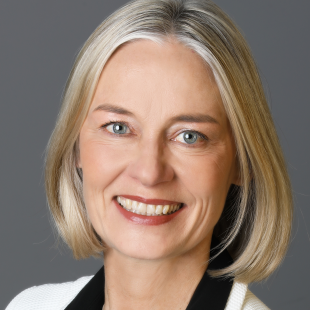
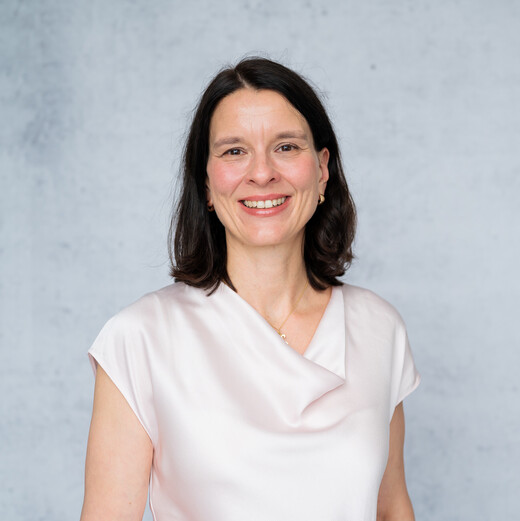
Prof. Dr. Sandra Ballweg is a Professor at Paderborn University in the Department of German as a Second Language, German as a Foreign Language and Multilingualism under the Faculty of Arts and Humanities. She leads the Zentrum für Sprachlehre (Language Teaching Center) and holds affiliations with institutions like the University of Limerick since 2015. Her work bridges language education, multilingualism, and sociolinguistic research.
Prof. Dr. Iris Kruse is Professor of German Literature Didactics with a focus on elementary school at Paderborn University's Faculty of Arts and Humanities, where she has been teaching since 2014. She leads the Paderborner Kinderliteraturtage (Paderborn Children's Literature Days) and serves as chair of the honorary critic jury for the Deutscher Jugendliteraturpreis (German Youth Literature Prize) for 2023-2024. Her work bridges academic research, teacher education, and practical classroom application in children's literature and inclusive education. Prof. Kruse's educational background includes: Doctorate (Dr. sc. paed.) from Kiel University (1998) with dissertation "Dass der Mensch allein nicht das Ganze ist!" Versuche menschlicher Zweisamkeit im Werk Max Frischs First State Examination for teaching at secondary schools (1994) Studies in German, Chemistry, and Educational Sciences at Kiel University Prof. Kruse's research focuses on children's and young adult literature, particularly examining how literature can address complex social issues in elementary education. Her work explores Holocaust education through children's literature, inclusive teaching practices, and the integration of multiple media forms in literature instruction. She investigates how children engage with challenging topics like historical trauma, racism, and social inequality through literature, developing pedagogical approaches that foster critical thinking while respecting children's developmental stages. Her concept of "Fragen-generierende-Didaktik des staunenden Erschreckens" (question-generating didactics of astonished shock) provides a framework for addressing difficult historical topics with young learners. Her recent publications reveal a strong emphasis on inclusive education and the use of children's literature to address complex historical and social issues. A notable trend is her focus on Holocaust education in elementary schools through picture books, examining both teacher perspectives and pedagogical approaches. She also explores how literature can address contemporary social issues like poverty, migration, and racism. Her work frequently employs intermedial approaches, examining how stories told across different media formats (books, films, etc.) can enhance literary learning. Much of her research is practice-oriented, developing concrete teaching strategies grounded in empirical classroom observations. Prof. Kruse serves in several significant professional roles: Chair of the honorary critic jury for the German Youth Literature Prize (2023-2024) Jury member for the Kranichsteiner Children's and Youth Literature Scholarships (2023) Member of the Clearing Office of the Graduate Center of the Faculty of Cultural Studies Member of the "Inclusion and Research" working group at Paderborn University Co-editor of academic journal series including "Kinder- und Jugendliteratur aktuell" and "Literacy im Elementar- und Primarbereich" As an educator, Prof. Kruse supervises bachelor's and master's theses and teaches courses such as "Paderborner Perspektiven auf Inklusion" (Paderborn Perspectives on Inclusion) and "Literarische Geselligkeit und ästhetische Praxis mit Kinderliteratur" (Literary Sociability and Aesthetic Practice with Children's Literature). She has developed innovative teaching approaches documented in her numerous publications on literature didactics. Her "Paderborner Kinderliteraturtage" (Paderborn Children's Literature Days) brings children's authors to campus for multi-day events where students analyze works, conduct interviews, and participate in workshops with the authors. Prof. Kruse leads the Paderborner Kinderliteraturtage, an annual event series that invites children's and young adult authors to Paderborn University. This initiative connects academic research with practical classroom application, as students analyze literary works, conduct interviews with authors, and develop teaching materials. She also participates in interdisciplinary research projects on inclusive education, collaborating with scholars from special education, linguistics, and educational psychology to examine classroom practices through observational vignettes.
Elvira Topalovic serves as Professor of German Language Didactics at the Institute of German Studies and Comparative Literary Science within the Faculty of Arts and Humanities at University of Paderborn, holding a W3 professorship since April 2012. She directs the Deutsch-Treff initiative and maintains active leadership roles in major German academic organizations. Her educational background includes a Magister Artium from the University of Cologne (1996), doctoral studies completed summa cum laude at the University of Cologne (2002), and earlier academic training at the University of Sarajevo where she earned certification as a German language and literature teacher for secondary schools (1988). Professor Topalovic's research focuses on language acquisition processes, particularly examining written and spoken language development, grammar acquisition, orthography learning, and the intersection of multilingualism with educational settings. Her work increasingly addresses language inclusion practices and digital education methodologies, reflecting contemporary challenges in language teaching. She investigates how children develop causal reasoning in writing across primary school years and analyzes typographic aesthetics in children's literature interpretation. Her current professional activities include serving as co-editor of the journal "Der Deutschunterricht," representing the Society for German Language Teaching in the German Council for German Orthography, and participating in the BMBF-funded "Communities of Practice NRW" project. She previously chaired the Society for University German Studies within the German Association of Germanists (2019-2022) and served as department head at Paderborn (2016-2019). Professor Topalovic has held teaching and research positions at multiple German universities including Münster, Cologne, and Dortmund, with earlier academic roots at the University of Sarajevo where she worked as a teaching assistant in German language and literature during the late 1980s and early 1990s before relocating to Germany.
Vanessa Albus serves as Professor of Philosophy Didactics at Paderborn University within the Faculty of Arts and Humanities, Department of Philosophy Didactics. She has held this position since 2020, following a substitute professorship at the same institution from 2019-2020. Previously, she held academic positions at the University of Duisburg-Essen where she completed her habilitation in 2012. Her research interests focus on Philosophy Didactics, Canon Research, Metaphorology, and 18th Century Philosophy. Dr. Albus has developed specialized approaches to gender-sensitive philosophy teaching, autobiographical philosophical reflection in educational settings, and the intersection of culinary arts with philosophical practice. Her work bridges theoretical philosophy with practical classroom applications. Analysis of her recent publications (2024-2025) reveals a strong focus on contemporary applications of philosophy education, particularly addressing sustainability through metaphorical thinking, gender-sensitive approaches to ethics education, and innovative methods for philosophical practice in school settings. Her work shows interdisciplinary connections between philosophy, education theory, gender studies, and sustainability science. Professor Albus actively supervises doctoral and habilitation projects, with current research focusing on intercultural philosophy education, theater applications in ethics teaching, and anti-classist philosophical history. She has successfully guided multiple doctoral students to completion, with research focusing on competency-oriented philosophy teaching, autobiographical philosophical methods, and film-based philosophical instruction. Her teaching portfolio includes courses on punishment theories in philosophy education, multimedia philosophy instruction at school and extracurricular learning locations, fundamentals of philosophy didactics, and embodiment in inclusive philosophy teaching. These courses reflect her commitment to innovative, accessible philosophy education across diverse learning environments.
Prof. Dr.-Ing. Dipl.-Wirt. Ing. Diethelm Bienhaus is a faculty member at the Faculty of Information Technology (MNI) at Technische Hochschule Mittelhessen . His academic focus spans Cyber-Physical Systems , Industry 4.0 , and Assistive Technologies , with long-term projects in building automation and age-appropriate assistance systems. Research Interests: Cybersecurity for industrial systems, robotics, embedded systems, and human-computer interaction. Committee Roles: Member of the MNI Department Council, Head of Curriculum Development for Computer Engineering, and Chair of multiple appointment committees. Funded Projects: Led initiatives in secure digitalized healthcare production, dendrochronological analysis automation, and industrial connectivity platforms. Email: diethelm.bienhaus@mni.thm.de
Heinrich Klingmann serves as Professor of Music Education with Special Consideration of Inclusion at Paderborn University's Faculty of Arts and Humanities. His academic work bridges theoretical and practical aspects of music education with a strong focus on inclusive practices, transcultural approaches, and contemporary music forms. His research interests encompass Inter/Transcultural Music Education, Music Education and Inclusion, Culturally Oriented Music Education, Musical Education, Didactics of Pop Music, and Rhythm/Groove Research. These areas reflect his commitment to understanding how music education can be made accessible and relevant across diverse cultural contexts and learner needs. Klingmann's recent publications demonstrate a strong focus on the intersection of pop culture, political phenomena, and educational practices. His edited volume "Druckwellen" examines cultural escalation phenomena in pop, society, and politics, while his work on inclusive music education provides foundational frameworks for teaching practice. His article "POPulismus, POPkultur und Pop-Didaktik" explores the pedagogical implications of pop culture in contemporary educational settings. Professor Klingmann has been actively involved in numerous workshops, conferences, and practical projects from 2010-2016, including percussion projects in schools, Latin music workshops, and inclusive performance initiatives. Notable projects include the Percussion Class Project at Moll Gymnasium Mannheim (2012-2015), "Desire for Salsa" with the Staatsphilharmonie Nürnberg (2014), and performances with inclusive student groups. His teaching portfolio includes Salsa Ensemble, Project Orientation and Internal Differentiation in Action-Oriented Music Teaching, Pop Music Practice and Digital Media, Latin Styles covering various musical traditions from Voodoo to Reggaeton, and Improvisation with musical foundations and school application fields.
Prof. Dr. Karina Pauls serves as Professor and Head of Institute for Art / Music / Textiles within the Faculty of Arts and Humanities at Paderborn University. Her interdisciplinary role bridges artistic practice and art education, specifically focusing on sculpture and its didactics. She maintains an active presence through her artistic work documented at www.karinapauls.de and directs the institute from Room S1.102 at Warburger Str. 100, Paderborn. Her educational background includes doctoral research on spatial concepts in art, specifically examining works by Rachel Whiteread and Gregor Schneider. This foundation informs her current research profile that integrates historical and contemporary perspectives on sculpture. Research interests center on expanding traditional sculpture concepts through open-ended artistic processes. Key areas include: Material significance and handling techniques in learning processes Optical/haptic perception in sculpture education Ceramics as experimental medium in art classes Conceptual-technical balance in artistic projects Spatial concepts derived from contemporary artists Integration of contemporary art practices in teaching Her work emphasizes the reflective connection between artistic creation and educational methodology. Recent publications demonstrate a strong focus on pedagogical frameworks for sculpture education, with particular attention to spatial concepts and material processes. The 2022 publications reveal consistent exploration of how sculptural practices can be adapted for diverse educational contexts while maintaining contemporary relevance. Her teaching portfolio includes specialized courses such as: "Skulptur und ihre Bezugsfelder im Kunstunterricht" (Sculpture and its reference fields in art education) "Zwischen Softskulptur und keramischem Objekt" (Between soft sculpture and ceramic objects) "Künstlerische Werkstatt - Bildhauerei" (Artistic workshop - sculpture) These courses reflect her commitment to connecting practical studio work with theoretical frameworks. Prof. Pauls leads the Art Practice Blog project and utilizes the university's Silo workshops for technical training. Her artistic work focuses on color-form relationships in drawing/printmaking, ceramic expression potential, figurative sculpture spatial references, and line concepts across mediums.
Prof. Dr. Rebekka Schmidt is a full Professor of Art Didactics at the Department of Art, Institute for Art, Music, and Textiles within the Faculty of Cultural Studies at the University of Paderborn since October 2015. Her work focuses on the intersection of art education, digital transformation, and inclusive teaching practices. She holds a primary school teaching degree with Art as her major from Otto-Friedrich University Bamberg, completed her first and second state examinations in 2003 and 2005 respectively, and served five years in school teaching before returning to academia. Her career path includes research and teaching positions at the University of Bamberg and a Junior Professorship for Primary School Art Didactics at Chemnitz University of Technology (2014-2015). Her research centers on inclusive art education, tablet integration in classrooms, teaching quality assessment through video analysis, and art reception in elementary schools. Recent publications demonstrate a strong focus on connecting digitalization with inclusion in teacher training, developing planning models for interdisciplinary teaching, and creating art didactic concepts that foster creativity. Her work consistently addresses practical implementation challenges in educational settings. Prof. Schmidt actively contributes to professional communities through memberships in BDK (Professional Association for Art Education), InSEA (International Society for Education through Art), and GMK (Society for Media Education and Communication Culture). Her teaching portfolio includes courses on inclusive education perspectives, art lesson planning and analysis, art reception in schools, and art education colloquia.
Tina Lamping is a Lecturer for special tasks in the Social Media Systems program at Technische Hochschule Mittelhessen. Her office is located at A10.6.01, and she is available by appointment. Contact details include the email tina.lamping@mni.thm.de and phone number +49 (0) 641 309 2484. Her academic focus spans Photography and Graphic Design , where she contributes to curriculum development and instruction in digital media disciplines. No information about research grants, laboratories, or supervised students is available in the provided text.
Professor Peter Franklin is a faculty member at the University of Konstanz's Konstanz Institute for Corporate Governance (KICG), specializing in intercultural communication and international business management. His academic profile demonstrates over three decades of research focused on cultural diversity in global workplaces, cross-cultural adaptation, and intercultural competence development. Franklin's research interests center on practical applications of intercultural theory in corporate settings, with particular emphasis on Sino-German cooperation, expatriate management, and organizational change in international contexts. His work bridges academic theory and business practice through numerous monographs including Global fitness for global people (2022) and The Mindful International Manager (2014), which have become standard references in international management education. His publication history reveals an evolution from theoretical frameworks in the 2000s toward applied case studies addressing contemporary global challenges, particularly visible in his 2016-2022 works on cultural synergy in mergers, offshoring, and Sino-German business relations. This trajectory demonstrates increasing focus on actionable strategies for leveraging cultural diversity as a business asset rather than merely managing it as a challenge. Franklin has made significant contributions through software-based learning tools including the Delta Intercultural Academy platform and multiple CD-ROM/online business communication courses developed with York Associates. His collaborative approach is evident through frequent partnerships with scholars like Spencer-Oatey and Barmeyer across publications spanning monographs, edited volumes, and journal articles in outlets such as Asia Pacific Journal of Human Resources.
Nina Grausam is a Researcher at the Institute of Language and Literature , Pedagogical University Schwäbisch Gmünd , specializing in German with Speech Education. She serves as the Geschäftsführende Leiterin des Amts für Schulpraktische Studien (Executive Head of the Office for School Practice Studies). Her work focuses on diagnostic competence for individual writing support, spelling proficiency, and educational research on integrated school forms like Gemeinschaftsschulen. Research Interests: Linguistics and Language Education Writing Instruction and Assessment Teacher Diagnostic Competence Early Literacy Development Empirical Studies in Educational Reform Scientific Contributions: Co-authored research on writing competency interventions in community schools Published monograph on teacher diagnostic skills in writing instruction Spearheaded longitudinal studies tied to Baden-Württemberg's educational reforms Awards: Hellmuth-Lang-Förderpreis (2001) for ADHD support research Doctorate degree (Dr. phil.) for work on integrated school writing pedagogy (2017)
Jens Keyssner is a Professor in Sports Science and Health Promotion at the Pedagogical University of Schwäbisch Gmünd since October 2005. With a background in primary education and sports pedagogy, he specializes in gymnastics, athletics, and winter sports didactics. Research focus on 'Bewegte Schule und Identität' (Active School and Identity) Developed mobile classroom concepts for movement-based learning Expert in coordination development through sports activities His publications explore parkour, gymnastics pedagogy, and health promotion in schools. He has presented at major sports science conferences on movement culture and identity formation. Keyssner integrates media and technology into sports education while emphasizing physical activity's role in developing children's identities.
Prof. Dr. Petra M. Lührmann is a full-time Professor at the Institute for Health Sciences , Pädagogische Hochschule Schwäbisch Gmünd , specializing in Nutrition and Health Education . She leads the Department of Nutrition, Everyday Culture, and Health and serves as Prorektorin für Studium und Lehre (Vice President for Academic Affairs and Teaching). Her research focuses on Nutrition and Health Promotion across educational settings, workplace environments, and vulnerable populations. Her educational background includes a Diploma in Human Nutrition (1993) and a Dr. oec. trop. (PhD in Nutrition Science) (1999) from Justus Liebig University Giessen, along with a Certificate in Epidemiology (2006). She has held leadership roles since 2008, including Prodekanin (2010–2014) and Direktorin des Instituts für Gesundheitswissenschaften (2014–2022). Key research areas include: Nutrition Education in schools and digital contexts Health Promotion in universities, emergency services, and low-income households Dietary Assessment and interventions Bone Health in children and adults Occupational Health in police and healthcare settings Sustainable Food Systems and consumer behavior Recent projects involve implementing the DGE Quality Standard in university canteens, evaluating Ich kann kochen! (I Can Cook!) in schools, and optimizing nutrition for police personnel during the 2024 UEFA European Championship. She has collaborated with institutions like the BARMER and Ministerium für Wissenschaft, Forschung und Kunst, Baden-Württemberg . Her work integrates epidemiological methods , project-based learning , and interdisciplinary health interventions , with a strong emphasis on translating research into policy and practice.
Iris Mandl-Schmidt is an academic staff member (adjunct professor status) at PH Schwäbisch Gmünd , specializing in Catholic Theology and Religious Education. Her career spans teaching, research, and publications focused on religious pluralism, biographical theology, and contemporary faith development. Education: Diploma in Catholic Theology, University of Tübingen Promotion (doctorate) in Theological Ethics, University of Tübingen (2003) Habilitation in Religious Education, University of Tübingen (2011) Research interests include: Religious didactics for secondary education Intrareligious pluralism and interreligious dialogue Role of emotion in religious identity formation Elementarization of theological concepts Biographical approaches to spirituality Recent publications emphasize performative teaching methods, Christological didactics, and intersections between popular culture and religious engagement. Her work often integrates empirical studies with theological frameworks.
Esther Merget ist Lecturer an der Pädagogischen Hochschule Schwäbisch Gmünd, mit Schwerpunkten in Educational Psychology und Quantitative Research Methods . Sie forscht zur Entwicklung des kindlichen Selbstkonzepts in Kita- und Familienkontexten und leitet Projekte wie Ich bin Ich 2.0 und Ich bin Ich 3.0 . Educational Psychology Developmental Psychology Quantitative Methods Early Childhood Education Inclusive Education Ihre Forschung kombiniert psychometrische Analysen, wie im SKF-Fragebogen , mit praktischen Interventionen zur Förderung von Selbstkonzepten. Sie verwendet SPSS und STATA für Datenanalyse und lehrt Scientific Writing sowie Quantitative Methods . Ihre Publikationen thematisieren Elternintegration , Philosophical Pedagogy , und Mindfulness Practices in Kitas. Sie promoviert seit 2018 zur Self-Concept Development .