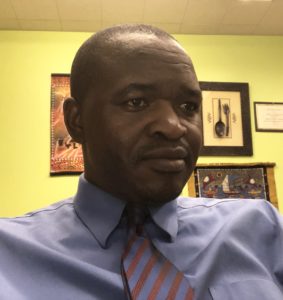
Michael Stanko is an Associate Professor of Marketing at NC State University's Poole College of Management. His research focuses on innovation management, digital marketing strategies, and consumer behavior dynamics. He holds a Ph.D. in Marketing from Michigan State University (2008). Stanko's work explores how technological advancements like 3D printing, crowdfunding, and social media influence business models and consumer engagement. He has published extensively on topics such as open innovation ecosystems, incumbent firm inertia, and brand management in crisis scenarios. His articles analyze the intersection of technology adoption, market dynamics, and organizational strategies. Recent studies investigate how curiosity drives idea generation in crowdsourcing platforms and how SMEs navigate technological turbulence. He also examines the dual roles of open and proprietary product strategies in innovation success. Stanko advises students on marketing analytics and innovation management. His research has been featured in top-tier journals and industry publications, emphasizing practical applications for businesses seeking to leverage digital tools and collaborative innovation.
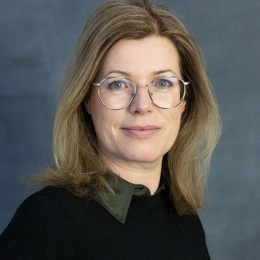
Dr. Maria Yanotti is a Senior Lecturer in Economics at the Tasmanian School of Business and Economics (TSBE) , University of Tasmania. She holds a PhD from the same institution and a Licenciatura in Economics from Universidad Nacional de Tucuman, Argentina. Her academic work centers on housing markets, housing finance, and macroeconomic policy, with strong interdisciplinary engagement in environmental and social economics. Position: Senior Lecturer in Economics Institution: University of Tasmania School: Tasmanian School of Business and Economics Department: Economics Email: Maria.Yanotti@utas.edu.au Languages: English, Spanish (Latin American) Maria’s research expertise lies in empirical economics, particularly in housing market dynamics, household financial wellbeing, and regional development. She applies advanced econometric methods to large datasets, including proprietary loan-level data (e.g., DOMINO), to analyze mortgage behavior, investment patterns, and policy impacts. Her interdisciplinary work extends to valuing environmental assets, energy efficiency in housing, microplastics, and the economic impact of creative industries. Her research aligns with several UN Sustainable Development Goals, including Reduced Inequalities (SDG 10), Sustainable Cities (SDG 11), and Gender Equality (SDG 5). Her recent publications explore topics such as home bias in property investment, the risks of 'liar loans', and the economic implications of federal budget allocations. These works reflect a consistent trend toward policy-relevant economic analysis, often engaging with national institutions like the RBA, ATO, and Housing Australia. The articles demonstrate expertise in behavioral economics, financial regulation, and regional economic disparities. Maria is actively involved in professional service: she is the Tasmanian chair of the Women in Economics Network (WEN) and a member of the Economic Society of Australia (Tasmanian branch). She has received research funding from AHURI (Australian Housing and Urban Research Institute) and has advised the National Housing Finance and Investment Corporation. She supervises and teaches in areas such as microeconomics, statistics, quantitative methods, finance for managers, and data analysis. Her teaching supports both undergraduate and postgraduate programs at TSBE. She is also a sought-after expert for media commentary, public speaking, consulting, and research collaboration. Maria leads and participates in multidisciplinary research teams focused on regional development, environmental management, and social policy. Her work often bridges economics with environmental science, public policy, and urban planning, contributing to a holistic understanding of economic wellbeing in regional contexts like Tasmania.
Charlotte Albrechtsen is an External Lecturer in the Department of Business & Management at the University of Southern Denmark, Faculty of Social Sciences. She is actively engaged in teaching, research, and editorial activities, contributing to interdisciplinary studies at the intersection of digital media, communication, and participatory research methods. Institution: University of Southern Denmark Department: Department of Business & Management (DBM) Academic Role: Lecturer Email: charal@sam.sdu.dk Her research interests center on innovative qualitative methodologies, including mobile ethnography, collaborative data analysis through gamified techniques, and the integration of generative AI in creative research practices. She explores how digital tools can enhance participatory research and democratize knowledge production. Recent publications reveal a strong trend toward blending humanities perspectives with digital technologies—such as drawing analogies between medieval monastic practices and modern prompt engineering, or using board games to involve stakeholders in data interpretation. This reflects a unique interdisciplinary approach that bridges communication theory, design, and AI literacy. Scientific recognition includes: Forbundet Kommunikation & Sprogs ph.d.-pris (2006) Forfatterlegat (2007) She has taught courses in strategic communication, research methodology, and market analysis, and has served as a peer reviewer for journals like CoDesign . Her current project, Balancing AI in EDU , investigates ethical and pedagogical implications of AI in higher education. While no formal advisees are listed, her supervisory role in teaching suggests mentorship experience. She does not appear to lead a formal lab but contributes to collaborative, participatory research networks.
Dr. Mike Molesworth is an Associate Professor in Marketing at the Department of Marketing, Birmingham Business School, University of Birmingham. He has been teaching marketing communications and digital marketing since 1999 and is actively engaged in research, supervision, and academic publishing. His educational background includes a PhD in Consumer Culture, a CIM Diploma, a PGCTHE, and a BA(Hons) in Advertising Management. Mike Molesworth's research centers on critical and qualitative approaches to marketing, with a focus on digital consumption, consumer culture, and ethical dimensions of digital media. He employs psychoanalytic and interpretive methods to explore consumer behavior, particularly in relation to digital possessions, online platforms, and corporate responsibility. His work often challenges dominant narratives in marketing and examines the emotional, symbolic, and institutional complexities of contemporary consumption. His recent publications reveal a strong trend in examining the paradoxes of digital life, including human-AI relationships, digital ownership, consumer resistance, and the emotional dynamics of corporate responsibility. He frequently collaborates with scholars such as Grigore, Denegri-Knott, and Jenkins, contributing to leading journals in marketing and management. He teaches modules such as Marketing Communications, International Brand Management, and Consumer Behaviour, and is an experienced PhD supervisor interested in critical marketing, consumer culture, psychoanalytic approaches, and corporate responsibility in digital contexts. Mike Molesworth has not received any explicitly mentioned scientific awards in the provided text. He supervises PhD students in areas related to critical marketing and consumer culture, though specific student names are not listed. He is involved in research projects exploring digital goods, platform economies, and ethical consumption, often using qualitative and interpretive methodologies. There is no mention of specific labs or research teams led by him, but his collaborative work suggests active participation in research networks within the Department of Marketing and beyond.
Dr Inci Toral is an Associate Professor in the Department of Marketing at the Birmingham Business School, University of Birmingham. She holds a PhD in Marketing and Management and has developed innovative marketing and management courses since 2012. Her teaching spans undergraduate and postgraduate levels, including courses such as Event Management (UK and Singapore) and Services and Retail Strategy (UK and Dubai). Her educational background includes: PhD in Marketing and Management (2012) MSc in Information Technologies Management (2008) BA in Management (1990) Senior Fellow of the Higher Education Academy, UK (2019) Associate Fellow of the Higher Education Academy (2013) Dr Toral's research focuses on digital marketing, retailing, strategic marketing, social media marketing, B2B marketing, and blended learning pedagogy. She explores digital services, responsible marketing education, and creativity in marketing education. Her work combines academic rigor with practical application, drawing from her prior experience as a senior manager in retail banking and project management in technology and banking sectors. Her recent publications highlight trends in digital consumption, smart home adoption, retail atmospherics, and responsible marketing education. These works reflect a strong emphasis on consumer behavior in digital environments, ethical marketing practices, and pedagogical innovation in higher education. She holds leadership roles including Education Lead for the Department, Programme Directorship, and Academic Integrity Officer, contributing to curriculum design, staff mentoring, and academic operations. Dr Toral has not been mentioned as receiving specific scientific awards in the provided text. She advises on course development and academic integrity but no named students are listed as her advisees. She is actively involved in research and teaching with no indication of retirement or part-time status.
Zahide Karakitapoğlu-Aygün is an Associate Professor at Bilkent University's Faculty of Business Administration, specializing in Organizational Behavior. She holds a Ph.D. in Social Psychology from Middle East Technical University (2002) and has been at Bilkent since 2003. Her research focuses on leadership, team dynamics, innovative behavior, cross-cultural issues, and organizational justice. Key projects were funded by TÜBİTAK, including BIDEB 1001 grants in 2008 and 2015. Her work spans transformative leadership styles, authoritarian leadership differentiation, and the impact of cultural contexts on leadership effectiveness. She has conducted visiting scholar roles at the University of Michigan (2000-2002) and Portland State University (2018-2019). Awards include the 2017 Evidence-based Human Resource Management Paper Award and 2014 Creativity & Innovation Best Paper Award. Publications appear in journals like Human Resource Management , Journal of Business Ethics , and Journal of Cross-Cultural Psychology . Her research emphasizes leadership's dual roles (bright/dark sides), team identity's innovation impact, and cross-cultural ethical climate dynamics. She teaches Organizational Behavior and Organization Theory. Grants and collaborations highlight her focus on cultural dimensions of leadership and global management challenges. Professional memberships include Academy of Management and European Academy of Management.
Prof. Peter Hertkorn is a full professor of Computer Science at Reutlingen University's Faculty of Computer Science, specializing in programming languages and databases. He holds leadership roles including Chair of the Examination Board for Media and Communication Informatics B.Sc. and BAföG Officer for the same program. His research focuses on model-driven software development, domain-specific languages, DevOps automation, interactive learning technologies, and distributed ledger technologies. He co-leads the Software Engineering and User Experience (swuxLAB) and Distributed Ledger Technologies (DLT-LAB) research groups. Education background includes a Diplom-Informatiker (master's equivalent) and Dr.-Ing. (PhD) from University of Stuttgart. Professional experience includes 5 years at T-Systems International GmbH and prior academic roles at University of Stuttgart. His teaching focuses on Software Engineering and Database Systems courses. Publications span interactive learning environments, collaborative innovation systems, and AR-based knowledge spaces. Active in academic service roles and interdisciplinary research collaborations since 2009.
Luisa Arango is an Associate Professor at the Institute of Ethnology, Faculty of Social Sciences, University of Strasbourg, where she also serves as Director of Studies for the Bachelor's program in Anthropology and Ethnology in Distance Learning (EàD). She is based at the MISHA building and is affiliated with the SAGE Laboratory (UMR 7363). Her academic work spans research, teaching, and interdisciplinary collaboration, with a strong focus on urban anthropology and environmental issues. Her research centers on urban environments, water and land resource management, identity dynamics in cities, and the anthropology of techniques, with fieldwork conducted in the Nile Valley (Sudan) and the Colombian Caribbean. She explores themes such as urbanization processes, spatiality and power, local perceptions of climate change, and alternative ethnographic methods. Her work often engages with political ecology, interdisciplinary environmental research, and the social dimensions of nature and resources. Luisa Arango’s recent publications (2013–2024) reflect a consistent focus on hydrosocial systems, urban water governance, land appropriation, and knowledge production in Africa and Latin America. Her articles appear in journals such as Canadian Journal of African Studies , Espaces et Sociétés , Autrepart , and Sources . She has also contributed to interdisciplinary dialogues on climate change, artistic ethnography, and field drawing as research tools. Knowledge about nature in Africa Urban water management in Khartoum and Cartagena Land rights and ethnic identity in Colombia Interdisciplinary approaches to climate and urban planning Ethnographic and artistic methodologies Luisa Arango is actively involved in research networks such as WATERLAT-GOBACIT and GAIA (University of Antioquia, Colombia). She has supervised academic projects and contributed to methodological innovations in ethnographic research. She teaches courses on ethnographic methods, urban anthropology, and research forums for distance-learning students. Her work emphasizes the political dimensions of resource access, the transformative power of collective action, and the importance of integrating social and material realities in understanding urban and environmental change. She has no listed scientific awards in the provided text, but her sustained publication record and leadership roles indicate significant scholarly impact. She is also engaged in public-facing research, including graphic works and documentaries on anthropological practice.
Alf Steinar Sætre is a Professor of Innovation and Strategy at the Department of Industrial Economics and Technology Management at NTNU. He leads the Norwegian Research School in Innovation (NORSI-PIMS), collaborating with top institutions like Harvard Business School, INSEAD, and Stanford University. His research focuses on innovation processes, organizational learning, and strategic management. Education: MSc in Economics from Norwegian School of Economics (Bergen), PhD from University of Texas at Austin (Fulbright Scholar). Research Interests: Ambiguity management, innovation termination, organizational knowledge absorption, and sustainable business models. His teaching includes courses on Innovation Management, Strategy, and Engaged Scholarship. He co-authored books like Communication in Organizations and contributes to journals such as Academy of Management Review and Journal of Product Innovation Management . Sætre’s work emphasizes practical applications of innovation theory through international collaborations and executive education programs.
Jan-Willem van Prooijen is an Associate Professor in the Department of Social Psychology at the Faculty of Behavioural and Movement Sciences, Vrije Universiteit Amsterdam (VU Amsterdam). He is affiliated with the IBBA and A-LAB research groups and actively contributes to interdisciplinary research on conspiracy theories, moral judgment, and political ideology. His work aligns with UN Sustainable Development Goals related to peace, justice, and strong institutions. His research focuses on the psychological underpinnings of conspiracy theories, extremism, moral reasoning, and public trust. Key areas include: Conspiracy mentality and its social consequences Moral judgment of corruption and unethical behavior Political ideology and extremism Emotions in social cognition AI-related distrust and technology perception His recent publications reveal a strong trend in interdisciplinary, preregistered studies using mixed methods to examine societal challenges such as misinformation, organizational deviance, and crisis communication. His work often involves cross-cultural comparisons and large-scale replications, emphasizing scientific rigor. Scientific awards include: Early Career Achievement Award, International Society for Justice Research (2006) Excellence in Teaching Award, Department of Social and Organizational Psychology (2014) Excellence in Teaching Award, Section of Social and Organizational Psychology (2018) He has supervised nine PhD theses and teaches courses such as Emotion and Social Cognition and Moral and Political Psychology. He has secured research grants, including a project on conspiracy theories and construal level theory (2022–2023). Van Prooijen is also a public speaker and author of the popular science book The Fame Game . He is active in media as an expert commentator on extremism, conspiracy theories, and social psychology. He holds ancillary roles at NSCR, Leqture.nl, and Maastricht University.
Paul Marc Collin is a Lecturer in Management Sciences at iaelyon School of Management, Jean Moulin Lyon 3 University, where he has been teaching since 2003. He is the Educational Manager of the Master 2 IBR (International Business Realities) and the Master 2 GMP (General Management Program), both delivered in international formats. His academic work spans teaching, research, and program coordination in strategic and international management. University: Jean Moulin Lyon 3 University School: iaelyon School of Management Position: Lecturer in Management Sciences Roles: Educational Manager, Course Manager, Researcher His research and teaching focus on strategic and international management, with strong interests in innovation, intercultural dynamics, project management, and sustainable business models. He explores qualitative methods and philosophical aspects of management, including degrowth and ethical consumption. His work bridges theoretical inquiry with practical applications in global business contexts. The recent publications and video clips reflect a trend toward critical management studies, digital transformation in marketing, and sustainable corporate strategies. His work integrates innovation in services, international coordination, and alternative economic paradigms, often from a qualitative and reflective perspective. Paul Marc Collin has not been listed as receiving any formal scientific awards in the provided text. He actively supervises master's level programs and contributes to curriculum development, particularly in international and strategic management courses. While no doctoral students are listed, he guides students through thesis methodology and partnership management courses. There is no mention of external research grants in the available information. He is affiliated with the Strategy Research Group and the Thematic Research Team in International Management, contributing to collaborative research on global business strategies and innovation in service sectors.
Patrick F. McKay is a Professor in the Department of Management at the College of Business, East Carolina University , where he contributes to research and teaching in Industrial-Organizational Psychology and Management. He holds a PhD from the University of Akron and is an active member of leading professional organizations including the Society for Industrial and Organizational Psychology and the Academy of Management. PhD in Industrial-Organizational Psychology, University of Akron (1999) Dr. McKay's research focuses on diversity, organizational demography, diversity climate, and worker outcomes . His work explores how demographic composition affects team dynamics, performance, and retention, with a strong emphasis on equity and inclusion. He investigates disparities in promotion, job satisfaction, and organizational commitment across race, gender, and tenure. His recent publications reflect a consistent scholarly trajectory in organizational behavior, human resource management, and workplace diversity . Themes include the impact of diversity climate on innovation and performance, mechanisms linking diversity to firm outcomes, and effectiveness of diversity training. His work employs meta-analytic and longitudinal methods, contributing to both theory and practice. Dr. McKay has received significant recognition for his contributions: Fellow, Society for Industrial and Organizational Psychology 2007 Dorothy Harlow Distinguished Paper Award (Academy of Management) 2009 Saroj Parasuraman Outstanding Publication Award (Academy of Management) He has served as an Associate Editor for Personnel Psychology and the International Journal of Human Resource Management , indicating leadership in the scholarly community. While no formal students are listed, his extensive publication and editorial record suggest mentorship and collaboration within academic networks. There is no mention of specific labs or research centers, but his research is highly collaborative and published in top-tier outlets.
Clapperton Chakanetsa Mavhunga is a Professor of Science, Technology, and Society (STS) at the Massachusetts Institute of Technology (MIT), where he has taught since 2008. His research re-centers African knowledge production in the study of science, technology, and innovation, challenging colonialist frameworks that position Africa as a passive recipient of technologies. Key Research Areas: African environmental history, indigenous knowledge systems, mobility studies, postcolonial technoscience, and critiques of technology transfer narratives. Books: The Mobile Workshop (2018) examines the tsetse fly as a catalyst for African innovation, while Transient Workspaces (2014) explores everyday technological practices in Zimbabwe. He also edited What Do Science, Technology, and Innovation Mean from Africa? Recent Articles: Focus on mobility as analytical framework, African responses to zoonotic diseases, and the political ecology of pesticide use in colonial contexts. Scientific Awards: Honorable mentions from the European Society for Environmental History (Turku Prize) and African Studies Association (Herskivits Prize) in 2015. Mavhunga’s work bridges history, philosophy, and anthropology of technology, advocating for decriminalizing African practices and integrating them into global STI discourses.
Danielle Ekman Ladru is a Senior Lecturer and Head of the Department of Child and Youth Studies at Stockholm University. Her research bridges childhood studies, human geography, and urban planning, focusing on children’s spatiality, mobility practices, and participation in public spaces. She leads the Formas-funded project Sustainable Vertical Childhoods? and co-led the research on The Whole City as a Preschool Yard , examining how dense urban environments shape children’s play and mobility. Research Interests : Spatiality, mobility, public space, urban planning, childhood geography Teaching : Lecturer in Child and Youth Studies master’s program Projects : Sustainable Vertical Childhoods? (2019–present) Learning in the City (funded by Vetenskapsrådet, 2015–2020) Her recent publications analyze urban inequalities during the pandemic, the role of materialities in mobile preschools, and national identity construction in Nordic curricula. She supervises doctoral students in childhood studies and collaborates with interdisciplinary networks on children’s geographies.
Campbell Drake is a Senior Lecturer in Interior Architecture at the University of Technology Sydney's School of Architecture within the Faculty of Design, Architecture and Building. Registered as an architect in New South Wales and Victoria with over 15 years of professional experience, he specializes in sustainable eco-tourism development in environmentally sensitive locations. His work bridges academic research and practical application through partnerships with government and non-government agencies focused on Indigenous infrastructure and housing. Education: PhD from RMIT University (2012-2018) Masters of Research Architecture from Goldsmiths College, University of London (2009-2010) Bachelor of Architecture from RMIT University (1999-2005) Dr. Drake's research centers on the interaction between urban infrastructure and social formation within remote communities, particularly investigating socio-architectural relations in Indigenous contexts. His work explores how infrastructure can enhance wellbeing, cultural practices, and environmental sustainability. He specializes in participatory design methods that empower communities through culturally responsive approaches that integrate Indigenous knowledge systems. His research spans sustainable tourism development in Indonesia, Indigenous housing policy in Australia, cultural burning practices, and the spatial politics of tourism infrastructure, demonstrating a commitment to decolonizing design practices and creating architecture that serves community needs. His recent publications reveal a clear trajectory toward evaluating specific programs (like the Roads to Home Program and Wreck Bay housing strategy) while simultaneously developing theoretical frameworks for culturally responsive architecture. There's a consistent focus on Indigenous infrastructure, housing, and participatory design methodologies, with increasing attention to the intersection of traditional knowledge systems with contemporary design practices in remote Australian communities. His work bridges practical implementation with critical theoretical analysis of power dynamics in architectural practice. Scientific Awards: 2018 UTS Teaching and Learning Awards: Indigenous Professional Capabilities High Commendation Interior Design/Interior Architecture Educators Association Teaching Award (2018 Third place finalist) 2018 AILA Research, Policy & Communication Landscape Architecture Award International Interior Design Association 2014 Global Excellence Awards Dr. Drake supervises Masters and PhD students with a focus on Indigenous architecture and sustainable design. His funded research includes culturally responsive design principles for Aboriginal housing, evaluations of the Wreck Bay Village housing program, Roads to Home evaluations for Gulargambone & Bowraville Reserves, and solar lighting projects for Namoi and Gingie Reserves. His grants come from diverse sources including the NSW Aboriginal Land Council, National Indigenous Australians Agency, and Department of Planning Industry and Environment, reflecting the practical impact of his work. As a founding member of UTS TIISHA (The Indigenous Infrastructure and Sustainable Housing Alliance), Dr. Drake leads collaborative research projects focused on 'health enabling infrastructure' to address structural factors of Indigenous disadvantage. TIISHA works with multiple Aboriginal Land Councils and government agencies to evaluate and implement housing and infrastructure programs that respect cultural values and community needs, demonstrating his commitment to creating tangible benefits for Indigenous communities through architectural practice.