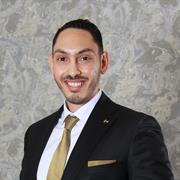
Emrah Özsoy is an Associate Professor in the Department of Business Administration at Sakarya University's Faculty of Business Administration. His research examines personality psychology in organizational contexts, particularly focusing on dark triad traits and behavioral addictions. Primary research domains include: Psychometric validation of personality assessments across cultures Work addiction and its relationship to digital/media addictions Cross-cultural manifestations of narcissism and Machiavellianism Psychological well-being measurement invariance globally He has led multinational research teams validating psychological scales across 65 countries and serves as editor for multiple journals in organizational psychology. His work on dark personality traits has been published in leading journals including Personality and Individual Differences and Journal of Research in Personality.
Prof. Dr. Aslı GÖNCÜ KÖSE is an Associate Professor in the Department of Psychology at Çankaya University's Faculty of Arts and Sciences. She holds a PhD and Master's from Middle East Technical University and Koç University, specializing in Industrial and Organizational Psychology. Her research focuses on leadership styles, workplace mistreatment, dark triad traits, and social media addiction. She has advised over 20 master's students and led/co-authored numerous national research projects. Key awards include the 2012 METU Doctoral Thesis Award and the 2009 IAMAB Best Student Paper Award. She is a co-editor for Türk Psikoloji Dergisi and active in international psychology conferences. Education: PhD: Middle East Technical University, Department of Psychology (2006-2011) Master's: Koç University, Industrial & Organizational Psychology (2004-2006) Bachelor's (Dual Degree): Middle East Technical University, Psychology & Political Science (1999-2004) Research Focus: Leadership styles (transformational/paternalistic) Workplace incivility and abusive supervision Dark triad personality traits and their organizational impacts Cross-cultural aspects of leadership and workplace behavior Recent Projects: Effects of supervisors' discriminatory behavior on employee attitudes (2022-2023) Bright sides of dark triad traits in management (2021-2022) Crisis psychology during the Ukraine war (2023) Awards: Recipient of 6 academic awards including METU Doctoral Excellence Awards and international conference recognitions Teaching: Advanced courses on leadership, organizational psychology, and industrial psychology
Oliver Weigelt is an Assistant Professor at the Department of Organizational Psychology within the Faculty of Behavioural and Social Sciences at the University of Groningen. His research focuses on occupational stress and recovery, technology-assisted health promotion, proactive work behavior, and counterproductive work behavior. He holds editorial roles at several journals including Anxiety, Stress & Coping and Acta Psychologica . Weigelt’s work contributes to UN Sustainable Development Goals related to health and well-being. His research topics include human energy dynamics, burnout prevention, and work-related rumination. He has published over 30 articles in journals like Journal of Occupational Health Psychology and European Journal of Work and Organizational Psychology . His recent studies explore interventions to enhance employee well-being, such as hybrid off-job crafting and personalized feedback systems. He has received awards for peer review excellence (2023, 2020, 2019) and was recognized for innovative research (2019) and best dissertation (2013/2014). Weigelt advises on grants for institutions like NWO and DFG and actively engages in public discourse on workplace health through media contributions.
Patrick Garcia is a Professor of Management and Organizational Behavior at Macquarie University's Department of Management. He holds a PhD in Business from the Australian National University and a Psychology degree from De La Salle University. Previously, he worked at the University of Vermont as an Assistant Professor. His research focuses on workplace aggression/deviance and career self-efficacy among adolescents and older workers, published in top journals like Journal of Applied Psychology and Leadership Quarterly . Education : PhD in Business (2012) from ANU; Psychology (Cum Laude) from De La Salle University. Research Interests : 1) Workplace aggression and deviance (e.g., abusive supervision, family aggression influences). 2) Career self-efficacy and policies for older workers. These streams aim to reduce counterproductive work behaviors and improve workforce retention strategies. Awards : Multiple best paper awards (2011, 2016, 2022), Dean’s Award for Research Excellence (2016), and MQBS Impact Competition (2024). Projects : Lead researcher in projects like 'Resilience and Mental Health in Mining' (2020–2025) and 'Hearing impairment longitudinal study (HALOS)' (2022–2024). Focuses on mining industry mental health, aging workers' policies, and occupational health. Editorial Roles : Editorial board member for journals like Group and Organization Management and Family Business Review .
Prof. Dr. Sigi Lindenberg is a Professor in Sociology/ICS at the University of Groningen's Faculty of Behavioural and Social Sciences. His research focuses on social psychology, organizational ethics, and adolescent behavior, contributing to UN Sustainable Development Goals related to social justice and well-being. He has published 186 research outputs since 2023, including influential articles in Academy of Management Review and Journal of Interpersonal Violence . Lindenberg's work emphasizes collaborative organizations, aggression theories, and governance dynamics. Education: PhD in Sociology (university unspecified) Research Areas: Adolescent behavior and antisocial tendencies Organizational ethics and governance Social dynamics and group processes Cognitive and motivational frameworks Notable Contributions: Developed frameworks for ethical collaborative organizations Advanced imbalanced needs theory of aggression Explored competitive intensity calibration in groups His recent work (2023-2025) addresses topics like thermoregulation measurement reliability, hierarchical failure mechanisms, and the psychological impacts of status-affection imbalances. Lindenberg has supervised 40 research projects and contributed to public discourse via media commentary, such as analyses of behavioral economics in fintech success. Lindenberg collaborates internationally, with notable partnerships in organizational behavior and social psychology. His datasets, including the 1987-1988 framing studies, are archived at the University of Groningen.
Kabir Daljeet is an Adjunct Professor in the Department of Psychology at the Faculty of Arts and Sciences, University of Montreal. He focuses on personality assessment, performance management, and psychometric methodologies. His current research includes person-centered approaches to personality analysis and cross-linguistic validation of psychometric scales. He is associated with teaching programs in Psychology, including bachelor’s, master’s, and doctoral programs (PTO and D.Psy.). His courses emphasize psychometrics, team psychology, and doctoral project seminars. Research interests span personality profiles, organizational behavior, and methodological rigor in psychological testing. He actively explores redundancy in personality constructs like the Dark Tetrad and HEXACO model, alongside feedback mechanisms in work settings. His work integrates statistical methods to improve assessment accuracy and address adaptive performance measurement. He leads a CRSH-funded project on cross-language personality profile validation (2023–2025) and collaborates on adaptive performance metrics (co-researcher, 2025–2029). He supervises doctoral students in psychology programs and is currently recruiting candidates for 2025–2026 in PTO and master’s tracks.
Dr. Zaid Alqhaiwi is a Lecturer in Management and Leadership at RMIT University's School of Management. His research focuses on leadership, behavioral ethics, and mindfulness, with a mixed-methods approach to address workplace challenges. He holds a PhD in Leadership from Swinburne University of Technology and an MBA from Eastern Mediterranean University. Prior to RMIT, he taught at Monash and Swinburne Universities. His work appears in journals like Journal of Business Ethics and Public Management Review , and he actively participates in conferences such as the Academy of Management Conference. Research interests include organizational behavior, employee well-being, and the intersection of Islamic principles in leadership. Collaborative projects and supervision of research students are open. He is affiliated with Google Scholar and LinkedIn.
Paraskevas Petrou is an Assistant Professor in the Department of Work and Organisational Psychology at the Erasmus School of Social and Behavioural Sciences, Erasmus University Rotterdam. His research focuses on employee well-being, proactive behavior, and the interplay between work and leisure. Research Interests: His work centers on job crafting, self-regulation, creativity, leisure behavior, and organizational change. He investigates how employees shape their work and leisure environments to enhance performance, engagement, and psychological well-being. His research integrates theories such as Conservation of Resources and Self-Determination Theory. The recent publications show a strong trend toward understanding the psychological mechanisms linking leisure activities to work outcomes, including creativity and entrepreneurial performance. He also explores the impact of personality traits like the Dark Triad on workplace behavior, and the role of mindfulness in shaping proactive work behaviors. Collaborations and Output: He actively collaborates with leading scholars such as Arnold Bakker and Despoina Xanthopoulou. His work appears in top-tier journals including the Journal of Organizational Behavior , Current Psychology , and Journal of Business Venturing . Supervision and Research: He has contributed to a doctoral thesis and multiple peer-reviewed articles, indicating active involvement in research supervision and team-based projects.
Christian Dormann is a Professor at the Department of Business Education, Johannes Gutenberg University Mainz. His research focuses on psychosocial safety climate, workplace stress, and evidence-based management. He leads the Chair team alongside Prof. Dr. Olga Zlatkin-Troitschanskaia and collaborates with international partners like the Australian Research Council (ARC). Key projects include DFG-funded studies on organizational stress dynamics and BMBF-supported evidence-based school management initiatives (EviS II). His work emphasizes longitudinal studies and methodological rigor, addressing topics such as job demands-resources theory and emotional workload. Dormann has contributed to over 80 peer-reviewed publications, with a focus on translating research into practical interventions. His team includes research assistants like Zaina Grätsch and collaborators from institutions worldwide. Notable achievements include co-developing the Demand-Induced Strain Compensation (DISC) model and advancing understanding of psychosocial safety climate’s role in workplace health. Dormann actively participates in editorial roles and has supervised numerous academic projects, though no specific student advisees are listed in the text.
Adam P. Balcerzak is a Professor at the University of Warmia and Mazury in Olsztyn, affiliated with the Faculty of Economic Sciences and the Department of Market and Consumption. His research spans Economics and Finance and Management Science, with a strong focus on institutional frameworks, entrepreneurship, and sustainable development. His primary research interests include: Institutional Economics, Microeconomics, and Macroeconomics Productivity and Industry 4.0 in the knowledge-based economy Sustainable growth of enterprises and the role of entrepreneurship in economic development The interplay between financial market efficiency, entrepreneurship, and economic development Corporate Social Responsibility (CSR), ESG, and business ethics Energy transition and sustainable investment regulation His recent publications (2023–2025) demonstrate a consistent trend in analyzing sustainability, entrepreneurship, and economic policy, particularly within the European Union and Visegrad countries. He frequently employs advanced econometric methods such as panel data analysis, structural equation modeling (SEM), and multiple-criteria decision analysis. His work bridges theoretical economics with practical policy implications, especially in emerging European markets. Dr. Balcerzak has not yet supervised any doctoral students but is open to supervising both Polish and international PhD candidates. He has not received any explicitly mentioned awards in the provided text. He is actively involved in research projects that do not require external funding and benefits from the infrastructure of his department. His collaborations span across institutions in Poland, the Czech Republic, Romania, and Slovakia, indicating a strong international research network.
Fariha Zahid is a Lecturer in Leadership and Management at Bournemouth University, holding a PhD in Organizational Behavior from Lahore University of Management Sciences (2020). Her academic profile includes peer-reviewed publications, book chapters, and case studies. Her research focuses on political skill , counterproductive work behaviors , and organizational creativity , with a particular emphasis on how leadership dynamics influence workplace ethics and task performance. Notable contributions include: 2025: Moral licensing in political skill 2024: Radical/Incremental creativity frameworks 2023: Rewards-creativity interplay 2019: Development of a counterproductive behavior scale She has presented at international conferences, including the British Academy of Management and Asian Academy of Management Sciences, and serves as a journal reviewer.
Dr. Paweł Kot is an Assistant Professor at the Department of Psychology of Emotions and Motivation, Institute of Psychology, Faculty of Social Sciences, John Paul II Catholic University of Lublin. His research focuses on technostress, self-efficacy in career transitions, problematic smartphone use, emotional regulation, and organizational psychology. Academic Affiliation: John Paul II Catholic University of Lublin Key Research Areas: Technostress, Digital Behavior, Self-efficacy, Career Counseling His research explores technostress in ICT workers, emotional mediation in cyberchondria, and digital behavior patterns across generations. Recent work examines parental phubbing, smartphone addiction, and mindfulness impacts on daily satisfaction. Notable trends in his publications include: Longitudinal analysis of self-efficacy during career transitions Cross-cultural studies on materialism and digital addiction Psychometric validation of technostress scales Generational differences in time perspective Dark triad personality traits and sleep quality Organizational culture preferences across demographics Scientific recognition includes the 2017 Rector's Team Award from KUL. He contributes to EU-funded projects like "European Advisor" and state-budget initiatives on mindfulness and technostress. Grants and projects span EU funding ("European Advisor" WDN-POWR.03.03.00-00-M133/16-01) and Polish state-budget research on cyberbullying, screen time, and career transitions. His work appears in journals like Europe's Journal of Psychology , Current Psychology , and Acta Psychologica .
Prof. Dr. Nezire Derya Ergun Özler is a Professor at the Department of Business Administration, Faculty of Economics and Administrative Sciences at Dumlupınar University. She holds a PhD in Management and Organization from Anadolu University (2001), following a Master's (1993) and Bachelor's (1990) in related fields. Her research focuses on Organizational Behavior and Human Resources Management, with notable contributions to studies on teamwork dynamics, dark personality traits in workplaces, psychological ownership, and organizational silence. She has led projects exploring mentoring tendencies among counselors and internal branding's role in brand performance. With over 47 publications, her work spans academic journals and conferences, addressing topics like emotional contagion, glass ceiling phenomena, and entrepreneurial intentions. She actively contributes to interdisciplinary research, including occupational safety culture in coal mines and cross-cultural reputation management tactics. Despite no listed awards, her extensive publications and project leadership highlight her academic influence. No student records are publicly available, but she has supervised multiple theses (no specific names provided). Her research often bridges theoretical frameworks with practical organizational challenges.
Daniel A Newman is a Professor in the Department of Psychology at the University of Illinois, with additional affiliations at the School of Labor and Employment Relations. His research spans industrial-organizational psychology, leadership, and diversity in human resources. Ph.D. from Pennsylvania State University B.A. from Rice University His research focuses include: Diversity in HR management (racial equality in hiring, adverse impact) Leadership dynamics (gender, personality dominance, emotional/social skills) Social network analysis (contagion effects, multilevel modeling) Emotional intelligence (cascading models, gender implications) Narcissism (leadership applications, counterproductive behavior) Work engagement (attitude models, temporal factors) His publications emphasize meta-analytic methodologies and theoretical integration across organizational behavior, personality psychology, and HR practices. Key themes include cross-cultural leadership analysis, diversity optimization, and ethical workplace dynamics. Scientific awards include: Sage/McDonald Advancement of Organizational Research Methodology Award (2020) Best Paper in Personnel Psychology (2020) Elected Division Chair (2013-2018), Academy of Management Multiple teaching and early career awards As a prolific researcher, Newman contributes to organizational research methods and construct development while maintaining active editorial and leadership roles in academic societies.
Vishal Singh is a Professor of Marketing at the Leonard N. Stern School of Business, New York University, where he has been a faculty member since 2007. He also serves as Director of the Stern Center for Research Computing, highlighting his leadership in data-intensive research. His academic journey includes prior experience as an Assistant Professor at the Tepper School of Business, Carnegie Mellon University. His research centers on data-driven business strategies , with key interests in retail competition, competitive pricing, customer management, database marketing, and empirical industrial organization. More recently, he has extended his work into public health, using large-scale consumer data to derive psychological and behavioral insights. His research has been published in top-tier journals such as Marketing Science , Journal of Marketing Research , and Psychological Science . The analysis of his recent articles reveals a strong trend toward interdisciplinary research , blending marketing science with behavioral economics, political psychology, and public health. His work often leverages large datasets to uncover patterns in consumer behavior related to ideology, brand trust, and social responsibility. Themes include the impact of political beliefs on purchasing, how brands can benefit from supporting refugees, and the unintended consequences of health interventions. Professor Singh teaches Data Driven Decision Making to undergraduate and MBA students at NYU Stern. While no formal awards are listed in the provided text, his research has been widely covered in major media outlets including the Wall Street Journal, Forbes, and Huffington Post, indicating significant public and academic impact. He advises on consumer behavior and public policy, and his collaborative projects suggest active engagement with interdisciplinary teams. His leadership in the Stern Center for Research Computing underscores his role in advancing computational methods in business research. Though specific grants are not mentioned, his large-scale survey and data analysis projects imply substantial research funding and institutional support. He is actively involved in research initiatives that connect business strategy with societal challenges, such as refugee integration and public health. His work exemplifies the growing role of empirical, data-centric research in shaping both corporate and public policy.