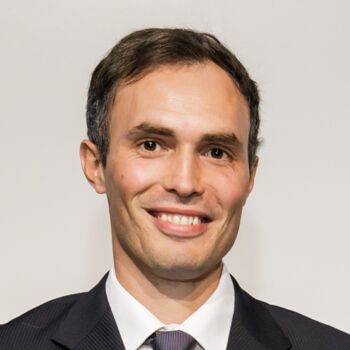
Bram Duivenvoorde is an Associate Professor at the Molengraaff Institute for Private Law , Utrecht University , specializing in advertising law , consumer law , and e-commerce . He holds a PhD from the University of Amsterdam (2014) and combines academic research with practical legal experience, including roles as an attorney-at-law at Hoogenraad & Haak (2014-2020) and interim legal counsel at Heineken International (2018). His work focuses on digital society , personalized marketing , and AI regulation in consumer contexts. Education : PhD (UvA, 2014), LLM (Utrecht, 2009), LLB (Utrecht, 2007) Key Research Areas : Advertising Law, Consumer Law, Digital Regulation, EU Law, Personalized Marketing Recent publications analyze generative AI , deepfakes , and DSA compliance , emphasizing consumer protection in evolving digital landscapes. He supervises PhD candidates Thijs Kelder and Jorn Torenbosch and leads the LLM Honours Programme . Duivenvoorde contributes to European consumer law through RENFORCE initiatives and serves as Editor for journals like Intellectuele Eigendom en Reclamerecht .
Natasha Zhang Foutz is a Research Associate Professor of Commerce at the McIntire School of Commerce, University of Virginia . Her work bridges Artificial Intelligence , Marketing Analytics , and Consumer Behavior , with a focus on Digital Content and Location-Based Services . She teaches Marketing Analytics , Entertainment Marketing , and Marketing Models across undergraduate to PhD programs. Ph.D. in Marketing, Cornell University M.S. in Statistics & Marketing, Cornell University B.S. in Economics, Fudan University Her research investigates: AI-Powered Entertainment Marketing : Using machine learning to analyze consumer behavior in digital content. Privacy and Ethical Data Use : Studying consumer trade-offs between privacy and public good, especially during crises like the COVID-19 pandemic . Location Analytics : Leveraging mobile data for urban economics, real estate, and emergency response modeling (e.g., MobiRescue for disaster logistics). Prosocial Consumer Behavior : Exploring how social capital and diversity drive innovation and policy compliance. Recent publications highlight trends in Reinforcement Learning for crisis management, Privacy-Preserving AI , and Freemium Pricing Models in digital markets. Her awards include the 2025 UVA Outstanding Researcher Award and the 2018 Mallen Award for motion picture studies. Natasha serves as an Area Editor for multiple journals, emphasizing Data Science in marketing. She has advised numerous PhD students and collaborated on projects analyzing Big Data in consumer mobility and platform economics.
Peter Huybers is a Professor of Earth and Planetary Sciences and Environmental Science and Engineering at Harvard University , where he investigates the climate system and its societal implications, including interactions between volcanism and glaciation , extreme temperature predictability , and climate change impacts on food production . Research interests span climate change attribution , paleoclimate reconstruction , drought dynamics , crop yield modeling , and earth system feedbacks . His work often integrates art-historical analysis with climate science, as seen in studies of 19th-century air pollution through Turner and Monet paintings . Scientific awards include funding from Harvard Data Science Initiative (2023) for projects on climate change and food supply volatility Amazon Web Services (2023) grant His 20+ peer-reviewed articles since 2020 focus on climate proxies , hydrological modeling , solar forcing , and agricultural-climate interactions , with recent work in Nature , PNAS , and Science Advances . Advising : Mentored 10+ PhD students including Parker Liautaud , Duo Chan , and Marena Lin , while leading research teams with current members like Greta Berendes and Caro Park . Former staff include Jon Proctor and Lucas Vargas Zeppetello , the latter now at UC Berkeley (2024).
Professor Iain MacRury is a Professor in Communications, Media and Culture at the University of Stirling with extensive involvement in media policy and regulation research. He currently serves as Deputy Chair of the General University Research Ethics Panel (GUEP) and Deputy Chair of the University Research Environment Group (REG) at the University of Stirling. His external roles include being appointed as External Examiner for Media Programmes at the University of Leeds (2028) and membership on Ofcom's Research, Evidence and Evaluation Working Group. His research focuses on: Media policy and regulation frameworks Branded content governance across international contexts Ethical considerations in contemporary media environments Cultural implications of promotional industries Comparative media systems analysis Professor MacRury leads the Branded Content Governance Project, an ESRC/AHRC joint-supported initiative conducting international comparative analysis of governance arrangements regarding media policy and institutional regulation of branded content in promotional industries across Europe and other global sites. His scholarly output demonstrates consistent engagement with the evolving relationship between commercial interests, media content, and regulatory frameworks. His work shows particular attention to transparency issues in digital media environments and the challenges of regulating emerging advertising formats across different national contexts. The trajectory of his recent publications indicates growing interest in the global dimensions of media regulation and the adaptation of regulatory frameworks to technological change. Professor MacRury actively contributes to university governance through his ethics and research environment leadership roles, demonstrating commitment to research integrity and academic standards within his institution.
Prof. Dr. Bernd Skiera holds the first chair for electronic commerce in Germany at Goethe University Frankfurt am Main since 1999. He serves on the board of efl - The Data Science Institute and the Schmalenbach Society, while representing Germany at the European Marketing Community (EMAC). Chair of Marketing, Goethe University Frankfurt am Main Board member, efl - The Data Science Institute National representative, European Marketing Community (EMAC) His research focuses on MarTech/SalesTech integration, customer value management, online advertising analytics, data-driven pricing models, and the economic implications of internet privacy regulations. He leads the ERC Advanced Grant project on cookie usage restrictions' economic consequences. Recent publications examine dynamic pricing in digital markets, competition visualization using big data, and AI applications in marketing analytics. The ERC Advanced Grant research has produced empirical analyses of GDPR impacts on advertising ecosystems. 2015 Journal of Marketing Best Paper Award 2013 International Journal of Research in Marketing Best Paper Award Multiple MSI/H. Paul Root Award recognitions He has mentored 17 doctoral students who became professors globally, including at London Business School and LMU Munich. His work bridges marketing analytics with financial valuation through customer equity modeling.
Vasant Dhar is the Robert A Miller Professor of Business and Professor of Data Science at the Leonard N. Stern School of Business at New York University. He serves as Director of Industry Relations and specializes in Technology, Operations, and Statistics. Joining Stern in 1983, Professor Dhar has established himself as a leading expert in artificial intelligence, data science, and financial technology. Professor Dhar's educational background includes: Ph.D. in Artificial Intelligence from the University of Pittsburgh (1984) M.Phil. from the University of Pittsburgh (1982) B.Tech. in Chemical Engineering from the Indian Institute of Technology, Delhi (1978) His research focuses on how risk influences our trust in AI systems, demonstrating the existence of an "automation frontier" that expresses a tradeoff between how often machines will be wrong and the consequences of their errors. Professor Dhar examines how innovations such as Artificial Intelligence impact our lives, and how we can create technology and policy for a better future in a world of increasingly intelligent machines. His work spans financial applications of AI, where he was among the first to bring machine learning to Wall Street in the 1990s, founding the machine-learning-based hedge fund SCT Capital Management. Professor Dhar's recent publications reveal a strong focus on the practical applications and societal implications of AI. His work addresses critical issues including AI reliability in financial document analysis, the governance of AI companies, ethical considerations in biometric payments, and the evolving relationship between humans and increasingly intelligent machines. His research demonstrates how AI is transforming various sectors while raising important questions about trust, accountability, and the future of work. Among his notable recognitions is the Robert A Miller Professorship, an endowed chair position at NYU Stern. His research has been funded by grants from industry and government agencies such as the National Science Foundation. Professor Dhar teaches courses on Systematic Investing, Data Science, Prediction, and Tech Innovation. He has written over 100 research articles and is the host of the "Brave New World" podcast, which explores how technology and virtualization in the post-COVID era is transforming humanity. He publishes fortnightly at vasantdhar.substack.com and is a frequent speaker in academic and industrial forums.
Michael D. Smith is a Professor of Information Technology and Public Policy at Carnegie Mellon University, with joint appointments at Heinz College and Tepper School of Business. His research employs economic and statistical methods to analyze digital markets, focusing on firm and consumer behavior in online environments. Education: B.Sc. in Electrical Engineering (Summa Cum Laude), University of Maryland M.Sc. in Telecommunications Science, University of Maryland Ph.D. in Management Science and Information Technology, MIT Research Interests: Professor Smith investigates the economics of digital information markets, consumer behavior in online platforms, and policy implications of technological disruption. His work spans copyright enforcement, digital advertising, and the impact of piracy on legal media consumption. Publications: His recent studies examine AI’s role in copyright policy, effectiveness of anti-piracy measures, and market dynamics in digital streaming. Articles often bridge economics, computer science, and public policy. Awards: National Science Foundation CAREER Award Multiple Best Teacher Awards at CMU Recognized as a Top 100 Emerging Engineering Leader (NAE, 2020) Best Paper Runner-Up (Information Systems Research, 2006) Editorial and Industry Roles: Served as Senior Editor at Information Systems Research and Associate Editor at Management Science . Prior to academia, he worked in telecommunications at GTE and Booz Allen Hamilton, earning a patent for AI applications in network design. Contact: mds@cmu.edu | Office: 4800 Forbes Avenue, Hamburg Hall 2204, Pittsburgh PA 15213
Tim Derdenger is an Associate Professor of Marketing and Strategy at Carnegie Mellon University’s Tepper School of Business. He holds a Ph.D. in Economics from the University of Southern California and a B.B.A. from George Washington University. His research focuses on technology markets and sports marketing, including platform dynamics, bundling strategies, celebrity endorsements, and dynamic demand modeling. He coordinates the Technology Strategy and Product Management Track for MBA students. As an Associate Editor for Management Science and editorial board member of Marketing Science , he contributes to academic publishing. His work spans empirical studies on golf equipment endorsements, EV subsidies, and AI regulation. He advises on topics like NIL in college football and generative AI bias. His affiliations include roles in executive education and industry panels on golf and tech strategy.
Prof. Dr. Bernd Skiera is a leading Marketing Professor at Goethe University Frankfurt since 1999 and a member of the managing board of the efl - The Data Science Institute. His work bridges information systems and marketing, with a focus on data-driven decision making and digital transformation.
Dr. Shirley Coleman is a distinguished Professor at Newcastle University Business School, specializing in the application of statistical methods to business and industrial problems. With over two decades of academic contributions, she has established herself as a leading expert in statistics, data science, and quality management within industrial contexts. Her research interests span several interconnected domains: Statistics, Data Science, Business Analytics, Quality Management, Six Sigma methodologies, Kansei Engineering (which integrates emotional design with product development), Industrial Statistics, Design of Experiments, Predictive Maintenance, and Customer Lifetime Value analysis. Coleman's work consistently bridges theoretical statistical concepts with practical business applications across diverse sectors including healthcare, manufacturing, facilities management, and digital marketing. Analysis of her recent publications reveals a strong focus on the evolving role of statistics in the digital age, particularly examining how statistical expertise contributes to AI development, Industry 4.0 initiatives, and data-driven business transformation. Her work demonstrates increasing emphasis on customer analytics, predictive maintenance modeling, and the strategic implementation of data science in small and medium enterprises. Coleman's publications frequently address methodological challenges while maintaining strong practical relevance for industry practitioners. Throughout her career, Coleman has been actively involved with the European Network for Business and Industrial Statistics (ENBIS), contributing to the development and dissemination of statistical methods in business contexts. Her collaborative approach is evident in numerous co-authored publications across disciplines, demonstrating her ability to work effectively with researchers from diverse fields including engineering, healthcare, and business management. Her advisory work appears focused on helping organizations implement statistical thinking in business processes, with particular attention to small and medium enterprises seeking to leverage data analytics for competitive advantage. Though specific grant information isn't detailed in the available publications, her extensive industry-focused research suggests significant engagement with practical business problems and industry partnerships. Dr. Coleman has made substantial contributions to the field through her leadership in professional organizations, particularly ENBIS, where she has helped shape the discourse around industrial statistics and their business applications. Her work on Kansei Engineering demonstrates innovative approaches to integrating human factors with statistical methods for product development.
Pieter Ballon is a Full Professor at Vrije Universiteit Brussel (VUB) and Director of imec-SMIT, part of the Studies in Media, Innovation and Technology (SMIT) research group. He holds dual affiliations in Communication Sciences and SMIT. His roles include leadership in interdisciplinary research projects and academic administration. Research expertise focuses on Smart Cities, Digital Platforms, and ICT business models. Key interests include platform urbanism, data ecosystems, and algorithmic systems' societal impacts. He has supervised 122 academic works, including 8 master’s theses listed here. Notable awards include the 1st Brussels Smart City Ambassador (2016-2017) and multiple Best Paper Awards. His work spans over 300 publications and 75 research projects, with active grants like SHALGO (2024-2028) and AMAI 5 (2025-2026). He frequently engages in public debates, academic conferences, and media discussions on topics like algorithmic governance and smart city technologies.
Tridas Mukhopadhyay is the Deloitte Consulting Professor of e-Business at Carnegie Mellon University's Tepper School of Business, where he has served on the faculty since 1986. His academic journey at CMU progressed from Instructor of Information Systems (1986-1987) to Assistant Professor (1987-1993), Associate Professor (1993-1997), Professor (1998-present), and Deloitte Consulting Professor of e-Business (2000-present). He also served as Director of the MS in Electronic Commerce program from 1999-2004. Ph.D. in Computer and Information Systems, University of Michigan–Ann Arbor, 1987 M.B.A. in Computer and Information Systems, Indian Institute of Management Calcutta, 1981 B. Tech. in Electrical Engineering, Indian Institute of Technology Kharagpur, 1978 Professor Mukhopadhyay's research spans multiple critical areas in information systems and technology management. His work on strategic IT use examines how organizations derive business value from information technology investments. He has conducted extensive research on business-to-business commerce, particularly focusing on e-procurement systems, web-based marketplaces, and electronic intermediation models. His cybersecurity research investigates the economic aspects of cyber security, including liability mechanisms and patch release strategies. In software engineering, he has studied productivity, quality metrics, and offshore software development contracts. His most recent publications reveal several key trends in his research trajectory. There's a growing focus on digital platform economics, examining advertising models, virtual currency systems in gaming, and sharing economy dynamics. His work increasingly incorporates behavioral aspects, studying how users respond to personalized content and how backers exert control in crowdfunded projects. Methodologically, his research employs sophisticated analytical approaches including hierarchical Bayesian models, structural equation modeling, and natural experiment designs. CART Research Frontier Award, Carnegie Mellon, 2005 Distinguished Ph.D. Alum, Michigan Business School, 2004 Best Paper, International Conference on Information Systems, 2001 Best Paper, MIS Quarterly, 1995 Xerox Research Chair, Tepper School of Business, 1988-1989 Information Systems Society Distinguished Fellow, 2012 Professor Mukhopadhyay has served on numerous editorial boards including Information Systems Research (1994-2003), Management Science (1999-2003), and MIS Quarterly (1997-1999), demonstrating his significant contributions to the field. His consulting work with major organizations including Alcoa, Chrysler, Ford, General Motors, IBM, and governmental agencies like the United States Post Office and Pennsylvania Turnpike has provided practical insights that inform his academic research. He has been actively involved in university governance through committee service including the Business Technology Faculty Search Committee and the CMU Faculty Senate. His research has been supported through various industry partnerships and academic grants, though specific grant details aren't provided in the source material. His teaching focuses on Business Computing and Strategic IT courses, reflecting his expertise in both foundational information systems concepts and strategic applications of technology in business contexts.
Oliver Gasser is a researcher at the Max Planck Institute for Informatics (MPI-INF) and the Technical University of Munich (TUM), where he has co-lectured courses such as Advanced Computer Networking and Master Course Computer Networks. His research focuses on Internet measurement, security, and privacy, with a strong emphasis on IPv6, DNS, BGP, and web tracking technologies. His research interests include Internet measurement, IPv6 deployment, BGP security, DNS infrastructure, web tracking, privacy technologies, and network resilience. He has made significant contributions to understanding IPv6 hitlists, router fingerprinting, hypergiant content delivery networks, and consent banner manipulation on the web. His work combines large-scale active measurements with data analysis to uncover systemic issues in Internet infrastructure and privacy practices. The recent publications highlight a consistent focus on measurement-driven research across networking, security, and privacy. Trends include analyzing IPv6 adoption patterns, detecting covert tracking mechanisms in web cookies, evaluating security of Internet protocols like DNS and BGP, and improving measurement methodologies for large-scale network studies. His work often involves developing open tools and datasets that advance reproducibility in networking research. PAM 2023 Best Paper Award TMA 2023 Best Paper Award TMA 2023 Fast Track Award PAM 2018 Best Paper Award IRTF Applied Networking Research Prize 2018 IMC 2017 Community Contribution Award TMA 2017 Best Dataset Award CoNEXT 2023 Community Contribution Award Oliver Gasser has advised or co-advised over 40 master’s and bachelor’s theses at MPI-INF and TUM, demonstrating strong mentorship in academic research. He has led several measurement projects that have received external funding, including development of the IPv6 Hitlist Service and tools for analyzing web tracking. His community service includes extensive participation in program committees for major networking conferences such as IMC, CoNEXT, PAM, and TMA. He leads and contributes to several open research initiatives including the IPv6 Hitlist Service, SNMPv3 Measurement Service, MPTCP Measurement Service, DNS Observatory, and the BannerClick tool for automated cookie banner interaction. These platforms provide valuable resources for the global networking research community and support reproducible science.
Dr. Bill Hamilton is an Assistant Professor in the Department of Computer Science at New Mexico State University. His research focuses on live media design, online communities, and digital game culture. He holds a Ph.D. in Human Computer Interaction from Texas A&M University (2018), and has collaborated with industry partners like Microsoft Research and Motorola Mobility. Education: Ph.D. in Human Computer Interaction, Texas A&M University (2018) Bachelor’s degree in Computer Science, Texas A&M University Research Interests: Bill explores how live media supports societal participation in education, politics, work, and play. His work employs qualitative methods like ethnographic inquiry to study collaborative digital environments. Recent projects include designing wearable interfaces for human-drone teams and analyzing YouTube’s content policies' impact on free speech. Awards: 2018 Texas A&M Distinguished Graduate Research Award 2016 Best Paper at ACM Interactive Experiences for TV/Online Video Advising & Grants: Mentors students like Preeti De Maurya and Cassandra Palmer, with a focus on inclusive education technologies and collaborative tools for emergency response. Active in conference organization including ACM CHI’s Games and Play Subcommittee (2019). Labs: His research is conducted through the PlexLab, exploring playful interactions and live media systems.
Brett Hemenway Falk is a Researcher in the Department of Computer and Information Science at the University of Pennsylvania. He serves as director of the Crypto and Society Lab, focusing on privacy and security in digital environments and facilitating transparency and trust. His work combines rigorous mathematical approaches with practical implementations in cryptography and blockchain technology. Education: Sc.B. in Mathematics from Brown University Ph.D. in Mathematics from UCLA Research Interests include: Cryptography and secure multi-party computation protocols Blockchain technology (cross-chain interoperability, financial network stability, on-chain governance) Privacy-preserving algorithms and data security Coding theory applications in secure systems Scientific Contributions include: Developing practical secure computation protocols Advancing ORAM (Oblivious RAM) architectures Analyzing decentralized governance mechanisms Exploring DeFi network stability and token economics His teaching activities feature the popular MCIT 582 Blockchain course at Penn. Research funding comes from NSF, DARPA, IARPA, ONR, ARL, NIH , and the Laura and John Arnold Foundation.