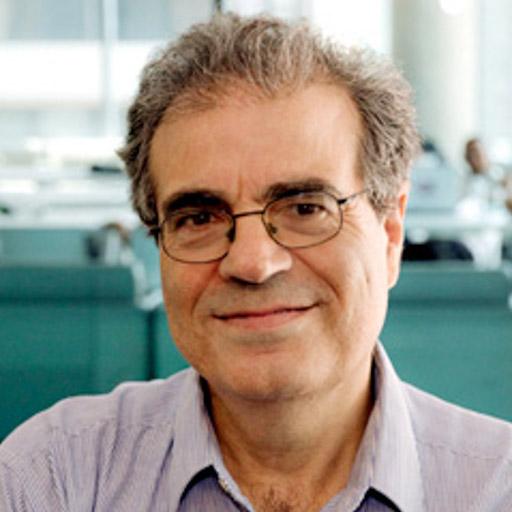
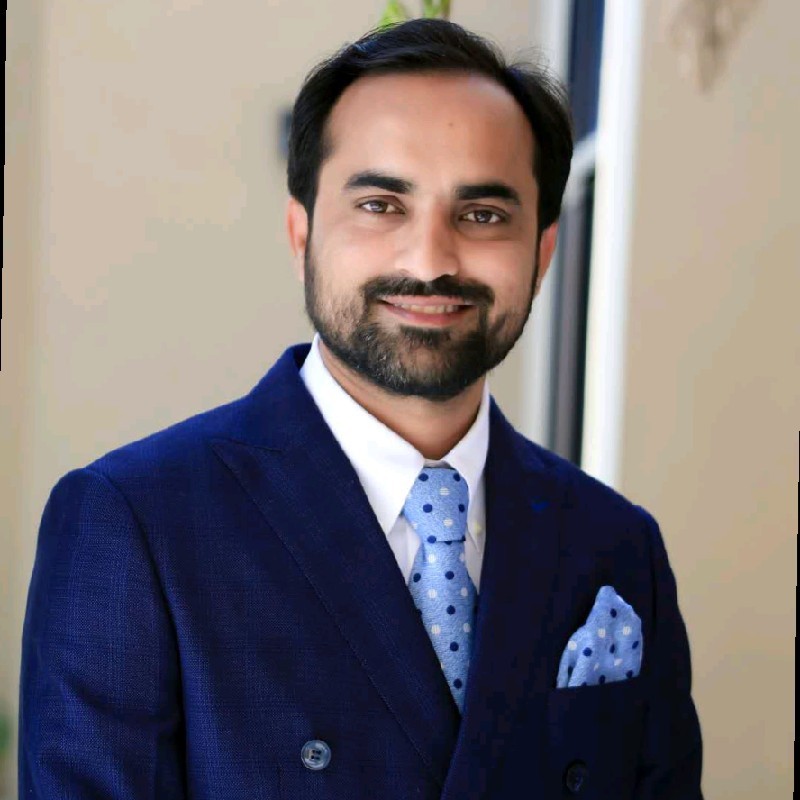
Prof. Dr. Michael Bosnjak leads the Department for Psychological Research Methods at the University of Trier, Germany, focusing on research synthesis methods, theory-driven machine learning, survey methodology, and experimental designs applied to personality psychology (HEXACO model), consumer behavior, and public health. His team includes Dr. Henning Silber (GESIS), Dr. Bernd Weiß (GESIS), and international collaborators at Utrecht University. Affiliation: University of Trier (Department of Psychology) Editorial Roles: Zeitschrift für Psychologie (Editorial Board), Social Science Computer Review (Associate Editor), Frontiers in Psychology (Review Editorial Board) Grants: DFG SFB 884 (co-applicant), DFG Project PaCO (2019-2024, principle investigator), BMBF-funded GESIS Panel Campus His recent publications analyze panel conditioning effects in longitudinal studies, e-commerce privacy dynamics, personality-trait interactions, and psychosis proneness measurement. Scientific awards include the 2016 BMBF infrastructure grant, 2011 Isaac Manasseh Meyer Fellowship, and 2003 Karin Islinger Award. Current projects address data quality in probability-based and opt-in panels, with experimental designs across eight groups testing measurement error mechanisms. He serves as a co-editor for multiple special issues on survey methodology and tourism psychology.
Daniel W. Green is an Assistant Professor of Business Administration in the Finance Unit at Harvard Business School , Harvard University. He teaches Finance II to MBA students and pursues research at the intersection of corporate finance, capital markets, and financial intermediation. Education: PhD in Financial Economics – MIT Sloan School of Management BA in Economics & Mathematics – University of Rochester Research Interests: Professor Green’s scholarship centers on how the organization of financial markets shapes firm capital structure and broader economic activity. Current projects explore socially responsible capital allocation, bank exit policies in energy lending, transaction-tax externalities in real-estate markets, and retirement-income innovation. His work spans both theoretical modeling and empirical analysis, drawing on settings as diverse as high-yield debt markets and microfinance. Publications Profile: Across 16 refereed articles, working papers, and Harvard cases, Green’s recent output tackles pressing policy and market questions—from the fiscal impact of Los Angeles’ mansion tax to the real effects of bank divestment from coal. Collectively, these studies illuminate how financing frictions, regulatory policies, and investor preferences jointly determine capital flows, firm behavior, and household welfare. Teaching & Case Development: In addition to Finance II, Green has authored or co-authored multiple award-winning HBS cases covering divestment strategy (Harvard Endowment), retirement product design (RTX Lifetime Income), and competitive bidding (Anadarko Petroleum). Contact: Email: dgreen@hbs.edu Office: 235 Baker Library, Harvard Business School, Boston, MA 02163
Jeeyeon Kim is a Lecturer in the Department of Management and Marketing at La Trobe Business School, La Trobe University. Prior to this, she served as an Assistant Professor at National Sun Yat-sen University in Taiwan. Her research focuses on digital marketing, omnichannel retailing, social media/influencer marketing, and digital healthcare. She holds a PhD and MA from Yonsei University, South Korea, and has held visiting roles at Yonsei University and IE University. Her work emphasizes empirical data analysis and statistical modeling to address marketing challenges. Jeeyeon has secured multiple research grants, including AUD 82,500 from Taiwan's Ministry of Science and Technology (MOST) for projects on big data-driven marketing and digital transformation. She also coordinates grants with Yonsei University and AACSB initiatives. Her editorial roles include serving on the Asia Marketing Journal and Korean Scholars of Marketing Science boards. Her research spans topics such as virtual influencers' impact on social media, omnichannel strategies, and healthcare consumer behavior. Teaching awards include the 'Outstanding Course Teaching Award' and 'Excellent Mentor Award.' She actively reviews for journals like the Asian Pacific Journal of Marketing and Logistics and conferences like the Global Fashion Management Conference.
Professor Byron Sharp is a Professor of Marketing Science and Director of the Ehrenberg-Bass Institute for Marketing Science at the University of South Australia. The institute is recognized as the world’s largest center for research into marketing, housing over 60 marketing scientists. He plays a pivotal role in advancing evidence-based marketing principles globally. Research Interests: Marketing Science and Empirical Generalizations Brand Growth and Customer Acquisition Advertising Effectiveness and Mental Availability Consumer Behavior and Loyalty Patterns Market Modeling (e.g., Dirichlet model) Evidence-Based Marketing Practice His recent publications reveal a consistent focus on quantifying brand performance, buyer behavior, and advertising impact. Trends in his articles emphasize the application of statistical models (e.g., NBD, Dirichlet) to understand consumer repertoires, loyalty, and the effects of advertising cessation. His work bridges academic rigor with practical marketing applications, particularly in brand strategy and media planning. Scientific Awards and Recognition: His book How Brands Grow was voted Marketing Book of the Year by AdAge readers. Recognized by Warc (2015) as one of the most influential marketing books of the past decade. Advising, Grants, and Collaborations: While specific student names are not listed, he leads a large research team and frequently collaborates with prominent scholars such as Jenni Romaniuk, John Dawes, and Robert Kennedy. His work is supported by industry partnerships and institutional funding through the Ehrenberg-Bass Institute, enabling large-scale empirical studies using real-world data. Labs and Teams: He directs the Ehrenberg-Bass Institute, which functions as a major research laboratory focused on marketing science, conducting longitudinal studies, empirical generalizations, and collaborative industry research.
Tridas Mukhopadhyay is the Deloitte Consulting Professor of e-Business at Carnegie Mellon University's Tepper School of Business, where he has served on the faculty since 1986. His academic journey at CMU progressed from Instructor of Information Systems (1986-1987) to Assistant Professor (1987-1993), Associate Professor (1993-1997), Professor (1998-present), and Deloitte Consulting Professor of e-Business (2000-present). He also served as Director of the MS in Electronic Commerce program from 1999-2004. Ph.D. in Computer and Information Systems, University of Michigan–Ann Arbor, 1987 M.B.A. in Computer and Information Systems, Indian Institute of Management Calcutta, 1981 B. Tech. in Electrical Engineering, Indian Institute of Technology Kharagpur, 1978 Professor Mukhopadhyay's research spans multiple critical areas in information systems and technology management. His work on strategic IT use examines how organizations derive business value from information technology investments. He has conducted extensive research on business-to-business commerce, particularly focusing on e-procurement systems, web-based marketplaces, and electronic intermediation models. His cybersecurity research investigates the economic aspects of cyber security, including liability mechanisms and patch release strategies. In software engineering, he has studied productivity, quality metrics, and offshore software development contracts. His most recent publications reveal several key trends in his research trajectory. There's a growing focus on digital platform economics, examining advertising models, virtual currency systems in gaming, and sharing economy dynamics. His work increasingly incorporates behavioral aspects, studying how users respond to personalized content and how backers exert control in crowdfunded projects. Methodologically, his research employs sophisticated analytical approaches including hierarchical Bayesian models, structural equation modeling, and natural experiment designs. CART Research Frontier Award, Carnegie Mellon, 2005 Distinguished Ph.D. Alum, Michigan Business School, 2004 Best Paper, International Conference on Information Systems, 2001 Best Paper, MIS Quarterly, 1995 Xerox Research Chair, Tepper School of Business, 1988-1989 Information Systems Society Distinguished Fellow, 2012 Professor Mukhopadhyay has served on numerous editorial boards including Information Systems Research (1994-2003), Management Science (1999-2003), and MIS Quarterly (1997-1999), demonstrating his significant contributions to the field. His consulting work with major organizations including Alcoa, Chrysler, Ford, General Motors, IBM, and governmental agencies like the United States Post Office and Pennsylvania Turnpike has provided practical insights that inform his academic research. He has been actively involved in university governance through committee service including the Business Technology Faculty Search Committee and the CMU Faculty Senate. His research has been supported through various industry partnerships and academic grants, though specific grant details aren't provided in the source material. His teaching focuses on Business Computing and Strategic IT courses, reflecting his expertise in both foundational information systems concepts and strategic applications of technology in business contexts.
Michel Laroche serves as Professor of Marketing and holds the Royal Bank Distinguished Professorship at Concordia University's John Molson School of Business. He maintains active research leadership through editorship of the Canadian Journal of Administrative Sciences and extensive scholarly contributions across global marketing domains. His educational background includes a Diplôme d'ingénieur from École Centrale de Paris, M.S.E. from Johns Hopkins, and M.Ph./Ph.D. from Columbia University, complemented by an honorary Doctor of Science from the University of Guelph. This multidisciplinary foundation underpins his research approach. Consumer behavior modeling Social media/digital marketing analytics Cross-cultural retailing dynamics Advertising effectiveness in global contexts Internet of Things consumer adoption Artificial intelligence in marketing systems His publication portfolio demonstrates consistent innovation in digital consumer behavior, with recent work examining social commerce cultural dynamics, TikTok authenticity metrics, and pandemic-driven media consumption patterns. Articles consistently integrate technological advancement with deep cultural analysis. Fellow of the Royal Society of Canada Recipient of the Jacques-Rousseau Medal for multidisciplinary research Living Legend of Marketing Award (HEC-Montreal) Hans B. Thorelli Award for international marketing research JBR Outstanding Associate Editor Award (namesake) Laroche has supervised 64 M.Sc. and 27 Ph.D. theses while securing major funding from SSHRC and FQRSC. His editorial leadership spans 16 years as Managing Editor of the Journal of Business Research and current Editor-in-Chief role at CJAS , establishing significant infrastructure for marketing scholarship. Professional service includes presidential roles in ASAC and AMS, plus extensive journal editorial board participation.
Deodat Edward Mwesiumo is a Professor of Supply Chain Management at Molde University College (HiMolde), part of the Faculty of Logistics. He holds a PhD in logistics from the same institution and has extensive teaching and research experience since 2012. His roles include Head of the Supply Chain Management Research Group and member of the PhD committee. Previously, he directed the Bachelor program in Supply Chain Management and Logistics. His research focuses on supply chain resilience, digital business transformation, and tourism management. Key areas include procurement strategies, sustainability, circular economy models, and interorganizational relationships in tourism. He has published in high-impact journals like Production Planning and Control , Journal of Purchasing and Supply Management , and Annals of Tourism Research . Dr. Mwesiumo has led externally funded projects and contributed to over 50 peer-reviewed publications. He is affiliated with research groups such as MIIBS (Marketing, Innovation, International Business & Strategy) and the Transport Research Group (TRG). His teaching spans BSc and MSc levels, including courses on value chain analysis, digital business, and supply chain theory. Recent work emphasizes airport digital maturity, supply chain risk mitigation, and the impact of data-driven decision-making in public procurement. He has authored books like Making Value Chains Work and Fundamentals of Digital Business Management , underscoring his commitment to both academic and applied knowledge dissemination.
Bryan Bollinger is a Professor of Marketing at Dartmouth College Tuck School of Business. Previously, he served as Associate/Professor at NYU Stern School of Business from 2019-2025. His research focuses on the causal effects of policy decisions in sustainability domains, including energy, environment, and health, with grants from DOE, NSF, and EPA. He has authored influential studies on solar adoption, dynamic pricing, and behavioral marketing. PhD in Marketing, Stanford University (2011) BA/BE in Engineering, Dartmouth College (2003) MA in Economics, Stanford University (2010) Research interests include technology adoption, energy policy, peer effects, and empirical methods. His work has appeared in Marketing Science , Management Science , and Nature . He currently edits leading journals like Journal of Marketing and Quantitative Marketing and Economics . Recent articles explore solar subsidy valuations, soda tax impacts, and behavioral strategies for sustainable products. Awards include the AMA-EBSCO Responsible Research Award. Supervised over 20 PhD/postdoc students in marketing and economics. Active in editorial boards and policy advisory roles. Labs/Teams: Collaborates with interdisciplinary groups on energy policy and behavioral science initiatives. Leads research on solar diffusion, climate change consumer behavior, and sustainable marketing strategies.
Dr. Carol Tan is a Senior Lecturer and Program Manager of the Master of Fashion Entrepreneurship at RMIT University's School of Fashion and Textiles. Her research focuses on fast-growth small-to-medium enterprises (SMEs), sustainable fashion practices, consumer behavior, and luxury fashion. She has been actively researching since 2003 and has contributed to peer-reviewed journals, media commentary, and industry reports. Dr. Tan holds six teaching awards, including the RMIT University Program Award for Innovation in Curricula (2013) and the 2011 Three-Minute Presentation Award. She currently supervises five PhD students. Research Highlights: Circular economy in fashion, virtual fashion consumption, blockchain in supply chains, and SME resilience. Media Engagement: Featured in ABC National Radio, The Age, Sydney Morning Herald, and industry reports on Australian fashion industry challenges. Committees: Member of RMIT's Learning and Teaching Committee (2024).
Sai Chand CHINTALA is an Assistant Professor of Marketing at the Lee Kong Chian School of Business (LKCSB), Singapore Management University. He holds a Ph.D. in Marketing from Cornell University (2025), an MBA from the Indian Institute of Management Lucknow (2012), and a B.Tech. in Electrical & Electronics Engineering from National Institute of Technology Warangal (2004). Education: Ph.D. in Marketing, Cornell University (2025) MBA, Indian Institute of Management Lucknow (2012) B.Tech. (Electrical & Electronics Engineering), NIT Warangal (2004) His research focuses on Retailing , E-commerce , and Marketplace Analytics , with a particular emphasis on understanding how digital platforms reshape consumer behavior and retail operations. His work has explored topics such as online grocery shopping dynamics and platform strategy. His 2024 Marketing Science article examines shifts in consumer purchasing habits due to online grocery platforms. Awards include recognition from the AMA (American Marketing Association) and grants from the Marketing Science Institute. Grants & Recognition : Secured a $5,000 MSI grant (2022) and received scholarships like the Byron E. Grote Johnson Professional Scholarship (2022). Active in doctoral consortiums (AMA-Sheth, ISMS, 2023). He contributes to strategic research areas such as Operations Management and Digital Business , aligning with LKCSB’s priorities in marketplace innovation.
Prof. Dr. Sven Heidenreich is a full Professor of Business Administration, specializing in Technology and Innovation Management at the University of Saarland. He leads an active research group and holds a prominent position in the German-speaking academic community, with consistent recognition in national and international rankings. University: University of Saarland Department: Business Administration Research Focus: Technology and Innovation Management Email: sven.heidenreich@uni-saarland.de His research centers on innovation processes, particularly consumer integration, co-creation, resistance to innovation, and sustainable business models. He employs a quantitative-empirical approach to study individual and organizational aspects of innovation, with applications in digital services, video games, and green innovation. The recent publications reflect a strong trend in understanding consumer behavior in innovation contexts, including greenwashing, leapfrogging, co-creation, and the role of personality in entrepreneurial success. His work frequently appears in high-impact journals such as Journal of Product Innovation Management , R&D Management , and Technological Forecasting and Social Change . Top 0.5% researcher worldwide in Innovation Management (ScholarGPS 2024) JPIM Outstanding Reviewer Award 2023 Multiple appearances in WirtschaftsWoche Economist Rankings (2018–2024) Finalist, Best Paper Award, IRCSM 2024 Prof. Heidenreich supervises doctoral researchers and has led significant research projects, including the DFG-funded TRIP project on integrating different consumer types into new product development. His team includes postdocs, junior professors, and scientific staff, indicating active mentorship and collaborative research. He also collaborates with researchers across Europe and beyond. He leads the DFG project TRIP and has secured funding from major German research bodies. His lab focuses on empirical studies involving consumer panels, student experiments, and idea competitions to validate innovation theories in realistic settings.
Dr Wasim Ahmad is a Lecturer in Marketing at the Department of Marketing, Lancaster University Management School (LUMS), having joined the institution in January 2024. His prior academic appointments include Monash University, Florida State University, Teesside University, and Fujian University of Technology, where he conducted research, taught undergraduate/postgraduate modules, and led curriculum development. Education: Ph.D. in Marketing, University of International Business and Economics PostDoc, Florida State University Research Interests: Dr Ahmad investigates consumer behaviour with emphasis on negative emotions (brand hate, betrayal) and extreme responses to brands across cultural contexts. His work spans sustainability-oriented innovation in B2B firms, eco-brand strategy, and cross-cultural CSR implementation—particularly during crises like the pandemic. He employs quantitative methodologies including experimental designs and meta-analysis, frequently examining digital marketing phenomena such as virtual influencers, travel apps, and dark patterns in online interfaces. Publication Trends: His 2023-2025 output reveals concentrated research on brand hate consequences in B2B relationships, sustainability innovation linked to triple-bottom-line performance, and cross-cultural digital behaviour (e.g., social media addiction, travel app usage). Key journals include Journal of Business Research , Industrial Marketing Management , and Annals of Tourism Research , demonstrating interdisciplinary reach across marketing, sustainability, and tourism. Scientific Awards: No specific awards, prizes, or fellowships mentioned in source materials Advising and Grants: Dr Ahmad actively supervises PhD candidates in green marketing topics (product sustainability, eco-brand orientation) using quantitative approaches. He teaches core modules including International Marketing (MKTG101), Strategic Marketing (MKTG301), and Marketing Research (MKTG212). No grant funding details were provided in the directory. Labs and Teams: No dedicated research labs or teams specified in current affiliation Collaborative work evident in B2B sustainability studies with international co-authors
Dr. Roger Moser is a Senior Lecturer at Macquarie University's Department of Management Innovation, Strategy and Entrepreneurship Research Centre. He also holds adjunct roles at the Indian Institute of Management Udaipur (since 2012) and the University of St. Gallen (since 2012). His research focuses on Decision Intelligence, Strategic Management, and International Management, particularly exploring how executives leverage data (small/big) to enhance decision-making frameworks. He has over 99 publications since 2005, with notable works in journals like Journal of Service Research and Journal of Business Research . Dr. Moser holds a Dr. rer. pol. from EBS European Business School (2006) and a lic. oec. HSG (MSc) from the University of St. Gallen (2003). His research interests include Decision Model Innovation, Social Capital in emerging markets, and strategic alignment in supply chains. He has conducted impactful studies on access-based services in India, supplier integration in China's automotive sector, and humanitarian logistics using satellite data. His recent work emphasizes technology integration in B2B value creation, decision frameworks for uncertainty reduction (e.g., in agriculture and disaster management), and AI-driven expert systems. He has presented at global forums on topics like digital transformation and decision intelligence applications, contributing to both academic and practitioner discourse. External Roles: Adjunct Professor of Business Policy, Indian Institute of Management Udaipur Titularprofessor / Permanent Lecturer, University of St. Gallen Notable impacts include a project providing clean drinking water in India through access-based solutions, recognized for quality-of-life and societal contributions. His research has been cited over 1,666 times with an h-index of 21.
Alpaslan Akay is an Associate Professor in the Department of Economics at the University of Gothenburg, where he has been employed since 2013. He holds a Ph.D. from the University of Gothenburg (2008), with prior doctoral training at Istanbul University (2005–2008). His research spans behavioral and experimental economics, happiness economics, migration economics, and applied microeconometrics, with a recent focus on positional concerns and teaching pedagogy. He actively collaborates across disciplines and serves as a referee for top journals. Education: Ph.D. in Economics, University of Gothenburg (2008) Master of Mathematical Statistics, Istanbul University Bachelor of Economics, Istanbul University Research Focus: His work examines positional behavior, immigrant assimilation, and well-being dynamics. Notable areas include the economic impacts of migration, the role of empathy in decision-making, and the interplay of relative income concerns with health and labor market outcomes. He also explores innovative pedagogical strategies in economics education. Professional Contributions: Organized large-scale economics conferences Member of high-profile scientific committees Referee for leading economics journals Key Themes in Publications: Happiness economics and positional concerns Immigrant labor market integration Experimental analysis of social behavior Policy implications of well-being metrics
Charles Spence is Professor of Experimental Psychology at the University of Oxford and Fellow of Somerville College, where he heads the Crossmodal Research Laboratory. His work bridges cognitive neuroscience with real-world applications in multisensory design, spanning food science, human-computer interaction, and environmental psychology. Spence's research centers on how the brain integrates sensory inputs (sight, sound, touch, taste, smell) to form unified perceptual experiences. This foundational work drives innovations in sensory marketing, product design, and human factors engineering, with significant implications for optimizing everyday interactions with technology and environments. His approach combines rigorous laboratory experimentation with industry collaborations to translate theoretical insights into practical solutions. Recent publications demonstrate a clear trajectory toward applied crossmodal research, particularly in consumer contexts. His 2025 output reveals growing emphasis on digital commerce environments, nature-food perception interactions, and multisensory flavor enhancement—showcasing how sensory cues can be strategically deployed to influence behavior in retail, dining, and digital platforms. His major recognitions include: 10th Experimental Psychology Society Prize British Psychology Society Cognitive Section Award Paul Bertelson Award (Young European Cognitive Psychologist of the Year) Friedrich Wilhelm Bessel Research Award 2008 IG Nobel Prize for Nutrition (for 'sonic crisp' research) Spence maintains extensive industry partnerships, having consulted for Toyota on multisensory warning systems, ICI on environmental psychology, and Heston Blumenthal's Fat Duck restaurant on culinary innovation. His research attracts significant commercial funding through these collaborations, though specific grant details aren't publicly itemized. The Crossmodal Research Laboratory operates as an interdisciplinary hub where psychologists, neuroscientists, and industry partners investigate sensory integration mechanisms. Current projects focus on optimizing driver alert systems, designing immersive food experiences, and understanding how built environments affect cognitive performance—maintaining Spence's legacy of translating basic science into tangible human benefits.