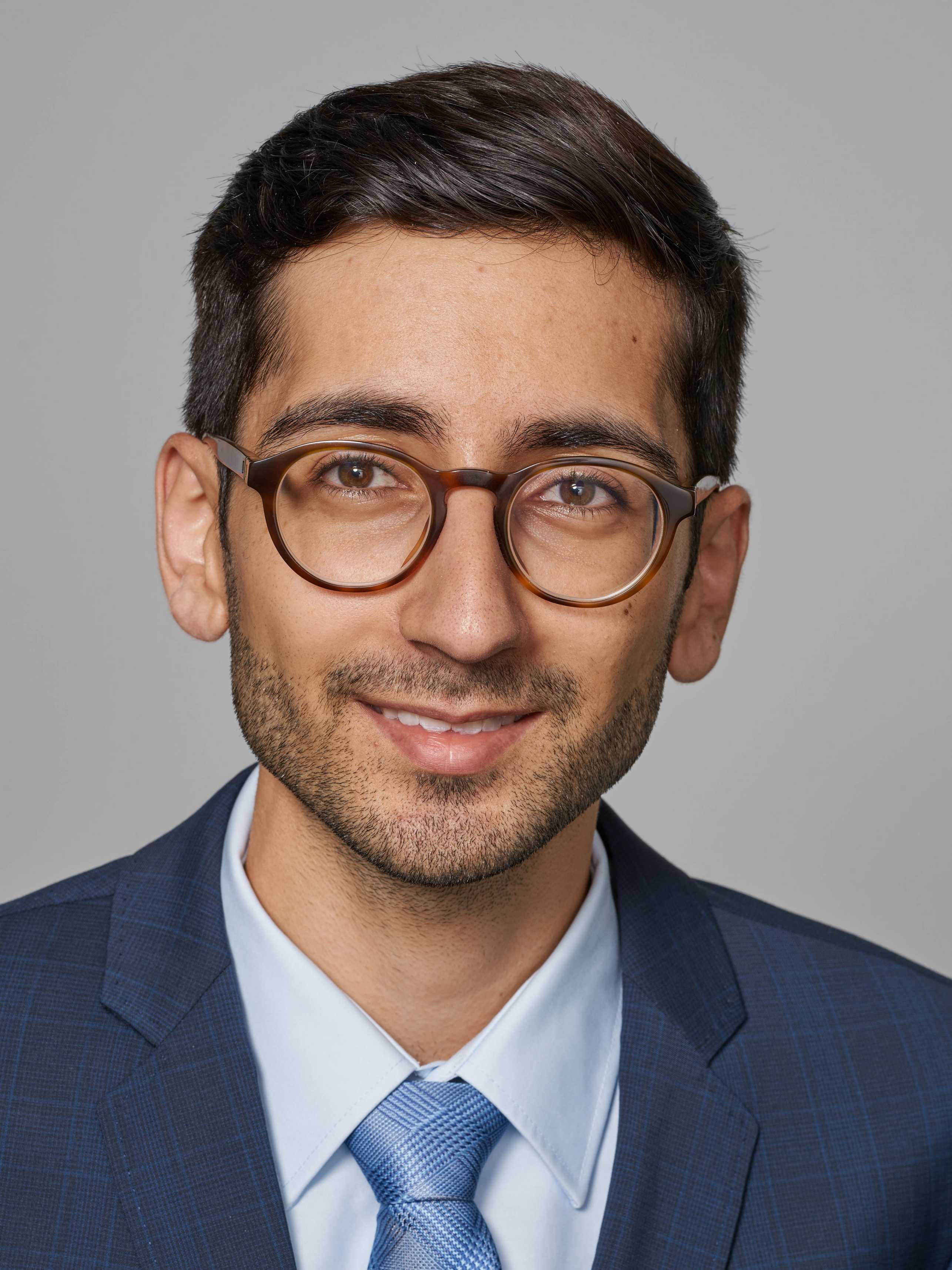
Peter Seele is a Full Professor at the Faculty of Communication, Culture and Society at Università della Svizzera italiana (USI). He is affiliated with the Center for Climate Finance and Sustainability (CCFS), Ethics and Communication Law Center (ECLC), and the Luxury Observatory Lugano (LOLugano). His research focuses on Corporate Social Responsibility (CSR), Business Ethics, Digital Ethics, Greenwashing, and Machinewashing. Dr. Seele holds dual PhDs in Economics (University of Witten/Herdecke, Germany) and Philosophy (University of Düsseldorf, Germany). He previously served as an Assistant Professor at the University of Basel and conducted post-doctoral research at the Institute for Advanced Studies in the Humanities (KWI) in Essen. His educational background includes studies at the University of Oldenburg and Delhi School of Economics, followed by two years as a business consultant in Frankfurt. His research explores ethical challenges in digitalization, sustainability, and technology. Notable themes include AI ethics governance, ethicswashing in corporate communication, and the interplay between blockchain and business ethics. Recent work addresses greenwashing trends, the ethical implications of algorithmic systems, and sustainable practices in luxury industries. Publications highlight critical analyses of digital ethics frameworks, sustainability backlashes, and the societal impact of emerging technologies. His interdisciplinary approach bridges philosophy, business studies, and environmental science, with a focus on practical solutions for ethical dilemmas in modern organizations. Peter Seele collaborates across academic and industrial sectors, emphasizing real-world applications of ethical theories. He advises on CSR strategies, digital transparency, and regulatory frameworks for sustainable business practices.
Jakob Merane is a postdoctoral researcher at ETH Zurich's Professorship of Law, Economics and Business, and a visiting researcher at the Max Planck Institute and Harvard Law School. He holds a Ph.D. from ETH Zurich and law degrees from the University of Basel, with additional studies in applied statistics. His research focuses on AI-driven legal enforcement, legal technology, and compliance-by-design approaches, leveraging computational and empirical methods. Merane's work includes developing tools like SwiLTra-Bench for multilingual legal translation and LEXam for benchmarking AI legal reasoning. He has contributed to GDPR compliance studies, automation of legal enforcement processes, and quantitative analyses of Swiss legal datasets. Awards include the 2024 Young Scholar Prize from the German Law and Economics Association. Teaching responsibilities include ETH's Law & Tech course since 2020, emphasizing AI regulation and interdisciplinary collaboration between law and computer science. Merane's research also addresses AI liability in medical contexts, digital advertising regulations, and ethical AI integration in legal systems. His work bridges legal theory with practical applications, aiming to enhance justice accessibility through technology.
Stefan Bechtold is a Full Professor of Intellectual Property at ETH Zurich since 2013 and Associate Vice President IP Policy (2023–2026). He is affiliated with the ETH AI Center and serves on global advisory boards including the Academic Advisory Board of the German Federal Ministry for Economic Affairs and Climate Action. His interdisciplinary research bridges law, economics, and computer science.
Anat R. Admati is the George G.C. Parker Professor of Finance and Economics at Stanford University Graduate School of Business, where she directs the Corporations and Society Initiative and serves as a senior fellow at Stanford Institute for Economic Policy Research. Her work spans corporate governance , banking regulation , and financial policy , emphasizing trustworthy institutions and systemic reform . Education: B.Sc. in Mathematics and Economics from Hebrew University Ph.D. in Economics from Yale University Honorary doctorate from University of Zurich Admati's research focuses on financial markets, corporate governance, and regulatory frameworks, with a particular emphasis on bank capital regulation and equity requirements . Her work critiques systemic risks in banking and advocates for transparency and accountability in financial systems. Recent publications highlight trends in corporate misconduct , capital adequacy , and financial contracting . Notably, her co-authored book The Bankers’ New Clothes and follow-up articles like The Parade of the Bankers’ New Clothes Continues (2024) systematically challenge banking industry claims and propose regulatory improvements. Scientific recognition includes: Named Time Magazine's 100 Most Influential People (2014) Included in Foreign Policy Magazine's 100 Global Thinkers (2014) Elected Fellow of the Econometric Society Admati has served on editorial boards, advisory committees (FDIC, CFTC), and as a visiting scholar at the International Monetary Fund. Her advocacy bridges academic rigor with real-world policy impact, particularly in financial regulation and corporate accountability .
Prof. Dr. Frank Krysiak is a full professor at the Faculty of Business and Economics , University of Basel, specializing in Environmental Economics . His research explores the intersection of environmental policy, sustainability theory, and technological progress under economic uncertainty. Research Networks: Forschungsnetzwerk Sustainable Future, SCCER CREST, FoNEW Contact: Peter Merian-Weg 6, 4002 Basel, Switzerland | Tel: +41 61 207 33 60 | Fax: +41 61 207 04 96 Key Research Areas: 1) Long-term impacts of environmental policy on technological innovation 2) Sustainability principles in uncertain futures 3) Climate and energy policy dynamics 4) Efficiency-sustainability trade-offs Publication Trends: Recent work focuses on green technology transitions in developing economies, energy market reforms with intermittent renewables, optimal policy mixes for sustainability, and adaptation strategies under multi-layer uncertainty. His scholarship bridges theoretical economics with practical climate policy challenges. Teaching: Chair holder in Environmental Economics, though no office hours during SS2023 sabbatical.
Sylvie Delacroix is the Inaugural Jeff Price Chair in Digital Law and Director of the Centre for Data Futures at King's College London. She is also a Visiting Professor at Tohoku University, focusing on bridging theory and practice in ethics and public policy initiatives. Her research spans Data & machine ethics Ethical agency and habit Social sustainability of data ecosystems Participatory infrastructure for AI systems Uncertainty communication in LLMs Legal theory and digital law Recent publications address LLM interfaces as transitional spaces for democratic revival and sustainable data rivers in generative AI. Her work has attracted significant grant funding from the Patrick J. McGovern Foundation, Wellcome Trust, and Omidyar Network. Scientific awards include the Leverhulme Prize Peter Birks 2d Prize for Outstanding Legal Scholarship Montgomery Fellowship at Dartmouth College She supervises PhD research on large language models and uncertainty communication, as well as habit in ethical lives. Her policy contributions include advising the Law Society of England and Wales on algorithmic justice systems.
Felix Gille is a researcher at the University of Zurich , affiliated with the Institute for Implementation Science in Health Care under the Faculty of Medicine. He leads the DSI-funded project "Data handling, security and protection: reaching conceptual equivalence for the concept of public trust in national electronic health records in Switzerland and neighboring countries," collaborating with Prof. von Wyl (IfIS/DSI, UZH) and Prof. Thouvenin (Faculty of Law, UZH). His work bridges health system and policy research, digital health, data law, and data security. Education: BSc in European Public Health, Maastricht University MMedSc in Health Economics, Policy and Management, Karolinska Institute PhD in Public Trust in Healthcare Systems, London School of Hygiene and Tropical Medicine Research Focus: Gille specializes in public trust dynamics within healthcare systems, particularly examining data governance, health policy, and ethical dimensions of digital health innovations. His projects analyze cross-national trust frameworks, biobanking ethics, AI in healthcare, and pandemic data sharing mechanisms. Scientific Contributions: His publications address critical issues such as GDPR impacts on research, trustworthiness of mHealth apps, and interdisciplinary approaches to health data policy. Articles span 2015–2025, emphasizing conceptual trust models, policy harmonization, and stakeholder engagement in health data systems. Awards & Roles: Fellow of the Swiss School of Public Health Associate Editor for Public Health Reviews
Prof. Samuel Maxwell Kern Alexander is a full Professor of International and European Financial Law and holds the Chair of Law and Finance at the University of Zurich's Faculty of Law. He leads the University of Zurich Competence Center for Sustainability: Finance, Law, Science and the Humanities, focusing on interdisciplinary research and teaching in sustainable finance. His roles include Co-Director of the Oxford Bank Governance Programme and participation in high-level EU supervisory initiatives. Research interests center on financial regulation, sustainable finance, banking law, and EU economic governance. Notable projects include analyzing ECB policy post-COVID-19, digital asset legal frameworks, and climate risk integration in banking regulation. He co-edited EU Sustainable Finance: Regulation, Supervision and Governance (2024) and frequently advises parliamentary committees like the UK House of Lords on financial regulatory priorities. Recent activities include keynote addresses at Madrid's EU Economic Governancy Colloquium (2025), testimony on regulatory objectives balancing (2024), and co-directing Oxford's 2023 Bank Governance Programme addressing post-SVB crisis challenges. His work bridges academic research with policy impact, emphasizing ethical banking governance and cross-border regulatory coherence. Prof. Alexander is a frequent commentator on Swiss banking crises, notably critiquing FINMA's handling of Credit Suisse (2023). He collaborates with institutions like the IMF, UNCTAD, and UBS on sustainable finance initiatives, and leads international conferences on topics like digital finance ethics and blended finance for urban development.
Tarun Ramadorai is Professor of Financial Economics at Imperial College London, with a distinguished career spanning household finance, financial economics, behavioral economics, real estate, and international finance. He serves as Executive Editor of the Review of Financial Studies and holds prestigious fellowships including Research Fellow of the Centre for Economic Policy Research (CEPR), Senior Academic Fellow of the Asian Bureau of Finance and Economics Research (ABFER), and Nonresident Senior Fellow at the National Council of Applied Economic Research (NCAER). Education BA in Mathematics and Economics from Williams College MPhil in Economics from the University of Cambridge PhD in Business Economics from Harvard University Research Interests Professor Ramadorai's research spans household finance, financial economics, behavioral economics, real estate, and international finance. His work examines how households make financial decisions across different markets and countries, with particular focus on housing markets, investment behavior, and financial inclusion. He has established himself as a leading expert in international comparative household finance, having previously served as Principal Investigator on a transformational initiative financed by the Sloan Foundation to establish this sub-field of finance and economics. His recent research explores the intersection of technology and personal finance, housing market dynamics, and optimal tax policy. He has demonstrated how housing costs impact fertility decisions, how machine learning affects credit markets, and how privacy policies influence consumer data extraction. His work combines rigorous theoretical frameworks with innovative empirical approaches using large-scale datasets from diverse markets. Publication Trends Professor Ramadorai's recent publications reveal a strong focus on household decision-making in financial markets, with increasing attention to the digital transformation of finance. His work bridges theoretical insights with practical policy implications, particularly in emerging economies. There is a clear trend toward interdisciplinary research that combines finance, economics, and data science to address pressing questions about financial inclusion, housing affordability, and the impact of technology on traditional financial services. Scientific Awards Brattle prize for best paper in the Journal of Finance Jensen prize for the best paper in the Journal of Financial Economics Wharton School-WRDS Best Paper Award in Empirical Finance James A Lebenthal Excellence in Municipal Finance Research Prize FMA Napa Conference Best Paper Prize INQUIRE Europe third prize Viz Risk Management Best paper prize Policy Engagement and Advisory Roles Professor Ramadorai has made significant contributions to policy discussions worldwide. He served as Chairman of the Inter-Regulatory Committee on Household Finance constituted by the Reserve Bank of India, which produced the influential "Indian Household Finance" report. He has advised numerous institutions including the Economic Advisory Council to the Prime Minister of India, the European Securities and Markets Authority, and the Norwegian Sovereign Wealth Fund. Currently, he co-chairs the Fintech workstream of the India-UK Financial Partnership, helping to shape the future of financial technology across borders. Research Initiatives Professor Ramadorai previously led the Initiative on International Comparative Household Finance, funded by the Sloan Foundation, which established household finance as a distinct sub-field of research. He is in the process of setting up a new initiative at Imperial College Business School to further advance this area of study. His work has influenced both academic research and practical policy interventions in financial markets around the world.
Reza Etemad is a Professor at EHL Hospitality Business School (part of HES-SO), specializing in marketing and hospitality technology. His research focuses on human-robot interaction, healthcare technologies in elderly care, and the application of technology in service delivery. He has led multiple projects funded by HES-SO and private partners, including studies on service robots' ethical implications, connected health technologies for seniors, and virtual agents in B2B/B2C contexts. Notable achievements include extending the Technology Acceptance Model (TAM) to healthcare and robotic service contexts, analyzing cultural impacts on online shopping risks, and investigating customer perceptions of revenue management practices in restaurants. He has published widely in journals such as International Journal of Hospitality Management and International Journal of Social Robotics , with a focus on bridging technological advancements and human-centric service solutions. Education: BSc in Hospitality from EHL. Key Projects (2010-2021): Led projects totaling over 298,600 CHF, including studies on robot ethics, smart home healthcare, and virtual agent impacts on B2B platforms. Awards: None explicitly listed, though his impactful research has driven industry-relevant insights. Labs/Teams: Collaborates with researchers like Justine Gentinetta and Valentina Clergue on robotics and healthcare tech. Partnerships include Touchmind for B2B digital solutions. Future Work: Expanding studies on AI ethics in service robots, sustainable healthcare technologies, and post-pandemic digital education strategies. His work emphasizes balancing technological innovation with ethical considerations, particularly in preserving human interaction's role in healthcare and hospitality sectors.
Giovanni Pica is a Full Professor of Economics and Dean of the Faculty of Economics at the Università della Svizzera italiana (USI). He holds affiliations with the Institute of Political Economy (IdEP) and research centers like Centro Studi Luca D'Agliano, CSEF, and fRDB. His expertise spans Labour Economics, Financial Market Imperfections, and Globalization effects on labour markets. Education: Ph.D. from Universitat Pompeu Fabra, followed by roles at the University of Southampton, University of Salerno, and University of Milan. Current research focuses on internal capital/labour markets within organizations, non-tariff measures' impact on firms, and occupational licensing. Recent work addresses skilled immigration's dual economic impacts, firm organizational responses to trade barriers, and youth unemployment drivers. His findings appear in top journals like the Review of Economic Studies and Journal of Financial Economics. No scientific awards explicitly listed here. His teaching and research emphasize applied economics, education disparities, and labour market institutions. He advises on policy-relevant topics and collaborates across institutions to address economic challenges.
Dorothée Baumann-Pauly is a Full Professor at the Institute of Management, University of Geneva, and serves as Director of the Geneva Center for Business and Human Rights, inaugurated in 2019. Since 2013, she has also been Research Director at the NYU Stern Center for Business and Human Rights. With expertise at the intersection of business ethics and human rights, she has established herself as a leading scholar in corporate responsibility and private governance mechanisms. Ph.D., University of Zurich Baumann-Pauly specializes in Business and Human Rights, with research focusing on corporate social responsibility, global governance, and multi-stakeholder initiatives. Her work examines how businesses can implement human rights standards across global supply chains, particularly in high-risk sectors like cobalt mining in the Democratic Republic of Congo, garment manufacturing, and commodity trading. She has pioneered research on business education models that integrate human rights principles into management curricula. Her recent publications reveal a strong focus on supply chain transparency, with particular attention to minerals critical for the green transition. Her work increasingly addresses the intersection of climate action and human rights, examining 'just transition' frameworks and the social dimensions of sustainable finance. She has produced influential research on greenwashing in the fashion industry and developed practical tools for implementing human rights due diligence. Baumann-Pauly leads the Geneva Center for Business and Human Rights, which conducts research, provides policy recommendations, and develops educational resources on business and human rights issues. The Center collaborates with multinational corporations, civil society organizations, and government bodies to advance implementation of the UN Guiding Principles on Business and Human Rights. Her team has developed innovative approaches to address human rights challenges in complex supply chains, particularly in the cobalt and fashion sectors.
Luc Thévenoz is a full professor and Dean at the Faculty of Law, University of Geneva, where he also directs the Center for Banking and Financial Law. His academic and professional work focuses on the law of obligations, banking and financial markets law, and trusts and fiduciaries. He has held influential roles in Swiss financial regulation, including chairing the Swiss Takeover Commission and serving on the Swiss Federal Banking Commission. His research interests include financial regulation, private banking, intermediated securities, trust law, and corporate governance. He has contributed significantly to international harmonization efforts, notably the Geneva/UNIDROIT Convention on Intermediated Securities and the Hague Trusts Convention. He has also been instrumental in shaping Swiss legislation on financial services and fiduciary structures. The most recent articles reflect his ongoing engagement with Swiss financial law, particularly in areas such as trust regulation, investment damages, private banking, and the legal treatment of cryptocurrencies. His publications often combine doctrinal analysis with practical implications, bridging academic scholarship and regulatory practice. He frequently collaborates with other experts and contributes to annual reviews of Swiss banking law. Honorary Member of the Society of Trust and Estate Practitioners (STEP), 2007 Luc Thévenoz is deeply involved in academic leadership and continuing education. He founded the CAS in Compliance Management and co-directs the CAS in Financial Regulation at the Universities of Geneva and Bern. He regularly teaches at the University of Luxembourg and has been a visiting professor at Berkeley, Boston University, and Duke Law School. He co-organizes the annual Banking and Financial Law Day, which brings together around 350 practitioners. He is a member of the editorial board of the Swiss Journal of Business Law and Trust Law International and serves on the board of directors of Banque Mirabaud & Cie SA. His academic work is centered at the Center for Banking and Financial Law at the University of Geneva, where he leads research and educational initiatives in financial law. He has supervised numerous collaborative projects and publications, often involving teams of researchers and practitioners. His leadership extends to editorial boards and professional associations that shape the discourse on financial and trust law in civil law jurisdictions.
Adrian Kuenzler is an Assistant Professor at the Faculty of Law, University of Zurich, and an Affiliate Fellow at Yale Law School's Information Society Project. His research focuses on antitrust, intellectual property, and consumer law from economic and comparative perspectives, integrating behavioral science insights to address digital economy challenges. He holds advanced degrees from Yale Law School (J.S.D., LL.M.) and the University of Zurich (Ph.D., M.A.). **Education**: J.S.D., Yale Law School, 2015 LL.M., Yale Law School, 2011 Ph.D., University of Zurich (Law), 2009 M.A., University of Zurich (Law), 2004 **Research Interests**: His work examines the legal implications of digitalization on consumer decision-making, with a focus on restoring consumer sovereignty through antitrust and privacy frameworks. Recent projects include analyzing third-generation competition law, digital antitrust dynamics, and the intersection of intellectual property with emerging technologies. Key themes: behavioral legal analysis, EU competition law evolution, and policy responses to market manipulation in digital spaces. **Selected Activities**: Visiting Professorships at University of Münster (2019), Universidad de San Andrés (2018–2019) Robert S. Campbell Visiting Fellow, University of Oxford (2023) Pro-bono advocate for the Value of Competition Programme Member of the World Economic Forum's Global Future Council on the Metaverse **Teaching**: Courses include Competition Law in the Digital Economy , Intellectual Property in the Digital Age , and Law and Economics .
Kyle Rozema is a Professor of Law at Northwestern University's Pritzker School of Law in Chicago, Illinois. His scholarly work spans multiple areas of legal scholarship with a particular focus on judicial behavior, political ideology in the legal profession, occupational licensing, and diversity in legal education. Rozema's research interests include: Political ideology in the legal academy and judiciary Affirmative action and diversity in law schools Occupational licensing requirements in the legal profession Police misconduct and accountability systems Supreme Court dynamics and reform proposals Tax law and incidence His scholarly output demonstrates consistent engagement with empirical legal studies, often employing quantitative methods to examine questions of legal theory and practice. Rozema frequently collaborates with scholars from other institutions including the University of Chicago, Harvard, and Yale, reflecting the interdisciplinary nature of his work. His research shows clear trends toward examining institutional structures within the legal system and their real-world impacts, with increasing focus on diversity issues and professional regulation in recent years. Professor Rozema has received significant attention for his research, with his papers accumulating over 22,575 downloads and 79 total citations according to SSRN metrics. His work appears in prominent law reviews and interdisciplinary journals. Rozema has made notable contributions to understanding: The ideological composition of the legal academy How law clerk hiring reflects and influences judicial ideology The effectiveness of occupational licensing requirements Patterns of police misconduct and disciplinary responses Historical trends in gender representation in legal education