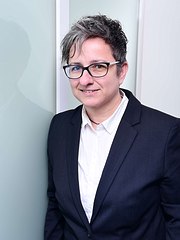
Rachel Carlos Duque Reis is a professor at the Federal University of Viçosa (UFV), Brazil , and a PhD student at the Institute of Mathematics and Computer Science of the University of São Paulo (ICMC-USP) . She holds a BSc in Computer Science (2002) from UFV and an MSc in Electrical Engineering (2004) from the University of Campinas (Unicamp). Her career bridges academia and industry, including work as a software analyst at Eldorado Institute and contractor roles for Motorola Inc. Education BSc in Computer Science, Federal University of Viçosa (2002) MSc in Electrical Engineering, University of Campinas (2004) Her research focuses on interdisciplinary areas within computer science and education, particularly Computer-Supported Collaborative Learning (CSCL) , Affective Computing , and Technology-Enhanced Learning . She also advocates for gender diversity in computing through her work on Women in Computing . Her technical expertise is further grounded in foundational fields like Computer Science and Electrical Engineering .
Sadhana Puntambekar is a prominent academic researcher in the field of educational technology and collaborative learning. Her work focuses on understanding and enhancing learning processes through technology integration, particularly in science and inquiry-based education. She has contributed extensively to the design of collaborative learning environments, automated assessment tools, and AI-driven educational systems. Her research spans topics such as collaborative learning dynamics, student-teacher interactions, and the role of physical/virtual models in science education. Notably, she has explored the impact of prior knowledge on collaborative outcomes and the development of frameworks for teacher support in educational technology adoption. Dr. Puntambekar has co-edited major conference proceedings, including the 10th International Conference on Computer-Supported Collaborative Learning (CSCL 2013), and has collaborated with institutions globally. Her recent work integrates large language models (LLMs) into educational tools, emphasizing ethical and responsible AI applications in learning environments. Publications highlight her exploration of AI in education, automated formative assessment, and the design of interactive learning systems for physics and biology. Her contributions bridge theory and practice, aiming to improve educational outcomes through innovative technology solutions.
David Kronawettleitner is a Researcher at the Research Center Wels LOGISTIKUM, affiliated with the University of Applied Sciences Wels. His work focuses on business simulation games, project management education, and collaborative learning strategies. He has contributed to projects like autoBAHN II (2010-2012) as a Co-Investigator. Key research interests include the application of simulation-based learning in project controlling, management accounting education, and understanding success factors for educational technologies. His studies explore how active learning through simulations enhances student engagement and knowledge retention in business disciplines. Recent publications (2019-2020) emphasize the design of collaborative learning environments, motivation in computer-supported education, and empirical analyses of business simulation game outcomes. His work bridges theoretical knowledge with practical pedagogical applications in logistics and management education.
Adetunji Adeniran is a Lecturer at the University of Dundee's School of Science and Engineering, contributing to the Graduate Apprenticeship Programme. His research focuses on educational technology, collaborative learning systems, and mentorship frameworks. He specializes in designing scenario-based training modules, evaluating online collaboration metrics, and developing adaptive learning systems. His work emphasizes equitable education through personalized learning technologies and scalable training solutions. Key contributions include WC-GCMS computational metrics for collaboration analysis and iterative design processes for mentor lesson development. His research spans educational psychology, group dynamics, and technology integration in learning environments. Adeniran has published extensively on computer-supported collaborative learning (CSCL), feedback systems in group work, and quantitative methods for educational evaluation. His recent work (2022-2023) highlights innovative approaches to tutor training and equitable mentorship in technology-mediated learning contexts.
Yuxin Chen is an Assistant Professor in the Department of Counseling and Instructional Sciences at the University of South Alabama, part of the College of Education and Professional Studies (CEPS). His work focuses on technology-enhanced learning environments, particularly in inquiry learning, problem-based learning (PBL), and computer-supported collaborative learning (CSCL). Education: Ph.D. in Learning Sciences, Indiana University (2023) M.A. in Educational Psychology, University of Iowa (2015) B.A. in English, Tianjin Normal University (2013) Research Interests : Dr. Chen investigates how instructors adapt facilitation strategies in K-12 and higher education to support collaborative learning. He designs mediating tools, visual representations, and dashboards to enhance knowledge construction and higher-order thinking. Key areas include: Teacher dashboards for real-time collaboration assessment Game-based PBL environments Post-pandemic classroom orchestration Adaptive scaffolding for collaborative inquiry Publications : His articles emphasize teacher dashboards, collaborative inquiry design, and post-pandemic pedagogy. Recent work explores self-regulation in dashboard use and real-time classroom orchestration tools. Awards : No scientific awards explicitly listed. Teaching & Grants : Teaches courses like EPY-351 (Human Growth) and ISD-641 (Performance Systems Technology). No student advisees or grants detailed in the text. Labs/Teams : No lab affiliations specified, though collaborates with organizations like AERA and ISLS.
Jürgen Buder is a research scientist at the Leibniz-Institut für Wissensmedien (IWM) in Tübingen, Germany, and has been a key member since 2008. He serves as Deputy Head of the Perception and Action lab since 2022 and is also the ombudsman for good scientific practice at IWM. He is affiliated with Eberhard Karls University Tübingen, where he completed his habilitation in psychology in 2021. His research focuses on human-AI interaction, processing of conflicting information on social media, attitude polarization, knowledge communication, and computer-supported collaborative learning (CSCL). His work bridges cognitive psychology, educational technology, and social media dynamics. He has led major projects such as 'Info-noise', 'How do people deal with opposing opinions?', and 'ArchiveGPT', exploring the psychological effects of digital environments. The most recent articles highlight trends in AI perception, trust in artificial agents, polarization in online discourse, and cognitive mechanisms in digital learning. These publications appear in high-impact journals such as Computers in Human Behavior , Psychological Science , and New Media & Society , reflecting interdisciplinary engagement across psychology, education, and human-computer interaction. Scientific Awards: Dissertation Award, Faculty of Social Sciences, University of Tübingen (2002) He actively supervises and collaborates with PhD students and postdocs, though specific advisees are not listed. He has secured multiple research grants through DFG and Leibniz ScienceCampus funding. He has organized numerous conferences and workshops, including the 'WCT meets HCI' series and symposia on belief polarization. He teaches courses such as 'Knowledge media in education, work, and leisure' and seminars on anthropomorphism at the University of Tübingen. He is a core member of the Perception and Action lab at IWM, contributing to its mission of understanding human cognition in digital environments. His work emphasizes both theoretical frameworks and practical applications in educational and public policy contexts.
Davinia Hernandez Leo is a Full Professor and Serra Húnter Fellow at the Department of Information and Communication Technologies, School of Engineering, Universitat Pompeu Fabra (UPF) in Barcelona. She serves as the head of the Interactive and Distributed Technologies for Education (TIDE) research group and is the Commissioner for research in educational innovation at UPF. She is also currently an ICREA-Academia fellow (2019-2024). Dr. Hernandez Leo received her Telecommunications Engineering degree and Ph.D. from Universidad de Valladolid, Spain, in 2003 and 2007, respectively. She has held visiting positions at Open University of the Netherlands (2006), Virginia Tech as a Fulbright Scholar (2012), and University of Sydney (2015). She previously served as Vice-Dean of the UPF Engineering School and head of its Unit for Teaching Quality and Innovation. Her research lies at the intersection of human-centered computing, network and computer applications, and learning sciences. She focuses on Learning and Collaboration Technologies, with specific interests in learning design technology, computer-supported collaborative learning (CSCL), community platforms, learning analytics, and architectures and devices for learning. Currently, she is investigating the interplay of learning design with data analytics, with an emphasis on CSCL. Her work often addresses social inclusion through technology, particularly with vulnerable populations including adults without academic degrees. Dr. Hernandez Leo's recent publications demonstrate a clear trajectory toward integrating ethical considerations with learning analytics, supporting teacher communities through design tools, and exploring collaborative learning environments in both formal and informal settings. Her work bridges theoretical research with practical applications, particularly evident in her collaborations with organizations like Àgora. Best Paper Awards at ICALT2004, ID+TIC2009, and CAE2010 Finalist Best Papers at EDEN2015 and ICALT2020 Best Demo Recognitions at ECTEL2013, ECTEL2018, and ECTEL2021 European Award for Excellence in CSCL Technology ICREA Academia Prize (2019-2024) Multiple teaching recognitions from UPF and Catalan Government Dr. Hernandez Leo is very active in research supervision of PhD students and visitors, and has led numerous European and national research projects including METIS Integrated Learning Design Environment. She has served as Associate Editor for IEEE Transactions of Learning Technologies, Vice-President of the European Association for Technology-Enhanced Learning, and chair of the IEEE ICICLE SIG on Learning Technology Data Standards. Currently, she is an elected member of the CSCL Committee within the International Society of the Learning Sciences and a member of the steering committee of the European Conference on Technology-Enhanced Learning. She leads the Interactive and Distributed Technologies for Education (TIDE) research group, which has established a significant collaboration with Àgora, a non-profit organization supporting adults without academic degrees. Through this partnership, her team has developed technologies for active aging, digital literacy programs, and platforms for community engagement, demonstrating a strong commitment to applying learning technologies for social inclusion and community empowerment.
Juan I. Asensio-Pérez is a researcher in educational technology and smart learning environments, with a focus on integrating formal and informal learning through innovative tools. He has collaborated extensively with Miguel L. Bote-Lorenzo, Yannis A. Dimitriadis, Alejandra Martínez-Monés, and Eduardo Gómez-Sánchez. Key research areas: Smart Learning Environments, Learning Design, Gamification, Linked Data Applications Notable contributions: Development of tools like Casual Learn for cultural heritage education, GamiTool for MOOC gamification, and Bucket-Server for cross-space learning artifact management Publications span journals like Computers & Education , IEEE Transactions on Learning Technologies , and conferences including EC-TEL and ICALT.
Magnus Hontvedt is an Associate Professor at the Department of Education, University of Oslo, with a focus on professional learning, technology-enhanced education, and simulations in training contexts. He is affiliated with the Network for Interaction Analysis (NIA) at the University of Southeastern Norway and the TEPEE research group at OsloMet/USN. Education: Ph.D. in Education (2014), University of Oslo Master of Education (2006), University of Oslo His research explores the socio-technical organization of learning, particularly through simulations, computer-supported collaborative learning (CSCL), and digital environments. Current projects include "Tracing learning outcomes across policy and practice" (LoAPP) and "Læring og undervisning i digitale omgivelser" (LUDO). Hontvedt's recent publications emphasize co-creation in higher education, video-based assessments, and epistemic agency in teacher education. His work integrates pedagogical theory, digital tools, and interdisciplinary methodologies. He teaches and supervises on pedagogy in teacher education, learning in higher education, simulator training, and interaction analysis. He is part of the LINK research group at UiO and has contributed to the "Teaching and Learning in Higher Education" course. The research group TEPEE and collaborations between OsloMet, University of Oslo, and University of Southeastern Norway highlight his cross-institutional engagement. His projects often involve video-observation, simulation fidelity frameworks, and policy enactment in classrooms.
Jingjing Zhang is an Associate Professor and Associate Dean at the Beijing Normal University (BNU) Faculty of Education. She leads the Big Data Centre for Technology-mediated Education and holds a DPhil in Education from the University of Oxford. Research Interests span educational technology, learning analytics, open educational resources (OER), and massive open online courses (MOOCs). Her work focuses on data mining techniques like network analysis to study human relationships and activities in digital learning environments, with applications in knowledge visualization and collaborative learning. Scientific Contributions include 103 publications and 2.3+ billion citations. Key research trends involve: Temporal network analysis of learner interactions Knowledge convergence mechanisms in open learning Design thinking for creativity in primary education MOOCs as agents of educational transformation Awards : ORS Scholarship, Clarendon Scholarship. Collaborations include Jiang Zhang's Lab and international partnerships with researchers from University College London, University of Oxford, and global institutions.
Catherine Dornfeld Tissenbaum serves as an Assistant Professor in Curriculum & Instruction at the University of Illinois Urbana-Champaign College of Education. Her research focuses on collaborative learning with technology, distributed scaffolding, and the influence of social/cultural factors on education. She works at the intersection of formal and informal learning environments, particularly with marginalized communities. Current appointment: Assistant Professor, Curriculum & Instruction Institutional affiliation: University of Illinois Urbana-Champaign Research areas: Participatory design methodologies, epistemic justice in educational spaces, translanguaging practices, and youth agency in museum-based learning Her recent publications demonstrate a commitment to: Centering Latina/x youth voices through Participatory Design Research (PDR) and Design-Based Research (DBR) frameworks Challenging epistemic injustice in curated learning environments Developing bilingual and multilingual educational interventions Creating community-engaged museum exhibitions Implementing culturally sustaining pedagogies Analyzing the emotional labor in participant-centered research Methodologically, she employs mixed-methods approaches, qualitative narrative inquiry, and social network analysis to understand learning processes across physical and virtual spaces. Her work particularly examines how afterschool programs can serve as third spaces for marginalized youth to process school experiences, build confianza, and assert their identities through creative expression. Key publications highlight: Redesigning educational interventions based on participant feedback Translanguaging as epistemic validation Using chisme (gossip) as cultural practice for trust-building Facilitating self-representation through multimodal art exhibits Developing epistemic tools for marginalized communities Comparative analysis of physical vs. virtual lab environments
Prof. Dr. Freydis Vogel is a Professor at the University of Hamburg's Faculty of Education, specifically within the Department of General, Intercultural and International Comparative Education as well as Educational Psychology (EW1). Her research focuses on computer-supported collaborative learning (CSCL), collaboration scripts, and their impact on educational outcomes. She investigates how socio-cognitive scaffolding, group awareness tools, and self-regulation strategies enhance learning processes in digital and collaborative environments. Her work emphasizes the design and evaluation of CSCL systems for fostering mathematical argumentation skills, collaborative problem-solving, and teacher education. Vogel also explores the role of emergency remote teaching methodologies and evidence-based practices in higher education. Her contributions bridge theoretical frameworks with practical implementations, addressing challenges in both synchronous online learning and traditional classroom settings. Key areas of interest include the interplay between collaboration scripts and cognitive processes, the effectiveness of heuristic worked examples, and the adaptation of scaffolding techniques for diverse learner populations. She has authored numerous publications on these topics and actively engages with international educational research communities through initiatives like the NAPLeS project.
Maya Persico is a Research Fellow at the University of Hamburg's Faculty of Education, affiliated with the Department of General, Intercultural and International Comparative Education as well as Educational Psychology (EW1). She specializes in digitalisation in education and focuses on open educational resources (OER), OER policies, and the integration of generative AI in collaborative learning environments. Her work also addresses teachers' future competences and self-regulated learning methodologies. Research Interests: OERlab UHH initiatives Twin Transformation-related OER development Open education policy frameworks at universities Role of AI in computer-supported collaborative learning (CSCL) Professional development of educators in digital age competencies Lab/Affiliations: Active contributor to the OERlab UHH, focusing on innovative educational resource creation and policy analysis. Advising & Grants: No specific grants or advising roles listed in current profile. Office hours available by arrangement (Tuesday 10-12 AM & 4-6 PM via in-person or Zoom).
Dr. Kevin Matthew Oliver is a Professor of Learning, Design, and Technology at North Carolina State University’s College of Education, holding a Ph.D. from the University of Georgia. He previously served as Department Chair for Teacher Education and Learning Sciences (2022–24) and currently teaches courses on instructional design and culturally-responsive pedagogy. His research focuses on digital history, culturally-responsive teaching, and STEM learning through makerspaces and robotics. He has mentored 16 doctoral students and advised 26 dissertations. Awards include the 2022 UNC System Faculty Fellow and Fulbright Specialist Roster (2021–25). Education: Ph.D. Instructional Technology, University of Georgia (1999) M.Ed. Educational Media and Instructional Design, UNC-Chapel Hill (1993) B.S. Communications-Advertising, University of Tennessee (1990) Research emphasizes technology-driven cultural representation (e.g., locative media projects in Prague and Vienna), distance education innovation, and STEM informal learning. He co-leads the Locative Press Lab, developing virtual tours and cultural heritage projects. His grants include funding from the Gates Foundation, NSF, and Burroughs-Wellcome Fund for initiatives like CIDRE and narrative-centered STEM education. Professional highlights include leading annual study abroad programs for teachers since 2011, serving as a Visiting Lecturer at Charles University (2017), and analyzing innovation in makerspaces across NC’s 17-campus system as a UNC System Fellow.
Yoav Bergner is an Associate Professor of Learning Sciences and Educational Technology at New York University's Steinhardt School of Culture, Education, and Human Development. He holds a Ph.D. in theoretical physics from MIT and an A.B. in physics from Harvard University. His research bridges psychometrics and learning sciences to develop analysis methods for educational design, focusing on Makerspaces/FabLabs, data literacy (especially with dancers), and collaborative problem-solving. Education: Ph.D. in Theoretical Physics, MIT A.B. in Physics, Harvard University Research Interests: Assessment of learning in Makerspaces/FabLabs Data literacy curriculum design integrating dance and STEM Collaborative problem-solving frameworks Educational technology tools like CPSX (collaborative problem-solving extension for Open edX) Psychometric modeling for small-group interactions Scientific Awards: MacArthur/ETS Edmund W. Gordon Fellowship for 21st Century Learning and Assessment (2013-2016) Advising & Grants: Experience in teacher education and industrial arts instruction Prior roles include Research Scientist at Educational Testing Service (ETS) and post-doctoral work in sculpture/furniture-making Current focus: Developing tools for real-time small-group analysis and culturally sustaining curricula Labs/Teams: Co-developer of CPSX platform Leading initiatives in AI+ Dance and creative computing education