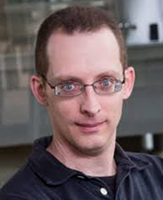
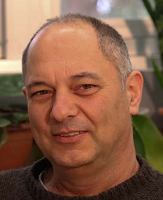
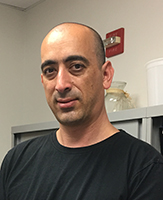
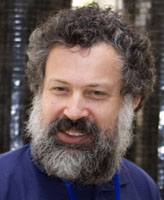
Yair Censor is a Professor of Mathematics at the University of Haifa, affiliated with the Department of Mathematics within the Faculty of Natural Sciences. His research focuses on optimization, feasibility problems, and their applications in medical imaging and radiation therapy, particularly in proton computed tomography (pCT) and intensity-modulated radiation therapy (IMRT). He pioneered the superiorization methodology , a framework for enhancing iterative algorithms to reduce objective function values while maintaining feasibility. His work spans theoretical contributions to applied mathematics, including projection methods, convex optimization, and perturbation resilience. Censor has collaborated extensively on interdisciplinary projects, such as developing algorithms for proton CT reconstruction and radiation treatment planning. He is associated with the Center for Mathematics and Scientific Computation (CMSC) at the University of Haifa and has contributed to special issues of journals like Inverse Problems and Applied Analysis and Optimization . Notable recent research includes advancements in superiorization for inverse planning in proton therapy, immunity to condition numbers in linear optimization, and floorplanning algorithms using feasibility-seeking methods. His work emphasizes bridging mathematical theory with practical medical and engineering applications.
Yuval Filmus is an Associate Professor at the Technion's Henry and Marilyn Taub Faculty of Computer Science, with a secondary appointment in the Mathematics Department since 2022. His academic journey includes a BSc from the Open University of Israel, MSc under Uri Feige at the Weizmann Institute, and PhD under Toni Pitassi at the University of Toronto. After a postdoc at the Institute for Advanced Study in Princeton, he joined Technion in 2015. Research focuses on Boolean function analysis, computational complexity, combinatorics, and submodular optimization. He has held grants from ISF and ERC, and is a recipient of the Alon Fellowship and Krill Prize. His work involves international collaborations, including visits to Charles University, Simons Institute, KTH, McGill University, and TIFR. He has advised numerous graduate students and postdocs, with notable advisees including Johnathan Spiegelman (now at MPI Saarbrücken), Artur Ryazanov (EPFL), and Idan Mehalel (NSF/Simons Collaboration postdoc). His academic network spans institutions globally, reflecting his contributions to theoretical computer science.
Prof. Isaiah (Shy) Arkin is a Professor in the Department of Biological Chemistry at the Hebrew University of Jerusalem's Silberman Institute of Life Sciences. His research focuses on the structural biology of membrane proteins, particularly viral ion channels and pumps, and the development of antiviral therapies targeting SARS-CoV-2 and influenza viruses. He employs advanced techniques including FTIR spectroscopy, molecular dynamics simulations, and statistical analysis. Research Interests: Computational and experimental structural biology of membrane proteins Structure-function relationships in viral ion channels Antiviral drug discovery Development of novel experimental/computational methodologies Prof. Arkin has been recognized with the Klachky Prize for advancing scientific frontiers and the 2015-16 Excelling Teacher award. His work bridges biophysics, virology, and drug design, with a focus on pathogen-related membrane proteins. Lab Activities: The Arkin Lab investigates antiviral mechanisms and structural dynamics of transmembrane proteins using interdisciplinary approaches. Collaborations include molecular biology, computational modeling, and advanced spectroscopic techniques.
Prof. Beatus Tsevi is an associate professor at the Hebrew University of Jerusalem, affiliated with the Benin School of Computer Science and Engineering and the Silberman Institute of Life Sciences. He holds dual appointments in Computer Science and Life Sciences, and is a member of the Bio-Engineering Center. His research focuses on understanding insect flight control mechanisms and developing bio-mimetic robotics. Education: B.Sc. in Physics and Computer Science, Hebrew University Ph.D. in Physics (Weizmann Institute, microfluidic droplet dynamics) Postdoc in Physics (Cornell University, insect flight control) Research Interests: Flight control dynamics in insects using ultra-fast imaging Multi-modal sensory integration during flight Neural and genetic bases of flight behavior Development of insect-inspired micro-robots Advising & Lab: Current students: 4 PhD/MS candidates and 6 undergraduate researchers Alumni: 12 graduates who transitioned to industry/academia Labs: Micro-Flight Laboratory (Silberman Institute) and Computer Science Office (Rothberg Building) His work bridges engineering, biology, and physics to create novel bio-inspired technologies.
Dr. Amnon Buxboim is an Assistant Professor at the Hebrew University of Jerusalem, affiliated with the Alexander Grass Center for Bioengineering and the Department of Cell and Developmental Biology. His research focuses on mechanobiology, particularly the roles of mechanical forces in stem cell differentiation, nuclear mechanics, and embryo development. He leads the Buxboim Lab, which combines single-cell genomics, microrheology, and AI to study mechanotransduction in contexts like preimplantation embryos and inflammation. Key achievements include securing an ERC Starting Grant (2015) for bovine reproduction mechanobiology and developing novel technologies like the MechanoSCOPE for in situ embryo mechanics analysis. His lab trains students in biology, bioengineering, physics, and computer science, collaborating with clinicians for translational impact. Notable students include Yoav Kan-Tor (PhD, Computer Science), Nir Zabari (MSc), and Shlomi Brielle (PhD). Research interests span matrix-directed stem cell fate, embryo development prediction via deep learning, and nuclear lamina interactions. The lab also investigates inflammation's mechanical aspects in IBD and GvHD.
Dr. Eden Amir is a Professor at the Department of Cell & Developmental Biology, Hebrew University of Jerusalem. His research focuses on epigenetic regulation in cancer, particularly DNA methylation and chromatin dynamics. He leads a lab studying epigenetic silencing of tumor suppressor genes and its implications for cancer therapy. Amir collaborates with Prof. Yuval Dor on cell proliferation markers and develops transgenic mouse models for cancer research. He teaches advanced cell biology and chromatin structure courses. His work bridges epigenetics, chromatin biology, and cancer mechanisms, with contributions to understanding genomic instability in tumors. Key research areas include: epigenetic silencing mechanisms, cancer epigenetics, chromatin remodeling in malignant rhabdoid tumors, and direct reprogramming of epigenetic defects. His lab employs mouse models, high-throughput genomic techniques, and computational analysis. Major findings include the role of macroH2A in gene silencing and the impact of DNA hypomethylation on tumor development. Amir’s contributions to the field are evident in over 50 peer-reviewed publications, including studies in Nature and Science . He is affiliated with the Institute of Life Sciences and collaborates internationally. His research also explores therapeutic strategies targeting aberrant epigenetic states in cancer cells.
Prof. Eitan Lerner is a Professor at the Department of Biological Chemistry, The Alexander Silberman Institute of Life Sciences, Hebrew University of Jerusalem. His research focuses on dynamic structural biology of intrinsically disordered proteins, molecular etiology of Parkinson's disease, bio-condensates, and biological fluorescence. He leads the Lerner lab, developing innovative methods such as single-molecule fluorescence spectroscopy and the flow virometer for rapid virus detection. His work bridges experimental and computational approaches to study biomolecular dynamics and phase separation. Research Interests: Parkinson's Disease mechanisms, phase-separated bio-condensates, fluorescent probe design. Key Projects: Flow virometer for virus detection (patented), FRET imaging of protein interactions, and fluorescence lifetime analysis of biomolecular condensates. Collaborations: With Prof. Eran Meshorer (HUJI), Prof. Thorben Cordes (LMU Munich), and others. His lab’s advancements include using fluorescence lifetime to report local densities in cellular condensates and structural studies of α-Synuclein.
Prof. Yonatan Loewenstein is a Professor in the Department of Neurobiology at the Hebrew University of Jerusalem. His research focuses on computational neuroscience and cognition, particularly the neural mechanisms underlying decision-making, reinforcement learning, and sensory processing. He leads an interdisciplinary laboratory exploring how learning principles govern behaviors in both biological and artificial systems. Key contributions include studies on somatosensory cortex organization, neuronal homeostasis, and human-machine synergy in decision-making. He co-authored the book Computational Models in Cognition , blending theoretical frameworks with empirical findings. Education details are not explicitly provided in the text, but his affiliations suggest advanced training in neurobiology and computational sciences. Research interests span decision-making biases, reinforcement learning dynamics, and the interplay between brain structure and function. His recent work addresses topics like idiosyncratic choice stability, value modulation in impulsivity, and abstract reasoning in neural networks. Publications highlight collaborations in fields ranging from cognitive dissonance to schizophrenia diagnostics. While no specific awards are listed, his involvement in high-impact journals and interdisciplinary projects underscores his academic contributions. The lab’s work is housed in the Goodman Faculty building, with active group members and experimental facilities.
Prof. Israel Nelken is a Full Professor at the Hebrew University of Jerusalem, affiliated with the Edmond and Lily Safra Center for Brain Sciences. His research focuses on auditory neurophysiology, specifically the neural mechanisms underlying sound processing, perception-action loops, and statistical learning in audition. He has contributed significantly to understanding how the brain detects deviant sounds and encodes complex auditory information across multiple temporal and spectral scales. Affiliations: Hebrew University of Jerusalem, Edmond and Lily Safra Center for Brain Sciences Roles: Full Professor, Principal Investigator of the Israel Nelken Lab Research Interests Prof. Nelken’s work explores the transformation of sensory signals into meaningful representations in the auditory system. Key areas include: Neuronal responses to complex sounds and their behavioral relevance Stimulus-specific adaptation (SSA) and prediction error detection Integration of auditory information across cortical and subcortical regions Role of auditory cortex in rhythmic motor synchronization and statistical learning Key Contributions His studies on deviance detection in auditory cortex have advanced our understanding of mismatch negativity (MMN) and predictive coding. Recent work highlights rats’ ability to synchronize movements with auditory rhythms, challenging assumptions about species-specific musicality. He has also developed innovative tools like the Rat Interactive Foraging Facility (RIFF) to study neural-behavioral interactions in real-time. Awards & Honors Rector’s Prize for Excellence in Research and Teaching (2015) Landau Prize for Sciences and Research (2015) Michael Bruno Memorial Award (2008) ERC Advanced Grant (2013) Grants & Collaborations Recipient of prestigious grants including the ERC Advanced Grant for studying auditory processing in natural environments. Active collaborations include work on cortical dynamics in Alzheimer’s models and computational frameworks for attentional blink phenomena. Labs & Teams Leads the Israel Nelken Lab, which integrates electrophysiology, computational modeling, and behavioral experiments to dissect auditory processing. The lab collaborates widely, contributing to projects like the dense cortical microcircuit simulations for understanding surprise responses.
Prof. Dana Reichmann is a Professor in the Department of Biological Chemistry at the Hebrew University of Jerusalem's Institute of Life Sciences. Her research focuses on protein homeostasis, redox regulation, and stress response mechanisms. She leads an interdisciplinary lab exploring topics such as intrinsically disordered chaperones, redox-dependent heterogeneity in cellular populations, and proteomics using mass spectrometry. Research Interests: System biology of redox regulation, computational/experimental proteomics, and structural biology of chaperones. Her work addresses how redox signaling and protein dynamics impact aging and stress responses, with applications in understanding neurodegenerative diseases and bacterial pathogenesis. Awards: - Farkas-Himsley Award for Young Researchers (2016) - Krill Prize (2016) Laboratory Activities: Current projects include studying the functional plasticity of Hsp33 chaperones, developing methods to analyze protein-protein interactions via crosslinking and HDX-MS, and investigating redox heterogeneity in yeast populations. The lab also designs novel peptides and explores applications in cultured meat protein production. Collaborations and Grants: Active collaborations include work on bacterial redox switches (with Harvard University) and proteasome dynamics (with UC San Francisco). Her lab has secured funding for projects on oxidative stress in aging and anti-bacterial strategies.
Prof. Sagiv Shifman is a Full Professor at the Department of Genetics , Alexander Silberman Institute of Life Sciences , The Hebrew University of Jerusalem . His research focuses on the genetics of neurodevelopmental and psychiatric disorders , particularly autism spectrum disorders and schizophrenia , utilizing genomic data analysis , mouse models , and CRISPR screening to uncover chromatin regulators , gene expression variation , and sex-specific genetic mechanisms . Academic Leadership : Served as department head (2017-2021), previously leading genetics teaching programs. Research Themes : Mapping genetic variants in brain disorders via computational/experimental methods. Studying gene networks and chromatin regulation in neurodevelopment. Investigating essential genes in stem cells and cancer via CRISPR libraries . Elucidating sex chromosome influences on gene essentiality and disease. Scientific Contributions : 2013 Krill Prize recipient for excellence in Life Sciences. Key discoveries in POGZ deficiency , AUTS2 isoforms , and ASD/Schizophrenia gene overlap . Collaborative Impact : Advancing neurogenetic databases and CRISPR-based disease modeling . Developing tools like ImReP and ROP for immunoglobulin repertoire analysis and RNA-seq read origin detection .
Prof. Ehud Zohary is a Professor of Neurobiology at The Hebrew University of Jerusalem's Edmond and Lily Safra Center for Brain Sciences (ELSC). His primary research focuses on visual perception, neural mechanisms underlying scene analysis, and visual recovery after early blindness. His lab investigates how the brain integrates sensory information to form coherent visual representations, particularly in unique populations such as children recovering from congenital cataracts. Research Themes: Visual perception, neuroplasticity, social cognition, and multisensory integration Key Projects: Vision recovery studies in Ethiopian children (Project EyeOpener), neural correlates of shape perception, and social scene understanding His work combines functional MRI, psychophysics, and computational modeling to explore how visual information is processed across hierarchical brain regions. Recent studies highlight deficits in social action understanding and gaze following in newly sighted individuals, underscoring the critical role of early visual experience. Lab Members: Includes PhD students Ilana Naveh, Sara Attias, Asael Sklar, and postdocs such as Maayan Raveh. Collaborations include multidisciplinary teams studying neuroplasticity and developmental vision.
Professor Yael Hanein is a Full Professor at the School of Electrical Engineering, Tel Aviv University, where she also serves as the head of the University Center for Nanoscience and Nanotechnology. She established the Neuro-Engineering Lab in 2003 as one of six core laboratories of the Tel-Aviv University Center for Nanoscience and Nanotechnology and is affiliated with the Sagol School of Neuroscience. Her research focuses on: Nanotechnology applications for neuronal interfaces Micro and nano devices for direct and indirect brain interfacing Novel materials for artificial retina applications Skin electronics for electrophysiology Microfabrication methods for biological applications Professor Hanein's recent work demonstrates significant trends in applying nanotechnology to medical diagnostics, particularly in developing printed electrode technology for home-based sleep monitoring as an alternative to traditional polysomnography, addressing limitations in availability, cost, and labor intensity. Her scientific recognition includes: ERC grant for young researchers (2012) World Economic Forum's Young Scientists selection (2009) Membership in the Young Israeli Academy of Sciences (since 2012) Membership in the World Academy of Young Scientists (since 2010) Professor Hanein's research is supported by diverse funding sources including ISF, ERC, GIF, Israeli Ministry of Science, Israeli Ministry of Industry and Trade, and industrial partnerships. She also serves as VP at 'Nano Retina,' an Israeli startup developing retinal implants, demonstrating the translational potential of her academic work. The Neuro-Engineering Lab maintains strong interdisciplinary connections across the university's neuroscience and engineering disciplines.
Prof. Amir Natan is a faculty member at Tel Aviv University's School of Electrical Engineering, Department of Physical Electronics. He leads the Nano-Materials and Devices Theoretical Modeling Group, focusing on interdisciplinary research bridging physics, chemistry, materials science, and electrical engineering. His work contributes to the Materials Genome Initiative, aiming to revolutionize materials design through computational approaches. Education B.Sc. in Physics and Mathematics - Hebrew University M.Sc. in Electrical Engineering - Tel Aviv University Ph.D. in Chemistry - Weizmann Institute of Science Post-doctoral training - Northwestern University Research Focus Prof. Natan's research integrates multi-scale computational modeling with practical applications in renewable energy and nanotechnology. Key areas include: Theoretical formalism development for material properties prediction Atomic-to-macroscopic scale simulations of novel materials Light-matter interactions and electron dynamics Surface/interface phenomena in low-dimensional systems Real-space DFT/TDDFT methodologies Applications span energy storage systems, photovoltaic cells, quantum dots, GaN-based HEMT devices, and sensor technologies. Academic Advising Currently supervising graduate students including: Elad Segev (M.Sc.) Yevgeny Rekita (M.Sc.) Affiliations Tel Aviv Center for Nanoscience and Nanotechnology Renewable Energy Center Israel National Research Center for Electrochemical Propulsion (INREP) PARSEC real-space DFT code development team
Prof. Eran Rabani is a distinguished researcher and professor holding dual appointments at Tel Aviv University's School of Chemistry and the University of California, Berkeley's Department of Chemistry. At UC Berkeley, he holds the prestigious Glenn T. Seaborg Chair in Physical Chemistry and serves as a Faculty Scientist at Lawrence Berkeley National Laboratory. His research bridges theoretical chemistry, computational physics, and nanomaterials science, with significant contributions to understanding quantum phenomena at the nanoscale. Prof. Rabani earned his Ph.D. in Theoretical Chemistry from The Hebrew University in 1996, followed by postdoctoral research at Columbia University. His academic career progressed from Senior Lecturer to full Professor at Tel Aviv University, where he has maintained a continuous appointment since 1993. His educational background includes a summa cum laude B.Sc. from the Special Program "Amirim" at The Hebrew University. Rabani's research program centers on three interconnected pillars: Optoelectronic Properties of Nanomaterials , where his group develops computational models to describe exciton fine structure and phonon interactions in nanocrystals; Quasiparticle Dynamics , investigating electron transfer processes in nanoscale systems; and Stochastic Electronic Structure Methods , pioneering computational approaches that dramatically reduce the complexity of quantum simulations. His work combines theoretical innovation with practical applications in renewable energy, sensing technologies, and quantum information processing. Analysis of Rabani's recent publications reveals a strong emphasis on quantum confinement effects, exciton dynamics, and the development of stochastic computational methods that enable simulations of previously intractable systems. His research demonstrates increasing interdisciplinary collaboration, particularly with experimental groups working on quantum dots, perovskites, and other nanomaterials, with a clear trajectory toward solving real-world problems in energy conversion and quantum technologies. Prof. Rabani's contributions have been recognized with numerous prestigious awards: International Association of Advanced Materials Fellow (2023) Humboldt Research Award (2022) Vebleo Fellow for Prominence and Leadership in Science (2021) Glenn T. Seaborg Chair in Physical Chemistry (2017) Baker Symposium Speaker at Cornell University (2016) Kavli Frontiers of Science Alumni (2015) Marko & Lucie Chaoul Chair for Theoretical and Computational Nanoscience (2013) His research program is supported by substantial funding from major agencies including the National Science Foundation, Department of Energy, and Israel Science Foundation. Current grants (2021-2025) total over $2.5 million, focusing on semiconductor nanowires, computational materials science, and optoelectronic materials. As Director of The Sackler Center for Computational Molecular and Materials Science at Tel Aviv University, he leads a vibrant research group that bridges theoretical innovation with experimental validation. Prof. Rabani directs The Sackler Center for Computational Molecular and Materials Science at Tel Aviv University and has served in various administrative roles including Vice President for Research and Development. His research group maintains strong collaborations with experimentalists worldwide, creating an intellectual community focused on advancing fundamental understanding of nanoscale phenomena while exploring practical applications in energy, sensing, and quantum technologies.