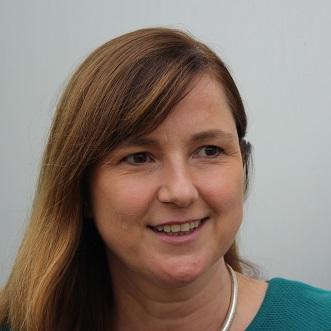
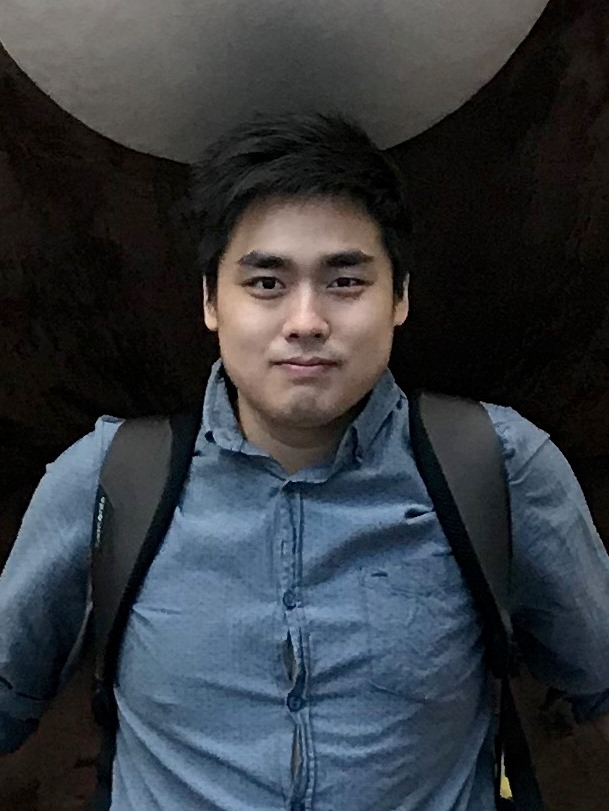
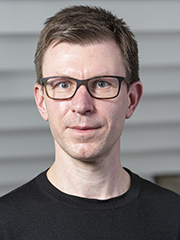
Annette Kinder is a Professor of Psychology of Learning (W2) at the Department of Education and Psychology, Freie Universität Berlin. She has held this position since 2010, following a Heisenberg Fellowship (2004–2010) at the University of Potsdam and a substitute professorship at the same institution in 2008. Her academic journey includes roles as a university assistant at Philipps-Universität Marburg (1999–2004) and research associate in a DFG project on associative learning (1995–1999). She obtained her habilitation in psychology (specializing in general psychology) in 2003 and completed her PhD in 1996 at Philipps-Universität Marburg with a scholarship from Hessian Promotion for Junior Researchers. Research Interests: Cognitive Psychology Artificial Grammar Learning Numerical Processing Educational Diagnostics Machine Learning in Education Neurocognitive Poetics Scientific Awards: Heisenberg Fellowship (2004–2010) Teaching: She has taught courses like 'Pädagogische Diagnostik' (Educational Diagnostics) and research colloquia for qualifying theses since 2018/2019, focusing on cognitive and educational psychology.
Camilla Grane serves as a Senior Lecturer in Psychology at Luleå University of Technology, where she is affiliated with the Department of Health, Education and Technology and specifically works within the Division of Health, Medicine and Rehabilitation. In addition to her teaching responsibilities, she holds the position of deputy head of education for the Department of Health, Medicine, and Rehabilitation (HMR). Dr. Grane holds a Master of Science degree in Ergonomic Design and Production and earned her PhD in Engineering Psychology. Her educational background has prepared her for interdisciplinary work at the intersection of psychology, engineering, and human factors, focusing on the practical application of psychological principles to real-world technological challenges. Her research centers on human-machine interaction and psychosocial factors, with notable expertise in attention and distraction when using multimodal interfaces in vehicles. She has expanded her research scope to include workers' digital tools and wearable sensors in mining and process industries, examining critical aspects such as usability, efficiency, safety, acceptance, and privacy. Dr. Grane is particularly interested in how ongoing digital development creates new relationships between humans and technology, with emerging interests in generative AI and human-robot interaction as research areas. Her publication record demonstrates a strong focus on automotive human factors, with numerous studies on gear shifter usability, human-automation interaction, and safety in industrial contexts. Her work spans multiple disciplines including psychology, engineering, ergonomics, and industrial safety, reflecting her interdisciplinary approach to understanding human-technology interactions across different environments. Dr. Grane teaches across multiple academic programs including the Psychology Bachelor's program and the Master of Science program in Industrial Design Engineering. Her extensive teaching portfolio covers Introduction to Psychology, Engineering Psychology, Social Psychology: Psychological Perspectives, Work and Motivation Psychology, Human-Machine Interaction, Usability, and Ergonomics and Cognition, among other specialized courses. She has led and participated in several significant research projects including 'Working environment of control room operators' (Swedish Transport Administration), 'SIMS' (attitudes towards positioning technology in mining environments), 'Quicktag' (mobile applications for inspections at Boliden), 'The Future Operator' (digital tools for future operators at LKAB and Boliden), 'MODAS' (measuring trust in highly automated vehicles), and 'Life on Board' (usability of future gear selectors in vehicles).
Prof. Dr.-Ing. Roland Dückershoff is a faculty member at the Technical University of Central Hesse in the Department of Mechanical Engineering, Mechatronics, and Materials Technology. He leads the Laboratory for Turbomachinery and has published extensively on hybrid MGT-SOFC systems, gas turbines, and cooling technologies. Specializes in turbomachinery, fuel cells, and hybrid energy systems Develops compact energy converters for sustainable hydrogen economy Recipient of multiple Best Paper Awards (2023, 2019, 2017) His research focuses on optimizing mechanical and thermal efficiency in hybrid systems through computational modeling, pressure dynamics, and flow visualization. Recent work emphasizes hydrogen production and marine applications. Key lectures include Turbomachines 1 and Turbomachines 2 . Awards include: 2023: Best Paper Runner-Up in Energy Technology 2019: Best Paper Runner-Up in Energy Technology 2017: Best Paper Award in Alternative Energy
Dr. Yendrew Yauwenas is a Researcher in the College of Engineering at the University of New South Wales (UNSW), specifically within the Department of Aerospace Engineering . Based in the Ainsworth Building (J17), Level 4, Room 408, Kensington Campus, his work focuses on aerospace engineering, aerodynamics, acoustics, and noise control. Research Interests : Yendrew’s research spans aeroacoustics, drone propeller noise, turbulent boundary-layer dynamics, and blade-tower interaction noise. He investigates noise generation mechanisms in aerospace systems, including wingtip vortices, ducted propellers, and rotor turbulence. Publications : His work includes experimental and numerical studies on noise directivity in small rotors, unsteady thrust in strut wakes, and innovative noise control using 3D-printed porous materials. Recent articles (2024) explore wall-pressure anisotropy and cross-correlation of turbulent flows. Contact : yendrew@unsw.edu.au
Kamila Misiejuk is a Postdoctoral Researcher at the Center of Advanced Technology for Assisted Learning and Predictive Analytics (CATALPA) within FernUniversität Hagen since October 2024. She previously served as a Senior Researcher and PhD Fellow at the Centre for the Science of Learning and Technology (SLATE) , University of Bergen (2017-2024), where she developed expertise in learning analytics and network modeling. Her research focuses on Interdisciplinary applications of Epistemic Network Analysis (ENA) and Transition Network Analysis (TNA) Designing data-driven educational tools for assessment and feedback Evaluating generative AI in academic writing and peer assessment Studying ethical implications of learning analytics dashboards Key trends in her 15 most recent publications (2024-2025) include Systematic reviews of generative AI and dashboard effectiveness Development of network analysis frameworks for collaborative learning Investigations into human-AI interaction dynamics and idiographic analytics Methodological tutorials in educational data visualization and R programming She contributes to professional networks as: Board Member , International Society for Quantitative Ethnography (ISQET, since 2021) Committee Chair , ISQET Resources Committee (2021-2023) Member , Society for Learning Analytics Research (SoLAR, since 2018)
Niels Seidel is a computer scientist and researcher at FernUniversität in Hagen, where he serves as the Lead of project APLE II at the CATALPA research center and as an alternate/deputy member of the CATALPA executive board. He works within the Faculty of Mathematics and Computer Science, focusing on the development of adaptive personalized learning environments for higher education. His work bridges computer science and educational technology, with particular emphasis on supporting self-regulated learning, reading comprehension, and assessment activities across diverse student populations. Seidel's research interests span multiple interconnected domains in educational technology. His primary focus is on Adaptive Learning Environments , where he designs, develops, and evaluates systems that support learners in self-regulated learning, reading, and assessment. His work in Learning Analytics involves analyzing and visualizing learning behavior at individual, group, and organizational levels while accounting for learner diversity. He has made significant contributions to Video-Based Learning , examining how video content can be structured and presented to optimize learning outcomes. His research increasingly incorporates Artificial Intelligence to create more responsive and personalized educational experiences, as evidenced by his recent work on generative AI applications for evaluating self-regulated learning skills. His publication record shows a clear trajectory toward increasingly sophisticated adaptive learning systems. Early work focused on foundational aspects of video-based learning and interaction design patterns, while recent publications demonstrate sophisticated integration of AI, learning analytics, and adaptive techniques. His research consistently addresses practical challenges in distance education while contributing to theoretical frameworks in educational technology. The 2024-2025 publications reveal particular emphasis on self-regulated learning assessment, reading comprehension support, and the application of generative AI in educational contexts. As an academic advisor, Seidel has supervised numerous bachelor's, master's, and diploma theses since 2018, mentoring students working on diverse projects related to educational technology. His current leadership roles include serving as spokesman for the Working Group Learning Analytics within the SIG Educational Technology of the German Informatics Society since 2021. He has secured funding for multiple projects, including the Google.org-funded Theresienstadt explained project and the BMBF-funded Life Long Learning Open Operating Platform (L³OOP). Seidel leads the APLE II project at CATALPA research center, which aims to develop domain-independent adaptive personalized learning environments for higher education. His work leverages the research infrastructure at FernUniversität in Hagen, particularly the Moodle-based learning management system, to implement and test innovative educational technologies with large student cohorts in real-world settings.
Rebeca Garcia Fandiño is a Full Professor in the Department of Organic Chemistry at the Faculty of Biology, University of Santiago de Compostela. She leads the SupraNanoBioMol research group focused on supramolecular systems, nanobiomimetics and molecular biophysics. Develops cyclodextrin-based therapeutics for age-related diseases Studies cyclic peptide nanotubes for antimicrobial applications Specializes in molecular dynamics simulations of biomolecular systems Her research explores hierarchical membrane structures, water model effects in nanoconfined environments, and membrane-targeted therapies. She has published extensively on: Toxic oxysterol removal using cyclodextrin dimers Antimicrobial D,L-α-cyclic peptide interactions Quantum-classical simulation hybrid approaches Post-COVID condition molecular characterization Augmented reality applications in education The SupraNanoBioMol group at CIQUS center utilizes experimental and computational techniques including DSC, ATR-FTIR and MD simulations. Recent work addresses antimicrobial resistance through membrane disruption mechanisms and AI-driven drug discovery.
PD Dr. rer. nat. Patrick Bruns serves as Lab Manager at the Biological Psychology and Neuropsychology Department within the School of Psychology at the University of Hamburg. Holding a habilitation in Psychology (2020) and a doctorate summa cum laude (2010), he maintains an active research profile while overseeing laboratory operations. His academic trajectory includes a visiting scholar position at Brown University (2016-2018) and postdoctoral work on the EU-Project NOMS. Dr. Bruns' research centers on multisensory integration and perceptual learning , with particular focus on audiovisual spatial processing, crossmodal recalibration, and neuroplasticity mechanisms. His work spans diverse populations including congenitally blind individuals and examines how sensory experience shapes neural adaptation. Key methodologies involve psychophysical testing, EEG, and computational modeling of perceptual phenomena. Analysis of his recent publications (2020-2025) reveals consistent investigation into how multisensory experiences recalibrate spatial perception , with growing emphasis on conscious awareness in learning consolidation and cross-species conservation of sensory mechanisms . His work bridges fundamental cognitive neuroscience with clinical applications in psychosis research and sensory rehabilitation. While no formal awards are documented in available materials, his publication record demonstrates sustained productivity in high-impact journals including Trends in Cognitive Sciences , Current Biology , and European Journal of Neuroscience . As Lab Manager, he supports research infrastructure while maintaining his independent scholarly contributions. Dr. Bruns' laboratory work focuses on experimental paradigms examining spatial recalibration through audiovisual interactions, with particular attention to methodological innovations in measuring perceptual precision. His team investigates how sensory deprivation (e.g., congenital blindness) and training protocols alter fundamental perceptual mechanisms across the lifespan.
María García de Blanes Sebastián is a researcher at the Faculty of Economics and Business, Universidad Nebrija, specializing in Audiovisual Communication and Advertising. She earned her PhD in 2023 from Universidad Rey Juan Carlos with a thesis on technology acceptance models applied to mobile payment platforms and virtual assistants. Research Focus: Technology Acceptance (UTAUT2), Digital Transformation, Augmented Reality, Metaverse, and Neuromarketing. Key Projects: Electric vehicle adoption factors, Hybrid AI banking applications, SaaS service quality, and AR/VR impacts on education and marketing. Her recent publications (2020-2025) demonstrate expertise in integrating AI, sustainability, and behavioral analysis across finance, education, and digital marketing. She collaborates with SEDGE research group and can be contacted at mgarcise@nebrija.es.
Dr. Cécile Münch-Alligné is an Ordinary Professor at the School of Engineering, HES-SO Valais-Wallis. She leads the Hydroelectricity research group and Renewable Energies orientation, focusing on sustainable energy systems and advanced turbine technologies. BSc in Industrial Systems from HES-SO Valais-Wallis MSc in Engineering from HES-SO Master Her research spans hydropower innovation, computational fluid dynamics (CFD) simulations, and flexible energy systems. Key projects include: Swiss Competence Center for Electricity (SCCER) phases I & II Xflex Hydro for hydraulic short-circuit technology TUNE micro-turbine deployment in urban networks Scientific contributions emphasize Pelton/Francis turbine dynamics, vortex rope behavior, and pumped storage optimization. She pioneered counter-rotating microturbine applications in water networks and advanced diagnostic methods for turbine fatigue analysis. Collaborations include industry partners like Stahleinbau GmbH, The Ark, and FMHL/FMHL+ hydropower plants. Her work bridges numerical simulations with field validation, targeting energy efficiency improvements and operational longevity.
Dr. Damiano Spina is a Senior Lecturer in the School of Computing Technologies at RMIT University, Melbourne, Australia. He serves as an Associate Investigator at the ARC Centre of Excellence for Automated Decision-Making and Society (ADM+S), the RMIT Research Lead at the Australian Internet Observatory (AIO), and a member of the International Panel on the Information Environment (IPIE). In June 2025, he began a 3-year appointment as an ACM Distinguished Speaker, recognizing his significant contributions to the computing field. Dr. Spina received his PhD in Computer Science from UNED (Spain) in 2014. His academic journey has established him as a leading researcher in information access systems and human-computer interaction. His educational background reflects a strong foundation in computer science with a focus on information retrieval systems. Dr. Spina's research focuses on Information Retrieval (IR), Text Analytics, and Human-AI interaction, with particular emphasis on interactive IR (including conversational assistants) and the evaluation of information access systems. His work bridges theoretical research with practical applications, addressing critical issues such as fairness-aware evaluation, bias detection, and the impact of generative AI on information access. He has developed innovative methodologies that incorporate physiological and cognitive data to better understand user interactions with information systems. His approach often integrates perspectives from cognitive science, behavioral analysis, and ethical considerations to create more effective and equitable information access solutions. His recent publications demonstrate a clear trajectory toward increasingly interdisciplinary research, combining traditional information retrieval with neurophysiological approaches, ethical frameworks, and societal impact assessments. The articles show growing attention to real-world applications, particularly in addressing misinformation, bias in search systems, and accessibility challenges for diverse user groups. His work increasingly incorporates multimodal data and human-centered evaluation methodologies that go beyond traditional relevance metrics. SIGIR 2025 LiveRAG Challenge - First Place Walert - Outstanding Achievement in the 2024 EIP-RACE Demonstrator Competition Award for Excellence in Reviewing ACM SIGIR 2024 Best Presentation Award NTCIR-17 (2023) Best Poster Award Ubicomp-ISWC 2023 RMIT Award for Research Impact (Technology) (2021) ARC Discovery Early Career Researcher Award (DECRA) (2020-2023) Best Short Paper Award ECIR 2020 Best Evaluation Paper Award ECIR 2019 Top Reviewer Award Information Processing & Management (2018) Dr. Spina has supervised numerous PhD and Master's students across diverse research areas including neurophysiological approaches to information retrieval, trust perception in social media, fairness-aware question answering, and sexism identification in social networks. His research has been supported by significant grants including the ARC DECRA award for 'Fair and Transparent Information Access in Spoken Conversational Assistants' (2020-2023) and ongoing projects through the ADM+S Centre. He has also received the 2021 RMIT Award for Research Impact (Technology) for his work's practical applications. Dr. Spina is actively involved with the Australian Internet Observatory (AIO), a national research infrastructure initiative developing tools to analyze digital social data across disciplines. He co-leads the EXIST project series on sexism identification in social networks and has contributed to the Cortana Intelligence Institute (2018-2020) which advanced knowledge on digital assistants. His work often bridges academia and practical applications, particularly in the areas of misinformation management, fairness in information access, and human-AI cooperation.
Karl Werder is an Associate Professor in the Section of Digital Business Innovation at the IT University of Copenhagen. His research focuses on resolving inherent trade-offs in digital innovation, emphasizing tensions between qualities like complexity/agency in AI and their impact on trustworthiness. He collaborates internationally, including visiting roles at Laval University (CA) and Georgia State University (US). Associate Editor: Communications of the Association for Information Systems, Business & Information Systems Engineering Journal Editorial Review Board: Decision Sciences Journal His work appears in leading journals across information systems (Journal of Management Information Systems), software engineering (IEEE Transactions on Software Engineering), and management (California Management Review). Recent research spans responsible AI, design methods, and emotional dynamics in technology adoption. Notable awards include the 2025 Honourable Mention Award. Media engagements include IEEE Spectrum and BLOG@CACM, addressing generative AI consistency and licensing errors in public AI datasets.
C. Garcia Sanchez is a researcher at Delft University of Technology within the Architecture and the Built Environment school, specializing in Urban Data Science. Their work bridges computational fluid dynamics, urban microclimate modeling, and building energy systems through advanced data-driven approaches. Education includes a PhD in Physics from von Karman Institute for Fluid Dynamics and Antwerp University (2017), a Research Master in Fluid Dynamics from von Karman Institute (2012), and an Aerospace Engineering degree from Universitat Politécnica de Valencia (2011). Postdoctoral research was conducted at Carnegie Institution for Science. Research focuses on urban data science with emphasis on High-fidelity computational fluid dynamics for urban environments Synthetic data generation for turbulence modeling Integration of building energy models with urban canopy systems Automated 3D building reconstruction for microscale simulations Recent publications demonstrate expertise in creating efficient simulation workflows that address urban ventilation, climate resilience, and energy efficiency challenges. Awarded the Outstanding Paper Award for 3D Processing & Visualization (2021) for contributions to urban simulation techniques. Research outputs include 19 publications, 3 datasets, and media coverage of digital twin applications for heatwave response. Active in supervising research projects and developing computational tools for urban science, with recent work featured in Computers and Fluids, SoftwareX, and Building and Environment. Current projects involve creating high-resolution urban models that integrate meteorological data with human behavior simulations during extreme weather events.
Adrian Staub is a Professor in the Department of Psychological and Brain Sciences at the University of Massachusetts Amherst. He directs the UMass Eyetracking Laboratory and focuses on psycholinguistics, particularly the cognitive processes underlying language comprehension and production. His work frequently employs eye-tracking methodologies to investigate syntactic parsing, word recognition, and predictability effects in reading. PhD in Psychological and Brain Sciences (2008), University of Massachusetts Amherst Research Interests Staub's research spans psycholinguistic theory, eye movement analysis during reading, and methodological issues in psychological science. He studies how readers process syntactic structures, recognize words, and integrate predictability information. His recent work includes investigations of function word errors in reading, statistical power in language research, and the theoretical foundations of the replication crisis in psychology. Recent Publications His publications examine phenomena such as the 'Sentence Superiority Effect,' the effects of predictability on lexical processing, and methodological challenges in eye-tracking research. These studies span diverse topics including cross-linguistic comparisons (e.g., Italian, French, Chinese), computational modeling of reading processes, and theoretical debates in psycholinguistics. Academic Roles Since January 2023, Staub has served as Editor-in-Chief of the Journal of Memory and Language . He has also acted as guest editor for a special issue on eye movements in reading at 50. His teaching includes graduate seminars on the replication crisis and undergraduate courses on the psychology of reading. International Collaborations Staub has held visiting appointments at institutions including the Labex EFL Project in Paris, the University of Salzburg, and the University of Milan-Bicocca. These roles reflect his engagement in international research networks focused on reading cognition and eye-tracking methodologies.
Alexei (Alyosha) Efros is a Professor in the Department of Electrical Engineering and Computer Sciences at the University of California, Berkeley, where he holds the Howard Friesen Professorship and is a core member of the Berkeley Artificial Intelligence Research Lab (BAIR). Prior to joining UC Berkeley in 2013, he spent a decade as faculty at Carnegie Mellon University and maintained affiliations with École Normale Supérieure/INRIA and the University of Oxford. His educational background includes: PhD in Computer Science, University of California, Berkeley (2003) BS in Computer Science, University of Utah (1997) Efros's research fundamentally explores how machines can understand and recreate the visual world using vast unlabeled data, with pioneering contributions at the intersection of computer vision and computer graphics. He champions data-driven and self-supervised learning approaches, emphasizing slow science principles while advancing applications in computational photography, visual data mining, robotics, and interdisciplinary humanities projects. His work consistently bridges theoretical innovation with practical impact, as evidenced by his prolific publication record and industry collaborations. Analysis of his 2024-2025 publications reveals three dominant trajectories: 1) Generative model interpretability (CLIP analysis, diffusion model auditing), 2) 3D scene understanding through novel representations (Gaussian splatting, persistent state modeling), and 3) Self-supervised techniques for video and multiview consistency. These threads demonstrate his lab's strategic focus on making generative systems more controllable, interpretable, and spatially coherent while maintaining strong connections to human vision principles. His exceptional contributions have been recognized with: ACM Prize in Computing (2016) Five ICCV Helmholtz Test-of-Time Prizes (1999-2017) SIGGRAPH Significant New Researcher Award (2010) NSF CAREER Awards (2006, 2010) Multiple teaching honors including the Jim and Donna Gray Award (2023) As a dedicated mentor, Efros has advised 19 PhD students to completion (including current faculty at CMU, TTIC, and Stanford) and numerous MS/BS researchers, with his trainees consistently securing prestigious fellowships and industry positions. His research has been supported by sustained NSF funding, industry partnerships with Adobe and NVIDIA, and collaborative grants through BAIR's multi-institutional initiatives. The lab maintains active international collaborations with Oxford, École Normale Supérieure, and leading AI institutes worldwide. His research group operates within BAIR's collaborative ecosystem, featuring dedicated computational resources for vision and graphics research. The lab emphasizes interdisciplinary teamwork, regularly partnering with robotics and cognitive science researchers to explore human-AI visual interaction. Current projects focus on foundational challenges in visual representation learning, with increasing emphasis on ethical AI development and societal impact through initiatives like visual data attribution frameworks.