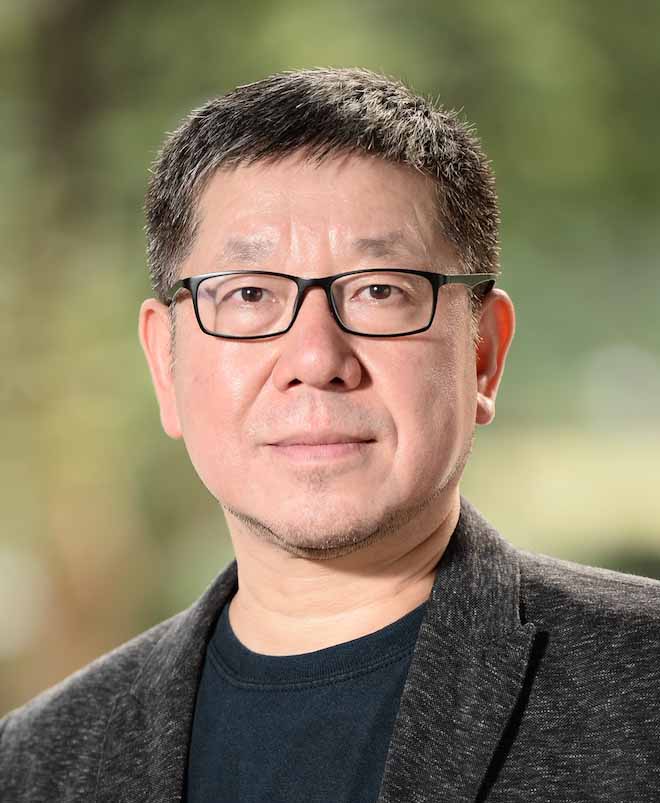
Professor Michael John Crawley is a faculty member in the Department of Life Sciences at Imperial College London , affiliated with the Faculty of Natural Sciences . His research focuses on plant-herbivore interactions, community ecology, and statistical methods in biological research. Fields of Scholarship : Plant ecology, population and community ecology Research Interests : Theoretical models of plant-herbivore interactions, predator satiation in tree recruitment, induced plant defenses, and ecological feedback loops Scientific Awards : FRS (Royal Society, 2002), Member of the Academia Europaea (2008) Contact : m.crawley@ic.ac.uk | m.crawley@imperial.ac.uk His publications bridge ecological theory with computational tools, including books on R programming and statistical analysis. The Park Grass Experiment and English oak recruitment studies are central to his empirical work.
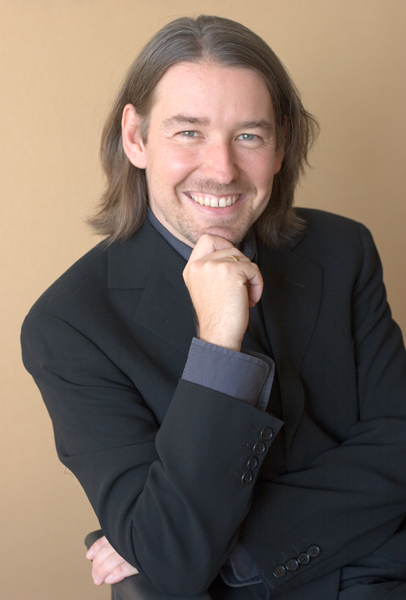
Wolfgang Hochleitner is an Assistant Professor at the Department of Digital Media, part of the Fakultät Hagenberg at Fachhochschule Oberösterreich (FH OÖ). His research focuses on game design, user experience, and interactive media. He holds a PhD in Digital Media and has a strong background in project-based education and collaborative event organization. Education: Master's in Digital Media (FH OÖ, 2006), Bachelor's in Media Technology and Design (FH OÖ, 2004), ongoing PhD in Digital Media (since 2013). Affiliations: Research Center Hagenberg, Digital Media Lab. Research interests include persuasive games, personalization in digital environments, and serious games for moral courage training. He has led projects like Play!Science (citizen science integration) and BF-CoVAR (cycling data analysis). Active in organizing events such as the Expanded Animation Symposium and Ars Electronica . Key contributions include developing haptic VR simulations and restructured academic project presentation frameworks. His work bridges educational innovation, interactive technology, and community engagement.
Dr. Mohammed Aufy serves as a Lecturer within the Division of Pharmacology and Toxicology at the University of Vienna's Faculty of Life Sciences, Department of Pharmaceutical Sciences. He actively supervises bachelor's theses through literature reviews on lysosomal peptidases in health/disease and practical projects evaluating cytotoxicity of novel antimicrobial/anticancer agents against cell lines. His research spans pharmacology, nanomedicine, and toxicology with core focus areas: Lysosomal protease roles in cancer progression, Alzheimer's, and neurodegenerative diseases Green biosynthesis of antimicrobial/anticancer nanoparticles using plant/fungal extracts Mechanistic studies of natural compounds (lemongrass, sclareol) for inflammation and sedation modulation Development of nanomaterials for water bioremediation and textile applications Methodologies include cell culture, in silico modeling, molecular docking, and in vivo animal studies. Analysis of his 2023-2025 publications reveals dominant trends in nanomedicine for antimicrobial applications (68% of works), cancer therapeutics (22%), and lysosomal biology (10%). Key innovations include bimetallic nanoparticles against drug-resistant bacteria, fungal-synthesized ZnO for biofilm disruption, and marine-derived gold nanoparticles with multi-functional activities. His work consistently bridges green chemistry with biological evaluation. Dr. Aufy advises bachelor's students through two structured pathways: Literature theses: Focused on lysosomal peptidases in antigen presentation, protein turnover, and disease mechanisms Practical theses: Requiring cell culture skills to test novel antifungal/antibacterial/antiviral compounds against normal and cancer cell lines Applications are accepted via email to mohammed.aufy@univie.ac.at at the UZA II campus (Josef-Holaubek-Platz 2, Vienna).
Manuela Waldner is an Associate Professor in the Department of Computer Graphics at Technische Universität Wien (TU Wien). Her research focuses on visual data exploration, human-computer interaction, and immersive analytics. She leads projects like 'Visual Analytics and Computer Vision meet Cultural Heritage' (FWF doc.funds.connect) and 'Joint Human-Machine Data Exploration' (FWF). She teaches courses including 'Computer Graphics', 'Information Visualization', and 'Visual Research Methods'. Awards include the Best Paper Award at EuroVA 2024. Her work spans medical visualization, VR navigation, and bias analysis in AI models. She advises numerous PhD and Master's students, contributing to 43+ publications.
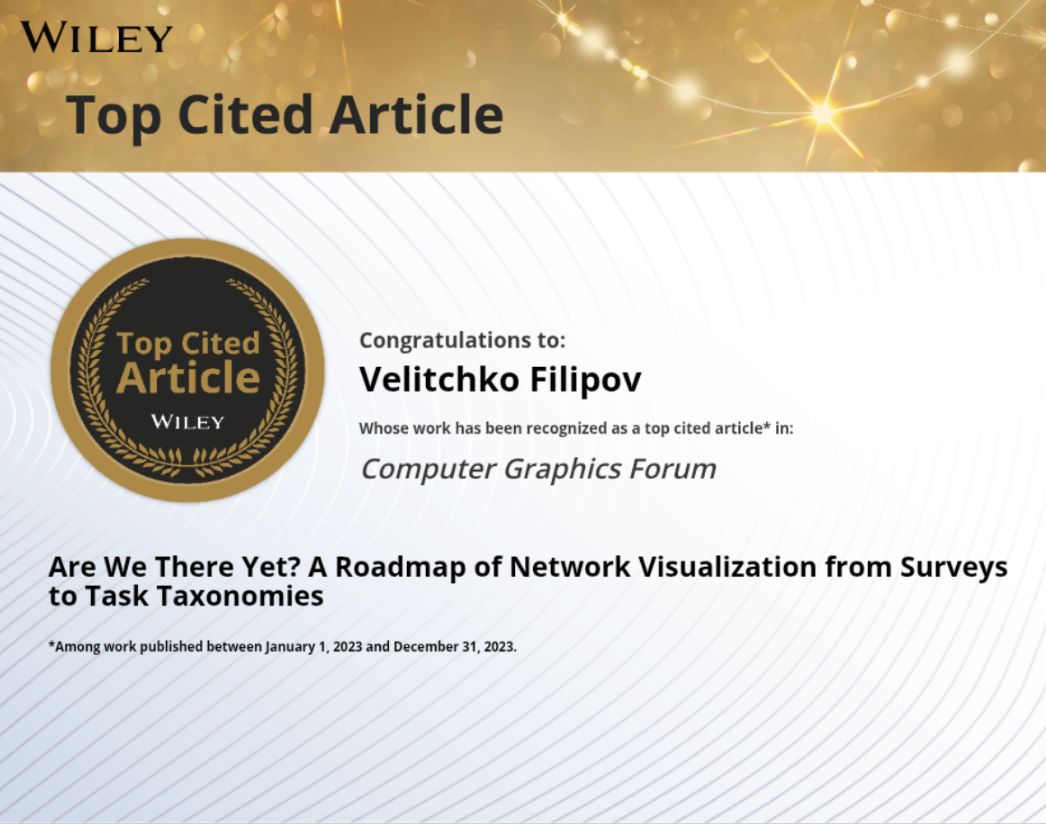
Velitchko Filipov is a PostDoc Researcher at the Institute of Visual Computing & Human-Centered Technology within the Faculty of Informatics at Vienna University of Technology (TU Wien). His work focuses on advancing Information Visualization and Visual Analytics, with a strong specialization in Dynamic Network Analysis. He is currently involved in multiple research projects including ArtVis (2022-2027), SANE (2024-2027), VaCoViCu2 (2023-2027), and SMGV-Esprit (2024-2027), with ArtVis funded by the Austrian Science Fund (FWF). Dr. Filipov completed his doctoral dissertation titled "Networks in time and space: visual analytics of dynamic network representations" at TU Wien in 2024. Prior to that, he completed his Diploma Thesis "Visual exploration and comparison of multiple resume: focus on time and space" at the same institution in 2017. His research centers on creating innovative visual representations and interactive techniques for exploring complex, time-varying networks. These approaches have significant applications in Art History, where understanding the evolution of artistic movements is crucial, and Information Diffusion. His work also benefits computational social sciences and digital humanities by providing tools to uncover patterns within evolving relational data. He has made notable contributions to uncertainty visualization, network physicalization, and the visualization of historical networks. Dr. Filipov's publication record shows a clear progression from foundational work on CV visualization and biographical trajectory mapping toward increasingly sophisticated techniques for dynamic network analysis. His recent work demonstrates a strong focus on making network data tangible through physicalization techniques and on addressing uncertainty in network representations, reflecting the evolving challenges in the visualization field. His scientific achievements have been recognized with several prestigious awards: Best Paper Award at EuroVis 2025 for "NODKANT: Exploring Constructive Network Physicalization" Top Cited Article 2025 in Computer Graphics Forum for "Are We There Yet? A Roadmap of Network Visualization from Surveys to Task Taxonomies" Nominee for Best Dissertation Award 2024 at TU Wien Informatics Best Paper at VIS4DH 2019 Graph Drawing Contest winner in 2019 and 2018 Dr. Filipov actively supervises students, with recent theses including "Dynamic network analysis with centrality measures" (2024) and "Utilizing visual analytics for network exploration in the domain of art history research" (2023). His research is supported by multiple grants, most notably the FWF project ArtVis. He collaborates extensively with researchers across Europe, particularly with Silvia Miksch, Wolfgang Aigner, and Renata Raidou. He is a key member of the Visual Analytics research group at TU Wien, participating in interdisciplinary collaborations that bridge computer science with art history and digital humanities. His work on the ArtVis project exemplifies this approach, developing visualization techniques specifically tailored to address the research challenges faced by art historians studying artistic networks and influence.
Enrico Coen is a Professor in Genetics at the John Innes Centre, a leading research institution in the UK specializing in plant and microbial sciences. His research focuses on Cell and Developmental Biology, particularly the genetic and computational mechanisms underlying plant development. He employs interdisciplinary approaches combining genetics, computational modeling, and molecular biology to study plant morphogenesis and organ shape. Coen has received numerous honors including Fellowship of the Royal Society (1998), Commander of the British Empire (2003), and the Darwin Medal (2004). He served as President of the Genetics Society from 2012 and is a Foreign Associate of the US National Academy of Sciences (2001). His work bridges fundamental biology with computational frameworks, exploring how genetic interactions shape plant form. His publications emphasize the interplay between tissue polarity, growth dynamics, and genetic regulation in plants. Key themes include the role of JAGGED genes in petal development, computational models of tissue polarity, and evolutionary allometry in Antirrhinum. Coen’s research highlights the integration of experimental and theoretical methods to unravel developmental processes.
Terho Lehtimäki is a Professor and Head of the Department of Clinical Chemistry at Tampere University's Faculty of Medicine and Health Technology. He also serves as Chief Physician at Fimlab Laboratories, a major clinical laboratory in Finland. His academic roles include being a docent in medical biochemistry and clinical chemistry, and he holds an eMBA degree. His research focuses on cardiovascular disease biomarkers, atherosclerosis, omics technologies, and genetic/epigenetic factors influencing complex traits. He leads major studies like the Tampere Vascular Study and contributes to over 35 international consortia. With 1200+ peer-reviewed publications and an H-index of 147, his work has driven discoveries in over 5000 genetic variants. Notable recognitions include membership in Academia Europaea and the University of Tampere Science Prize. Education & Career MD/PhD (1992) Docent in Medical Biochemistry (1996, University of Tampere) Docent in Clinical Chemistry (2003, University of Eastern Finland) eMBA (2013) Research Interests Cardiovascular biomarkers for risk prediction Omics-based systems biology approaches Functional genetics of complex traits Epigenetic inheritance mechanisms Multimodal cohort studies (e.g., Young Finns Study) Publications & Impact His work spans Nature, Science, and NEJM, with key contributions to understanding atherosclerosis biology, genetic risk factors, and clinical translation of omics data. Recent trends emphasize multi-omics integration and precision medicine applications. Awards & Leadership Over €15M in grant funding 3 spin-off companies Scientific leadership roles in >35 international initiatives Reviewer for 50+ journals and 15 funding agencies Teaching & Mentorship Trained over 60 PhD/MSc students, many now leading academic and clinical roles. Active in problem-based learning methodologies at Tampere University's Center of Excellence. Labs & Teams Directs the Clinical Chemistry Department's research group, collaborating closely with Fimlab Laboratories and international networks like the European Eye Consortium.
Zhang Jun is a Full Professor of Physics and Mathematics and Co-director of the Applied Math Lab at the Courant Institute, New York University (NYU), USA. He also serves as Co-director of the NYU-ECNU Joint Physics Research Institute in Shanghai, China, and holds an Affiliated Professorship at NYU Shanghai. His research focuses on experimental fluid physics, particularly fluid-structure interactions in biological and geophysical contexts, including bio-locomotion, flapping wings, and continental dynamics. Zhang has authored over 290 invited talks and peer-reviewed papers in journals like Nature and Physical Review Letters. He received the 2017 APS Fellow award for pioneering work in fluid-structure interactions. Beyond academia, he is a freelance illustrator with plans to publish a book of sketches. Education: PhD in Physics (1994), Niels Bohr Institute, University of Copenhagen PhD Candidate (1990-1991), Hebrew University of Jerusalem BSc in Physics (1985), Wuhan University Research Interests: Zhang’s work bridges physics, biology, and geophysics, exploring phenomena like flapping wing aerodynamics, animal locomotion, and Earth’s core-mantle interactions. His experiments often use novel fluid dynamics setups to model natural systems. Awards: APS Fellow (2017) Milton Van Dyke Award (2014) Antarctica Service Medal (2015) Labs & Teams: Co-directs the Courant Institute’s Applied Math Lab, specializing in fluid dynamics experiments. Collaborates with institutions globally, including NYU Shanghai and Aix-Marseille University.
Christian Keysers is a leading full professor of Social Neuroscience at the University of Amsterdam and head of the Social Brain Lab at the Netherlands Institute for Neuroscience (NIN). He has held tenured positions since 2000, focusing on the neural basis of empathy, mirror neurons, and social cognition across species. Department Head, Social Brain Lab, NIN (2010–now) Full Professor, Social Neuroscience, University of Amsterdam (2014–now) Full Professor, Social Brain, University of Groningen (2007–2014) His research explores how mirror neurons and embodied cognition underpin empathy, using neuroimaging, electrophysiology, and animal models. He has pioneered cross-species approaches, linking empathic mechanisms in humans and rodents to prosocial behavior and moral conflict. Recent publications highlight his work on predictive coding , altruism , and touch interventions . His findings have been published in Nature Neuroscience , Current Biology , and PLoS Biology . Scientific Awards: ERC Consolidator Grant (2012) VICI Grant (2016) Marie Curie Excellence Grant (2005) IPPY Prize for 'The Empathic Brain' (2012) Keysers actively shapes European research policy as a member of the Future and Emerging Technologies advisory board and the Young Academy of Europe. His book 'The Empathic Brain' won critical acclaim for science communication.
Franziska Proksa is a Professor and Senior Researcher at the Institute of Creative Media/Technologies at St. Pölten University of Applied Sciences, leading the Media Creation Research Group. She holds a PhD in Philosophy from the University of Vienna and has taught at multiple institutions, including the University of Vienna and Upper Austria University of Applied Sciences. Her roles include Head of the Media Creation Research Group (2017–2022) and returning as Head in 2025 after a temporary hiatus. Education: Doctorate (Dr. phil.) in Theatre, Film, and Media Studies at University of Vienna (2017) Master’s Degrees in Painting & Animation (University of Applied Arts Vienna) and Theatre, Film, and Media Studies (University of Vienna) University Assistant at University of Vienna (2009–2013) Research Interests: Animation theory and history Virtual/Augmented Reality applications in animation Cross-disciplinary projects like VRinMotion (hybrid animation in VR) and AniVision (machine learning for animation analysis) Climate change communication through media Recent Articles Trends: Focus on VR/AR integration with stop-motion techniques, frame theory in digital environments, and animation history. Projects like ExperiMotion explore spatial animation and live performances in VR. Grants & Projects: FWF-funded VRinMotion and AniVision Climate Media Frames (GFF NÖ grant) Collaborations with artists and technologists on immersive media Labs/Teams: Leads the Media Creation Research Group, collaborating with interdisciplinary teams on projects like Immersive Media Lab and RegioBioGraph.
Robin Angus Silver is Professor of Neuroscience at University College London (UCL), a Wellcome Trust Principal Research Fellow, and Fellow of the Royal Society. He has held leadership roles since 2011 and is renowned for groundbreaking work in synaptic transmission, neural computation, and neuroinformatics. Education: B.Sc. in Physical Sciences (1st Class Hons), Coventry Polytechnic (1986) Ph.D. in Physiology, UCL (1990) Dr. Silver's research focuses on information processing in cerebellar and neocortical circuits. He discovered fundamental properties of central excitatory synapses, elucidated how neurons perform arithmetic operations, and pioneered tools like NeuroConstruct and NeuroML for 3D neuronal modeling. His development of high-speed two-photon microscopy with acousto-optic lenses revolutionized in vivo imaging. His work spans synaptic physiology, computational modeling, and neuroinformatics infrastructure. He has contributed to open-source platforms like OpenSourceBrain, enabling browser-based visualization and simulation of neural models. Awards include Royal Society Fellowship (2017), Wellcome Trust Principal Research Fellowships (2011, 2016), and ERC Advanced Investigator Award (2011). Scientific Awards Fellow of the Royal Society (2017) Wellcome Trust Principal Research Fellowship (2011, 2016 renewal) European Research Council Advanced Investigator Award (2011) Hungarian Academy of Sciences Distinguished Guest Scientist Fellowship (2012) Multiple Wellcome Trust Senior/Principal Research Fellowships Wellcome Trust Research Career Development Fellowship (1996) Dr. Silver has organized international workshops including OpenSourceBrain meetings and INCF Congress events. He serves on steering committees for neuroinformatics initiatives and evaluation panels for funding bodies like the Wellcome Trust and US BRAIN Initiative.
Noreen Mutoro is a Researcher at the University of Salzburg's Department of Environment & Biodiversity, affiliated with the Faculty of Natural and Life Sciences. She is currently completing her PhD in natural sciences (2019–2025). Her research focuses on integrated social-ecological conservation studies, utilizing GIS, remote sensing, and fecal detection dogs for carnivore research. She holds an MSc in Biology of Conservation (2012–2016) from the University of Nairobi and a BSc in Wildlife Management and Conservation (2007–2012). Professional experience includes roles as Assistant Research Scientist (2015–2017), Country Coordinator for TBAAK (2013–2017), and various internships in wildlife conservation. She has strong computer skills in GIS software (ArcGIS, QGIS), statistical tools (SPSS), and field data collection apps. Her research interests include species distribution modeling, carnivore dietary analysis, and the application of working dogs in conservation. She has published extensively on cheetah ecology, habitat analysis, and detection dog methodologies in high-impact journals like Animal Cognition and Global Ecology and Conservation .
Dr. Gudrun Wallentin serves as Associate Professor for Geoinformatics and Ecology at the Department of Geoinformatics (Z_GIS) within the Faculty of Natural and Life Sciences at the University of Salzburg. She is Program Director of the UNIGIS distance learning programs and heads the Research Group "Spatial Simulation". Her academic work bridges ecological theory with advanced spatial modeling techniques. Dr. Wallentin's research focuses on spatial simulation in ecology , individual-based modeling , and complex systems . Her work integrates geographical information science with ecological modeling to understand spatial patterns and processes in natural and urban environments. She has developed innovative approaches to model ecological dynamics, animal behavior, and urban transportation systems using agent-based and hybrid modeling frameworks. Analysis of her publication record from 2008-2017 reveals consistent research themes centered on spatial modeling approaches applied to ecological and urban systems. Her work demonstrates a progression from ecological modeling (particularly alpine tree line dynamics and invasive species) toward urban applications (especially bicycle traffic and safety), while maintaining a strong methodological focus on individual-based and agent-based modeling techniques. The interdisciplinary nature of her work spans ecology, computer science, transportation engineering, and geography. Dr. Wallentin actively contributes to the academic community through service roles including Guest Editor for the ISEM 2019 special issue in "Ecological Modelling" and membership on program committees for major conferences such as AGILE, AGIT, and GI_Forum. As Program Director for UNIGIS, she oversees distance learning programs in Geographical Information Science and Systems, and supervises master's theses across multiple programs including Geography, Applied Geoinformatics, and Ecology. Her teaching portfolio includes courses on Spatial Simulation, Modeling Geographical Systems, and GIS applications in ecological research. She leads the "Spatial Simulation" research group, which focuses on developing and applying individual-based modeling approaches to complex spatial systems, with particular applications in ecological dynamics and urban transportation networks.
Yurii Kornilev M.Sc. is a researcher at the Institute of Zoology within the Department of Ecosystem Management, Climate and Biodiversity at the University of Natural Resources and Life Sciences, Vienna (BOKU). His work focuses on animal ecology, zoology, biodiversity research, and animal physiology, with particular emphasis on amphibian and reptile conservation. He maintains active research collaborations across multiple institutions, as evidenced by his involvement in projects like the Green Toads habitat survey and research on magnetoreception in mice. Dr. Kornilev's research spans several key areas in zoology and conservation biology. His primary interests include amphibian ecology (particularly European green toads), reptile conservation (with work on tortoises, snakes, and other herpetofauna), biodiversity monitoring, and habitat modeling. His research demonstrates strong integration of field studies with technological approaches, including bioacoustic monitoring systems and citizen science methodologies. Much of his geographical focus centers on Eastern Europe, particularly Bulgaria, where he has conducted extensive studies on snake distributions and habitat requirements. Analysis of Dr. Kornilev's recent publications reveals a strong focus on conservation-oriented research with practical applications. His work bridges fundamental zoological research with conservation implementation, particularly through citizen science initiatives like the AmphiBiom project. The publications show expertise in both terrestrial herpetofauna (snakes, tortoises) and amphibians, with a methodological approach that combines ecological modeling, field surveys, and increasingly, technological solutions for species monitoring. His research has significant implications for habitat conservation and biodiversity protection in changing environments. Dr. Kornilev collaborates on multiple research projects, including the Green toads in changing times: habitat survey and creation using Citizen Science project (2023-2025) funded by Federal Ministries, and The neuronal basis of magnetoreception in the mouse project (2019-2023) funded by the Austrian Science Fund (FWF). These projects involve collaborations with the Institute of Hydrobiology and Aquatic Ecosystem Management and other research units at BOKU. His work demonstrates strong interdisciplinary connections between zoology, ecology, and conservation science.
Renate Kunert is a full Professor at the University of Natural Resources and Life Sciences, Vienna , leading the Institute of Animal Cell Technology and Systems Biology. Her research focuses on Bioprocess optimization for recombinant protein production Antibody engineering (IgG, IgM, IgA) CHO and Pichia pastoris cell factory design Complement system interactions with immunoglobulins Glyco-engineering for therapeutic proteins She has developed stable cell lines for complex proteins like trimeric SARS-CoV2 spike and human IgMs against cancer. Key research trends from her publications include Statistical process optimization (DoE) Host cell line comparisons (CHO vs yeast) Computational antibody humanization Advanced bioreactor cultivation strategies Transcriptomic analysis for production bottlenecks Her work bridges molecular design and scalable bioprocesses. She supervises multiple PhD students and collaborates with teams in Europe and the USA. The institute maintains extensive cell banks for mammalian and yeast systems, supporting applications in HIV, oncology, and industrial biotechnology.