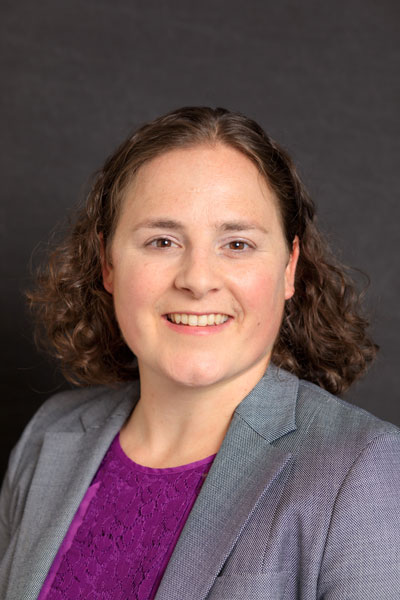
Seong Joon Oh is a Professor at the University of Tübingen leading the Scalable Trustworthy AI (STAI) research group. He also advises Parameter Lab alongside his main academic position. His research career spans both academia and industry, having previously served as a research scientist at NAVER AI Lab for 3.5 years. Oh received his PhD in computer vision and machine learning from the Max-Planck Institute for Informatics in 2018 under the supervision of Bernt Schiele and Mario Fritz. His doctoral research focused on privacy and security implications of computer vision and machine learning. He completed his earlier education at the University of Cambridge, earning a Master of Mathematics with Distinction in 2014 and a Bachelor of Arts in Mathematics as a Wrangler in 2013. Professor Oh's research concentrates on training reliable AI models with emphasis on explainability, robustness, and probabilistic modeling. His work explores methods to obtain necessary human supervision in a cost-effective manner, with significant contributions to uncertainty quantification, out-of-distribution generalization, and privacy-preserving techniques. His research intersects computer vision, natural language processing, and machine learning theory, particularly focusing on compositionality, trustworthy AI, and model interpretability. Analysis of Oh's recent publications reveals a strong focus on practical challenges in deploying trustworthy AI systems. His work spans multiple domains including computer vision, natural language processing, and foundational machine learning. Key themes include compositionality in vision-language models, privacy concerns in large language models, domain adaptation techniques, and methods for improving model robustness. His research demonstrates a consistent trajectory toward building AI systems that are not only high-performing but also reliable, interpretable, and secure. Professor Oh has made significant contributions to several research communities as evidenced by his publication record across top-tier conferences including NeurIPS, ICML, ICLR, CVPR, and ACL. His work on membership inference attacks, object-centric learning, and trustworthy machine learning has influenced the field. He co-authored the textbook "Trustworthy Machine Learning" which covers out-of-distribution generalization, explainability, uncertainty quantification, and evaluation of trustworthiness in machine learning models. Oh leads the Scalable Trustworthy AI research group at the University of Tübingen, focusing on developing AI systems that are explainable, robust, and probabilistic. His team investigates fundamental questions about how AI models understand compositionality, handle distribution shifts, and maintain privacy when processing sensitive information. The group's work bridges theoretical insights with practical applications, aiming to create AI systems that can be safely deployed in real-world scenarios where reliability is critical.