Qian Li is a researcher working at the intersection of database systems and operating systems, with primary affiliation at DBOS Inc. and academic connections to Stanford University's School of Engineering, Department of Computer Science, and Peking University in Beijing, China. The research focuses on developing the Database Operating System (DBOS) concept, which reimagines operating systems with database technology at their core. Research interests center on database systems, operating systems integration, transaction processing, and serverless computing. The work explores how database principles like ACID transactions can improve system reliability, debugging, and application development, particularly in cloud environments. Key projects include DBOS, Epoxy for cross-data store transactions, and Apiary for transactional serverless computing. The publication record shows a strong trend toward integrating database transaction semantics with modern computing paradigms, particularly serverless architectures. Recent work demonstrates how transactional guarantees can simplify application development, improve debugging, and enable new approaches to cloud-native application design. The research bridges theoretical database concepts with practical systems implementation. As a core contributor to the DBOS project, Qian Li has collaborated extensively with leading researchers including Michael Stonebraker, Matei Zaharia, Christos Kozyrakis, and Peter Kraft. The work has been published consistently in top-tier venues including VLDB, USENIX ATC, and CIDR, reflecting significant impact in the systems research community.
Charlotte Thålin, MD PhD, is Adjunct Professor and Associate Professor at Karolinska Institutet and heads the Mucosal Immunology research group within the Department of Clinical Sciences, Danderyd Hospital . She leads two large longitudinal clinical cohorts— COMMUNITY (n>2 000 healthcare workers) and MEDECA (n=1 500 patients with non-specific cancer symptoms)—and the newly launched D/T-MAP project (2024) funded by an ERC Starting Grant. Her work bridges bedside-to-bench research in mucosal immunology and early cancer detection, supported by a unique biobank of >60 000 paired serum–mucosal samples and advanced organoid and glycoproteomic platforms. Education & Training: Although formal degree details are not provided, Dr Thålin is a clinically active physician-scientist, implying full medical and research training. Research Interests: Molecular IgA glycobiology: dissecting how glycosylation modulates secretory IgA function against respiratory pathogens. Translational mucosal immunity: using human adult stem-cell-derived airway organoids to model protection and develop recombinant IgA therapeutics. Cancer early detection: discovery and validation of blood-based multi-analyte biomarker panels to identify occult malignancy before imaging. COVID-19 immunity: defining correlates of protection, durability of mucosal vs systemic responses, and risk of breakthrough infection. Neutrophil extracellular traps (NETs): exploring NET formation as a link between inflammation, thrombosis and occult cancer. Scientific Awards & Funding: ERC Starting Grant (2024) Knut and Alice Wallenberg Project Grant (2024) SSMF Consolidator Grant (2024) NIH, Heart-Lung Foundation, Region Stockholm, ALF Medicine and additional foundations Research Group & Mentorship: Dr Thålin mentors a multidisciplinary team including 5 doctoral students (Aguilera, Almeida, Bladh, Stäheli, Wannberg), 1 postdoc (Pongracz) and several affiliated researchers and research nurses. The group collaborates with leading scientists at KTH, Uppsala University, Leiden UMC, Utrecht University, UNC Chapel Hill, Mount Sinai, NUS, Oxford and others. Labs & Infrastructure: The group operates within the Clinical Research Center North (KFC) integrated into Danderyd Hospital, housing flow cytometry, ELISA, qPCR, extracellular vesicle isolation and a dedicated human airway organoid platform.
Erika Kirgios is an Assistant Professor in the Behavioral Science Department at the University of Chicago Booth School of Business. Her research focuses on workplace diversity, inequality, prosocial behavior, and behavior change, with a particular emphasis on race and gender dynamics in organizational contexts. Education: Ph.D., Operations, Information, and Decisions, Wharton School, University of Pennsylvania B.A., Computer Science (summa cum laude), Princeton University, with minors in Cognitive Science and Neuroscience Research Interests: Kirgios' work combines insights from behavioral economics, judgment and decision-making, and organizational behavior to study persistent workplace inequality and potential interventions. She specializes in field experiments across gyms, hospitals, non-profits, and tech firms, exploring psychological drivers like loss aversion and self-image concerns in diversity-related behaviors. Publications: Her research appears in top journals including Proceedings of the National Academy of Sciences , Nature Human Behaviour , Management Science , and Organizational Behavior and Human Decision Processes . Recent work examines demographic stickiness in hiring, gender-diverse team innovation, and Q&A communication strategies for health messaging. Awards: NSF Graduate Research Fellowship
Andrew Ning is a Professor in the Department of Mechanical Engineering at Brigham Young University, with a joint appointment at the National Renewable Energy Laboratory. He leads the FLOW Lab, focusing on optimization, deep learning, and aerodynamic simulation methods for wind energy systems and aircraft design . Education PhD & MS in Aeronautics and Astronautics from Stanford University BS in Applied Physics from Brigham Young University His research spans optimization , aerodynamics , and machine learning , addressing challenges in wind farm layout, aerostructural design, and urban air mobility vehicle analysis. The FLOW Lab develops advanced computational tools including vortex particle methods, beam theory implementations, and meshless simulation techniques. Recent publications demonstrate expertise in gradient-based optimization , unsteady potential flow , and multirotor aerodynamics . Key application areas include electric propulsion , solar aircraft , and floating offshore wind turbines . His work integrates high-fidelity modeling with computational efficiency through novel algorithm development. Office hours for Winter 2025: Mondays 3:30-4:00pm, Tuesdays 4:00-5:00pm, Wednesdays 11:00am-12:00pm, and Thursdays 1:00-2:00pm.
Anne-Claude Gavin is a Professor at the University of Geneva's Faculty of Medicine within the Department of Cell Physiology and Metabolism. Her research group, based at CMU office C05.1535.a, focuses on lipid metabolism with particular emphasis on APOE lipidation mechanisms and their implications in Alzheimer's disease. The laboratory actively recruits PhD candidates for high-level collaborative projects, with a recent opening targeting autumn 2025 start dates for research on APOE polymorphism and metabolic stressors. Her research interests center on lipid-protein interactions, particularly APOE homeostasis across isoforms and cell states, ceramide transport mechanisms, and the role of lipid dysregulation in neurodegenerative diseases. Recent work integrates structural biology, cellular imaging, and systems approaches to dissect molecular mechanisms of lipid transfer proteins like CERT and STARD4. Her group has made significant contributions to understanding how APOE variants differentially modulate cellular cholesterol metabolism and inflammatory responses in astrocytes. Analysis of recent publications (2023-2025) reveals strong thematic continuity in lipid-centric research, with increasing focus on Alzheimer's disease mechanisms through APOE studies, structural characterization of lipid transfer proteins, and cellular aging processes in hematopoietic systems. Key methodologies include molecular dynamics simulations, fluorescent biosensor development, and system-wide lipid transfer protein mapping. While no specific awards are listed in the provided materials, her research has garnered media attention including coverage in RTS's CQFD program (March 2022) discussing protein contributions to Alzheimer's disease. Her laboratory maintains active recruitment for doctoral positions, indicating ongoing grant funding for projects like the collaborative study on APOE lipidation mechanisms. Active recruitment for PhD positions in lipid metabolism Media features on Alzheimer's research Collaborative projects with clinical implications The laboratory operates within the Lipid Metabolism research group at the University of Geneva's Centre Médical Universitaire (CMU), utilizing advanced techniques including molecular dynamics, chemoproteomics, and genetically encoded fluorescent probes to investigate lipid dynamics in cellular systems. Current work emphasizes translational connections between fundamental lipid biochemistry and neurodegenerative disease pathways.
Chunlin Xu is a Professor in the Faculty of Science and Engineering at Åbo Akademi University, leading the Laboratory of Natural Materials Technology. His research focuses on developing sustainable materials from biorefinery feedstocks, with significant contributions to lignin valorization, nanocellulose engineering, and bio-based coatings. Current affiliations include principal investigator roles in major EU and national projects advancing circular bioeconomy solutions. Xu's research spans Lignin chemistry and nanoparticle formation Nanocellulose-based hydrogels and composites Biomaterials for packaging and medical applications Photosynthetic biohybrid systems for chemical production Machine learning applications in biorefining His work demonstrates strong alignment with UN Sustainable Development Goals, particularly for sustainable materials and clean water technologies. Analysis of Xu's 2025 publications reveals dominant trends in Advanced lignin modification for additive manufacturing Multi-functional hemicellulose derivatives for emulsion stabilization Scalable production of bio-based barrier coatings Nanocellulose integration in environmental remediation These works emphasize practical applications in packaging, agriculture, and water treatment while maintaining strong fundamental science. Scientific recognition includes: Chancellor’s Prize (2023) for renewable materials innovation Election to Swedish Academy for Engineering Sciences in Finland (2023) Xu directs substantial research funding through projects like S2B (EU-funded solar butanol production) and CIMANET (doctoral network for circular materials). His laboratory hosts numerous academic visitors and collaborates internationally across Europe. The research group operates within Åbo Akademi's Natural Materials Engineering ecosystem, with facilities for advanced biopolymer characterization and processing. Current activities include organizing the European Workshop on Lignocellulosics and Pulp while developing next-generation biohybrid systems for sustainable chemical production.
Dr. Cam Minh Tri Tien (pronounced 'Tree') is a Postdoctoral Research Fellow at the Centre for Future Materials (CFM) within the University of Southern Queensland (UniSQ), based at the Toowoomba Campus. He is additionally affiliated with the Institute for Advanced Engineering and Space Sciences (IAESS), focusing on computational engineering applications for composite repair processes via digital twin technology. His professional credentials include Registered Professional Engineer status in Queensland (RPEQ 24545) and with Professionals Australia (RPEng 2408). His educational qualifications are: Bachelor of Engineering (BEng) from Ho Chi Minh City University of Technology Master of Science (MSc) from Konkuk University PhD in Computational Engineering from the University of Southern Queensland Research interests emphasize Composite Materials , Computational Fluid Dynamics (CFD) , Finite Element Analysis (FEA) , Discrete Element Method (DEM) , and Additive Manufacturing . With over 10 years of senior engineering experience across Vietnam, South Korea, New Zealand, the United States, and Australia, he integrates material science, thermodynamics, and fluid dynamics with advanced simulation techniques to solve complex engineering problems, producing visualizations to validate solutions. Dr. Tien operates within UniSQ's Centre for Future Materials and Institute for Advanced Engineering and Space Sciences, where his work bridges industrial engineering, multiphysics flows, and composite manufacturing. Teaching engagements include ENG3104 Engineering Simulations and Computations and ENG5105 Advanced Numerical Modelling, supported by 7 years of cumulative teaching experience (2 years tertiary, 5 years other contexts).
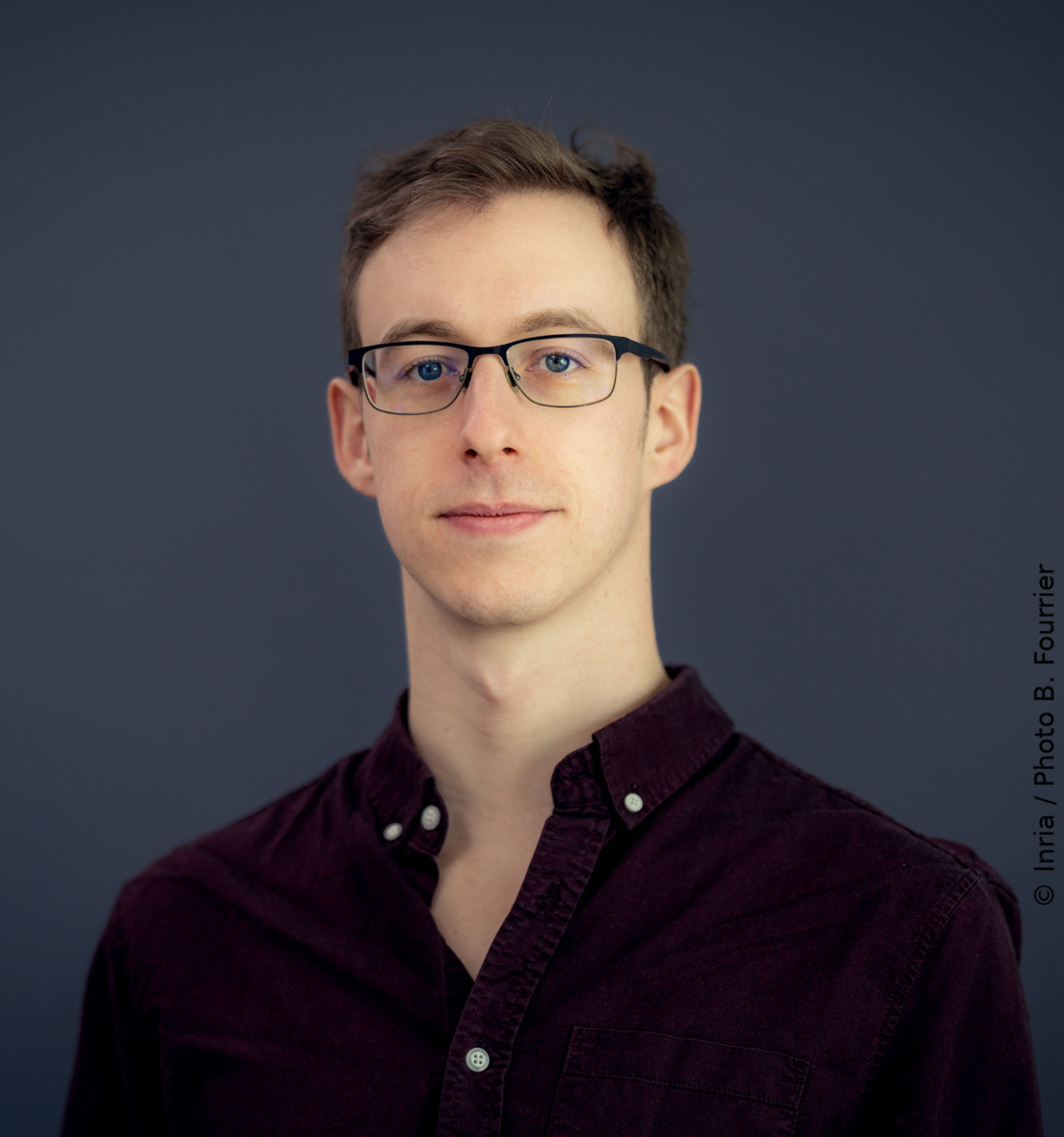
Renaud Vilmart is a researcher at LMF (Laboratoire Méthodes Formelles), part of Inria Saclay, affiliated with Université Paris-Saclay, CNRS, and ENS Paris-Saclay. He holds an Inria Starting Faculty Position (ISFP), placing him in a research-intensive faculty role. He is actively involved in the scientific committee of Inria Saclay and co-supervises the Groupe de Travail Informatique Quantique (GTIQ) under the GdR-IFM. His research focuses on quantum computing, particularly on the ZX-Calculus —a graphical language rooted in category theory that enables visual reasoning about quantum processes. This formalism unifies quantum circuits and measurement-based models, offering intuitive tools for verification and optimization. His work addresses foundational questions such as the completeness of the ZX-Calculus with respect to quantum mechanics. The 15 most recent articles reflect a strong trend in formal methods for quantum computing , with emphasis on diagrammatic reasoning, categorical semantics, and completeness proofs. Key topics include stabilizer theory, Clifford+T circuits, fermionic circuits, and scalable extensions of the ZX-Calculus. These publications demonstrate a deep integration of logic, algebra, and quantum theory. His scientific achievements have been recognized with: Kleene Award for best student paper at LiCS (Logics in Computer Science) Accessit (honorable mention) for the Gilles Kahn Award from the Société Informatique de France He is actively involved in mentoring and academic leadership through co-supervising GTIQ and serving on the Inria Saclay scientific committee. Though no specific grants are listed, his ISFP position is typically grant-funded, indicating sustained research support. He contributes significantly to education through teaching in the QDCS and QMI master’s programs and the ARTeQ year, focusing on advanced complexity and quantum computing topics. His research is conducted within the LMF (Laboratoire Méthodes Formelles), a collaborative lab between Inria, CNRS, and ENS Paris-Saclay, which fosters interdisciplinary work in formal methods and theoretical computer science.
Carl Mitchell is a Professor in the Department of Physical and Environmental Sciences at the University of Toronto Scarborough Campus (UTSC), with graduate appointments in the Department of Geography and the School of the Environment at the University of Toronto. His research focuses on biogeochemical processes and contaminant transport, particularly mercury cycling, in diverse ecosystems including boreal forests, Arctic regions, and urban environments. PhD in Physical Geography, University of Toronto (2007) Postdoctoral Fellowship, Smithsonian Environmental Research Center (2008) Research interests include biogeochemistry , hydrology , mercury cycling , sulphur cycling , carbon cycling , and passive sampling techniques . His work explores how landscape features and human activities (e.g., forest harvesting, urbanization) influence mercury bioavailability and transport. Recent publications highlight studies on mercury dynamics in forest soils , beaver ponds , rice paddies , and Arctic ecosystems , with a focus on methylation/demethylation mechanisms and remediation strategies. Articles span environmental science, hydrology, and biogeochemical modeling. Awards include the Young Scientist Award from the Canadian Geophysical Union (2017), along with leadership roles as President (2019–21) and Past-President of the CGU. He serves as Associate Editor for Frontiers in Environmental Science . Supervised students and postdocs: Haiyong Huang (postdoc, 2024), Wai Ying Lam (postdoc, 2024), Sayuri Sagisaka Mendez (PhD candidate), and numerous alumni including David McLagan (now Assistant Professor, Queen’s University) and Colin McCarter (now Assistant Professor, Nipissing University). Teaching: EESB04 (Principles of Hydrology), EES1126 (Hydrology and Watershed Management) The WATER Group operates the CFI and MRI-funded Integrated Watershed Hydrology and Biogeochemistry Research Facility , combining field and lab-based methods to study contaminant transport.
Kenneth G. Brown is a Professor in the Department of Management and Entrepreneurship at the Tippie College of Business, University of Iowa, where he also holds the endowed title of Tippie Children Professor of Management. He additionally holds an affiliation with the Department of Educational Policy and Leadership Studies, where he currently serves as Department Executive Officer. His research and teaching focus on workplace learning, training, leadership development, and management education. PhD in Psychology, Michigan State University MA in Psychology, Michigan State University BS in Psychology, University of Maryland Dr. Brown’s research interests center on how individuals and organizations learn and develop. He investigates topics such as e-learning, learner control, training effectiveness, and the psychological underpinnings of leadership. His work integrates theory from psychology, organizational behavior, and human resource management to improve workplace training and development practices. He is particularly interested in bridging the gap between academic research and practical application in management. His recent publications reflect a strong focus on training and development, e-learning, and organizational change. The articles span topics from meta-analyses of trainee reactions to critical examinations of foundational change models like Lewin’s. His work often employs both empirical research and theoretical integration, contributing significantly to the fields of industrial-organizational psychology and management education. Fellow - Association of Psychological Science, 2016 Fulbright Specialist - U.S. Department of State, 2015 President & Provost Award for Teaching Excellence - University of Iowa, 2009–2019 Michael J. Brody Award for Faculty Excellence in Service - University of Iowa, 2024 Diversity, Equity and Inclusion Award - Tippie College of Business, 2021 Fellow - American Psychological Association, 2017 Best Paper Award - Human Relations, 2016 Distinguished Teaching Contributions Award - Society of Industrial and Organizational Psychology, 2015 Outstanding Service Contribution by a Faculty Member - Tippie College of Business, 2014 Last Lecture - University of Iowa, 2011 Certified Diversity Executive (CDE), 2023–2026 Kenneth G. Brown has been a principal or co-principal investigator on research grants, including a collaborative NSF-funded project on workforce planning models that recognize human learning. He has served in major editorial roles, including Editor of the Academy of Management Learning & Education and editorial board member for numerous top journals such as Journal of Applied Psychology , Personnel Psychology , and Academy of Management Review . His service reflects a deep commitment to advancing the quality and impact of scholarship in management and organizational psychology. Dr. Brown has been actively involved in shaping management education, contributing to curriculum development and pedagogical innovation. His work emphasizes evidence-based teaching and learning practices. He has presented at major conferences and institutions, sharing insights on teaching excellence and influence. His leadership roles, including his current position as Department Executive Officer, underscore his administrative and academic influence within the university.
Miles Silman is a Professor of Biology at Wake Forest University and holds the Andrew Sabin Family Foundation Professorship in Conservation Biology. He is also the Director of the Center for Energy, Environment, and Sustainability (CEES), where he leads interdisciplinary research on global environmental change. His work is centered in the Andes and Amazon, particularly in Peru and Bolivia, where he conducts long-term ecological studies. B.S. in Biology, University of Missouri (1989) Ph.D. in Zoology, Duke University (1996) His research focuses on tropical forest ecology, conservation biology, and the impacts of climate change on species distributions. He integrates modern ecological fieldwork with paleoecological data to understand how plant communities respond to environmental gradients over time. His lab operates a 3 km altitudinal transect in southeastern Peru, providing critical insights into biodiversity, carbon cycling, and ecosystem resilience. Silman’s recent publications reveal strong trends in climate-driven species migration, forest productivity along elevation gradients, and the long-term human influence on Amazonian forests. His work frequently appears in high-impact journals such as Science , PNAS , and Global Change Biology , and often involves large collaborative networks. Key themes include species distribution modeling, carbon budgeting, disturbance ecology, and the use of unmanned aerial vehicles for forest monitoring. Andrew Sabin Family Foundation Professor of Conservation Biology He actively mentors graduate and undergraduate students, many of whom conduct field research in South America. He teaches a summer field course on Tropical Biodiversity in Peru and supports student research through grants and lab funding. His lab collaborates with institutions like the Amazon Conservation Association and operates from field stations including Wayqecha, Villa Carmen, and Cocha Cashu. His work has significant implications for conservation policy, climate adaptation strategies, and sustainable land use in tropical regions.
Scott Frazier is an Associate Professor in the Department of Biosystems and Agricultural Engineering at Oklahoma State University (OSU), where he also serves as an Extension Specialist for Energy Management with OSU Extension. His work integrates teaching, applied research, and extension outreach focused on energy and resource management in agricultural and industrial sectors. PhD, Oklahoma State University MS, Oklahoma State University BS, Oklahoma State University Dr. Frazier's research spans energy management, renewable energy systems, life cycle assessment (LCA), irrigation efficiency, and decision science. His applied work emphasizes sustainability in agricultural processes, including biofuel technologies, water use efficiency, and energy conservation in farming operations. He has led numerous projects evaluating the performance of irrigation systems, particularly center pivots in western Oklahoma, and assessing the environmental and economic impacts of energy technologies. His recent scholarly output shows a strong focus on sustainability analysis, including LCA studies comparing landfilling and gasification for municipal solid waste, and evaluating biochar versus metal catalysts in syngas cleaning. He also explores synthetic data generation for agricultural loads using TimeGANs and conducts economic analyses of household solar and wind energy systems. These works reflect a consistent theme of using engineering and systems analysis to promote sustainable resource use. Professional Engineer (PE), National Society of Professional Engineers Certified Energy Manager (CEM), Association of Energy Engineers Dr. Frazier is actively involved in teaching courses such as Energy and Power in Biosystems Engineering, Experimental Methods, and doctoral research. He advises graduate students and teaches specialized topics including life cycle assessment and off-grid energy systems. His funded research includes projects on the Oklahoma Master Irrigator Program, hazardous materials transportation risk modeling (OK-EFRA), and irrigation pump diagnostics, supported by agencies such as the Oklahoma Department of Emergency Management, USDA, and USGS. He also leads extension efforts in residential and commercial energy use, biofuels, and sustainability.
Andrea Tonoli is a Full Professor at the Department of Mechanical and Aerospace Engineering (DIMEAS) at Polytechnic University of Turin. He serves as Scientific Advisor for partnerships with DAYCO, ITALDESIGN GIUGIARO, and STELLANTIS, and leads Spoke 2 'Sustainable Road Vehicle' at the National Center for Sustainable Mobility (MOST). He coordinates the DIMEAS-LIM research group and participates in CARS and PEIC interdepartmental centers. His teaching includes courses on Car Body Design, Motor Vehicle Design, and Mechatronic Systems Simulation. His research focuses on electric/hybrid powertrain optimization, mechanical design of electric traction machines, energy management in autonomous vehicles, longitudinal/lateral dynamics, virtual sensors for vehicle state estimation, electro-hydraulic/electromechanical shock absorbers, and magnetic bearings. Key subfields include rotordynamic analysis, harmonic finite element modeling for turbines, maglev stability, mechatronic systems for autonomous vehicles, and sustainable transportation. Recent publications emphasize electrodynamic maglev damping, compact assistive knee prostheses, electromagnetic shock absorber testing, and multi-objective optimization of regenerative suspensions. His work spans automotive, aerospace, and biomedical domains with applications to energy recovery, vibration control, and sustainable mobility. He supervises PhD students in mechatronics and automotive engineering, and leads numerous funded research projects including SPHERE (PNRR), MINERVA (PNRR), SmartCorners (EU), and industry collaborations with Hyperloop Transportation Technologies, Dayco Europe, and Racing Force Spa.
Javier Tarrío Saavedra is a faculty member in the Department of Mathematics at the University of A Coruña, Spain, where he contributes to the College of Engineering. His academic role centers on statistics and operational research, with extensive teaching and research engagement across multiple engineering and sustainability-focused programs. His research interests span a wide interdisciplinary spectrum, including Statistical Quality Control, Industrial Statistics, Statistical Learning, Materials Science, Thermal Analysis, Rheology, Naval and Ocean Engineering, Energy Efficiency, and Epidemiology . He applies advanced statistical methods to real-world problems in industrial processes, environmental monitoring, and marine technology. His work often integrates machine learning and data science techniques for predictive modeling and process optimization. The recent publications highlight strong trends in applying statistical models to marine engineering, material degradation, energy efficiency, and environmental sustainability . Many studies involve collaboration with interdisciplinary teams, focusing on data-driven solutions for industrial and ecological challenges. His work frequently appears in journals related to chemometrics, thermal analysis, maritime technology, and environmental science. He has directed or co-directed numerous master’s and final-year theses, indicating active involvement in student mentorship. His collaborative research projects are funded by national (Ministerio de Ciencia), regional (Xunta de Galicia), and international (CNRS, Sweden) agencies, reflecting broad academic impact. He is a member of the research group Modelización, Optimización e Inferencia Estadística , contributing to applied statistical modeling in science and engineering.
Kristof Cools is a Full Professor at Ghent University's Faculty of Engineering and Architecture , affiliated with the Department of Information Technology and the Internet Technology and Data Science Lab . His research spans computational electromagnetics, integral equations, and finite element methods, focusing on electromagnetic scattering and wave propagation. Research Interests include: Computational Electromagnetics Integral Equations and Boundary Element Methods Domain Decomposition and Preconditioning Antennas, Propagation, and Modeling of Composite Systems His Publications emphasize stable time-domain solvers, multi-trace formulations, and advanced discretization techniques for electromagnetic problems. Notable trends include resonance-free equations, quasi-Helmholtz projectors, and nonlinear surface scattering models. Advisory Roles include supervising doctoral researchers: Cedric Münger Paul Olyslager Quang Huy Nguyen Alessandro Zuccotti Prakash Jay