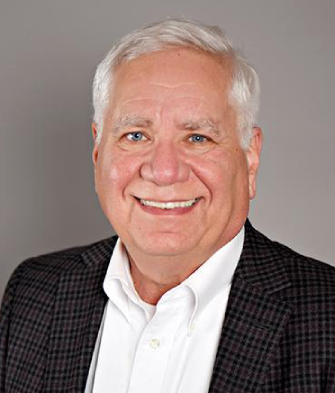
Stephen Kelly is an Assistant Professor in the Department of Computing and Software at McMaster University. His interdisciplinary work spans surgical research methodology, biomedical informatics, and machine learning. Affiliation: McMaster University Roles: Faculty in Computing and Software, Surgical Research Collaborator Research Interests: Dr. Kelly’s work focuses on applying evolutionary computation and reinforcement learning to medical and educational challenges, such as detecting mind wandering via EEG and optimizing surgical training programs. His research bridges clinical practice and software innovation. Recent Publications: Trends include automated program synthesis, neural memory frameworks for RL, and evidence-based surgical education tools. Key areas: AI for healthcare, algorithmic design, and educational technology. Contact: Email: kellys32@mcmaster.ca
Dr. Irène Abi-Zeid is a Full Professor at the Department of Operations and Decision Systems within the Faculty of Administrative Sciences at Université Laval , Canada. With a joint doctorate in water sciences and a master's in mathematics, her work bridges multi-criteria decision support (MCDA), optimization , and machine learning to address complex socio-ecological challenges. Research Interests : Multi-criteria decision support systems, socio-ecological modeling, participatory decision-making, and optimization techniques for search and rescue operations. Awards : 2019 Best paper award, Artificial Intelligence and Decision Support Systems track 2019 Best Ph.D. project award (KMIS Conference) 2017 Runner-up: GDN Springer Young Researcher Award Teaching : Probability and statistics for business, ANOVA, stochastic processes, and research methodology. Publications : Over 40 peer-reviewed articles focusing on MCDA applications in water management, urban planning, and emergency response. Her pioneering SARPlan decision support system for search and rescue operations has been adopted by Canadian agencies, while her MCDA-ULaval software advances multi-criteria analysis in environmental and transportation domains.
Ronald Kluger is a Professor of Organic and Biological Chemistry at the University of Toronto's Department of Chemistry. His research focuses on protein modification, particularly hemoglobin, to develop acellular oxygen carriers for medical applications. Kluger's work includes site-specific cross-linking of hemoglobin using 'click chemistry' and investigating mechanisms of carbon dioxide release in decarboxylation reactions. His group also explores thiamin-derived intermediates and lanthanide-catalyzed reactions in water. Affiliations: University of Toronto, Department of Chemistry; Collaborations with Toronto General Hospital's surgery department. Labs: Laboratories in Davenport Building 450/451. Research Interests: Hemoglobin modification for oxygen therapeutics, decarboxylation mechanisms, protein-protein coupling, and biomimetic synthesis. Key projects include creating non-vasoactive oxygen carriers from cross-linked hemoglobin and studying carbonic acid intermediates in decarboxylation. Grants & Awards: Not explicitly listed, but sustained research output indicates sustained funding. Collaborations include industry partnerships (e.g., lung transplant research).
Jason Choi is an Assistant Professor in the Department of Economics at the University of Toronto. His research focuses on macroeconomics and financial economics, with particular emphasis on public debt sustainability, monetary policy analysis, and financial market dynamics. He explores topics such as the effects of US public debt on global financial systems, safe asset market power, and the interplay between banking sector risk and policy interventions. His work spans both theoretical and empirical analyses, including studies on optimal monetary policy frameworks, the impact of treasury debt on bank lending, and regime switches in economic policy. While no specific awards or grants are explicitly listed in the provided texts, his contributions to macro-finance and policy analysis are evident through his extensive publication record. Dr. Choi’s research also delves into historical and comparative studies, such as the secular decrease in UK safe asset market power and the structural evolution of the US economy’s input-output networks. His findings contribute to understanding economic stability, policy design, and the implications of fiscal-monetary interactions in global markets.
Salim Ahmed is an Assistant Professor in the Department of Chemical Engineering at Memorial University of Newfoundland's Faculty of Engineering and Applied Science since February 2012. He holds a B.Sc. and M.Sc. in Chemical Engineering from Bangladesh University of Engineering and Technology (BUET) and a Ph.D. in Process Control from the University of Alberta. Prior roles include a postdoctoral fellowship at the University of Alberta (2006-2008), an Assistant Professorship at Qatar University (2008-2012), and a Lecturer position at BUET (1997-2000). His research focuses on safety and risk engineering, process systems, and model-based process control. Notable projects include an IgniteR&D grant-funded risk-based alarm system for process industries and early warning systems design. His expertise spans system identification, continuous-time models, model validation, and valve stiction analysis. Teaching responsibilities include undergraduate and graduate courses in Process Engineering and Oil and Gas Engineering. Awards include the 2010 Best Student Research Award (Energy and Environment category) at the Qatar Foundation Annual Research Forum. Research outputs include over 30 peer-reviewed articles, conference papers, and book chapters, emphasizing fault detection, data-driven modeling, and risk assessment in process systems. He has developed tools like StepID for step-response identification and AlarmSoft for alarm management.
Trish Reay serves as Vice-Dean at the Alberta School of Business, University of Alberta, and holds the TELUS Chair in Management. Her research centers on organizational and institutional change, organizational learning, professions and professional work, and identity and role identity. She earned her PhD and MBA at the University of Alberta. Education: PhD, University of Alberta MBA, University of Alberta Dr. Reay investigates how organizations and institutions evolve through professional work and identity dynamics, with emphasis on spatial contexts and restructuring challenges. Her qualitative research examines healthcare systems, professional collaboration, and institutional logics, revealing how professionals navigate change in high-stakes environments like emergency departments during crises. Her 15 most recent publications (2017-2022) demonstrate deep engagement with healthcare transformation, professional identity formation, and interprofessional dynamics. Frequent collaborations with health services researchers appear in top journals including Administrative Science Quarterly and Academy of Management Journal, highlighting her interdisciplinary approach to complex organizational problems. Key Honors: Dr. Reay holds the TELUS Chair in Management, a distinguished endowed position recognizing her research excellence and leadership in organizational studies. Dr. Reay teaches Managing Organizational Change (Master's/EMBA), International Family Enterprise, Implementing Public Policy, and Qualitative Methods for PhD students. Her extensive publication record indicates active research supervision and successful grant acquisition for projects examining primary care transformation, family business dynamics, and professional identity in healthcare settings.
Thomas Brabec is a Full Professor of Physics at the University of Ottawa. His primary research focuses on the interaction between light and matter, particularly in high-intensity laser physics, with applications in ultrafast photonics, theoretical quantum mechanics, and nanophysics. He holds a PhD in Theoretical Photonics from Vienna University of Technology, Austria, and has conducted postdoctoral research through the APART fellowship. His work spans theoretical and computational analyses of laser-driven phenomena, including strong-field ionization, high-harmonic generation, and quantum dynamics in complex systems. Key research areas include ultrafast laser-matter interactions, nonlinear optics, and the development of novel theoretical frameworks for attosecond science. Brabec has pioneered methods to study molecular electronics and nanophysics through advanced computational modeling. His contributions have been recognized with prestigious awards such as the E.W.R. Steacie Memorial Fellowship (2004) and the Canada Research Chair (Tier 1, 2002). His publications frequently explore cutting-edge topics like orbital angular momentum control in strong-field physics, semiconductor Bloch equations, and chiral photonics. He maintains an active research group focused on bridging condensed matter physics with attosecond science through experimental and theoretical collaborations.
Keith W. Hipel is University Professor of Systems Design Engineering at the University of Waterloo, where he serves as Coordinator of the Conflict Analysis Group. He is also Former President of the Academy of Science within the Royal Society of Canada, Senior Fellow of the Centre for International Governance Innovation, and Fellow of the Balsillie School of International Affairs. Hipel's academic journey includes: Doctorate in Civil Engineering (1975), University of Waterloo Master's in Systems Design Engineering (1972), University of Waterloo Bachelor's in Civil Engineering (1970), University of Waterloo Professor Hipel's research centers on developing sophisticated decision-making methodologies for addressing complex interdisciplinary problems at the interface of society, technology, and the environment. His work has pioneered the Graph Model for Conflict Resolution (GMCR), multiple criteria decision analysis, and time series analysis frameworks. These methodologies are systematically applied to critical areas including water resources management, environmental engineering, energy systems, and sustainable development. His recent work has expanded into inverse engineering of decision systems, creating novel connections between conflict resolution and artificial intelligence. Hipel's approach consistently integrates systems thinking with practical applications to solve real-world challenges. An analysis of Hipel's recent publications reveals a strong trajectory toward addressing planetary health challenges through advanced conflict resolution methodologies. His work increasingly focuses on climate change impacts, water resource conflicts, and sustainable development using sophisticated graph model techniques. There is a clear evolution from theoretical foundations to practical applications, with growing emphasis on AI integration through inverse engineering. His publications consistently bridge engineering, environmental science, and social sciences to develop implementable solutions for complex system-of-systems problems. Hipel has received exceptional recognition for his scholarly contributions: Officer of the Order of Canada (highest civilian honor) Foreign Member of the U.S. National Academy of Engineering Japan Society for Promotion of Science Eminent Scientist Award (previously awarded to six Nobel laureates) IEEE SMC Norbert Wiener Award (highest honor in systems engineering) Miroslaw Romanowski Medal and Sir John William Dawson Medal from the Royal Society of Canada Three Honorary Doctorates (France, Hungary, Canada) Professor Hipel has mentored 86 graduate students to completion (37 PhD, 49 Master's), with each graduate securing successful careers in industry, government, or academia. His research has been supported by numerous grants from NSERC, SSHRC, and international funding agencies, enabling the development of influential decision support systems including GMCR II (used by 95 groups in 28 countries) and the McLeod-Hipel Time Series Package. He founded and chairs the International Conferences on Water Resources and Environment Research (ICWRER) and co-chaired the Expert Panel on Energy Use and Climate Change for the Council of Canadian Academies. As Coordinator of Waterloo's Conflict Analysis Group, Hipel leads a dynamic research team that bridges theoretical advances with practical applications across multiple domains. The group has produced seminal textbooks including 'Time Series Modelling of Water Resources and Environmental Systems' and 'Conflict Resolution Using the Graph Model: Strategic Interactions in Competition and Cooperation.' Their decision support systems have been implemented worldwide for addressing environmental conflicts, water resource management challenges, and complex decision-making scenarios requiring interdisciplinary approaches.
Mingzhe Jiang is an Adjunct Assistant Professor at the University of Waterloo, focusing on remote sensing and machine learning applications in environmental science. His work emphasizes sea ice classification, SAR imagery analysis, and deep learning models for geospatial data. He is affiliated with the Adjunct Faculty group at the university. Research interests include developing advanced algorithms for sea ice dynamics, uncertainty quantification in climate models, and automated environmental monitoring systems. His contributions span Bayesian neural networks, graph convolutional networks, and semi-supervised learning frameworks for polar and maritime applications. Key publications (2016–2025) highlight innovations in SAR data processing, including hierarchical pipelines for sea ice segmentation, dual-polarized imagery analysis, and unsupervised clustering techniques. His work often integrates satellite data from platforms like RADARSAT-2 with machine learning to improve environmental parameter estimation. No scientific awards or grants are explicitly listed in the provided information. He has not reported advisees or laboratory affiliations in the text.
James McDonald serves as an Assistant Professor in the Department of Mechanical Engineering within the Faculty of Engineering at the University of Ottawa. He joined the university in July 2013 after working at the Centre for Computational Engineering Science at RWTH Aachen, Germany (2010-2013), where he developed advanced models for non-equilibrium gas flows. His academic credentials include: Ph.D. in Aerospace Studies from the University of Toronto M.A.Sc. from the University of Toronto B.Eng. from Dalhousie University Professor McDonald specializes in non-equilibrium gas flows , micro-scale fluid dynamics , and computational fluid dynamics . His research develops novel moment-closure models using maximum-entropy methods to solve flows where Navier-Stokes equations fail, with applications spanning rarefied gas dynamics, plasma physics, multi-phase systems, and radiation modeling. His work enables accurate simulation of hypersonic, micro-scale, and highly rarefied flows. Analysis of his recent publications (2020-2025) reveals a consistent focus on extending moment-closure techniques to diverse non-equilibrium flow regimes. Key advancements include globally hyperbolic closures using orthogonal polynomials, applications to plasma discharges and multiphase flows, and solutions for relativistic gases. His research consistently addresses realizability and numerical stability challenges in complex flow simulations.
Dr. Arash Sahraei is an Adjunct Professor in the Department of Civil Engineering at the University of Ottawa, specializing in structural mechanics and finite element analysis. He holds a PhD in Civil Engineering from the University of Ottawa (2017) and has postdoctoral experience through a CRD Fellowship with S-Frame Software Inc., contributing to software development for structural analysis. His professional career includes roles at Adjeleian Allen Rubeli (AAR) and WSP Canada Inc., where he worked on high-rise structures and the Rehabilitation of Parliament of Canada project. Education: PhD in Civil Engineering, University of Ottawa (2017) MSc in Civil Engineering, Iran BSc in Civil Engineering, Iran Research Interests: Dr. Sahraei focuses on computational structural mechanics, finite element modeling, lateral torsional buckling of steel members, structural stability, dynamics, and earthquake engineering. His work bridges theoretical advancements and practical applications in structural design and software development. Professional Contributions: His collaboration with S-Frame Software Inc. led to software enhancements for structural analysis. Current projects include seismic analysis of tall buildings and distortion-based buckling solutions for complex structures. Awards: CRD Post-Doctoral Fellowship (2018–2021) Advising & Projects: Dr. Sahraei’s applied research supports large-scale infrastructure projects, such as Canada’s Parliament Rehabilitation. He emphasizes integrating computational tools into structural engineering practice to improve safety and efficiency. Labs/Teams: Collaborates with the University of Ottawa’s structural mechanics research group and industry partners like S-Frame Software Inc.
Rex J. Brynen is a Professor of Political Science at McGill University, specializing in conflict simulation, Middle East politics, and security in fragile states. His work bridges academic research, policy analysis, and practical training through innovative game design. Primary affiliation: Department of Political Science, McGill University Adjunct roles: Non-Resident Senior Fellow (Atlantic Council, 2016–18), consultant to NATO, UN agencies, and multiple governments Research focuses on Palestinian refugee issues, authoritarian resilience in the Arab world, and strategic forecasting. His conflict simulation projects include humanitarian crisis games (AFTERSHOCK), pandemic response exercises (Outbreak Ready!), and journalism crisis training (CNN Academy). Publications span over 30 years, emphasizing policy-relevant analysis of Middle East security, democratization challenges, and the role of simulations in education and strategic planning. Key works include Beyond the Arab Spring (2012) and Palestinian Refugee Problem (2013 co-edition). Consulted for: World Bank, Global Affairs Canada, US Department of State Designs matrix games for military, medical, and diplomatic training scenarios
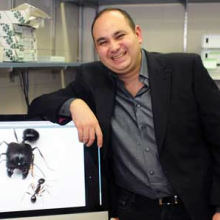
Ehab Abouheif is the James McGill Professor in the Department of Biology at McGill University's Faculty of Science. His research focuses on evolutionary developmental biology, particularly in ants, exploring how developmental mechanisms drive evolutionary innovations and social complexity. Key areas include gene networks, morphological evolution, and the interplay between ecology, development, and evolution. His work bridges ecology and developmental genetics, examining how environmental factors influence phenotypic plasticity and caste differentiation in ants. Notable contributions include studies on wing polyphenism, programmed cell death mechanisms, and the evolution of superorganism complexity in arid regions. Abouheif's lab integrates cutting-edge imaging techniques like nano-CT to study larval development and organ coordination in soldier ants. Abouheif has published extensively on topics such as gene regulatory networks, ecological genomics, and the origins of social behavior. His research emphasizes interdisciplinary approaches, fostering collaboration across biology, ecology, and developmental genetics. Despite no explicitly listed awards or grants in the provided text, his contributions have advanced eco-evo-devo frameworks and ant model systems. His lab (Abouheif Lab Website) serves as a hub for exploring evolutionary transitions, particularly in social insects, and his work continues to address fundamental questions about how developmental systems evolve to produce novel traits and social structures.
Christine Neill is the Chair of the Department of Economics and an Associate Professor at Wilfrid Laurier University's Lazaridis School of Business and Economics. Her research focuses on the economics of education, public policy, and labour economics, with a regional emphasis on Canada. She has contributed to understanding higher education funding mechanisms, tax policies affecting student loans, and pandemic-related educational challenges. Dr. Neill’s work bridges economic theory with practical implications for policy design, emphasizing evidence-based solutions for issues like student debt, childcare impacts, and post-secondary accessibility. Her research interests include analyzing tax expenditures related to education, evaluating the effects of policy changes on parental employment and youth crime, and comparing international approaches to student loan repayment systems. She has published extensively on topics ranging from Ontario’s tuition tax credits to the socioeconomic impacts of infrastructure spending. Dr. Neill’s recent work highlights the complexities of pandemic-era educational policies, particularly for marginalized groups such as girls and young women. She also explores the intersection of education finance and labour market dynamics, offering insights into how tuition fees influence student employment patterns. While no specific awards are listed, her contributions to public economics and education policy reflect a commitment to rigorous, applied research with real-world policy relevance. Her advising and grants activity is not detailed here, but her academic leadership role suggests active involvement in guiding students and securing research funding. Leveraging her position as department chair, Dr. Neill likely collaborates with interdisciplinary teams and policy stakeholders to address contemporary challenges in education and public finance.
Peruvemba Sundaram Ravi is Associate Professor and Director of the Einwechter Centre for Supply Chain Management at Wilfrid Laurier University's Lazaridis School of Business and Economics. His research focuses on scheduling optimization and management science applications in supply chain systems. Research expertise includes: Complex scheduling algorithms Operations management models Supply chain optimization