Dr. Ludovic Rapp is a Senior Research Fellow at the Research School of Physics , Australian National University (ANU) , and leads the High-Power Laser group at the Laser Physics Centre (LPC) . His expertise spans ultrafast laser interaction with matter , beam shaping , and laser-induced microexplosions for synthesizing super-dense material phases , including novel silicon allotropes. He is also the Laser Safety Officer for the Research School of Physics.
Professor Marios C. Angelides is a full-time faculty member at Brunel University London , serving as Professor of Computing and Divisional Lead within the College of Engineering, Design and Physical Sciences . He leads the Creative Computing Research Group under the Institute of Digital Futures and contributes to the Digital Media department at Brunel Design School. BSc (First Class Honours) and PhD in Computing from the London School of Economics (LSE) Chartered Engineer (CEng) and Chartered Fellow of the British Computer Society (FBCS CITP) His research focuses on Creative Computing , specifically applying Machine Learning , Serious Gaming , and Cognitive Modeling to develop Smart IoT Applications . His work spans autonomous drone fleets for environmental monitoring, cybersecurity middleware for Android systems, wearable technology for lifestyle recommendations, and historical analysis of Alan Turing’s legacy in modern AI. Recent publications highlight trends in deploying Machine Learning for: IoT systems optimization Autonomous aerial/underwater vehicle coordination Deepfake detection using Turing’s Imitation Game Energy allocation in CubeSats via gaming mechanics Scientific recognition includes being Deputy Editor of The Computer Journal and runner-up for the 2016 Oxford University Press Wilkes Award . He has supervised PhD students in topics like Smart Android Middleware for Cybersecurity and Wearable Recommendation Systems , with active involvement in editorial boards and international conferences.
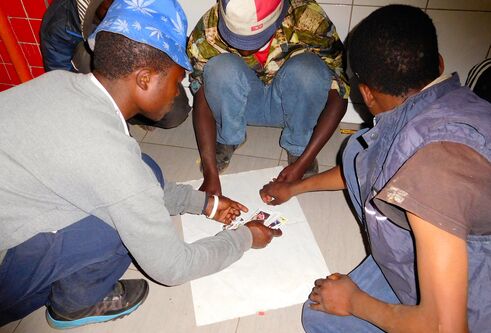
Lorraine van Blerk is a Professor of Human Geography at the University of Dundee's School of Humanities, Social Sciences and Law. She serves as Chair of Human Geography and leads the Research Centre for Transformative Change: Educational & Life Transitions (TCELT) in Education and Society. Her work focuses on street children/youth, refugees, and global inequalities. Academy of Social Sciences Fellow (2021) Stephen Fry Awards - Public Engagement Project of the Year (2017) Market Research Society President’s Medal (2015) Research interests include: Street youth resilience mapping Intergenerational partnerships Transitions to adulthood in crises Policy development for marginalized groups Coastal socio-ecological systems Cultural geographies of homelessness Recent publications address global street youth resilience frameworks (2REST project) and cinema's role for Harare street youth. Key collaborations include universities in Pretoria, Cape Town, Makerere, and Ryerson University. Scientific contributions recognized through: 6 major research prizes 16 funded projects 149+ research outputs International visiting appointments (Toronto Metropolitan University, National University of Singapore)
Aaron J. Chalfin serves as Associate Professor and Graduate Chair of Criminology within the Department of Criminology at the University of Pennsylvania's College of Liberal and Professional Studies. He maintains significant external affiliations as a Senior Fellow at the Niskanen Center, faculty research fellow at the National Bureau of Economic Research, and research affiliate at the University of Chicago Crime Lab. His academic foundation includes: PhD in Public Policy, University of California, Berkeley (2013) MA in International and Development Economics, Yale University (2004) BS in Industrial & Labor Relations, Cornell University (2003) Chalfin's research program centers on policing economics, officer behavioral preferences, place-based crime prevention strategies, and victimization determinants. He concurrently advances methodological rigor in social science through innovations in measurement error correction, spatial crime concentration metrics, and administrative data linkage techniques. His empirical approach consistently bridges theoretical criminology with practical policy evaluation. Recent publications reveal evolving research trajectories across bias-motivated violence measurement during pandemics, low-cost gun violence interventions, racial disparities in traffic fatalities, and methodological improvements for policy analysis. This body of work demonstrates sustained commitment to evidence-based criminal justice solutions through experimental and quasi-experimental designs. His ongoing collaboration with the University of Chicago Crime Lab exemplifies integration between academic research and real-world crime laboratory operations, focusing on scalable public safety innovations.
Riccardo Raheli is a Full Professor at the University of Parma , Department of Engineering and Architecture, with a career spanning over three decades in Information and Communication Technologies (ICT). He has served as Chair of the Councils for Telecommunications and Communication Engineering programs, and as representative of the University of Parma in CNIT and its Members' Assembly. Education: Laurea in Electronic Engineering (University of Pisa, 1983), M.Sc. in Electrical and Computer Engineering (University of Massachusetts, 1986), Postgraduate Diploma (Scuola Superiore Sant'Anna, 1987) Key Roles: President of Degree Councils (2002-2018), CNIT Committee Member (2000-2005), Editorial Board member for IEEE Transactions, Springer and MDPI journals His research bridges telecommunications , digital signal processing , and healthcare applications , producing extensive international publications and industrial patents. He has co-authored monographs including Detection Algorithms for Wireless Communications (Wiley, 2004) and LDPC Coded Modulations (Springer, 2009). Recent article trends show interdisciplinary work in automotive stress monitoring (IoT/Matlab-based systems), video processing for healthcare (neonatal seizures, respiratory monitoring), and acoustic field control (microphone virtualization, personal sound zones). His work spans machine learning applications in automotive systems, stochastic acoustic modeling , and power-line communications . Scientific Leadership : Co-Chair for IEEE conferences (ICC 2010, GLOBECOM 2011, ISPLC 2020) Editorial roles in 7+ international journals Grants & Collaborations : Led industrial patents in communications systems Coordinated CNIT Technical Reports series (2025) He teaches Wireless Communications and Digital Signals Laboratory , emphasizing Matlab/Simulink proficiency. His laboratory sessions focus on practical implementation of signal processing algorithms, requiring full software installation on personal devices.
Nicolas Peyre is a Lecturer and Researcher in Information and Communication Sciences at the University of Toulouse Capitole, where he is affiliated with the Institute of Space, Territorial, Cultural and Communication Law (IDETCOM). He serves as Director of Studies for the Master 2 program in "Administration and Communication of Cultural Activities." His teaching includes Diplomacy of Influence (M2), History of Cultural Policy (M2), Business Intelligence (M1), Communication Law (L3), and Management of Cultural Events and Festivals (M2). Nicolas Peyre's research centers on cultural diplomacy and influence , examining how institutions like the French Institute and Alliance française function as instruments of soft power. His work explores the globalization of museum brands (particularly the Louvre and Centre Pompidou), the cultural and creative industries , and business intelligence in cultural contexts. He investigates how French cultural policy adapts to globalization through both traditional networks and digital platforms, with special attention to diplomatic applications. His recent publications reveal a strong focus on museum branding in international contexts , particularly analyzing the Centre Pompidou Málaga as a case study of cultural diplomacy. He critically examines how social media platforms like Instagram both support and challenge the globalization of museum brands, and connects sport, communication, and diplomacy to analyze how sporting events serve as vehicles for cultural influence. His work spans academic journals, book chapters, and critical commentary on current cultural partnerships. Nicolas Peyre actively contributes to academic discourse through his role as a consulting editor for The Journal of Arts Management, Law, and Society , membership on the editorial board of Hermès, La Revue (CNRS), and as co-founder of Lélia Productions. He has organized numerous international conferences and seminars on cultural diplomacy and influence, including the "Culture & Influence" research seminars at Toulouse Capitole University and co-organizing major international events on French cultural diplomacy.
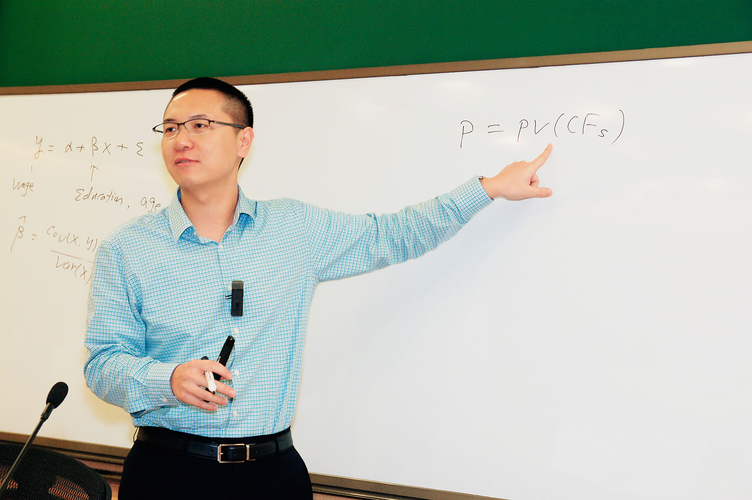
Xuan Tian is the JD Capital Chair Professor of Finance at PBC School of Finance, Tsinghua University, where he has been actively contributing to academic research and teaching since at least 2014. His institutional affiliation is evident through his university email address (tianx@pbcsf.tsinghua.edu.cn) and his extensive publication record representing Tsinghua University as his primary academic institution. Professor Tian's research interests center on theoretical and empirical corporate finance and entrepreneurial finance, with primary focus areas including Venture Capital, Corporate Innovation, Mergers and Acquisitions, Labor Economics, and Payout Policy. His scholarly work demonstrates a consistent trajectory exploring how financial markets, institutions, and policies influence corporate innovation and entrepreneurial activities, with particular attention to Chinese market dynamics and global comparative perspectives. Analysis of his recent publication trends reveals a growing emphasis on the intersection of technology, information, and finance, with increasing attention to patent systems, innovation ecosystems, and the impact of digital transformation on traditional financial markets. His work frequently examines how market participants process information and how institutional arrangements affect innovation outcomes. Jensen Prize (2nd prize) of Journal of Financial Economics Jensen Prize (1st prize) of Journal of Financial Economics Professor Tian has presented his research at numerous prestigious conferences including the American Finance Association (AFA), Western Finance Association (WFA), and National Bureau of Economic Research (NBER) programs. His teaching portfolio includes Corporate Finance for Master's students and Ph.D. Seminars on Advanced Topics in Finance, demonstrating his commitment to both research and academic mentorship. His publications have been featured in prominent outlets including the Harvard Law School Forum on Corporate Governance and Financial Regulation, indicating significant impact on both academic and practitioner communities.
Robert Forsythe is a Professor of Finance at Wayne State University's Mike Ilitch School of Business, where he served as Dean from 2014 to 2022. Prior to Wayne State, he was Dean at the University of South Florida's College of Business (2006-2012) and a faculty member at the University of Iowa (1981-2022), where he co-founded the Iowa Electronics Market, a futures market for political and economic event contracts. Ph.D., Economics, Carnegie Mellon University M.S., Economics and Statistics, Carnegie Mellon University B.S., Quantitative Business Analysis, Pennsylvania State University His research focuses on Experimental Economics , particularly prediction markets, game theory, and market mechanisms. He has analyzed how markets aggregate information, tested theories of public goods provision, and explored strategic behavior in auctions, bargaining, and elections. His work on the Iowa Electronic Market demonstrated the predictive power of market prices for political outcomes. His recent articles emphasize Market Efficiency , Information Aggregation , and Strategic Decision-Making . He has investigated the role of polls in multi-candidate elections, cooperation in games without reputation, and judgment bias in election stock markets. Notable contributions include the establishment of the Bulls Business Community at USF and the restructuring of M.B.A. programs to accommodate working professionals. Despite no scientific awards explicitly mentioned, his work remains influential in Finance and Political Forecasting . Robert Forsythe co-founded the Iowa Electronic Market and has been instrumental in integrating experimental methods into business education. His teaching includes BUSINESS FINANCE (FIN3290) at Wayne State University.
Christopher G. Brinton is the Elmore Associate Professor of Electrical and Computer Engineering at Purdue University, where he leads the ION research lab. He is affiliated with the Department of Electrical and Computer Engineering in the College of Engineering at Purdue University's West Lafayette campus. Dr. Brinton received his PhD from Princeton University, where he was previously the Associate Director of the EDGE Lab and a Lecturer of Electrical Engineering. His research focuses on the intersection of networking, communications, and machine learning, with particular emphasis on Fog computing systems, the Internet of Things (IoT), NextG Wireless, and social learning networks. His research integrates foundational techniques including convex and non-convex optimization, machine learning, and signal processing to address challenges in networked intelligent systems. The ION lab under his leadership develops both theoretical frameworks and practical implementations for next-generation networking solutions, with strong industry collaborations including Qualcomm, Nokia, Intel, Cisco, Dell, and Ericsson. Recent publications reveal a strong trend toward federated learning, decentralized algorithms, and edge intelligence, with significant contributions to model partitioning, communication-efficient learning, and robust network architectures. His work increasingly bridges traditional communication theory with modern machine learning techniques to solve emerging challenges in distributed networked systems. NSF CAREER Award ONR Young Investigator Program (YIP) Award DARPA Young Faculty Award (YFA) AFOSR Young Investigator Program (YIP) Award Intel Rising Star Faculty Award (RSA) Dr. Brinton teaches several courses including ECE 647: Performance Modeling of Computer Communication Networks, ECE 301: Signals and Systems, and ECE 547: Introduction to Computer Communication Networks. He has co-authored the book 'The Power of Networks: Six Principles That Connect Our Lives' and taught three Massive Open Online Courses (MOOCs) with over 400,000 cumulative students. While not currently actively recruiting students, he remains open to connecting with highly motivated individuals. Dr. Brinton leads the ION (Intelligent Optimization and Networking) research lab, which focuses on creating theoretical foundations and practical implementations for next-generation networked systems. The lab has recently published significant work on 6G taxonomy in collaboration with major industry partners and continues to push boundaries in distributed learning and network optimization.
Nathaly Carolina Pinto Torres is a Doctoral Researcher at Aalto University's Department of Design, working on critical design interventions for marginalized communities. Since 2020, she has led the "Emergencia de Educación en la Amazonía Ecuatoriana" project, collaborating with indigenous students and Confeniae to develop pictographic communication systems challenging social exclusion. Her research spans: Participatory design with indigenous communities Gender justice in education during crises Epistemic justice in plurinational contexts Visual resistance strategies in Amazonian regions Postcolonial educational frameworks Design for socio-environmental transformation Publication trends show focus on: Visual communication systems for marginalized groups Crisis-driven educational design Decolonial methodologies Intersectional analysis of exclusion Epistemic justice in academia Collective resilience building Scientific recognition includes: Best Demo Award (2021) SENESCYT International Graduate Scholarship (2019) Netherlands Fellowship Programmes (NFP) (2010)
Prof. Dr. iur. Dipl.-Soz. Marion Albers holds the Chair for Public Law, Information and Communication Law, Health Law and Legal Theory at the Faculty of Law, University of Hamburg. She has been a Full Professor at Hamburg University since October 2009 and serves as Managing Director of multiple research institutions including the Cyber Law Clinic and the Hamburg Center for Bio-Governance. Her academic career spans prestigious positions at the University of Augsburg, Humboldt-University Berlin, and international collaborations with institutions in Brazil, Japan, and the United States. Education: Studies of Law, Sociology, Political Sciences and Economy at the Free University of Berlin and University of Bielefeld State Exam in Law and Diploma in Sociology Doctorate of Law in Crime Prevention and Provisions for Prosecution at University of Bielefeld Habilitation in Informational Self-Determination at Humboldt-University Berlin Professor Albers' research focuses on the intersection of law, technology, and human rights, with particular expertise in data protection law, digital constitutionalism, bioethics, and health law. Her work examines how traditional legal frameworks adapt to emerging technological challenges, especially regarding informational self-determination in the digital age. She has pioneered research on the horizontal effect of fundamental rights, the legal implications of biotechnologies, and the balance between security measures and privacy protections. Her scholarship consistently bridges theoretical legal concepts with practical applications in rapidly evolving technological contexts. Analysis of her recent publications reveals a strong trajectory toward digital constitutionalism, with increasing focus on data subject rights within digital governance frameworks. Her work demonstrates sophisticated engagement with EU data protection regulations while simultaneously exploring comparative approaches across jurisdictions including Japan and Brazil. A consistent thread throughout her scholarship is the exploration of how constitutional principles apply in digital environments, particularly regarding the protection of personal data as a fundamental right. Scientific Awards and Fellowships: Scientific award of the Claussen-Simon-Foundation (2015) Opus Magnum-Fellowship of the Volkswagen Foundation (2015-2016) Fellow at Alfried Krupp Wissenschaftskolleg Greifswald (2014) Fellow at the Institute for Advanced Study Berlin (2017/2018) Professor Albers has secured significant research funding including the Volkswagen Foundation's Opus Magnum Fellowship and has served as Principal Investigator for the German/Brazilian DAAD/CAPES PROBRAL Research Project "Internet regulation and internet rights" (2015/2018). She has supervised numerous doctoral candidates and established productive international research collaborations, particularly with Brazilian institutions. Her advisory work extends to governmental bodies including service as an expert in the German Council for Scientific Information Infrastructures (RfII) since 2018 and previous membership on the Bundestag's Advisory Committee "Ethics and Law of Modern Medicine" (2003-2005). She directs the Hamburg Center for Bio-Governance (since 2013) and the Cyber Law Clinic at the Faculty of Law (since 2012), creating interdisciplinary research environments that bridge legal scholarship with practical applications in bioethics, health law, and digital governance. Her leadership extends to editorial roles including the book series "Schriften zum Bio-, Gesundheits- und Medizinrecht" and numerous edited volumes on data protection and constitutional law.
Renjie Zhao is an Assistant Professor in the Department of Computer Science at Johns Hopkins University and a member of the Data Science and AI Institute. His research focuses on wireless networking and mobile computing, with significant contributions to millimeter-wave communications, software-defined radio, and IoT systems. Dr. Zhao received his B.E. in Electric Power Engineering and Automation from Shanghai Jiao Tong University in 2018, followed by an M.S. (2020) and Ph.D. (2023) in Electrical and Computer Engineering from the University of California San Diego, where he was advised by Professor Xinyu Zhang. His research centers around three main areas: next-generation wireless network architectures (5G millimeter wave, 6G joint communication and sensing, Internet of Things), novel radio hardware and software design (software-defined radio, wireless brain interfaces, low-power ultra-wide-band), and ubiquitous communication and sensing systems (smart homes, virtual/augmented reality, localization, ultra-reliable RFID for supply chains). His work bridges theoretical innovation with practical implementation, often resulting in open-source hardware and software platforms that advance the field. Dr. Zhao's research has been published in top conferences including ACM SIGCOMM, MobiCom, and NSDI. His work demonstrates a clear progression from foundational wireless communication systems to increasingly sophisticated sensing and localization applications, with consistent focus on practical deployment challenges and solutions. Scientific Awards: Best Paper Award at ACM MobiCom 2020 for work on massive MIMO millimeter-wave software radio Best Paper Award at ACM SenSys 2023 for NeuroRadar paper Hopkins AITC funding for AI technologies promoting healthy aging Dr. Zhao actively serves the research community as TPC member for major conferences including MobiCom'25, NSDI'25, and MobiSys'25, and as a reviewer for leading journals. He is involved in multiple NSF-funded projects, including an NSF CIRC project developing the next-stage M-Cube platform. His lab, focused on wireless systems, maintains strong industry connections with companies like Qualcomm and Samsung. Dr. Zhao leads the M-Cube project, an open-source millimeter-wave massive MIMO software radio platform that has been adopted by numerous research institutions worldwide. His team continues to develop innovative wireless technologies with practical applications in supply chain management, healthcare, and smart environments.
Miles Maochun Yu is a Professor of East Asia and military/naval history at the United States Naval Academy, a Senior Fellow at the Hudson Institute, and the Robert Alexander Mercer Visiting Fellow at Stanford University's Hoover Institution. His expertise spans China policy, military history, US-China relations, and geopolitical strategy, with a focus on historical precedents influencing modern conflicts. Doctorate in History, University of California, Berkeley Master’s Degree, Swarthmore College Bachelor’s Degree, Nankai University Yu’s research synthesizes military history and contemporary CCP behavior, analyzing ideological roots of Chinese aggression toward Taiwan, military technology evolution in US-China rivalry, and Cold War parallels. His work examines how historical events like the 1958 Quemoy-Matsu Crisis and 1979 Sino-Vietnamese War inform current strategic dynamics. His recent publications reveal trends in China’s strategic deception, post-CCP transition scenarios, and the role of AI in future military engagements. These works bridge historical analysis with policy recommendations, emphasizing ideological clarity in countering authoritarian regimes. Recipient of USNA Top Researcher Award US Navy Special Action Award US Navy Meritorious Service Awards As former China Policy Advisor to Secretary Mike Pompeo, Yu has shaped U.S. foreign policy discussions. He regularly consults governmental agencies, testifies before Congress, and serves as chief historian for military documentaries on the History and Discovery Channels.
Bryan K. Hanks is an Associate Professor in the Department of Anthropology at the University of Pittsburgh's Dietrich School of Arts and Sciences. An archaeologist specializing in prehistoric Eurasian societies, his research spans from the Bronze Age steppes of Russia to Neolithic villages in the Balkans and Native American pit house settlements in Idaho. Education: Dr. Hanks earned his Ph.D. from the University of Cambridge in 2003, establishing his foundation in archaeological research. Research Interests: His work focuses on late prehistoric societies , particularly examining mobile pastoralism , early metallurgy , and settlement patterning . His projects integrate geophysical and geochemical methods to understand subsistence strategies, craft production, and social organization across Eurasia and North America. Research Trends: His publications reveal a consistent focus on Bronze Age societies of the Eurasian steppes, with particular attention to mortuary practices , metallurgical developments , and social complexity . Recent work has expanded to include Neolithic European settlements and Native American archaeology in the American West. Collaborations & Training: Dr. Hanks maintains extensive international collaborations with institutions in Russia, Serbia, the UK, and across the US. He is deeply committed to student training , regularly including graduate and undergraduate students in his international field projects and offering local geophysics training in Pittsburgh.
Rania Maktabi is an Associate Professor at the Department of Welfare, Management and Organization, Østfold University College. Her research focuses on political relations in the Middle East, particularly the legal status of Arab women, citizenship, and the interplay between religion, law, and politics in Lebanon, Syria, Kuwait, Qatar, Morocco, and Egypt. Key research areas include citizenship studies , gender and law , legal reforms in authoritarian regimes , and post-Arab Spring dynamics . She has published extensively on female lawyers' mobilization , patriarchal nationality laws , and women's political participation , including the 2018 edited book Brennpunkt Midtøsten: Byene som prisme . Her notable awards include the 2014 Prize for Research Dissemination . Collaborations include projects like "The Unfolding Transformation of the State System in the Middle East" (2019–ongoing) and "Gender and Judging in the Middle East & Africa" (2016–2022). She is actively involved in the interdisciplinary research group AreaS , focusing on electoral politics, medialized politics, and women's political participation in the Middle East and beyond.