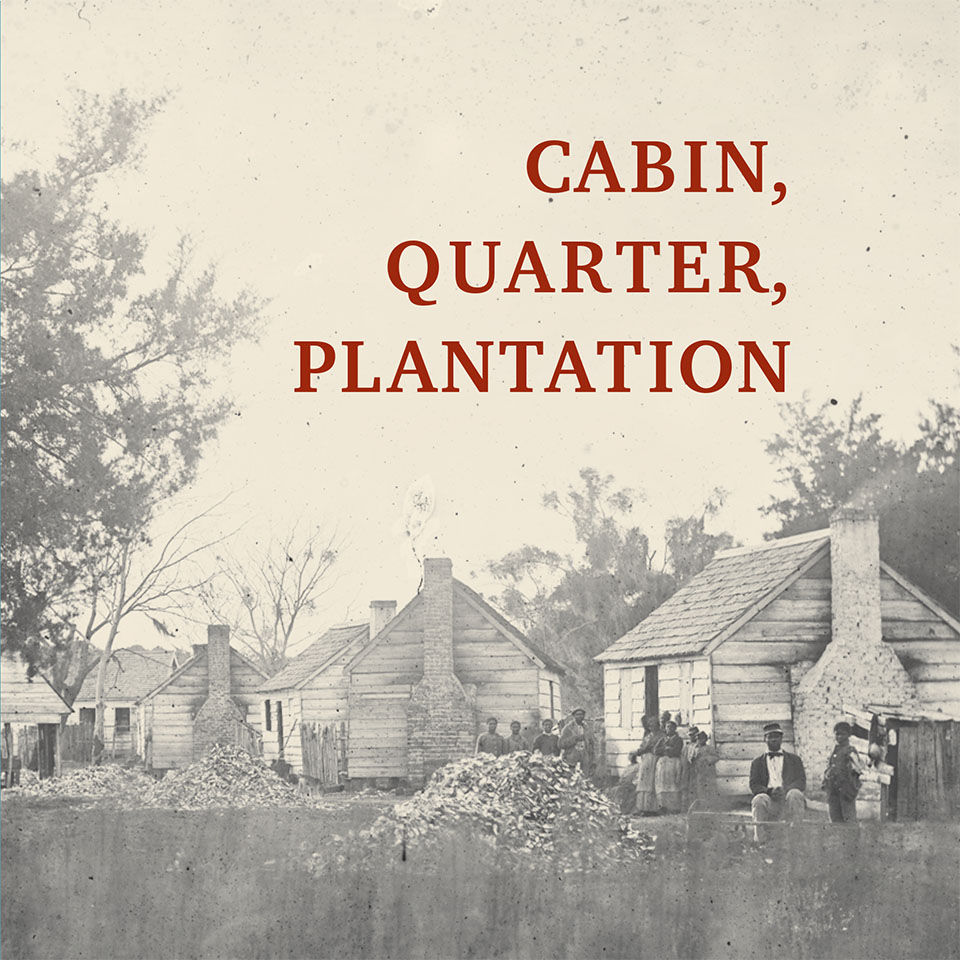
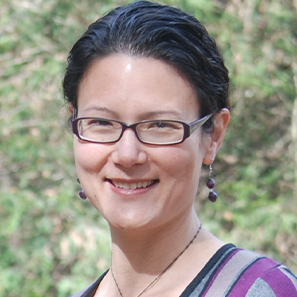
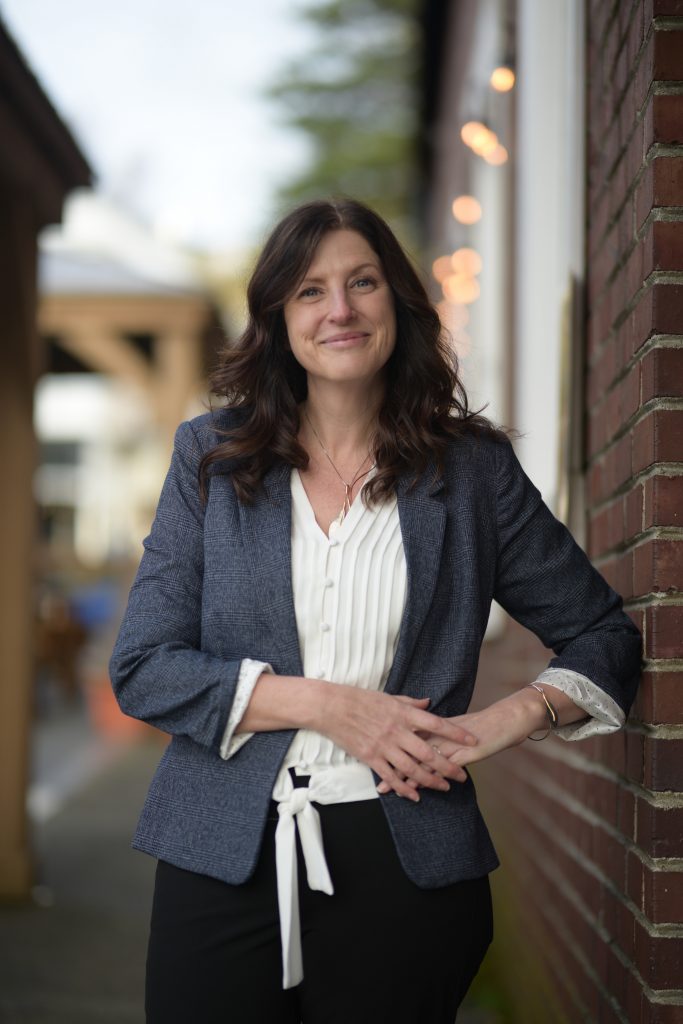
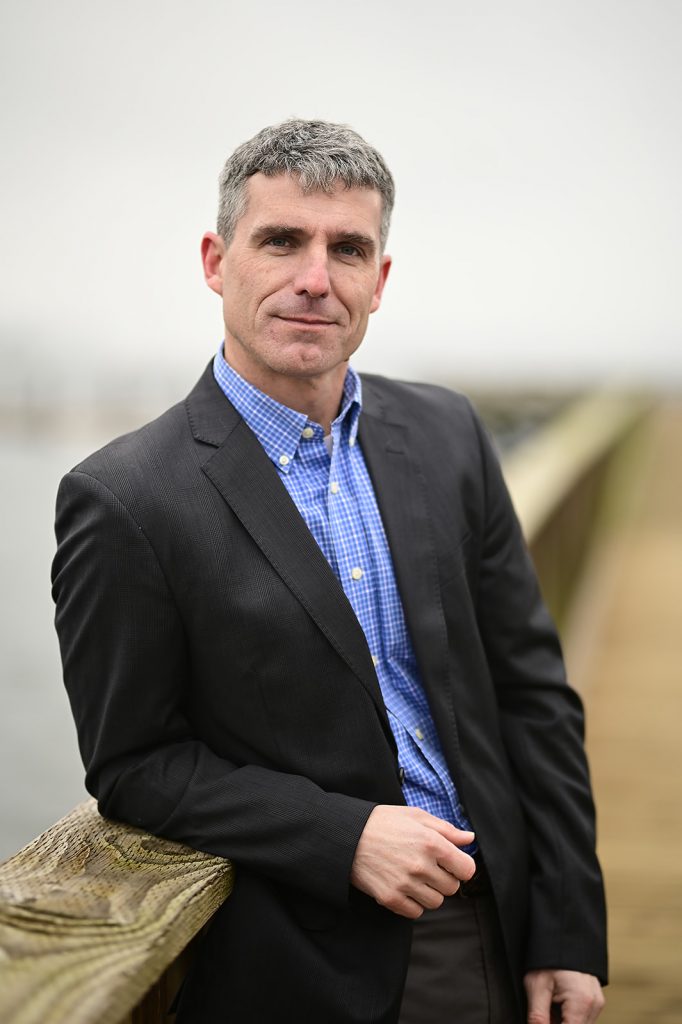
Dr. Clifton Ellis is a Professor at the Huckabee College of Architecture, Texas Tech University, specializing in the architecture and material culture of the colonial and antebellum South. His research explores how architecture mediates social dynamics of class, gender, and race. Ph.D. in Architectural History, University of Virginia M.A. in Architectural History, University of Virginia M.A. in Early American History, University of Tennessee B.A. in French and History, Carson-Newman College Bachelor of Architecture, Iowa State University College of Design His work bridges architectural history, historical archaeology, and African American studies, focusing on plantation societies, slave housing, and urban slavery. Recent publications examine landscapes of resistance, spatial configurations, and cultural hybridization in the Americas. Dr. Ellis contributes to discourse on architectural symbolism, historical memory, and vernacular forms. His research spans colonial Virginia, antebellum Tennessee, and transatlantic contexts like Bermuda and Jamaica. Contact: clifton.ellis@ttu.edu
Polly R. Ha is an Associate Professor in the Department of History within the Arts & Sciences school at Duke University. Her office is located at 0044A Langford Building, Durham, NC 27708. She holds a Ph.D. from the University of Cambridge (2006) and a B.A. from Yale University (2002). Her research focuses on Early Modern British History , particularly Puritan ecclesiastical politics , religious toleration , and Atlantic World Calvinism . Key themes include ecclesiastical independence, historical proportionality in religious scholarship, and the transnational spread of Reformed theology. Her work bridges English religious history with colonial contexts in Bermuda and the Bahamas. Analysis of her 15 most recent publications (2010-2024) reveals a consistent focus on ecclesiastical governance across three interconnected areas: (1) Late Elizabethan Puritan political theology, (2) Revolutionary-era church-state relations, and (3) Atlantic transmission of Calvinist ideas. Methodologically, she combines manuscript analysis with transnational frameworks, often challenging conventional narratives about persecution-driven migration by emphasizing godly globalization as a Puritan motive. Her major works include the 2022 Oxford Press monograph Reformed Government Puritanism (co-authored with Moore and Frankot) and the 2017 critical edition The Puritans on Independence . Her 2015 article Godly Globalisation: Calvinism in Bermuda pioneered alternative models for understanding Puritan colonization. Teaching includes HISTORY 190FS.04 (Topics in Focus Program) and cross-listed courses like CLST 210.01 ( The Good Life ) for Fall 2025.
Peter Clegg is a Professor in Politics and International Relations and Head of the School of Social Sciences at the University of the West of England (UWE Bristol) since 2016. The School encompasses Criminology, Philosophy, Policing, Politics & International Relations, Psychology, and Sociology, along with two research groups and one research centre, maintaining a strong reputation for teaching and research excellence in social sciences. His academic foundation includes a BA (Hons) in History and Politics and MSc in International Relations from the University of Southampton, where he completed his PhD in 2000. He has held visiting research positions at the Sir Arthur Lewis Institute of Social and Economic Studies (University of the West Indies, Jamaica) and the Royal Netherlands Institute of Southeast Asian and Caribbean Studies. Professor Clegg's research centers on the international political economy of the Commonwealth Caribbean, governance challenges in non-independent territories, and the strategic positioning of small states within global systems. His expertise is recognized through editorial roles for The Round Table , The Commonwealth Journal of International Affairs , and Small States and Territories , reflecting his authority in Commonwealth and territorial studies. He has collaborated extensively with Caribbean governments and international organizations on development and sovereignty issues. Analysis of his 15 most recent publications (2022-2025) reveals persistent focus on constitutional evolution in British Overseas Territories, with recurring case studies of Bermuda, Pitcairn, and the Falklands. Key thematic trends include Brexit's territorial repercussions, decolonization dynamics, sovereignty threats from transnational crime, and the political economy of island microstates, demonstrating methodological consistency in comparative constitutional analysis and postcolonial political economy. As School Head, he oversees a vibrant academic community with significant contributions to Caribbean scholarship. No specific research grants or student mentorship details are publicly documented, though his leadership fosters institutional capacity in social sciences research and professional practice across multiple disciplines.
Gad Heuman is a Professor in the History Department at the University of Warwick and former Director of the Centre for Caribbean Studies. He holds fellowships from the Royal Historical Society and the Rockefeller Foundation. He studied at Columbia College and Yale University. His research focuses on Caribbean history, particularly the dynamics of slavery, post-emancipation resistance, and social structures in slave societies. He has edited major journals and book series, including Slavery & Abolition and the Studies in Slave and Post-Slave Societies . Recent research includes analysis of the Morant Bay Rebellion and post-emancipation Caribbean resistance. He organized symposia on control and resistance in the region, contributing to edited volumes. Awards: Fellow of the Royal Historical Society, Rockefeller Residency Fellowship Grants: Multiple fellowships including the Rockefeller program at Johns Hopkins He supervises doctoral research on topics like the Jamaican planter class, women’s suffrage in Bermuda, and colonial linkages between Cumbria and the West Indies. His book The Caribbean: A Brief History (2006) offers a concise overview of regional developments.
Jason T. Raupp is an Assistant Professor in the Department of History at East Carolina University (ECU), teaching courses including Shipwreck Archaeology (HIST3980), Field Research in Maritime History (HIST6650), and Maritime Heritage of the World (HIST6850). He also serves as a Research Associate in the Department of Archaeology at Flinders University, Australia, following extensive field experience across the United States, West Africa, Australia, Asia, Europe, the Caribbean, and Pacific regions over twenty years. His past employers include the U.S. National Park Service, Florida’s Bureau of Archaeological Research, and Papahānaumokuākea Marine National Monument. Education B.A. in Anthropology, Northwestern State University M.A. in History, University of West Florida Ph.D. in Archaeology, Flinders University Research Interests Raupp specializes in Maritime Archaeology and Maritime History , with deep regional expertise in the Pacific Ocean , Latin America , and the Caribbean . His work centers on culture contact , historic fisheries (e.g., Pensacola’s red snapper industry), military technologies , battlefield studies , and contact-period rock art as evidence of cross-cultural interaction. He employs multidisciplinary methodologies, including geophysical surveys and artifact analysis, to study submerged heritage in marine protected areas. Publication Trends Raupp’s recent articles (2011-2021) demonstrate a consistent focus on maritime archaeology in the Pacific and Caribbean , particularly WWII military sites, colonial shipwrecks, and whaling heritage. His work emphasizes methodological innovation (e.g., geophysical techniques for site detection) and heritage management in marine protected areas. Key themes include cultural contact evidence through rock art, fisheries history, and multi-agency collaboration for underwater site preservation, published in journals like the International Journal of Nautical Archaeology and Bulletin of the Australasian Institute for Maritime Archaeology. Advising and Grants While no named students or grant awards are specified, Raupp actively collaborates with ECU students on field research, as evidenced by co-authored publications (e.g., the 2018 ship graffiti study with Wright and Fernández López). His courses HIST5530 (Field School) and HIST6650 (Field Research) imply student mentorship in underwater archaeological projects, likely supported by institutional or agency funding given his work with the National Park Service and Papahānaumokuākea Marine National Monument. Labs and Teams Raupp’s career involves leadership in multidisciplinary teams, including his role as Staff Archaeologist in ECU’s Program in Maritime Studies and collaborations with agencies like the U.S. National Park Service. At Flinders University, he contributes to maritime archaeology research groups, and his publications with scholars such as McKinnon and Steinberg highlight international partnerships. Fieldwork with ECU students on projects like the Saipan WWII survey and Cocos Island ship graffiti indicates hands-on team leadership in maritime heritage documentation.
Duncan L. McDowall is currently serving as University Historian at Queen's University, where he is affiliated with the Department of History within the Faculty of Arts and Science. He holds a Ph.D. from Carleton University and earned both his B.A. and M.A. from Queen's University. His research centers on 19th and 20th-century business and political history, with specialized interests in the history of Canadian banking, Canada’s relations with the developing world, and the history of Bermuda, particularly in the context of modern tourism and maritime archaeology. His work bridges historical scholarship with public engagement and archaeological inquiry. His recent publications explore Bermuda’s role in the Darwinian Revolution and the final years of Captain George Dixon, reflecting a strong thematic focus on maritime history, colonial science, and historical biography. These works demonstrate a consistent engagement with Atlantic and imperial history, scientific interpretation, and cultural memory. Finalist, Ottawa Centre for Research and Innovation "Top Educator" Award, 2002 "Most Popular Professor," Maclean’s Magazine, 1999 "Most Popular Professor," Maclean’s Magazine, 2002 "Most Popular Professor," Maclean’s Magazine, 2003 "Most Popular Professor," Maclean’s Magazine, 2004 McDowall has supervised doctoral students including Jeffrey Noakes, whose thesis examined Defence Construction Ltd., and Tim Krywulak, who researched the archaeology of Keynesianism from 1896 to 1948. While no current grants are listed, his supervisory and publication record indicates sustained scholarly activity and mentorship in historical studies. Though no formal lab or research team is mentioned, his work appears to be deeply connected to maritime and colonial historical networks, potentially involving collaborations with archaeological and heritage institutions, particularly in Bermuda.
Dr. Eva Johanna Holmberg (she/her), FRHistS, is a University Researcher in the Department of Philosophy, History, and Art Studies at the University of Helsinki. She holds a Title of Docent in Cultural History from the University of Turku and serves as History Supervisor in the Doctoral Program in History and Cultural Heritage. Currently, she is a senior researcher on the Academy of Finland project Experiencing Agony: Pain and Embodiment in the British Atlantic World, 1600–1900 (2022-2026), and is launching a new research project on embodied experiences of British early colonialism. Her research interests span Renaissance cross-cultural encounters, early modern race-making, Anglo-Ottoman exchanges, and the cultural history of mobility, with particular focus on bodily, sensory, and emotional experiences. Holmberg has authored three influential books: Jews in the Early Modern English Imagination: A Scattered Nation (2012), British Encounters with Ottoman Minorities in the Early Seventeenth Century: 'Slaves' of the Sultan (2022), and Writing Mobile Lives, 1500-1700 (2024). Her scholarly work appears in prestigious journals including Huntington Library Quarterly, Cultural & Social History, and Renaissance Studies. Her recent publications demonstrate a consistent focus on pain, embodiment, travel writing, and cross-cultural encounters in the early modern period, with increasing attention to colonial experiences and settler colonialism. Holmberg serves as a Trustee and council member of the Hakluyt Society and co-convener of the Institute of Historical Research seminar Society, Culture, and Belief, 1500-1800 . FRHistS (Fellow of the Royal Historical Society) Title of Docent in Cultural History (University of Turku) Academy of Finland Research Fellow (2016-2022) Helsinki Collegium for Advanced Studies Core Fellow (2013-2016) Holmberg has taught at the University of Turku, Queen Mary University of London, and University of Helsinki, specializing in early modern cultural history, history of emotions and senses, cross-cultural encounters, and historiography. She actively supervises graduate students in the Doctoral Program in History and Cultural Heritage and has completed extensive training in university pedagogy and feminist pedagogy through the Finnish Gender Studies network, HILMA. She is also a team member of the AHRC-funded research collective Medieval and Early Modern Orients, a decolonial project examining early English-Islamic world interactions.
Bruce S. Elliott is a Professor in the Department of History at Carleton University, specializing in 18th-19th century social and immigration history, material culture, and public history. He holds a B.A. and Ph.D. from Carleton University and an M.A. from the University of Leicester. His academic career includes seven years as graduate chair and co-founder of the MA in Public History program, where he remains active as a teacher and supervisor. Research interests focus on gravestones, cemeteries, and memorialization; North American monument industry transitions; and English/Irish immigration to Canada. Recent work examines the American Civil War headstone program and Bermuda's free persons of colour gravestones. He actively advises local heritage projects, including Pinhey’s Point and Fairfields historic sites, and previously served as Nepean’s City Historian (1986–1990). Awards include the 2013 Nepean Museum Wall of Fame, 2000 Nepean Millennium Medal, and multiple recognitions from historical societies. He has supervised over 12 graduate students, covering topics from First World War commemoration to Icelandic migration narratives. His publications include Irish Migrants in the Canadas (winner of the Floyd Chalmers Prize) and Letters Across Borders . Community involvement includes heritage advisory roles with local governments and leadership in organizations like the Association for the Preservation of Ontario Land Registry Office Documents. Current research explores the industrialization of the monument trade in early 20th-century North America.
Quito J. Swan is a Professor of History and Africana Studies at The George Washington University, and Director of the Africana Studies Program. His research focuses on Black internationalism, the African Diaspora, environmental justice, and decolonization. He has authored three books, including Pasifika Black (2022) and Pauulu’s Diaspora (2020), which have received major academic awards. Swan’s work has been supported by prestigious fellowships from the National Endowment for the Humanities, Harvard’s Radcliffe Institute, and others. He has taught at Indiana University Bloomington, University of Massachusetts Boston, and Howard University. As an expert witness, he contributed to Bermuda’s 2020 Commission of Inquiry into land losses caused by colonial and military developments. Awards: 2023 ASALH Book Prize, 2021 Pauli Murray Prize, NEH Fellowship. Grants: NEH, ACLS, Wilson Center, and international institutions. His research integrates historical analysis with contemporary cultural forms, such as Dancehall music’s role in social movements (upcoming book Born as a Sufferer , 2024). He advocates for public-facing scholarship that bridges academia and activism.
Travis Parno is an Adjunct Professor of Anthropology at St. Mary's College of Maryland and serves as Chief Archaeologist at Historic St. Mary’s City. His academic career includes teaching roles at Boston University and Brandeis University, alongside extensive archaeological fieldwork across North America and Bermuda. Education: B.A. in Anthropology, College of William & Mary M.A. in Historical Archaeology, University of Bristol Ph.D. in Archaeology, Boston University Research focuses on colonial/postcolonial life in the English Atlantic world, agricultural practices, religious material culture, and archaeology's role in museums. Notable projects include studies at Jamestown, Bermuda's 18th-century sites, and the Fairbanks House in Massachusetts. No specific grants or advising details are provided, though he has conducted fieldwork at historic churches, plantations, and farms. His affiliation with Historic St. Mary’s City underscores his engagement with public archaeology and heritage preservation.
Neil Kennedy is Associate Professor cross-appointed between History and Archaeology at Memorial University of Newfoundland, specializing in seventeenth-century Bermuda and Caribbean history. His archaeological fieldwork spans Bermuda, Dutch Caribbean, and North America. Current research investigates Patrick Williams, an enslaved Bermudian sold to Louisiana after self-emancipation, through a SSHRC-funded project. Studies examine slavery narratives, post-emancipation societies, and maritime archaeology, with particular attention to credit networks in Bermuda's carrying trade. Publications address slave narratives, colonial assembly debates, and archaeological heritage. Recent work recovers overlooked Bermudian freedom narratives and re-examines the slave ship's legacy. Supervises graduate projects on maritime technology, trauma pedagogy through slave narratives, and colonial sexuality. Directs the Maritime Studies Research Unit.
Heather Miyano Kopelson is an Associate Professor in the Department of History at the University of Alabama. She holds a PhD from the University of Iowa (2008) and specializes in the history of race, gender, and religion in the early Americas. Her work bridges Indigenous studies, material culture, and sensory history, with a focus on colonial interactions involving Indigenous women's contributions to cultural and spiritual practices. Her research interests include transatlantic slavery, the African diaspora, and performance studies. Current projects involve analyzing Indigenous women’s material contributions to ritual dance through objects like feathers and shells. She teaches courses on colonial America, gender in the African diaspora, and Native American history. Received the John Murrin Prize (2013) for 'One Indian and a Negroe.' Elected to non-resident membership in the Colonial Society of Massachusetts (2014). Awarded fellowships from institutions including the Newberry Library and the American Antiquarian Society. Her book Faithful Bodies explores embodied religion and race in the Puritan Atlantic. Ongoing projects include Speaking Objects , examining Indigenous women’s material contributions to dance in the early Americas.
Katie Custer Bojakowski is an Instructional Assistant Professor at Texas A&M University, serving as Director & Curator of the Anthropology Research Collection and Coordinator for the Museum Studies Minor and Museum Internships. She holds a Ph.D. from Texas A&M University (2011). Her research focuses on post-medieval to early modern seafaring, ship construction, cultural heritage management, and museum studies. She has led projects such as the Cape Ratac Wreck survey in Croatia, the preservation of the historic schooner Equator , and studies on dhow construction in Zanzibar. She also contributed to the Warwick Project in Bermuda and preservation efforts at Pearl Harbor National Memorial. Her teaching includes courses on cultural heritage management, museum studies, and anthropological ethics. Research interests span ship iconography, early navigation, preservation of underwater sites, and the interplay between maritime technology and cultural identity. She collaborates with institutions like the Institute of Nautical Archaeology (INA) and the National Park Service’s Submerged Resource Center. Key projects include documenting the Equator using LiDAR and photogrammetry, analyzing microbial communities affecting the USS Arizona wreck, and studying dhow construction in Zanzibar. Her work bridges archaeology, history, and technology, emphasizing preservation methodologies and interdisciplinary approaches.
Dr. Piotr Bojakowski is an Assistant Professor in the Anthropology Department at Texas A&M University, holding the Sara W. & George O. Yamini Endowed Professorship. He specializes in nautical archaeology with a focus on early modern shipbuilding, underwater cultural heritage, and maritime history. His research integrates advanced technologies like 3D modeling, GIS, and drone-based surveys. Dr. Bojakowski directs the J. Richard Steffy Ship Reconstruction Laboratory, a leading facility in ship archaeology. Education: Earned his PhD in Anthropology in 2012 (institution unspecified). Key research areas include Atlantic World maritime history (16th–18th centuries), conflict archaeology involving unaccounted US service members, and interdisciplinary projects like the Zanzibar Ship Ethnography. He has conducted over 30 field projects across Northern Europe, the Mediterranean, Africa, North America, and Southeast Asia. Recent projects include the Cape Ratac Wreck survey in Croatia (17th-century Venetian glass cargo), the Equator schooner analysis in Washington, and the Warwick Project in Bermuda. His work bridges historical ship reconstruction with digital preservation, addressing themes like technological change in shipbuilding and trans-oceanic trade networks. Publications span 20 years, emphasizing ship reconstruction methodologies, colonial-era shipwrecks, and digital archaeology techniques. He collaborates internationally with institutions like the National Museum of Bermuda and the Institute of Nautical Archaeology.