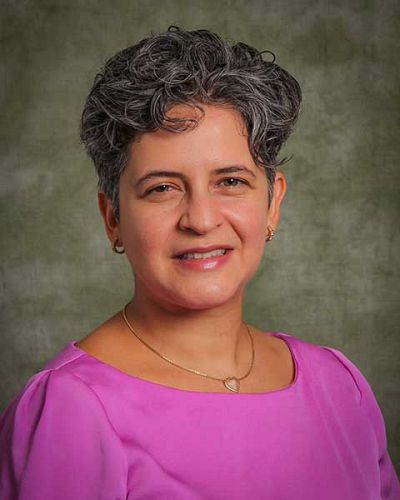
Susan Fussell is a Professor at Cornell University in both the Department of Communication and Department of Information Science. She received her Ph.D. in psychology from Columbia University and directs graduate studies in Communication. Key research areas: Computer-Mediated Communication, Intercultural Communication, Human-Computer Interaction, Multilingual Collaboration, and Collaborative Intelligence Analysis. Teaching focus: Theories of communication, research methods in social computing, and behavioral foundations of technology. Her publications from 2015-2025 reveal trends in cross-cultural communication technology , AI-mediated interaction , and collaborative problem-solving . Scientific awards include NSF grants #1025425, #1318899, #1314778 Google Faculty Gift She advises students like Nanyi Bi, Ge Gao, and Bin Xu. Notable collaborations include work with Claire Cardie, Sara Kiesler, and Dan Cosley. Projects include Tools for multilingual collaboration Energy conservation through social computing Telepresence robotics and human-robot interaction Contact: 226 Gates Hall, Ithaca, NY 14853 | sfussell@cornell.edu
Fedor Dokshin is an Assistant Professor in the Department of Sociology at the University of Toronto, Downtown Toronto (St. George) campus. His research bridges computational social science with environmental and political sociology, focusing on energy transitions, partisan dynamics, and social network structures. Key research areas include racial and income disparities in solar photovoltaic adoption, policy feedback mechanisms in renewable energy programs, and partisan influences on environmental decision-making. Fields of Study: Computational and Quantitative Methods, Environmental Sociology, Political Sociology, Social Networks Areas of Interest: Computational social science, Energy and the environment, Political polarization Research Trends: Dokshin's publications reveal a focus on energy justice, behavioral diffusion models, and political polarization. His work combines computational methods with environmental policy analysis, examining how socioeconomic factors and partisan identities shape renewable energy adoption. Articles demonstrate geographic heterogeneity in opposition to extraction projects, digital discourse analysis techniques, and institutional dynamics affecting scholarly knowledge production. Methodological Emphasis: Utilizes large-scale data analysis, spatial modeling, and automated textual analysis to explore energy-environment-society intersections. Research highlights the tension between technical solutions and social equity in energy transitions, with recurring themes of policy design, public engagement, and networked political behavior.
AnneMarie Luijendijk is the William H. Danforth Professor of Religion at Princeton University and Head of New College West , one of Princeton’s residential colleges, where she has served on the faculty since 2006. A leading papyrologist and historian of early Christianity, she specializes in the social history of Christianity in late-antique Egypt using both literary and documentary papyri. Education Ph.D., Harvard Divinity School, 2005 (New Testament and Early Christianity) Specialization in New Testament Studies, Vrije Universiteit Amsterdam (prior to Harvard) Research Interests Luijendijk’s scholarship bridges papyrology, early Christian studies, and social history. She investigates the everyday lives of early Christians through the papyrus letters and documents that survive from Roman and late-antique Egypt. Her current projects include: From Gospels to Garbage – a forthcoming monograph on the readers, owners, and eventual discard of the earliest Christian manuscripts; Papyrus acquisitions in the 1920s; Fashion, Footwear, and Faith in Late Antiquity – an exploration of dress, status, and religious identity. Her earlier work has illuminated Christian lot divination, the Gospel traditions in Oxyrhynchus, and the role of women and clergy in Egyptian communities. Selected Publications & Editorial Projects Greetings in the Lord: Early Christians and the Oxyrhynchus Papyri (Harvard University Press, 2008) Forbidden Oracles? The Gospel of the Lots of Mary (Mohr Siebeck, 2014) My Lots Are in Thy Hands: Sortilege and its Practitioners in Late Antiquity (co-edited with William E. Klingshirn, Brill, 2018) Re-Making the World: Christianity and Categories (co-edited, Mohr Siebeck, 2019) From Roman to Early Christian Cyprus: Studies in Religion and Archaeology (co-edited, Mohr Siebeck, 2020) Leadership & Service From 2013 to 2020 she chaired Princeton’s Committee for the Study of Late Antiquity , fostering interdisciplinary research across the humanities. She regularly organizes and participates in international workshops, including Princeton–Humboldt Strategic Partnership events, and has secured collaborative grants to advance papyrological research. No individual Ph.D. or master’s advisees are explicitly listed in the provided sources. Laboratories & Collaborations While no dedicated laboratory is mentioned, Luijendijk works closely with the Institute for the Study of the Ancient World (ISAW) at NYU, the Princeton Humanities Council , and international papyrology networks. Her research benefits from digital humanities resources such as the Papyrological Navigator and her Academia.edu profile, which has over 27,000 public views and ranks her among the top 2 % most followed scholars on the platform.
Sarah Jacoby is a Professor of Religious Studies at Northwestern University , specializing in Tibetan Buddhism with particular focus on gender and sexuality, religious autobiography, Buddhist revelation, and Tibetan literature. She holds a Ph.D. from the University of Virginia and previously held a postdoctoral fellowship at Columbia University’s Society of Fellows in the Humanities. Key academic affiliations: Northwestern University (2009–present), Columbia University (postdoc), University of Virginia (Ph.D.) Teaching areas: Introduction to Buddhism, Buddhism and Gender, Tibetan Religion and Culture, Feminist Theory, Religion and Celibacy Research Themes : Jacoby’s work centers on Tibetan Buddhist women’s voices through textual translation and analysis. Her groundbreaking study of Sera Khandro (1892–1940) explores: Autobiographical ventriloquy and spiritual legitimacy Interdependent personhood and relational ethics Translation methodology as ethical practice Gender dynamics in tantric Buddhist practices Academic Impact : 2016 E. Gene Smith Book Prize for Love and Liberation 2015 American Academy of Religion Book Award Finalist Co-organizer of 2022 Tibetan translation workshop Advocate for Tibetan script in academic publications Key Projects : Current book project on Lelung Zhepai Dorjé’s biographical texts Khyentse Foundation Buddhist Studies Lecture Series chair Collaborative translation initiatives with Tibetan writers and scholars
Andrew McInnes is a Reader in English Literature at Edge Hill University's English & Creative Arts department. His academic work focuses on Romantic period women's writing, the Gothic, children's literature, and theories of wit and humor. He co-directs the EHU Nineteen research group, organizing seminars and conferences like the 2022 'New Romanticisms' BARS/NASSR event. PhD in English Literature (University of Exeter) MA in English Studies (University of Exeter, Cornwall Campus) His research explores the 'Romantic Ridiculous' as an alternative to the sublime, drawing on German Romantic writer Jean Paul Richter to examine laughter as a unifying force in Romanticism and modern higher education. Recent projects include analyzing P.J. Harvey's reinterpretation of Romantic childhood and Austen's cinematic adaptations. Key collaborations span institutions in the UK and beyond, with recurring engagement at international Romanticism conferences. His publications and talks address themes like Supernaturalism , Sublime , and New Romanticism . AHRC ECR Leadership Fellowship McInnes actively supervises PhD students and integrates his research into modules on Jane Austen and Young Adult Fiction, emphasizing Romanticism's ideological constructs.
Dr. Emma Cheatle is a Senior Lecturer at the School of Architecture and Landscape , University of Sheffield, specializing in interdisciplinary architectural humanities. She serves as the School Director of Research and Innovation and chairs the Architectural Humanities Research Association (AHRA) . Her work bridges architecture, feminism, and decoloniality, focusing on domesticity, health, and urban common land. Research Interests : Feminist theory, autotheory, urban common land, maternity in architecture, decolonial spatial practices Teaching : Coordinates architectural humanities modules, leads critical spatial writing, and supervises PhD students in feminist and decolonial pedagogy Awards : 2014 RIBA President's Award for Outstanding PhD Thesis Projects : AHRC Major Award (2019–2022) on urban common land, editorial leadership in the field: A Free Journal of Architecture Collaborations : Hélène Frichot (University of Melbourne), Victoria Bates (University of Bristol), and the Sheffield School of Architecture Feminist Library steering committee Her recent publications include Lying in the Dark Room: Architectures of British Maternity (2023) and co-authored works on urban common land. She employs creative-critical writing and ethnographic methods to explore embodied spatial histories and contemporary conditions.
Raman Kashyap is a Full Professor at the Department of Electrical Engineering and Department of Engineering Physics at Polytechnique Montréal . He serves as a researcher at the Centre d’optique, photonique et laser (COPL) and a member of the Advanced Research Centre in Microwaves and Space Electronics (POLY-GRAMES) . His work spans multiple domains in photonics and laser technology. B.Sc. (King's College), Ph.D. (Essex) Research Interests : Professor Kashyap's research focuses on optical fibers , laser cooling , Bragg gratings , optoelectronics , nonlinear optics , and periodically poled crystals . His work explores stimulated Brillouin scattering , optical sensors , and material modification via lasers , contributing to advancements in quantum photonics and microwave engineering . Recent Research Trends : His latest publications emphasize Anti-Stokes fluorescence cooling in silica and oxide glasses, elastic optical network optimization , and femtosecond laser writing for photonic devices. These works bridge material science , quantum computing , and telecommunications , showcasing innovative applications in temperature sensing , optical delay systems , and 3D integrated optics . Scientific Awards : 2016 - Québec Science's 10 Discoveries of the Year 2014 - Royal Society of Canada (RSC) Fellow 2013 - SPIE Fellow 2012 - Killam Fellowship (Canada Council for the Arts) 2011 - Engineering Institute of Canada (EIC) Fellow 2010 - Institute of Physics Fellow 2004 - Optical Society of America (OSA) Fellow Academic Supervision : Professor Kashyap has supervised 36 students , including 24 Ph.D. candidates and 12 Master’s students . His supervised projects cover spherical Bragg resonators , laser-induced cooling , optical frequency domain reflectometry , and femtosecond laser writing . Labs & Collaborations : He leads research at the Fabulas laboratory and collaborates with the POLY-GRAMES center. His work involves partnerships with institutions like INRS and Québec Science , influencing quantum computing and optical fiber communication technologies.
Gunilla Almgren Bäck is a researcher at the Department of Educational Psychology, Faculty of Health and Life Sciences, Linnaeus University. Her work focuses on assistive technology and its role in addressing reading and writing difficulties, particularly in primary and middle-school education. She has conducted extensive studies on speech-to-text tools for students with dyslexia and writing disabilities. Education: Ph.D. in Psychology (2024) from Linnaeus University, specializing in educational psychology and assistive technology. Research Interests: Almgren Bäck's research explores how speech-to-text technology can prevent, bridge, and develop students' text production capabilities. Her work includes longitudinal studies on dyslexic students' experiences and collaborations across Nordic countries to refine assistive technologies. Recent Publications: Her studies, such as Prevent, Bridge, Develop (2024) and Enhancing Middle-School Students' Textual Expression (2025), highlight the integration of assistive technology in educational settings. Her articles emphasize technology's potential to support writing difficulties, dyslexia, and AI-enhanced text production. Projects: She leads the ongoing project When AT meets AI , investigating the synergy between assistive technology and artificial intelligence in text production. Additionally, she collaborates on a 2024–2025 initiative using speech synthesis to aid reading learning in SFI teaching.
Dr. Allyson Stack is a Senior Lecturer in Creative Writing & English Literature at the School of Literatures, Languages and Cultures (University of Edinburgh). Her work focuses on 19th-20th century North American fiction, particularly Edith Wharton and Willa Cather, alongside psychoanalytic theory (Jean Laplanche) and feminist theory. She teaches postgraduate courses like Acts of Storytelling: Narrator, Text, Audience and Exploring the Novel , and undergraduate courses such as American Innocence and Reading Theory . Education: PhD in English Literature, University of Edinburgh (2006) MFA, Arizona State University (1997) BA, Yale University (1991) Her research combines Edith Wharton studies , psychoanalytic theory , and phenomenology of enchantment , with recent publications analyzing Wharton's travel writing, mental health narratives, and intersections of literature with environmental and cultural theory. She supervises PhD students in American literature but no longer in creative writing. Key trends in her publications include: Psychoanalytic and feminist interpretations of Wharton's work Exploration of wonder, enchantment, and sensory experiences Interdisciplinary engagement with environmental and cultural theory Blending creative writing with literary criticism Scientific Awards: AWP National Director’s Prize for Alligator Juniper Pushcart Prize nomination (2012) for story 'The Front' Advising & Grants: She is a core collaborator in the Royal Society of Edinburgh-funded Arts & Humanities Research Workshop (2017–present) and has served as External Examiner at the University of Aberdeen (2019–2023). Her doctoral research at Edinburgh examined Wharton's work through psychoanalytic and feminist lenses. Labs & Teams: She co-organized the Life-Writing Colloquium (2020) and contributed to interdisciplinary projects like Until Only the Mountain Remains , which explored creative writing and visual arts intersections.
Pier Federico Mauro Caliari is a Full Professor at the Department of Architecture and Design (DAD) of the Polytechnic University of Turin since 2016. He holds a PhD in Interior Architecture and Exhibition Design, having graduated cum laude in Architecture from the Polytechnic University of Milan in 1991. Scientific Director, Memorandum of Understanding with Canova Foundation (2022–2025) President, Adrianea Academy of Architecture and Archaeology Onlus (2017–2026) Director of Master's Program in Museography at Adrianea Academy His research focuses on Museography , Interior Architecture , and Cultural Heritage Enhancement , blending archaeological landscapes with innovative design strategies. He explores virtual reconstruction, VR/AR communication, and interdisciplinary approaches to heritage sites. Recent trends include designing for heritage, museography in international contexts (Athens, Pompeii), and theoretical frameworks for integrating cultural communication with architectural practice. Scientific Awards : ICOM Italia Award (2011) for Vatican Museums' Profane Museum Editorial leadership in journals like Piranesi Prix de Rome and Progettare Archeologia He has advised PhD students such as Simona Canepa and led international workshops across China, Egypt, Greece, and the U.S. His projects span public museography commissions, including the Civic Museums of Monza and MUST in Vimercate, the latter winning Italy’s top museum exhibition award.
Zachary Tatlock is an Associate Professor at the Paul G. Allen School of Computer Science & Engineering at the University of Washington, where he leads the Programming Languages & Software Engineering Group (PLSE) and the SAMPL Group. His research spans programming languages, formal verification, compilers, and computational fabrication. He is also an Amazon Scholar with AWS's Automated Reasoning Group and previously advised OctoML. Tatlock's work bridges theoretical foundations with practical systems, focusing on making it easier to write tricky code while ensuring correctness through rigorous proofs and measurements. PhD in Computer Science & Engineering, University of California, San Diego (2014) Thesis: Reducing the Costs of Proof Assistant Based Formal Verification Advisor: Sorin Lerner BS in Computer Science (Honors) and Mathematics, Purdue University (2007) Professor Tatlock's research focuses on the intersection of programming languages, formal methods, and systems. His work in compilers and formal verification aims to make it easier to write tricky code while ensuring correctness through rigorous proofs. He explores computational fabrication techniques that bridge digital design with physical manufacturing. His recent work on equality saturation (via the egg framework) has transformed program optimization and synthesis. Tatlock also investigates floating-point numerics, distributed systems verification, and hardware/software co-design, always seeking to balance theoretical rigor with practical implementation. Tatlock's recent publications demonstrate a strong focus on equality saturation techniques (egg framework), computational fabrication, and verified systems. His work increasingly integrates machine learning with program analysis and synthesis. There's a clear trajectory toward more practical applications of formal methods in real-world systems, particularly in numerical computing and fabrication. His research group has made significant contributions to e-graph technology, floating-point accuracy, and the verification of distributed systems. Distinguished Paper Award for Rewrite Rule Inference Using Equality Saturation (OOPSLA 2021) Spotlight Paper Award for Dynamic Tensor Rematerialization (ICLR 2021) Distinguished Paper Award for egg: Fast and Extensible Equality Saturation (POPL 2021) Faculty Appreciation for Career Education & Training (FACET) Award (2020) NSF CAREER Award: Verifying Distributed System Implementations (2017) Distinguished Paper Award for Automatically Improving Accuracy for Floating Point Expressions (PLDI 2015) Distinguished Teaching Award Nomination (2015) Professor Tatlock has advised numerous doctoral, master's, and undergraduate students who have gone on to prominent positions in academia and industry, including faculty positions at the University of Utah and Brown University, and leadership roles at companies like OctoML and Certora. His research is supported by significant funding from NSF, DARPA, DOE, and industry partners, totaling millions of dollars. Current grants include projects on computer-aided reasoning, formal verification, computational fabrication, and machine learning systems. He has served on numerous program committees and organized workshops including FPTalks, EGRAPHS, and PNW PLSE. As co-leader of the Programming Languages & Software Engineering (PLSE) research group and affiliate of the SAMPL Group at the University of Washington, Tatlock has developed influential tools including egg (an equality saturation toolkit), Carpentry Compiler, and Odyssey. His group actively collaborates with industry partners including Amazon Web Services, where he serves as an Amazon Scholar. The group has made significant contributions to equality saturation, floating-point accuracy, program synthesis, and computational fabrication, with applications ranging from compiler optimization to 3D printing.
Jason Nelson is a Professor of Digital Culture in the Department of Linguistic, Literary and Aesthetic Studies at the University of Bergen, Norway. He is a creator of digital poems and fictions, builder of surrealist and politically focused art games and digital creatures. His work is exhibited widely in galleries and journals around the globe at FILE, ACM, LEA, ISEA, SIGGRAPH, ELO and numerous other venues. Nelson serves on organizational boards including the Australia Council Literature Board and the Electronic Literature Organization. Nelson's research focuses on the intersection of digital technology, creative writing, and artistic expression. He explores how AI and machine learning can be harnessed for creative purposes, developing new forms of digital literature and interactive art. His work often involves building expansive visual worlds through collaborative AI processes, creating interactive digital poetry, and developing novel approaches to digital narrative. Nelson's research spans digital humanities, electronic literature, AI-generated art, and interactive media, with particular emphasis on how these technologies transform creative processes and experiences. Over the past decade, Nelson's work has increasingly focused on the creative potential of AI technologies, especially in the areas of text-to-image generation and multimodal authorship. His projects often blend game engines with poetic expression, creating immersive experiences that challenge traditional boundaries between human and machine creativity. Recent works explore themes of multispecies futures, time perception, and the transformation of physical spaces through augmented reality. Nelson has received numerous scientific awards and fellowships including: Fulbright Fellowship at the University of Bergen Moore Fellowship at the National University of Ireland Winner of the Digital Writing Prize, Queensland Literary Awards (15,000 AUD) Winner of the Woollahra Library Digital Poetry Prize (5,000 AUD) Runner-Up Prize at the Videomedeja digital art exhibition Finalist for the Turn-on Literature Prize Finalist for the Queensland Literary Awards, Digital Writing Category Multiple finalist nominations for the New Media Writing Prize Nelson actively participates in academic advising and has secured significant research funding, including a 125,000 AUD grant from the Australia Council of the Arts, Literature Board for his project "Cube Cryptext and Nomencluster," which was recognized as the world's largest interactive art-game. His work "Nine Billion Branches" received multiple awards including the Digital Writing Prize from the Queensland Literary Awards. He has also received a 75,000 NOK grant for the "Flood Mosaic Artwork" project featured in the Floodlines Exhibition at the State Library of Queensland. Nelson is affiliated with the Center for Digital Narrative at the University of Bergen, where he collaborates with researchers like Scott Robert Rettberg and Alinta Krauth. Together they form EphemerLab, exploring new creative processes that move beyond simple "ask and generate" AI methods. Their work involves stitching together hundreds of individual image fragments and components into cohesive visual and narrative concepts, pushing the boundaries of what's possible with current AI technologies.
Michael Ziser is an Associate Professor of English at the University of California, Davis, where he has taught since 2003. His interdisciplinary scholarship bridges literary studies and environmental humanities, focusing on pre-Civil War North American writing and visual arts through frameworks of ecocriticism and more-than-human agency. His academic foundation includes: Ph.D. in English, Harvard University, 2003 B.A., University of California, Berkeley, 1996 Professor Ziser's research explores agrarianism, eco-phenomenology, food studies, and bioregionalist thought, with particular emphasis on nonhuman nature's representation in cultural production. His book manuscript Continent Ajar: Environmental Practice and Early American Writing pioneers methodologies for more-than-human literary histories, intersecting with science studies, religious studies, and media theory. His 2004-2009 publications reveal consistent engagement with environmental themes across historical periods—from early American pomology and ornithology to contemporary climate justice. Key threads include wilderness conceptualization, animal semiotics, and literature's entanglement with scientific practices, demonstrating how ecological concerns permeate cultural production from colonial to modern eras. As inaugural director of UC Davis' Environmental Humanities Research supercluster, he cultivates cross-disciplinary collaboration, notably organizing the 2009 conference California, the University, and the Environment . His Art of Regional Change fellowship develops community partnerships in Calaveras County and West Sacramento, applying university resources to regional environmental challenges. He also serves as Reviews Editor for Eighteenth-Century Studies . Through initiatives like the Environmental Humanities supercluster, Professor Ziser integrates faculty and graduate researchers across disciplines to address ecological issues via collaborative scholarship and community-engaged projects, emphasizing practical applications of environmental humanities.
Giovanna Montenegro is an Associate Professor of Comparative Literature and Romance Languages at Binghamton University, serving as Director of the Latin American and Caribbean Area Studies Program (LACAS). Her research focuses on colonialism in Latin America and the Caribbean, with interdisciplinary interests in German Studies, cartography, ecocriticism, and visual culture. She has published extensively on topics including the Welsers’ colonial venture in Venezuela and Indigenous environmental resistance in the Guianas. Education: PhD in Comparative Literature from the University of California, Davis. Research interests include colonial history, environmental humanities, Indigenous and Maroon studies, and digital humanities. She has led study abroad courses in Peru and collaborated on projects addressing land rights for Saamaka communities in Suriname. Her work has been supported by prestigious fellowships such as the Fulbright U.S. Scholar Award, Newberry Library grants, and the American Association of University Women. Notable awards include the 2019 LASA-Venezuela Section Best Article Prize for her analysis of German cultural memory around the Welser colony. In teaching, she offers courses on colonialism, environmental literature, and world literature, reflecting her commitment to linking academic scholarship with public engagement through initiatives like mapping projects and community advocacy.
Professor Margaretta Jolly is a Professor of Cultural Studies (Media and Film) at the University of Sussex, affiliated with the School of Media, Arts and Humanities. She has been at Sussex since 2007, leading research initiatives such as the Sisterhood and After: Women's Liberation Oral History Project and the Business of Women's Words collaboration with the British Library. Her academic roles include Director of Research (Knowledge Exchange and Impact) for her School until 2025. Her research focuses on life writing, oral history, and audio/visual storytelling, particularly in women's history and gender studies. She also studies cultural industries, emphasizing ethical and heritage enterprises. Notable projects include curating the BBC Connected Histories archives and directing the Centre for Life History and Life Writing Research at Sussex. Key research trends from her articles highlight feminist publishing strategies, philanthropy in social movements, and intersections of oral history with national identity. Her work bridges theoretical frameworks like Donna Haraway’s Chthulucene with practical applications in conservation diaries and cyborg theory. Awarded the University of Sussex Research Impact Award (2024), her contributions extend to academic leadership and knowledge exchange. She has advised on grants for projects blending archival work with contemporary activism, such as the Media Collaboration Network . Her interdisciplinary approach unites cultural studies with historical and technological analyses.