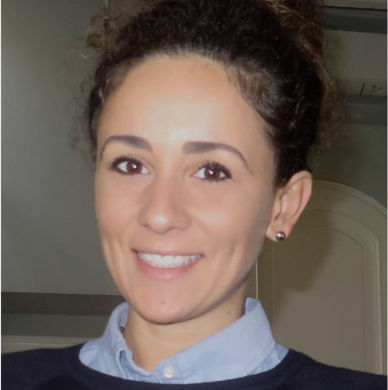
Dario Guarascio is a researcher at the Department of Economics and Law (Dipartimento di Economia e Diritto) at Sapienza University of Rome. He teaches courses in Innovation Economics, Labor Economics, and Public Economics, focusing on topics such as digital platforms, technological unemployment, and EU policy challenges. His research spans the impact of AI, robotics, and digitalization on labor markets, as well as structural vulnerabilities within the EU. Teaching responsibilities include modules on innovation policy, labor economics, and platform work dynamics. Courses are delivered in both Italian and English, with practical components involving STATA analysis of economic datasets. His research emphasizes empirical analysis of technological adoption, policy effectiveness, and socio-economic inequality linked to digital transformation. Recent work explores AI’s regional employment disparities in Europe, meta-analyses of robotics’ labor market impacts, and EU energy resilience strategies. His publications address issues like monopoly capital in digital platforms, the Eurozone’s structural challenges, and the green transition’s core-periphery divides within the EU. He actively collaborates with research networks and institutions, contributing to policy debates on digital sovereignty, platform regulation, and innovation-driven competitiveness. His work bridges theoretical economic frameworks with applied policy analysis, emphasizing real-world implications of technological change.
Maurizio Leotta is an Assistant Professor in Computer Science at the University of Genova, Italy, where he has been employed since 2018. He is a member of the Department of Computer Science, Bioengineering, Robotics, and Systems Engineering (DIBRIS) within the School of Mathematical, Physical and Natural Sciences. Additionally, he serves on the School Council and the Department Board of DIBRIS. Dr. Leotta received his PhD in Computer Science from the University of Genova in 2015, with a thesis on Automated Web Testing under the supervision of Prof. Filippo Ricca. His doctoral work was revised by Prof. Massimiliano di Penta (Università del Sannio, Italy) and Prof. Ali Mesbah (University of British Columbia, Canada). Before his academic career, he worked as an IT Technician in various companies and participated in research and industrial projects funded by organizations such as Finmeccanica S.p.A. and the Italian Space Agency. Dr. Leotta's primary research focuses on Software Engineering, with particular emphasis on Test Automation, which is his main research topic. He collaborates with Prof. Paolo Tonella from USI, Switzerland on this area. His other significant research interests include Empirical Software Engineering, Requirements Engineering, Business Process Modelling, and Model-Driven Software Engineering. His work often addresses practical challenges in web and mobile application testing, with a growing interest in applying AI and gamification techniques to improve software testing processes. His recent publications demonstrate a strong trend toward integrating artificial intelligence with traditional software testing methodologies, particularly in end-to-end web testing. He has made significant contributions to improving test robustness, addressing flakiness in test execution, and developing tools for better test maintenance. His work also shows increasing interest in gamification approaches to engage developers and students in software testing activities, as well as applications of large language models to enhance test automation. Dr. Leotta has received multiple prestigious awards for his research, including: Best Paper Award at ICST 2025 (Short Papers, Vision and Emerging Results) Distinguished Paper Award at ICST 2023 (Industry Papers) Best Paper Award at QUATIC 2022 (Full Papers) Best Paper Award at ICST 2022 (Demo and Testing Tool Papers) Best Paper Award at QUATIC 2020 (Full Papers) Best Student Paper Award at ICWE 2016 (Full Papers) Dr. Leotta has advised numerous graduate students, including three PhD candidates who have completed their degrees (Andrea Fasciglione in 2024, Dario Olianas in 2023, and Diego Clerissi in 2020). He currently supervises multiple Master's students working on topics related to software testing, web accessibility, and AI applications in software engineering. He has also served as a postdoctoral advisor for researchers including Diego Clerissi and Dario Olianas. Beyond advising, Dr. Leotta has secured research funding through collaborations with industry partners and has been involved in multiple research projects focused on software testing and verification. He co-directs the Software Engineering for Healthcare (SEH) Laboratory, which has been partially supported by Janssen Italia (previously by Actelion Pharmaceuticals Italia). The lab focuses on applying software engineering techniques to healthcare applications, particularly in the areas of wearable technology for patient monitoring and medical data analysis. Dr. Leotta is also active in the Gamify research community, organizing workshops on gamification in software development, verification, and validation.
Sandro Bartolini serves as Associate Professor in the Department of Information Engineering and Mathematical Sciences at the University of Siena, Italy, where he teaches advanced courses in computer architecture and parallel programming while leading cutting-edge research in high-performance computing systems. His academic journey began with a cum laude Laurea in Computer Engineering followed by a PhD in Computer Science and Engineering from Università di Pisa. Education: PhD in Computer Science and Engineering, Università di Pisa Laurea in Computer Engineering (cum laude), Università di Pisa Research Focus: His work centers on photonic interconnects for chip multiprocessors , energy-efficient software optimization for multi-core/GPU architectures, and performance-portable parallel programming models . Current investigations span cryptographic acceleration, blockchain algorithms, and hardware/software co-design for emerging computing paradigms, with strong emphasis on practical implementations bridging theoretical advances and real-world applications. Publication Trends: Recent publications (2019-2023) reveal three dominant threads: (1) Photonic network innovations addressing energy bottlenecks in chip multiprocessors, (2) The PHAST library ecosystem enabling seamless CPU/GPU programming across domains from autonomous vehicles to UAV navigation, and (3) Hardware accelerator designs for convolutional networks and cryptographic workloads. These works consistently target performance-portability challenges in heterogeneous computing environments. Grants and Collaborations: As principal investigator for the Italian Ministry-funded PHOTONICA project, he established international research partnerships with Murcia University, Columbia University, and Hong Kong University of Science and Technology, while securing industry collaborations with STMicroelectronics, Intel Munich, IBM, and IMEC. He has also managed complex IT system deployments for Siemens Italy, RAI (Italian public broadcasting), and SpaceDys. Academic Leadership: Bartolini serves as Associate Editor for the Eurasip Journal of Embedded Computing and actively contributes to the European HiPEAC network. His research group at Siena maintains strong industry ties for technology transfer, particularly in photonic interconnect validation and parallel programming frameworks for next-generation computing systems.
Maurizio Bevilacqua serves as a Full Professor in the Department of Industrial Engineering and Mathematical Sciences at the University of Ancona (Università Politecnica delle Marche). His academic focus falls under the scientific sector IIND-05/A - Impianti industriali meccanici (Mechanical Industrial Plants). Based at the university's Engineering faculty located at Via Brecce Bianche in Ancona, Italy, Professor Bevilacqua maintains an active research profile with numerous publications spanning industrial engineering, digital transformation, and smart manufacturing technologies. Professor Bevilacqua's research interests center on cutting-edge industrial engineering topics including Digital Twin technology, Industry 4.0 implementation, smart retrofitting of industrial machinery, maintenance engineering, and robotics applications in manufacturing. His work demonstrates particular expertise in applying these technologies to challenging sectors such as oil and gas, food manufacturing, and maritime transportation. His research bridges theoretical innovation with practical industrial applications, as evidenced by his numerous case studies across different manufacturing sectors. An analysis of his recent publications (2023-2025) reveals a strong emphasis on digital transformation in industrial settings, with particular focus on Digital Twin implementations across various sectors. His work shows a progression from foundational Industry 4.0 concepts toward more sophisticated applications including Digital Triplet frameworks and human-machine integration approaches that anticipate Industry 5.0 paradigms. Many of his studies combine multiple advanced techniques such as machine learning, fuzzy cognitive maps, and association rule mining to solve complex industrial problems. Professor Bevilacqua's research demonstrates strong industry collaboration, with numerous case studies conducted in real industrial settings across multiple sectors including oil and gas, food manufacturing, and maritime transportation. While specific grant information isn't provided in the available materials, his extensive publication record suggests active participation in research projects that bridge academic theory with practical industrial implementation. His work frequently addresses challenges related to legacy system modernization, operational resilience, and sustainable manufacturing practices. Though specific laboratory affiliations aren't detailed in the available information, Professor Bevilacqua's research appears to focus on industrial applications of digital technologies, suggesting collaboration with industrial partners and possibly university research centers focused on manufacturing innovation, robotics, and industrial IoT. His work on smart retrofitting solutions indicates involvement with projects that transform conventional machinery into intelligent systems capable of integration within modern digital manufacturing ecosystems.
Andrea Vinci is an accomplished researcher with 66 publications and 1,261 citations, specializing in the intersection of quantum computing, edge-cloud architectures, and Internet of Things (IoT) systems. His work demonstrates significant contributions to solving complex computational problems through innovative approaches that bridge theoretical quantum algorithms with practical distributed computing applications. His research interests span quantum computing applications for resource management, multi-density clustering techniques for urban analytics, and platform-independent IoT application development. Vinci has pioneered work in variational quantum algorithms for cloud/edge resource allocation, quantum kernels for IoT data classification, and distributed AI for cognitive building systems. His research demonstrates a consistent focus on addressing NP-hard problems through quantum-classical hybrid approaches. Analysis of Vinci's publication trends reveals a strategic research trajectory moving from foundational work in smart city analytics and crime prediction toward cutting-edge quantum computing applications for IoT and edge-cloud systems. His recent publications (2023-2025) show increasing focus on quantum machine learning techniques specifically tailored for IoT data processing, with significant attention to practical implementation challenges. Vinci maintains an extensive collaborative network, frequently publishing with researchers including Fabrizio Marozzo, C. Mastroianni, J. Settino, and Antonio Guerrieri across multiple high-impact venues including IEEE Transactions, ACM conferences, and specialized journals in quantum computing and distributed systems. His technical contributions include the development of the COGITO platform for cognitive buildings, novel approaches to multi-density crime prediction, and significant advancements in quantum kernel methods for IoT data analysis. Vinci's tutorial publications indicate his role in educating the broader research community about emerging quantum computing applications for distributed systems.
Federico Barravecchia is a Fixed-term Researcher (Law 240/10 art.24-b) and tenure-track Assistant Professor at the Department of Management and Production Engineering (DIGEP) , Politecnico di Torino. He serves as a Member of the University Internship Commission and has been recognized with Quality Awards in 2018 and 2019 by Politecnico di Torino. Academic Role: Assistant Professor in Industrial and Information Engineering (Area 0009) Research Group: Quality Engineering (DIGEP) Research Interests focus on advanced manufacturing technologies, quality engineering, and product-service systems. His work bridges servitization in manufacturing with emerging Quality 4.0 paradigms, particularly in human-robot interaction and big data analytics applications. Teaching Contributions include leadership in the Service Quality and Customer Experience course for the Master's Degree Course in Management Engineering since 2022, with earlier roles as course collaborator for Quality in Services and Production Systems courses from 2019 to 2021. Scientific Achievements include significant publications in top journals like the International Journal of Quality and Reliability Management and Quality Engineering , addressing topics such as: Digital voice-of-customer processing Collaborative robotics cost modeling Affective computing in manufacturing Servitization measurement frameworks User sentiment analysis for service quality
Luigi Panza is a Fixed-term researcher at the Department of Management and Production Engineering (DIGEP) within the College of Management and Production Engineering at the Polytechnic University of Turin. He also serves as an invited member of the College of Mechanical, Aerospace, and Automotive Engineering. His scientific disciplinary sector is Manufacturing Technologies and Systems (IIND-04/A) under Area 0009 - Industrial and Information Engineering. Dr. Panza's research centers on sustainable production systems with emphasis on circular economy integration, Industry 4.0 applications, and advanced manufacturing technologies. His work bridges environmental policy, digital transformation, and industrial processes, particularly examining carbon taxation impacts, additive manufacturing sustainability, and laser-based polymer processing. He actively explores cross-sector applications including agricultural technology modernization through digital tools. His 2024-2025 publications reveal a strong focus on systemic industrial transitions, combining bibliometric analysis with empirical environmental assessment. Key trends include circular economy frameworks using 10R principles, life-cycle evaluation of decentralized manufacturing, policy-driven business model shifts, and material-specific advanced production techniques. No scientific awards were documented in available sources. Panza serves as course collaborator across five engineering disciplines at Polytechnic University of Turin, teaching Manufacturing Processes, Production Systems, and Graphic Communication since 2020/21 with assignments extending through 2025/26. His instructional scope spans Mechanical, Automotive, Industrial Production, and Management Engineering programs, including the Challenge@PoliTo NewLAW project on alumina waste valorization. No student advising or grant details were specified in current profiles.
Antonino Furnari is a tenure-track Assistant Professor at the University of Catania's Department of Mathematics and Computer Science. He is affiliated with the Image Processing Laboratory (IPLAB) and co-leads the LIVE research group. His research focuses on intelligent systems that perceive and anticipate human actions through egocentric vision, enabling assistive technologies for wearable devices. He teaches courses on Computer Programming (Bachelor) and Fundamentals of Data Analysis (Master's), having supervised over 30 theses and 8 PhD students. Key research interests include egocentric vision, action anticipation, human-object interaction analysis, and wearable systems. His work spans datasets like EPIC-KITCHENS and MECCANO, advancing domain adaptation, mistake detection, and procedural activity understanding. Recent contributions include developing methods for unsupervised mistake detection using gaze signals, differentiable task graph learning for procedural activities, and attention-based models for short-term interaction anticipation. He has been recognized with an Italian Habilitation to Full Professor (ASN) in 2025 and serves as an Associate Editor for TPAMI and publicity co-chair for ICCV 2025. He actively participates in organizing workshops such as the Joint Workshop on Egocentric Vision (EgoVis) and presents at top venues like CVPR, ECCV, and NeurIPS. His research bridges computer vision, machine learning, and assistive technologies, with applications in healthcare, industrial settings, and cultural heritage.
Anna Spagnolli is a Full Professor at the University of Padua, specializing in Human-Computer Interaction (HCI), Usable Privacy, and Technology-Mediated Interaction. Her research focuses on ethical AI, IoT systems, virtual reality (VR) applications in prosocial behavior, and digital health assistants. She has led projects like SAFE GYMS (IoT for safety in sports/work environments) and DOMHO (IoT for co-housing). Her work bridges technology design with user needs, emphasizing transparency, accessibility, and ethical considerations. Research Interests: Usable Privacy and Security AI Ethics and User-Centered Design Virtual Reality for Behavioral Training IoT in Healthcare and Safety Qualitative Methods in HCI Key Contributions: Developed frameworks for transparency in healthcare AI and digital assistants. Explored prosocial behavior through VR simulations of emergencies. Designed inclusive mobile apps (e.g., SAFE TALK) for social support during isolation. Her publications span over two decades, addressing topics from sustainable technology to workplace ergonomics with collaborative robots. Despite no listed awards, her extensive academic output reflects significant influence in HCI and technology ethics.
Umberto Castellani is a Full Professor at the Department of Computer Science, University of Verona. His research spans computer vision, computer graphics, and machine learning, with applications in biomedical analysis and cultural industries. Research Focus 3D acquisition and registration Geometric deep learning and spectral methods Neuroimaging (diffusion MRI, fNIRS, EEG) Augmented/virtual reality and human-machine interaction Key Projects INDICE - Digital Innovations for Cultural Industries (2025) VVV - Virtual simulation of natural ecosystems (2023) SARAS - Robotic surgical assistant (2018) Collaborations with game industry and biomedical companies Laboratory : Member of Vision, Image Processing & Sound (VIPS) Lab.
Raffaella Bernardi is an Associate Professor at the University of Trento, affiliated with the Department of Information Engineering and Computer Science (DISI) and the Center for Mind/Brain Science (CIMeC). She holds a PhD in Logic and Language from Utrecht University (2002) and has held academic positions at the Free University of Bozen-Bolzano and the University of Trento. Her research focuses on computational linguistics, formal semantics, distributional semantics, and multimodal models, with a particular emphasis on integrating vision and language systems. Education: PhD in Logic and Type Theory (2002, Utrecht University), Master's in Philosophy (1994, University of Chieti), and High School Diploma (1990). Research Interests: Natural Language Processing, Categorial Type Logic, Compositional Distributional Semantics, Visual Dialogues, and Multimodal Reasoning. She has pioneered work on grounding language in visual contexts and has contributed to key projects like the ERC-funded COMPOSES initiative. Grants & Leadership: Principal Investigator on EU projects (e.g., CACAO, Galateas) and member of the ERC COMPOSES team. She chairs conferences like ACL and EMNLP and serves on editorial boards for journals like the Journal of Logic, Language, and Information. Labs: Leads the LaVi (Language and Vision) research group and collaborates with the CLIC Lab. Active in organizing workshops on Formal Grammar and Vision-Language Integration.
Simona Crea is an Assistant Professor at the Sant'Anna School of Advanced Studies in Pisa, Italy. Her research focuses on wearable robotics for rehabilitation, assistance, and performance augmentation, with specific interests in exoskeleton design for stroke rehabilitation, musculoskeletal strain reduction in workplaces, and sensory feedback systems for neurological patients. She coordinates the HABILIS and HABILIS++ projects funded by INAIL, addressing rehabilitation robotics for motor impairments. Academic Positions: Assistant Professor, Sant'Anna School of Advanced Studies (2017–present) Post-Doctoral Research Fellow, Sant'Anna School of Advanced Studies (2015–2017) Visiting PhD Student, Harvard University (2015) Educations: PhD in Biomedical Engineering, Sant'Anna School of Advanced Studies (2012–2015) M.Sc. and B.Sc. in Biomedical Engineering, University of Pisa (2009–2012) Her work emphasizes translating robotics innovations into clinical and industrial applications. Key projects include developing hip exoskeletons for stroke survivors, passive occupational exoskeletons reducing shoulder strain in repetitive tasks, and biofeedback devices for Parkinson's gait correction. Recent studies highlight energy-efficient prosthetic designs and human-robot collaboration in Industry 5.0 contexts. Publications (2020–2025) focus on exoskeleton biomechanics, gait analysis algorithms, and user-centered design methodologies. Her research bridges clinical rehabilitation needs with ergonomic workplace solutions, emphasizing interdisciplinary approaches.
Cecilia Robustelli is a Full Professor at the University of Modena and Reggio Emilia, based in the Department of Linguistic and Cultural Studies. Her research focuses on gender and language, Italian linguistics, language policy, and the sociocultural dimensions of communication. She is actively involved in initiatives promoting gender-inclusive language and non-discriminatory administrative communication. Teaching includes courses such as Administrative Writing in Italian and Linguistic Strategies for Institutional Communication , addressing professional and gender-aware writing skills. She also teaches Language, Speech, and Gender , exploring the historical and sociolinguistic intersections of gender and language. Her research highlights the role of language in reflecting societal changes, particularly regarding women’s roles and gender equality. Recent work examines digital tools in linguistics, inclusive language policies, and the impact of gender diversity on language systems. She collaborates with institutions like the Accademia della Crusca and contributes to EU-funded projects on multilingualism and language policy. Publications span over 50 works, including monographs like Lingua italiana e questioni di genere (2018) and articles on topics such as gender-neutral language in administrative texts and the linguistic representation of non-binary identities. She advises governmental bodies on language reform and participates in international conferences on language policy and gender studies.
Amelia Compagni is an Associate Professor in the Department of Social and Political Sciences at Bocconi University and Director of the Center for Research in Health and Social Care Management (CeRGAS) at SDABocconi School of Management. She holds a Biology degree from the University of Pavia, a PhD in Genetics from the Institute of Molecular Pathology in Vienna, and a Master in International Health Management from Bocconi University. Her research focuses on healthcare management, policy innovations, and professional dynamics in healthcare organizations, with a particular emphasis on hybrid organizational models and governance challenges. Her academic leadership roles include serving as Academic Director of the World Bachelor in Business (WBB) program (2018–2022) and as Research Fellow at the Institute of Public Administration and Healthcare (2008–2009). She teaches courses on government organization management, healthcare sector analysis, and qualitative research methods. Her work explores topics such as healthcare governance during crises (e.g., the Covid-19 pandemic), public-private hybrid organizations, and the ethical dimensions of medical practice. Recent research highlights include studies on strategic ambiguity in healthcare corruption contexts and the diffusion of robotic surgery innovations. Research Themes: Healthcare Policy, Professional Hybridity, Crisis Management, Telemedicine Adoption Teaching: Management of Government Organizations, Healthcare Sector Analysis, Qualitative Methods Affiliations: CeRGAS, Institute of Public Administration and Healthcare
Eric Eaton is a prominent researcher in Computer Science, specializing in Artificial Intelligence, Reinforcement Learning, and Federated Learning. His work bridges theoretical advancements with practical applications in healthcare, robotics, and educational technology, as evidenced by his collaborations with institutions like the Vector Institute and co-authors such as Marcel Hussing and Amir-massoud Farahmand. Research Focus: Lifelong Learning, Object-Centric Representation, and Algorithmic Fairness Key Contributions: ELLA algorithm, Distributed Continual Learning frameworks, and AI integration in surgical video analysis His recent publications address critical challenges in high update ratio reinforcement learning, federated learning for surgical data, and ethical considerations in algorithmic fairness. These works highlight his interdisciplinary approach, combining AI with healthcare and education. Eaton's leadership in projects like FORLA and Slot-BERT demonstrates innovation in unsupervised learning and temporal coherence. His involvement in the CS2023 curriculum design underscores his commitment to advancing computer science education.