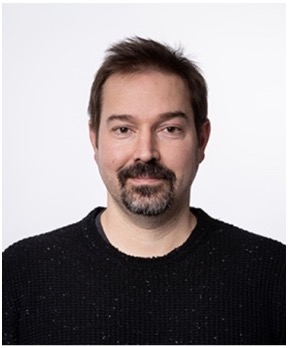
Gwilym Pryce is a Professor of Urban Economics and Social Statistics at the University of Sheffield's School of Economics. He currently leads the ESRC/Nordforsk 'Life at the Frontier' research project and co-directs the ESRC Centre for Doctoral Training in Data Analytics and Society. Previously, he held roles including Director of the Glasgow Q-Step Centre and the ESRC Urban Big Data Centre. His research focuses on urban inequality, residential segregation, immigration impacts, and spatial policy implications, with a particular emphasis on geographically-driven disparities affecting crime, wellbeing, and local economies. Education: BSc (First Class) in Economics & Public Policy from Leeds Metropolitan University (1991), MSc Economics from the University of Warwick (1994). He completed his ESRC Research Fellowship in Urban Studies at the University of Glasgow (1995), progressing through academic ranks before becoming Professor in 2006. He moved to Sheffield in 2014 to lead the Sheffield Methods Institute, joining the School of Economics in 2022. Research interests span urban segregation mechanisms, social frontiers, housing markets, and environmental policy. Notable projects include analyzing immigration's local employment effects via spatial econometrics, and quantifying the socioeconomic impacts of urban decentralization. His work bridges academic theory with policy application, often collaborating with international stakeholders. Recent publications explore housing price dynamics under immigration, the cost of informal care, and methodological advancements in detecting social boundaries. He has contributed to policy reports on universal credit impacts and flood-risk housing economics. Current projects involve interdisciplinary collaborations across Europe and China to address urban inequality through data analytics. Labs/Teams: Active in the Interdisciplinary Centre for Social Sciences (ICOSS), ESRC CDT Data Analytics & Society, and the Sheffield Economic Research Paper Series (SERPS). He advises on multiple doctoral training programs and policy initiatives focused on urban regeneration and social justice.