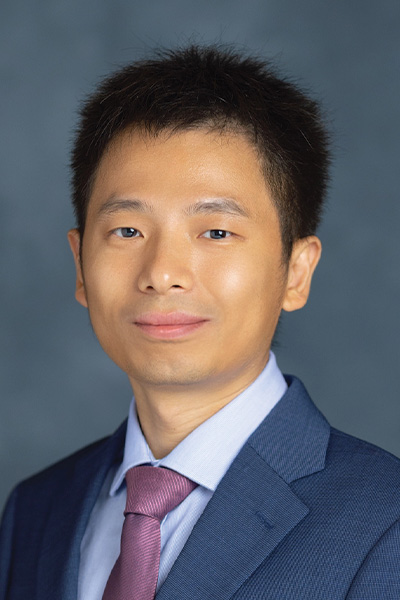
Petar Kormushev is a Senior Lecturer (Associate Professor) in Robotics at the Dyson School of Design Engineering, Imperial College London, and the founder/director of the Robot Intelligence Lab. He holds a PhD in Computational Intelligence from Tokyo Institute of Technology. His research focuses on robotics and machine learning, particularly reinforcement learning for autonomous robots. Key projects include the WALK-MAN humanoid robot for disaster response and contributions to the PANDORA and STIFF-FLOP EU projects. He has received the 2013 John Atanasoff Award for scientific excellence in ICT. His lab develops machine learning algorithms applied to humanoid robots like COMAN and iCub, with interests in robot learning, compliant control, and autonomous systems. He has supervised numerous PhD students and led research teams at IIT and Imperial College.
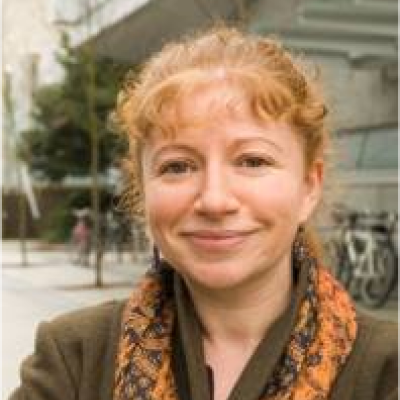
Ohad Fried is an Associate Professor of Computer Science at Reichman University. He was previously a postdoctoral research scholar at Stanford University under Prof. Maneesh Agrawala and completed his PhD with Prof. Adam Finkelstein as part of the Princeton Graphics group. He holds an M.Sc. in Computer Science and a B.Sc. in Computational Biology from The Hebrew University. His research lies at the intersection of computer graphics, computer vision, and Generative AI , focusing on tools, algorithms, and paradigms for photo and video editing and synthesis . His work has been widely recognized in top conferences including CVPR, SIGGRAPH, and ECCV, with recent contributions to tiled diffusion models, expressive 4D facial motion generation, and synthetic image detection. Ohad has received numerous awards, including the Israel Science Foundation personal research grant (2021) , the Outstanding faculty researcher at Reichman University (2022) , and the Siebel Scholar award (2017) . He has advised multiple students in research projects, and his work is covered by media outlets like Wired , The Washington Post , and CNN . Teaching roles include courses at Reichman University such as "GenAI for Games & Entertainment" and "Synthetic Media Detection", and at Stanford University "Computational Video Manipulation". Key Research Themes: Neural Rendering Diffusion Models 3D Facial Animation Image/Video Editing Media Forensics Scientific Awards: ISF Personal Grant (2021) Siebel Scholar (2017) Google PhD Fellowship (2014-2016) Gordon Y.S. Wu Fellowship (2012-2013) Excellence Scholarships
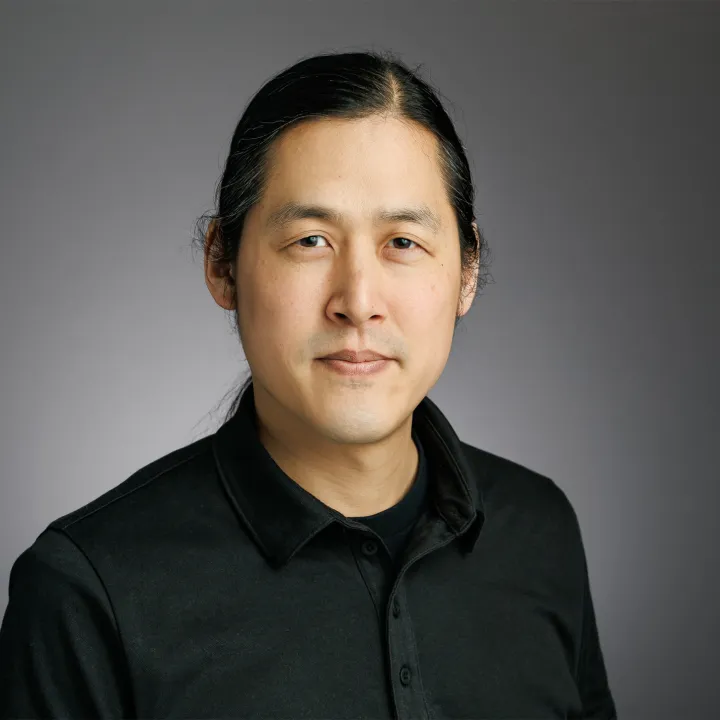
Ryszard Lenczewski is a distinguished Professor of Film Art at The Leon Schiller National Higher School of Film, Television and Theatre in Łódź, where he has served as a lecturer at the Cinematography Department since his graduation in 1974. He held the position of Vice-Dean from 2008 to 2014 and has been instrumental in shaping generations of Polish cinematographers. As a member of prestigious film organizations including the Society of Cinematographers (PSC), the European Film Academy (EFA), the British Academy of Film and Television Arts (BAFTA), and the American Academy of Motion Picture Arts and Sciences (AMPAS), Lenczewski has established himself as a significant figure in international cinema. Lenczewski's research and creative interests span cinematography, film art, documentary filmmaking, visual storytelling, and camera techniques. His extensive filmography demonstrates mastery across feature films, documentaries, and television productions, with notable works including the Oscar-winning film "Ida" (2013) where he served as cinematographer. His approach combines technical precision with profound artistic expression, emphasizing visual narrative and emotional depth through innovative camera work and lighting techniques. Throughout his career, Lenczewski has supervised numerous student films, guiding emerging talent in cinematography techniques and visual storytelling. His pedagogical approach emphasizes hands-on experience and creative experimentation, reflected in the diverse range of student projects he has mentored from 2013 through 2025. 2013 Decoration Silver Medal for Merit to Culture - Gloria Artis 2015 Golden Camera 300 Lifetime Achievement Award at the Manaki Brothers Film Festival 2018 Gold Medal "Gloria Artis - For Merit to Culture" 2019 "Golden Glan" award from Charlie cinema in Łódź 2020 Society of Cinematographers (PSC) Lifetime Achievement Award 2022 Polish Filmmakers Association Award 2024 Silver Cross of Merit Lenczewski's creative output reveals a consistent exploration of visual narrative techniques, with recent student projects focusing on experimental cinematography, sensory film experiences, and innovative approaches to time, space, and emotion in visual storytelling. His work demonstrates mastery across documentary, feature film, and educational contexts, establishing him as a versatile and influential figure in contemporary cinematography.
Fei Liu is an Assistant Professor in the Min H. Kao Department of Electrical Engineering and Computer Science at the University of Tennessee, Knoxville. His research focuses on surgical robotics, medical robotics, and control systems. He holds a PhD in Robotics from the University of Lyon (INSA de Lyon), France, an MSc in Control Systems and Automation Engineering from INSA de Lyon, and a BSc in Control Systems and Automation Engineering from Northwestern Polytechnical University, China. Fei's research interests include autonomous robotic systems, deformable object manipulation, and perception frameworks for surgical applications. His work emphasizes bridging real-world and simulation environments through advanced modeling and control techniques. Recent projects involve optimizing robotic actions using multi-modal demonstrations, improving tool-tissue interaction tracking, and developing frameworks for boundary parameter estimation in surgical settings. His articles highlight contributions to surgical robotics, including real-to-sim matching of deformable tissues, autonomous suturing, and trajectory optimization for wound care. He has also explored applications in haptic training systems and medical telerobotics. Fei's work often combines machine learning, physics-based simulation, and real-time control to address challenges in robotic surgery. Fei is affiliated with the Tickle College of Engineering and maintains an active research profile with collaborations in robotics and medical engineering domains. His lab focuses on advancing robotic autonomy in healthcare environments through interdisciplinary approaches.
Gökhan Alcan is an Assistant Professor in Robotics and Machine Learning at the Automation Technology and Mechanical Engineering Unit of Tampere University, Finland. He leads the Advanced Learning, Control and AutomatioN (ALCAN) Research Group, focusing on safe model predictive control, constrained optimal control theory, reinforcement learning, and their applications to dynamical systems. His research addresses challenges in robotic manipulation, safe navigation, and human-robot collaboration through projects like the Aurora initiative on automated and connected machines. Education: B.Sc., M.Sc., and Ph.D. in Mechatronics Engineering from Sabanci University (2008–2019). Postdoctoral research at Sabanci University (2019) and Aalto University (2020–2024). Research Interests: Robotics, control theory, system identification, autonomous systems, and machine learning applied to robotic manipulation, autonomous vehicles, and safety-critical systems. Notable work includes trajectory optimization for hybrid systems, magnetic manipulation for medical applications, and sim-to-real gap analysis in cloth manipulation. Awards: Third Place in Aalto Open Science Award 2023, Elginkan Foundation Technology Award (2016), and multiple scholarships. Advised Ph.D. student David Blanco Mulero, who defended his thesis on robotic manipulation of deformable objects. Labs/Teams: ALCAN Research Group, former roles in Aalto University's Intelligent Robotics Group and Sabanci University's Control, Vision, and Robotics (CVR) Group.
Alla Sheffer is a Professor and Associate Head of Faculty Affairs in the Department of Computer Science at the University of British Columbia, Faculty of Science. She is affiliated with multiple research centers including CAIDA (Centre for Artificial Intelligence Decision-making and Action), the Institute of Applied Mathematics, and ICICS (Institute for Computing, Information and Cognitive Systems). B.Sc., Hebrew University, Jerusalem (1991) M.Sc., Hebrew University, Jerusalem (1995) Ph.D., Hebrew University, Jerusalem (1999) Postdoctoral Research Associate, University of Illinois, Urbana-Champaign (1999-2001) Assistant Professor, Technion, Israel (2001-2003) Assistant Professor, University of British Columbia (2003-2008) Associate Professor, University of British Columbia (2008-present) Professor Sheffer's research focuses on geometry processing, addressing algorithmic challenges in digital shape modeling and manipulation. Her work primarily deals with discrete geometry representations, specifically meshes (polygonal model representations), with applications in computer graphics and computer-aided engineering. She utilizes tools from computational and differential geometry, discrete mathematics, and graph theory to generate, manipulate, and edit discrete geometric models. Her research spans virtual and augmented reality, visual computing, and 3D modeling, with significant contributions to sketch-based modeling, mesh processing, and cloth simulation. The 15 most recent publications reveal a consistent research trajectory in geometry processing, with recent work focusing on vector sketch processing, VR drawing tools, and advanced mesh manipulation techniques. Her work demonstrates a strong connection between human perception and computational methods, particularly in the interpretation of freehand sketches and the generation of perceptually-accurate geometric representations. The recurring themes across her publications include flowlines, curve networks, mesh parameterization, and the application of perceptual studies to improve algorithmic outputs. Eurographics Fellow ACM Fellow IEEE Fellow Royal Society of Canada Fellow SIGGRAPH Academy Member UBC Killam Research Prize NSERC Discovery Accelerator Supplement IBM Faculty Award Professor Sheffer has supervised numerous doctoral and master's students, with recent theses focusing on geometric mesh processing, vector sketch interpretation, VR drawing tools, and garment modeling. Her research group maintains strong connections with industry through various partnerships and has received substantial grant funding to support their innovative work in geometry processing and computer graphics. She teaches courses in computer graphics, geometric modeling, and video game programming, contributing significantly to both undergraduate and graduate education in computer science.
Theodore Kim is a Professor of Computer Science at Yale University, where he co-leads the Computer Graphics Group with Julie Dorsey and Holly Rushmeier. His research focuses on physics-based simulation, including fluid dynamics, solid mechanics, and fractal growth structures. He holds a PhD from the University of North Carolina at Chapel Hill and has held academic positions at UCSB and the University of Saskatchewan. His work has been applied in over two dozen films, earning him SciTech Oscars in 2012 and 2022. He previously served as a Senior Research Scientist at Pixar, contributing to projects like *Cars 3*, *Coco*, and *Incredibles 2*. Education: Ph.D., Computer Science, University of North Carolina at Chapel Hill (2006) M.S., Computer Science, University of North Carolina at Chapel Hill (2006) B.S., Computer Science, Cornell University (2001) Research Interests: Kim’s work bridges academia and industry, emphasizing practical applications of physics-based simulation. Notable areas include hair and skin simulation for animation, fluid dynamics, and the historical context of computer graphics innovations. His research also addresses racial biases in graphics, such as in hair and skin modeling. Articles Trends: Recent work emphasizes diverse representation (e.g., Black hair simulation), biomechanical accuracy (feather modeling), and historical analysis of technical contributions (e.g., Búi Tướng Phong’s legacy). Earlier publications focus on fluid subspace methods, wavelet turbulence, and efficient simulation techniques. Awards: Academy Award for Scientific and Technical Achievement (2012, 2022) NSF CAREER Award (2013–2018) UCSB Harold J. Plous Award (2015) Best Paper Awards at SCA (2011, 2016, 2018) Grants & Labs: Leads Yale’s Critical Computing Initiative and directs undergraduate studies in CS. His lab collaborates with industry (e.g., Pixar) and emphasizes open-source software. Current projects include fractal design tools and anti-racist graphics research.
PD Dr. Anna Pelka is a Senior Lecturer in European History (19th and 20th Centuries) at the University of Regensburg’s Institute of History , within the Faculty of Philosophy, Arts, History and Social Sciences. She specializes in the intersection of cultural, urban, and political history, with a focus on dictatorships in Spain, East Germany, and Poland. Her research examines topics such as urban development under Franco, youth fashion as political expression, and gender ideologies in authoritarian regimes. Educations: PhD (2006): Ruhr University Bochum, analyzing youth fashion in Poland and the DDR. Habilitation (2018): University of Regensburg, on urban change in Madrid and Barcelona during Franco’s dictatorship. Studies: Art History at University of Warsaw (1994–1999), German Language Studies (2000–2001), and extended research stays in Spain (2001–2003, 2008–2010). Research interests span urban sociology, fashion as political discourse, dictatorship-era policies, and transnational cultural exchanges. Her work often highlights how everyday practices (e.g., clothing, neighborhood mobilizations) reflect broader political and social dynamics. Recent projects include DFG-funded studies on Katowice’s multiethnic history and urban marginalization under Franco. Teaching focuses on modern European history, methodological approaches, and interdisciplinary seminars. She leads courses like “The Acoustic Turn in Historical Research” and “Comic Books as Tools for Teaching 20th-Century Dictatorships.” Key publications include monographs like Urbaner Wandel und Öffentlichkeit (2019) and edited volumes such as the Vademecum of Contemporary Spanish History (2012). Her articles explore topics like workers’ movements in 19th-century Katowice, neighborhood strategies in Madrid under Franco, and fashion as a tool of political control in communist regimes. Awards and grants include DFG funding for multiple projects, reflecting her established reputation in European historical studies. She actively contributes to academic networks and public history initiatives, such as curating exhibitions on GDR culture.
Maria Dolors Molas Font is an Associate Professor of Ancient History at the University of Barcelona and a researcher at the ADHUC-Research Center of Theory, Gender and Sexuality . She co-founded and coordinates the Tàcita Muta research group on women and gender in antiquity since 1998. Her work bridges Mediterranean protohistory and gender studies in antiquity. University of Barcelona (since 1998) ADHUC Research Center (since 2016) Her research spans various subfields, including: Archaeology of Childhood Feminist Archaeology Gender Dynamics in Antiquity Iberian World Studies Classical Reception of Women Violence in Ancient Societies Article themes reveal expertise in: Homeric and Euripidean textual analysis Roman Republican settlement archaeology Slavery and power structures in antiquity Transgressive practices in classical myth Perinatal archaeology in Iberian contexts Gendered interpretations of oratory
Danijel Skočaj is Full Professor at the University of Ljubljana, Faculty of Computer and Information Science , and serves as Head of the Visual Cognitive Systems Laboratory . He is an internationally recognized researcher in computer vision, machine learning, and cognitive robotics , with a strong focus on deep-learning solutions for real-world visual perception tasks and their ethical implications. Education: While specific degrees are not listed in the text, Professor Skočaj’s 2002 “Best PhD paper award” confirms he holds a PhD in the relevant field. Research Interests: His work spans Computer Vision & Pattern Recognition Deep Learning & Neural Networks Cognitive Robotics & Autonomous Navigation Visual Anomaly & Surface-Defect Detection AI Ethics & Societal Impact of AI These interests manifest in both theoretical advances and practical systems deployed in industry and public infrastructure. Publication Trends: Recent papers (2020-2024) emphasize deep-learning architectures for defect detection, robotic grasping, autonomous navigation, traffic-sign recognition, and 3-D anomaly detection , demonstrating a clear trajectory toward robust, real-time, and data-efficient visual intelligence. Awards & Honors: Prometheus of Science Award 2021 (Slovenian Science Foundation) Golden Plaque, University of Ljubljana 2020 ARRS National Award for Exceptional Scientific Achievement 2011 & 2022 Multiple Best-Paper awards at ERK conferences (2013, 2017, 2019) Top-downloaded paper recognition, Journal of Intelligent Manufacturing 2020 Grants & Projects: He currently leads or co-leads five major 2025-2028 national and EU projects (RTFM, SMASH, COMET, RoDEO, MUXAD) totaling several million Euros, focusing on advanced computer vision, machine learning for science & humanities, autonomous systems, and explainable AI. Past leadership includes EU FP7 CogX, GOSTOP, ViLLarD, and many ARRS programmes. Laboratory & Team: The Visual Cognitive Systems Laboratory hosts a dynamic group of doctoral and master’s students working on cutting-edge perception systems. The lab’s open-source low-cost robotic platform and datasets are widely adopted for education and research.
Paul Siebert is a Reader in Computing Science at the University of Glasgow, specializing in computer vision and robotics. He leads the Computer Vision and Graphics research group and teaches Digital Image Processing and Computer Systems. His research focuses on 3D vision systems, biologically inspired vision, and cognitive robot vision, with applications in clinical and media domains. He has pioneered commercial 3D surface scanning technology and collaborated with clinical groups such as Glasgow Dental School. Affiliations: University of Glasgow (Computing Science Department) Roles: Reader, Group Leader (Computer Vision and Graphics) Research interests include active binocular robot vision, 2D/3D sensing, and visual perception for robotics. Notable projects include work on driver attention monitoring, virtual character creation, and clinical anatomical imaging. Siebert previously directed the 3D-MATIC Faraday Partnership and served as Chief Executive of the Turing Institute, developing commercial vision systems. Publications span over 140 works, emphasizing applications like rain removal algorithms, continual learning in robotics, and foveated imaging. His work integrates deep learning, biological vision models, and real-world robotics challenges. Awards and recognitions are not explicitly listed, but his contributions to 3D vision commercialization and robotics research highlight significant impact in the field.
Xing-Dong Yang is an Associate Professor of Computer Science at Simon Fraser University (SFU) and holds an adjunct appointment as Assistant Professor at Dartmouth College. He directs the XDiscovery Lab and focuses on Human-Computer Interaction (HCI), particularly in developing interactive systems for smart everyday objects such as wearables, garments, and appliances. His research emphasizes accessibility for visually impaired users and prototyping tools for non-specialists. He earned his PhD from the University of Alberta, following degrees from the University of Manitoba and University of Alberta. Affiliations: Simon Fraser University (School of Computing Science), Dartmouth College (Adjunct) Education: PhD, Computer Science, University of Alberta MS, Computer Science, University of Alberta BS, Computer Science, University of Manitoba His research explores novel interactive systems, including tactile interfaces for education, assistive technologies for visual impairments, and innovative input methods for wearables. Key projects include MakeBronze (cultural preservation through interactive crafts), AccessibleCircuits (inclusive electronics for blind users), and systems like iWood and MicroFluID that merge materials science with HCI. His work has been recognized with awards such as the Best Paper Award at UIST'19 and multiple Honorable Mentions at CHI and UIST conferences. He advises a dynamic team of PhD and MSc students, emphasizing hands-on prototyping and industry collaborations through internships at companies like Google, Microsoft, and Apple. Yang has secured grants including an NSF CRII grant for device modulation and an NSF CSR Large grant for health-focused earpiece technology. His lab fosters interdisciplinary innovation, bridging computer science with design, engineering, and cultural studies.
Jitendra Malik is the Arthur J. Chick Professor of Electrical Engineering and Computer Sciences (EECS) at the University of California, Berkeley, with affiliations in Bioengineering, Cognitive Science, and Vision Science groups. He previously served as Chair of the Computer Science Division (2002-2004) and Department Chair of EECS (2004-2006 and 2016-2017). He also worked part-time as Research Director and Site Lead at Facebook AI Research (Meta Inc.) during 2018-2019. Education : B.Tech in Electrical Engineering (IIT Kanpur, 1980), PhD in Computer Science (Stanford, 1985) Current Research : Computer Vision, Robotics, Machine Learning, Computational Modeling of Human Vision, and Biological Image Analysis Making significant contributions to computer vision , robotics , and machine learning , Malik’s work includes foundational algorithms like anisotropic diffusion , normalized cuts , and R-CNN . His recent research focuses on embodied AI agents , dexterous manipulation , 3D scene reconstruction , and vision-language-action models . His publications have received 11 best paper awards , including test-of-time awards like the Longuet-Higgins Prize (3x) and Helmholtz Prize (3x). Malik has mentored over 80 PhD students and postdoctoral fellows , many of whom hold prominent positions at institutions like MIT, Caltech, Google, and Meta. His lab’s work spans computer vision , robot learning , and 3D modeling , with applications in autonomous systems, medical imaging, and computational biology. Scientific Awards Presidential Young Investigator Award (1989) Distinguished Alumnus Award, IIT Kanpur (2008) IEEE PAMI-TC Distinguished Researcher (2013) K.S. Fu Prize, IAPR (2014) ACM-AAAI Allen Newell Award (2016) IJCAI Award for Research Excellence (2018) IEEE Computer Society Pioneer Award (2019) Fellow, IEEE, ACM, AAAS Member, National Academy of Engineering and National Academy of Sciences As a leader in sensorimotor learning and humanoid robotics , Malik has pioneered approaches for vision-based quadcopter control , humanoid locomotion , and visuo-tactile perception , further advancing the field of artificial intelligence and computational vision .
Isabel Maria Dias Cabral is a Contracted Researcher at the Centre for Textile Science and Technology (2C2T) at Universidade do Minho, Portugal. She holds a Doctorate in Textile Engineering (2018) and has academic background in Industrial Design (2004) and multiple Masters in Textile and Design fields (2009, 2011). Her research focuses on smart materials applied to textile design, particularly color change materials, shape memory textiles, and sustainable practices. Doctorate in Textile Engineering (2018) Master in Space, Product and Communication Design (2009) Licenciatura in Industrial Design (2004) Her work explores intersections between Humanities (Arts, Architectural Design) and Engineering (Materials, Textiles). Key research areas include smart textiles , interactive materials , and ecological coloration , with a focus on thermochromic , photochromic , and hydrochromic textile systems. Recent publications (2023-2025) demonstrate expertise in natural dyes (eucalyptus, weld, madder), colorimetry in design education , and functionalization of materials for specific applications. She co-supervises PhD and MSc students in projects related to sustainable fashion , smart printed textiles , and ecological coloration . Scientific recognition includes: CEECIND award (2022) Post-Doc grant (2018) FCT PhD grant (2012) Active in project coordination (Bioeconomia Têxtil e Vestuário_BE@T), educational outreach through workshops, and international collaboration with institutions in Sweden, Spain, and Belgium. Her work bridges art , science , and technology in textile innovation.
Carlos A. Ocampo Martínez is an Associate Professor in the Department of Automatic Control (ESAII) at the Universitat Politècnica de Catalunya (UPC), BarcelonaTech, Spain. He is affiliated with the Institut de Robòtica i Informàtica Industrial, CSIC-UPC, a joint research center between UPC and the Spanish National Research Council. He has been with UPC since 2011 and served as Deputy Director of IRI from 2014 to 2018. Education: PhD in Control Engineering, Universitat Politècnica de Catalunya, 2007 MSc in Industrial Automation, National University of Colombia, 2003 BSc in Electronics Engineering, National University of Colombia, 2001 His research is centered on model predictive control (MPC) , particularly constrained and distributed MPC, with applications in energy, water, and smart manufacturing. He investigates large-scale systems management, partitioning strategies, and non-centralized control architectures. His work integrates IoT frameworks for smart industrial systems. Key domains include renewable hydrogen production, fuel cell vehicles, microalgae bioreactors, and solar thermal plants. The recent publications reflect a strong trend in applying control theory to sustainable energy systems and environmental management. There is a clear focus on integrating game theory, population dynamics, and optimization into MPC frameworks for distributed and coalitional control. Applications span hydrogen infrastructure, solar energy, water irrigation, and transportation electrification, demonstrating interdisciplinary impact. Scientific Awards: Juan de la Cierva Research Fellow Dr. Ocampo-Martínez actively supervises PhD students and leads research projects such as MASHED , which focuses on digitalized energy systems with hybrid storage. He has advised students on topics including alkaline electrolyzers, hydrogen production control, and alcohol steam reformers. His grant involvement emphasizes renewable integration, smart grids, and sustainable transport. He collaborates with researchers across Europe and contributes to high-impact journals and IFAC conferences. He is a key member of the Automatic Control research group at ESAII and contributes to the strategic direction of the Institut de Robòtica i Informàtica Industrial. His team integrates control theory, optimization, and real-world industrial applications, particularly in energy and water systems.

/prod01/channel_3/media/migration/research-groups/Petar-Kormushev--tojpeg_1463870974521_x4.jpg)