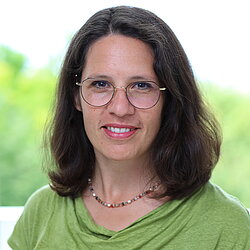
Carla van Boxtel is Professor of Teaching Methodology with a focus on historical education at the University of Amsterdam's Faculty of Social and Behavioural Sciences. Her research investigates historical reasoning, educational dialogue, and the professional development of history teachers. She develops and evaluates pedagogical approaches for promoting historical empathy, critical source evaluation, and social scientific reasoning in educational settings, often focusing on collaborative learning and concept mapping techniques. Recent publications examine dialogic teaching methods, teacher professional growth in history education, and assessment frameworks for social scientific reasoning, emphasizing practical applications for classroom instruction and curriculum design.
Dr. Michaela Oliver is an Assistant Professor and Deputy Director of Education in the School of Education at Durham University, and Associate Executive Dean for Education and Student Progression in the Faculty of Social Sciences and Health. She teaches across undergraduate, master’s, and Initial Teacher Training (ITT) programs, and supervises research projects at various degree levels. Michaela holds a first-class degree in Education and English Literature from Durham University, a Primary PGCE, and a PhD funded by the ESRC. She is a Senior Fellow of the Higher Education Academy (SFHEA). Her research focuses on digital education, literacies, citizenship, and wellbeing, with a particular emphasis on task design, dialogic teaching, and promoting critical thinking in primary and secondary education. She leads two ESRC-funded projects on critical digital literacies and curriculum design. Her publications span books, journal articles, and conference papers, emphasizing reasoning in primary education and pedagogical strategies. Notable works include Developing Reasoning to Encourage Deeper Writing (2023) and Exploring Task Design to Promote Discipline-Specific Reasoning (2023). She has presented at multiple conferences and serves on the editorial board of The Curriculum Journal . Michaela is committed to widening participation and inclusive education, leading initiatives like the First Generation Scholars Network. Her work bridges theory and practice, advocating for evidence-based teaching strategies and student-centered learning environments.
Chris Banister is a Senior Lecturer in English for Academic Purposes (EAP) at Regent's University London, where he has worked since 2008. He also serves as a Module Leader, Educational Developer, and External Examiner, with over 20 years of English Language Teaching experience across the UK and Turkey including roles at the British Council and International House. His educational qualifications include: Postgraduate Certificate in Higher Education (PGCHE), Regent’s University London (2018) MA in TESOL with Distinction, UCL Institute of Education (2015) Diploma in English Language Teaching of Adults (DELTA), International Training Institute, Istanbul (2002) Trinity College Certificate in TESOL (1997) BA in Politics and Contemporary History, University of Salford (1996) Banister's research centers on practitioner research and exploratory practice, with deep investigations into peer feedback mechanisms, learner evaluation systems, and vocabulary acquisition in academic/business English contexts. He examines how classroom ideologies perpetuate linguistic power structures and how teacher self-efficacy is rebuilt through learner feedback. His work bridges theory and practice through classroom-based investigations, emphasizing decolonial approaches to business English and the implementation of vocabulary lists like the Academic Word List. His publication trajectory reveals evolving focus from vocabulary list implementation (2016-2018) to critical examinations of business English ideologies (2023) and teacher research efficacy (2024-2025). Recent work increasingly integrates decolonial theory with exploratory practice frameworks, while maintaining core attention to peer feedback processes and vocabulary development across academic and professional contexts. His scientific recognition includes: Senior Fellow of the Higher Education Academy (2020) Fellow of the Higher Education Academy (2015) While specific graduate student advising isn't documented, Banister's role as Educational Developer involves mentoring faculty in research practices. His External Examiner position indicates quality assurance responsibilities across institutions. Professional service includes IATEFL ReSIG Committee membership (2018-2020) where he moderated online discussions on narrative knowledging. He contributes to academic communities through BALEAP membership since 2013 and develops educational frameworks at Regent's University London, particularly in business English and academic literacy programs where he leads module development and delivery.
Russell Campion is a Professor and Head of the Department of Computing at the University of Staffordshire, leading the School of Digital, Tech, Innovation & Business. He holds a PhD in Computer Science, MRes in Computing Science (specializing in Human-Computer Interaction), and a BA (Hons) in Interactive Systems Design. He is a Senior Fellow of the Higher Education Academy and a Member of the British Computer Society (BCS). Campion’s expertise spans Digital Applications, Mobile Computing, Games Development, and Usability Design. His research focuses on multimedia/web systems design, e-learning applications, and health informatics. He has developed over 35 modules, including pioneering multimedia and web-based courses, and has led initiatives like the TRIuMPh design method for task-oriented interface development. He has secured research grants totaling £300,000 for projects such as mobile computing navigation systems and distance-learning digital media courses. His 30+ publications address multimedia semantics, gamification in education, and healthcare technology. He supervises PhD students in e-learning, mobile education, and health informatics. Recent work includes collaborative gamification frameworks, cloud-driven semantic systems, and RFID-based hospital tracking. Awards include Whatuni Student Choice Awards 2023 and recognition for 'Outstanding' research impact in The Times Good University Guide 2023.
Gordon A. Moulden is a Lecturer in the MA TESOL Department at Trinity Western University's School of Education. He holds an EdD and MA in TESOL from Temple University (2005 and 1993, respectively) and a BA in French from the University of British Columbia (1985). With over 30 years of experience as an ELT professional, he has taught in Japan, Canada, and specialized in teacher training. His expertise spans language assessment, course design, educational research, and intercultural leadership. His recent research focuses on pandemic impacts on TESOL practices, task-based assessment approaches, and action research in education. He is affiliated with BC TEAL and TESL Ontario, contributing as a certified instructor in theory and methodology. Courses taught include Evaluation & Measurement in TESOL, Research Methods in Applied Linguistics, and Leadership in TESOL.
Zahra Vahedi is an Assistant Teaching Professor in the Department of Psychology at Syracuse University , part of the College of Arts & Sciences. Her work focuses on integrating technology in education and understanding its societal impacts. Education: Ph.D., Psychology, Toronto Metropolitan University (2020) M.A., Psychology, Toronto Metropolitan University (2016) B.Sc., Psychology and Human Biology, University of Toronto (2013) Research Interests: Zahra investigates the psychological effects of digital technologies, including social media's impact on mental health and body image. She also explores classroom technology use to enhance learning, emphasizing evidence-based pedagogy. Her work bridges social psychology, digital communication, and educational innovation. Teaching Contributions: She teaches courses such as Forensic Psychology, Foundations of Human Behavior, and oversees independent studies. Her pedagogical approach prioritizes inclusive classroom communities and student research literacy. Awards & Service: Writing Across the Curriculum Faculty Fellow (2025–Present) Doctoral Completion Award (2020) Ryerson Graduate Scholarship (2019–2020) Committee Involvement: Active in DEI initiatives, including the Diversity Equity & Inclusion Committee and PRIDE Subcommittee at Syracuse University since 2021. Served on the FYS 101 Award Selection Committee (2023).
Kimberle Koile, Ph.D., is a Principal Lecturer in the Department of Electrical Engineering and Computer Science (EECS) at the Massachusetts Institute of Technology, with affiliations in the Computer Science and Artificial Intelligence Laboratory (CSAIL). She has extensive experience spanning over 25 years in both academic and industrial settings, focusing on building intelligent computational tools for complex human tasks. Her educational background includes a Ph.D. in Computer Science (AI) from MIT's Department of EECS and a B.A. in Chemistry with a minor in Math and teaching certificate from UT Austin. Prior to her current position, she held roles at MIT's Office of Digital Learning, Center for Educational Computing Initiatives, Artificial Intelligence Laboratory, and Laboratory for Computer Science. Dr. Koile's research interests span educational technology (particularly pen-based computing), assessment, teacher professional development, ubiquitous computing, knowledge-based systems, human-computer interaction, and computer-aided design. For the past decade, she has led an educational technology research group developing tablet-based systems to enhance classroom interaction and learning. Her current INK-12 project investigates how pen-based input and wireless communication can support teaching and learning math in upper elementary classrooms through the Classroom Learning Partner (CLP) software system. Her publication record reveals a progression from foundational work in computer-aided architectural design and context-aware computing to her current emphasis on educational applications. Many projects involve collaborations with TERC and the Concord Consortium, with funding primarily from NSF grants across multiple domains including science education, mathematical reasoning, and classroom interaction systems. Selected member of Massachusetts Digital Literacy and Computer Science Standards Panel (2014-2015) Dr. Koile has advised numerous students across various projects including the INK-12 project, Technology for Mathematical Argumentation (TMA), Classroom Learning Partner (CLP), and others. Her research has been supported by multiple NSF grants including DRL-1020152, DRL-1019841, IIS-1250362, IIS-1250802, and DRL-0733299. She leads a research team investigating how pen-based input and wireless communication can support classroom practices that teach critical STEM skills: creation/manipulation of representations for mathematical/scientific objects and communication of those representations.
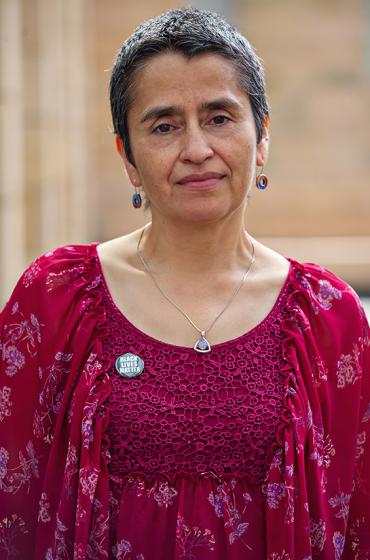
Vilma M. Mesa is a Professor at the Marsal Family School of Education and holds a courtesy appointment in the Department of Mathematics at the University of Michigan’s College of Literature, Science, and the Arts. She is also a Faculty Associate at the Center for the Study of Higher and Postsecondary Education. Her research focuses on undergraduate mathematics education, particularly in community colleges and inquiry-based learning environments, analyzing how resources influence teaching expertise and student success in STEM fields. She earned a B.S. in Computer Sciences and a B.S. in Mathematics from the University of Los Andes in Bogotá, Colombia, followed by a Master of Arts and Ph.D. in Mathematics Education from the University of Georgia. Prior to academia, Mesa worked as a systems programmer for Colombia’s Ministry of Finances and a construction/hospitality firm, and advised on computing systems in Colombia. Mesa’s research interests include the interaction between instructors, students, and instructional materials; textbook analysis; and the impact of teaching practices on student retention in STEM. She has contributed to projects such as the MAA National Study of College Calculus and the Characteristics of Successful Programs in College Calculus, and co-authored pre-calculus and statistics textbooks for university students. Her work has been recognized with the 2022 Louise May Award from the Association of Women in Mathematics and the 2022 Outstanding Undergraduate Research Opportunity Mentor Award from the University of Michigan. She has served as Associate Editor for the Journal for Research in Mathematics Education and currently edits Educational Studies in Mathematics . Mesa has secured over $6M in federal grants, including the NSF CAREER Award (2008–2013) and the PROTEUS project (2024–2027). Her RTMUS Lab investigates teaching and learning in undergraduate mathematics, with ongoing projects on open textbooks, quality instruction measures, and barriers to calculus success in community colleges. She collaborates widely with institutions like the American Institute of Mathematics and tribal colleges to advance culturally sustaining mathematics education. Her teaching includes graduate courses on educational research and assessment, as well as introductory calculus programs at the University of Michigan.
Heather McMaster is a faculty member at the University of Sydney where she teaches primary mathematics education to pre-service teachers. She leads research on measurement concept development, mathematics-science integration, and leadership pathways for primary mathematics specialists. Education & Affiliations: University of Sydney, Education Building (current academic post) Member: Mathematics Research Group of Australasia, Australian Association of Mathematics Teachers, Mathematics Association of NSW Research Interests: McMaster investigates how primary children and pre-service teachers understand measurement concepts such as volume, capacity, mass and density, and how these concepts intersect across mathematics and science curricula. A second strand explores the motivation and identity of undergraduates who specialise in mathematics leadership, aiming to create effective teacher-education pathways that respond to government initiatives for primary mathematics specialisation. Recent Publication Trends (2021-2024): Her latest outputs focus on designing undergraduate primary mathematics specialisations, integrating measurement of matter into national numeracy progressions, and examining pre-service teachers’ emotional highs and lows in forming mathematics-related identities. Collectively the works advocate curriculum coherence between mathematics and science and emphasise rich, problem-based learning tasks. Scientific Awards & Recognition: 2012 – Faculty of Education and Social Work Excellence in Teaching Award 2016 – Vice-Chancellor’s Award for Outstanding Teaching (Primary Mathematics team) Supervision & Grants: Since 2017 she has supervised nine honours/master projects on topics ranging from rural parent facilitation of mathematics to children’s conceptions of density, mass and volume. She currently leads two projects: “Leadership in Mathematics Education” (investigating school needs and student aspirations for maths leadership) and “Measuring Stuff” (evaluating syllabus language and interdisciplinary connections between volume, capacity and mass). Laboratories & Teams: McMaster collaborates within the Primary Mathematics Specialist Team at Sydney and is a chief investigator in the university’s current “Measuring Stuff” and “Leadership in Mathematics Education” projects, working closely with colleagues Prof Janette Bobis and Assoc. Prof Jenny Way.
Jessica Audet de la Cruz, Ph.D., is an Associate Professor of Education at Assumption College. She specializes in mathematics education, with a focus on teacher development, proportional reasoning, and integrating technology into teaching. Her work emphasizes improving instructional strategies and professional development for educators through evidence-based practices. Dr. de la Cruz holds a Ph.D. in Mathematics Education from an unspecified institution (2008), an M.S. in Mathematics (2004), and a B.A. in Mathematics (2001). Her research explores lesson planning processes, the impact of professional development on teaching practices, and leveraging technology to enhance teacher training. Notable projects include the Assumption College Education Mathematics Capacity Building Project (NSF-funded) and studies on using Facebook to extend reflective discussions beyond classroom settings. She has presented at conferences such as the National Council of Teachers of Mathematics and the School Science and Mathematics Association. Dr. de la Cruz has been awarded multiple faculty development grants, including projects on technology integration and proportional reasoning task selection. Her teaching spans undergraduate courses in mathematics education methods, curriculum design, and classroom technology integration. She also oversees practicum and supervision programs for future educators. Her current research includes examining prospective teachers’ lesson planning considerations and the role of inquiry-based learning in mathematics education. She is affiliated with organizations like the National Council of Teachers of Mathematics and the Academy of Inquiry-Based Learning.
Jeronimo Grandi is an Assistant Professor in the Department of Computer & Cyber Sciences at the School of Computer and Cyber Sciences, Georgia Southern University. His academic work spans augmented reality (AR), virtual reality (VR), and human-computer interaction, with a focus on collaborative technologies and cybersecurity in extended reality (XR). He holds a Ph.D. and M.S. in Computer Science from Federal University of Rio Grande do Sul (2018 and 2014), and a B.A. in Game and Interactive Media Design from University of Caxias do Sul (2011). His research emphasizes AR/VR interfaces for first responders, public safety applications, and continuous authentication systems. Notable achievements include the Best 3DUI Contest Award (2023), Unreal Faculty Fellowship (2023), and a Ph.D. distinction (Cum Laude) in 2018. He teaches courses like Human-Computer Interaction and Dissertation Research, and actively reviews for conferences like ACM ISMAR and IEEE VR. Key research directions include modular AR frameworks for emergency response, cross-reality collaboration tools for sustainability education, and visual search optimization in VR. His work bridges theoretical HCI principles with practical implementations in law enforcement, healthcare, and disaster management scenarios.
Dr Cris Edmonds-Wathen is a Senior Lecturer in Education at Charles Darwin University's Faculty of Arts and Society. She specializes in Mathematics Education with a focus on Indigenous languages and cultural contexts. Her research explores how non-Indo-European languages, particularly Australian Indigenous languages, express mathematical concepts and how these can be integrated into education systems. Education: PhD in Mathematics Education, RMIT University (2013) Graduate Diploma in Primary Education, Charles Darwin University (2005) Bachelor of Arts (First Class Honours), University of Western Sydney (1998) Bachelor of Arts (Linguistics & Mathematics), University of Melbourne (1995) Research Interests: Dr Edmonds-Wathen investigates mathematical expression in Indigenous languages, policies for language-in-education, and culturally responsive mathematics curricula. She has conducted fieldwork in Australia and Papua New Guinea, focusing on spatial cognition, bilingual education, and Indigenous knowledge systems. Her work contributes to the UN Sustainable Development Goal on Quality Education (SDG4). Awards: 2023 Award for Excellence and Impact in Education from the Australian Council of Deans of Education Grants & Programs: Principal Investigator for the MiIL Project (2021–2023), identifying mathematical expression in Indigenous languages Coordinates the Growing Our Own program, training Indigenous teachers in NT Recipient of ARC Centre of Excellence funding for language dynamics research Labs & Networks: Active in international networks including the Umeå Mathematics Education Research Centre (Sweden) and the Research Unit for Indigenous Language (Melbourne). Collaborates with Catholic Education NT and PNG elementary schools.
Orakwue Arinze is a Professor in the Department of Decision Sciences and MIS at Drexel University. He can be contacted via phone (215.895.1798) or email (arinzeob@drexel.edu), with his office located in Gerri C. LeBow Hall, room 526. His research spans multiple domains including information systems, data analytics, and educational technology, with significant contributions to understanding technology adoption and pedagogical innovation. Research interests focus on: Information systems architecture and applications Data-driven decision-making in business contexts Cloud computing and cybersecurity frameworks Technology-mediated learning methodologies Economic analysis of information systems Behavioral aspects of technology use Decision support system design His publications demonstrate consistent focus on evolving technology landscapes, shifting from foundational work on decision support systems (1990s) to contemporary explorations of AI in education and online learning efficacy. Recent articles critically examine ChatGPT's academic impact and comparative learning modalities, while earlier works established frameworks for cloud adoption and identity theft mitigation, reflecting adaptability to emerging tech challenges across three decades.
Birgit Gysin is a researcher and academic member of the Mathematics II Department and the Institute of Mathematics II at Ludwigsburg University of Education. Her work focuses on mathematics education in primary schools, particularly in designing learning-promoting environments and analyzing learning dialogues among children in mixed-age classrooms. She actively contributes to teacher training programs and supports initiatives for mathematically gifted children. Educational Background: PhD thesis: 'Arithmetisch-geometrische Probleme und Entdeckungen in ihrer Bedeutung für das mathematische Lernen in der Grundschule' (Supervised by Prof. Dr. Jens Holger Lorenz and Prof. Dr. Edeltraud Röbe) - 2006 Scientific paper for Second State Examination: 'Die Bedeutung geometrischer Vorerfahrungen für Lernprozesse' (2002) Scientific paper for First State Examination: 'Visual aids in initial arithmetic instruction' (Supervised by Prof. Dr. Jens Holger Lorenz and Prof. Dr. Silvia Wessolowski) - 1999 Research Interests: Interdisciplinary research on learning conversations in children Design of task and teaching cultures to foster learning in primary mathematics Support programs for mathematically gifted children Publications Overview: Her research highlights mixed-age classroom dynamics, learning dialogues, and practical educational strategies. Key themes include mathematical literacy development, resource-based learning, and innovative teaching approaches in primary education. Teaching & Engagement: Teaches courses at Ludwigsburg University of Education, including upcoming summer 2025 offerings Active in teacher training and curriculum development initiatives Labs/Teams: Involved in designing educational materials and supporting cross-disciplinary pedagogical projects.
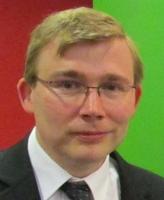
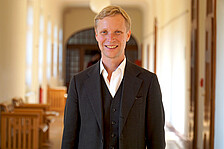
Tom Wellmann is Junior Professor for Practical Philosophy and its Didactics at the Heidelberg University of Education, Institute of Philosophy and Theology. Since October 2021 he has combined research in ancient philosophy—especially on Empedocles and Plato—with innovative work in philosophy didactics. Education 2003–2010: Undergraduate studies in Philosophy/Ethics and Greek, University of Tübingen and Humboldt University of Berlin 2010: 1st State Examination for the Office of Academic Councillor, Berlin 2011–2015: Doctoral scholarship, Konrad Adenauer Foundation 2020: Doctorate in Philosophy, Humboldt University of Berlin Research Interests His work focuses on two complementary strands: specialist research in ancient philosophy—particularly Empedocles’ cosmology and Plato’s ontology—and the didactics of philosophy, where he investigates how historical philosophical content can be transformed into effective classroom practice. A central concern is the integration of subject-matter expertise with pedagogical innovation. Recent publications and lectures explore the use of ancient anecdotes, the concept of philosophizing as a praxis of variation, and the role of ethics within vocational education. These projects collectively advance a theory of philosophy education that treats historical texts as living resources for contemporary learning experiences. Scientific Awards & Scholarships Doctoral Scholarship, Konrad Adenauer Foundation (2011–2015) Teaching & Academic Service During the 2025 Summer Semester, Professor Wellmann offers weekly office hours on Tuesdays 3–4 p.m. (alternating in-person and online) and monthly digital sessions during the lecture-free period. He teaches seminars on ethical education, skepticism, Descartes, Levinas, Plato, Rawls, and the history of philosophy, among others. Administrative support is provided by Dr. Tontini (secretary) and Isabelle Wagner (academic staff member).