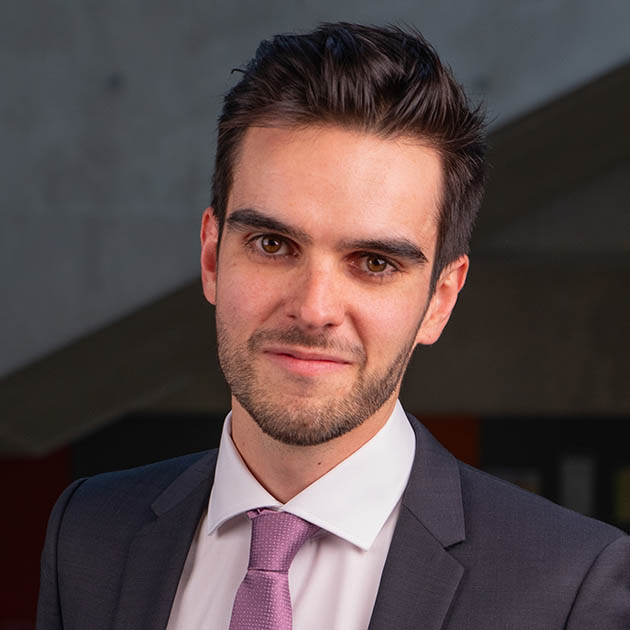
Dr. Adrian Müller is a Researcher at the University of Bern's Tourism Research Unit (CRED-T) within the Center for Regional Economic Development (CRED). His work focuses on sustainable aviation, decarbonization of business travel, and the intersection of climate strategies with organizational practices. He holds a scientific role in advancing research on travel behavior, policy implications, and alternative modes of transportation. Research interests include sustainable aviation fuel adoption, post-pandemic travel trends, and the misalignment between corporate climate goals and actual travel practices. His studies explore behavioral economics aspects of travel decisions, including social norms in rail business travel and decision-making autonomy among travelers. Key articles highlight themes like decarbonization challenges in knowledge-intensive industries, preferences for sustainable aviation fuels, and the shift toward video conferencing post-COVID-19. Müller’s research often bridges environmental science, transportation economics, and policy analysis, emphasizing actionable solutions for reducing aviation’s ecological footprint. He is affiliated with the Economic Institute at the University of Bern and contributes to initiatives like the Oeschger Center for Climate Change Research. No scientific awards are explicitly listed, but his work reflects engagement with cutting-edge climate and travel research.
Kati Kulovesi is Professor of Law at the University of Eastern Finland , specializing in International Environmental Law , EU Climate Law, and the intersection of climate change law with international economic law. She works closely with the 3E Center at the Brussels School of Governance, Vrije Universiteit Brussels , and Earth Negotiations Bulletin , with multidisciplinary collaborations in the Atmospheric and Climate Competence Center . Education: LL.M. from University of Helsinki and London School of Economics; PhD from LSE Research Focus: EU Climate Policy, Legitimacy in Climate Governance, Arctic Environmental Regulation, Carbon Market Mechanisms Professional Experience: Legal adviser for Finnish Government, World Bank, UN FAO, European Commission, Nordic Council of Ministers, IUCN, and World Resources Institute Publications span EU Climate Law, WTO-Environmental Disputes, Arctic Governance, and Short-Lived Climate Pollutants, with recent work on the European Green Deal and Fit for 55 Package . Her scholarship integrates legal theory with empirical analysis of climate policy implementation.
Detlef F. Sprinz is a Senior Scientist at the Potsdam Institute for Climate Impact Research (PIK) and a Professor at the Faculty of Economics and Social Sciences of the University of Potsdam, Germany. During 2024-2025, he leads the project "AMaReNa - A Market for the Restoration of Nature" , focusing on carbon removals. His academic background includes a Ph.D. and M.A. in Political Science from the University of Michigan and an M.A. in Economics from the University of the Saarland. Research Interests: Climate policy at multiple levels, long-term policy design, evaluation of international/national institutions, European/international environmental policy, and modeling political decisions for sustainability. Notable Projects: Tandem Fellowship (2020-2022) for interdisciplinary course development, Visiting Researcher at University of Lund (2022-2023), and coordination of research at the Käte Hamburger Kolleg (2017). Publications emphasize climate cooperation under the Paris Agreement, effectiveness of environmental regimes, and predictive modeling for climate negotiations. His work spans empirical analyses of acid rain regulation, Kyoto Protocol implementation challenges, and bioenergy accounting errors. Scientific Awards & Memberships: Tandem Fellowship (German Stifterverband) Member, European Academy Co-founder, Ecologic Institute Teaching includes courses on global climate governance, political decision modeling, and environmental policy at the University of Michigan, Yale, University of Oslo, and University of Potsdam. He has contributed to IPCC’s Sixth Assessment Report as a Lead Author. Advisory Roles: Chairmanship of the European Environment Agency’s Scientific Committee (2009-2012), Senior Research Fellow at CICERO (2011-2013), and consultancy for governments, corporations, and think tanks.
Ottmar Edenhofer serves as Director and Chief Economist of the Potsdam Institute for Climate Impact Research (PIK), Director of the Mercator Research Institute on Global Commons and Climate Change (2012-2024), Professor for The Economics and Politics of Climate Change at Technische Universität Berlin, and Chair of the European Scientific Advisory Board on Climate Change (ESABCC) since 2022. His affiliations span leading European climate research institutions and academic bodies. Edenhofer's research focuses on climate change economics, particularly the impact of technological change on mitigation costs, public finance implications of climate policy, distributional effects of carbon pricing, and governance of global commons. His work bridges theoretical economic modeling with practical policy design, emphasizing equity considerations and institutional frameworks for effective climate action. He pioneered social science research at PIK, establishing rigorous methodologies for translating scientific findings into actionable policy advice. His publication record demonstrates consistent leadership in high-impact climate economics research, with seminal contributions to IPCC assessments (serving as Co-Chair of Working Group III for the Fifth Assessment Report) and influential analyses of carbon pricing mechanisms. Recent work increasingly addresses carbon dioxide removal governance, distributional justice in climate policy, and the integration of climate action with broader sustainable development goals. His research consistently appears in top journals including Nature, Science, and Nature Climate Change. Edenhofer has received numerous scientific honors including the Romano Guardini Prize (2018), Deutsche Umweltpreis (2020), and Arthur Burkhardt-Prize (2021). He belongs to the top 1% of most cited scientists globally (2018-2022) and was ranked among Germany's top 10 economists (2019-2020). His policy influence extends to serving as Vatican consultor for the Dicastery for Promoting Integral Human Development and advising EU institutions through ESABCC. As a science-policy interface leader, Edenhofer has shaped climate negotiations leading to the Paris Agreement and continues to advise European institutions on implementing climate neutrality targets. His work emphasizes the critical role of carbon pricing with equitable revenue recycling and the strategic sequencing of climate policies to maintain political feasibility while achieving deep decarbonization.
Hisham Zerriffi is an Associate Professor at the University of British Columbia (UBC) in the Department of Forest Resources Management, Faculty of Forestry. He also serves as Associate Dean for Equity, Diversity, and Inclusion. His research intersects technology, energy, and the environment, focusing on rural areas in the Global South. Affiliation: BioProducts Institute Affiliation: Clean Energy Research Centre Affiliation: Institute for Resources, Environment and Sustainability His research examines institutional factors in technology diffusion, household energy choices, and welfare impacts of energy use. Current projects include analyzing forest density's ecological impact, clean cooking transitions in India, and decentralized energy systems. Recent publications address just transitions, biomass energy economics, and policy misalignments in Indigenous communities. He has authored works on climate change mitigation via forest carbon credits and rural electrification strategies. Scientific Award: Ivan Head South/North Research Chair As a PhD supervisor, he has guided Natalie Payer on urban energy poverty in the U.S. He collaborates on interdisciplinary grants and leads the Energy Resources, Development and Environment Lab (ERDELab).
Thomas Hale is Professor in Public Policy (Global Public Policy) at the Blavatnik School of Government, University of Oxford, and Director of the Master of Public Policy. His research tackles transnational governance challenges, emphasizing climate change, global health, and economic interdependence. He holds a PhD in Politics from Princeton University, a master's in Global Politics from the London School of Economics, and an AB in Public Policy from Princeton. His research explores the evolution of political institutions to address globalization, with foci on: Climate governance mechanisms like the Paris Agreement and net-zero transitions Global health policy, including pandemic response tracking Transnational commercial disputes and cooperation frameworks His recent publications (2022-2024) predominantly analyze climate policy effectiveness, net-zero accountability, pandemic governance, and geopolitical energy shifts. Trends show consistent emphasis on institutional design, multi-stakeholder action, and data-driven policy assessment across environmental and health crises. He leads major initiatives including the Oxford COVID-19 Government Response Tracker and co-leads the Net Zero Tracker and Climate Policy Hub , collaborating with global policymakers to translate research into governance frameworks.
Nancy G. Love is the Borchardt and Glysson Collegiate Professor and JoAnn Silverstein Distinguished University Professor of Environmental Engineering at the University of Michigan, affiliated with the Department of Civil and Environmental Engineering and the African Studies Center. Her research focuses on water infrastructure, public health, and environmental systems, emphasizing interdisciplinary approaches to address challenges in both domestic and global contexts. Education: Ph.D. (1994) in Environmental Systems Engineering from Clemson University; MS (1986) and BS (1984) in Civil Engineering from the University of Illinois. Research interests include water quality, pathogen fate and transport, sustainable resource recovery (e.g., urine-derived fertilizers), and infrastructure resilience in shrinking cities. She leads the Love Research Group, which integrates chemical, biological, and computational methods to develop technologies for contaminant removal, resource recovery, and public health protection. Her work addresses pressing issues like drinking water equity in Detroit, Legionella outbreaks in Flint, and global sanitation in Ethiopia. She advocates for transdisciplinary collaboration and community-informed solutions to environmental challenges. Awards include prestigious professorships at the University of Michigan. She serves on editorial boards (e.g., ACS ES&T Engineering) and contributes to policy initiatives on water infrastructure and environmental justice. Labs/Teams: Love Research Group; Collaborations span academia, industry, and NGOs, including projects on urine diversion, sensor-mediated wastewater treatment, and civic engagement in infrastructure decisions.
Alberto Brugnoli is a Full Professor in Applied Economics at the University of Bergamo, Italy, where he has served since 2020. He holds the UNESCO Chair on Human Rights, International Cooperation and Sustainable Development and serves as Delegate for International Cooperation in Developing Countries at the University of Bergamo. His academic career spans over 30 years with progressive appointments from Researcher to Full Professor. Brugnoli's research focuses on International Development Cooperation, Sustainable Development, Local Development, Regional Governance and Policy, Migration, Municipal Financing, and Trade. His work demonstrates a strong international dimension through collaborations with institutions like Fundação Getulio Vargas (Brazil), McGill University (Canada), OECD, and the European Commission. His recent publications show a clear trajectory toward sustainability, decarbonization, and economic transition topics. His research output reveals a progression from traditional economic policy topics toward contemporary challenges of sustainability, climate change, and social development. The most recent publications (2022-2025) predominantly address decarbonization, sustainable economic transitions, and regional development strategies, reflecting current global economic policy priorities. Award by the Scientific Committee of the First Report on Finance of the Rosselli Foundation (2012) Award by the NATO Assistant Secretary General for Public Diplomacy (2009) Recognition from Università Bocconi for editorial contributions (1999) Brugnoli has advised numerous international research projects and has extensive teaching experience in Development Economics, Regional Economics, and International Cooperation. His leadership extends to serving as President of the Master's Degree Program in Human Rights, Migration and International Cooperation (2018-2022) and various delegate roles at the University of Bergamo.
Dr Andrew Hoolachan is a Lecturer in Urban and Regional Planning at the University of Glasgow's School of Social and Political Sciences. He holds a PhD from the University of Cambridge, an MSc from UCL, and an MA from the University of St Andrews. His research focuses on urban governance, sustainability, and political ecology, particularly exploring localism, devolution, and scalar politics in UK cities. He has conducted fieldwork in East London examining the Localism Act's impact on sustainable urban development and the Olympic Legacy. His methodological expertise includes visual and digital methods, policy analysis, and urban political ecology frameworks. Theoretical interests span scale constructions, cultural geographies, and phenomenology. He is affiliated with the Socio-Environmental Action and Place & Built Environment research groups. Recent outputs include studies on urban flood resilience, housing retrofitting, and walking-based pedagogy. His work bridges academic research with policy practice, contributing to reports for institutions like the Royal Town Planning Institute and the UK Collaborative Centre for Housing Evidence. He teaches modules on spatial planning strategies and urban economics, emphasizing experiential learning approaches.
Harald Rohracher is a Professor at the Department of Theme (TEMA) , Linköping University , affiliated with the Theme Technology and Social Change (THEME) . His research focuses on sociotechnical transitions for climate-neutral cities , examining energy systems, digitalization, and governance strategies. Grants: Formas, Horizon Europe, Vinnova Labs: STRIPE (Sociotechnical Research on Infrastructures, Politics, and Environment), Biogas Solutions Research Center Students: Adam Svensson, Stella Huang, Gavin Nilsson Lewis, Giorgi Kankia Rohracher investigates how households , social movements , and policy frameworks interact in transformative processes. His recent work explores smart grid politics , decentralized energy systems , and urban food digitalization , emphasizing power dynamics and governance experiments. He leads projects on transdisciplinary education for climate governance, positive energy districts , and collective experimentation across Sweden and Spain. His scientific grants highlight institutional support for sustainability research, while his research teams bridge academic, governmental, and civil society actors.
Thomas Le Goff is an Assistant Professor of Law & Technology at Télécom Paris – Institut Polytechnique de Paris, affiliated with the Interdisciplinary Institute of Innovation (i3) and the Digital, Organization and Society (DTOS) research team. His work bridges legal frameworks and technological advancements, focusing on AI regulation, environmental sustainability, data protection, and cybersecurity. Education: PhD in Private Law, Université Paris Cité Master’s in Law, Université Paris Cité LLM, University of Exeter (UK) Licence and Magistère, Université de Rennes 1 His research explores the intersection of AI and sustainability, emphasizing how legal principles can guide environmentally responsible technology. Key themes include the AI Act’s implications, data center energy demands, and regulatory strategies for balancing digital growth with net-zero targets. His work has been presented at international forums like BILETA and contributes to EU think tanks such as CERRE. Recent publications address AI’s environmental footprint, nuclear energy’s role in powering AI, and legal frameworks for sustainable digital infrastructure. Collaborations with institutions like the Center on Regulation in Europe (CERRE) highlight his focus on comparative analyses of global regulatory practices.
Tiago de Melo Cartaxo is a Senior Lecturer in Environmental Law at the University of Exeter’s College of Humanities and Social Sciences, Cornwall Campus. He founded the Exeter Centre for Environmental Law (ExCEL) and is part of Law and Business Cornwall (LAB/C). Current roles include Associate Director for External Engagement at the Environment and Sustainability Institute (ESI) and former Director of Postgraduate Research for Humanities and Social Sciences. His research focuses on environmental rights, climate resilience justice, circular economy, energy transition, and international environmental law. He holds a European PhD in Law from Universidade Nova de Lisboa, with postdoctoral work at the University of Surrey. Tiago has advised governments and international bodies, including the Portuguese Presidency of the EU Council, and chairs the World Public Sector Integrity Initiative (WPIEI). Education European PhD in Law, Universidade Nova de Lisboa (2015–2020) LLM in Environmental Law and Planning, University of Coimbra (2012–2014) Licenciatura in Law, University of Lisbon (2000–2005) Research Interests He explores legal frameworks supporting sustainability transitions, including governance of single-use plastics, nature markets, and climate adaptation. His work bridges environmental law with social equity, focusing on resilience justice, circular economy policies, and EU environmental law. He emphasizes transdisciplinary approaches to address socio-ecological challenges in urban contexts. Notable Contributions Coordinated ESI-funded projects on regulatory frameworks for nature markets Developed academic partnerships with the Portuguese Environment Agency Chaired WPIEI during Portugal’s EU Presidency Advised on post-2011 Portuguese economic reforms Awards & Affiliations Fulbright Scholarship (USA) FCT Fellowships (Portugal) Senior Fellow of AdvanceHE Member of ILA Committees on Sustainable Development, SDGs, and ICC Environment Commission Advising & Grants Tiago welcomes PhD/Masters supervision in Environmental & Climate Law. His grants include ESI funding and collaborations with international institutions. He leads the NOVA Law Green Lab and has advised Portuguese and EU policymakers on environmental compliance and energy transitions. Labs & Networks Founder of ExCEL and NOVA Law Green Lab; collaborates with Exeter Biodiversity & People Network, Exeter Food Policy, and Environmental Intelligence initiatives.
Rui Shi is an Assistant Professor in the Department of Chemical Engineering at Pennsylvania State University. Her research focuses on sustainability engineering at the intersection of natural and engineered systems, prioritizing sustainable pathways for transportation fuels, bioproducts, agricultural systems, and food-energy-water systems through integrated sustainability analyses. She develops frameworks for quantitative sustainable design (QSD) and system-level environmental impact assessments to navigate technical, economic, and environmental trade-offs. Her work has led to advancements in plastic recycling via cold sintering technology, biofuel lifecycle assessments, and frameworks for sustainable aviation fuels. Notable projects include assessments of renewable jet fuels in the U.S. Northern Great Plains, cold sintering of LLZO-based composites, and quantifying uncertainties in greenhouse gas abatement costs. Shi has secured grants such as the $3.4M contract for plastic waste solutions and IEE seed grants for interdisciplinary sustainability research. Shi collaborates on global low-carbon transition initiatives and integrates computational tools like BioSTEAM-LCA for agile biorefinery modeling. Her research spans from fundamental material science (e.g., repurposing polyolefin waste) to policy-relevant analyses of land use change and bioenergy systems. She contributes to the Integrated Energy Systems and Water Sustainability research themes at Penn State's Institutes of Energy and the Environment.
Jonas Eliasson is a Visiting Professor at Linköping University's Department of Science and Technology (ITN), focusing on Communications and Transport Systems. He concurrently serves as Director of Transport Access at the Swedish National Transport Administration and chairs the Planning & Construction committee of the Royal Academy of Engineering Sciences. Previously, he was Director of the Stockholm City Transportation Administration (2016–2019) and a professor at the Royal Institute of Technology (KTH) from 2007 to 2016. His research emphasizes transport policy design and evaluation, including cost-benefit analysis, transport pricing, railway capacity allocation, and public acceptability of policies. He advises governments on sustainable transport planning, congestion pricing, and socio-economic appraisals. His work bridges theoretical frameworks and practical implementation, with a focus on accessibility, equity, and climate targets. Key research themes include infrastructure cost overruns, traffic demand reduction strategies, and the integration of passenger and freight transport systems. Recent publications analyze policy impacts, forecasting methods, and carbon-neutral transportation systems. His interdisciplinary approach addresses both technical and socio-political dimensions of transport challenges. Eliasson collaborates with research groups like Railway and Public Transport and contributes to initiatives like the 'Next Generation Smart Transportation Systems' project. Despite extensive professional roles, no formal student advisees are listed. His work is disseminated through journals like Transportation Research Part A and policy reports for national and regional governments.
Professor Hu Qing serves as a Professor at the School of Environmental Science and Engineering, Southern University of Science and Technology (SUSTech), and Director of the Engineering Innovation Center (Beijing) at SUSTech. With over 30 years of research and professional experience in environmental science and engineering, she has established herself as a leading expert in soil and groundwater remediation, environmental policy, and sustainable development. Education: PhD in Soil Environmental Pollution and Hydrology, Imperial College London (1993-1998) MSc in Water Treatment and Environmental Chemistry, Chinese Academy of Sciences (1987-1990) BSc in Environmental Engineering, Tsinghua University (1982-1987) Professor Hu's research focuses on critical environmental challenges including soil and groundwater remediation, contaminated site management, environmental policy development, and sustainable urban development. Her work integrates technical innovation with policy implementation, particularly in the areas of green and sustainable remediation methodologies for contaminated sites. She has pioneered approaches that combine big data applications with traditional environmental engineering practices, contributing significantly to China's environmental protection framework and international collaboration efforts in ecological sustainability. Analysis of Professor Hu's recent publications reveals a strong emphasis on practical environmental solutions with policy implications. Her work spans soil and groundwater remediation technologies, environmental policy development, and sustainable approaches to contaminated site management. A notable trend is the integration of international best practices with China-specific environmental challenges, particularly in the areas of brownfield redevelopment and soil pollution control. Her research demonstrates a consistent focus on translating scientific findings into practical applications that inform national environmental policies and standards. Scientific Awards: State Council Special Allowance Experts (2013) Second Prize of National Science and Technology Progress Award (2017) First Prize of Environmental Protection Science and Technology Award (2021) Science and Technology Progress Award of Ministry of Education (2012) IBM Global Distinguished Scholar Award (2016) Professor Hu has led and participated in more than ten national and provincial research projects, including the National 863 Program and the National Water Pollution Control and Treatment Science and Technology Major Project. She has managed dozens of site investigation and remediation projects across multiple industries including chemicals, printing and dyeing, petroleum, and electroplating. Her international collaboration experience is extensive, having served as the Chinese leading expert in the Sino-UK Soil & Groundwater Remediation Science & Technology Cooperation Program and as project leader for multiple World Bank and Asian Development Bank projects. As Director of the Engineering Innovation Center (Beijing), Professor Hu leads a multidisciplinary team focused on developing innovative solutions for environmental challenges. The center serves as a bridge between academic research and practical implementation, working closely with government agencies including the National Development and Reform Commission, Ministry of Science and Technology, and Ministry of Environmental Protection to shape national environmental policies and standards.