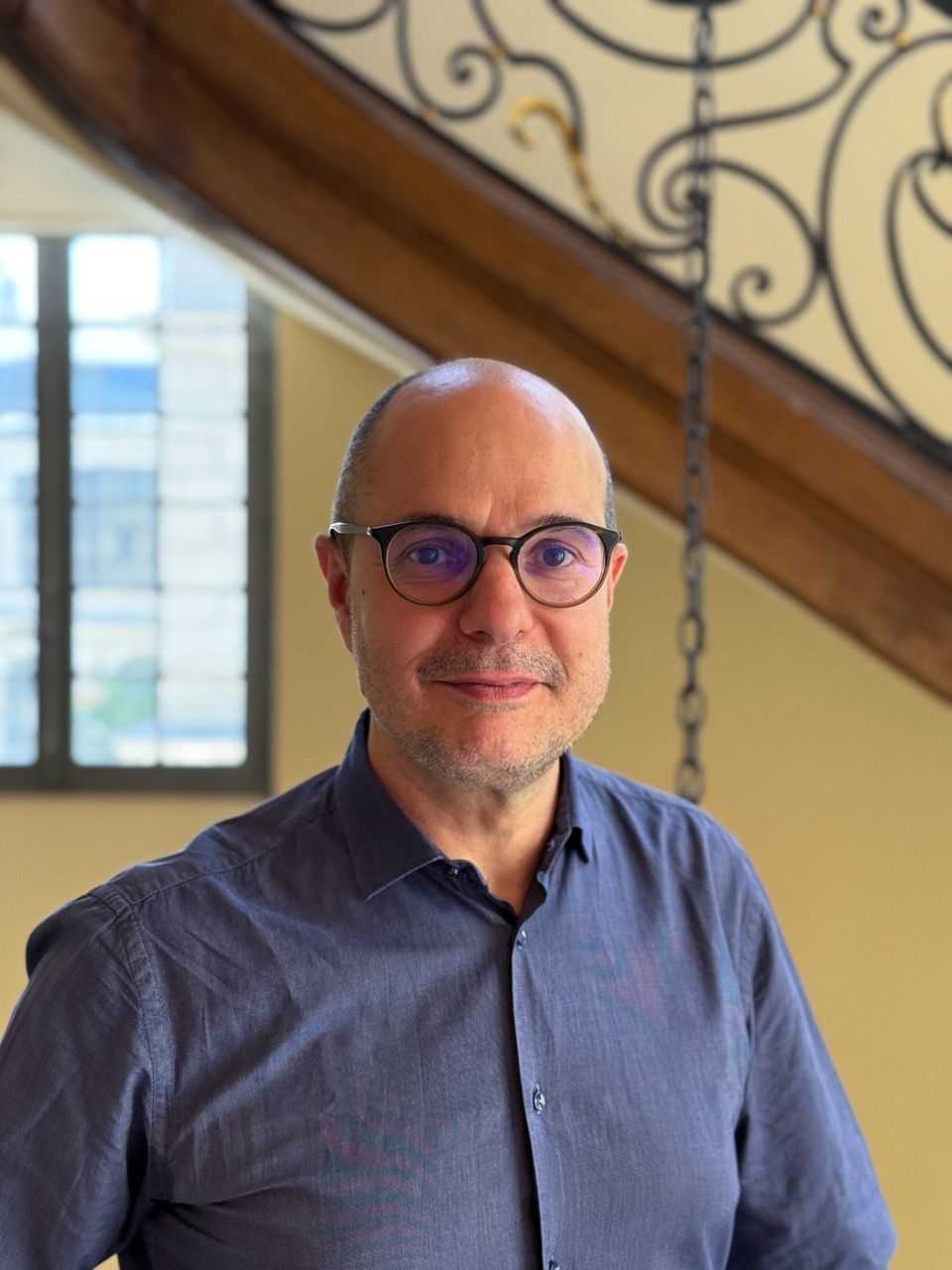
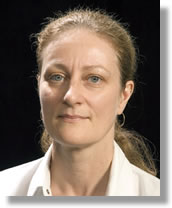
Marie Johansson is a Professor in Timber Engineering at the Department of Building Technology, Faculty of Technology, Linnaeus University. Her career spans teaching structural engineering in bachelor’s and master’s programs and leading research projects on wood quality, strength grading, and timber mechanics. Acting supervisor in two PhD projects Expert Team Leader for "Construction & Design" in BioInnovation SIO-programme Research Interests : Wood material properties (shape stability, stiffness, strength) Connection technology in timber structures Climate change adaptation in agriculture (Öland, Sweden) Modular multi-storey timber buildings Fiber orientation modeling for strength prediction Publication Trends : Recent work focuses on wind-induced vibrations in tall timber structures, 3D fiber orientation models, genetic selection for timber traits, and non-destructive evaluation of wood properties. Collaborations with international conferences (WCTE, ICEM) and institutions highlight her contributions to wood science and sustainable construction. Research Groups : Leads the Wood Building Technology group, emphasizing applied mechanics and industrialized timber construction.
Philippe Bezes is a CNRS Research Professor at the Centre for European Studies and Comparative Politics (CEE) at Sciences Po , where he teaches the sociology of public administrations and state reforms. He holds a PhD in Political Science (2002) from Sciences Po and an HDR (Habilitation to Direct Research) from 2014. His work focuses on the historical sociology of administrative reforms, neo-managerial turn in public bureaucracies, and comparative analysis of state rationalization processes. Education PhD in Political Science (2002), Sciences Po HDR (Habilitation to Direct Research) (2014) Research Interests Administrative Reform Policy and State Reform Transformations of Bureaucracy in Comparative Perspective Public Policy Analysis Organizational Changes and State Rationalization Scientific Contributions Co-editor of Gouvernement et action publique Member of editorial board of Sociologie du travail Co-chair of IPSA Research Committee 27 (Structures and Organization of Government) Lead researcher on projects like SOG-PRO (2016) and COCOPS (2011-2014) Awards CNRS Bronze Medal (INSHS) in 2014 Collaborations Worked with scholars like Gerhard Hammerschmid, Steven Van de Walle, Patrick Le Lidec, and Gilles Jeannot Contributed to European research on public administration reform through ANR and FP7 grants
Associate Professor Wendy Susan Shaw is a prominent human geographer at the University of New South Wales (UNSW), Faculty of Science, with research specializing in Indigenous geographies and the contemporary field of whiteness in postcolonial Australia. Her work examines theoretical debates about identity, urbanism, gentrification, cosmopolitanism, and the complex realities of (post)colonial urban life across Australia and the Asia-Pacific region. Professor Shaw's research interests focus on Aboriginal urban issues, particularly in Redfern, Sydney apartment development, and the intersection of whiteness studies with urban geography. Her current projects demonstrate an interdisciplinary approach, combining 'science' and 'social science' methodologies to address contemporary challenges. She has developed significant expertise in studying urban transformation processes, including gentrification dynamics and the spatial dimensions of postcolonial identity formation. Her scholarly contributions include serving as Editor of Geoforum (2015-2018) and holding leadership positions such as Vice President of the NSW Geographical Society (2014-2017) and Council member of the Institute of Australian Geographers (2011). She has received distinguished appointments including Visiting Scholar at Newcastle University UK (2013) and Distinguished International Visiting Fellow at the University of Durham, UK (2010). Professor Shaw leads substantial research funding exceeding $4 million, with projects spanning diverse areas including: Narcissism and environmentalism Cable cars as mass transit solutions Human-animal bonds research with Taronga Zoo Multiple Papua New Guinea collaborations (including Canarium weevil research with G. Cassis) Rip currents and surf safety research with R. Brander Biodiversity capacity building in PNG Accommodating DisabilityCare initiatives Her research portfolio reflects strong engagement with both theoretical frameworks and practical applications, particularly through collaborations with government agencies, international institutions, and community organizations.
Luca Brunelli serves as Senior Lecturer and Stage leader in Architecture at The Glasgow School of Art, actively contributing to urban design research with focus on ageing populations and Sustainable Development Goals implementation. His work bridges academic theory and practical application through field studies in Edinburgh and Kigali. His research centers on salutogenic urban design frameworks that enhance well-being for older adults, particularly through high street environments. He investigates how public spaces can be reconfigured to support ageing-in-place while addressing climate resilience and housing sustainability. Key themes include the domestication of SDGs in Rwandan housing projects and post-pandemic adaptations for age-friendly communities. Recent publications reveal a cohesive trajectory examining the intersection of urban morphology, demographic ageing, and sustainable development. His work consistently applies salutogenic principles to analyze how local high streets function as well-being resources, with growing emphasis on climate adaptation strategies for vulnerable populations. The Karama Model Village studies in Rwanda demonstrate his methodological approach to policy implementation in Global South contexts.
Lars B. Sonderegger serves as a Lecturer at the Lucerne University of Applied Sciences and Arts (HSLU), School of Business, within the Institute for Business and Regional Economics. He teaches management and leadership modules while simultaneously leading his research and consulting firm Quantonomics LLC. His work bridges academic theory with practical business applications, focusing on translating behavioral neuroscience into organizational solutions. His educational background includes neuroscience and behavioral sciences studies at the University of Zurich, culminating in a magna cum laude doctorate in stress management under Prof. Dr. Ulrike Ehlert. This foundation combines with his Swiss Federal Diploma in Business Administration and family background in SME entrepreneurship to create his unique practitioner-scholar approach. Sonderegger's research centers on behavioral economics and neuroscience applications in management, with particular emphasis on leadership development, organizational transformation, and human capital optimization. His work explores how neurobiological principles can reshape traditional management practices, especially in hybrid work environments, decision-making processes, and talent retention strategies. Current projects include the VR Board Assessment Tool, Transformation Tracking, and Agile Collaborative People Management. His publication portfolio demonstrates consistent focus on practical neuroscience applications, with recent work examining leadership in VUCA environments, employee well-being frameworks, and cognitive bias mitigation in governance. The trajectory shows increasing integration of neuroscientific evidence into management literature, moving from foundational stress research toward actionable leadership tools. Schulze Award for Outstanding Applied and Practice Publication (2023) Fellow of the Royal Society for the Encouragement of Arts, Manufactures & Commerce (2017) Sonderegger actively advises Master's students at HSLU on topics ranging from performance management to organizational transformation, while securing consulting engagements that translate academic insights into business value. His Quantonomics firm implements behavioral strategies for clients, supported by research projects tracking transformation effectiveness and developing neuroscience-based leadership tools. He serves on multiple boards including SHL Schweizerische Hotelfachschule Luzern and Eigthwell, applying his expertise to real-world organizational challenges. Through Quantonomics and his university role, Sonderegger maintains a dynamic research-practice ecosystem where academic inquiry directly informs consulting solutions. His teams develop tools like the VR Board Assessment platform while conducting field research on agile people management and SME internationalization, ensuring continuous feedback between theory and practice.
Terry van Dijk serves as a faculty member at the University of Groningen's Faculty of Spatial Sciences within the Urban and Regional Studies Institute. His academic profile demonstrates active engagement in spatial planning research with significant scholarly output including 96 publications and ongoing supervision of PhD candidates like Nika Lindhout. Recent activities include invited presentations at international forums such as the 39e Rencontre d'agences d'urbanisme (2018) and guest lectures on water governance and intercultural perspectives (2015-2016). Dr. van Dijk's research interests span multiple dimensions of spatial planning with particular emphasis on boundary-spanning design approaches, land use challenges, and climate adaptation strategies. His fingerprint analysis reveals dominant expertise in Land Use (100%), Dutch Studies (95%), Spatial Planning (77%), Planning Process (76%), Planning Practice (53%), and Central/Eastern Europe contexts (45%). This multidisciplinary focus connects theoretical frameworks with practical applications in urban development. His recent publications demonstrate evolving research trajectories from traditional spatial planning toward innovative design-led approaches for complex challenges like climate adaptation and child-friendly urbanism. The 2025 publications particularly highlight boundary-spanning competencies in urban climate adaptation and process architecture for consensus-building in land consolidation projects, showing a consistent thread of integrating stakeholder perspectives through spatial design solutions. As a PhD supervisor and academic presenter, Dr. van Dijk maintains active engagement with both scholarly communities and practical planning contexts. His media contributions, including expert commentary on projects like the Lelylijn (2021), demonstrate applied relevance of his research to contemporary spatial challenges in the Netherlands.
Dr. Tehzeeb Zulfiqar is a Research Fellow at the National Centre for Epidemiology and Population Health at the Australian National University (ANU) and an Adjunct Associate Professor at the Health Services Academy in Pakistan. With over 30 years of experience in public health policy and research across Pakistan and Australia, she brings extensive expertise in epidemiology, program evaluation, and health systems strengthening. Her current work focuses on the evaluation of the Australian Pathogen Genomics Program (AusPathoGen) using realist theory, examining the utility and cost-effectiveness of genomic-based public health responses and capacity transformation with emphasis on end-user acceptability. Dr. Zulfiqar's educational background includes: PhD in Public Health from the Australian National University Master of Public Health (MPH) from the Australian National University MPhil in Reproductive Physiology from Quaid-i-Azam University MSc in Community Nutrition from Allama Iqbal Open University MBBS from Army Medical College Dr. Zulfiqar's research spans genomic epidemiology, immigrant health, and environmental health challenges. Her primary focus is on genomic surveillance systems and their implementation in public health practice, particularly through her leadership in evaluating Australia's national pathogen genomics program. She has conducted extensive studies on obesity patterns, health disparities, and cultural adaptation among immigrant populations in Australia, examining intergenerational differences in body image standards and dietary practices. Her environmental health research has gained prominence following Australia's devastating bushfire seasons, where she investigated community perceptions of smoke exposure and the effectiveness of public health communication during environmental disasters. Her work demonstrates how housing conditions, individual risk perception, and public health advice interact during climate-related emergencies. Dr. Zulfiqar's publication record shows a clear trajectory toward integrating advanced genomic technologies with practical public health applications while maintaining a strong commitment to health equity. Her recent work spans from technical evaluations of genomic surveillance systems to critical examinations of public health terminology and its impact on marginalized communities, particularly regarding the problematic use of terms like 'culturally and linguistically diverse (CALD).' Dr. Zulfiqar has supervised multiple students including Hesham Al-Sharani, Russell Tolentino, and Alfi Fatima Yudani. She has been involved in numerous significant research projects, including the third-party evaluation of Pakistan's Lady Health Workers program conducted by Oxford Policy Management, UK, where she served as national lead. Her teaching experience includes Family Medicine, Public Health Nutrition, Life Style Medicine, and serving as a tutor at the ANU Medical School for 8 years. Dr. Zulfiqar is actively involved in multiple research teams, most notably as a key researcher in the Australian Pathogen Genomics Program evaluation and the Timor-Leste One Health Bacteria Enteropathy and Nutrition (BEN) Study (2023-2027). Her interdisciplinary approach bridges epidemiology, social sciences, and public health practice to address complex health challenges both in Australia and internationally.
Kylie Message-Jones is a Professor of Public Humanities and Director of the ANU Humanities Research Centre at the Australian National University. She is also a Research Fellow of the National Museum of Australia and an Advisory Board Member of the Vietnamese Museum of Australia. With a career spanning over two decades, she works at the intersection of university and cultural sectors, committed to communicating humanities research to broad public audiences while analyzing contemporary cultural events and policies in scholarly contexts. Professor Message-Jones holds a PhD from the University of Melbourne (2003) and a BA (Hons) from the same institution. She has also completed the Oxford Cultural Leaders program at the University of Oxford. Her academic journey includes positions at Victoria University of Wellington in New Zealand, the University of Melbourne, and various leadership roles at the Australian National University. Her research focuses on the relationships between cultural organizations, citizenship, government, and political reform movements. Message-Jones is particularly interested in museum activism, curatorial practices, and the role of cultural institutions in multicultural policy climates since the 1970s. She has pioneered methodologies for building, translating, and evaluating knowledge about collaborative research practice in cultural settings. Her work examines how museums across the world have conducted contemporary collecting and been involved in sites of activism and controversy, with significant contributions to understanding the political history and impact of culture. Her extensive publication record includes influential books such as "Collecting Activism, Archiving Occupy Wall Street" (2019), "The Disobedient Museum: Writing at the Edge" (2018), and "Museums and Racism" (2018). These works consistently explore how museums engage with political exchange, social justice issues, and the documentation of curatorial activism within multicultural contexts. Her research output demonstrates a sustained focus on the relationships between museums, citizenship, and political reform movements. Research Fellow of the National Museum of Australia Professor Message-Jones has held numerous leadership positions including Associate Dean Research for the ANU College of Arts and Social Sciences (2019-22), Director of the Australasian Consortium of Humanities Researchers and Centres (2022-23), and Head of the ANU School of Archaeology and Anthropology (2013-15). She has secured significant research funding for projects examining cultural diversity, citizenship, and museum practice, including "Cultural Diversity, Collecting Institutions, and the Making of Citizenship in Australia since the 1970s" (2012-2017) and "Curatorial Activism: Archiving Occupy" (2018). As Director of the ANU Humanities Research Centre, she leads one of Australia's premier humanities research hubs, fostering interdisciplinary collaboration and public engagement with humanities research. She also serves as chief editor of "Humanities Research" and founding general series editor of the Routledge "Museums in Focus" book series, while maintaining active roles in international academic organizations including the Consortium of Humanities Centers and Institutes.
Tom DE LEYN is a Tenure Track Assistant Professor at Hasselt University's School of Social Sciences, where he contributes to the Capacity group Social Sciences and the Research group Research for Digitalisation, Diversity and Democracy. His work bridges media studies, sociology, and digital anthropology with a focus on youth experiences in technology-mediated environments. Based at Campus Hasselt in the Faculty of Law building, he actively engages in interdisciplinary research examining the societal implications of digital transformation. His research centers on Digital Media, Media and Communication, and the Sociology of Youth, with particular emphasis on Privacy and Surveillance dynamics across diverse cultural contexts. He investigates how children, adolescents, and ethno-religious minorities navigate digital spaces, parental mediation, and mobile technologies through qualitative and ethnographic approaches. Key themes include digital disconnection practices, intimate surveillance, and the socio-cultural construction of technology use, often comparing Global North and South contexts like Belgium and Liberia. Recent publications (2024-2025) reveal a cohesive trajectory examining digital harms assessment scales, children's perspectives on surveillance, and the paradoxes of digital disconnection policies. His work consistently employs innovative methodologies like the 360° interview technique while addressing critical gaps in understanding racial, gendered, and age-based digital inequalities. This scholarship demonstrates strong thematic continuity across media sociology, youth studies, and critical technology assessment. No scientific awards were mentioned in available sources. Tom DE LEYN actively contributes to academic training as a coordinating lecturer for courses including Media and Communication Studies I, Digital Media and Civil Society, and Qualitative Research Methods. He currently leads the 'Environmental analysis digital skills' research project (2025) focused on community service learning contexts, demonstrating practical engagement with digital inclusion initiatives. Within Hasselt University's research ecosystem, he operates through the Research group Research for Digitalisation, Diversity and Democracy, which examines technology's societal impacts through lenses of diversity, democratic processes, and digital transformation. This affiliation positions his work at the intersection of theoretical innovation and real-world policy relevance, particularly regarding youth digital rights and inclusive technology design.
Brennan Bean is an Assistant Professor in the Mathematics and Statistics Department at Utah State University's College of Arts & Sciences. His work focuses on geospatial modeling, statistical methods for extreme weather analysis, and machine learning applications in structural and environmental engineering. Recent publications highlight expertise in snow load prediction, Bayesian entropy, and interdisciplinary data science. Notable contributions include optimizing design methods for insulated concrete wall panels and addressing deployment challenges for ML models in engineering contexts. Research trends span geospatial data integration, climate change impact assessments, and educational interventions in STEM. Key subfields include ground snow load mapping, extreme value statistics, climate downscaling, and high-dimensional ecological modeling.
Dr. Kathleen Boies is a Professor in the Department of Management at Concordia University's John Molson School of Business, holding the Concordia University Research Chair in Leadership Development. Her research focuses on leadership across educational institutions, non-governmental organizations, and private industry, with particular emphasis on trust dynamics and team effectiveness. Education: PhD in Management, University of Western Ontario Dr. Boies' research explores the intersection of personality traits and leadership behaviors, the impact of trust on organizational outcomes, and strengths-based leadership approaches in healthcare. Recent work examines career advancement procrastination, affective trust mechanisms, and longitudinal effects of leadership training programs. Scientific Awards: Dean's Award for Distinguished Scholarship (Established Scholar), 2023 Junior Researcher Award, John Molson School of Business, 2006 Her funded research supported by the Social Sciences and Humanities Research Council of Canada and the Fonds Québécois de Recherche sur la Société et la Culture has been published in top-tier journals including the Leadership Quarterly, Journal of Business and Psychology, and European Journal of Work and Organizational Psychology.
Jane Hall is a Distinguished Professor of Health Economics at the Centre for Health Economics Research and Evaluation (CHERE) within the Faculty of Health at the University of Technology Sydney (UTS). She is a Fellow of the Academy of Social Sciences in Australia and a Fellow of the Australian Academy of Health and Medical Sciences. Professor Hall serves on the Independent Health and Aged Care Pricing Authority and has been instrumental in shaping health economics research and policy in Australia through her extensive national and international committee work. Professor Hall earned her PhD from the University of Sydney in 1994. She was the founding Director of CHERE, established in 1990, and led the center until 2012. Her leadership has significantly contributed to the development of health economics as a discipline in Australia, building institutional capacity and professional networks that continue to influence health policy development. Professor Hall's research program spans multiple dimensions of health economics, with a current focus on healthcare financing and funding mechanisms to improve system performance. Her work examines health technology assessment, measurement of quality of life, end-of-life care economics, health workforce issues, and primary care economics. Recent publications reveal a strong emphasis on out-of-pocket costs, Medicare sustainability, geographic disparities in healthcare access, and value-based payment reform. Her methodological approaches include sophisticated econometric analyses, discrete choice experiments, and health services research designs that bridge theoretical economics with practical policy applications. Her scholarly contributions demonstrate consistent thematic development across healthcare financing models, with particular attention to equity implications and system performance metrics. The articles show progression from foundational work on health technology assessment to current research addressing complex challenges in healthcare financing amid rising costs and demographic pressures. Officer in the Order of Australia (AO) 2023 Fellow of the Academy of Social Sciences in Australia Fellow of the Australian Academy of Health and Medical Sciences UTS Distinguished Service Award 2019 National Health and Medical Research Council Outstanding Contribution Award 2017 Australian Financial Review/Westpac 100 Women of Influence 2016 Inaugural Professional Award of the Health Services Research Association of Australia and New Zealand 2011 Professor Hall has been actively engaged in professional leadership throughout her career, serving as Past President of the Academy of Social Sciences in Australia, the Health Services Research Association of Australia and New Zealand, and the International Health Economics Association. Her work has attracted significant research funding through collaborations with government bodies seeking evidence to inform health policy decisions. She maintains an extensive international network through her long-term involvement with the Commonwealth Fund International Program in Health Policy and Practice. As founder and former Director of CHERE, Professor Hall established a vibrant research center that brings together interdisciplinary teams working collaboratively with policymakers, healthcare providers, and other stakeholders. The center continues to conduct high-impact research addressing complex challenges in healthcare financing and delivery, building on the foundation she established over three decades ago.
Professor Catherine Hawke is a faculty member at the University of Sydney within the School of Rural Health (Dubbo/Orange) under the Faculty of Medicine and Health. She serves as Head of Clinical School and specializes in Population Health , evidence-based medicine , and research methods . Her research focuses on Adolescent Health , Epidemiology , and Public Health , with particular attention to Obesity , Diabetes , Cardiovascular Disease , and Healthy Ageing . Recent work includes rural STEMI care optimization and mental health impacts of climate change. Key Themes : Rural health disparities Hormonal influences on adolescent development Health system navigation Climate change resilience Articles Trends : Her publications emphasize adolescent endocrinology , rural healthcare innovation , and public health policy , often employing longitudinal studies and mixed-methods research .
Dr. Christina Malamateniou is a Reader (Associate Professor) in Radiography at City St George's, University of London, and an Adjunct Professor in Radiography at University College Cork. With over 20 years of experience in Medical Imaging as both an academic and researcher, she previously worked as an MRI radiographer at the University Hospital of Athens. She has taught Medical Imaging and Research Methods across 7 universities in 3 countries and serves as co-director for the postgraduate programme in Radiography at City University. Her educational background includes: PhD in Medical Imaging from Imperial College London MA in Clinical Education from King's College London BSc (Hons) in Diagnostic Radiography from Technological Educational Institute of Athens, Greece Senior Fellow of the Higher Education Academy (2018) Dr. Malamateniou is an expert in MRI research with specialization in brain MRI, perinatal MRI, placental MRI, and high field MRI. Her work bridges clinical practice with technological innovation, particularly in the application of Artificial Intelligence to radiography. She has a strong interest in clinical education, research mentoring, and building research capacity among healthcare practitioners. Her current research involves fetal MRI with King's College London, simulated practice with University of Greenwich, AI implementation with the Society and College of Radiographers, cardiovascular MRI with Oxford University, and MRI in autism with multiple institutions. Her extensive publication record demonstrates a clear trajectory toward integrating AI into radiography practice while maintaining a strong foundation in traditional MRI research. Recent work focuses on ethical AI implementation, inclusive research practices for neurodiverse populations, and addressing workforce challenges in global radiography. Dr. Malamateniou has received significant recognition for her contributions: Clinical MRI Prize of the British Institute of Radiology (2006) Leonard Levy Prize of the British Institute of Radiology (2006) City Extraordinary Women Award (2023) Senior Fellow of the Higher Education Academy As a dedicated mentor, Dr. Malamateniou has supervised 6 PhD students as primary or secondary supervisor, with 2 completions to date and more expected soon. She has secured substantial research funding totaling £2.8 million as either principal or co-investigator. Her leadership extends to numerous professional roles including Chair of the Radiographers' Scientific Programme Committee at the European Congress of Radiology (2016), Research Committee Chair for the European Federation of Radiographer Societies, and leadership of the Formal Radiography Research Mentoring (FoRRM) scheme. Through her work with the Society and College of Radiographers, she has co-authored national guidelines on perinatal MRI, patient and public engagement with research, and artificial intelligence in radiography. She also serves as Chair of the AI working group and has established fetal MRI services at multiple international hospitals.
Rebecca Morgenstern Brenner is a Senior Lecturer at the Jeb E. Brooks School of Public Policy , Cornell University, with affiliations as a Faculty Fellow at the Atkinson Center for Sustainability , Einhorn Center for Community Engagement Faculty Fellow , and Mario Einaudi Center for International Studies Faculty Associate . Focus areas: Environmental policy, disaster resilience, ethics, and community engagement Key leadership: Co-lead of FEMA’s Higher Education Experiential Learning and Leadership Special Interest Group Research and Practice emphasizes translating values into policy, reducing vulnerability, and building resilience through collaborations. Her work spans managed retreat equity , environmental justice , and science-policy integration for floodplain and wildfire management. Scientific Awards 2024 Kaplan Distinguished Faculty Fellowship Selected Publications include interdisciplinary studies on disaster resilience, community partnerships, and ethical considerations in service-learning programs.